
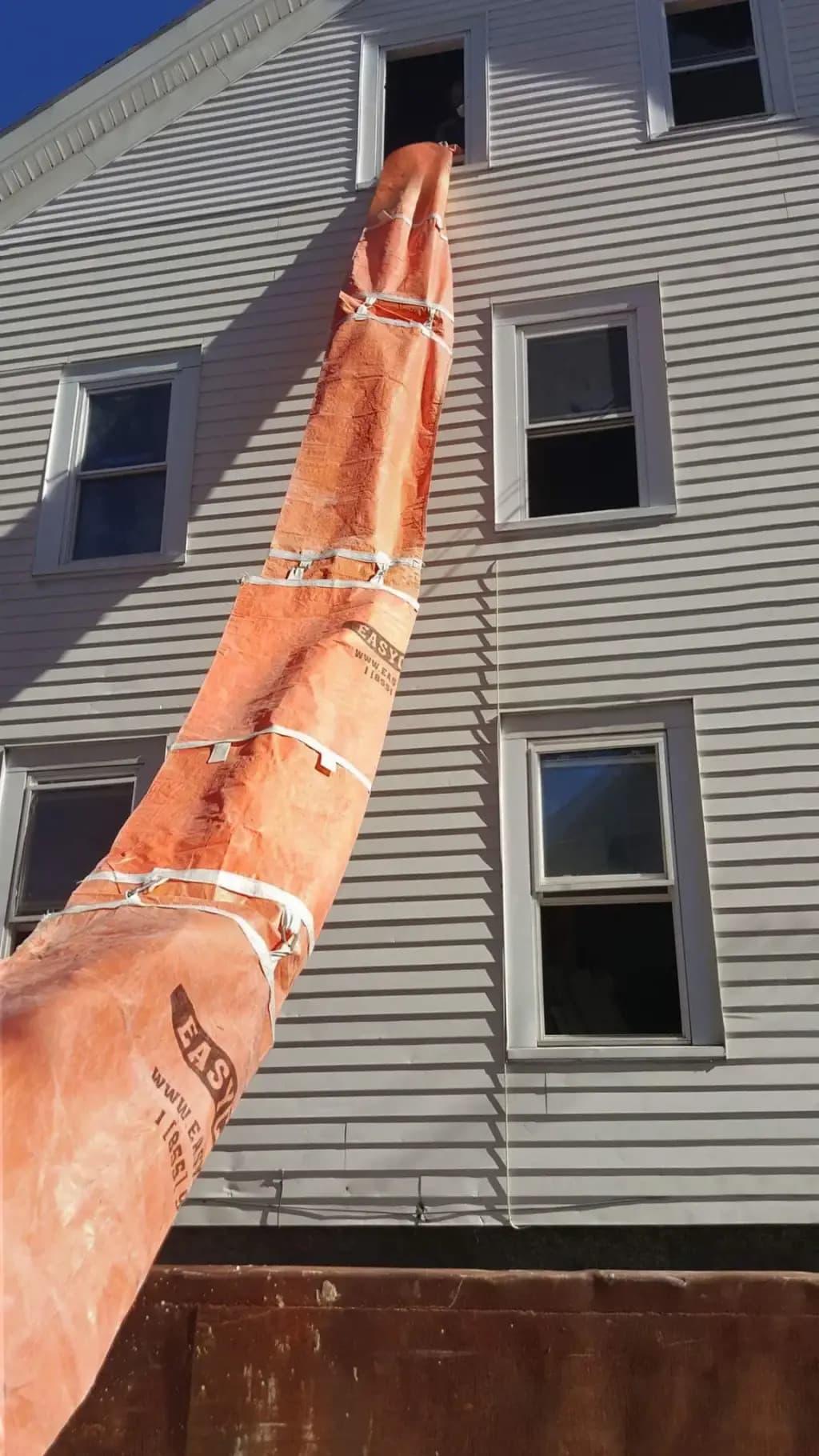
If you landed here searching for the trash chute in Silent Hill 2, you're probably deep in one of gaming's most atmospheric horror sequences — trying to figure out how a rusted, industrial chute fits into a puzzle that's equal parts disturbing and brilliant. We'll address that in a moment. But EasyChute is a construction-product company, so this post does something a little different: it uses the game's iconic trash chute as a launching pad to explain what real debris chutes are, how they work, why contractors and roofers rely on them daily, and how to choose one for an actual job site.
Whether you're a curious gamer who ended up here by accident, a contractor who's always wondered about the physics behind chute systems, or a junk removal pro looking for a smarter way to move debris, you'll find something useful below.
The Silent Hill 2 Trash Chute: What Players Are Actually Looking For
Silent Hill 2 — both the original 2001 release and the celebrated 2024 remake by Bloober Team — features a trash chute as a memorable environmental element inside the Lakeview Hotel and other decayed interior spaces. Players search for it because it ties into inventory management, puzzle progression, or simply because the game's environmental storytelling makes every mundane object feel ominous and significant.
The chute in the game is exactly what you'd expect architecturally: a vertical drop shaft, typically built into an interior wall, designed to move waste from upper floors to a collection point below. In older hotels and apartment buildings, these were standard infrastructure — a hinged metal door on each floor, a lined shaft running straight down, and a collection room or bin at the base.
That functional design is precisely why it appears in survival horror settings. It's dark, it's enclosed, and it implies descent into something unknown. It's also, in the real world, genuinely useful engineering — which is where our expertise takes over.
From Fiction to Function: What a Real Trash Chute Is
In the real world, a trash chute is a vertical passage that moves debris, waste, or demolition material from an elevated point down to a collection container at ground level. The core principle — gravity does the work — is exactly the same whether you're looking at a 1960s apartment building laundry chute or a modern fabric debris chute hanging off a scaffold.
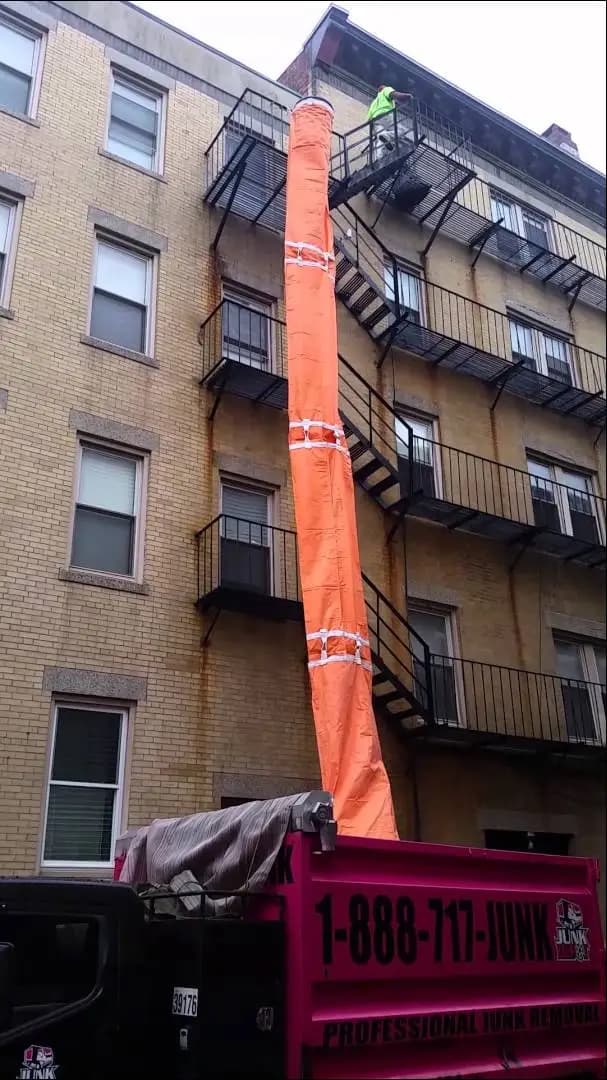
At EasyChute, the chutes we design are purpose-built for construction, roofing, and junk removal. They're not fixed infrastructure embedded in a wall. Instead, they're modular, reusable fabric sections that hang from a window, roof edge, or scaffold and funnel debris straight into a dumpster below.
You can read a full breakdown of the category in our guide to debris chutes: what they are, how they work, and how to choose the right one. The short version: these systems save labor, reduce injury risk, and keep job sites dramatically cleaner than bucket brigades or wheelbarrow runs.
Why Real Contractors Think About Chutes the Way Game Designers Do
Here's an interesting parallel: the designers of Silent Hill 2 understood that a trash chute creates tension through verticality. You're dropping something — or someone — into an unknown space below. Real contractors feel a version of this tension every time they're working three or four stories up with a pile of shingle tear-off or gut-renovation debris and no clean way to get it down.
Moving heavy debris manually from upper floors creates serious ergonomic risk. OSHA's ergonomics guidelines make clear that repeated overhead carrying and awkward-load handling are among the leading causes of musculoskeletal injury in construction. A debris chute solves that problem by turning a manual carry into a guided gravity drop.
The psychological relief contractors describe when a chute is set up properly — just open the window, feed the debris in, done — mirrors the satisfaction of solving a puzzle in a game. The system clicks into place, and what was complicated becomes simple.
How EasyChute's Fabric Debris Chutes Actually Work
EasyChute sections are made from woven, coated poly fabric — lightweight, durable, and engineered to handle the impact of falling debris without tearing or shifting. Here's how a typical setup works from start to finish:
- Choose your length. Sections come in 10 ft (lite-duty and heavy-duty), 25 ft, and 50 ft. Measure the drop from your highest debris-loading point to the top of your dumpster, then add sections to cover it.
- Connect sections. Each section overlaps the next by 1.5 ft, creating a continuous sealed channel. No tools, no hardware beyond standard carabiners or quick-connects.
- Hang from woven loops. Four heavy-duty woven loops at the top of each section attach to whatever anchor point is available — window frame, roof edge, scaffold rail. Ordinary carabiners work fine.
- Load debris at the top. Feed material in from the work area. Gravity takes it straight down into the dumpster.
- Strike the setup in minutes. Disconnect the carabiners, fold each section into its compact form, store in the box it shipped in. Ready for the next job.
A 10 ft section weighs under 3 lbs. One person can carry, hang, and strike a full chute setup without assistance — a significant operational advantage on tight urban job sites. See the full walkthrough in our step-by-step EasyChute installation guide.
The Types of Jobs Where a Debris Chute Is Non-Negotiable
Not every job needs a chute. A single-story deck tear-off? You probably just toss material directly into a dumpster or haul it to the curb. But the following job types almost always benefit from a properly rigged debris chute:
- Shingle tear-offs on multi-story roofs. Old asphalt shingles are heavy, sharp, and generate enormous volume. Carrying them down a ladder is slow and dangerous. A roofing trash chute turns a half-day manual haul into a continuous, single-person loading operation.
- Interior gut work and selective demolition. Plaster, drywall, insulation, framing — interior demo generates mixed, irregular material that's hard to stage inside a building. A chute running from an upper-floor window keeps material moving out of the work zone continuously. See our complete guide to demolition chutes for setup specifics.
- Brownstone and row-house renovations. Urban projects in tight neighborhoods — like the Brooklyn brownstone work covered in our Brooklyn trash chute guide — have almost no staging area. A chute from the third or fourth floor window directly into a street-level dumpster is often the only practical option.
- High-rise and mid-rise renovation. Any work above the fourth floor where vertical hauling by hand becomes a serious productivity and safety liability.
- Junk removal from upper apartments. Appliances, furniture, and bagged junk from upper floors can be bagged and dropped rather than carried down stairwells.
Fabric vs. Hard-Shell: Choosing the Right Debris Chute Material
When contractors research debris chutes, the first specification question is usually about material. Two primary categories exist in the market:
Hard Polypropylene Sections
Rigid plastic chutes are common on larger commercial sites. They're durable and handle high-velocity material well, but they're bulky, heavy, and require significant labor to set up and break down. Storage and transport add cost. For crews moving between multiple smaller jobs, the logistics overhead often outweighs the durability benefit.
Woven Fabric Sections
Fabric chutes — including EasyChute's woven, coated poly design — are dramatically lighter, fold into small footprints, and deploy in a fraction of the time. The coated poly weave is engineered to handle repeated impact from debris without abrading through. For residential renovation crews, roofing contractors, and junk removal operators, fabric chutes hit the right balance of durability and portability.
Our fabric trash chute explainer covers the material engineering in more detail, including when coated poly outperforms canvas and when you'd want to step up to heavy-duty sections.
Canvas and Specialty Materials
Some operations specify canvas for its abrasion resistance under sharp material like roofing nails and broken tile. Canvas is heavier than coated poly but handles rough-edged debris well. If your work involves a lot of sharp material or extreme-weight loads, review the tradeoffs in our canvas trash chute guide.
Sizing a Chute System: Length, Overlap, and Drop Calculations
Getting the length right before you order is the most important pre-job calculation. An undersized chute leaves a gap above the dumpster (debris misses the container); an oversized chute piles up on the ground and creates its own mess.
How to Calculate the Drop
- Measure from your loading point (window sill, roof edge, scaffold platform) to the ground.
- Subtract the height of your dumpster (typically 3.5 ft to 4.5 ft for a standard roll-off).
- That net figure is your required chute length. Order sections that meet or slightly exceed it — sections connect in 1.5 ft overlap increments so you have adjustment range.
Section Combination Examples
- 15 ft net drop: Two 10 ft sections (connected, effective drop coverage: ~18.5 ft). One section handles up to about 8.5 ft net.
- 35 ft net drop: One 25 ft + one 10 ft section, or combination thereof.
- 60 ft net drop: One 50 ft + one 10 ft section — typical for a five- to six-story building.
When in doubt, oversize slightly. A section or two of extra length costs less than a callback because debris is missing the dumpster and hitting the sidewalk. If you're unsure, the EasyChute FAQ has specific guidance on sizing edge cases, or you can contact us directly with your job dimensions.
OSHA, Safety, and Why Debris Chutes Aren't Optional on Many Sites
Beyond productivity, debris chutes are a safety system. OSHA's construction safety standards address falling object hazards and the obligation to protect workers and the public from material dropped or thrown from elevation. A properly rigged debris chute is a controlled drop — material travels inside the chute, not in free fall where it can scatter, bounce, or strike a worker below.
Key safety practices for any chute installation:
- Establish a drop zone. Cordon off the area around and downwind of the dumpster. No workers should be in this zone while debris is being loaded.
- Never overload a section. Feed material in manageable amounts. Large, single-piece drops (a full sheet of drywall, for example) can build momentum that overwhelms the chute or causes the dumpster to shift.
- Inspect anchor points before loading. Every carabiner and loop should be checked at the start of each day. Look for wear on the loop fabric where it contacts the anchor.
- Bag fine material. Dust, insulation fibers, and small granules can escape the chute in transit. Bag this material or wet it before loading to control airborne debris.
- Strike the chute before dusk. Never leave a hanging chute overnight unless it's on a secure, monitored site. Wind and unauthorized access are both real risks.
Environmental Responsibility: What Happens to the Debris Below
Getting debris down efficiently is step one. Disposing of it responsibly is step two, and it matters more than many contractors realize. According to the EPA, construction and demolition debris represents a significant portion of total material waste generated in the United States — well over 600 million tons annually in recent estimates.
Many materials that travel down a debris chute are recyclable or divertible from landfill:
- Clean wood framing — accepted at many C&D recyclers for grinding into mulch or biomass fuel.
- Drywall/gypsum — recyclable at specialty facilities; some manufacturers take it back.
- Asphalt shingles — increasingly accepted at paving recyclers who grind them for road base.
- Metals (copper, aluminum, steel) — high scrap value; nearly always worth separating.
- Concrete and masonry — crushable into fill material at many aggregate recyclers.
Sorting at the dumpster is easier when material arrives in a single consistent stream from a chute rather than scattered across a job site from manual hauls. That's an underappreciated operational benefit of a well-run chute system — it creates a natural material sorting opportunity at the dumpster level.
Urban Job Sites: Tight Streets, Noise Ordinances, and Neighbor Relations
Dense urban neighborhoods add layers of complexity to debris removal that suburban and rural contractors don't face. We've written specific guides for many of these markets — from Lower Manhattan to Greenpoint, Brooklyn — because the variables really do differ.
Street Permit Considerations
Many cities require a permit for a dumpster placed in the street or on the sidewalk. The chute itself typically doesn't require a separate permit, but check with your local building department. In New York City, for example, sidewalk shed and dumpster placement rules are enforced by DOB and DSNY respectively. Getting this right before the chute goes up avoids stops-work and fines.
Neighbor Communication
A debris chute is visually prominent and makes noise when material drops. Brief, respectful communication with adjacent property owners — especially in townhome rows or tight brownstone blocks — reduces complaints and can actually accelerate permit approvals when neighbors vouch for a professional operation.
Working in Historic Districts
Some neighborhoods with historic preservation overlays have restrictions on what can be attached to a building facade. Fabric chutes attached via carabiners to window frames typically don't involve drilling or permanent attachment, which makes them easier to clear through historic review boards than scaffold systems. Document your attachment method and confirm with your project's historic consultant if applicable.
The EasyChute System vs. Improvised Alternatives
Contractors who haven't used a purpose-built debris chute often improvise: plywood slides, tarped gutters, stacked dumpster chutes fashioned from whatever's on site. It's worth being direct about why these alternatives create more problems than they solve.
- Plywood slides require significant bracing at every floor and create serious falling-object risk if a board shifts. OSHA has clear standards about temporary work surfaces that plywood slides rarely satisfy.
- Tarped makeshift channels tear, bunch, and misalign under debris load — creating gaps where material escapes.
- Throwing debris directly from a window into a dumpster is both a safety liability (misses go into the street) and illegal in most jurisdictions without specific permits and cordoning.
A purpose-built fabric chute from EasyChute ships free, deploys in minutes, and costs a fraction of the labor savings it generates on its first job. That ROI calculation is why crews who try it once typically order additional sections before the first job is complete.
You can compare the broader tradeoffs in our debris chute vs. scaffolding chute comparison guide.
Frequently Asked Questions
Is this post actually about the Silent Hill 2 video game?
Partially, as a starting point — but mostly no. EasyChute sells real fabric debris chutes for contractors, roofers, and junk removal crews. This post uses the Silent Hill 2 trash chute as a cultural hook to explain what real-world debris chutes are, how they work, and why job sites depend on them. If you're looking for a game walkthrough, a gaming wiki will serve you better. If you're a contractor who stumbled here and found it useful, welcome.
What materials can a fabric debris chute handle?
EasyChute sections are designed for typical construction and demolition debris: asphalt shingles, drywall, plaster, insulation, broken tile, wood framing, bagged concrete, and mixed interior gut material. Very sharp material — roofing nails, jagged metal — should be loosely bagged before loading to prevent abrasion on the chute interior over repeated uses. The heavy-duty 10 ft sections are rated for heavier per-load volumes and rougher material than the lite-duty version.
How long does it take to set up an EasyChute system?
One person can typically hang a single-section setup in under five minutes once they're familiar with the system. A four- or five-section run covering 40 to 50 feet of drop takes roughly 15 to 20 minutes to fully rig, including walking each section out the window and connecting overlaps. Strike time is similar. Watch the EasyChute setup videos for a real-time demonstration before your first install.
Do I need special tools or hardware to install an EasyChute?
No. The chute sections hang from four woven loops at the top of each section. Standard carabiners — the type sold at any hardware or outdoor-supply store — connect those loops to any available anchor point: a window frame, scaffold rail, or roof edge bracket. No drilling, welding, or specialty hardware is required. This is a core design principle: one person, no tools, operational in minutes.
Can an EasyChute section be reused across multiple jobs?
Yes — reusability is central to the product's value proposition. The woven, coated poly fabric is engineered for repeated use across many job cycles. Inspect the loops and seams after each job for wear, particularly if you've run sharp or heavy material. Clean sections by hosing them down before folding for storage. Crews who maintain their sections properly report using them across dozens of jobs before needing replacement.
How do I order EasyChute sections and how long does shipping take?
EasyChute sells at fixed prices online with free shipping to job sites across the United States. Lead times vary but sections are typically ship-ready quickly. Visit our contact page or place your order directly on the site. If you have a job starting in the next few days and need to confirm availability, reach out before ordering so we can confirm your ship date.
Are there specific setup tips for winter or cold-weather conditions?
Cold weather makes coated poly fabric stiffer, which affects how sections fold and how smoothly overlaps seat. In sub-freezing conditions, warm the fabric briefly before connecting sections to ensure a full 1.5 ft overlap seal. Ice on anchor points is also a hazard — de-ice carabiner attachment zones before each shift. For a full seasonal maintenance guide covering New England conditions specifically, see our winter debris chute maintenance tips for Maine contractors.
Ready to Get Your Chute Set Up Before the Next Job?
Whether you're a roofer planning a multi-square tear-off, a renovation crew prepping for a full gut job, or a junk removal operator trying to stop carrying furniture down three flights of stairs, EasyChute has a section configuration for your drop height and material type.
Start with our debris chute overview to understand the full product line, then use our FAQ to dial in your sizing. When you're ready, order online with free shipping — no minimums, no dealer markup, fixed prices direct from the source.
The setup is easier than solving a Silent Hill puzzle. And the debris clears a lot faster.