
Brooklyn renovation work moves fast, but getting debris off a three-story brownstone or a five-story walk-up without the right equipment slows everything down — and creates real safety risk. A trash chute for Brooklyn job sites lets you drop drywall, roofing shingles, plaster, and wood scraps straight into a roll-off or trash can below, keeping workers safe, sidewalks clear, and neighbors less angry. EasyChute ships our lightweight, woven coated-poly fabric chutes free to Brooklyn job sites so you can order today and get to work.
Whether you're gutting a Park Slope brownstone, re-roofing a Bushwick row house, or renovating a mid-rise in Bay Ridge, EasyChute sections connect quickly, hang from a window or roof edge without a frame or rental crew, and fold up small enough to haul in a truck bed when the job is done. This page covers which sections fit Brooklyn's most common building types, how to set one up safely, and where to order.
Trash chutes shipped free to Brooklyn
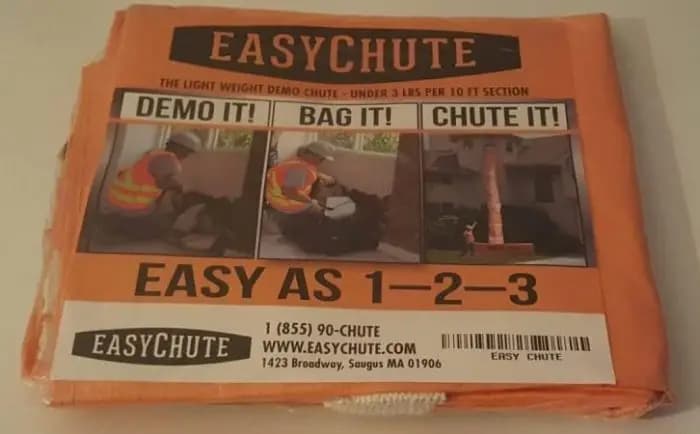
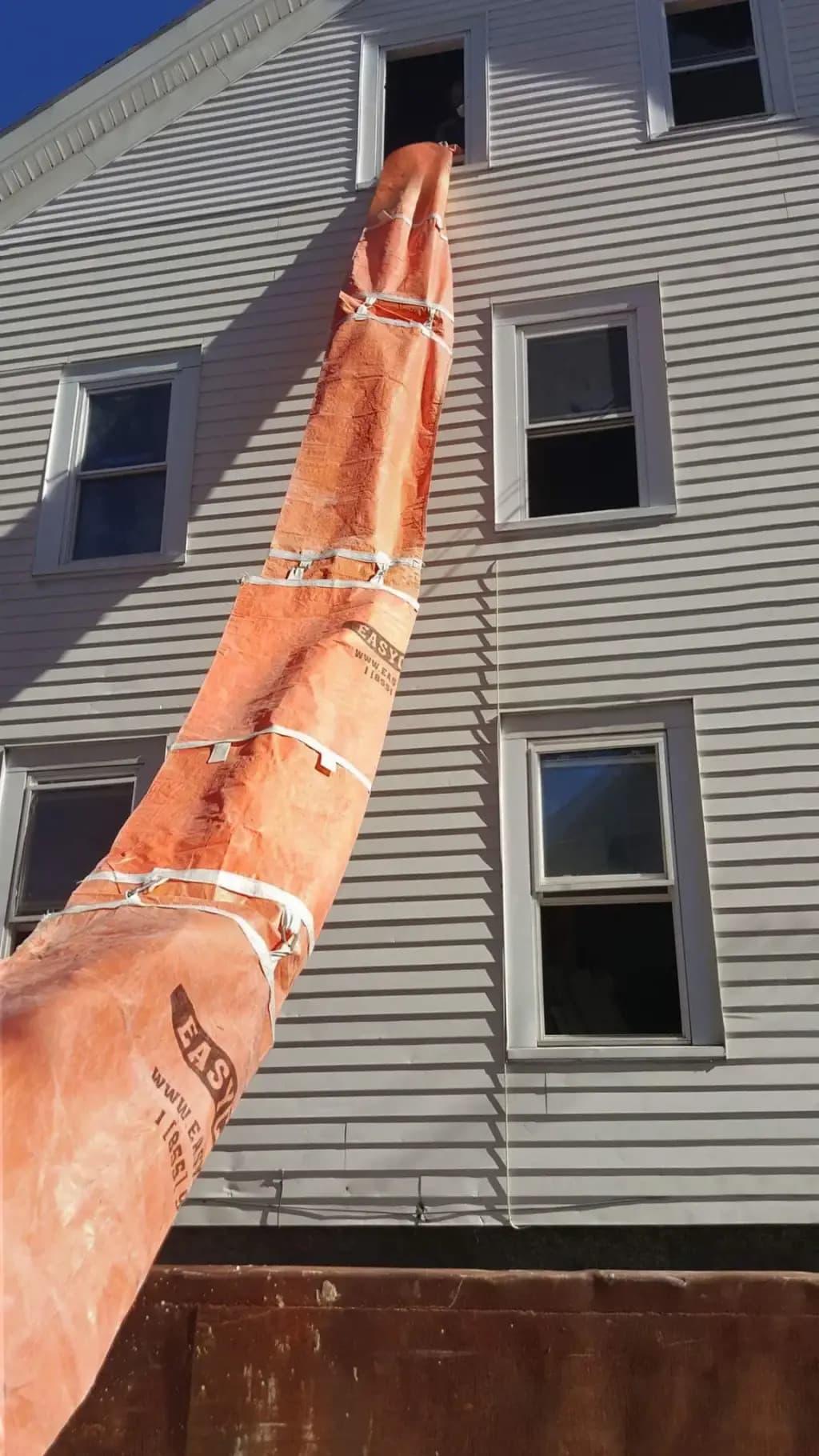
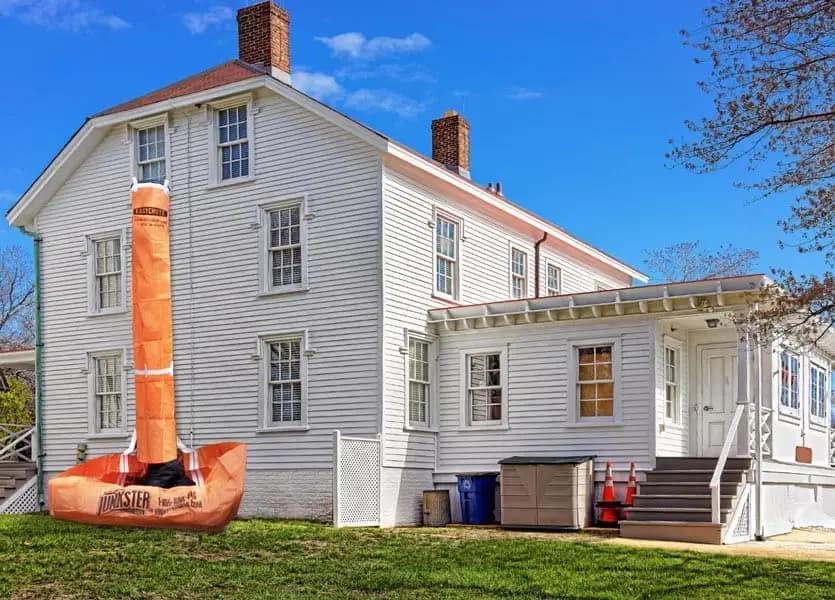
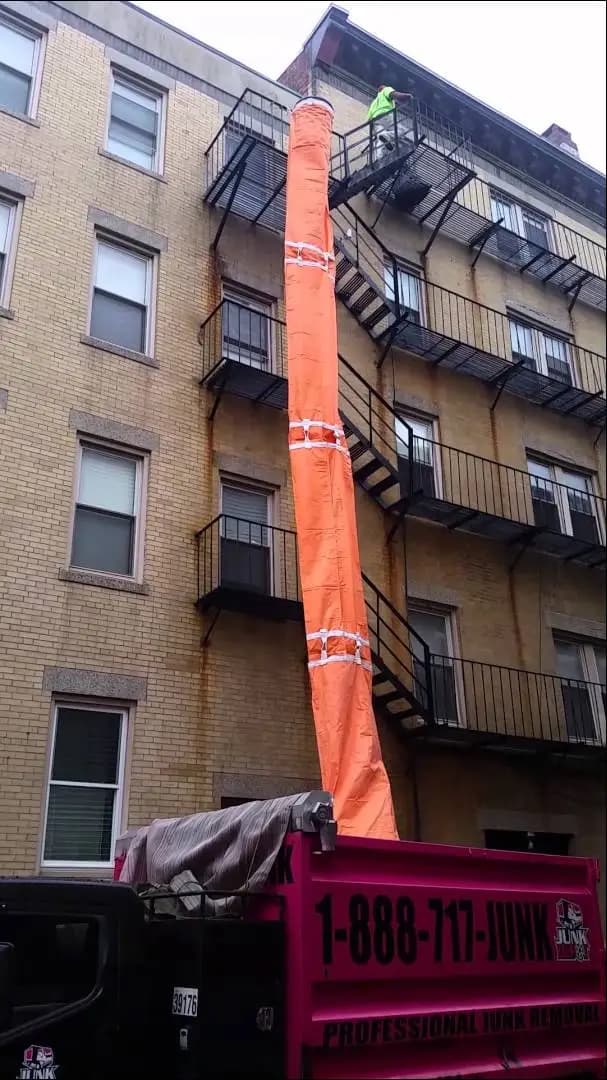
Free shipping on every order. See the full shop.
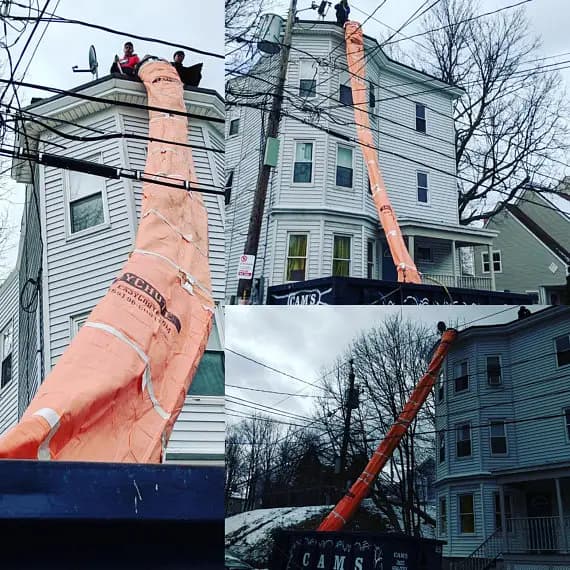
Why Brooklyn Buildings Make a Trash Chute Essential
Brooklyn's building stock is unlike almost anywhere else in the country. The borough is defined by its 19th- and early 20th-century masonry construction: four- and five-story brownstones, two- and three-family brick row houses, pre-war apartment buildings, and converted factory lofts in neighborhoods like DUMBO and Williamsburg. These buildings are tall, sit on narrow lots, and line streets where foot traffic never stops.
That combination — height, density, pedestrian activity — is exactly why OSHA 29 CFR 1926.252(a) requires an enclosed chute when debris is dropped more than 20 feet to any point outside a building's exterior walls. An EasyChute debris chute is enclosed by design: each section overlaps the next by 1.5 feet and debris travels inside the chute from top to bottom, not through the air. It meets or exceeds that OSHA requirement.
Beyond compliance, a chute is simply the practical choice on a Brooklyn block. You're rarely working next to a wide-open parking lot. You may have a stoop railing six feet away, a parked car below the window, or a sidewalk shed already eating into your working footprint. Running a chute from the window to a trash can or dumpster at the curb keeps the debris stream controlled and your liability low.
Choosing the Right Trash Chute Section for Brooklyn Building Heights
EasyChute is available in three section lengths. Matching the right section to your building saves you money and setup time.
- 10-foot section (≈ one story): Ideal for gut-rehab work on the top floor of a three-story brownstone when you only need to drop one level, or for connecting additional length to an existing run. Weighs under 3 lbs and folds to drawer size. Available in Lite-Duty ($99) and Heavy-Duty ($149).
- 25-foot section (≈ two and a half stories): A strong match for Brooklyn's most common renovation scenario — a three- or four-story brownstone or row house where you need the chute to reach from an upper-floor window to grade. Weighs under 8 lbs. Order the 25 ft section for $277.
- 50-foot section (≈ five stories): Built for taller pre-war apartment buildings, mid-rises, and commercial loft conversions. If you're working on a roof or top-floor renovation of a five- or six-story building in Crown Heights, Fort Greene, or Sunset Park, this section reaches the street in one run. Weighs under 15 lbs. Order the 50 ft section for $596.
Sections connect loop-to-loop with carabiners or quick-connects and can be combined for taller runs — useful on Brooklyn's occasional eight- or ten-story buildings near the waterfront or in Downtown Brooklyn. Middle shortening straps let you fine-tune the length so the bottom of the chute lands right where you want it.
Setting Up a Debris Chute on a Brooklyn Job Site
EasyChute was designed specifically for urban renovation work where you can't bring in a crane or a specialty crew. Here's how a typical Brooklyn setup works:
- Create a hopper. Take a standard 32-gallon commercial trash can, remove the bottom, and set it in the window opening or at the roof edge. This gives workers a wide, stable target to toss debris into.
- Hang the chute. The top of each EasyChute section has four woven connection loops. Loop a length of rope or a strap through them and tie off to a window frame, scaffold railing, or a secure anchor at the roof edge. No outriggers, hoists, or special hardware required.
- Connect additional sections if needed. Each section has four loops at the bottom as well. Connect the next section loop-to-loop with carabiners. The 1.5-foot overlap at every joint keeps dust and debris from escaping between sections.
- Position the landing zone. Direct the bottom of the chute into a roll-off dumpster, a contractor bag in a trash can, or a pile area on the sidewalk within your permitted work zone. On a tight Brooklyn street, a 32-gallon can at the curb is often the most practical option.
- Work and repeat. The 22-inch diameter chute handles drywall sheets broken in half, plaster chunks, bundled shingles, and cut lumber. When the job wraps, fold the chute and store it for the next project.
Always verify local sidewalk shed, lane closure, or debris management requirements with the New York City Department of Buildings before starting work. Rules for street use and scaffolding can vary by project type and borough.
Brooklyn Neighborhoods We Ship To
EasyChute ships free to every Brooklyn neighborhood — no minimum order, no freight surcharge. We regularly ship to job sites in Park Slope, Williamsburg, Bushwick, Bay Ridge, Windsor Terrace, DUMBO, Greenpoint, and beyond. If you're working in a specific neighborhood, we have dedicated pages with setup tips tailored to local building types:
- Park Slope trash chute guide
- Williamsburg debris chute guide
- Bushwick trash chute guide
- Bay Ridge trash chute guide
- Windsor Terrace trash chute guide
- DUMBO debris chute guide
- Greenpoint trash chute guide
Working elsewhere in New York City? See our NYC trash chute overview or browse jobs in Queens multi-unit buildings.
A Reusable Investment That Pays for Itself Across Jobs
Renting a specialty debris-chute system through a scaffolding company in New York City is expensive and often involves scheduling lead times you can't afford mid-project. EasyChute is yours outright — order it once, use it on every job. The woven, coated poly fabric is tear-resistant and built for the repeated abuse of real renovation work: gritty plaster, nail-studded lumber scraps, and broken tile all travel through without snagging. When the section isn't in use it folds into a small bundle that fits behind the seat of a pickup or in a tool room shelf.
For brownstone window setups specifically, see our brownstone window debris chute guide. For a broader look at why reusable chutes make financial sense on New York renovations, visit our cost-effective reusable chute page.
Order Your Brooklyn Trash Chute Today
Every EasyChute ships free, anywhere in the United States, at fixed prices with no quote required. Browse all chute sections in our shop, or call us Monday through Friday, 8 AM to 10 PM Eastern at 855-902-4883 if you have questions about which section fits your job. You can also reach us at orders@easychute.com.
Frequently asked questions
Which EasyChute section is best for a typical three-story Brooklyn brownstone?
For most three-story brownstones, the 25-foot section is the right fit — it covers roughly two and a half stories, which is enough to run from an upper-floor window to grade level. If you're working on the top floor of a taller building, you can add a 10-foot section to extend the run using the loop-to-loop connector system.
Does EasyChute comply with OSHA requirements for debris drops in New York City?
Yes. OSHA 29 CFR 1926.252(a) requires an enclosed chute when material is dropped more than 20 feet outside the exterior walls of a building. EasyChute meets or exceeds that requirement — sections overlap by 1.5 feet at every joint, keeping debris fully enclosed from top to bottom. Always confirm any additional New York City Department of Buildings requirements with your local building department.
How do I hang a trash chute from a Brooklyn row house window?
Loop a rope or strap through the four woven connection loops at the top of the chute and tie off securely to the window frame or a nearby anchor point. Place a standard 32-gallon trash can with its bottom removed in the window opening to serve as a hopper. No outriggers, frames, or rental crew are needed.
Can I connect multiple EasyChute sections for taller buildings?
Yes — sections connect loop-to-loop using carabiners or quick-connects, and each joint overlaps by 1.5 feet to contain dust and debris. For a five-story building, a single 50-foot section typically reaches from roof to street. For taller mid-rises, you can combine a 50-foot section with one or more 10-foot sections to get the exact length you need.
Does EasyChute ship free to Brooklyn job sites?
Yes, every EasyChute order ships free to any address in the United States, including all Brooklyn neighborhoods. There's no minimum order and no freight surcharge. Order online at the fixed prices listed in our shop, and the chute comes directly to your job site.
Neighborhoods in Brooklyn
Related guides
- Brownstone Window Debris Chute Brooklyn: Setup, Permits & Safety Guide for 2026
- Cost-Effective Reusable Trash Chute for NYC Renovation Projects (Contractors)
- Long Island Contractor Guide to Debris Chutes for Split-Level Homes
- Queens Multi-Unit Renovation Debris Control Plan (Window Loading + Zone Control)