
Fabric Trash Chute: What It Is, How It Works, and When to Use One
A fabric trash chute is a flexible, sectional debris chute made from woven, coated poly fabric. Instead of rigid plastic tubes or welded steel, it folds flat for transport, hangs from a window or roof edge in minutes, and channels construction waste straight into a dumpster below — no crane, no outrigger, no rental crew required. Contractors, roofers, and remodelers across the country rely on fabric chutes because they combine lightweight convenience with the enclosed-chute performance that OSHA demands on multi-story jobs.
This page explains exactly what a fabric construction chute is, how woven coated poly stacks up against plastic and metal alternatives, how to choose the right length for your building, and when a fabric chute is simply the best tool for the job. If you already know what you need, head straight to our chute shop and order with free shipping anywhere in the US.
Shop EasyChute trash chutes

Free shipping on every order. See the full shop.
What Is a Fabric Trash Chute?
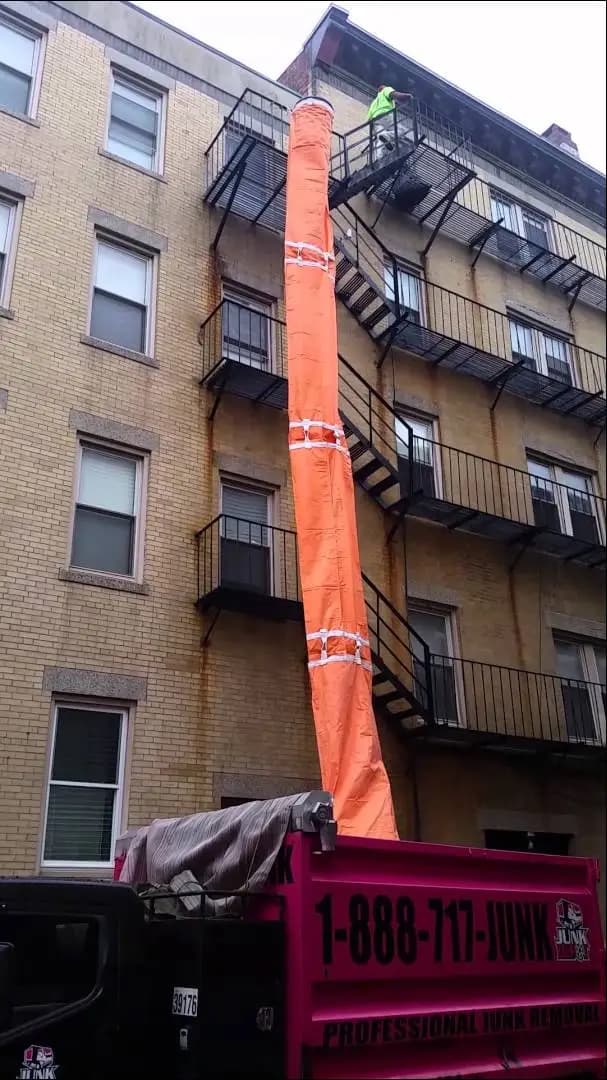
A fabric trash chute — sometimes called a debris chute, construction chute, or woven chute — is a cylindrical sleeve made from flexible textile material. Sections connect end-to-end to reach from upper floors down to ground level. Workers feed demolition waste into the top opening, and gravity carries it to a dumpster or collection point below.
The defining characteristic is the material itself. Where traditional chutes use rigid fiberglass, polypropylene, or galvanized steel panels, a fabric chute is built from woven, coated poly fabric that is tear-resistant and folds compactly when not in use. That flexibility is what makes the system practical for job sites where storage space is tight and setup time matters.
EasyChute's fabric debris chutes are 22 inches in diameter — wide enough to handle drywall chunks, plaster, roofing shingles, wood scraps, and insulation without constant jams. Four woven connection loops at the top and four at the bottom of every section let you join sections loop-to-loop using carabiners or quick-connects. Each joint overlaps 1.5 feet so dust and debris stay inside the chute rather than drifting onto the sidewalk or neighboring property.
Fabric vs. Plastic vs. Metal: An Honest Comparison
Every chute material has trade-offs. Understanding them helps you choose the right tool rather than overspending on features you don't need — or under-buying and creating a safety problem.
Rigid Plastic (Polypropylene) Chutes
Injection-molded plastic chutes are common on rental yards. Individual hopper and straight sections snap or pin together. They are durable under repeated impact and resist deformation under heavy, concentrated loads. The downsides: each section is bulky and heavy to move, they require more storage space on a trailer or job site, and plastic can crack in cold weather or under sharp debris. Setup typically takes longer because sections must be physically maneuvered into position one at a time.
Metal (Galvanized Steel or Aluminum) Chutes
Metal chutes appear most often on large commercial demolition projects or high-rise renovations where abrasive material volume is very high and the chute stays in place for weeks or months. They are heavy-duty but correspondingly heavy — moving, storing, and assembling metal sections typically requires more labor, more equipment, and a larger budget. For short-duration residential or light commercial jobs, metal chutes are usually impractical overkill.
Fabric (Woven Coated Poly) Chutes
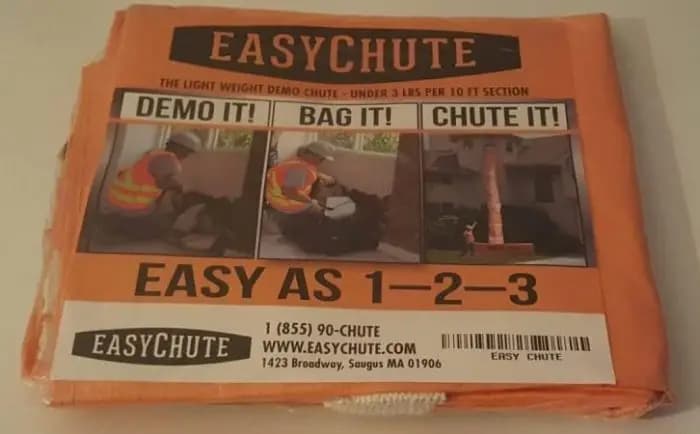
A fabric trash chute addresses the weight and storage problems directly. EasyChute's 10-foot section weighs under 3 pounds and folds small enough to fit in a drawer or a small box. A 25-foot section stays under 8 pounds. A 50-foot section — enough to reach five full stories — weighs under 15 pounds. One worker can carry an entire multi-story chute system in a bag to the upper floor and have it hanging in a fraction of the time it takes to stage rigid sections.
The trade-off is that woven fabric chutes are best suited for the debris types they are designed for: drywall, plaster and lath, roofing shingles, wood scraps, and insulation. They are not intended for concrete rubble, heavy masonry, or material with extremely sharp edges that could stress the fabric at high velocity. For the vast majority of residential and light commercial renovation or roofing jobs, a fabric chute is the right call.
See our full debris chute overview for more context on choosing between chute types.
How a Fabric Chute Hangs and Stays Secure
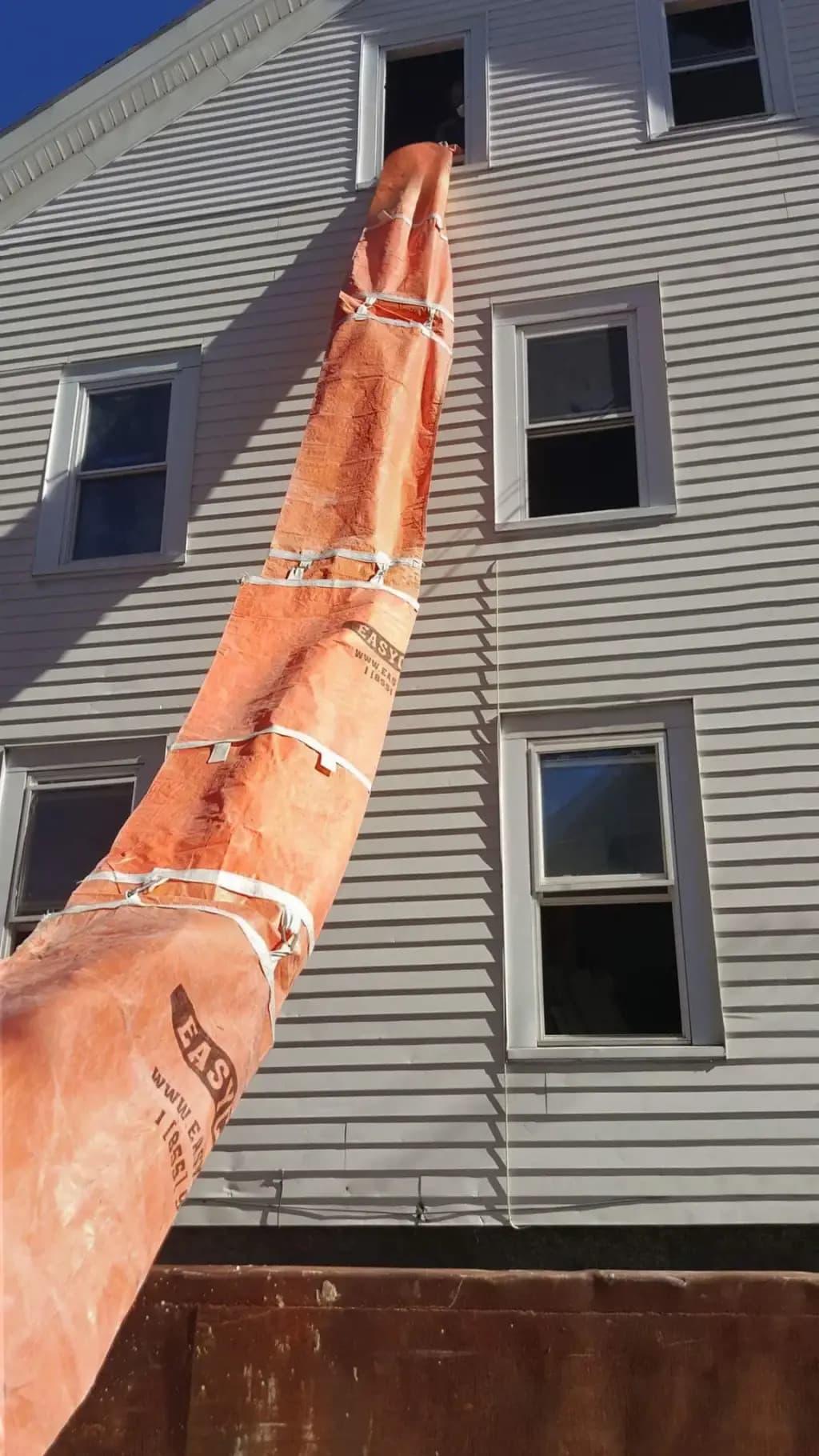
One of the biggest advantages of the fabric design is that it requires no outriggers, frames, hoists, or specialty hardware. The chute hangs from any stable anchor point at the top of the building: a window frame, a roof edge, a scaffold rail, or a fire escape. Use the four woven connection loops at the top of the uppermost section to tie or carabiner the chute in place.
A standard 32-gallon commercial trash can with its bottom removed serves as a ready-made hopper at the entry point. Workers toss debris in, and it funnels straight down. Middle shortening straps on each section let you fine-tune the hanging length so the chute reaches exactly where you need it without excess material pooling at the bottom.
When the job is done, unclip the sections, fold them flat, and store them. The same sections go right back to work on the next project.
The OSHA 20-Foot Rule and Why It Matters
Using an enclosed chute is not just best practice — on many jobs it is a federal requirement. OSHA 29 CFR 1926.252(a) states that when material is dropped more than 20 feet to any point outside the exterior walls of a building, an enclosed chute must be used. EasyChute fabric trash chutes meet or exceed the applicable OSHA regulations for enclosed chutes.
What this means in practice: if your dumpster sits on the street or in a parking lot and you are working above the second story, an open toss is not compliant. A fabric debris chute keeps the material enclosed from the point of entry to the dumpster, protecting workers, bystanders, and neighboring property below. It also keeps your job site cleaner and reduces the time spent picking up scattered debris at ground level.
For more guidance on safe chute use on your specific project type, visit our construction chute page or our roofing chute page.
How to Choose the Right Fabric Chute Length
Sizing a fabric trash chute starts with estimating your drop distance — the vertical distance from where workers will load debris to the top of the dumpster below.
- 10-foot section (≈ one story): A single section works for single-story homes, low additions, or jobs where the dumpster sits elevated. Two 10-foot sections cover a two-story structure. The Lite-Duty 10 ft Section ($99) handles typical light renovation debris. The Heavy-Duty 10 ft Section ($149) is built for heavier or more abrasive loads like roofing shingles.
- 25-foot section (≈ two and a half stories): The 25 ft Section ($277) covers most two- and three-story residential buildings in a single piece, reducing the number of connection points and speeding setup.
- 50-foot section (≈ five stories): The 50 ft Section ($596) reaches mid-rise buildings and larger apartment renovations without stacking multiple short sections.
Sections connect freely, so you can mix lengths. If you have a 35-foot drop, a 25-foot section plus a 10-foot section gives you 33 feet of covered run with the shortening straps handling the last few feet of adjustment. Always measure your actual drop before ordering so you are not working with a chute that falls short — literally.
Still unsure which combination fits your job? Visit our FAQ page for answers to common sizing questions, or call us at 855-902-4883 (Mon–Fri, 8 AM–10 PM Eastern).
When a Fabric Trash Chute Is the Right Choice
A fabric construction chute earns its place on the job when three conditions line up: the work involves standard renovation debris (not heavy masonry), the job site has limited staging area for bulky equipment, and speed of setup matters.
It is a natural fit for roofing tear-offs, interior gut jobs, window replacements, siding removal, and drywall renovation on multi-story homes and apartment buildings. Property managers overseeing occupied buildings especially appreciate how fast and tidy a fabric chute system is compared to wrestling rigid panels past tenants in a hallway.
For demolition projects involving heavier rubble, review our demolition chutes page to confirm a fabric chute is the right tool for your material type.
Why EasyChute
EasyChute was created in Massachusetts by a remodeling contractor and a junk-removal operator who needed a chute system that was actually practical on real job sites. The result is a product built around the way contractors actually work: fast to hang, easy to store, reusable across dozens of jobs, and priced at a fixed rate with free shipping to any job site in the United States — no negotiating, no rental counters, no surprise fees.
Every order ships free. Every section is reusable. And when you are done with a project, the chute folds back into a bag and waits for the next one. Browse all chute sections and order online today.
Frequently asked questions
What debris is a fabric trash chute designed to handle?
EasyChute fabric debris chutes are built for common construction and renovation waste: drywall, plaster and lath, roofing shingles, wood scraps, and insulation. They are not intended for heavy masonry, concrete rubble, or extremely sharp heavy material that could stress the fabric at high velocity.
How does a fabric chute connect between sections?
Each section has four woven loops at the top and four at the bottom. You join sections loop-to-loop using carabiners or quick-connects. Every joint overlaps 1.5 feet so dust and debris stay inside the chute rather than escaping at the connection points.
Does a fabric trash chute meet OSHA requirements?
Yes. EasyChute fabric trash chutes meet or exceed applicable OSHA regulations. OSHA 29 CFR 1926.252(a) requires an enclosed chute when material is dropped more than 20 feet outside the exterior walls of a building, and EasyChute's enclosed design satisfies that requirement.
How do I know which chute length to order?
Measure the vertical drop from the loading point to the top of your dumpster. A 10-foot section covers roughly one story, a 25-foot section covers about two and a half stories, and a 50-foot section covers approximately five stories. Sections connect together, so you can combine lengths to match your exact drop distance.
Does EasyChute ship to my state, and is there a delivery charge?
EasyChute ships to job sites anywhere in the United States, and every order includes free shipping — no minimum order, no additional freight charge. You order online at a fixed price and the chute ships directly to your job site.