
Demolition Chutes: The Complete Guide for Interior Gut Work and Selective Demo
A demolition chute is a vertical enclosed tube that channels debris — plaster, lath, drywall, framing scraps, insulation — from upper floors straight down to a dumpster on the street level below. Whether you're gutting a century-old brownstone down to the studs or doing selective demo in a four-story office building, a proper chute keeps dust and falling material contained, protects workers below, and dramatically speeds up cleanup compared to hauling debris down stairwells by hand.
This page covers everything you need to know about demolition chutes: how they work, what they're made of, how to size and set one up, the OSHA rules that apply, and how EasyChute's lightweight fabric chutes fit into a real demo workflow. If you've already done your research and just need to order, head straight to the EasyChute shop — free shipping on every order, anywhere in the United States.
Shop EasyChute trash chutes

Free shipping on every order. See the full shop.
What Is a Demolition Chute and How Does It Work?
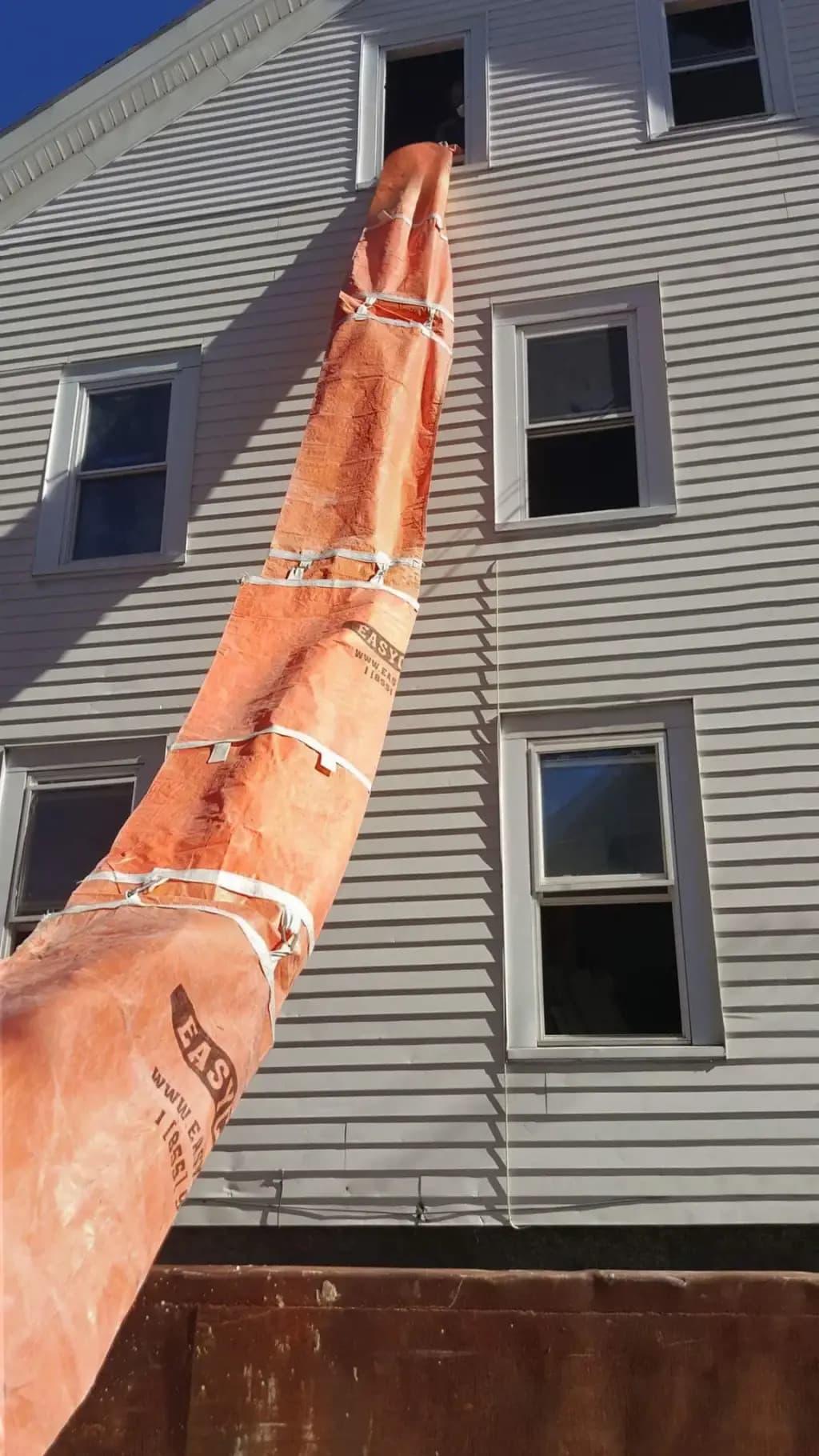
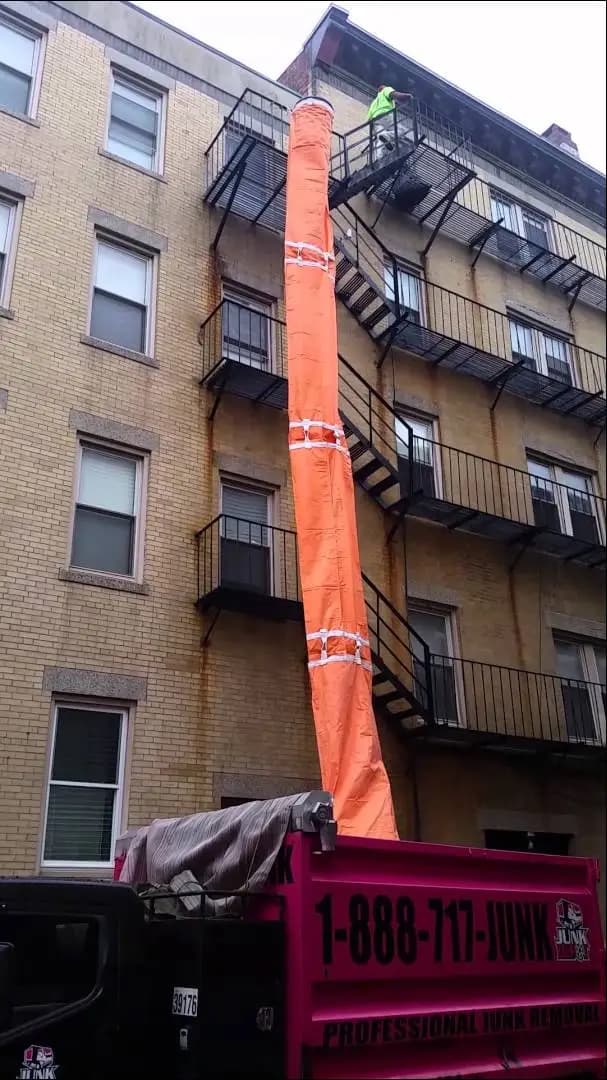
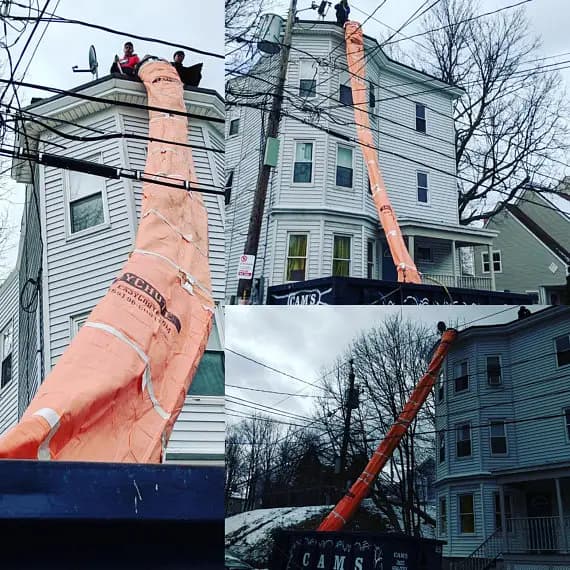
At its core, a demolition chute is a gravity-fed tube suspended vertically on the exterior of a building. A worker on an upper floor feeds debris into the top opening — often through a window or over a roof edge — and the material falls through the enclosed chute to a dumpster, trailer, or collection point at ground level. Because the chute is enclosed on all sides, dust and small fragments stay inside the tube instead of raining down on the street or onto workers passing below.
The top of the chute is typically fitted with a hopper or intake collar that sits in the window opening. A standard 32-gallon commercial trash can with its bottom removed works well as an improvised hopper, funneling material into the chute and preventing overspray at the entry point. Below the hopper, sections of chute connect end-to-end all the way to ground level.
The physics are simple: the interior diameter of the chute must be wide enough that debris flows freely without bridging (jamming), and the chute must be secured to the building at multiple points so it doesn't swing or pull away from the facade under load.
Types of Demolition Chutes: Material and Construction
The construction industry has used a few different chute materials over the decades. Understanding the trade-offs helps you choose the right tool for your project.
Rigid Plastic or Steel Chutes
Traditional demolition chutes are made of injection-molded plastic or stamped steel sections that snap or pin together. They are durable and can handle very heavy or sharp debris, but they come with real trade-offs: each section is bulky and heavy, transportation requires a truck or van, and assembly can be time-consuming. On high-rise commercial demolition projects where a chute stays in place for months, that weight is acceptable. On a residential gut job or a short selective-demo contract, hauling a pallet of rigid sections up to the site is often impractical.
Fabric Demolition Chutes
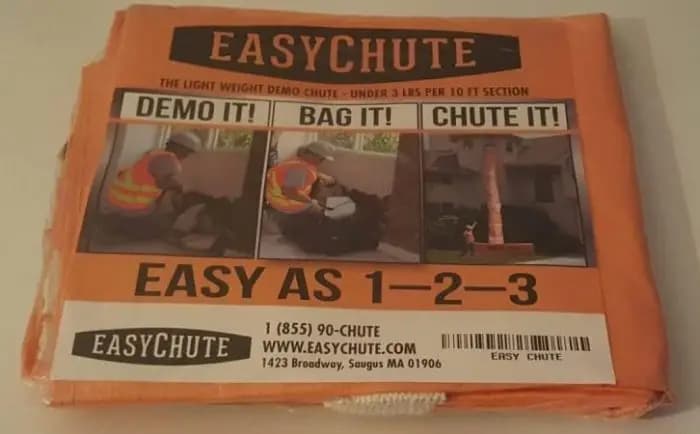
Fabric chutes — like those made by EasyChute — are constructed from woven, coated poly fabric. The material is tear-resistant and far lighter than rigid alternatives. A 10-foot section weighs under 3 pounds and folds down small enough to fit in a drawer or tool bag. A 50-foot section (enough for a five-story drop) weighs under 15 pounds. That portability matters enormously on interior gut jobs, where you may need to carry the chute up multiple flights of stairs before the dumpster is even on site.
Fabric chutes are not a compromise — they are well-suited to the debris that interior demolition actually produces: drywall, plaster and lath, wood framing scraps, insulation, and roofing shingles. For a deeper look at how fabric compares to other materials, see our fabric trash chute overview.
Choosing the Right Demolition Chute: Key Factors
Building Height and Section Length
The first question is: how far does the debris need to fall? Match your chute length to the drop from the intake point to the dumpster top.
- One story (~10 ft): A single 10 ft section does the job.
- Two to three stories (~25 ft): The 25 ft section covers this range in one piece.
- Four to five stories (~50 ft): The 50 ft section handles the full drop.
- Taller buildings or longer drops: Connect multiple sections using the four woven loops at the top and bottom of each section. Two front loops and two back loops link to the next section's top loops using carabiners or quick-connects. Every joint overlaps 1.5 feet to keep dust and debris inside — nothing escapes at the connection points.
If you're unsure how many sections you need, measure the vertical distance from the window or roof edge where the chute hangs to the top of the dumpster below, then round up to the nearest available length. Chute sections have middle shortening straps that let you fine-tune the length once the chute is hung.
Lite-Duty vs. Heavy-Duty
EasyChute offers two 10-foot section weights for different job demands:
- The EasyChute Lite-Duty Trash Chute — 10 ft — $99 is ideal for lighter residential demolition work: drywall, insulation, and general light debris.
- The EasyChute Heavy-Duty Trash Chute — 10 ft — $149 is built for heavier or more abrasive material like plaster and lath, roofing shingles, and dense framing scraps.
The 25 ft ($277) and 50 ft ($596) sections are available in one construction tier, suited for a wide range of residential and mid-rise commercial applications. Browse all options at the EasyChute shop.
Diameter
EasyChute chutes are 22 inches in diameter — wide enough for full sheets of drywall broken in half, large chunks of plaster, and standard lumber off-cuts to pass through without bridging. If you're doing a gut demo that produces unusually large single pieces, break them down before feeding them into the chute. This is good practice regardless of which chute you use.
OSHA Compliance and the 20-Foot Rule
Federal OSHA regulations directly address debris chutes. Under 29 CFR 1926.252(a), when material is dropped more than 20 feet to any point outside the exterior walls of a building, an enclosed chute must be used. That means on any multi-story exterior drop exceeding 20 feet, an open-sided toss is not compliant — you need an enclosed demolition chute.
EasyChute meets or exceeds applicable OSHA regulations for debris chutes. The enclosed tube design with overlapping section joints keeps material inside the chute from the intake all the way to the dumpster. Always establish a barricade or exclusion zone at ground level around the dumpster to prevent workers or bystanders from entering the debris drop area while the chute is in use. Check with your local building department and site safety officer for any additional local requirements — OSHA sets the federal floor, but municipalities can add their own rules.
For more detail on chute use in taller structures, see our high-rise demolition debris chute page.
How to Set Up a Demolition Chute on an Interior Gut Job
- Position the dumpster. Place it directly below the window or roof edge you plan to use as the intake point. The closer the dumpster is to the building wall, the shorter the debris free-fall at the bottom and the less splatter.
- Rig the hopper. Remove the bottom of a 32-gallon trash can and set it in the window frame or over the roof edge as a funnel. This keeps debris from catching on the window sill and reduces dust escape at the top.
- Hang the chute. Attach the top loops of the first section to an anchor point — a scaffold tube, a strong window frame, or a roof anchor — using carabiners. Let the chute hang freely.
- Add sections as needed. Connect additional sections loop-to-loop, ensuring each joint overlaps by 1.5 feet. Secure the chute to the building face at intermediate points using the loops and additional carabiners or rope ties to prevent excessive swing.
- Adjust length. Use the middle shortening straps to dial in the final length so the bottom of the chute is close to the dumpster opening without dragging on the ground.
- Establish a ground exclusion zone. Mark off the area around the dumpster. Nobody walks under or near the chute while material is being fed.
- Feed debris steadily. Don't overfill the chute all at once. Feed material at a pace that keeps the tube from jamming. Break large pieces down before they go in.
Demolition Chutes for Common Interior Demo Scenarios
Plaster and Lath Removal
Plaster and lath is dense, dusty, and heavy for its volume. The heavy-duty section handles this material well. Keep chunks to a manageable size — roughly the width of a lath board — and feed them steadily. Plaster dust is the main hazard, and the enclosed chute keeps most of it contained rather than billowing out of an open window.
Drywall Gut-Out
Full sheets of half-inch drywall can be snapped in half and dropped in one at a time. The 22-inch diameter passes them cleanly. This is a natural fit for the lite-duty section on residential projects, or the heavy-duty if the job also involves harder materials.
Framing and Wood Scraps
Studs and joists should be cut to manageable lengths before going into the chute. Long boards fed at an angle can catch the walls of the chute. A quick cut with a reciprocating saw before feeding keeps the flow moving.
Roofing Shingles
Demo jobs that include a tearoff alongside interior work can use the same chute for shingle debris. See our roofing chute page for setup details specific to roof-edge drops.
Why Contractors Choose EasyChute for Demolition Work
The EasyChute was designed by a remodeling contractor — Tim Hogan — who needed a chute that could move from job to job without a dedicated truck or a rental crew. The result is a chute that weighs almost nothing, sets up without outriggers or frames, and stores in a bag between jobs. Because it's reusable job after job, one purchase covers many projects.
EasyChute ships free to job sites anywhere in the United States. There's no minimum order, no rental period, and no return trip for pickup. Have questions before you order? Call 855-902-4883 (Mon–Fri, 8 AM–10 PM Eastern) or email orders@easychute.com. You can also visit the FAQ page for quick answers, or reach us through the contact page.
Ready to get your demolition chute on site? Shop EasyChute now — every order ships free.
Frequently asked questions
What size demolition chute do I need for a three-story building?
A three-story building typically has a drop of roughly 25 to 30 feet from the intake window to the dumpster top. The EasyChute 25 ft section covers this comfortably in one piece. If your building is on the taller end of three stories, you can connect a 25 ft section to a 10 ft section to add length — sections link with carabiners at the woven loops.
Is an enclosed chute legally required for multi-story demo work?
Under OSHA 29 CFR 1926.252(a), an enclosed chute is required whenever material is dropped more than 20 feet to any point outside the exterior walls of a building. Most two-story and taller drops outside the building envelope will hit that threshold. Always confirm with your site safety officer and local building department, as local rules may add further requirements.
Can I use a fabric demolition chute for plaster and lath removal?
Yes. EasyChute's woven, coated poly fabric is tear-resistant and built for dense demo debris including plaster and lath. For this type of work, the Heavy-Duty 10 ft section is the better choice over the Lite-Duty, and you can connect multiple sections to match your building height.
How do I keep the demolition chute from swinging away from the building?
Secure the chute to the building face at intermediate points — every two or three sections is a good rule of thumb — using the woven connection loops and carabiners or rope ties. Keeping the dumpster directly below the intake window also minimizes the angle the chute needs to hang and reduces lateral swing.
How does EasyChute ship, and do I need to be on site to receive it?
EasyChute ships free to any US address, including job sites. Because the sections fold down small — a 10 ft section fits in a drawer or small box — deliveries are compact and easy to manage. If you have questions about your order, call 855-902-4883 or email orders@easychute.com, Monday through Friday, 8 AM to 10 PM Eastern.
More about trash chutes
Related guides
- Debris Chute for High Rise Demolition Contractors: Complete Setup & Safety Guide for 2026
- Demolition Debris Chute Systems: The Contractor's Complete Guide
- Demolition Debris Chute Workflow in Baltimore (Modular Setup for Faster Cleanup)
- Spring Demolition Debris Chute Checklist for Pennsylvania Contractors: 2026 Complete Setup Guide