
Trash Shoot: Everything You Need to Know (Yes, It's 'Chute')
If you searched trash shoot, you're in the right place — and you're not alone. "Trash shoot" is one of the most common misspellings on the web for what the construction industry calls a trash chute (also called a debris chute or construction chute). The two words sound identical, so the mix-up happens constantly. Whatever you typed, the thing you're looking for is a long tube that hangs from a roof, window, or scaffold and channels demolition debris safely down to a dumpster below — no wheelbarrows, no tossing, no mess.
This page explains exactly what a trash chute is, how it works, what types exist, how to choose the right size, and how to use one safely under OSHA guidelines. If you're ready to order, browse EasyChute's full lineup — every order ships free anywhere in the United States.
Shop EasyChute trash chutes

Free shipping on every order. See the full shop.

What Is a Trash Shoot (Chute), and How Does It Work?
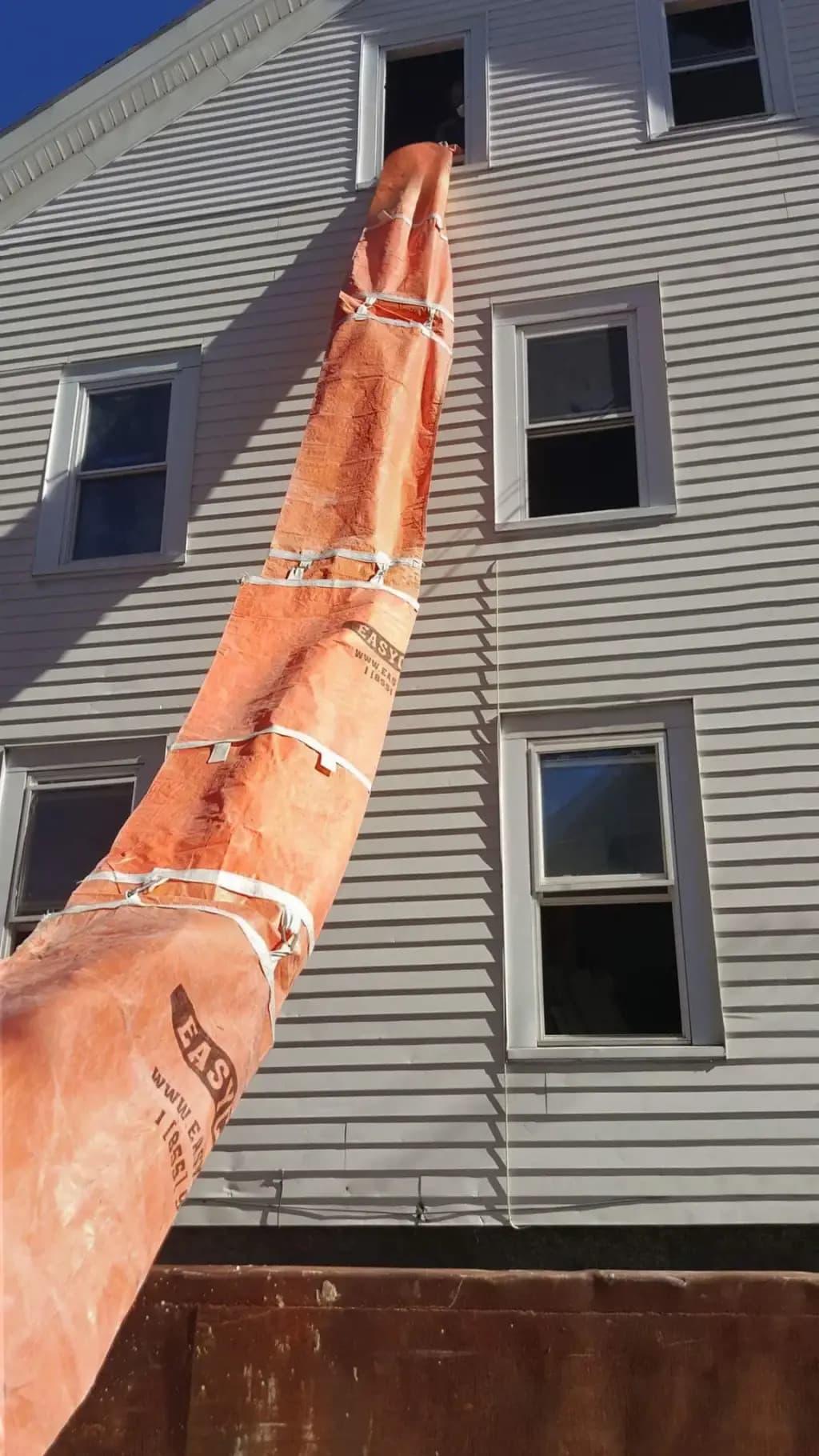
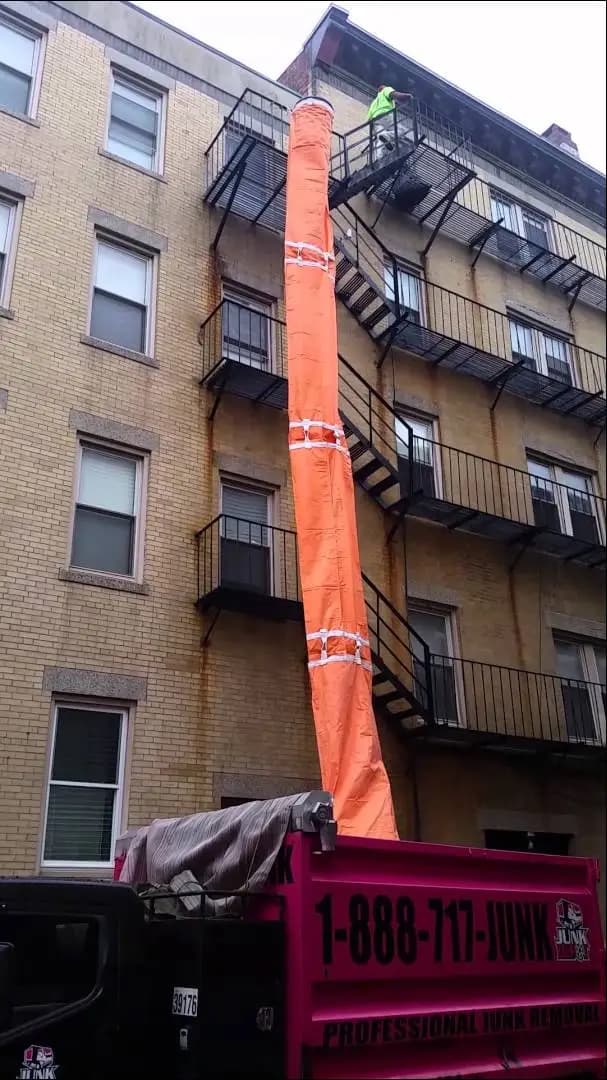
A construction trash chute is a flexible, cylindrical tube made in sections that connect end to end. You hang the top section from a roof edge, window frame, scaffold rail, or fire escape, then add more sections until the bottom opening sits just above a dumpster or debris pile on the ground. Workers feed debris into the top — loose shingles, broken drywall, old plaster, wood scraps, insulation — and gravity does the rest. The debris travels through the enclosed tube and drops into the container below without scattering across the job site.
Because the chute is fully enclosed, dust and debris stay contained instead of raining down on passersby, neighboring properties, or workers at ground level. That containment is not just a convenience — it's a legal requirement in certain situations (more on that under the OSHA section below).
Trash Shoot vs. Trash Chute: Why the Spelling Matters (a Little)
"Shoot" and "chute" are homophones — they sound the same — so the confusion is understandable. In everyday conversation, nobody cares. But if you're searching for products, specifications, or safety regulations, using the correct spelling (chute) will return far more useful results. Building codes, OSHA documents, and manufacturer spec sheets all use "chute." Now that you know, you're set.
Types of Construction Trash Chutes
Not all debris chutes are the same. Here's an honest overview of the main categories you'll find on the market:
- Rigid plastic chutes. Made from hard polypropylene or ABS sections that snap together. Durable but heavy, bulky to transport, and often require a frame or outrigger system to support their weight at the top.
- Steel chutes. Common on large commercial demolition sites. Very strong, but expensive, very heavy, and typically rented rather than purchased. Overkill for most residential or light commercial jobs.
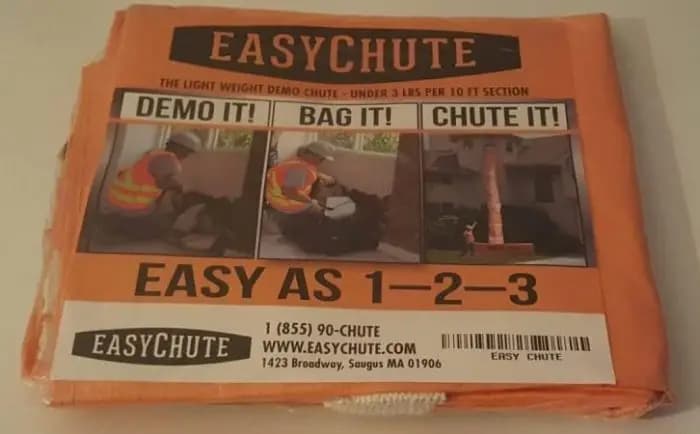
- Fabric / poly chutes. Made from woven, coated poly fabric. Lightweight, foldable, and reusable. Easy for one or two workers to hang without special equipment. EasyChute falls into this category — a fabric trash chute designed specifically for contractors, roofers, and remodelers who need a practical solution they can carry up a ladder.
For most residential remodels, roofing jobs, and light commercial work, a woven poly fabric chute hits the best balance of weight, price, and performance. If you're moving massive chunks of concrete or steel on a high-rise demo, a heavy steel chute or rental system may be more appropriate.
How to Choose the Right Trash Chute for Your Job
Three questions help narrow it down fast:
- How high is the drop? Measure (or estimate) the vertical distance from where you'll hang the chute to the top of your dumpster. Add a little extra so the bottom of the chute clears the ground and sits inside the container.
- What kind of debris are you moving? Lighter debris like insulation, drywall, and asphalt shingles work fine in a lite-duty chute. Heavier or sharper debris — broken plaster with wire lath, dense lumber, roofing nails — calls for a heavier-duty option.
- Will you reuse it on multiple jobs? If yes, invest in something that packs small, weighs little, and connects reliably section to section.
Sizing a Trash Chute by Story Height
A quick rule of thumb: one story ≈ 10 feet of chute. Here's how EasyChute sections map to common building heights:
- 10 ft section — one story. Good for a single-story ranch or a low roof edge. Available in Lite-Duty ($99) or Heavy-Duty ($149).
- 25 ft section — about two and a half stories. Covers most two-story homes with room to spare. The EasyChute 25 ft section is $277.
- 50 ft section — about five stories. Right for mid-rise apartment buildings, taller commercial projects, or any job where you need one long continuous run. The EasyChute 50 ft section is $596.
Sections connect loop-to-loop using carabiners or quick-connects, with a 1.5-foot overlap at every joint to keep dust and debris from escaping between sections. Middle shortening straps let you fine-tune the overall length without cutting anything.
Setting Up a Trash Chute: What You Actually Need
One of the biggest misconceptions about construction chutes is that they require elaborate hardware. For a lightweight poly chute like EasyChute, setup is straightforward:
- A hanging point. A window frame, roof edge, scaffold rail, or fire escape railing all work. The four woven connection loops at the top of the chute give you multiple anchor options.
- A hopper. A standard 32-gallon commercial trash can with the bottom removed fits neatly over the top of the chute and acts as a wide funnel. Workers toss debris into the can; it funnels into the chute.
- A dumpster or debris pile below. Position it so the bottom of the chute drops inside the container.
- No outriggers, frames, hoists, or rental crew required. One or two people can hang the system before the crew gets started.
At under 3 lbs for a 10 ft section and under 15 lbs for a 50 ft section, EasyChute sections are light enough to carry up a ladder. When the job is done, fold each section flat — a 10 ft section fits in a drawer or small box — and take it to the next job.
OSHA Rules and the 20-Foot Drop Requirement
If you're dropping debris more than 20 feet outside the exterior walls of a building, federal OSHA regulations require an enclosed chute. Specifically, OSHA 29 CFR 1926.252(a) states that when material is dropped more than 20 feet to any exterior point, an enclosed chute must be used. EasyChute meets or exceeds applicable OSHA regulations.
Even when a chute isn't legally required — say, on a single-story job — using one is good practice. It protects workers below, keeps debris off landscaping and neighboring property, and speeds cleanup by putting everything directly in the dumpster instead of spread across the yard.
Always check with your local building department about any state or municipal debris-management requirements that may apply to your specific project. Rules vary by jurisdiction, and what applies in one city may differ from the next.
Common Debris a Trash Chute Handles
EasyChute's woven, coated poly fabric is built for the everyday materials that fill dumpsters on residential and light commercial renovation sites:
- Asphalt roofing shingles
- Drywall sheets and scraps
- Plaster and lath
- Wood framing scraps and trim
- Batt and blown insulation
For jobs centered on roofing tear-offs, see our dedicated roofing chute page. For larger demolition projects, the demolition chutes page covers heavier-duty applications.
Why Contractors Choose EasyChute
EasyChute was created by a working remodeling contractor — Tim Hogan — alongside Leo Guarente of Junkster Bag and Junk Depot. That background shows in the design: no unnecessary hardware, no complicated setup, and sections light enough to carry up a ladder solo. The 22-inch diameter is wide enough to accept a full sheet of drywall on edge or a bundled armful of shingles without jamming.
Every EasyChute ships free to any job site in the United States. Order online at a fixed price — no quotes, no negotiations, no waiting for a sales rep to call back. If you have questions before you order, call 855-902-4883 (Mon–Fri, 8 AM–10 PM Eastern) or email orders@easychute.com.
Ready to stop tossing debris off the roof and start working smarter? Shop all EasyChute trash chutes and find the section length that fits your job.
Frequently asked questions
Is 'trash shoot' the same thing as a trash chute?
Yes — 'trash shoot' and 'trash chute' refer to the same product. They're homophones (same sound, different spelling). The correct industry term is 'chute,' which you'll find in product names, OSHA regulations, and building codes. If you searched 'trash shoot,' you're looking for a construction debris chute, and you're in the right place.
How many sections do I need for a two-story house?
A two-story home typically needs about 20–25 feet of chute. The EasyChute 25 ft section covers two and a half stories in one piece, making it a natural fit. If you need flexibility to adjust the length precisely, you can also combine two 10 ft sections and fine-tune the drop with the built-in middle shortening straps.
Do I need any special hardware or a crew to hang a trash chute?
No special hardware or rental crew is needed for EasyChute. The chute hangs from four woven loops at the top and attaches to a window frame, roof edge, scaffold rail, or fire escape using carabiners or quick-connects — both of which are widely available at hardware stores. A standard 32-gallon trash can with the bottom removed works as a hopper. One or two workers can have the system up and running quickly.
When does OSHA require a trash chute on a job site?
OSHA 29 CFR 1926.252(a) requires an enclosed chute whenever material is dropped more than 20 feet to any point outside the exterior walls of a building. EasyChute meets or exceeds applicable OSHA regulations. For any additional local or state requirements, check with your local building department, since rules can vary by jurisdiction.
Can I reuse the chute on multiple jobs?
Absolutely. EasyChute sections are designed to be reused job after job. When you're done, each section folds flat and packs small — a 10 ft section fits in a drawer or small box, and the entire 50 ft section weighs under 15 pounds. That makes it easy to toss in a truck and bring to the next project.