
Canvas Trash Chutes: What They Are, How They Work, and How to Choose the Right One
When contractors and roofers search for a canvas trash chute, they usually mean any fabric debris chute that hangs from a roof edge, window, or scaffold and channels waste straight down into a dumpster. The term "canvas" has stuck around from the days when these chutes were literally made of heavy canvas duck cloth — but most fabric chutes sold today, including EasyChute, are made from woven, coated poly fabric rather than traditional canvas. Understanding that difference helps you pick the chute that actually holds up on the job.
This page breaks down exactly what a canvas-style trash chute is, how it works, what materials are used in the industry today, how to size and rig one correctly, and what OSHA requires when you're dropping debris more than 20 feet. By the end, you'll know whether a true canvas chute, a poly-fabric chute, or something else fits your project — and you'll be able to order the right product without a phone call or a quote.
Shop EasyChute trash chutes

Free shipping on every order. See the full shop.
What Is a Canvas Trash Chute?
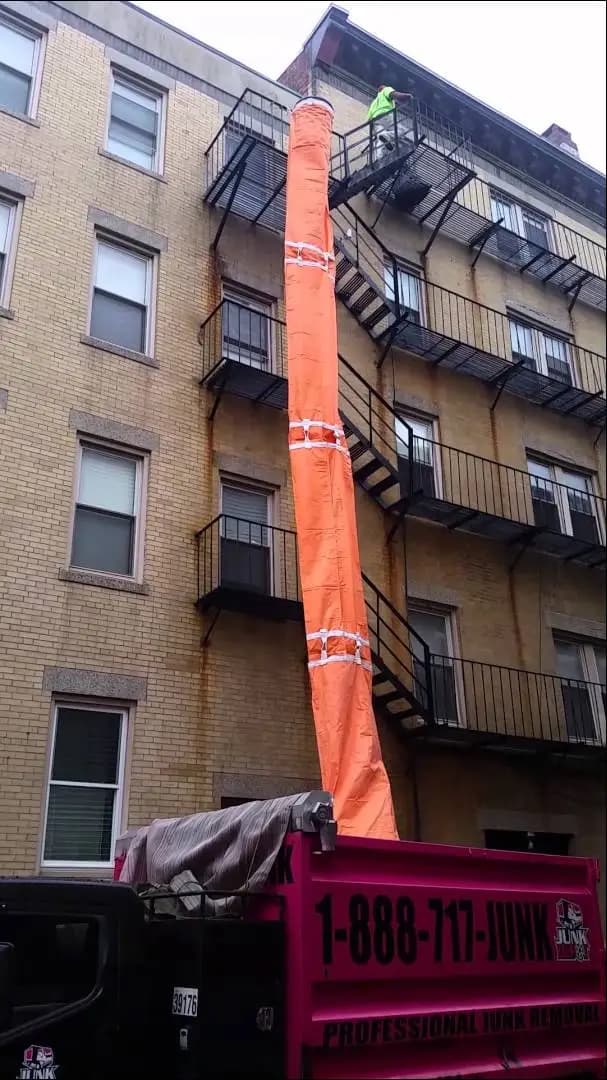
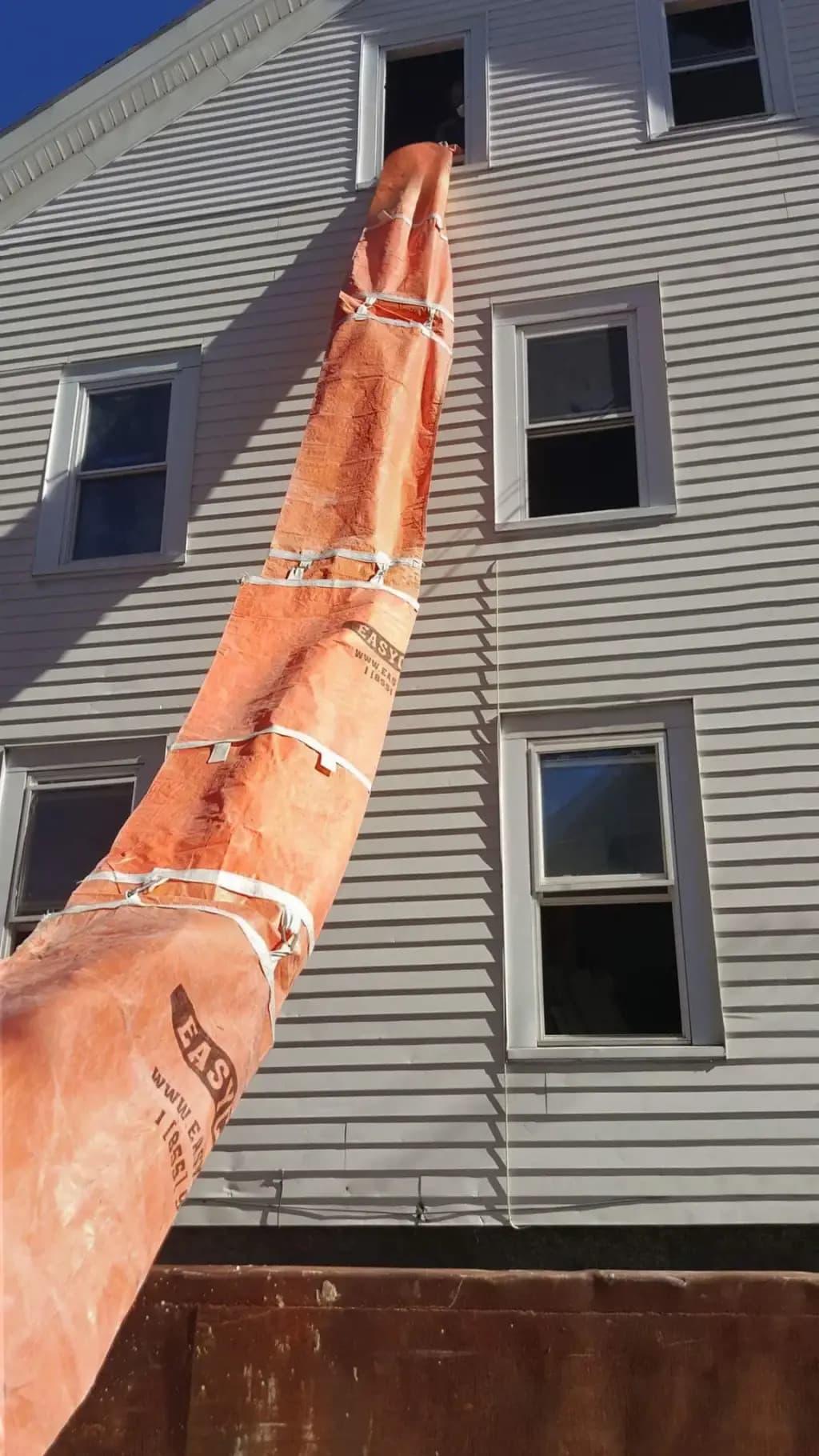
A canvas trash chute is a flexible, cylindrical tube that connects to the side of a building — typically at a window, roof edge, fire escape, or scaffold — so that construction debris can be fed in at the top and slide safely down into a dumpster or roll-off container below. The original versions were sewn from heavy canvas duck, the same rugged woven cotton fabric used for tarps and tool bags. Canvas was cheap, strong, and easy to sew into a tube. The name stuck even as the materials evolved.
Today, most professional-grade fabric debris chutes are manufactured from synthetic woven fabrics — usually coated polyethylene or polypropylene — because they're lighter, easier to fold and store, and more tear-resistant than cotton canvas. When you see a contractor or supplier use the phrase "canvas trash chute," they almost always mean this broader category of hanging fabric chutes, regardless of what the material actually is.
If you want a deeper side-by-side look at how the materials stack up, see our canvas vs. poly trash chute comparison.
How a Fabric Debris Chute Works
The mechanics are simple, which is a big part of why these chutes have been standard on job sites for decades.
- Hang the top section. Use the built-in connection loops to anchor the chute to a window frame, roof edge, scaffold rail, or fire escape railing. No outrigger, crane, or rental crew needed.
- Add a hopper. A standard 32-gallon commercial trash can with the bottom removed fits neatly over the top opening to act as a hopper. Workers feed debris into the can, and it drops straight into the chute.
- Connect additional sections. If your drop is longer than one section, link sections together loop-to-loop using carabiners or quick-connect hardware. Each joint overlaps by about 1.5 feet, keeping dust and debris contained instead of billowing out at every connection.
- Adjust length with shortening straps. Middle shortening straps let you fine-tune the hanging length so the chute's bottom opening lands right over the dumpster opening — no guessing, no ladder adjustments mid-job.
- Clear debris at the bottom. Position a dumpster or roll-off directly below. The chute drops material cleanly, keeping your site cleaner and your crew safer than tossing debris over the side.
When the job is done, fold the sections down, coil or stack them, and store them for the next project. A good fabric chute is reusable job after job.
Canvas vs. Woven Coated Poly: Honest Material Comparison
If you're shopping for a fabric trash chute, here's an honest look at how traditional canvas and modern coated poly compare on the factors that matter on a job site.
Weight and Portability
Canvas is heavier pound-for-pound than coated poly fabric. For a one- or two-story drop that might not matter much, but for taller buildings where you're hanging 25, 50, or more feet of chute, weight adds up fast. EasyChute's 50 ft section weighs under 15 lbs and folds down small enough to haul in a truck bed or van without dedicating a whole cargo area to it. A comparable length of traditional canvas can weigh significantly more and won't fold nearly as flat.
Tear Resistance
Modern woven, coated poly fabric is tear-resistant by design — the weave structure resists propagation once a cut or snag starts. Traditional canvas can also be tough, but uncoated cotton is more prone to moisture absorption and degradation over repeated use in a rough environment. Coated poly keeps its structure even after handling sharp debris like broken plaster lath, metal flashing trimmings, or roofing nails.
Storage and Setup
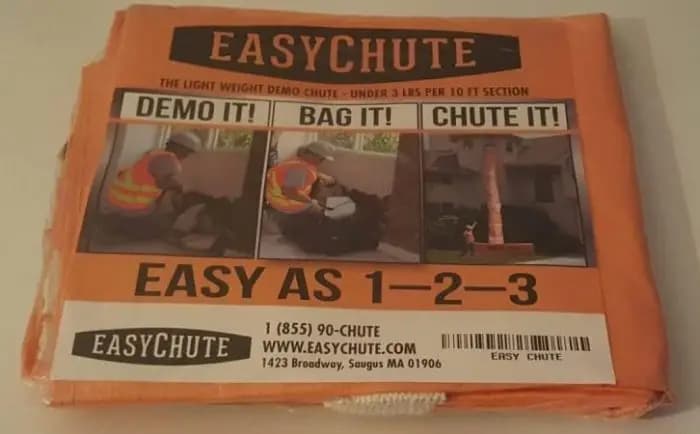
A coated poly chute folds flat and stores in a small space — EasyChute's 10 ft section fits in a drawer or a small box. That kind of packability means you can keep a full chute kit in a truck without sacrificing space for tools. Canvas chutes tend to be bulkier and stiffer when folded.
Cost
Canvas chutes, particularly custom-sewn heavy-duty versions, can carry a premium price. Coated poly chutes like EasyChute are sold at fixed, transparent prices with no custom-order lead time — you see the price, you order, it ships to your job site.
For a full breakdown on pricing across fabric chute types, visit our canvas vs. poly cost comparison page.
How to Size a Canvas Trash Chute for Your Project
Getting the length right is the most important buying decision. Measure or estimate the vertical drop from where the chute will hang to the top of your dumpster. Then choose sections that add up to that distance, with a little extra so the bottom clears the rim cleanly.
- 10 ft section ≈ one story. The EasyChute Lite-Duty 10 ft Section ($99) works well for single-story residential work. If debris is heavier — shingles, dense plaster, concrete rubble — the Heavy-Duty 10 ft Section ($149) handles the load.
- 25 ft section ≈ two and a half stories. The EasyChute 25 ft Section ($277) is a common choice for two- and three-story residential and light commercial projects.
- 50 ft section ≈ five stories. The EasyChute 50 ft Section ($596) covers mid-rise work or any project where the drop is substantial. Sections can also be combined — connecting a 25 ft and a 10 ft section, for example, covers a three-and-a-half-story drop.
All EasyChute sections share the same 22-inch diameter and the same four-loop connection system, so mixing and matching lengths on the same job site is straightforward.
Not sure which setup fits your job? Browse the full lineup at our shop or call us at 855-902-4883, Monday through Friday, 8 AM to 10 PM Eastern.
OSHA Requirements for Debris Chutes
If you're dropping construction material from height, OSHA 29 CFR 1926.252(a) is the rule you need to know: when material is dropped more than 20 feet to any point outside the exterior walls of a building, an enclosed chute must be used. That's a hard federal requirement on covered job sites, not a suggestion.
All EasyChute sections meet or exceed applicable OSHA regulations. The overlapping joints at every connection keep debris inside the chute rather than raining outward — which is exactly what the enclosed-chute requirement is designed to prevent.
Even on drops under 20 feet, a chute is good practice. It keeps the work area cleaner, protects workers and passersby below, and reduces the time your crew spends moving debris away from the building. For more on safe chute rigging, see our construction chute guide.
Common Uses for a Canvas-Style Debris Chute
Fabric debris chutes handle a wide range of renovation and construction waste:
- Roofing tear-offs: Shingles, underlayment, and flashing drop cleanly from the eave into a dumpster below. See our dedicated roofing chute page for setup tips specific to roof work.
- Interior demo: Drywall, plaster and lath, and wood framing scraps — feed it in from a second- or third-floor window and skip the trips down the stairs.
- Insulation removal: Blown-in or batt insulation is dusty and light. A sealed chute keeps the mess contained rather than spreading it across the yard.
- General remodeling cleanup: Kitchen and bathroom gut-outs produce a surprising volume of bulky waste. A chute makes the haul-out fast and controlled.
For larger, heavier demolition loads, visit our demolition chutes page for guidance on the right section weight and rigging approach.
Why EasyChute Instead of a True Canvas Chute
EasyChute isn't canvas — it's woven, coated poly fabric, and that's intentional. The co-founders, remodeling contractor Tim Hogan and Leo Guarente, built EasyChute around what working contractors actually need: a chute that's light enough to carry up a ladder, tough enough to handle real demolition debris, easy to connect without special tools, and simple enough to order online at a fixed price with free shipping to any U.S. job site.
There's no rental paperwork, no deposit, no minimum order, and no quote process. Order today, it ships to your job site anywhere in the United States. Every order ships free.
Have questions before you order? Visit our FAQ page or reach us at orders@easychute.com.
Ready to Order?
Browse every section length and both duty ratings at easychute.com/shop. All orders ship free to any U.S. address — no minimums, no hidden fees, fixed prices every day.
Frequently asked questions
Is EasyChute actually made of canvas?
No. EasyChute is made from woven, coated poly fabric, not traditional canvas. Contractors often search for "canvas trash chute" because that's the historic name for this type of product, but most modern fabric chutes — including EasyChute — use coated poly fabric because it's lighter and tear-resistant. The term canvas has become a generic label for hanging fabric debris chutes of any material.
What OSHA rule applies to trash chutes on construction sites?
OSHA 29 CFR 1926.252(a) requires that when material is dropped more than 20 feet to any point outside the exterior walls of a building, an enclosed chute must be used. EasyChute sections meet or exceed applicable OSHA regulations. If you're unsure about permit or inspection requirements for your specific project location, check with your local building department.
How do I know how many sections to order?
Estimate the vertical drop from your anchor point to the top of your dumpster. A 10 ft section covers roughly one story, a 25 ft section covers about two and a half stories, and a 50 ft section covers about five stories. EasyChute sections connect loop-to-loop with carabiners, so you can combine lengths to match your exact drop. It's better to order a little extra length — the shortening straps let you fine-tune the fit.
Can I connect multiple EasyChute sections together?
Yes. Every EasyChute section has four woven connection loops at the top and four at the bottom, so sections connect to each other using carabiners or quick-connect hardware. Each joint overlaps 1.5 feet to keep dust and debris inside the chute. You can mix and match 10 ft, 25 ft, and 50 ft sections on the same job.
Does EasyChute ship to my state?
EasyChute ships to job sites anywhere in the United States, with free shipping on every order. Orders are placed online at fixed prices — no quote required. You can also reach the team by phone at 855-902-4883, Monday through Friday, 8 AM to 10 PM Eastern, or by email at orders@easychute.com.