
If you're a contractor, roofer, or junk removal pro working in Fitchburg, MA, you've probably asked yourself some version of the same question before every debris-heavy job: Is it cheaper to rent a debris chute or just buy one outright? And if you rent, what should you actually expect to pay?
The Fitchburg market — covering the Route 2 corridor, the old mill districts, the three-deckers near Main Street, and the commercial strips pushing out toward Westminster — has its own pricing dynamics. Rental houses in central Massachusetts don't always stock construction chutes, lead times can stretch days, and hidden fees have a way of appearing on invoices after the job is done.
This guide breaks down every cost factor you need to budget accurately, compares rental to purchase, and gives you a clear framework for choosing the right debris management approach for your Fitchburg job site.
What Is a Debris Chute and Why Does It Matter on Fitchburg Job Sites?
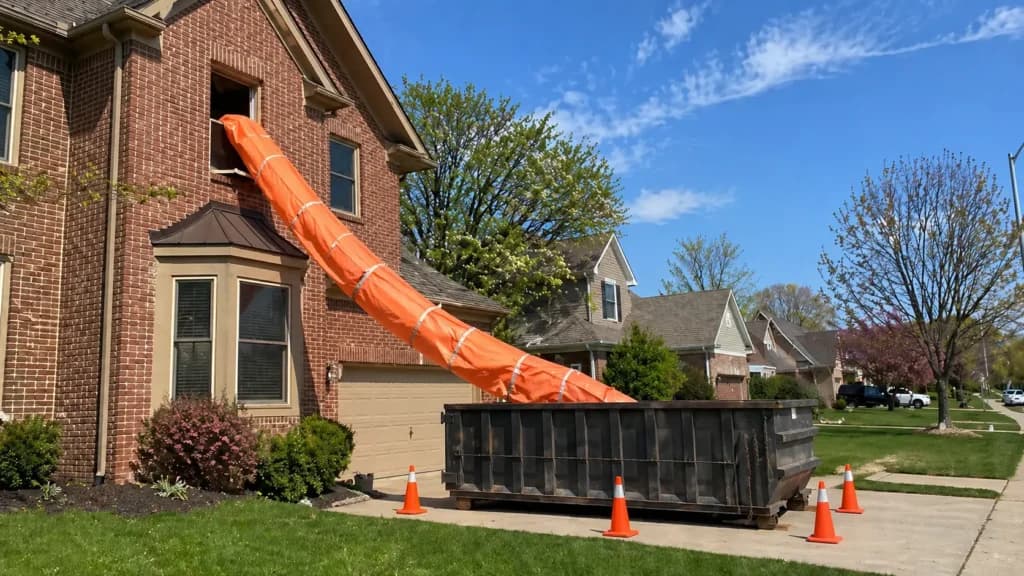
A debris chute is a gravity-fed tube — fabric, poly, or steel — that channels demolition waste, roofing shingles, drywall, or general debris from an upper floor straight into a dumpster on the ground. Instead of carrying heavy loads down ladders or tossing debris over railings (both OSHA violations waiting to happen), workers load the chute at height and let gravity do the rest.
Fitchburg's housing stock is heavy on two- and three-story wood-framed buildings, older brick commercial blocks near the downtown district, and aging multi-family properties that are cycling through renovation. These structures almost always require vertical debris management — you can't bucket-brigade three floors of plaster and lath without someone eventually getting hurt or dropping debris on a neighbor's property.
The OSHA Dimension
According to OSHA's construction industry standards, debris dropped from heights above six feet requires containment controls. An unsecured debris toss from a third-story window isn't just dangerous — it can result in citations and project shutdowns. A properly installed chute is one of the clearest, lowest-cost ways to meet that standard without a scaffold overhaul.
The Volume Reality in Central Massachusetts
The EPA estimates that construction and demolition debris accounts for more than 600 million tons of material generated annually in the United States. On a typical Fitchburg gut renovation — say, a 1,500 square foot three-decker floor — you can easily move two to four tons of plaster, framing, and insulation. Managing that volume safely is not optional.
The Real Cost of Renting a Debris Chute in Fitchburg, MA
Let's put actual numbers on the table. Rental pricing for construction chutes in the Fitchburg-to-Worcester corridor generally looks like this in 2026:
- Daily rental rate: $40–$90 per day for a basic fabric or poly chute system
- Weekly rental rate: $150–$300 per week depending on chute length and equipment provider
- Delivery fee: $50–$150 each way, depending on distance from the rental depot
- Pickup fee: Often the same as delivery, billed separately
- Damage deposit: $100–$500 held until equipment is inspected on return
- Late return penalty: $25–$75 per day beyond the reserved window
- Cleaning fee: $50–$150 if the chute is returned without being hosed out
Add it up for a one-week roofing job in Fitchburg: $200 weekly rate + $100 delivery + $100 pickup + $100 deposit = $500 in total cost before you've run a single bundle of shingles down the chute. If the job runs two days long, you're looking at another $60–$90 in overage fees.
The Hidden Cost Nobody Talks About: Scheduling Friction
Central Massachusetts rental yards serving the Route 2 and Route 12 corridors typically prioritize scaffolding and heavy equipment. Debris chutes often sit behind those in the dispatch queue. If you need a chute on Monday and the earliest delivery is Wednesday, you're either delaying the job or having workers improvise — neither is acceptable on a tight commercial timeline.
How Fitchburg Job Sites Differ from Boston-Area Sites
Boston contractors have a dense network of equipment suppliers within close range. Fitchburg sits about 50 miles northwest of Boston, which means rental yards are fewer, delivery zones are wider, and delivery fees reflect that geography. What costs $50 to deliver in Somerville may cost $120 or more delivered to a Fitchburg address.
The local construction ecosystem also skews toward smaller, independent crews — not large GCs with long-term rental accounts. That matters because many rental houses offer better pricing to volume customers. An independent Fitchburg contractor doing 15–20 jobs per year pays rack rate almost every time.
Regional Alternatives Worth Knowing
Contractors in Fitchburg sometimes drive to Leominster or Worcester to pick up rental equipment directly, bypassing delivery fees. This works if you have a truck that can handle the load and your crew isn't time-constrained. But the pickup-and-return round trip can eat two to three hours of billable time — a cost that rarely gets calculated properly when comparing rental vs. purchase options.
Buying vs. Renting: The Break-Even Math for Fitchburg Contractors
Here's the calculation most contractors should do once and remember forever. A quality reusable fabric debris chute — the kind designed for real job-site use, not a one-and-done poly sleeve — runs roughly $150–$400 depending on length and duty rating. Fabric trash chutes in particular are designed to fold down small, reuse hundreds of times, and hold up under serious debris loads.
If a single rental episode in Fitchburg costs you $400–$500 all-in (as shown above), you reach break-even on a purchase after one or two jobs. Every job after that, you're running at zero chute cost.
- Job 1: Purchase cost absorbed — roughly equivalent to renting once
- Job 2: Full savings vs. rental (roughly $400–$500 back in your pocket)
- Job 10: Cumulative savings of $3,500–$4,500 compared to renting every time
- Job 25: Savings of $9,000+ over the life of the chute
That math gets even more compelling if you're a roofer doing 40+ tear-offs per season or a junk removal crew working Fitchburg and the surrounding towns — Leominster, Gardner, Lunenburg, Westminster — every week.
When Renting Actually Makes Sense
Renting is the right call in a narrow set of scenarios:
- You're doing a one-time job with no recurring debris work expected
- The job requires a specialty length or configuration you don't own
- Your storage situation genuinely can't accommodate any additional gear
- You're testing debris chute workflows before committing to a purchase
Outside those situations, ownership almost always wins on total cost.
Choosing the Right Chute Length for a Fitchburg Building
Fitchburg's residential stock runs mostly two to four stories. Commercial buildings near the downtown and along Water Street can go higher, but most renovation work happens in the two- to three-story range. Here's how to size your chute correctly:
- 10 ft section: Ideal for single-story work or as an add-on connector section
- 25 ft section: Covers two-story residential work with comfortable clearance to a dumpster
- 50 ft section: Three-story and above, or any job where the dumpster sits back from the building face
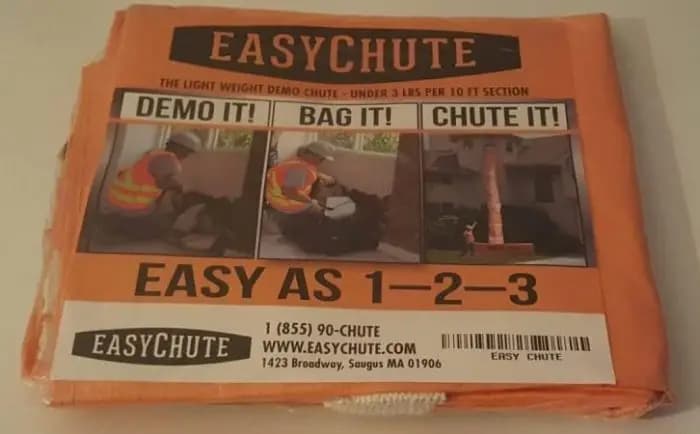
EasyChute sections connect with a 1.5 ft overlap and hang from four woven loops using standard carabiners — no tools, no complicated rigging. A single 25 ft section weighs under 10 lbs and fits in a small box. One person can hang and strike the chute in minutes, which matters when your crew is paid by the hour.
For more detail on sizing and setup specific to roofing projects, see the roofing trash chute guide.
What a Real Debris Chute Rental Invoice Looks Like
To make this concrete, here's a sample invoice breakdown for a three-day shingling job on a two-story house in Fitchburg's east side:
- Chute rental (3 days at $60/day): $180
- Delivery from Worcester-area depot: $110
- Pickup: $110
- Damage deposit (refundable, held 7–10 business days): $200
- Cleaning fee (chute returned with debris residue): $75
- Total charged to card at checkout: $675
- Deposit returned (2 weeks later): $200
- Net cost: $475
That's $475 for three days of chute access on a job that took a two-person crew one day to finish. The schedule slipped because the chute didn't arrive until day two. The crew improvised a tarp-and-bucket system on day one — which is exactly the kind of workaround that leads to worker injuries and neighbor complaints.
EasyChute vs. Traditional Rental: A Side-by-Side Look
For Fitchburg contractors evaluating their options, here's a direct comparison between renting from a regional equipment house and purchasing an EasyChute fabric chute system:
- Upfront cost: Rental = $0 upfront, but $400–$700 per use total. EasyChute = $150–$400 purchase, near-zero ongoing cost.
- Availability: Rental = subject to depot stock and scheduling. EasyChute = ships free, arrives at your job site address.
- Weight: Steel or rigid-poly rental chutes = 20–80 lbs per section. EasyChute 10 ft section = under 3 lbs.
- Setup time: Rental = often requires multiple workers and hardware. EasyChute = one person, carabiners, minutes.
- Storage: Rental chutes go back to the depot. EasyChute folds into a small box, fits in any truck.
- Reuse: Rental is single-use from your cost perspective. EasyChute is yours to use job after job.
The debris chute vs. poly chute comparison guide breaks down material differences in more technical detail if you want to go deeper on that angle.
OSHA, Safety, and Debris Chutes on Massachusetts Job Sites
Massachusetts enforces OSHA construction standards through the state's Department of Labor Standards. For debris management, the key compliance considerations are:
- Debris dropped more than 20 feet must be enclosed in a chute
- Chutes must discharge into enclosed containers or areas with barriers to prevent bystander contact
- Workers loading chutes must not lean over unguarded edges without fall protection
- Ground workers must stay clear of the chute discharge zone
OSHA's ergonomics guidelines also note that repetitive heavy lifting — like carrying debris down multiple flights of stairs — is a leading cause of musculoskeletal injuries in construction. A properly installed chute eliminates that exposure entirely.
What Inspectors Look for in Fitchburg
Local building officials and OSHA area offices serving North-Central Massachusetts pay particular attention to debris management on renovation projects in densely settled residential neighborhoods. Fitchburg's tight streetscapes — especially around the Cleghorn, Highlands, and upper Main Street neighborhoods — leave little margin for debris landing outside a controlled drop zone. A chute that directs material directly into a dumpster is both a compliance tool and a neighbor-relations tool.
Environmental Considerations for Debris Disposal in Fitchburg
Fitchburg contractors working on pre-1978 properties need to be particularly aware of lead paint and asbestos-containing materials in debris streams. Proper chute use keeps regulated materials contained during the drop, reducing the risk of cross-contamination across the job site. Once material is in the dumpster, licensed hazardous-waste haulers can handle segregated loads.
Beyond hazardous materials, the EPA's materials waste and recycling data shows that concrete, wood, and metals make up the bulk of C&D debris by weight — all of which can be recycled or diverted from landfill when separated. A chute that deposits debris cleanly into a dedicated dumpster makes sorting and recycling far easier than material scattered across a job site.
How to Budget Debris Chute Costs into Your Fitchburg Bids
Most Fitchburg contractors who've been around a few seasons know to line-item debris removal in their proposals. But debris management — meaning the equipment and labor needed to move material from upper floors to the dumpster — often gets absorbed into general overhead rather than itemized. That's a mistake, and it's especially costly on multi-day jobs.
A Simple Line-Item Framework
When building your bid for any Fitchburg project with upper-floor demo or roofing work, include these cost buckets explicitly:
- Dumpster rental: Sourced locally from haulers serving the Fitchburg area. Budget $350–$600 for a 10-yard roll-off for most residential jobs.
- Debris chute: If renting, budget $400–$700 all-in per mobilization. If you own an EasyChute, this line item drops to near zero after your initial purchase.
- Setup and strike labor: One person, 30–60 minutes for EasyChute. Longer for heavy rental systems. Bill it at your standard labor rate.
- Disposal fees: Tipping fees at area transfer stations vary; get current rates from your hauler.
Itemizing these costs not only protects your margin — it also signals professionalism to clients who are comparing bids. A contractor who can explain exactly where debris goes and how it's managed is a contractor who wins trust.
Passing Through vs. Absorbing Equipment Costs
If you own your chute, you have a choice: absorb the cost as overhead (essentially free after break-even) or pass through a modest equipment-use fee per job. Either approach is defensible. Some contractors charge $50–$100 per job as a debris management fee, which builds long-term equipment replacement funds while keeping bid totals competitive.
Practical Tips for Installing a Debris Chute on Fitchburg Buildings
Fitchburg's building stock presents some specific installation challenges worth knowing before you show up on site:
- Triple-deckers with small window openings: Older three-family homes often have double-hung windows with narrow rough openings. Confirm your chute diameter fits the opening before job day. EasyChute's fabric design is flexible enough to thread through tight spots that rigid chutes can't navigate.
- Brick facades: Downtown commercial blocks have masonry walls with no easy anchor points. Plan to use a window frame, roof edge, or scaffold rail as your hanging point. Woven loop hangers with carabiners give you flexibility on anchor location.
- Grade changes: Fitchburg's terrain is hilly. Buildings on sloped lots may need the chute angled carefully so the discharge end clears the dumpster opening. A 10 ft extension section can fine-tune the drop distance.
The step-by-step EasyChute installation guide walks through setup in detail for a range of building types. The EasyChute video library shows actual installs in real job-site conditions.
Neighboring Markets: Debris Chute Costs Across North-Central Massachusetts
If you're a contractor based in Fitchburg but working across the region, it's useful to know that pricing patterns are consistent across North-Central Massachusetts. Whether you're working in Gardner, Leominster, Athol, or Orange, the rental cost dynamics are similar: limited local stock, delivery fees that reflect distance, and rack-rate pricing for most independent crews.
Owning your chute eliminates all of that geographic variation. Your chute travels with your truck. The dumpster is the only third-party cost that changes by location.
For contractors working into neighboring states, the Rhode Island debris chute setup guide and the Connecticut winter maintenance checklist cover regional nuances you'll find useful as your work expands.
Frequently Asked Questions
How much does it cost to rent a debris chute in Fitchburg, MA?
All-in rental costs in the Fitchburg area typically run $400–$700 per mobilization when you factor in the daily or weekly rate, delivery, pickup, deposit, and potential cleaning fees. Daily rates alone average $40–$90, but that figure understates true cost significantly. Delivery from regional depots in Worcester or Leominster adds $100–$150 each way. Contractors doing more than one or two debris jobs per year almost always come out ahead buying a reusable chute system outright.
Is it better to buy or rent a debris chute for a Fitchburg roofing job?
For most roofing contractors in Fitchburg, buying wins after the first or second use. A quality fabric chute system can be purchased for roughly the same cost as a single rental episode — sometimes less. After that, you own an asset that travels with your crew to every job, sets up in minutes, and eliminates all the scheduling friction that comes with depot rentals. The only scenario where renting makes sense is a genuine one-time project with no expectation of repeat debris work.
What length debris chute do I need for a typical Fitchburg triple-decker?
A 25 ft section typically covers a two-story drop with clearance to get material into a standard roll-off dumpster positioned at the building's base. For a true three-story triple-decker — floor-to-eave heights of 30 to 35 feet are common in Fitchburg's older housing stock — a 50 ft section or two connected 25 ft sections gives you proper reach. Always measure from your intended hang point to the top of the dumpster opening before ordering. EasyChute sections connect with a 1.5 ft overlap, so it's easy to customize total length.
Does EasyChute ship to Fitchburg, MA?
Yes. EasyChute ships free to job sites across the United States, including Fitchburg and the surrounding North-Central Massachusetts area. Orders are placed online at fixed prices with no negotiation required. Because the chutes are lightweight — a 10 ft section weighs under 3 lbs — they ship efficiently and arrive quickly without the freight complications of heavier equipment. Contact the team through the EasyChute website if you have questions about specific delivery timelines or bulk orders for larger crews.
Are fabric debris chutes OSHA-compliant for Massachusetts job sites?
Yes, fabric debris chutes can meet OSHA construction safety standards when properly installed and used. The key requirements are that debris dropped from height is contained, that ground workers stay clear of the discharge zone, and that workers loading the chute at height have appropriate fall protection. A well-hung fabric chute that directs material straight into an enclosed dumpster satisfies the primary containment requirement. Always consult OSHA's construction standards and your project-specific safety plan for the full compliance picture on any given site.
How do I account for debris chute costs in my contractor bids?
The cleanest approach is to line-item debris management separately from general labor and dumpster rental. If you rent, budget $400–$700 per mobilization as a hard cost. If you own your chute, you can either absorb it as overhead after the break-even point or charge clients a modest equipment-use fee of $50–$100 per job. Itemizing this cost shows clients you've thought through the full scope of the job and distinguishes your proposal from competitors who bury debris costs in vague line items.
Can one person set up an EasyChute on a Fitchburg job site?
Yes. EasyChute was specifically designed for single-person setup. The fabric sections are lightweight — under 3 lbs for a 10 ft section — and hang from four woven loops using standard carabiners or quick-connects that any crew member will already have on hand. There is no special rigging or additional hardware required. Most experienced users can hang and secure a chute in under 15 minutes, and striking it at the end of the job takes even less time. This matters on smaller crews where every worker-hour is accounted for.
Ready to Stop Paying Rental Fees on Every Job?
If you're running debris-heavy jobs in Fitchburg — roofing tear-offs, interior gut renovations, commercial demo — the math on chute rental vs. ownership is clear. You're likely spending $400–$700 per rental episode on a piece of equipment you could own outright for a similar price and reuse indefinitely.
EasyChute ships free to your Fitchburg job site, sets up in minutes, and weighs less than most of the tools already in your truck. Learn more about how EasyChute was built for working contractors, explore the canvas trash chute options, or check out the construction chute guide to see how other crews are using it on multi-story sites just like yours.
When you're ready to order, visit the EasyChute contact page or head straight to the product listings. Free shipping. Fixed prices. One purchase that pays for itself the first time you skip the rental call.