

If you have ever priced out a debris removal system for a multi-story job and come back with two wildly different quotes, you already know the market is not clean. One vendor calls it a debris chute. Another calls it a poly chute. A third offers a fabric chute. Are these the same thing? Are they not? And which one actually belongs on your job site in 2026?
This guide cuts through the naming confusion and gives you a direct, specification-level comparison of debris chutes and poly chutes — what each is made of, how each performs under real contractor conditions, what each costs to own, and which one makes sense for roofers, gut-demo crews, junk removal operators, and renovation contractors working at different heights and volumes.
What Is a Debris Chute, Really?
The term debris chute is a broad category term. It describes any tube, sleeve, or channel system designed to move construction and demolition waste from an elevated work area down to a ground-level receptacle — typically a dumpster or a junk bag. The category includes rigid plastic chutes, heavy galvanized metal chutes, fabric chutes, and coated poly-fabric chutes.
What they all share: a roughly cylindrical profile, a hanging or anchoring mechanism at the top, and gravity as the engine. Beyond that, the differences in material, weight, durability, and cost are significant — and those differences determine which system is right for a given trade.
The Range of Debris Chute Materials
- Rigid plastic (ABS or HDPE): Molded sections that lock together. Common on high-rise scaffolded builds.
- Galvanized steel: Heavy-duty, typically rented from scaffold companies. Built for extreme volume and very tall drops.
- Coated woven poly fabric: Lightweight, foldable sections. Built for portability and reuse on mid-rise and residential projects.
- Canvas: An older category. Heavier than modern poly fabric, less water-resistant, increasingly rare on job sites.
Understanding this range matters because when a supplier says "debris chute" they might mean any of the above. Getting specific about material and configuration before you buy or rent is not optional — it determines your cost per job, your setup time, and your OSHA compliance picture.
What Is a Poly Chute Specifically?
A poly chute refers specifically to chutes made from polyethylene, polypropylene, or poly-coated woven fabrics. In practice, the term covers two subtly different products:
- Rigid poly chutes: Injection-molded or extruded sections, usually 18 to 22 inches in diameter, that clip or bolt together. These are heavier per section than fabric but more rigid — debris slides through without bunching.
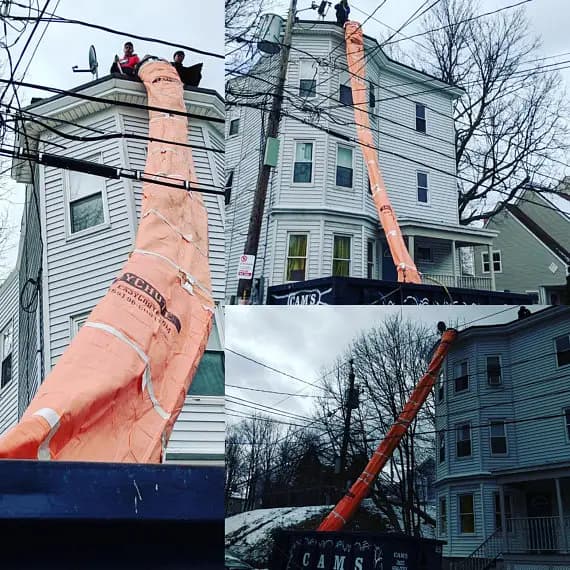
- Woven poly-fabric chutes: Sections made from the same coated woven polypropylene used in heavy-duty tarps and bulk bags. Lightweight, foldable, and strong. This is the category EasyChute occupies.
The confusion between these two sub-types is real. When contractors search for a "poly chute" they may be comparing apples to oranges — a rigid injection-molded rental unit versus a lightweight ownable fabric system. Section weights differ by a factor of three to five, which matters enormously on a roofing crew or a junk removal run where one person sets up solo.
Why the Naming Matters for Purchasing Decisions
Buying the wrong system because of naming confusion is a genuine, repeated mistake in this industry. A roofer who orders rigid poly sections expecting something like a fabric chute will receive a product that is three times heavier and requires two people to hang. Always ask suppliers for the section weight in pounds, the material spec, and the intended use height before committing.
Side-by-Side: Debris Chute vs Poly Chute — Core Specifications
The table below treats the debris chute category as the traditional rigid plastic or galvanized rental chute and the poly chute category as a modern woven-poly fabric chute — the most common real-world comparison contractors face in 2026.
- Weight per 10-foot section: Rigid debris chute: 15–25 lbs. Woven poly fabric chute: under 3 lbs.
- Setup crew required: Rigid: 2–3 workers. Poly fabric: 1 worker.
- Storage footprint: Rigid: requires a truck bed or trailer. Poly fabric: folds into a small box, fits in a cargo van or trunk.
- Section connection method: Rigid: molded clips or bolt flanges. Poly fabric: 1.5-foot overlap with carabiners or quick-connects.
- Ownership vs rental: Rigid: almost always rented. Poly fabric: purchased once, reused job after job.
- Suitable drop height: Rigid: up to 150+ ft (scaffold systems). Poly fabric: typically 10–100 ft when sections are combined.
- Durability: Rigid: excellent per use, but scratches and cracks under repeated drops. Poly fabric: abrasion-resistant coating, rated for repeated use.
- Cost to contractor per job: Rigid rental: $80–$300+ per day depending on height. Poly fabric: fixed purchase cost, amortizes to near zero over many jobs.
These specs explain why woven poly-fabric chutes have taken market share from rigid rental systems on residential and mid-rise commercial work. The economics shift decisively once a crew runs more than a handful of jobs per year. You can read more about how these systems compare from an ownership standpoint in the debris chute rental vs. EasyChute breakdown.
Weight and Portability: Why This Is the Number-One Contractor Concern
Ask any experienced roofer what slows down a tear-off and debris removal will be near the top of the list. Ask what makes debris removal slower than it has to be, and weight of the equipment itself comes up immediately. This is where the poly-fabric category wins decisively over rigid alternatives.
What Under-3-Pound Sections Actually Mean on the Job
A single worker can carry a 10-foot EasyChute section in one hand. That means no waiting for a second crew member to hang the chute, no separate equipment trip from the truck, and no scaffold time spent wrestling heavy sections into position. On a single-day roofing job where setup speed directly affects how many square feet get torn off before the dumpster swap, this is not a minor advantage.
The Cumulative Weight Problem on Multi-Section Setups
If you are running a 50-foot drop — say, a four-story gut renovation — a rigid poly section setup might require five or six sections weighing 15 to 25 lbs each. That is 75 to 150 lbs of equipment to haul up to the hang point. A woven poly-fabric system covering the same height weighs under 15 lbs total for the same number of sections. That difference shows up in OSHA ergonomics considerations around repetitive heavy lifting, and it shows up in crew fatigue by the end of the day. OSHA's ergonomics guidelines are clear that reducing manual load weights reduces injury risk — and an injured crew member is a job stoppage.
Durability and Reuse: Which System Survives the Job-Site Reality?
Durability is the argument most often made in favor of rigid poly or galvanized debris chutes. The counterargument — that woven poly fabric is not durable enough for contractor use — does not hold up against the actual material science.
How Woven Coated Poly Fabric Actually Performs
The coated woven polypropylene used in quality fabric chutes is the same material class used in heavy-duty tarps, bulk bags (the kind that carry a ton of soil or gravel), and industrial protective covers. It is abrasion-resistant, UV-stabilized, and water-resistant. It is not a garbage bag material. When debris slides through a properly hung fabric chute, the load is distributed across the entire tube surface rather than hammering a single hard shell — which actually reduces stress concentrations at seams.
Where Rigid Systems Have the Durability Edge
Rigid systems do hold up better under one specific condition: very high-volume concrete and masonry debris on tall commercial builds. When you are running hundreds of pounds of broken concrete through a system per hour, the scraping load on a fabric interior is greater than on a rigid shell. For that specific use case — high-rise commercial demolition with heavy masonry — rigid galvanized or heavy-duty plastic makes sense. For everything else, the fabric system's reuse economics dominate.
The full debris chute guide covers material selection for different debris types in greater depth if you want to dig into those edge cases.
Setup Speed: A Real-World Walk-Through
Speed of setup and strike is where the practical difference between debris chute types becomes clearest. Here is a realistic walk-through of each setup sequence for a 30-foot three-story drop.
Rigid Debris Chute Setup (Three Sections, 30 Feet)
- Unload sections from truck — two workers required (15–25 lbs each).
- Carry sections up to hang point — typically via interior stair or scaffold.
- Attach top section to window frame or scaffold rail using bolt flanges or chain system.
- Connect second section using molded clip locks — align carefully to prevent blowout under load.
- Connect third section and verify alignment at ground level with dumpster.
- Reposition dumpster if alignment is off — rigid systems have zero lateral flex.
- Test with small debris load before committing crew.
Typical setup time: 25–45 minutes with two workers.
Woven Poly Fabric Chute Setup (Three 10-Foot Sections, 30 Feet)
- Pull three folded sections from cargo van — one worker, under 9 lbs total.
- Carry to hang point solo.
- Attach four woven loops of top section to anchor point using carabiners — takes under two minutes.
- Overlap second section 1.5 feet inside the first and secure with quick-connects.
- Repeat for third section.
- Adjust swing at bottom to align with dumpster — fabric flex allows several feet of lateral adjustment.
- Begin running debris immediately.
Typical setup time: 8–15 minutes, solo worker capable.
For a visual breakdown, the EasyChute installation step-by-step guide walks through every connection point with photos. The EasyChute video library shows real installs in under ten minutes.
Cost Comparison: What Contractors Actually Pay in 2026
Cost is where the debris chute vs poly chute conversation becomes a business decision rather than a technical one. Here is how the numbers break down across common contractor scenarios.
Rental Economics for Rigid Debris Chutes
Rigid debris chute rental is typically priced by the day or by the week, with a height-based structure. In most US markets in 2026, expect:
- Single-day rental (30 ft): $85–$180 depending on market and supplier.
- Weekly rental (30 ft): $300–$550.
- Delivery and pickup fees: often $50–$150 additional.
- Damage deposits: common, ranging $100–$500.
For a contractor running 40 roofing or renovation jobs per year, even at the low end of daily rental cost, that is $3,400 per year in chute rental alone — before delivery fees and deposits. That figure does not include the scheduling friction of coordinating rental availability with your job dates.
Ownership Economics for Poly Fabric Chutes
A woven poly-fabric chute system purchased outright at fixed pricing ships free and can be deployed immediately. The upfront cost is a one-time investment, and the cost-per-job drops toward zero with each reuse. For contractors doing more than ten jobs per year where debris removal is a workflow component, the ownership model wins on pure math within a single season.
For a full modular pricing breakdown across section lengths and configurations, the modular trash chute kit cost breakdown lays out exactly what you pay at different build heights.
Use-Case Matching: Which System Belongs on Which Job?
Not every job calls for the same system. Here is how to match the chute type to the work type.
Roofing Tear-Offs
Poly fabric wins here in nearly every case. Shingles, underlayment, ice-and-water shield, and OSB decking all slide cleanly through a fabric chute. The lightweight setup means a two-person roofing crew can hang the chute in minutes and strike it the same afternoon. For a detailed roofing-specific workflow, the roofing trash chute guide covers shingle tear-offs from setup through dumpster drop.
Interior Gut Renovations
Drywall, insulation, framing lumber, tile, and flooring debris all move well through fabric chutes. The window- or doorway-hang configuration is ideal for gut renovations in row houses, brownstones, and multi-family buildings where stairwells cannot absorb constant debris traffic. The demolition chutes guide covers interior gut-work scenarios specifically, including debris staging and dumpster positioning.
High-Rise Commercial Demolition (40+ Stories)
This is the one scenario where rigid galvanized debris chutes still have a legitimate argument. The sheer volume of concrete and masonry debris, and the extreme drop heights involved, favor purpose-built scaffold-mounted rigid systems. Woven poly-fabric chutes are engineered for residential through mid-rise commercial work, not 40-story concrete demolition. Know your use case.
Junk Removal Operations
Junk removal is a high-frequency, many-jobs-per-week business. The portability and solo-setup capability of poly fabric chutes makes them the obvious fit. A single operator can hang a chute, clear a unit, and strike in one visit. Rigid rental systems add scheduling complexity that kills the efficiency model junk removal businesses depend on.
Urban Job Sites with Access Restrictions
Cities like New York, Boston, Chicago, and Philadelphia regularly have tight sidewalk access, permits required for dumpster placement, and narrow building footprints. Rigid chute sections that extend several feet from the building face create sidewalk obstruction problems. Fabric chutes hang close to the building wall and can be angled into a dumpster placed within a few feet of the building — a meaningful operational advantage in dense urban work. See how this plays out on specific urban projects in the Brooklyn debris chute guide and the Midtown Manhattan job site guide.
Safety Considerations: OSHA, Debris Containment, and Fall Risk
Any debris removal system touches OSHA compliance in two ways: the ergonomic loading risk of moving debris manually, and the fall and impact risk of the chute itself as installed equipment.
Ergonomic Loading Risk
The manual alternative to a chute — carrying debris bags down stairs or throwing debris off roofs — carries significant musculoskeletal injury risk. OSHA's construction industry standards address fall hazards and overhead work risks that are directly reduced when a chute is in use and workers stay back from the roof edge or floor opening. A chute is not just a convenience; it is a genuine safety control.
Securing the Chute at the Anchor Point
Whether you are running a rigid or fabric system, the anchor point is the critical failure location. Fabric chutes that hang from four woven loops distributed around the circumference distribute load more evenly than single-point chain hangers common on older rigid systems. Make sure your anchor — window frame, scaffold pipe, or roof edge bracket — is rated for dynamic load, not just static weight. Debris hitting the top of a chute creates impact load that exceeds the static weight of the debris stream.
Debris Containment and Environmental Compliance
Construction and demolition debris is a regulated waste stream. The EPA's construction and demolition debris data makes clear that C&D waste is one of the largest material streams in the US by volume. A properly installed chute that directs debris into a lined dumpster or waste bag is a containment control — it reduces the chance of debris scatter onto adjacent properties, streets, or storm drains. That matters for code compliance, neighbor relations, and project liability.
Environmental and Jobsite Efficiency Angle
Reusability is an underrated factor in the poly-fabric chute value proposition. A woven poly-fabric chute bought once and used for years generates far less material waste than a single-use or low-reuse rigid system that cracks, chips, and gets retired. For contractors who source-separate recyclable materials on job sites — drywall, metal, clean wood — a chute that deposits debris accurately into a dumpster or sorted bag makes that separation workflow easier and reduces contamination. The EPA's recycling guidance for construction materials underscores that source separation at point of removal is the most effective diversion strategy, and a good chute workflow supports that.
Choosing Section Length: 10-Foot, 25-Foot, or 50-Foot?
One of the most practical questions contractors ask is how to configure section length for a given job height. Here is the decision logic.
- 10-foot sections (lite-duty and heavy-duty): Maximum flexibility. You can combine them to any height in 10-foot increments, and they are the most portable per section. Ideal for roofers and junk removal crews who work at varying heights from job to job.
- 25-foot sections: Fewer connections for a given drop height. Good for contractors who consistently work at two-to-three-story heights and want a faster setup with fewer connection points.
- 50-foot sections: Best for fixed or predictable four-to-five-story drops on larger renovation or demolition projects. Reduces connection points to one or two for most job heights encountered in residential and light commercial work.
Sections connect with a 1.5-foot overlap — a simple, reliable system that does not require tools and can be undone in seconds. Mixing section lengths in a single run is fully supported, which means you can carry a 25-foot section and two 10-foot sections and cover drops from 10 to 45 feet with a single kit.
The canvas trash chute guide and the fabric trash chute overview both include additional context on section sizing if you are still working through the right configuration for your typical jobs.
Common Mistakes Contractors Make When Comparing Chute Systems
After reviewing what makes each system work, it is worth cataloging the specific mistakes that lead contractors to pick the wrong system — or to run a good system badly.
Mistake 1: Comparing Rental Price to Purchase Price Unfairly
Rental price per day versus purchase price is an apples-to-oranges comparison if you do not factor in job frequency. Run the math over a full season: number of jobs times daily rental cost versus one-time purchase price. The crossover point is usually fewer than ten jobs for crews working at residential heights.
Mistake 2: Underestimating Setup and Strike Time in Job Bids
If your job bid includes debris removal but does not account for chute setup time, you are absorbing that time as unbillable labor. A 30-minute setup versus a 10-minute setup across 40 jobs per year is 13 hours of unbillable crew time annually — time that could be running the next job.
Mistake 3: Buying Undersized Sections for the Job Height
A contractor who buys only 10-foot sections for a job that consistently runs at 40 feet will have four connection points per run. That is more setup time and more potential leak points for fine debris. Right-sizing section lengths to your typical drop height saves setup time and reduces dust escape at connections.
Mistake 4: Ignoring the Solo-Setup Advantage on Small Crews
Two-person roofing and junk removal crews often assume they need both workers to hang a chute. With a lightweight poly-fabric system, one worker handles the hang while the other positions the dumpster — cutting the setup phase in half from a labor perspective. The construction chute guide covers crew workflow optimization for different team sizes.
Frequently Asked Questions
What is the main difference between a debris chute and a poly chute?
A debris chute is a broad category term that includes rigid plastic, galvanized metal, and fabric systems. A poly chute specifically refers to a chute made from polyethylene, polypropylene, or coated woven poly fabric. In practice, when contractors compare the two, they are usually weighing a traditional rigid rental debris chute against a modern lightweight woven poly-fabric chute — which differ significantly in weight, setup speed, portability, and cost structure. The material determines everything from section weight to how the system handles dynamic debris load.
Can a woven poly-fabric chute handle heavy demolition debris like tile and concrete?
Yes, for residential and mid-rise commercial demolition debris including tile, drywall, insulation, flooring, roofing shingles, and broken lumber. Coated woven polypropylene is an abrasion-resistant, high-tensile material used in industrial bulk bags that carry a ton or more of aggregate. It handles repeated drops of these materials well. The exception is very high-volume concrete and masonry on tall commercial demolition projects, where rigid galvanized systems are better suited to the scale and material hardness involved.
How many sections do I need for a two-story roofing job?
A standard two-story roofline sits roughly 18 to 22 feet above grade. Two 10-foot sections connected with a 1.5-foot overlap give you an effective drop of about 18.5 feet — enough for most two-story residential work. If your eave height runs taller, add a third 10-foot section for a 28.5-foot effective drop. For a 25-foot section plus one 10-foot section, you get a 33.5-foot effective drop, which covers most two-to-three-story situations comfortably with a single connection point.
Is a debris chute required by OSHA on construction sites?
OSHA does not universally mandate chutes on all construction sites, but specific standards address debris disposal methods at elevation, particularly for renovation and demolition work. The practical compliance argument for chutes is strong: they eliminate the alternative practices — throwing debris from height or carrying loaded bags on stairs — that create fall risk and ergonomic injury exposure. Many general contractors and site safety managers require chutes as a site safety protocol even when OSHA's written standards leave the method to the contractor's discretion.
Can one person set up a poly-fabric debris chute solo?
Yes. A 10-foot woven poly-fabric section weighs under 3 lbs, so a single worker can carry multiple sections in one trip. The hang uses four woven loops attached to a window frame, scaffold pipe, or roof bracket using standard carabiners or quick-connects — no bolting, no alignment jigs, no second set of hands required. Most experienced solo operators can hang a 30-foot three-section run in under 12 minutes from first section out of the bag to debris flowing through.
What should I look for in a poly chute to make sure it is durable enough for repeated use?
Look for woven construction rather than extruded film — woven poly distributes load across thousands of interlocking strands rather than relying on a single-layer film that can tear along a stress line. The coating should be specified as UV-stabilized and water-resistant. Connection points — loops, grommets, or sewn reinforcement patches — should be double-stitched or heat-welded, as these are the highest-stress locations under dynamic load. A well-built woven poly-fabric chute should survive hundreds of job-site reuses without material degradation under normal residential and light commercial use.
Do poly-fabric chutes come in different diameters, and does diameter matter?
Yes, diameter matters for debris flow. A 22-inch inner diameter is the practical standard for residential and light commercial work — it accommodates shingle bundles, drywall sheets broken to manageable size, and lumber drops without consistent jamming. Narrower chutes (under 16 inches) restrict flow and cause blockages with bulkier debris. Wider chutes are available for high-volume commercial demolition. EasyChute runs a 22-inch diameter specification across its sections, which is sized for the residential-through-mid-rise commercial use cases its systems are designed for.
Ready to Stop Renting and Start Owning Your Debris System?
The comparison is clear: for roofers, gut-demo crews, junk removal operators, and renovation contractors working at residential through mid-rise heights, a woven poly-fabric debris chute outperforms rigid rental systems on weight, setup speed, portability, and total cost of ownership — in most cases within a single job season.
EasyChute ships free to job sites across the United States, is priced at fixed online rates with no rental scheduling friction, and can be set up solo in under 15 minutes. If you are ready to see exactly how the system works before ordering, start with the EasyChute video library for real installs in action, or browse the EasyChute FAQ for spec and configuration questions.
When you are ready to order or have a job-specific question, reach out through the contact page — the team behind EasyChute are working contractors who will give you a straight answer on the right configuration for your job height and debris type.