

Fall in Rhode Island is a contractor's sprint. From late September through mid-November, roofing crews are racing shingle tear-offs before the first hard freeze, gut-reno teams are finishing second-floor additions before daylight shrinks, and junk removal operators are clearing out rental properties between tenant turnovers. Every one of those jobs generates debris — and how you move that debris off the upper floors determines whether your crew finishes on time or spends an extra afternoon hauling bags down staircases.
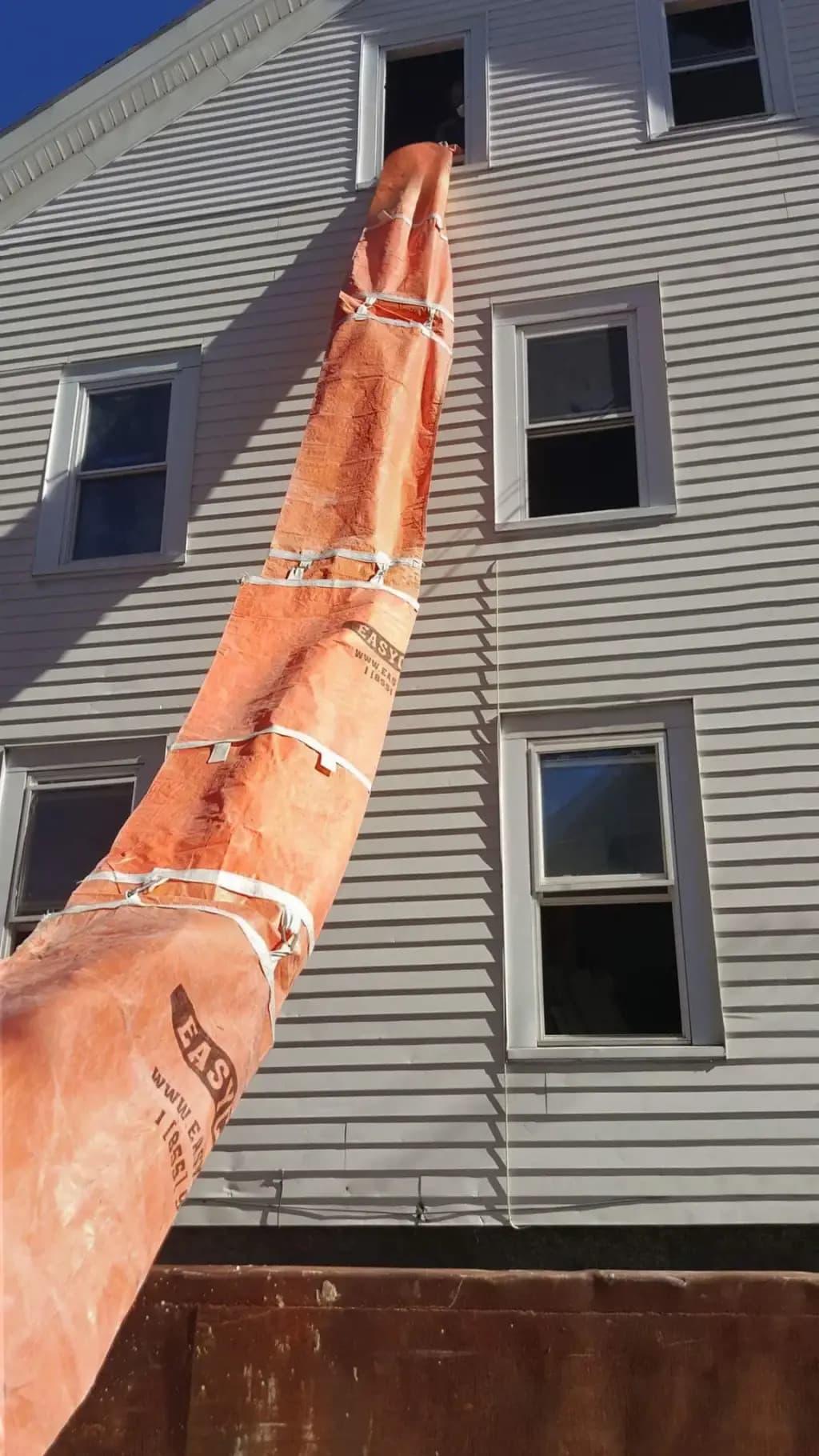
A well-rigged debris chute is one of the highest-leverage tools on a fall job site. Set it up right and one person can feed shingles, plaster chunks, and demo waste straight into the dumpster below while the rest of the crew keeps working. Set it up wrong — especially in October wind and cold — and you lose time, risk a dropped load, or create a safety hazard you did not plan for.
This guide is specifically for Rhode Island contractors dealing with the unique conditions of a New England fall: wind off Narragansett Bay, temperature swings between morning and afternoon, short days, and job sites that range from Westerly beach cottages to Providence triple-deckers. Everything here is practical, field-tested, and focused on getting your chute rigged fast, working safely, and broken down before the next crew needs the dumpster.
Why Fall Is the Most Demanding Season for Debris Chute Setup
Spring and summer installs are comparatively forgiving. The anchor points are dry, the mornings are warm, and you have light until 7:00 PM. Fall changes every one of those conditions simultaneously, and Rhode Island's coastal geography makes the changes sharper than you'd face inland.
Wind Off the Bay
Providence, Narragansett, Newport, and Warwick all sit close enough to Narragansett Bay that northwest winds in October can hit 20-30 mph by mid-afternoon. A chute hanging free against a wall becomes a sail under those conditions. If the chute is not anchored at the bottom — or if the dumpster lid is open and the chute mouth is loose — wind pressure can billow the chute outward, swing debris away from the container, or dislodge the anchor loops at the top. More on controlling wind load below, but flag it now: fall wind is the number one site-specific variable Rhode Island contractors need to plan around.
Temperature Swings and Hardware Behavior
A 40-degree morning on a Cranston job site can warm to 62 by 1:00 PM. That swing matters because carabiners and quick-connect hardware contract slightly in the cold. A gate-style carabiner clipped under load the night before may be snug in the morning but rattle loose as it warms. Before every fall shift, do a quick tug-test on each anchor point. It takes 30 seconds and has saved more than one crew from a mid-day incident.
Shorter Windows for Setup and Strike
By late October, Rhode Island gets roughly 11 hours of daylight. If your crew arrives at 7:00 AM and needs the chute fully struck before the dumpster swap at 4:30 PM, you have a narrower production window than you do in July. That makes a fast-rigging chute system — one that hangs from four loops with standard carabiners and folds back into a small box — worth real money per day.
Choosing the Right EasyChute Section Length for Rhode Island Fall Jobs
EasyChute sections come in 10 ft (lite-duty and heavy-duty), 25 ft, and 50 ft lengths. They connect with a 1.5 ft overlap and hang from four woven loops using carabiners or quick-connects. Choosing the right section configuration for your specific building height is more important in the fall because you want to minimize the number of times you are climbing to adjust the rig in cold or windy conditions.
Single-Story Additions and Shed Dormer Work (10-15 ft)
For a one-story addition roof in East Greenwich or a shed dormer on a Pawtucket bungalow, a single 10 ft heavy-duty section is usually enough. The chute mouth sits at the eave, the exit end lands inside or just above a standard dumpster, and there is very little exposed fabric for wind to catch. This is the fastest possible rig — one person, one section, five minutes.
Two- and Three-Story Triple-Deckers (20-35 ft)
Providence and Woonsocket are full of wood-frame triple-deckers where the working height from the top-floor window to the dumpster below runs 25-35 ft. Two 10 ft sections plus one 10 ft extension, or a single 25 ft section, typically covers this range. For fall work, the 25 ft single-section option reduces the number of mid-chute overlap connections that need to be checked after a wind event.
Larger Commercial and Four-Story Projects (40-60 ft)
For commercial gut work or a four-story building in downtown Providence, a 50 ft section — or a combination of sections — is the right call. At these heights the chute will be exposed to significantly more wind, so bottom anchoring and mid-point stabilization become mandatory rather than optional. See the wind-bracing section below.
For a detailed look at how section sizing interacts with project type, the modular trash chute kit cost breakdown walks through real job scenarios with cost and configuration math.
Anchor Points: What Works on New England Building Types
Rhode Island's housing stock is old. You will encounter balloon-frame construction from the 1890s, brick three-flats, mid-century concrete commercial buildings, and modern stick-frame additions, sometimes on the same block. Each building type presents different anchor opportunities and risks.
Wood-Frame Rooflines
The most common anchor on a wood-frame house is a rafter tail or a roof joist. In good weather, a loop of nylon webbing around a rafter tail with a locking carabiner is fast and secure. In fall, check for rot — October rain combined with aging wood means that a rafter tail that looks solid can pull under a loaded chute. When in doubt, double-anchor: one loop on each of two adjacent rafter tails, then clip both to the chute's top loop.
Masonry and Brick Facades
On brick buildings — common in Providence's Federal Hill and Elmwood neighborhoods — roof-edge anchoring often means using a ridge clamp or a beam clamp on a parapet. A simple knotted rope through a masonry anchor bolt is another option. Whatever you use, the anchor point must be rated for the total loaded weight of the chute. A fully loaded 25 ft fabric chute can carry 80-100 lbs of debris in transit. Plan accordingly.
Scaffold-Based Hanging
If you are working off a tube-and-clamp or frame scaffold, you have the most flexibility. The chute's four woven loops clip directly to horizontal scaffold tubes. Use two anchor points at the top — left and right of the chute mouth — and you get a stable, level opening that feeds cleanly. On a scaffold, you can also add a mid-point anchor clipped to a lower horizontal tube to reduce billow on windy afternoons.
The full step-by-step hanging process is covered in detail in the EasyChute installation guide, which is worth reviewing before your crew's first fall rig of the season.
Wind Management: The Rhode Island Fall Variable You Cannot Ignore
No other single factor causes more fall chute problems in coastal New England than wind. The fix is not complicated, but it requires deliberate setup rather than just hanging the chute and walking away.
Bottom Anchor or Dumpster Funnel
The single most effective wind-management step is anchoring the bottom of the chute to the dumpster or to a fixed point at ground level. Options include:
- Bungee cords threaded through the bottom loop of the chute and hooked to the dumpster rail
- A short length of paracord tied from the exit end to a dumpster handle or a ground anchor stake
- A weighted debris bag placed just inside the chute exit to hold it down when not actively feeding material
Any of these keeps the chute mouth directed into the dumpster even when wind pushes laterally against the fabric body.
Mid-Point Bracing on Tall Runs
On chute runs over 30 ft, add a mid-point brace. A single length of rope tied from the chute fabric at the midpoint to a window sill, scaffold tube, or wall anchor pulls the chute close to the building face and dramatically reduces billow. This is especially important on the south-facing sides of buildings, which catch the prevailing northwest winds that funnel across the Bay in October.
Pausing During High-Wind Events
OSHA's construction safety standards identify wind as a specific hazard for elevated work. If gusts are hitting 25 mph or higher on a coastal Rhode Island site, the right call is to pause chute feeding operations until conditions calm. A 10-minute pause is far less costly than a load of shingles that swings off-target and strikes a worker or bystander below. OSHA's construction industry guidelines are clear that falling object hazards must be controlled — a chute that is not secured in wind conditions is a falling object risk.
Fall-Specific Rigging Checklist for Rhode Island Crews
Before the first bag of debris goes into the chute each morning on a fall job, run this quick checklist. It takes under three minutes and catches the issues that develop overnight from temperature change and moisture.
- Inspect all anchor loops — look for abrasion, fraying, or stretching. EasyChute's woven poly loops are durable but worth a quick visual each morning.
- Tug-test every carabiner gate — cold metal contracts; confirm gates are locked and seated under load.
- Check overlap connections — on multi-section rigs, confirm the 1.5 ft overlap on each joint has not shifted or separated.
- Verify bottom anchor — confirm the exit end is directed into the dumpster and secured against wind.
- Clear the dumpster area below — no pedestrians, no parked vehicles, no workers standing under the chute path.
- Check the chute interior — any debris left from the previous day's work? Clear it before loading to prevent a plug or sudden dump.
- Assess wind conditions — if it is already gusty at 7:00 AM, add mid-point bracing before starting.
This kind of systematic pre-shift check is consistent with the ergonomic and safety-management principles outlined by OSHA's ergonomics program, which emphasizes hazard identification before work begins rather than reactive response after an incident.
Roofing Tear-Offs in Fall: Rhode Island-Specific Tips
Roofing is the dominant fall use case for debris chutes across Rhode Island. Asphalt shingle tear-offs — on capes, colonials, and bungalows from Woonsocket to Westerly — generate dense, heavy debris that needs to move off the roof fast. Here is how experienced Rhode Island roofers get the most out of a chute setup in fall conditions.
Loading Technique for Shingles
Broken shingles are irregular and can bridge across the chute if loaded in a clump. The best practice is to feed shingles in continuous small batches — a steady stream rather than a dump-and-wait approach. This keeps the chute flowing, prevents plugs, and reduces the impulse load on the anchor points. On a steep-pitch roof with a big crew stripping fast, designate one person specifically to feed the chute so the loading rate stays controlled.
Managing Nail and Metal Debris
Roofing debris always includes nails, staples, and sometimes flashing scraps. These are abrasive on fabric, but EasyChute's woven coated poly fabric is designed to handle this. What you do need to manage is the dumpster placement: position the dumpster so the chute exit angles toward the far end of the container, giving nails and flashing room to scatter without bouncing back out over the rim.
Cold-Morning Brittleness in Old Shingles
On a 35-degree October morning in North Kingstown or Lincoln, old 3-tab shingles become noticeably more brittle. They break into smaller pieces when stripped, which means more volume of smaller debris moving through the chute. This is actually a smoother flow situation — the fine pieces move quickly. Just be aware the dumpster fills faster than you expect, and plan your swap timing accordingly.
For a comprehensive look at chute setup specifically for roofing, the roofing trash chute guide covers material handling, weight load estimates, and positioning in detail.
Interior Demo Work: Upper-Floor Window Chuting in Fall
Interior gut renovations — kitchen and bath remodels, full-floor demo on triple-deckers, plaster removal on older homes — are another major fall use case. When the debris is coming out a second- or third-floor window rather than off a roof edge, the setup considerations shift slightly.
Window Frame Anchor Rigging
The most common anchor for a window-drop setup is a 2x4 or steel bar braced horizontally across the window opening, with the chute loops clipped to the bar ends. This distributes load evenly and keeps the chute mouth centered in the opening. In fall, check that the bar is not resting on a rotted sill — a common problem in the older wood-frame stock you find throughout Pawtucket, Central Falls, and West Warwick.
Containing Dust in Cold Dry Air
Fall air in New England is drier than summer, which means plaster dust, drywall particles, and insulation fibers become airborne more easily when fed into the chute. Consider taping a light poly dust curtain around the window opening on the interior side, leaving only a feeding slot. This keeps the demo room workable and reduces the dust cloud at street level — important if you are working on a tight Providence lot with neighbors nearby.
The demolition chutes guide covers the full range of interior gut scenarios including floor-by-floor staging, material sequencing, and how to handle mixed waste streams efficiently.
Dumpster Positioning on Tight Rhode Island Lots
Rhode Island has some of the densest residential neighborhoods in New England. Providence's South Side, Cranston's Auburn neighborhood, and the streets of Woonsocket have narrow lots, close setbacks, and sidewalks that barely fit a dumpster alongside a building. Getting the chute-to-dumpster geometry right in these conditions is as much a planning task as it is a setup task.
- Measure before the dumpster is dropped. Know the exit point of the chute — window, eave, or scaffold edge — and position the dumpster container directly below it. A 5 ft offset between the chute exit and the dumpster center is workable; a 10 ft offset means debris lands on the rim or misses entirely.
- Account for chute swing in wind. If the chute will swing toward the street on a northwest wind, position the dumpster slightly windward so the exit tracks toward the container under typical conditions.
- Use a dumpster with open or removable top doors on one end. Many roll-off containers have rear doors that swing open, giving you an angled entry point for the chute exit that avoids the high rim.
- Coordinate with the dumpster company on placement date. You want the container dropped the morning the tearoff starts — not two days earlier when it will be in the neighbor's way, and not the afternoon of the first day when you have already lost half your efficiency.
Safety and Compliance Considerations for Rhode Island Fall Job Sites
Rhode Island OSHA follows federal OSHA standards under 29 CFR 1926, which governs construction safety including falling object protection and debris management. Using a properly rigged chute directly supports your compliance posture on several fronts.
Falling Object Protection
When debris is being fed into a chute at an upper floor, the area directly below the chute path must be barricaded or protected. This is not optional — it is a federal OSHA requirement. Use cones, tape, or temporary fencing to establish an exclusion zone on the ground for the full duration of chute operations. Post a spotter at ground level if the site has active pedestrian traffic.
Waste Categorization and Responsible Disposal
Rhode Island has active landfill diversion programs and C&D debris recycling requirements for commercial projects over a certain size. Before you fill that dumpster, know what your municipality requires. Wood, metal, concrete, and asphalt shingles can often be separated and diverted from the landfill at lower cost — and in some cases at no cost — compared to mixed load disposal. The EPA's construction and demolition debris data makes clear that C&D waste is a major contributor to the national waste stream, and contractors who sort on-site save money and demonstrate responsible practices to their clients.
Worker Ergonomics on Debris Loading
Feeding a chute from an upper floor involves repetitive lifting, bending, and reaching. Especially on cold mornings when muscles are tight, these motions carry real injury risk. Brief your crew on proper lifting mechanics before each shift — straight back, load close to the body, no twisting while carrying. This is the same guidance found in OSHA's ergonomics resources, and it is especially relevant in fall when cold temperatures reduce flexibility and increase soft-tissue injury risk.
Striking and Storing the Chute Between Fall Jobs
One of EasyChute's major advantages for Rhode Island contractors is portability. A 10 ft section weighs under 3 lbs and folds into a small box. A 25 ft or 50 ft section is still manageable by one person. But proper storage between fall jobs matters — especially given the moisture, temperature swings, and occasional early freeze that define New England Octobers and Novembers.
Post-Job Cleaning Routine
After striking the chute, shake out any debris caught in the fabric. A quick rinse with a garden hose removes dust, shingle granules, and grit that can abrade the coated fabric over multiple jobs. Let the sections dry before folding — wet poly fabric stored folded can develop mildew spots over a long weekend, especially if it is going into the back of a van with other damp equipment.
Cold-Weather Storage
Coated poly fabric handles cold well, but avoid storing the chute pressed against metal surfaces (like a truck bed floor) for extended periods at freezing temperatures. The coating can become temporarily stiff, which makes unfolding on a cold morning slightly harder. A simple mesh bag or cardboard box in the cab of the truck, rather than the cargo area, keeps the chute at a workable temperature for early-morning rigging.
Inspection Before Next Use
Before the next job, run a quick visual inspection of the loops, any seam areas, and the fabric body. Look for cuts, abrasion spots, or loop wear that might indicate a replacement is needed. EasyChute sections are reusable job after job, and the woven coated construction is durable — but like any tool, periodic inspection protects both the equipment and the crew using it.
For a broader comparison of chute materials and durability, the debris chute vs poly chute comparison guide breaks down fabric types, load ratings, and cost-per-job economics in detail.
How EasyChute Fits Rhode Island Contractor Workflows
Rhode Island contractors — especially the small-to-mid-sized crews that dominate the residential and light commercial market from Providence to South County — need tools that travel light, set up fast, and do not require a dedicated equipment budget line. EasyChute was built by contractors with exactly that profile in mind.
Founder Tim Hogan and co-founder Leo Guarente built the system in Massachusetts, on the same type of New England job sites Rhode Island crews work every day. The result is a chute that one person can carry, hang, and strike without a helper — which matters enormously when your three-person crew is already split between stripping the roof, feeding the chute, and managing the ground operation.
EasyChute ships free to job sites across the United States, including directly to Rhode Island addresses. Fixed online pricing means no negotiation, no rental return logistics, and no surcharges for coastal delivery. For contractors in Warwick, Woonsocket, or Westerly, that is a real operational advantage over rental-based chute programs that require pickup and drop-off coordination.
For a fuller picture of the product line and how sections connect and hang, the fabric trash chute overview and the construction chute guide cover the full range of applications contractors use EasyChute for.
You can also watch the rig in action — the EasyChute video library shows real setups on real job sites, including window drops and roofline hangs that mirror the conditions Rhode Island crews encounter every fall.
Frequently Asked Questions
How long does it take to set up an EasyChute on a typical Rhode Island fall job site?
One person can hang a single 10 ft or 25 ft section in five to ten minutes on a standard wood-frame house. That includes unboxing the section, attaching the loops to anchor points with carabiners, positioning the exit end over the dumpster, and doing a quick tug-test on each anchor. On taller buildings or scaffold setups, allow an extra five to ten minutes for mid-point bracing, which is recommended for fall wind conditions in coastal Rhode Island locations.
What is the best section length for a two-story Rhode Island triple-decker?
Most Rhode Island triple-deckers run 25 to 35 ft from the top-floor window sill to the ground. A 25 ft EasyChute section covers the majority of these buildings as a single run. For taller examples or situations where the dumpster cannot be positioned directly against the building, you can add a 10 ft section at the bottom to extend the exit point. Connecting sections requires a 1.5 ft overlap and takes under two minutes.
Can EasyChute handle the weight of asphalt shingles in a fall tear-off?
Yes. EasyChute's heavy-duty sections are designed specifically for dense debris like asphalt shingles, which are among the heaviest common roofing materials by volume. The key is continuous feeding rather than dumping large loads all at once. A steady stream of broken shingles moves cleanly through the fabric without plugging or stressing the anchor loops. The coated woven poly fabric resists the abrasion that comes from shingle grit and roofing nails.
What should I do if wind is making the chute swing off-target?
Add a bottom anchor first — run a bungee cord or rope from the chute's exit loop to the dumpster rail to hold the exit directed into the container. If the chute body is billowing away from the building, add a mid-point brace: tie a rope from the chute fabric at the midpoint to a fixed wall anchor, window sill, or scaffold tube. On very high-wind days above 25 mph, pause operations until wind calms. Debris swinging off a chute at height is a falling object hazard under OSHA construction standards.
Does EasyChute ship to Rhode Island addresses?
Yes. EasyChute ships free to job sites and business addresses across the United States, including all Rhode Island locations. Orders are placed online at fixed prices — no rental logistics, no return scheduling, and no delivery surcharge for coastal or island locations. Sections arrive boxed and compact, ready to deploy directly from the shipping box on your first job.
How do I store EasyChute sections between fall jobs in New England weather?
After each job, shake out debris and rinse the section with a garden hose if there is significant grit or shingle dust. Let it dry fully before folding to prevent mildew. Store it in a dry location — a cardboard box or mesh bag in the cab of your truck is ideal, keeping the fabric at a workable temperature for cold-morning rigging. Inspect the loops and fabric body visually before each new job to catch any wear before it becomes a problem on site.
Is a debris chute required for fall roofing jobs in Rhode Island under OSHA rules?
OSHA does not mandate a specific debris removal method, but it does require that falling objects be controlled to protect workers and the public below. A properly rigged debris chute is one of the most effective ways to comply with those requirements. It channels debris from the roof directly into the dumpster, eliminates the need for workers to carry heavy loads down ladders, and keeps the ground-level exclusion zone manageable. Rhode Island contractors working at height should review the federal OSHA construction standards for falling object protection relevant to their scope of work.
Get Your EasyChute Ready Before the Next Rhode Island Fall Job
Fall is short in Rhode Island, and the window between the last dry September day and the first November freeze that makes a roof too dangerous to strip is narrower than it looks in your schedule. Having your chute sections on-hand, inspected, and ready to rig means your crew hits the ground running on day one instead of improvising debris removal mid-job.
EasyChute sections ship free to Rhode Island job sites, order online at fixed prices, and arrive ready to use. A 10 ft heavy-duty section handles a one-story cape. A 25 ft or multi-section rig handles a triple-decker gut reno. Every section reuses job after job, so the cost per use drops every time you deploy it.
Browse the full product line, review the EasyChute FAQ for any remaining setup questions, or reach out directly through the contact page if you want help matching a section configuration to a specific Rhode Island job. The debris is not going to move itself — let's get you set up to move it safely, fast, and without a second person on the ladder.