
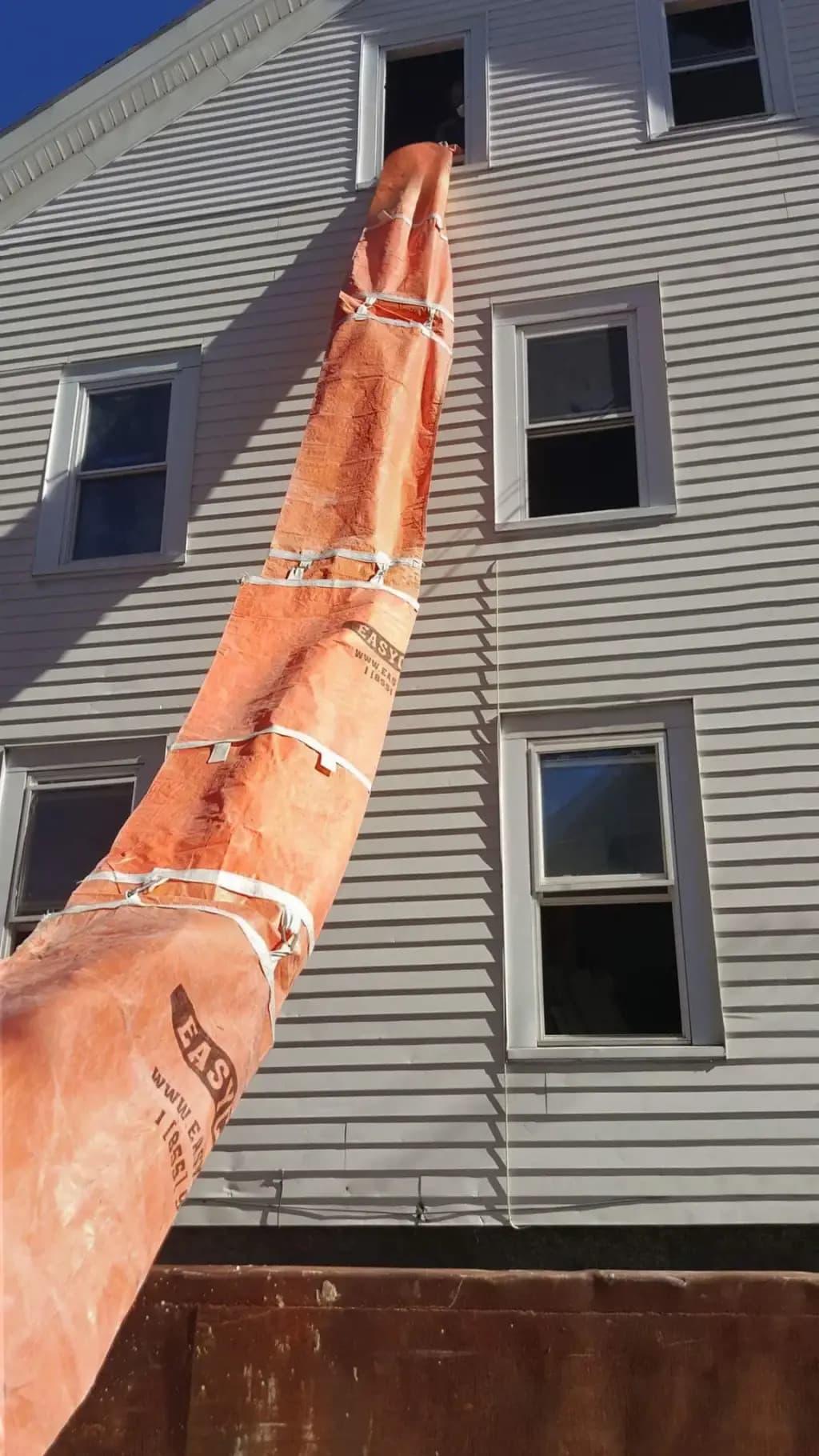
When contractors start shopping for a debris chute, one of the first questions that comes up is material: stainless steel trash chute or something lighter? It sounds like a simple choice, but it carries real consequences for job speed, crew safety, budget, and long-term reusability. This guide breaks down everything you need to know — what stainless steel chutes actually are, where they genuinely shine, where they fall short, and what most field crews are using instead in 2026.
What Is a Stainless Steel Trash Chute?
A stainless steel trash chute is a rigid, cylindrical or rectangular channel made from formed stainless steel panels or rolled-tube sections. The sections bolt or clamp together, hang from a fixed anchor point above, and direct debris in a continuous column from an upper floor or roof edge straight down into a waiting dumpster or container below.
Stainless steel is chosen primarily for its corrosion resistance, smooth interior surface, and durability under sustained abrasion. Unlike galvanized carbon steel, it resists rust even when exposed to wet debris, chemical cleaners, or coastal salt air — which makes it a go-to for permanent installations in multi-unit residential buildings and commercial high-rises.
Permanent vs. Temporary Stainless Steel Chutes
It is worth drawing a hard line between two categories that often get lumped together:
- Permanent residential chutes — the vertical drop shafts built into apartment towers and condominiums so residents can dispose of daily trash without leaving their floor. These are almost always stainless steel on the interior and are code-regulated in most jurisdictions.
- Temporary construction chutes — modular sections rented or owned by contractors, hung temporarily from a window, scaffold, or roof edge to move demolition debris during a renovation or new build.
Most of what people search for when they type "stainless steel trash chute" is the permanent residential variety. If you are a contractor or roofer looking for a temporary debris chute for a job site, that is a genuinely different product category, and this guide covers both so you can make an informed call.
How Permanent Stainless Steel Chutes Work in Residential Buildings
In a mid-rise or high-rise residential building, the stainless steel trash chute is a vertical shaft that runs the full height of the building, typically accessed through a hopper door on each floor. Residents open the spring-loaded hopper door, drop their bagged trash, and the debris slides or falls down the stainless interior into a collection room on the ground floor or basement.
Key Components of a Building Trash Chute System
- Hopper doors — spring-loaded, self-closing steel doors on each floor, often with odor seals
- Chute body — 18-gauge or heavier stainless steel tube, typically 18 to 24 inches in diameter
- Intake collar — the connection between the hopper door and the chute body
- Discharge door — the bottom-most opening into the trash room or compactor
- Fire suppression integration — many codes require sprinkler heads inside the chute at every other floor
- Venting — a cap or vent at the rooftop to allow airflow and reduce odor buildup
Stainless steel is the preferred interior surface for these systems because it is easy to sanitize — a critical factor given the volume of organic waste passing through daily. OSHA construction standards do not directly govern permanent residential chutes (those fall under building codes), but the sanitation and fire-separation requirements are strict at the municipal and state level.
Where Stainless Steel Chutes Excel
Stainless steel is not a marketing gimmick in the right application. Here are the scenarios where it genuinely earns its cost premium:
High-Volume Daily Residential Use
When a 200-unit apartment tower generates tons of bagged waste every day, a stainless interior surface handles the abrasion without degrading. Plastic or coated fabric liners would wear through far more quickly under that kind of sustained throughput. The smooth interior also reduces the chance of bags snagging and creating blockages.
Wet and Chemical Environments
Restaurants, food-service buildings, and medical facilities often route wet organic waste through trash chutes. Stainless steel resists the corrosive effects of food acids, cleaning solutions, and high-pressure washdowns that would corrode carbon steel or degrade fabric over time.
Fire-Separation Requirements
Building codes in most US jurisdictions require that penetrations through fire-rated floors and walls use materials with matching or superior fire-resistance ratings. A stainless steel shaft can be detailed to meet those requirements in a way that a temporary fabric chute cannot — which is precisely why fabric chutes are designed for exterior deployment over a building's facade, not through its interior floor system.
The Real Cost of Stainless Steel for Temporary Job Sites
Now let us shift to the other audience: contractors, roofers, and junk removal crews who need a temporary chute to move demolition debris safely from an upper floor to a dumpster. Can you use a stainless steel temporary chute? Yes. Should you? In most cases, no — and here is the math.
Weight and Labor Cost
A single rigid stainless steel chute section — typically 4 to 5 feet long — weighs 25 to 60 pounds depending on gauge and diameter. A three-story house renovation might need 30 to 40 feet of chute, meaning you are moving 180 to 480 pounds of hardware up and down ladders, loading it into a truck, unloading it, and hanging it on the building — before you have moved a single piece of debris. OSHA ergonomics guidelines recommend keeping two-person lift loads under 50 lbs each; a single heavy section can exceed that on its own.
Storage and Transportation
Rigid metal sections do not compress or fold. They require a full-size truck bed or cargo van, stack awkwardly, and are prone to denting and scratching in transit — which can degrade both the metal integrity and resale value over time. For a contractor running multiple jobs per week across different addresses, that logistics overhead adds up fast.
Setup Time
Bolted or clamped rigid sections take longer to assemble than fabric chutes that connect with a simple overlap and four carabiners. On a one-day roofing job, the difference between a 10-minute setup and a 60-minute setup is real money.
Fabric Debris Chutes: The Field-Proven Alternative for Contractors
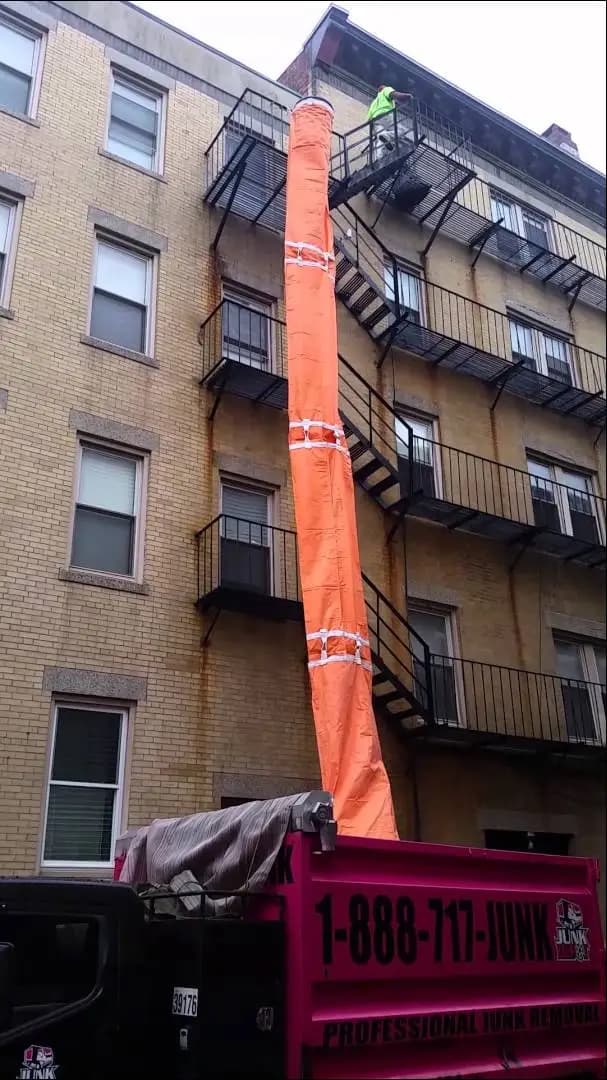
The construction industry has largely shifted toward woven, coated poly fabric chutes for temporary job-site use — and the reasons are straightforward once you have used one. Fabric trash chutes like the EasyChute system weigh under 3 lbs per 10-foot section, fold into a small box, hang in minutes with ordinary carabiners, and move debris just as efficiently as a rigid metal chute for roofing, interior gut work, and multi-story renovations.
How EasyChute Sections Connect
EasyChute sections connect with a 1.5-foot overlap — the upper section slides over the lower, and the woven loop-and-carabiner attachment points keep everything aligned. You can combine 10 ft, 25 ft, and 50 ft sections to reach virtually any building height without bolts, clamps, or specialized tools. One person can carry, hang, and strike a chute in minutes, which matters enormously on fast-turn roofing or demo jobs.
Stainless Steel vs. Fabric Trash Chutes: Side-by-Side Comparison
Rather than making you hunt through paragraphs, here is a direct comparison across the factors that matter most on a real job site:
- Weight per 10 ft: Stainless rigid sections — 60 to 120 lbs total. Fabric chute — under 3 lbs.
- Setup time: Stainless — 45 to 90 minutes for a 30-ft run. Fabric — 10 to 15 minutes.
- Transport: Stainless — full truck bed or trailer required. Fabric — folds into one small box, fits in a car trunk.
- One-person setup: Stainless — rarely practical for upper-floor runs. Fabric — yes, standard.
- Reusability: Stainless — high if stored and transported carefully. Fabric (heavy-duty) — also high, job after job.
- Cost: Stainless temporary systems — hundreds to thousands of dollars per run. Fabric — fraction of the price.
- Best for: Stainless — permanent building installations. Fabric — temporary construction, roofing, demo.
- Fire-separation compliance: Stainless — achievable with proper detailing. Fabric — exterior use only, not for interior shaft penetrations.
For a deeper dive into the full range of temporary chute options, the debris chute guide covers everything from material selection to job-specific configurations.
When a Contractor Might Still Choose a Metal Chute
Fairness matters here. There are edge cases where a rigid metal chute makes sense on a construction site:
Extremely High-Abrasion Debris
If you are demolishing a masonry chimney or removing heavy stone tile and dropping chunks of rubite or granite from multiple stories, the sharp angular edges of heavy stone can eventually wear through fabric over repeated jobs. A rigid metal chute handles that sustained abrasion better. That said, EasyChute's heavy-duty sections are engineered for exactly this kind of rough debris, and many contractors use them for years without issue.
Permanent Dumpster Pad Installations
Some commercial facilities — including certain large construction-and-demolition operations tracked by the EPA — build semi-permanent chute infrastructure at a fixed loading dock or waste collection point. For a chute that will hang in the same spot every day for a year, a rigid stainless system may pencil out over time.
Regulated Municipal or High-Rise Work
Certain high-rise projects in dense urban markets — think a full gut renovation of a 20-story building — may have specific contract requirements or municipal permits that specify chute material or dimensions. Always verify what your contract and local building department actually require before purchasing any chute system. For example, crews working on projects like extreme-height debris removal at iconic towers face a different set of constraints than a residential roofer.
Maintaining a Stainless Steel Trash Chute in a Residential Building
If you manage a building that already has a stainless steel chute installed, maintenance is a real operational concern. Here is the standard upkeep protocol:
Routine Cleaning Schedule
- Weekly: Inspect hopper doors for proper spring tension and odor-seal integrity. Confirm the discharge door is fully closing after each collection cycle.
- Monthly: High-pressure hot-water flush of the interior chute body. Apply an enzymatic cleaner designed for waste chutes to break down organic residue.
- Quarterly: Full interior inspection using a camera or manual inspection from the roof vent. Check for stainless surface pitting, corrosion near the discharge point, or debris build-up at section joints.
- Annually: Fire suppression head inspection and test; door hinge and hardware replacement as needed.
Many building managers contract this work to a professional trash chute cleaning company rather than handling it in-house — particularly for buildings with more than six floors where interior access is limited.
Common Mistakes Contractors Make Buying a Trash Chute
Spending too much on the wrong material is just one of the errors that slow down a job and inflate overhead. Here are the most frequent mistakes field crews make when purchasing or setting up debris chutes:
- Buying a chute sized for the wrong height. A 10 ft section works for a single-story drop from a window well. A three-story house needs at least 25 to 30 feet. Always measure your drop height before ordering.
- Assuming rigid equals better for temporary use. Weight and setup time are real costs. A chute that takes two people and 90 minutes to hang eats margin on a fast roofing turn.
- Not anchoring the top securely. Whether fabric or metal, the anchor point carries the full weight of the debris in transit. Use rated hardware and test the connection before loading. The EasyChute installation guide walks through proper anchor setup step by step.
- Using an interior chute in an exterior application or vice versa. Permanent building chutes are not designed to hang off a roof edge, and exterior fabric chutes are not designed to penetrate fire-rated floor assemblies.
- Skipping debris bags. On roofing jobs especially, loose shingles and nails sliding down an unlined chute can bounce, spread, and create a site hazard at the dumpster. Using a chute in combination with proper bagging reduces injury risk significantly.
- Forgetting to check local regs. Some municipalities — particularly in dense markets like New York City — have specific rules about where a chute can extend over public sidewalks. Always pull the right permits. Crews in markets like Lower Manhattan or Midtown Manhattan navigate these requirements constantly.
For a fuller breakdown of setup errors and how to avoid them, the debris chute mistake guide for New Jersey contractors covers many of the same pitfalls that apply across all US markets.
Environmental Considerations for Debris Chutes
Moving debris efficiently is not just a productivity issue — it also has environmental implications. EPA waste and recycling data consistently shows that construction and demolition debris is one of the largest waste streams in the United States. Using a chute — whether fabric or stainless — channels that debris directly into a container where it can be sorted, recycled, or properly disposed of, rather than scattered across a job site or manually carried through a building.
Reusable chutes also reduce the single-use material waste that comes from improvised debris-removal methods like cardboard chutes or single-use plastic sheeting. EasyChute's fabric sections are designed for repeated reuse across dozens or hundreds of jobs, keeping material costs down and reducing the environmental footprint of each project. Responsible debris management is increasingly a topic that building owners and general contractors evaluate when selecting subcontractors — an operational detail that connects directly to broader EPA recycling and waste-reduction goals.
Choosing the Right Chute for Your Specific Project Type
To make this practical, here is a quick decision framework based on the most common job types:
Residential Roofing (Shingle Tear-Off)
A lightweight fabric chute hung from the ridge or upper eave is the standard approach. Speed of setup is paramount on a one-day job. The roofing trash chute guide covers the specific rigging techniques for different roof pitches and eave configurations.
Interior Gut Renovation (Kitchen, Bath, Full Floor Demo)
A fabric chute hung from a window opening and directed into a dumpster or bin on the street below keeps interior hallways clear and reduces crew fatigue from carrying loads down stairs. For brownstone and walk-up work in dense urban neighborhoods, this setup is nearly universal. See the demolition chute guide for interior gut-work specifics.
High-Rise or Multi-Story Commercial Renovation
Longer drops need longer chute runs — here is where connecting 25 ft and 50 ft fabric sections pays off. For taller drops, intermediate tie-off points on intermediate floors keep the chute from swaying and directing debris off-target. Some high-rise projects do use rigid systems for sustained multi-month jobs, but verify what your contract and site safety plan actually require.
Multi-Unit Residential Building Management
For the building manager overseeing a permanent chute installation, stainless steel is the correct answer. The focus shifts from job-site logistics to building-code compliance, fire suppression integration, and an ongoing maintenance contract.
Junk Removal Operations
Junk removal crews pulling furniture, appliances, and miscellaneous residential debris benefit enormously from a lightweight fabric chute that one person can carry up stairs, hang from a window, and use to drop loads straight into the truck or dumpster below. The speed and ease of a fabric system aligns perfectly with the high-volume, fast-turn nature of junk removal work. For canvas-specific options, the canvas trash chute guide provides useful context on material variants.
Frequently Asked Questions
What is a stainless steel trash chute used for?
Stainless steel trash chutes are most commonly used as permanent vertical waste-disposal shafts in mid-rise and high-rise residential buildings, allowing residents to drop bagged trash from their floor into a collection room below. The stainless interior is chosen for corrosion resistance, ease of cleaning, and durability under sustained daily use. In some specialized commercial and institutional applications — such as food-service facilities or medical buildings — stainless steel is also used for its resistance to chemical cleaners and sanitation protocols.
Can I use a stainless steel chute for a temporary construction job?
You can, but most field contractors choose not to. Rigid stainless sections are heavy (often 25 to 60 lbs per section), require significant setup time, and need a truck or trailer for transport. For temporary roofing, demo, or gut-renovation work, lightweight fabric debris chutes are almost always faster to set up, easier to transport, and significantly lower in cost — while doing the same job of moving debris safely from an upper floor into a dumpster below.
How much does a stainless steel trash chute cost?
Permanent building chute systems vary widely based on building height, number of hopper doors, compactor integration, and fire-suppression requirements — installations for a 10-story building can range from several thousand to tens of thousands of dollars installed. Temporary rigid metal chute sections for construction use are typically rented rather than purchased, and rental costs depend on length and local market rates. By comparison, fabric chute systems for temporary construction use are available at a small fraction of that cost with free shipping direct to the job site.
How do you clean a stainless steel trash chute in an apartment building?
Routine maintenance involves weekly inspection of hopper doors and seals, monthly high-pressure hot-water flushing of the chute interior with an enzymatic cleaner, and quarterly camera or manual inspection of the full interior shaft. Annual fire suppression head testing is also required in most jurisdictions. Many building management companies contract this work to a professional trash chute cleaning service, particularly for buildings where interior shaft access requires specialized equipment or fall-protection rigging.
What is the difference between a trash chute and a debris chute?
These terms are often used interchangeably, but in practice "trash chute" most commonly refers to permanent residential building systems for daily household waste, while "debris chute" refers to temporary construction-site systems for moving demolition and renovation materials. Stainless steel is the dominant material for permanent trash chutes; woven poly fabric is the dominant material for temporary construction debris chutes in 2026. Both accomplish the same fundamental task — directing falling material into a contained collection point — but they serve different industries with different requirements.
Are fabric debris chutes safe for heavy demolition material?
Yes, when properly rated for the load. Heavy-duty fabric chute sections — made from woven, coated poly fabric — are engineered to handle shingles, drywall, concrete fragments, lumber, and other construction debris without tearing under normal use. The key variables are debris size (avoid oversized single chunks that exceed the chute diameter), drop height (longer runs need properly spaced tie-off points), and anchor quality. Following the manufacturer's installation guidance and using rated hardware keeps the system safe across dozens or hundreds of jobs.
Do I need a permit to hang a debris chute on a building exterior?
It depends on your municipality and the specific job. In many suburban and rural markets, temporary construction chutes hung over a private driveway or on-site dumpster require no permit beyond your general construction permit. In dense urban markets — particularly New York City boroughs — a chute extending over a public sidewalk typically requires a sidewalk shed permit and possibly a Department of Buildings notification. Always check with your local building department before hanging a chute over any public right-of-way. Your general contractor or site safety manager can advise on the specific requirements for your project location.
Ready to Move Debris Faster on Your Next Job?
If you are a contractor, roofer, or junk removal operator looking for a temporary debris chute that is fast to set up, easy to transport, and built to last across hundreds of jobs, EasyChute's fabric chute system is worth a close look. Sections start at 10 feet, connect to any height, ship free to job sites across the United States, and can be set up by one person in minutes — no rigid panels, no heavy-lift crew, no truck-bed logistics.
Visit the EasyChute FAQ for answers to common setup and ordering questions, watch the chute in action on real job sites, or head to the contact page to reach the team directly. Ordering is straightforward, pricing is fixed, and your chute ships free to wherever the job is.