
If you manage a multi-unit residential building, run a commercial facility, or oversee a construction site, the words trash chute cleaning company have probably come up in a budget meeting or a complaint email. Chutes get dirty. Grease, food waste, construction dust, and moisture build up inside the shaft over time — and when they do, you get odors, pest activity, and potential fire hazards that no property manager wants on their hands.
This guide breaks down exactly what a trash chute cleaning company does, when you genuinely need one versus when you can avoid the call, what the cleaning process looks like from start to finish, how to compare and vet vendors, and — critically — how choosing the right chute system in the first place affects how often you need professional cleaning at all. Whether you're a building super, a general contractor, or a junk removal operator, this is the most complete reference you'll find on the topic.
What Is a Trash Chute Cleaning Company?
A trash chute cleaning company is a specialized service provider — sometimes a standalone business, sometimes a division of a janitorial or building-maintenance firm — that cleans, deodorizes, and sanitizes the interior of a trash chute shaft. Their work targets the vertical duct, the intake doors on each floor, the bottom discharge area, and the room or dumpster enclosure where debris lands.
These are not general cleaning crews. The equipment they use — high-pressure rotary brushes, truck-mounted extraction systems, hospital-grade disinfectant foggers — is built specifically for confined vertical spaces that standard janitors never enter.
Residential vs. Commercial vs. Construction Chute Cleaning
The service looks quite different depending on the setting:
- Residential high-rises: Ongoing maintenance cleaning on a monthly or quarterly schedule. The focus is odor control, sanitation, and pest prevention.
- Commercial facilities: Office towers, hotels, and hospitals often need quarterly or semi-annual deep cleans, plus emergency response after a blockage or spill.
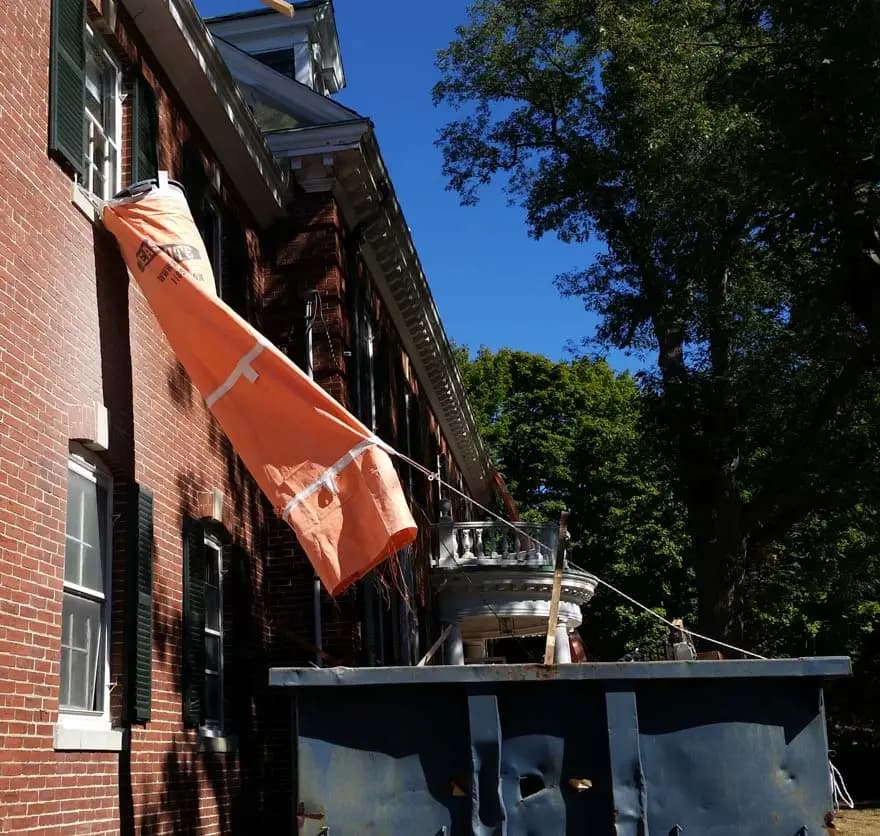
- Construction sites: Temporary fabric or rigid chutes used during a renovation or demolition project get cleaned — or more often simply struck and disposed of — at project end. The dynamics here are very different from a permanent building chute, which we'll cover later.
Why Trash Chutes Get Dirty (and Why It Matters)
Understanding the problem makes it easier to manage. Trash chutes are dark, enclosed, and humid — the ideal environment for bacteria, mold, and pests. Every bag of garbage that slides down the shaft leaves behind trace residue: food grease, liquid leakage, and fine organic particles that cling to seams and joints.
The Four Main Contamination Sources
- Food waste and liquids: Bags tear in transit. Liquid seeps through. Over weeks, that residue ferments inside the chute wall.
- Construction dust: Drywall powder, insulation fibers, and silica dust coat the interior of a construction chute and pack into seams. According to OSHA's construction safety guidelines, airborne dust from demolition debris is a recognized respiratory hazard — contained residue inside a chute creates re-aerosolization risk every time the chute is used.
- Pest activity: Cockroaches, flies, and rodents are attracted to the residue inside a chute. Once inside, they can access every floor of a building through the intake doors.
- Moisture and mold: Rain intrusion from a roof-level chute opening, or condensation inside the shaft, creates the humidity mold needs to colonize.
Fire Risk: The Overlooked Reason to Keep Chutes Clean
Grease and paper dust buildup inside a trash chute is a documented fire accelerant. Many local fire codes require chute cleaning on a defined schedule — typically quarterly in residential buildings above a certain height. A trash chute cleaning company can often provide documentation of service that satisfies your fire marshal's requirements. This is not a hypothetical: the EPA's construction and demolition debris data shows just how much organic and combustible material flows through building waste systems on a daily basis.
What a Trash Chute Cleaning Company Actually Does: The Process
Here is what a professional cleaning visit looks like, step by step. Knowing this helps you evaluate quotes and hold vendors accountable.
Step 1 — Pre-Inspection and Blockage Check
Before any cleaning equipment goes in, the crew inspects the chute from top to bottom. They check for blockages, damaged intake doors, missing sprinkler heads inside the shaft (required by code in many jurisdictions), and any structural issues. They photograph the interior condition before cleaning begins.
Step 2 — Chute Isolation and Resident/Worker Notification
The intake doors on every floor are secured shut so no debris can enter during cleaning. In a residential building, residents are notified — typically with 24 hours of notice — that the chute will be out of service for two to four hours.
Step 3 — High-Pressure Hot Water and Rotary Scrubbing
The cleaning crew works from the top floor down. They insert a rotary brush head connected to a high-pressure, hot-water supply line. The brush spins against the chute walls while the hot water dissolves grease and biofilm. Wastewater and dislodged debris fall to the bottom of the chute where they are captured and removed.
Step 4 — Disinfectant Application
After the mechanical scrub, a commercial-grade disinfectant is applied — often by fogging — to kill remaining bacteria, mold spores, and odor-causing organisms. The best companies use EPA-registered disinfectants and can provide the product data sheet on request.
Step 5 — Intake Door Cleaning and Lubrication
The intake doors on each floor are wiped down, sanitized, and lubricated. Stiff or non-closing doors are a common source of odor migration into hallways and a pest entry point.
Step 6 — Discharge Area and Dumpster Room Cleaning
The bottom of the chute — where everything lands — is often the dirtiest area. A good company pressure-washes the discharge chute, the floor of the dumpster room or enclosure, and the walls immediately surrounding the chute exit.
Step 7 — Post-Cleaning Inspection and Documentation
Final photos are taken. The crew notes any repairs needed — cracked chute joints, broken door hardware, missing sprinkler heads — and provides a written service report. This documentation is valuable for fire code compliance and liability protection.
How to Find and Vet a Trash Chute Cleaning Company
Not every company that markets itself as a "trash chute cleaner" delivers the same level of service. Here is a practical checklist for evaluating vendors before you sign a contract.
Questions to Ask Before Hiring
- What equipment do you use? Look for hot water (not cold), rotary brushes, and commercial extraction. Cold-water spray alone does not remove grease biofilm effectively.
- Are your disinfectants EPA-registered? Ask for the product name and registration number. Any reputable vendor will provide it.
- Do you carry general liability and workers' comp insurance? This is non-negotiable. Working inside a vertical shaft is confined-space work. If a technician is injured on your property without coverage, you have exposure.
- Can you provide fire code compliance documentation? If your jurisdiction requires proof of regular cleaning, the vendor should supply a dated service certificate.
- Do you handle repairs, or just cleaning? Some companies replace intake door hardware, chute sections, and sprinkler heads. Others clean only. Know what you are buying.
- What is included in a "standard" visit vs. add-ons? Get the scope in writing. Discharge room cleaning, door lubrication, and repair reporting should be standard — but confirm.
Red Flags to Watch For
- No written service report after the visit
- Quotes given without an inspection or at least a site description
- No mention of disinfectant — cleaning without disinfecting only delays odor return
- Unusually low prices that suggest cold-water spray and a quick rinse
- No proof of insurance or reluctance to share it
How Often Should a Trash Chute Be Professionally Cleaned?
The right cleaning frequency depends on usage volume, the type of debris going through the chute, and local fire code requirements. Here are general benchmarks used by building management professionals:
- High-rise residential (100+ units): Monthly cleaning is common for heavily used chutes; quarterly is a minimum for most fire codes.
- Mid-rise residential (20-100 units): Quarterly cleaning plus a mid-year inspection visit.
- Commercial buildings: Quarterly to semi-annual, depending on the type of waste (food service facilities need more frequent service).
- Construction site chutes: Typically not professionally cleaned — they are struck and either disposed of or, in the case of reusable fabric chutes, cleaned by the crew. See the section below on construction chute management.
What Professional Trash Chute Cleaning Costs
Pricing varies significantly by region, building size, chute length, and service scope. These are realistic ranges based on market data from 2026:
- Standard residential cleaning (up to 10 stories): $200–$500 per visit
- Taller residential or commercial buildings (10-25 stories): $500–$1,200 per visit
- High-rise cleaning (25+ stories): $1,200–$2,500+ per visit, depending on access complexity
- Annual maintenance contracts: Often 10–20% cheaper per visit than one-off service calls
- Emergency blockage removal: Typically billed as an add-on at $150–$400 above the base cleaning rate
Always get at least three quotes. Prices in dense urban markets like Manhattan or Boston often run higher than suburban or rural areas due to access logistics and labor costs. If you are managing a job site in a dense metro area, check out our guide on trash chutes for Lower Manhattan renovations for context on the unique logistics involved.
Construction Site Chutes: A Different Animal Entirely
If you arrived at this article because you are a contractor or junk removal operator looking at temporary chutes on a job site, your situation is fundamentally different from a building manager's. Permanent building chutes are fixed infrastructure that require ongoing professional maintenance. Temporary construction chutes — especially lightweight fabric models — are designed to be installed, used for the duration of a project, and struck without leaving a contamination problem behind.
Why Fabric Chutes Reduce the Cleaning Equation
A fabric trash chute made from woven, coated poly material has a smooth interior that resists debris adhesion. Construction waste — shingle granules, drywall chunks, old insulation — passes through cleanly and lands in the dumpster below. There is no grease biofilm, no food waste, and no moisture-trapping joint structure the way a segmented metal chute has.
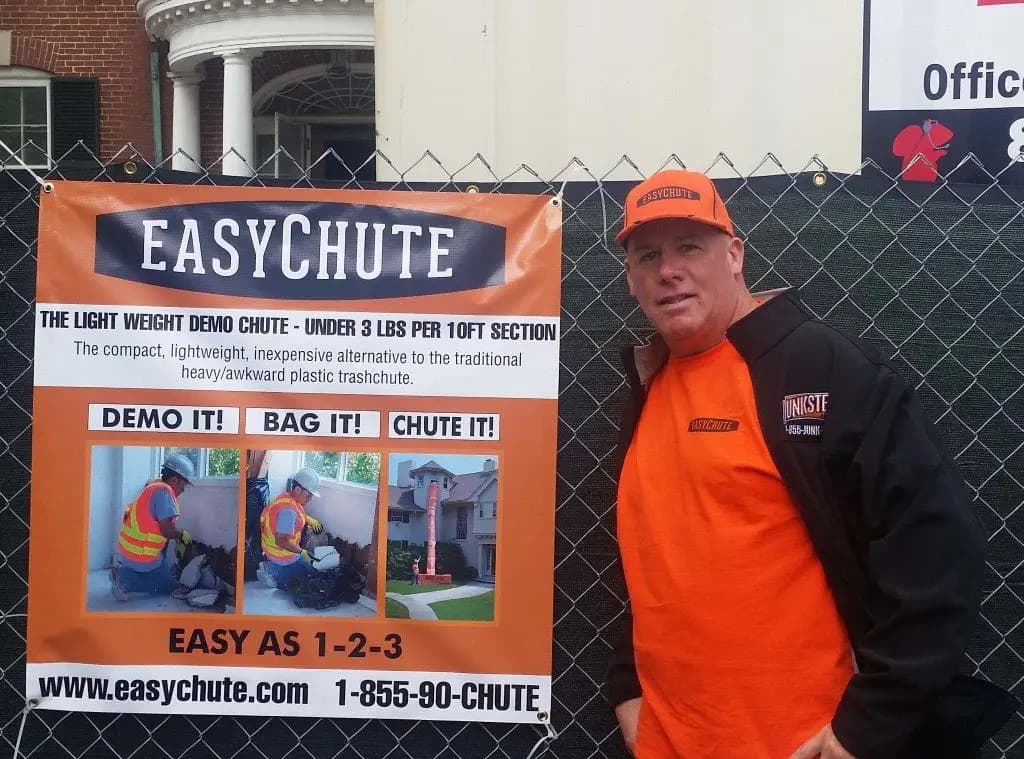
EasyChute's lightweight sections weigh under 3 lbs per 10-foot section. One person can hang, use, and strike the entire chute in minutes. When the job is done, the chute folds into a small box and ships to the next site. That is a completely different maintenance model than a permanent chute in a residential tower.
When Contractors Do Need Cleaning Support
Even on construction sites, there are scenarios where cleaning becomes relevant:
- Long-duration projects: A six-month gut renovation that generates wet debris — plaster, old roofing adhesive, insulation — may benefit from a mid-project rinse of the chute interior.
- Reusable chute maintenance: If you own and reuse the same chute sections across dozens of jobs, periodic cleaning extends the material's life and prevents odor buildup in storage.
- End-of-project building handoff: If your chute passes through an occupied building during renovation, you are responsible for leaving the building clean. That can include the chute path and discharge area.
For a full walkthrough of how construction chutes are set up and managed on a job site, see our construction chute guide for contractors.
Permanent vs. Temporary Chutes: Maintenance Cost Comparison
One of the most useful ways to frame the trash chute cleaning question is to compare the total cost of ownership between a permanent installed chute and a reusable temporary chute system.
- Permanent rigid chute (residential building): Installation cost runs into the tens of thousands of dollars. Ongoing professional cleaning at $400 per quarter = $1,600/year minimum. Fire code inspections, repairs, and door hardware replacement add further costs annually.
- Reusable fabric chute (contractor-owned): Purchase price of a 50-foot system is a fraction of permanent installation. Cleaning is handled in the field by the crew. No fire code maintenance schedule. No building access required for a cleaning crew. The savings over a multi-year period are substantial.
This is not an apples-to-apples comparison — permanent building chutes serve different purposes — but for roofing contractors, junk removal crews, and renovation teams, understanding that a reusable fabric chute sidesteps the professional cleaning cycle entirely is an important factor in the buying decision.
DIY Trash Chute Cleaning: What You Can and Cannot Do
For small buildings or low-traffic commercial spaces, some property managers attempt DIY cleaning between professional visits. Here is an honest assessment of what works and what does not.
What You Can Do Yourself
- Intake door wiping: Daily or weekly wipe-down of door surfaces with a disinfectant spray reduces surface bacteria and controls odor at the point of contact.
- Deodorizer application: Enzyme-based deodorizer blocks or pouches placed at the top of the chute can reduce odor between professional cleanings.
- Discharge area maintenance: Keeping the dumpster room clean, well-drained, and free of debris reduces the volume of contamination that splashes back into the chute.
- Resident education: The single biggest DIY intervention is requiring residents to bag and tie all trash before it enters the chute. Loose food waste is the primary contamination driver.
What Requires a Professional
- Interior shaft scrubbing — you cannot safely access a vertical chute shaft without specialized equipment and confined-space training
- Sprinkler head inspection and replacement
- Fire code compliance documentation
- Blockage removal below the intake level
- Mold remediation inside the shaft
Trying to handle interior shaft cleaning without proper equipment is both ineffective and potentially dangerous. OSHA's ergonomics and safe-lifting guidelines are relevant here — improperly handling heavy cleaning equipment in a confined vertical space creates real injury risk for untrained workers.
Trash Chute Cleaning for Demolition and Interior Gut Work
Interior demolition projects create a specific kind of debris flow: drywall dust, old plaster, lead paint chips, asbestos-containing materials in older buildings, and mixed construction waste. The demolition chute setup for this type of work needs to handle abrasive, dusty, irregular debris without creating a secondary contamination problem inside the building.
When a demolition chute is used in an occupied or partially occupied building, the discharge area and any interior surfaces the chute contacts need to be cleaned before residents or other workers re-enter the space. This is where a trash chute cleaning company may be brought in specifically for a one-time post-demo clean rather than recurring maintenance.
Key considerations for post-demolition chute cleaning:
- Confirm whether hazardous materials (lead, asbestos) were present — if so, remediation specialists, not standard chute cleaners, handle the cleanup
- Ensure the discharge room floor is power-washed and dried before the dumpster is removed
- Document the cleaning for the general contractor's project closeout file
- If you used a reusable fabric chute, inspect it for tears or abrasion before storing it — debris with sharp edges can nick the coated fabric
Choosing Between a Chute Cleaning Contract and On-Demand Service
If you manage a building with a permanent trash chute, you will eventually choose between signing an annual maintenance contract with a cleaning company or calling for service on demand. Each approach has real trade-offs.
Annual Maintenance Contracts: Pros and Cons
- Pro: Lower per-visit cost — typically 10–20% below on-demand rates
- Pro: Scheduled visits mean you are less likely to let cleaning lapse and face a fire code violation
- Pro: The vendor learns your building's quirks over time and cleans more efficiently
- Con: You are locked into one vendor — if quality slips, you still owe the remaining contract value
- Con: Contracts often auto-renew; set a calendar reminder to review before the renewal window
On-Demand Service: Pros and Cons
- Pro: Maximum flexibility to switch vendors if quality is poor
- Pro: No long-term commitment
- Con: Higher per-visit cost
- Con: Scheduling during peak demand (summer, end of quarter) can be difficult
- Con: Easy to procrastinate, which leads to code violations and complaints
The right choice depends on your building's size and usage. For buildings with more than 50 units or any food service component, an annual contract almost always pencils out better over a three-year horizon.
How the Right Chute Setup Reduces Your Cleaning Bill
Here is a practical point that most building managers and contractors overlook: the design and material of your chute directly affects how often it needs professional cleaning and how much that cleaning costs.
Smooth-interior chutes with minimal joints accumulate less residue than sectioned metal chutes with exposed fasteners and rough seams. For temporary construction applications, a canvas or woven poly chute that is used for a defined project window and then struck — rather than left in place — essentially removes the professional cleaning variable from your budget entirely. That is by design. EasyChute sections connect with a 1.5-foot overlap and hang from four woven loops using standard carabiners, so the whole system goes up and comes down without any permanent attachment point that could trap residue.
For job site setup guidance, the step-by-step EasyChute installation guide walks through the full process — including how to position the chute for the cleanest possible debris path into the dumpster below.
And if you want to see how the system performs in real job conditions, the EasyChute video library shows actual installations across roofing, demolition, and junk removal scenarios.
Frequently Asked Questions
How much does a trash chute cleaning company typically charge?
Pricing depends on building height, chute length, and service scope. In 2026, most standard residential cleanings (up to 10 stories) run between $200 and $500 per visit. Taller or more complex buildings can reach $1,200 to $2,500 or more. Annual maintenance contracts typically offer a 10 to 20 percent discount over on-demand rates. Always get the full scope of work in writing — some companies charge extra for discharge room cleaning, door lubrication, or repair documentation that should be standard.
How often does a trash chute need to be professionally cleaned?
For high-rise residential buildings, monthly cleaning is common in heavily used chutes; quarterly is a typical fire code minimum. Mid-rise buildings with moderate usage generally need quarterly cleaning plus an annual inspection. Commercial buildings with food service components may need monthly service. Temporary construction chutes — especially lightweight fabric models — are struck at the end of a project rather than cleaned professionally, which removes the ongoing maintenance cost entirely.
What is the difference between a trash chute cleaning company and a general janitorial service?
A specialized trash chute cleaning company uses high-pressure hot water systems, motorized rotary brushes, commercial extraction equipment, and EPA-registered disinfectant foggers specifically designed for enclosed vertical shafts. A general janitorial crew lacks this equipment and cannot safely access the interior of a chute shaft. Using a general cleaner for chute interior work typically produces poor results — surface-level odor masking rather than genuine sanitation — and may create liability if a technician is injured without proper confined-space training.
Can I clean a construction trash chute myself instead of hiring a company?
For temporary fabric or woven poly construction chutes, yes — basic field cleaning is straightforward. After a project, the chute can be rinsed with a garden hose, allowed to dry fully, and folded for storage. For permanent rigid chutes in residential or commercial buildings, interior shaft cleaning requires specialized equipment and confined-space safety protocols that go beyond what a typical maintenance crew can safely handle. Attempting interior shaft cleaning without proper equipment creates both injury risk and poor sanitation outcomes.
What should a trash chute cleaning company include in a service visit?
A complete service visit should include: pre-cleaning inspection with photos, isolation of all intake doors, high-pressure hot water scrubbing of the full chute interior from top to bottom, EPA-registered disinfectant application, cleaning and lubrication of all intake door hardware, pressure washing of the discharge area and dumpster room, and a written post-service report with photos and any repair recommendations. Fire code compliance documentation should be provided if required by your local jurisdiction. Any company that skips the disinfectant step or the written report is not delivering full-service cleaning.
Are there fire code requirements for trash chute cleaning frequency?
Yes, in most jurisdictions that have permanent trash chutes in residential or commercial buildings. Local fire codes — which vary by city and state — typically require quarterly cleaning at a minimum for high-rise buildings. Some jurisdictions require documentation from a licensed cleaning company as proof of compliance. Building managers should check with their local fire marshal for specific requirements. Failure to comply can result in fines, failed inspections, and increased insurance liability. A reputable trash chute cleaning company will be familiar with local code requirements and can provide the documentation needed.
Does the type of trash chute material affect how often it needs cleaning?
Yes, significantly. Smooth-interior chutes made from coated woven fabric accumulate far less residue than segmented metal chutes with exposed joints and fasteners. For temporary construction applications, lightweight fabric chutes — like those used by roofing contractors and demolition crews — are struck after each project and generate no ongoing cleaning requirement. Permanent metal chutes in high-rise buildings have more surface area for biofilm and grease to accumulate, which is why they require a regular professional cleaning schedule that temporary fabric systems avoid entirely.
Ready to Choose a Chute System That Works With Your Workflow?
If you are a contractor, roofer, or junk removal operator, you do not have to build a professional cleaning schedule into your operating costs. The right temporary chute system — lightweight, reusable, and designed to be struck clean at the end of every job — takes that variable off the table entirely.
EasyChute sections connect to any height, hang from standard carabiners, weigh under 3 lbs per 10-foot section, and ship free to job sites across the United States. Whether you are working a two-story roofline in New England or a full gut renovation in a dense urban building, there is a configuration that fits your site. See the full debris chute product overview to find the right length, or visit the EasyChute FAQ for answers to the most common setup and ordering questions.
Have a job coming up and want to talk through the right configuration? Contact EasyChute directly — the team behind the product are contractors themselves and can help you spec the right setup for your specific site conditions.