
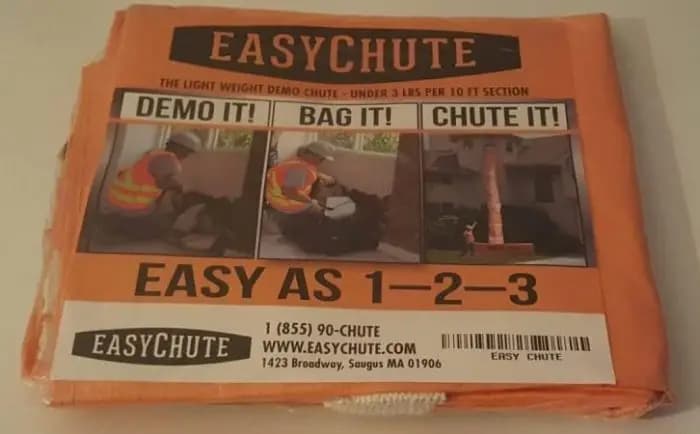
Savannah, Georgia is one of the busiest renovation and restoration markets on the East Coast. Historic squares, antebellum townhomes, mid-century apartment blocks, and a roaring hospitality construction scene all create steady demand for skilled trades — and all of them generate debris that has to move off upper floors and into dumpsters fast. If your crew is still hauling buckets and rolling wheelbarrows through finished hallways, you are losing time, risking injuries, and leaving money on the table.
A debris chute changes all of that. In this guide you will learn exactly what a debris chute is, how to pick the right configuration for Savannah job sites, how to hang it safely, and why a lightweight, reusable fabric chute outperforms rented steel towers for most contractors and roofers working in the Hostess City.
What Is a Debris Chute and Why Does Every Savannah Crew Need One?
A debris chute is a tubular channel — made from fabric, plastic, or steel — that attaches to an upper-floor window, roof edge, or scaffold and funnels broken materials directly into a dumpster or bag below. Instead of carrying shingles, drywall chunks, plaster, or concrete rubble down stairs by hand, workers load the chute at the top and gravity does the work.
For Savannah specifically, the case for a chute is ironclad:
- Multi-story historic stock. The Victorian District, Ardsley Park, and Midtown Savannah are packed with two- to four-story homes where stairwells are narrow and irreplaceable woodwork lines every hallway.
- Year-round roofing season. Savannah's mild winters keep roofers busy through December, meaning high-volume shingle tear-offs happen at pace all year.
- Active gut-renovation market. Hotel conversions, short-term rental flips, and adaptive reuse projects downtown all involve heavy debris loads from upper floors.
- OSHA compliance pressure. OSHA's construction industry standards require employers to control debris to prevent struck-by hazards — a chute documents that control.
How Fabric Debris Chutes Work: The Mechanics
Not every chute is made from the same material, and the type you choose affects how easily it ships to your Savannah address, how quickly one person can hang it, and whether you can reuse it across dozens of jobs.
The Anatomy of a Woven-Poly Fabric Chute
EasyChute sections are made from woven, coated poly fabric — the same category of material used for bulk grain bags and heavy industrial liners. Each section is a cylinder roughly 22 inches in diameter with four reinforced hanging loops at the top opening and a socket at the bottom that slips over the next section with a 1.5-foot overlap. That overlap keeps debris from escaping at the joint as it accelerates down the tube.
- 10 ft lite-duty section: Under 3 lbs. One person, one hand, carried up a ladder.
- 10 ft heavy-duty section: Reinforced fabric for rougher material — broken masonry, tile, metal lath.
- 25 ft section: Ideal for three-story Savannah townhomes or scaffold setups where you want fewer connections.
- 50 ft section: Designed for taller commercial and mixed-use builds — hotel conversions, multi-unit residential new construction.
Hanging the Chute on a Savannah Job Site
Each section hangs from four woven loops using ordinary carabiners or quick-connects. The loops fit over a 2x4 set in a window opening, clip to scaffold tubing, or lash to a roof-edge anchor point. No drilling, no welding, no specialty hardware. A single worker can hang a complete chute — from opening the box to dropping the first load — in under 15 minutes. See the full process in the step-by-step EasyChute setup guide.
Choosing the Right Chute Configuration for Savannah Building Types
Savannah's building inventory is unusually diverse for a mid-size city. A debris chute that's perfect for a three-story Landmark Historic District brownstone is different from one you'd run on a four-story Holiday Inn Express renovation on Abercorn Street. Here's how to match sections to your project:
One- and Two-Story Residential Roofing Jobs
Most Savannah bungalows and ranch-style homes in neighborhoods like Midtown and the Starland District sit at 12 to 20 feet from ridge to grade. A single 25 ft section — or two connected 10 ft sections — handles that span with room to angle into the dumpster opening. The 10 ft lite-duty section is the starting point most roofers use; read more in the complete roofing trash chute guide.
Three- and Four-Story Victorian and Federal-Style Homes
The Victorian District and Ardsley Park routinely present crews with tear-out jobs at 30 to 45 feet of vertical height. Three or four 10 ft sections, or a single 25 ft plus a 10 ft, covers that range. Always add one extra section so the bottom of the chute reaches past the dumpster lip — you do not want debris bouncing off the rim.
Commercial and Hospitality Construction
Savannah's hotel and mixed-use development pipeline — particularly around the Savannah Convention Center corridor and Plant Riverside — means more projects at 60 to 100 feet. A 50 ft section paired with a 25 ft extension, or a full run of 10 ft heavy-duty sections, delivers the reach. The demolition chute guide covers high-volume interior gut work workflows in detail.
Scaffold-Mounted Setups
Many Savannah façade restoration and masonry repair jobs use system scaffold. EasyChute loops clip directly to scaffold tube with standard carabiners — no adapter needed. Run the chute on the exterior face and drop to a skip or bag positioned at grade. Workers at each level can feed the chute from the platform without leaving their work area.
The Safety Case: Why a Chute Beats Manual Carries Every Time
Carrying debris down stairs is not just slow — it is genuinely dangerous. OSHA's ergonomics guidance identifies repetitive heavy lifting as a leading cause of musculoskeletal injuries in construction. A single bucket of shingles can weigh 40 to 60 lbs; crews carrying five or ten loads per trip accumulate that load across dozens of stair runs in a single day.
Struck-By and Falling-Object Hazards
Tossing debris from upper floors — still common on residential jobs — creates an immediate struck-by hazard for anyone below. OSHA 29 CFR 1926.252 requires that debris dropped more than 20 feet be enclosed in a chute that extends to a point sufficiently close to the ground or to the level to which the material is dropped. A properly hung EasyChute satisfies that requirement on record.
Reducing Trip-and-Fall Risk on Stairs
Narrow Victorian staircases with steep risers are a trip hazard even when empty. Add a worker carrying a full wheelbarrow or a 60 lb bag and the risk compounds. Eliminating those carries entirely — let the chute do it — removes that exposure from your safety log. For crew-level safety playbooks, the EasyChute FAQ covers common setup questions that affect site safety.
Environmental Responsibility: Construction Debris in Coastal Georgia
Savannah sits in a coastal Georgia ecosystem that includes the Savannah River, tidal wetlands, and Tybee Island's shoreline. Construction debris that escapes job sites — blown off open truck beds, scattered from careless loading — can end up in storm drains and waterways. According to the EPA's data on construction and demolition debris, the US generates hundreds of millions of tons of C&D waste annually, and containment is the first step toward responsible disposal.
A fabric debris chute keeps material contained from the point of removal to the dumpster. Nothing blows off the truck bed because everything is already in the dumpster before the truck arrives. That is good practice for any coastal market where local codes and community relationships matter.
Cost Comparison: Renting a Steel Chute System vs. Owning EasyChute
Steel modular chute systems are available for rent in some markets, but Savannah is not a major equipment rental hub for specialty debris management gear. That means wait times, delivery fees, and minimum rental periods that add real cost to a short-duration job. Here is a practical comparison:
- Steel rental chute: Typically $150–$400 per week depending on height, plus delivery and pickup fees. Every job requires a new rental order. Heavy sections require multiple crew members to hang and strike.
- EasyChute fabric chute (purchased): Fixed purchase price, free shipping to your Savannah address, and the system pays for itself across multiple jobs. A 10 ft section weighs under 3 lbs — one person hangs it in minutes and packs it in a box at the end of the day.
The full rental-vs-purchase breakdown and the modular kit cost breakdown both walk through the numbers in detail. For most crews doing more than three or four jobs per year at height, ownership wins quickly.
The Reusability Factor
Fabric chutes take real abuse — concrete chunks, broken tile, asphalt shingles — and the woven coated poly holds up job after job. When a section does eventually wear, you replace that one section, not the entire system. That modular replacement model keeps lifetime cost low compared to either rental dependency or replacing a full kit.
Fabric vs. Canvas vs. Plastic: Understanding Your Material Options
If you have been searching for debris chutes in Savannah, you have likely seen references to canvas chutes, plastic chutes, and fabric chutes. Here is what the terminology actually means and how to choose:
- Canvas trash chutes: Traditional woven cotton or cotton-blend construction. Heavier per linear foot than modern poly fabric, absorbs moisture over time, and can mildew in Savannah's humid subtropical climate. Read the detailed breakdown in the canvas trash chute guide.
- Fabric trash chutes (woven poly): Lighter, coated against moisture, UV-stabilized. Savannah's heat and humidity make the moisture-resistant coating a meaningful advantage over raw canvas. Full breakdown in the fabric trash chute guide.
- Rigid plastic or fiberglass sections: Heavy, awkward to stack, not practical for one-person setup. Common in permanent high-rise trash rooms, not field-deployable construction chutes.
For almost every Savannah contractor — roofer, remodeler, junk removal operator — woven coated poly fabric is the correct material choice in 2026.
Roofing Crews in Savannah: A Step-by-Step Shingle Tear-Off Workflow
Savannah roofers deal with a lot of three-tab asphalt, architectural shingles, and the occasional metal standing-seam repair. Shingle tear-offs generate dense, heavy debris that needs to move off the roof quickly so crew members are not tripping over sliding waste.
Pre-Job Checklist for Savannah Roofers
- Measure eave-to-grade drop. Add at least 2 ft so the chute mouth clears the dumpster rim.
- Position dumpster close to the foundation wall directly below your planned chute exit point.
- Lay out chute sections from bottom to top — connect them on the ground first if access allows.
- Hang the top section from the ridge cap or fascia anchor using carabiners through the four loops.
- Confirm the bottom of the chute hangs inside the dumpster opening, not over the rim.
- Brief crew: all debris goes in the chute — no tossing off the far side of the roof.
Mid-Job Adjustments
If the dumpster fills mid-job and gets swapped out, the chute stays hung — you do not need to strike it. The swap driver repositions the empty container under the chute mouth, and the crew keeps moving. This is one of the workflow advantages covered in the EasyChute video library.
Interior Gut Renovations: Using a Debris Chute Inside Savannah Historic Buildings
Interior demolition in Savannah's historic properties presents a specific challenge: you cannot damage plaster medallions, heart-pine floors, or original millwork getting debris out. That means no wheelbarrows through parlors, no dragging concrete bags across oak floors.
Window-Exit Chute Setup
The most common interior gut workflow uses an EasyChute hung from a window opening. The 2x4 crossbar sits in the rough opening (or a temporary frame if the window is already removed), and the chute drops straight to the dumpster below. Workers carry debris to the window and drop it in — a 10-second task per load versus a 3-minute round-trip down stairs.
Floor-by-Floor Relay for Tall Structures
On four-story structures, some crews run a short relay: workers on upper floors break material to manageable size and pass it to the floor with the chute opening. Others run a chute from each floor level and accept the extra connection point. Both approaches eliminate stair carries entirely. The construction chute guide covers multi-floor relay setups in more detail.
Junk Removal Operations in Savannah: Maximizing Efficiency with a Chute
Savannah's short-term rental market — vacation homes near Forsyth Park, Airbnb flips in Thomas Square, estate cleanouts in the Victorian District — keeps junk removal crews busy year-round. When a cleanout involves a second or third floor, the choice between carrying everything down and running a chute is a direct labor-cost calculation.
A two-person junk removal crew running an EasyChute can clear a third-floor apartment in roughly half the time of a carry-down operation. One person loads and feeds the chute upstairs; one person manages the dumpster or bag at grade. Load times drop, truck cycles drop, and the job wraps before overtime kicks in.
EasyChute works with standard roll-off dumpsters and with large debris bags like junk removal contractors commonly use. The construction debris removal guide covers bag-versus-dumpster decisions for different job types.
Shipping and Delivery: Getting a Debris Chute to Your Savannah Job Site
One of the friction points contractors face with specialty equipment is logistics. EasyChute ships free to job sites across the United States — including Savannah and the surrounding Coastal Georgia market. Because a 10 ft section weighs under 3 lbs and folds into a compact box, sections ship via standard parcel carriers to any address: a job site, a contractor's shop, or a home address.
There is no freight terminal pickup, no rental company coordination, no deposit check. You order online at fixed prices, the chute arrives at your door, and you are ready for the next job. To learn more about how EasyChute is built and who built it, visit the About EasyChute page.
Common Mistakes Savannah Contractors Make with Debris Chutes
Getting a chute in the air is straightforward, but these errors are common enough on Savannah job sites that they are worth flagging explicitly:
- Undersizing the reach. The chute bottom must reach past the dumpster lip, not just to grade. Add a section if you are unsure.
- Skipping the bottom anchor. On windy days — and Savannah gets coastal wind events — an unanchored bottom section can swing and miss the dumpster. Use a simple tie-down or weight the chute bottom with a sandbag loop.
- Overloading with wet debris. Wet drywall and soaked insulation are heavier than they look. Limit load size per drop on fabric chutes — small, frequent loads move faster and put less stress on the hanging loops than large infrequent dumps.
- Ignoring the overlap. The 1.5 ft section overlap is load-bearing. Rushing connections to only a few inches of overlap causes sections to separate mid-job.
- No pedestrian exclusion zone. Mark out the area around the dumpster. No one stands under a loaded chute — ever. This is an OSHA struck-by requirement, not a suggestion.
Frequently Asked Questions
Does EasyChute ship debris chutes to Savannah, GA?
Yes. EasyChute ships free to job sites across the United States, including Savannah and all of coastal Georgia. Sections are lightweight enough to ship via standard parcel carriers, so delivery goes directly to your job site address, your shop, or your home. There is no freight pickup or minimum order required. You can order a single 10 ft section or a full multi-section run depending on the height of your project.
What size debris chute do I need for a three-story Savannah Victorian?
A three-story Victorian home typically sits 30 to 42 feet from the top window to grade. You will want at least 35 to 45 feet of chute to reach comfortably past the dumpster rim. That means three or four connected 10 ft sections, or a 25 ft section plus one or two 10 ft extensions. Always err on the side of one extra section so the chute mouth lands inside the dumpster opening rather than stopping at the edge.
Is a fabric debris chute OSHA-compliant for Savannah construction jobs?
OSHA 29 CFR 1926.252 requires that debris dropped more than 20 feet be enclosed in a chute. A properly installed EasyChute — hung securely, extending to near grade, with a pedestrian exclusion zone below — satisfies that requirement. Contractors are responsible for their own site compliance documentation, but a fabric chute that fully encloses falling debris meets the design intent of the regulation. Review OSHA's construction standards for full guidance specific to your project type.
Can I use EasyChute for a roofing tear-off in Savannah?
Absolutely — roofing tear-offs are one of the most common uses. Hang the top section from the eave or fascia, connect additional sections to reach the dumpster below, and shingles drop straight in. The woven coated poly fabric handles the weight and abrasion of asphalt shingles well. For steep-pitch roofs common in Savannah's historic neighborhoods, a simple hip anchor keeps the chute positioned correctly at the eave line throughout the job.
How long does it take one person to set up a debris chute on a Savannah job site?
A single worker can typically hang a complete EasyChute setup — from opening the box to dropping the first load — in 10 to 15 minutes. The loops go over a 2x4 in a window opening or clip to scaffold tubing with standard carabiners. Sections connect on the ground and get raised, or connect in place from a ladder. Strike time at the end of the day is equally fast: unclip, fold, box, done.
What types of debris can I run through a fabric chute?
EasyChute handles the full range of residential and light commercial demolition debris: asphalt shingles, drywall, plaster, wood framing scraps, insulation batts, broken tile, light masonry rubble, and general junk removal material. Sharp metal or heavy concrete chunks should go in the heavy-duty 10 ft section rather than the lite-duty version. Avoid running actively burning or smoldering material — let debris cool before loading the chute.
How is EasyChute different from renting a steel chute system?
Steel rental chutes require scheduling, delivery logistics, and weekly rental fees that add up fast. EasyChute is purchased at a fixed price with free shipping, arrives in a small parcel, and is reused job after job. A 10 ft fabric section weighs under 3 lbs versus 20 or more pounds for a comparable steel section. One person hangs it; steel systems often require two. For most Savannah contractors doing multiple jobs per year, ownership pays for itself within the first few projects.
Get a Debris Chute Shipped to Your Savannah Job Site Today
Savannah's renovation market moves fast — historic properties, tight timelines, narrow staircases, and demanding property owners who will not tolerate damage to original finishes. A debris chute is not a luxury on these jobs; it is the difference between a smooth operation and a costly, slow carry-down that eats labor and risks the finish work.
EasyChute ships free to Savannah, GA. Sections arrive ready to hang, weigh under 3 lbs, and fold back into the box at the end of every job. One investment, dozens of uses, no rental coordination, no delivery trucks.
Ready to order? Visit the EasyChute contact page with any questions about sizing for your specific project, or head straight to the full product overview to choose your sections. Demo it. Bag it. Chute it.