
If you're a contractor in Woonsocket, RI pricing out a renovation, roof tear-off, or interior gut job, debris removal rarely gets its own line item until the job is halfway done and somebody is hauling bags down three flights of stairs. That's money walking out the door. A solid debris chute setup cost estimate up front changes the math entirely — it turns debris handling from a hidden labor sink into a predictable, budgeted task.
This guide breaks down every variable that affects what you'll spend on a debris chute in Woonsocket: the size of your project, the height of the building, whether you're buying or renting, and how a lightweight fabric chute like the ones from EasyChute compares to traditional metal or plastic options. By the end, you'll have enough information to put a real number into your next bid.
Why Woonsocket Contractors Need a Debris Chute Budget Line
Woonsocket sits in Providence County, a city with a dense mix of three-decker triple-deckers, early-20th-century mill buildings converted to condos, and older single-family housing stock. Most of these structures have narrow interior staircases, tight side yards, and streets where a dumpster can only sit legally for a limited time before the city wants it moved.
That combination — height, tight access, dense neighborhood — means hand-carrying debris bags downstairs isn't just slow, it's genuinely dangerous. OSHA's ergonomics guidelines are clear that repetitive heavy lifting is one of the leading causes of musculoskeletal injury on job sites. A crew spending two hours a day carrying shingles or demo waste down stairs is a worker's comp claim waiting to happen.
Putting a chute in your budget isn't overhead — it's risk management and time savings rolled into one line item.
What "Debris Chute Setup Cost" Actually Covers
When contractors ask about setup cost, they're usually thinking about one number. In reality, the total cost of running a debris chute on a Woonsocket job site has four components:
- Equipment cost — purchase price or rental fee for the chute sections themselves
- Labor to hang and strike — crew time to install and take down the chute each day or per job
- Accessories and hardware — carabiners, rope, anchor points, chute bags at the bottom
- Dumpster positioning — sometimes adjusting where the bin sits to catch the chute output adds a small cost
Most cost estimates you'll find online only quote the equipment. That's why crews feel sticker shock when they realize they also spent two hours setting up a complicated rig. The goal of this guide is to give you the full picture.
Typical Price Ranges for Debris Chute Equipment
Rental Costs in the Rhode Island Market
Renting a construction chute from a local equipment yard typically runs between $80 and $200 per week for a standard 20-to-30-foot setup in Rhode Island. That price usually covers only the rigid plastic or metal sections — carabiners, anchor straps, and a bottom bag are often add-ons. On a two-week job, you're looking at $160 to $400 just in rental fees before you count your time picking it up and dropping it off.
For longer jobs, rental costs compound fast. A four-week project at $150 per week is $600 spent on equipment you'll never own. And if anything is damaged on-site, you're paying the rental company's replacement rate, which can be steep on metal or fiberglass sections.
Purchase Costs for Lightweight Fabric Chutes
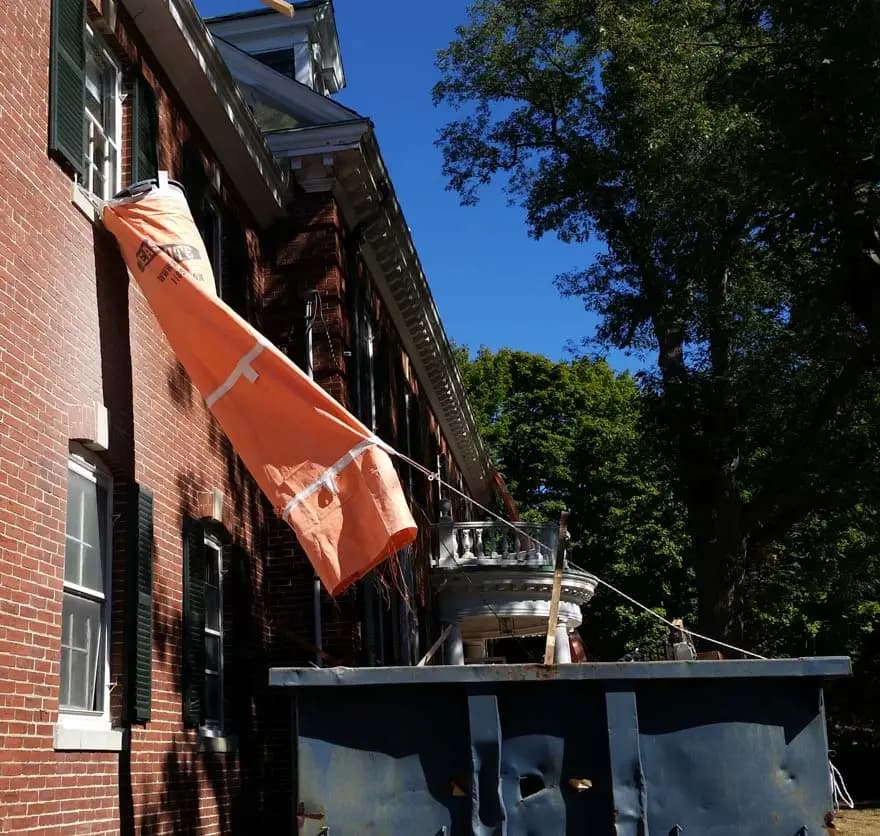
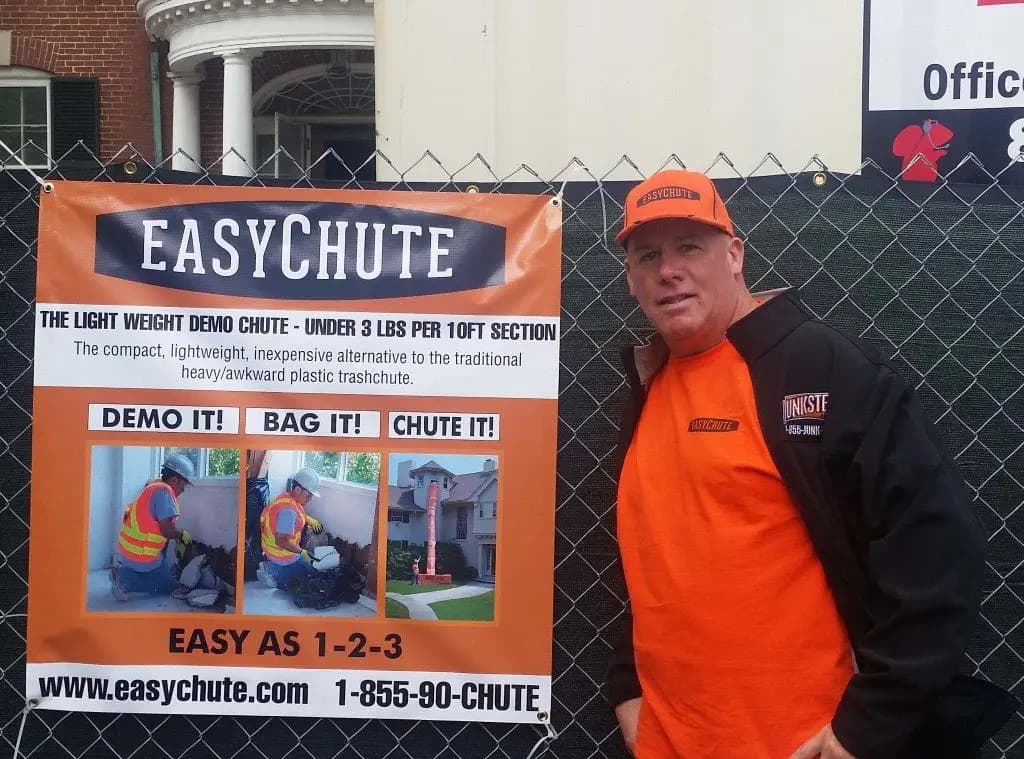
Buying a woven poly fabric chute is a different model entirely. EasyChute sections are priced at a fixed rate and ship free to job sites across the United States, including Woonsocket and all of Providence County. A single 10-foot heavy-duty section weighs under 3 lbs and folds into a small box, so it doesn't require a truck to move or a storage unit to house.
When you do the math against rentals, a purchased fabric chute pays for itself in one to three jobs depending on how often you do multi-story work. After that, every deployment is essentially free equipment. That's a fundamentally better cost structure for any contractor doing repeat roofing, renovation, or demo work. You can explore the full range at EasyChute's fabric trash chute product page.
Modular Sections vs. Single-Length Chutes
Modular systems — where you connect 10-foot, 25-foot, and 50-foot sections to match the job height — are almost always a better value than fixed-length chutes. With EasyChute, sections connect via a 1.5-foot overlap and hang from four woven loops using standard carabiners. That means a crew working a two-story triple-decker in Woonsocket might need one or two 10-foot sections, while a job on a taller mill conversion might call for a 25-foot section or a 25-foot plus a 10-foot combined.
Buying only what you need for typical job heights and adding sections as work expands keeps upfront cost low and flexibility high. See the full debris chute guide for a breakdown of which section lengths match which building heights.
Labor Cost to Hang and Strike a Debris Chute
How Long Does Setup Actually Take?
With a lightweight fabric chute, one person can typically hang a chute in 10 to 20 minutes. That includes carrying the sections to the upper floor, feeding them out the window or over the roof edge, clipping the carabiners to a scaffold pipe, railing, or anchor point, and verifying the bottom clears into the dumpster. Striking (taking it down) is even faster — 5 to 10 minutes.
Compare that to rigid metal or plastic chutes, which may take two people 45 minutes to an hour to assemble, hang, and secure safely. At $60 to $80 per hour for a skilled tradesperson in Rhode Island's current labor market, that extra setup time is real money.
Calculating Labor Into Your Budget
Here's a simple way to frame it in your estimate:
- Identify whether the chute is a one-time hang for the whole job or needs to be moved between floors or elevations.
- Multiply setup time (in hours) by your crew's burdened labor rate.
- Add strike time at the end of the job.
- If the chute stays up for multiple days without being moved, labor cost per day drops close to zero.
On most residential renovation jobs in Woonsocket — a bathroom gut, kitchen demo, or roof tear-off on a triple-decker — you'll hang the chute once and leave it for the duration of debris removal. That makes the labor cost a one-time expense, not a daily one.
Project Type Affects Your Total Cost Estimate
Roofing Jobs
Roof tear-offs are the highest-volume debris generation scenario most contractors face. Old shingles, underlayment, and in some cases rotted decking all need to reach ground level fast so the new roof system can go on. A roofing trash chute hung from the ridge or eave line drops debris directly into the dumpster without anyone carrying anything down a ladder.
For a standard Woonsocket residential roof (1,500 to 2,000 square feet of living space, typical 1.5-to-2-story pitch), one or two 10-foot sections are usually enough. Equipment cost is minimal; the real savings come from crew speed — a team can clear the roof 30 to 50 percent faster when they're not hauling shingles to the edge one armload at a time.
Interior Gut and Demo Projects
Interior demo creates a different challenge. Drywall, lath and plaster, old framing, insulation batts — this material comes out of upper floors through windows or stairwells. A demolition chute hung from an upper window allows continuous debris flow from the inside without crews running bags down stairs.
For multi-story gut jobs in Woonsocket's older building stock (many are three-decker structures built between 1890 and 1930 with plaster walls and old-growth framing), a 25-foot section or a combination of a 10-foot and 25-foot section typically handles the drop. EPA data on construction and demolition debris shows how much material gut jobs actually generate — and efficient removal matters for both project timelines and environmental compliance.
Junk Removal and Cleanout Jobs
Junk removal crews working Woonsocket properties — estate cleanouts, hoarder situations, furniture removal from upper floors — benefit enormously from a lightweight chute. The load variety is high and the turnaround per job is fast, so the chute needs to go up and come down quickly. EasyChute was co-created by a junk removal owner for exactly this use case, and the design reflects it: no tools, no assembly beyond clipping carabiners, and fold-flat storage between jobs.
What Drives Cost Up (And How to Avoid It)
Renting Instead of Owning
As covered above, rental fees accumulate fast. If you're doing more than two or three jobs a year that involve multi-story debris removal, ownership almost always wins. The modular chute vs. rental cost comparison breaks this down in detail, and while it's framed for Connecticut contractors, the math applies equally to Rhode Island.
Buying the Wrong Length
Over-buying chute length wastes money and creates excess weight and storage issues. Under-buying means the chute doesn't reach the dumpster safely. A good rule of thumb: measure the drop from your hang point to ground level, add 3 to 4 feet for the dumpster clearance overhang, and that's your minimum chute length. Build in a small buffer — it's better to have one extra section than to have the chute bottom-out six inches above the dumpster lip.
Failing to Plan Dumpster Position
Even the best chute setup fails if the dumpster isn't where the chute ends. On tight Woonsocket streets where parking and sidewalk access are limited, you may need to coordinate dumpster placement with the city's permit requirements. Know where the bin will sit before you finalize your chute anchor point. This is a planning cost — it's free if you think it through, expensive if you have to move things mid-job.
Skipping Safety Basics
Debris chutes need to be properly anchored so they don't swing or slip under load. OSHA's Construction Industry safety standards apply to how material is handled and dropped from elevation. Skimping on anchor points or using undersized hardware doesn't save money — it creates liability. EasyChute's four woven loop design distributes load across the structure evenly, but you still need to verify the anchor point (scaffold, railing, beam) can handle the dynamic load of debris passing through.
Sample Cost Estimates for Common Woonsocket Job Types
These are illustrative ranges based on typical Woonsocket project sizes, current equipment pricing, and regional labor rates. Use them as a starting point for your own estimates, not as a quote.
Single-Story Roof Tear-Off (Ranch or Cape)
- Chute needed: One 10-foot heavy-duty section
- Equipment cost (purchase): Low end of the product range; ships free
- Setup labor: 15 minutes, one person
- Total added cost per job after first use: Essentially $0 (equipment already owned)
- Time saved vs. hand-carry: 1 to 2 crew-hours per 1,500 sq ft roof
Two- or Three-Story Triple-Decker Gut Renovation
- Chute needed: One 25-foot section or two 10-foot sections combined
- Equipment cost (purchase): Mid-range; ships free to Woonsocket
- Setup labor: 20 to 30 minutes, one person
- Total added cost per job after first use: $0 on equipment; minor labor
- Time saved vs. hand-carry: 4 to 8 crew-hours over a full gut project
Junk Removal Cleanout, Two-Story Colonial
- Chute needed: One 10-foot lite-duty section for lighter furniture and boxed items
- Equipment cost (purchase): Lowest tier
- Setup labor: 10 minutes
- Time saved vs. stair carry: 1 to 3 crew-hours depending on volume
At Rhode Island labor rates, saving even 2 crew-hours per job at $65 per hour burdened cost is $130 back in your margin. On 20 jobs a year, that's $2,600 — more than enough to cover the cost of owning a complete modular chute system.
How to Read a Debris Chute Product Page Before You Buy
Not all fabric chutes are built the same, and the product page should tell you everything you need to make an informed decision. Here's what to look for:
- Fabric type and weight rating — woven, coated poly is the workhorse; look for heavy-duty vs. lite-duty designations and understand what debris each handles
- Section length options — does the system offer multiple lengths so you can match the chute to your most common job heights?
- Connection method — overlap-and-clip systems (like EasyChute's 1.5-foot overlap with carabiner loops) are faster and more reliable than zipper or Velcro connections under heavy debris load
- Weight per section — anything over 5 lbs per 10-foot section starts to become a two-person setup job
- Reusability — can you clean it and fold it for the next job, or is it single-use?
- Shipping cost — free shipping to job sites matters when you're ordering for a specific project start date
EasyChute's canvas and fabric chute guide walks through these material and construction differences in detail if you want a deeper comparison before purchasing.
Installation: What to Expect on Your First Setup
If you've never used a fabric debris chute before, the first setup takes a little longer while you dial in your anchor point and confirm the drop angle. After that first job, it becomes a 10-minute routine. The step-by-step EasyChute installation guide covers the process from anchor selection to confirming the dumpster position, and there are real job-site videos at EasyChute's video library so you can see the process before your first deploy.
Anchor Point Options on Woonsocket Job Sites
Woonsocket's older housing stock means your anchor options vary by building type:
- Triple-deckers: Porch railings and balcony framing are common anchor points; verify structural condition before loading
- Mill conversion buildings: Heavy timber framing and masonry window surrounds offer excellent anchor options
- Scaffolding: If you have scaffold up, scaffold pipes are the most reliable and cleanest anchor option
- Roof edges: For roofing jobs, anchor to a ridge board, chimney, or dedicated roof anchor — never rely on a single gutter bracket
Permit and Sidewalk Access Considerations in Woonsocket
Woonsocket requires standard building and demolition permits for most interior gut and structural work. For work where the chute extends over a public sidewalk, you may need a right-of-way permit from the city's public works department. This is a low-cost permit in most Rhode Island municipalities, but it's one that contractors sometimes overlook until an inspector flags it.
The practical implication for your cost estimate: add $50 to $150 for the sidewalk permit if your chute will pass over or adjacent to a public walkway. That's a small number relative to the labor savings, and it protects you from a stop-work order that costs far more.
Reusing Your Chute Across Multiple Jobs
One of the biggest cost advantages of a purchased fabric chute over a rental is the reuse factor. EasyChute sections are designed to be used job after job. After each use:
- Shake out loose debris at the job site before striking the chute.
- Fold or roll the section starting from the bottom, working toward the top.
- Store folded in its original box or a contractor bag — a 10-foot section fits easily in a truck cab or van shelf.
- Inspect the fabric and loops before the next use; replace any carabiners showing signs of wear.
With basic care, a heavy-duty EasyChute section handles dozens of deployments. When you spread the purchase price across 20, 30, or 40 jobs, the per-job equipment cost drops below $5. No rental model can match that math. For a full look at responsible debris handling and reuse, the EPA's recycling and waste resource hub has useful context on how contractors can reduce landfill load on C&D projects.
Common Mistakes Woonsocket Contractors Make with Debris Chute Budgets
Waiting Until the Job Starts to Order
Ordering a chute the week the job kicks off introduces risk. If shipping is delayed even by a day, your crew starts hand-carrying debris — and once that habit is set, the chute arrival barely changes behavior. Order with enough lead time to have the chute on-site the day demo or tear-off begins. EasyChute ships free, so there's no cost pressure to consolidate orders; just order when you bid the job.
Underestimating Debris Volume
Contractors frequently underestimate how much material a gut renovation or roof tear-off generates. A 2,000-square-foot triple-decker gut can produce 10 to 20 tons of mixed C&D debris. That's not a few bags down the stairs — that's a continuous operation where chute efficiency directly controls how fast the job moves. EPA waste and recycling data offers perspective on typical C&D material volumes by project type.
Buying Sections That Are Too Short
A chute that doesn't reach the dumpster isn't a chute — it's a ramp that sprays debris across your staging area. Always measure the full drop before ordering and err toward slightly longer rather than shorter. Sections connect easily, so if you bought a 25-foot section and you need 28 feet, adding a 10-foot section gets you there without waste.
Ignoring the ROI Conversation with the Client
Some GCs hesitate to line-item a debris chute in a client-facing estimate because they think it looks like padding. Flip the framing: a debris chute is a safety and efficiency measure that keeps the job moving and reduces the risk of a worker injury claim. The SBA's small business marketing resources are a good reminder that positioning your methods as professional differentiators builds client confidence — not skepticism.
Frequently Asked Questions
How much does a debris chute setup cost for a typical Woonsocket, RI job?
For a standard residential project in Woonsocket — a roof tear-off or interior gut on a two- or three-story building — your all-in debris chute setup cost typically ranges from the purchase price of one or two fabric sections (which ship free) plus 15 to 30 minutes of labor to hang and position. After the first job, owned sections have no recurring equipment cost. Rental alternatives run $80 to $200 per week before accessories and return transport are factored in.
Do I need a permit to use a debris chute in Woonsocket?
Your standard building or demolition permit covers the work itself. If your chute passes over or adjacent to a public sidewalk or right-of-way, Woonsocket — like most Rhode Island municipalities — may require a separate sidewalk or encroachment permit from the public works department. These typically cost $50 to $150 and are straightforward to obtain. Contact the city directly with your project address to confirm requirements before the job starts.
Is it better to rent or buy a debris chute for contractors in Rhode Island?
For contractors doing multi-story work more than two or three times a year, buying is almost always the better financial decision. Rental fees accumulate quickly — a four-week rental at $150 per week is $600 for equipment you don't own. A purchased fabric chute from EasyChute ships free, weighs under 3 lbs per 10-foot section, and can be reused across dozens of jobs, dropping your effective per-job equipment cost below $5 over time.
What length debris chute sections do I need for a Woonsocket triple-decker?
A typical Woonsocket triple-decker stands roughly 30 to 35 feet from ground to the third-floor porch or eave line. For a window hang from the second floor, one 25-foot section usually provides enough drop to clear into a standard dumpster. For a third-floor or roof hang, combine a 25-foot section with a 10-foot section. Always measure your specific drop and add 3 to 4 feet for dumpster clearance before finalizing your section selection.
How long does it take to set up a fabric debris chute?
One person can typically hang an EasyChute fabric section in 10 to 20 minutes, including carrying sections to the upper floor, clipping carabiners to the anchor point, and confirming the bottom clears into the dumpster. Striking the chute at job end takes 5 to 10 minutes. This compares favorably to rigid metal or plastic chutes, which often require two people and 45 to 60 minutes to assemble and hang safely.
Can a fabric debris chute handle heavy demolition material like plaster and old framing?
Yes, when you choose the correct section rating. EasyChute offers both lite-duty and heavy-duty 10-foot sections alongside 25-foot and 50-foot lengths. Heavy-duty sections are designed for dense material like plaster, old masonry, and thick framing lumber. Lite-duty sections work well for shingles, insulation, drywall, and mixed junk removal loads. Matching the section rating to your debris type ensures durability across multiple job reuses.
Where can I see EasyChute sections in use before ordering?
EasyChute has a video library showing real job-site deployments across different building types and debris scenarios. You can view those at the EasyChute Videos page on this site. The installation guide also walks through the full setup process step by step, from anchor selection to confirming the dumpster drop zone. Both resources are free and don't require any account to access.
Get Your Debris Chute Cost Estimate Right the First Time
Debris removal is a task every contractor on every multi-story job has to solve. The difference between a crew that handles it efficiently and one that burns labor hours hauling bags down stairs often comes down to one piece of equipment — a well-matched debris chute that goes up fast, stays up for the job, and comes down just as fast.
For Woonsocket, RI contractors working in triple-deckers, mill conversions, and older residential stock, that means knowing your building heights, planning your dumpster position, and ordering the right section lengths before the job starts. EasyChute's modular fabric sections — 10 ft, 25 ft, and 50 ft — cover virtually every drop height you'll encounter in Providence County, ship free to your job site or business address, and are reusable across years of projects.
Explore the full construction chute guide for a broader look at how contractors manage debris from upper floors, or check out the EasyChute FAQ if you have specific questions about products, shipping, or setup. When you're ready to put a real number in your next bid, reach out to EasyChute directly — fixed pricing, free shipping, and no sales runaround.