
If you run a roofing crew, demo team, or junk removal operation anywhere in Connecticut — from Bridgeport to Hartford to New Haven — you have already felt the squeeze. Rental yard prices keep climbing, fuel surcharges show up on invoices nobody warned you about, and a job that runs two days longer than planned can double your equipment cost before you even swing a hammer. The question on every project manager's desk in 2026 is straightforward: is a modular, reusable trash chute a smarter investment than renting a traditional debris chute every time you need one?
The answer depends on job volume, building height, crew size, and a few Connecticut-specific realities — permit rules in certain municipalities, the density of the Gold Coast job corridor, tight colonial neighborhoods in Fairfield County. This guide walks through every cost layer so you can run the math yourself and make a confident call before the next bid goes out.
What "Traditional Rental" Actually Means in the Connecticut Market
When contractors in CT talk about renting a debris chute, they usually mean one of two things: a hard-plastic sectional chute sourced from a local equipment yard, or a full scaffold-and-chute package from a larger scaffolding company. Both options carry costs that rarely appear in the top-line rental quote.
The Standard Rental Stack
- Base rental fee: Most Connecticut equipment yards charge a weekly or per-day rate for hard-plastic chute sections. A three-story residential job typically requires a 25-to-30-foot run, which puts you at three to four sections plus a hopper.
- Delivery and pickup: Rental companies serving Fairfield, New Haven, and Hartford counties often add a flat delivery charge plus mileage. That alone can run $150–$300 per mobilization in 2026 depending on distance from the yard.
- Fuel surcharges: Nearly every rental house now itemizes a fuel or logistics surcharge, typically 8–15% of the base rental.
- Damage deposit: Hard-plastic sections crack under heavy debris impact. Expect a deposit equivalent to one or two weeks of base rental, held until the equipment is inspected on return.
- Extension fees: Job running long? Each extra day or week is billed at the standard rate. There is no built-in grace period.
Add those layers together and a single two-week roofing job in Greenwich or Stamford can generate a rental invoice of $600–$1,200 — before you factor in any damage claim. That is not a one-time cost; it repeats on every project.
How Modular Fabric Chutes Price Out
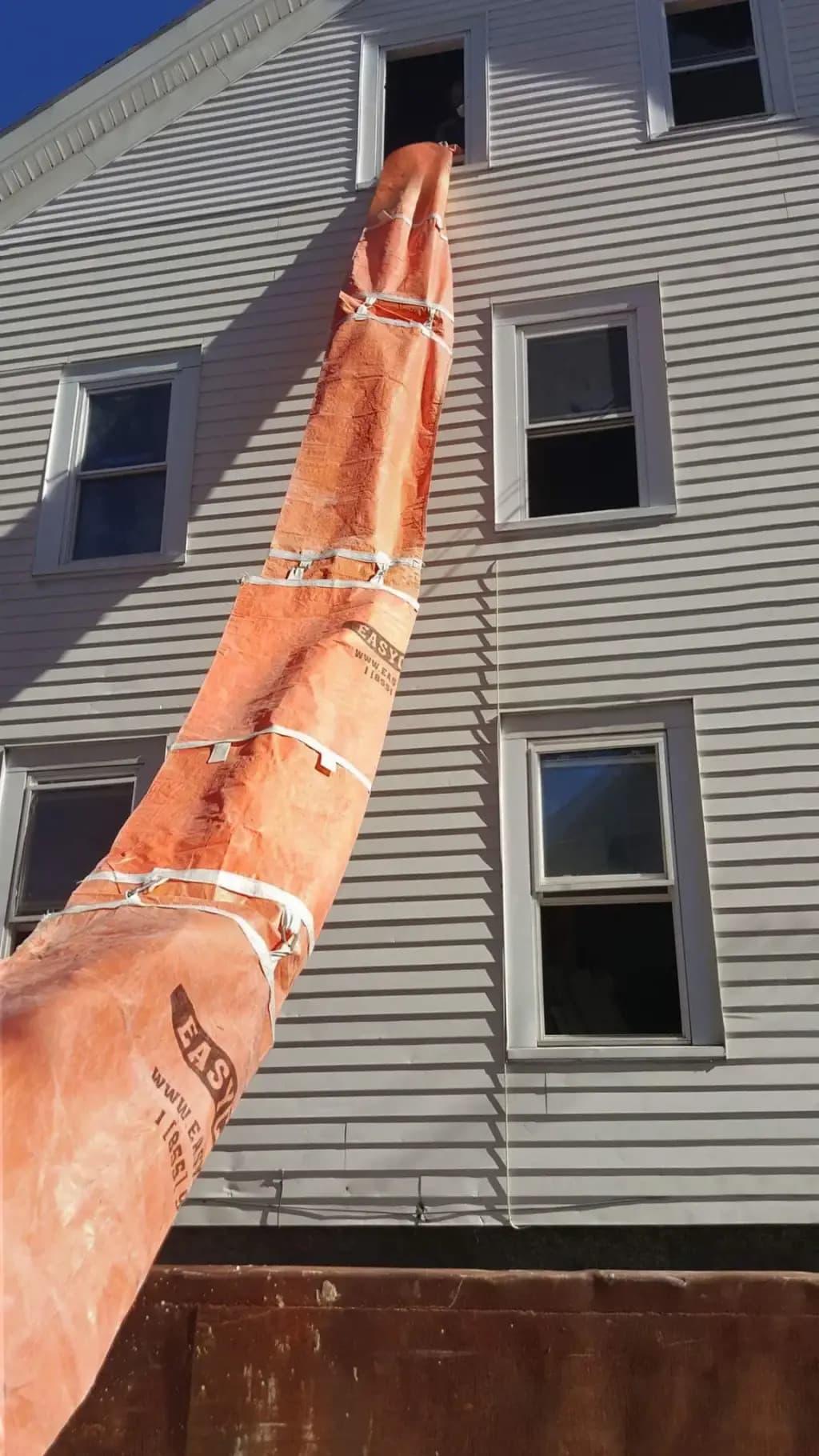
A modular system like the one fabric trash chutes from EasyChute uses is fundamentally different in economic structure. You purchase sections once and reuse them across dozens — or hundreds — of jobs.
Section Pricing and Configuration Options
EasyChute offers three section lengths — 10 ft, 25 ft, and 50 ft — in both lite-duty and heavy-duty fabric. Sections connect via a 1.5-foot overlap, so reaching any floor height is a matter of combining the right pieces. A typical Connecticut three-story residential job (roughly 25–28 ft of drop) needs one 25-ft section or two 10-ft sections stacked.
- A single heavy-duty 10-ft section weighs under 3 lbs and folds into a box small enough to stow in a truck bed.
- Free shipping to any Connecticut job site address means no delivery surcharge at purchase.
- No deposit, no fuel surcharge, no return logistics — the chute stays with your crew.
The Break-Even Calculation
Here is how the math actually works. Assume a Connecticut roofing crew runs 30 tear-off jobs per year and pays an average of $700 per rental cycle (two weeks, delivery included). That is $21,000 per year in rental spend. A modular chute configuration capable of handling the same jobs costs a fraction of that at purchase — and that purchase cost does not repeat the following year. The break-even point for most active Connecticut crews lands somewhere between job three and job eight, depending on their rental rate and job cadence.
For a detailed look at what a full installation involves, the EasyChute installation guide walks through setup time, anchoring points, and strike procedures that keep labor cost per job low.
Hidden Costs Rental Quotes Never Show You
The rental invoice you receive is not the full picture. Experienced Connecticut contractors know to look for the costs that live outside the invoice entirely.
Crew Time Spent Coordinating Rentals
Someone on your team has to call the yard, confirm availability, schedule delivery, be present for drop-off, inspect the sections on arrival, and coordinate the pickup window. On a busy job, that is 1–2 hours of supervisory time per rental cycle. Multiply that by 30 jobs a year and you have a hidden labor sink that rarely appears in a job costing spreadsheet.
Scheduling Gaps and Project Delays
Equipment yards across Connecticut are not always stocked. During peak roofing season — typically April through October — hard-plastic chute sections go fast. If the yard is out of stock, your crew either waits or starts throwing debris by hand, which creates OSHA construction safety exposure you do not want on a job site. A modular system you own eliminates that dependency entirely.
Damage Claims and Disputed Deposits
Hard-plastic chute sections crack. A single heavy load of concrete tile or green lumber can split a section. When equipment comes back with cracks, the rental yard has every incentive to attribute the damage to your crew and charge accordingly. Disputes over damage deposits are one of the most common contractor complaints about traditional rental.
Connecticut Job-Site Realities That Change the Math
Connecticut is not a monolithic market. A multi-family gut renovation in Bridgeport has very different logistical demands than a Cape Cod tear-off in Simsbury or a commercial strip-mall demo in Waterbury. These local realities affect how much any chute solution actually costs to operate.
Fairfield County Density and Street Access
In Greenwich, Stamford, and Norwalk, street access is often limited. Delivery trucks from rental yards may not be able to park close to the building, adding unload time and creating staging headaches. A fabric chute that ships to your warehouse and rides in the back of your work truck is a practical advantage in these environments. Projects in tight corridors like those covered by our small-space renovation debris chute guide illustrate exactly this dynamic.
Multi-Story Commercial Work in Hartford and New Haven
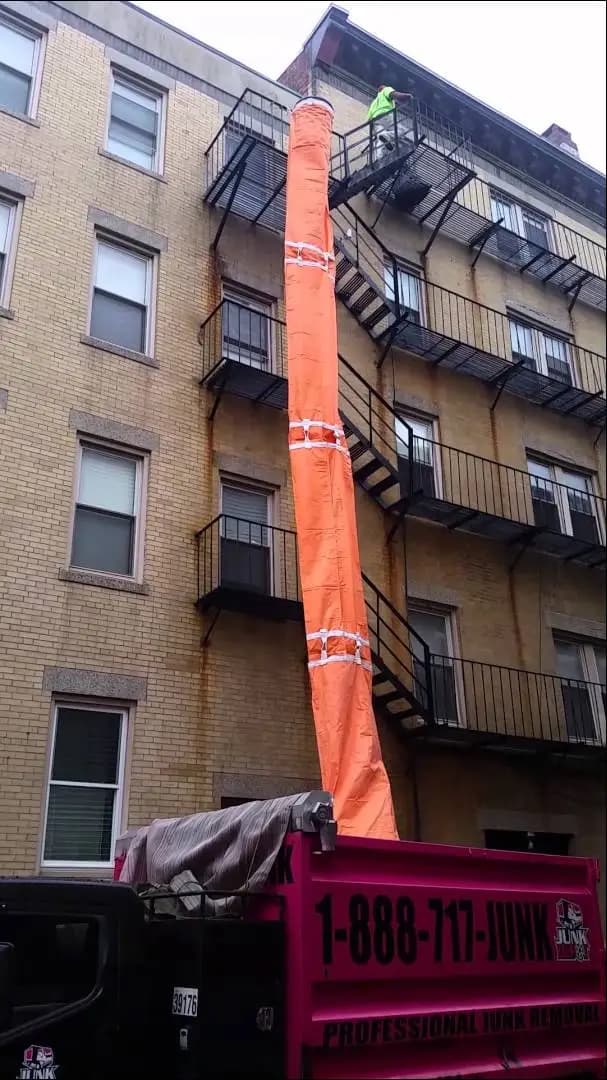
Commercial renovation projects in Hartford's downtown core or the Yale-adjacent blocks in New Haven often run to five, six, or more stories. Connecting 50-ft sections or combining a 25-ft with a 10-ft to reach those heights is straightforward with modular fabric chutes. With traditional hard-plastic rentals, adding sections means additional rental line items and increased delivery weight — both costs that add up quickly on a tall-building job.
Seasonal Volume Swings
Connecticut roofing and exterior renovation work is heavily seasonal. If you are doing 20 jobs in June and two in January, a rental model means your per-job cost is essentially the same year-round. With owned modular equipment, your cost base is fixed at purchase — slow months do not add to the equipment bill.
Side-by-Side Cost Comparison: Modular vs. Rental Over 12 Months
Rather than abstract percentages, here is a practical side-by-side view for a Connecticut roofing contractor running 25 jobs per year at an average drop height of 25 feet.
- Traditional rental — annual cost estimate:
- Base rental (25 jobs × $500 average): $12,500
- Delivery and pickup (25 jobs × $225 average): $5,625
- Fuel surcharges (12% of base): $1,500
- Damage claims (estimated 3 incidents × $250): $750
- Crew coordination time (25 jobs × 1.5 hrs × $35/hr supervisor): $1,312
- Total estimated annual cost: ~$21,687
- Modular purchase — annual cost estimate:
- One-time equipment purchase (25-ft heavy-duty configuration): purchase cost paid in year one
- Delivery: $0 (free shipping)
- Damage/deposit: $0
- Fuel surcharge: $0
- Crew coordination time (25 jobs × 15 min setup × $35/hr): $218
- Year-two and beyond recurring cost: $0 for equipment, $218 for setup time
- Payback typically achieved by job 5–8 in year one
These are estimates using conservative Connecticut market rates. Your actual numbers will vary, but the structural advantage of a purchased modular system compounds every year you use it. For a deeper look at how demolition chutes stack up on interior gut work — where chute volume is highest — the numbers skew even more heavily toward ownership.
Environmental and Waste Management Considerations
Connecticut has some of the most active construction and demolition (C&D) debris recycling infrastructure in New England. The state encourages diversion of concrete, wood, and metal from landfill — and the way you move debris from an upper floor directly affects how cleanly it can be sorted at the bottom.
According to the EPA's construction and demolition debris data, C&D waste represents a significant share of total material sent to landfill annually in the U.S. Chuting debris directly into a sorted dumpster — rather than tossing it from windows where it comingles on the ground — makes on-site sorting cleaner and more reliable.
Reusable fabric chutes also contribute less plastic waste to the job site than single-use or frequently-replaced hard-plastic rental sections. For crews working with clients who have green building or sustainability requirements, that is a talking point worth having ready. More context on the EPA's recycling guidance helps frame why clean debris streams matter at the disposal end.
Safety Economics: What an Injury Costs Versus What a Chute Costs
Cost comparisons that focus only on rental fees miss the most significant variable: the cost of a worker injury during manual debris removal. When crews carry heavy loads down ladders or toss shingles from rooflines, they create ergonomic and fall risk that is entirely preventable with a properly installed chute.
OSHA ergonomics guidance documents the connection between repetitive heavy lifting and musculoskeletal injuries — one of the most common and expensive injury categories in construction. A single workers' compensation claim in Connecticut can run into the tens of thousands of dollars in medical costs, lost productivity, and insurance premium impact. No rental fee — and no modular purchase price — comes close to that exposure.
The Productivity Multiplier
Beyond injury prevention, a chute speeds up the debris removal step of any job. Instead of two crew members shuttling material down stairs or passing loads hand-to-hand, one person at the top feeds the chute and one monitors the dumpster below. The labor savings on a full-day roofing tear-off can easily exceed one crew-hour per job — which, at prevailing Connecticut wage rates, has real dollar value.
When Traditional Rental Still Makes Sense
Fairness in this comparison requires acknowledging the scenarios where renting actually is the better call.
- One-off or infrequent jobs: If you do fewer than three or four jobs per year that require a chute, the break-even math may not favor purchase — especially if storage space for owned equipment is genuinely scarce.
- Extreme height requirements on a single job: If a one-time project requires a 100-foot-plus drop that your existing modular configuration cannot reach, renting a specialty rig for that specific job may make sense while your standard kit handles the rest of the year.
- Proof-of-concept on a first project: A contractor who has never used a chute at all may want to rent once to understand the workflow before committing to a purchase. That is a reasonable approach — but it should be a deliberate trial, not an open-ended rental habit.
For most active Connecticut contractors, those exceptions are narrow. The debris chute overview covers the full range of scenarios where chutes apply so you can map your own job mix against the tool.
Choosing the Right Modular Configuration for Connecticut Job Heights
Connecticut's housing stock skews toward two- and three-story colonials, cape cods, and four-story multi-family buildings. Commercial work ranges from one-story strip malls to mid-rise office buildings. Here is a quick configuration guide:
Standard Residential (2–3 Stories, 20–30 ft)
- One 25-ft heavy-duty section handles most drops cleanly.
- Two 10-ft sections connected give you flexibility for shorter drops with less material in the truck.
- Hang from window frames, roof fascia, or scaffold uprights using the four woven loops and standard carabiners.
Taller Residential and Mid-Rise Commercial (4–6 Stories, 40–60 ft)
- A 50-ft section covers most four- to five-story drops in a single piece.
- For six stories, combine a 50-ft and a 10-ft section for a 60-ft run.
- Always verify dumpster placement allows the chute to discharge cleanly without debris bounce-back.
High-Rise and Specialty Applications
For true high-rise work — 10 or more stories — multiple 50-ft sections can be connected in sequence. The construction chute guide addresses the anchoring and tension considerations that become important at extreme heights.
Logistics of Owning vs. Renting: Storage, Maintenance, and Lifespan
Ownership comes with a maintenance obligation that renting does not. It is worth understanding what that actually involves before making a purchase decision.
Storage Footprint
A 10-ft fabric section folds into a box smaller than a carry-on bag. Even a full 50-ft section is compact enough to store in a truck bed box or a small corner of a shop. This is one of the defining advantages of woven poly fabric over hard plastic — a full kit for most Connecticut residential jobs takes up less space than a single hard-plastic chute section.
Cleaning and Inspection
After each job, shake out loose debris and inspect connection points and loops for wear. Coated poly fabric resists moisture and most debris types. There is no lubrication required, no moving parts to service, and no seasonal storage protocol beyond basic dryness.
Expected Service Life
With normal use and basic care, a quality fabric chute section is designed for multi-year, multi-job reuse. The economics of ownership assume that lifespan. Treat the equipment as a tool — the same way you would treat a good ladder or a reliable compressor — and the per-job amortized cost continues to drop with every use.
For crews new to the system, the EasyChute video library shows real-world setup, operation, and strike so you can see what the maintenance and use cycle actually looks like on a job site.
Permit and Compliance Considerations for Connecticut Contractors
Some Connecticut municipalities — particularly in Fairfield County and certain Hartford neighborhoods — have rules about debris management on permitted renovation and demolition projects. While this guide does not constitute legal or code advice, it is worth flagging a few practical points.
- Some building permits require that debris be contained during removal — a chute directly into a dumpster satisfies that requirement more cleanly than open tossing.
- Street-level dumpster permits often specify that the dumpster must be covered or that debris cannot spill beyond its footprint — a properly directed chute helps maintain that boundary.
- When a general contractor requires subcontractors to demonstrate safe debris handling practices, owned equipment with a documented setup procedure is easier to present than a rental arrangement that varies job to job.
The roofing trash chute guide goes into more detail on site setup best practices that satisfy most job site safety plans and GC requirements.
How to Make the Purchase Decision: A Practical Checklist for Connecticut Crews
Before you commit either to continuing rentals or switching to a modular purchase, run through this quick checklist:
- Count your chute-eligible jobs over the last 12 months. Any job above one story where you moved debris by hand counts. How many were there?
- Estimate your average rental cost per job, including delivery, pickup, and any damage charges from the past year.
- Identify your typical drop height. Most Connecticut residential jobs fall in the 20–35 ft range. That determines which section configuration you need.
- Check your storage situation. Do you have truck storage, a shop bay, or a trailer? Even a small space works for fabric sections.
- Calculate the break-even job count by dividing the purchase price by your average rental cost per job. If you will hit that number within your first season, ownership is the clear call.
- Factor in crew time saved on coordination, setup, and strike. At Connecticut wage rates, even modest time savings add up quickly over a full season.
If you want to review the full product line and talk through which configuration fits your most common Connecticut job type, the EasyChute contact page connects you directly with the team. And if you want to review more details before reaching out, the EasyChute FAQ covers the most common questions about sections, compatibility, and ordering.
Frequently Asked Questions
How much does it typically cost to rent a trash chute in Connecticut per job?
Rental costs in Connecticut vary by region and rental yard, but most two-week cycles for a standard residential job run $500–$900 when you include the base rate, delivery, pickup, and fuel surcharges. Jobs in Fairfield County or other areas farther from major rental yards tend to land at the higher end of that range. Damage deposits add additional exposure on top of the base invoice, and extension fees apply if the project runs long.
How many jobs does it take for a modular chute to pay for itself?
For most active Connecticut contractors, the break-even point falls between job five and job eight in the first year of ownership, based on typical rental rates in the state. Crews with higher rental costs — due to distance from rental yards or frequent damage claims — often hit break-even sooner. After break-even, every subsequent job generates savings relative to the rental alternative. The key variable is your actual average rental cost per job, including all fees.
Can a fabric chute handle heavy demolition debris like concrete or tile?
EasyChute's heavy-duty sections are designed for high-impact debris including asphalt shingles, concrete tile, drywall, and similar materials. The woven, coated poly fabric is built to withstand the abrasion and impact of construction debris. For very heavy or sharp materials like broken masonry, the heavy-duty 10-ft or 25-ft sections are the appropriate choice over lite-duty options. Reviewing the specific product specs and the installation guide helps match the right section to the debris type.
Is free shipping available to all Connecticut job sites?
Yes. EasyChute ships free to job site addresses across the United States, including all Connecticut locations — from Stamford and Greenwich in Fairfield County to Hartford, New Haven, Waterbury, and everywhere in between. There are no delivery surcharges, no fuel add-ons, and no minimum order thresholds to qualify for free shipping. Orders are placed online at fixed prices, so the total cost is known before you complete the purchase.
What is the difference between a modular fabric chute and a traditional hard-plastic rental chute?
Hard-plastic rental chutes are rigid sectional tubes that require delivery truck transport, are prone to cracking under heavy loads, and must be returned after each job. Modular fabric chutes are made from woven coated poly, fold compactly for truck storage, connect via overlap and carabiners, and are reused job after job without returning to any yard. The fabric design is lighter per section, easier for one person to handle, and eliminates the entire rental logistics chain including delivery, pickup, and deposit management.
Do Connecticut municipalities require permits to use a debris chute?
Chute use itself is generally not separately permitted, but it falls within the scope of your existing demolition or renovation permit and any associated debris management requirements. Some municipalities in Fairfield County and Hartford have specific site cleanliness standards for permitted projects. Using a chute that directs debris directly into a dumpster typically satisfies those requirements more cleanly than manual tossing. Always confirm local requirements with your project's building department before work begins.
How long does setup and strike take for a modular chute on a typical Connecticut job?
For a standard two- or three-story residential job, one person can hang, connect, and position a modular fabric chute in under 15 minutes using the four woven loops and standard carabiners. Strike at end of job takes roughly the same amount of time — disconnect, fold, and stow in the truck. That compares favorably to the coordination time required for a rental, which requires scheduling, presence at delivery, and presence at pickup — typically 1.5 to 2 hours of supervisory time spread across the rental cycle.
Ready to Stop Paying Rental Fees on Every Connecticut Job?
The comparison is clear. For any Connecticut roofing crew, demo team, or junk removal operation running more than a handful of chute-eligible jobs per year, modular ownership is the economically sound choice. The rental fees, delivery charges, fuel surcharges, and deposit exposure that stack up under a traditional rental model simply do not exist when you own the equipment outright.
EasyChute was built by contractors who ran the same math and drew the same conclusion. Lightweight, reusable, free-shipping, fixed-price — it is a tool designed to stay with your crew job after job without adding cost to every invoice.
Your next step: Review the section options on the EasyChute product page, check the About EasyChute page to understand what goes into the design, and then reach out directly with your typical job height and volume. The team can confirm the right configuration for your Connecticut work and get your order moving — with free shipping to your door.