
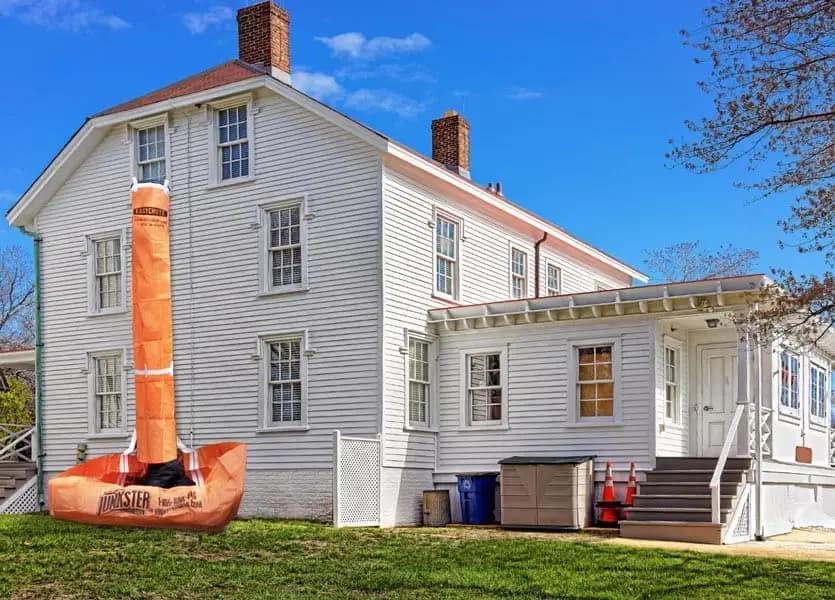
Senior home renovations are booming across Massachusetts. From aging-in-place bathroom retrofits in Worcester to full kitchen gut-outs in Springfield and roof replacements on Cape Cod colonials, contractors are busier than ever working in occupied, older homes — and that creates one specific logistical headache: how do you get debris out of the house safely, quickly, and without breaking the budget?
A debris chute is the answer most experienced crews land on. But the moment you start shopping, you run into a confusing split: rent a chute from a local equipment yard, or buy a lightweight fabric chute you can reuse job after job. Both paths have real numbers attached, and the right choice depends on how many senior renovation jobs you're running in a given season.
This guide breaks down honest debris chute rental cost estimates for Massachusetts senior renovations, explains what drives price variation, and helps you figure out whether rental or ownership makes more financial sense for your crew.
Why Debris Chutes Are Essential on Senior Renovation Sites
Senior home renovations involve a very specific set of constraints that make debris management more complicated than a standard gut job. Clients are often still living in the home during work. Narrow hallways, staircases, and finished surfaces need protection. And the health and safety of an elderly occupant can be seriously compromised by dust, noise, and foot traffic from crews hauling debris through living spaces.
A properly rigged debris chute addresses every one of those problems. Debris drops from an upper-floor window or roof edge directly into a dumpster or bag below — no wheelbarrow runs through the kitchen, no manual carry down three flights of stairs, no cloud of drywall dust rolling through the living room where an 80-year-old is trying to stay warm.
Occupant Safety Comes First
Falls are the leading cause of injury for older adults, and a renovation site multiplies those risks. When workers carry heavy loads down stairs, they introduce trip hazards for everyone — including the client. Channeling debris through a window chute eliminates that traffic entirely. OSHA's construction safety standards are clear that load-carrying routes should be controlled and hazard-free; a chute is the mechanical solution that meets that expectation on multi-story jobs.
Speed Matters More on Occupied Homes
On a standard demo job, a slow debris removal process is annoying. On an occupied senior renovation, it extends the disruption to someone's daily life — their kitchen, their bathroom, their peace. Crews that use a chute consistently report finishing debris removal phases 30–50% faster than crews relying on manual carry. That speed translates directly into lower labor costs and happier clients.
How Debris Chute Rental Works in Massachusetts
Equipment rental yards in Massachusetts generally carry steel or heavy rigid-plastic chutes — the kind you see hanging off construction scaffolding on commercial projects. A few companies in the Boston metro, Worcester area, and Springfield market rent these units to contractors on a daily, weekly, or monthly basis.
Here's how a typical rental transaction works:
- You call or visit the rental yard and specify the building height you're working on.
- The yard quotes you a rate based on the number of sections needed and the rental duration.
- You pick up (or pay for delivery) the chute sections, hardware, and any hopper attachments.
- You rig it, use it, break it down, and return it — cleaned, or you pay a cleaning fee.
- You're invoiced for the rental period plus any damages or missing hardware.
It sounds simple, but there are several cost layers that catch contractors off guard the first time.
Debris Chute Rental Cost Estimates: What Massachusetts Contractors Actually Pay
Rental pricing in Massachusetts varies by region, vendor, and chute type. The numbers below reflect general market ranges as of 2026 — always call your local yard for a firm quote, because fuel surcharges, seasonal demand, and inventory availability all affect final pricing.
Daily Rental Rates
- Single 10-foot section: $30–$60 per day
- Full 30-foot chute (3 sections): $90–$180 per day
- Full 50-foot chute (5 sections): $150–$300 per day
- Hopper attachment (if required by site): $20–$50 per day additional
Weekly Rental Rates
- 30-foot chute, one week: $400–$750
- 50-foot chute, one week: $600–$1,100
- Security deposit (often required): $200–$500 on top of rental fees
Hidden Costs That Inflate the Final Bill
The line-item rental rate is never the full story. Factor in:
- Delivery and pickup: $75–$200 round-trip depending on your location
- Cleaning fees: $50–$150 if returned with caked debris
- Damage charges: Dented sections, bent rings, or missing hardware can add $50–$300 to your invoice
- Fuel surcharges: Common in 2026 with diesel prices still elevated
- Extension fees: If the job runs long and you keep the chute past the agreed return date
A conservative estimate for a one-week rental on a two-story senior renovation — 30 feet of chute, delivery, deposit, and cleanup — runs $600–$1,000 all-in for a single job in the greater Boston area. In western Massachusetts, you may find lower rates, but availability is thinner and delivery adds up fast.
How Senior Renovation Scope Affects the Chute You Need
Not every aging-in-place project generates the same debris volume. The type of renovation determines both the chute length you need and how many days you'll realistically be running it.
Bathroom Accessibility Retrofits
Converting a tub to a roll-in shower, widening a doorway, or adding grab bars and blocking generates moderate debris — tile, drywall, some framing. On a two-story home, a single 20-foot chute run is typically sufficient. These jobs often complete the demo phase in one to two days, making a short rental practical.
Kitchen Gut-Outs and Cabinet Replacements
Full kitchen renovations on ranch or cape-style homes (common in Massachusetts senior housing stock) are usually on the ground floor, so a chute may not be needed. But on a two- or three-story multi-family where the senior occupant is on an upper floor, a 30-foot chute run becomes essential. Demo debris from a kitchen gut can be substantial — cabinets, countertops, flooring, plaster walls.
Roof Replacements on Colonial and Cape Cod Homes
Roofing tear-offs are the highest-volume single-day debris generation event in the senior renovation category. A full shingle tear-off on a 2,000-square-foot colonial can produce 3–5 tons of old shingles. Here, a roofing trash chute is indispensable — you're dropping weight continuously for hours, and manual carry is both dangerous and slow. A 50-foot chute is ideal for steeper-pitch roofs on taller homes.
Full Interior Demo for Accessibility Remodels
Some aging-in-place contractors do comprehensive whole-home reconfigurations — removing walls, reconfiguring bathrooms and bedrooms, replacing all flooring. These are multi-week projects with ongoing debris generation, which changes the rental math entirely. A two-week rental of a full chute system could cost $1,200–$2,000, and that's before your crew's time hauling sections in and out.
The Ownership Alternative: Buying a Reusable Fabric Chute
Here's where the math starts shifting for contractors who do more than one or two senior renovations per season. A lightweight, woven fabric chute like the EasyChute system can be purchased outright, set up by a single worker in minutes, and reused on every job indefinitely.
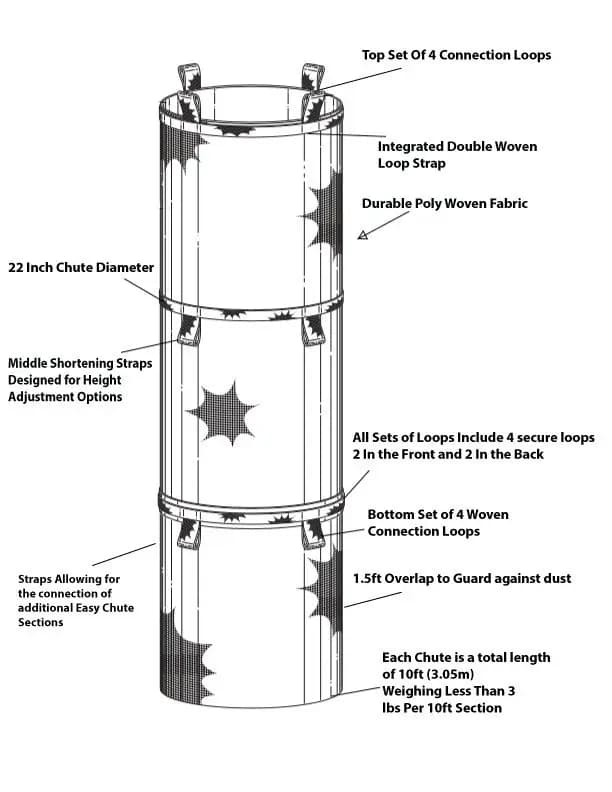
The EasyChute sections — available in 10-foot, 25-foot, and 50-foot lengths — connect with a 1.5-foot overlap and hang from four woven loops using standard carabiners. The entire 10-foot section weighs under 3 pounds and folds into a box small enough to toss in the back of a pickup. Compare that to hauling and storing rigid steel or plastic rental chute sections.
For a contractor running 8–12 senior renovation jobs per year in Massachusetts, the break-even point on purchasing versus renting typically arrives after 2 to 4 jobs. After that, every job where you deploy your own chute is money back in your pocket.
What Fabric Chutes Cost to Buy
- 10-foot section (lite-duty): Purpose-built for light debris on shorter drops
- 10-foot section (heavy-duty): Handles roofing shingles, tile, and heavier demo waste
- 25-foot section: Ideal for two- and three-story Massachusetts colonials
- 50-foot section: Built for taller multi-family buildings or commercial work
Visit the debris chute overview page for current pricing and section specs. EasyChute ships free to job sites across the United States, including anywhere in Massachusetts — no delivery surcharge, no deposit, no return trip.
Rental vs. Ownership: A Realistic Side-by-Side for Massachusetts Contractors
Let's run the numbers on a typical Massachusetts senior renovation contractor who does 10 jobs per year that require a chute — a mix of roof tear-offs, bathroom retrofits, and second-floor gut work.
- Annual rental cost (10 jobs × $700 average all-in): $7,000
- One-time purchase of a complete EasyChute system (multiple sections): Fraction of that annual rental figure
- Year 2 and beyond with owned chute: $0 per job (minus occasional replacement if a section wears out)
The rental model makes sense if you do one or two chute jobs per year and don't have storage space. The ownership model wins decisively once you cross three or four chute deployments annually. Most Massachusetts contractors doing senior renovation work hit that threshold by summer.
Setup Time Comparison
- Rental chute (rigid sections): 45–90 minutes to rig, two-person job, specialty hardware required
- EasyChute fabric sections: 10–15 minutes, one person, standard carabiners or quick-connects
On a job site where you're billing time, the setup differential is real money. Read the full EasyChute installation guide to see exactly how the hang-and-lock system works step by step.
Massachusetts-Specific Factors That Affect Your Debris Chute Decision
Massachusetts has some regional quirks that influence chute selection and cost for senior renovation work specifically.
The Housing Stock Is Old
Massachusetts has one of the oldest housing stocks in the country. Cape Cod cottages, triple-deckers, Greek Revival colonials — most of the homes where you'll be doing senior renovations were built before 1970 and often before 1950. That means plaster walls, horsehair insulation, old-growth framing, and occasionally asbestos-containing materials. Debris volumes tend to run higher on these older structures, and the structural quirks can make scaffolding or ladder access challenging. A chute that installs from a window frame without scaffolding is a major advantage.
Urban Job Sites Have Space Constraints
If you're working in Boston neighborhoods — Dorchester, Jamaica Plain, Roxbury, South Boston — street space is at a premium. A rigid rental chute requires clearance for delivery, staging, and pickup. A fabric chute arrives in a box via standard shipping, stores in your truck, and goes back in the box when you're done. For contractors in tight urban neighborhoods, the urban chute case studies from similar dense markets show how fabric systems outperform rigid alternatives in confined spaces.
Seasonal Demand Spikes Drive Rental Prices Up
Spring and fall are peak renovation seasons in Massachusetts. Equipment rental yards get heavily booked between April and June and again in September and October. During those windows, rental availability tightens and rates often increase. If you own your chute, you sidestep seasonal pricing entirely and can take jobs other contractors decline because they can't get rental equipment.
Environmental Responsibility Matters to Senior Clients
Homeowners — especially older Massachusetts homeowners with long ties to their communities — often care about how debris is handled. A fabric chute that directs demolition waste cleanly into a single-stream container supports responsible disposal. The EPA's construction and demolition debris data shows that C&D waste is one of the largest waste streams in the United States — directing it into a contained receptacle rather than scattering it across a yard or sidewalk is both safer and greener.
Safety Considerations on Senior Renovation Sites
Safety on any job site matters, but on an occupied senior renovation it matters more. You have a vulnerable occupant in the building, often with mobility limitations, who can be seriously harmed by debris, dust, or unexpected foot traffic.
Worker Ergonomics
Manual debris carrying — especially down stairs with heavy loads — is one of the highest-injury activities in residential renovation. Back injuries, knee injuries, and fall incidents spike when workers are hauling repeatedly on tight staircases. OSHA's ergonomics guidance specifically highlights repeated load-carrying as a major musculoskeletal injury risk. A chute eliminates that repetitive carry entirely — workers load the chute at the top, debris slides down, no one carries anything down three flights of stairs.
Dust Control in Occupied Homes
Demolition dust in an occupied home where a senior client lives is a serious respiratory hazard. Channeling debris through a chute keeps demo material moving in one direction — down and out — rather than settling throughout the interior. Combined with poly sheeting on doors and a HEPA air scrubber, a chute-fed removal system is the professional standard for occupied-home renovations.
Dumpster Placement and Debris Containment
Position your dumpster or bag directly below the chute exit before you start. Wandering debris — shingles sliding off a pile, drywall pieces bouncing outside the container — creates hazards for anyone on the ground. A correctly rigged chute with a vertical drop into a contained receptacle is the cleanest, safest setup available. Review the Massachusetts debris chute safety guide for additional protocols specific to sites where vulnerable occupants are present.
How to Get an Accurate Cost Estimate for Your Specific Job
Whether you're leaning toward rental or purchase, here's the information you need to gather before committing to a number:
- Building height: Measure from the highest point of debris generation to the dumpster at ground level. This determines your chute length requirement.
- Debris type and volume: Roofing shingles need heavy-duty capacity. Light drywall demo doesn't. The material drives the section spec.
- Job duration: How many days will you actually be running the chute? If it's one day, rental might win on cost. If it's four days across a two-week project, ownership is almost certainly cheaper.
- Site access: Can a delivery truck reach the site? Can you park a vehicle with rental equipment? Urban Massachusetts sites often make self-supplied equipment the only practical option.
- Future job volume: How many similar jobs do you expect over the next 12 months? If the answer is three or more, ownership math almost always favors buying.
For a deeper breakdown of cost structures across different chute configurations, the modular trash chute kit cost breakdown covers what you're actually paying for in each section type and configuration.
Choosing the Right Section Length for Massachusetts Senior Renovation Heights
Massachusetts senior homeowners tend to live in one- to three-story single-family homes or two- to four-story multi-family buildings. Here's a quick reference for matching EasyChute section length to building type:
- One-story ranch or cottage: Roof edge to dumpster is typically 12–18 feet. A single 25-foot section covers the drop with room to spare.
- Two-story colonial (most common in MA): Second-floor window or roof peak to grade is typically 18–28 feet. A 25-foot section or two 10-foot sections connected together handles it cleanly.
- Three-story triple-decker: Third-floor window to ground runs 28–38 feet. A 50-foot section or a 25-foot plus a 10-foot section works well.
- Four-story multi-family: Top-floor access to dumpster can reach 40–50 feet. The 50-foot section is purpose-built for this range.
If you're unsure what configuration fits your job, the EasyChute FAQ covers common height and overlap questions in detail. And for a direct comparison of fabric chute performance versus other chute types, the debris chute vs. poly chute contractor comparison is worth reading before you commit to either.
What the Best Senior Renovation Contractors Do Differently
Contractors who specialize in aging-in-place work and senior home renovations in Massachusetts share a few common practices around debris management that separate them from generalist crews.
They Plan the Debris Route Before Demo Starts
Before a single piece of drywall comes down, the best crews have identified the chute window, confirmed the dumpster position, and rigged the chute. Debris removal is not an afterthought — it's part of the job plan. This prevents the chaotic mid-demo scramble where workers are making improvised decisions about where to put material.
They Communicate the System to the Client
Senior clients are often anxious about renovation disruption. A contractor who can explain — in plain language — that debris will exit through the upstairs window into a contained dumpster, not through their living room, builds instant trust. Show them the chute. Explain the process. That five-minute conversation reduces client stress dramatically throughout the project.
They Factor Chute Cost Into Every Bid
Whether they own their chute or rent it, experienced contractors include debris removal equipment as a line item in every proposal. It's a real cost of doing the job correctly. Clients who see a detailed, professional estimate that includes chute setup understand they're getting a thorough contractor — not someone who's going to wing it with wheelbarrows and hope for the best.
For a complete picture of how a fabric chute installs and performs on a real job, the EasyChute video library shows actual setup and operation in field conditions.
Frequently Asked Questions
How much does it typically cost to rent a debris chute in Massachusetts?
Rental rates in Massachusetts generally run $30–$60 per day for a single 10-foot section and $400–$1,100 per week for a full 30- to 50-foot system. When you add delivery, security deposits, and cleaning fees, a one-week rental on a typical senior renovation often totals $600–$1,000 or more. Rates vary by vendor, location, and season — spring and fall demand can push prices higher as rental yards book up quickly across the greater Boston area and beyond.
Is it better to rent or buy a debris chute for senior renovation work?
If you're running three or more chute-dependent jobs per year, purchasing a reusable fabric chute almost always makes more financial sense than renting. The break-even point for most Massachusetts renovation contractors is 2–4 jobs. After that, every deployment saves you several hundred dollars in rental fees. Ownership also eliminates delivery logistics, deposit requirements, and return-trip scheduling — all of which add friction to busy job sites in occupied homes.
What length debris chute do I need for a typical two-story Massachusetts colonial?
A two-story colonial in Massachusetts typically has a second-floor window or roof edge at 18–28 feet above grade. A single 25-foot section covers most of these drops comfortably, with the standard 1.5-foot overlap at the top connection point. If you're working from a steep roof peak rather than a window, measure the actual vertical drop to the dumpster and add a few feet for the hang setup. When in doubt, the 50-foot section gives you coverage for virtually any residential building in the state.
Are fabric debris chutes safe for heavy demolition material like old roofing shingles?
Yes — provided you select the right duty rating. EasyChute offers both lite-duty and heavy-duty 10-foot sections. The heavy-duty section is built from woven, coated poly fabric designed to handle roofing shingles, tile, plaster, and dense demolition debris. For a full roofing tear-off on a Massachusetts colonial, the heavy-duty sections are the correct specification. Lite-duty sections are appropriate for lighter materials like drywall scraps, insulation, and small framing pieces where continuous heavy loading is not expected.
Can one person set up a debris chute on a senior renovation site?
With a lightweight fabric chute system like EasyChute, yes — one person can carry, hang, and rig a chute in 10–15 minutes using standard carabiners or quick-connects on the four woven loops. A 10-foot section weighs under 3 pounds, so there's no awkward two-person carry. Rigid rental chutes are a different story — those typically require two people and 45–90 minutes to rig. For small crews and solo operators doing senior renovation work in Massachusetts, the weight and setup difference is significant.
Do I need a permit to use a debris chute on a residential renovation in Massachusetts?
Permit requirements for debris chutes on residential projects vary by municipality in Massachusetts. In most jurisdictions, a chute used within private property lines and discharging into a contained dumpster or bag does not require a separate chute permit — though your overall renovation or demolition permit covers the work. If you're working in a dense urban area or the chute will extend over a public sidewalk or right-of-way, check with the local building department. Some Boston-area municipalities have specific requirements for street-level containment when chutes overhang public space.
How do I dispose of debris collected by a chute responsibly?
The EPA identifies construction and demolition debris as one of the largest U.S. waste streams. For senior renovations in Massachusetts, coordinate with your dumpster or junk removal provider on proper disposal and recycling channels for materials like concrete, metal, wood framing, and drywall. Some Massachusetts transfer stations accept sorted C&D debris at lower rates than mixed loads, which can reduce disposal costs. Asbestos-containing materials from pre-1980 homes require licensed abatement and cannot go into a standard debris chute or dumpster.
Ready to Stop Renting and Start Owning Your Debris Chute System?
If you're doing senior renovation work in Massachusetts — whether that's roofing in Worcester, bathroom retrofits in Lowell, or full interior demo in the Boston suburbs — the numbers are clear: every rental fee you pay is money that could be building equity in equipment you own and reuse forever.
EasyChute was built by Massachusetts contractors who got tired of the rental racket. Lightweight, woven-poly sections that one person can hang in minutes, connect to any height, and fold back into a box when the job is done. Free shipping to your job site anywhere in the United States. No deposits, no delivery fees, no damage charges.
Check the fabric trash chute overview to see full section specs, or visit the construction chute guide for setup recommendations by building type. When you're ready to order or have questions about the right configuration for your next Massachusetts senior renovation, reach out to the EasyChute team — we'll help you size the system correctly the first time.