
If you are pricing out a roofing tear-off, gut renovation, or demo project in Taunton, MA, one of the first questions your project manager or customer will ask is: how much does a debris chute cost to rent? The answer depends on several variables — job height, duration, chute diameter, the vendor you call, and whether renting even makes sense compared to buying lightweight fabric sections outright.
This guide breaks down everything you need to know about debris chute rental costs specific to Taunton-area jobs, and explains why many Bristol County contractors are skipping rentals altogether in 2026.
What Does Debris Chute Rental Actually Mean?
When contractors search for "debris chute rental" in Taunton, they typically mean one of two things: renting a rigid poly or steel sectional chute system from a local equipment yard, or borrowing a chute from a general contractor or supply house by the day or week.
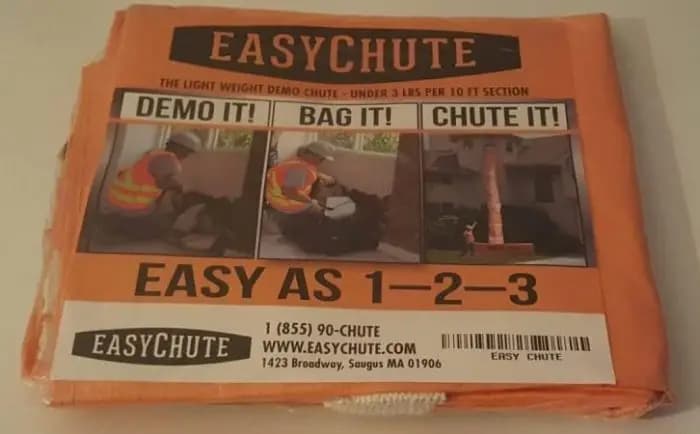
Rigid chute rentals — the kind you see at large commercial sites — are heavy, require a crew to assemble, and involve formal rental contracts with daily and weekly rates. Fabric chute systems like EasyChute operate on a different model entirely: you purchase sections once and reuse them across every future job, eliminating the rental loop.
The Two Models in Plain English
- Traditional rental: Call an equipment yard, pay a daily or weekly fee per section, pick up (or pay delivery), return the chute after the job, and repeat on the next project.
- Buy-and-reuse: Order lightweight woven poly sections once, hang them in minutes with carabiners, fold them into a box, and carry them to the next job with zero incremental cost.
Understanding this distinction matters before you start calling around Taunton for quotes, because the math changes dramatically once you look past a single job.
Typical Debris Chute Rental Rates in the Taunton, MA Area
Taunton sits in Bristol County, roughly equidistant from Providence, Brockton, and Fall River. Equipment rental yards serving the area generally pull from Brockton, Raynham, and East Taunton depots. Based on typical southern Massachusetts rental market conditions in 2026, here is what you can expect to pay for a standard rigid debris chute rental:
- Per-section daily rate: Approximately $15–$30 per 10-foot section per day, depending on diameter and vendor.
- Per-section weekly rate: Roughly $60–$110 per 10-foot section per week.
- Delivery and pickup fees: $75–$150 round-trip within Bristol County, often more for same-day calls.
- Damage deposit: Many yards require a deposit of $100–$300 per order.
- Cleaning surcharge: Some yards charge $25–$75 if sections are returned with debris stuck inside.
For a two-story colonial tear-off requiring 20 feet of chute, a typical one-week rental in Taunton can run $220–$370 all-in before you add fuel and the time your helper spends returning equipment. That is one job. Now multiply by how many shingle jobs you run in a season.
Why Rates Vary So Much Between Vendors
Rental yards price chutes based on the condition of their fleet, replacement cost, and local demand. During peak roofing season — May through October in southeastern Massachusetts — demand spikes and rates often climb 10–20%. If you are working a summer storm job in Taunton after a hail event, expect tight availability and premium pricing.
The Hidden Costs Most Contractors Forget to Count
The quoted weekly rental rate is rarely the real cost. Experienced foremen know to budget for the line items that rarely appear in the initial quote.
Labor Time for Pickup and Return
If your crew spends 90 minutes driving to the rental yard, loading sections, and returning them after the job, that is 3 hours of billable labor time — potentially $90–$150 at current Massachusetts prevailing rates — eaten by equipment logistics, not actual work.
Assembly Time on Site
Rigid poly sections require coupling, clamping, and sometimes cable-securing at each joint. On a 40-foot drop, expect 45–60 minutes of setup and a similar amount to strike. On tight Taunton lots where every hour counts, that is time you will not bill back.
Damage Liability
Rental agreements typically hold you liable for cracks, warped connectors, and missing hardware. A single damaged section can cost more than the rental itself to replace — and on a busy downtown Taunton renovation near the Green, that risk is real.
Vehicle Wear and Fuel
Rigid chute sections are bulky. You will either dedicate truck bed space or pay for delivery. Neither is free, and neither shows up on the rental company's rate sheet.
For a deeper look at how these cost structures compare across chute types, see the Modular Trash Chute Kit Cost Breakdown: What You Actually Pay — it walks through the math line by line.
Buying vs. Renting: The Taunton Contractor's Break-Even Analysis
The break-even point is the moment at which buying your own chute sections becomes cheaper than continuing to rent. For most active Taunton contractors, that point arrives faster than expected.
Sample Scenario: Roofing Crew Running 20 Jobs Per Season
- Average rental cost per job (20 ft drop, one week): $280 all-in
- 20 jobs per season: $5,600 in annual rental costs
- EasyChute 25 ft section purchase price: a fraction of one season's rental spend
- EasyChute weight (10 ft section): under 3 lbs — one person can carry, hang, and strike it
- Useful life: multiple seasons with proper care
After just two or three jobs, a lightweight fabric chute system pays for itself. Every subsequent job is pure margin recovery.
The Reuse Advantage
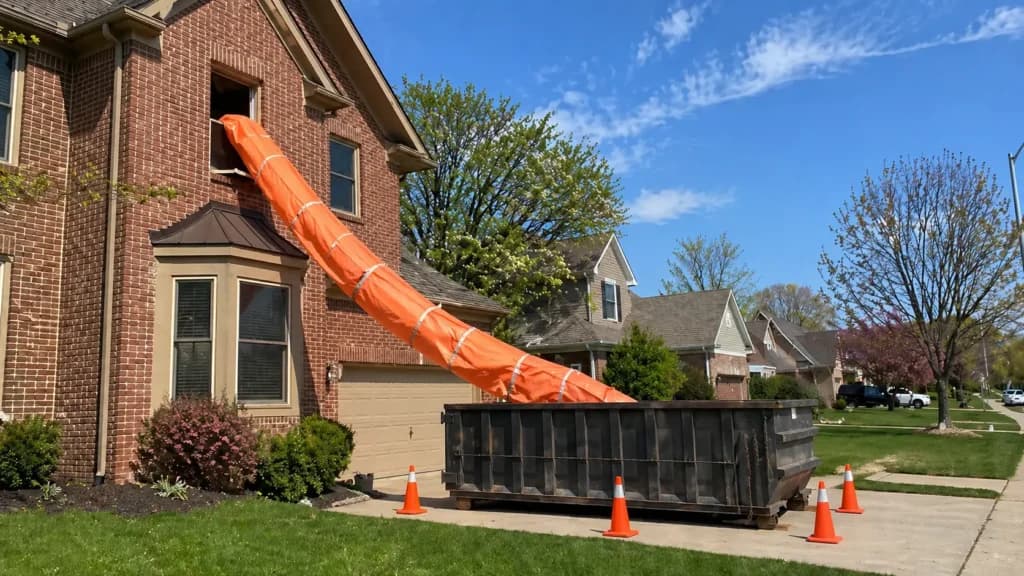
EasyChute sections connect with a 1.5-foot overlap and hang from four woven loops using standard carabiners or quick-connects. There is no rigid hardware to crack or lose. After the job, the section folds into a small box. One crew member can set it up, move it to a new window opening mid-job, and strike it — all without a second person or a trip back to a rental yard.
That kind of flexibility is worth real money on Taunton jobs where the dumpster position or the window access point changes during the course of a project.
Types of Jobs in Taunton Where Debris Chutes Make the Biggest Difference
Taunton's housing stock is a mix of late-1800s colonials near Church Green, mid-century ranches in the Whittenton neighborhood, and newer construction off Route 44. Each job type has different chute requirements.
Roofing Tear-Offs on Two- and Three-Story Homes
A standard Taunton colonial with a steep 8/12 pitch and two full stories typically needs 20–30 feet of chute to reach a dumpster in the driveway. Shingles, underlayment, and rotted decking all move cleanly through a 17.5-inch-diameter fabric chute without jamming. For the specifics on this application, the Roofing Trash Chute: The Complete Guide for Shingle Tear-Offs is worth bookmarking.
Interior Gut Renovations and Demo
Downtown Taunton has seen a wave of commercial-to-residential conversions and kitchen gut jobs on older colonials. When you are demoing plaster walls and wood lath from a second-floor kitchen, carrying debris by hand through a narrow staircase is dangerous and slow. A chute dropped from a window opening keeps the path clear and protects the finished floors below.
The Demolition Chutes: The Complete Guide for Interior Gut Work and Selective Demo covers load types, window clearance, and how to anchor a chute on an interior demo job safely.
Junk Removal from Multi-Level Properties
Junk removal crews working Taunton's older neighborhoods often encounter tight staircases, fragile banisters, and homeowners who do not want furniture dragged through the living room. A fabric chute from a second-floor window to a waiting truck or roll-off cuts job time dramatically and eliminates trip-and-fall risk on stairs.
Commercial Renovation Projects
Taunton's Route 44 corridor and the Myles Standish Industrial Park host ongoing light commercial renovation work. Debris chutes on commercial jobs often need to cover greater heights — 40 to 50 feet — which is where EasyChute's 50 ft sections provide an off-the-shelf solution without special-ordering extended rentals.
OSHA Compliance and Debris Chutes on Massachusetts Job Sites
Debris chutes are not just a productivity tool — they are a safety one. OSHA's Construction Industry standards require that loose materials not be thrown or dropped from elevated surfaces in a way that could strike workers or bystanders below. A properly installed chute channels debris into the dumpster and keeps the ground zone predictable.
What Massachusetts Inspectors Look For
- A clear drop zone marked off at the dumpster end — no workers standing in the debris path
- Secure attachment at every mounting point — no swinging or shifting sections mid-job
- Chute sections that fully contain debris (nothing spilling out the sides)
- Signage or barriers alerting passersby to the chute zone
EasyChute's woven loops and carabiner attachment method meet these requirements without additional hardware. The chute hangs plumb, stays in position through wind, and the overlap connection between sections prevents gaps where debris could escape.
OSHA's ergonomics guidance also supports using chutes instead of manual carrying for heavy debris loads — reducing the cumulative strain that leads to back injuries on multi-day roofing and demo jobs.
How EasyChute Ships to Taunton, MA Job Sites
One of the most common objections contractors have when considering a purchase over a rental is lead time. If you need a chute tomorrow morning and the rental yard is open at 7:00 AM, you can pick it up. Can an online order beat that?
EasyChute ships free to job sites across the United States, including all Bristol County addresses. Orders placed on business days typically move out the same day or next day. A 10 ft section weighs under 3 lbs and ships in a compact box — it lands at your shop, your truck, or directly at the job-site address. You do not need to be there with a forklift. It goes in the mailbox or at the door.
Ordering for a Specific Taunton Job
If you know your drop height, the order is straightforward:
- Measure from the highest window or roof edge to the top of the dumpster.
- Add 3–5 feet of buffer so the chute mouth clears the dumpster rim comfortably.
- Choose sections that reach that total — 10 ft, 25 ft, and 50 ft sections connect freely.
- Order with free shipping and have it at the site before your scheduled start date.
For a step-by-step look at the setup process once the chute arrives, the How to Install the EasyChute: Step-by-Step Setup Guide walks through every anchor point and connection in plain language.
Comparing EasyChute to Rigid Poly Rental Chutes: Honest Differences
This comparison matters because your choice affects job speed, safety, and bottom line. Here is an honest side-by-side:
- Weight: Rigid poly sections run 15–25 lbs each. EasyChute 10 ft sections weigh under 3 lbs. One person handles setup versus two for rigid chutes.
- Setup time: Rigid chutes require coupling, hardware checks, and often a second pair of hands. EasyChute loops over a carabiner — setup in minutes.
- Storage: Rigid sections need a truck bed or trailer. EasyChute folds into a small box that goes under the seat or in the cargo area.
- Cost over time: Rigid rental accumulates indefinitely. EasyChute is a one-time purchase with no rental cycle.
- Debris compatibility: Both handle standard roofing debris. EasyChute's woven coated poly handles shingles, drywall, wood, and mixed demo material without cracking or splitting.
- Return logistics: Rigid rentals require a return trip. EasyChute gets folded back into its box and goes to the next job.
For a broader comparison of fabric versus poly chute systems, the Debris Chute vs Poly Chute: The 2026 Contractor's Comparison Guide goes deeper on material properties, load capacity, and job-site scenarios.
Environmental Considerations for Debris Chutes and C&D Waste in Taunton
Taunton contractors operating near the Taunton River watershed and residential neighborhoods have an added incentive to control debris carefully. Loose shingles or drywall blown off a roof or tossed from a window can carry fine particulates, granules, and dust into storm drains or neighboring yards.
According to the EPA's construction and demolition debris data, C&D waste is one of the largest waste streams in the United States. Chutes that direct debris precisely into a dumpster reduce spillage, minimize dust migration, and make sorting for recycling and diversion easier because material lands in one contained zone rather than scattered across the job site.
For crews doing selective demo or material salvage on Taunton jobs, this containment is especially valuable — metal, clean wood, and concrete can be sorted at the dumpster rather than re-collected from a scattered site perimeter.
Common Mistakes Taunton Contractors Make When Renting Debris Chutes
After talking with roofers, GCs, and junk removal operators across southeastern Massachusetts, a few recurring mistakes stand out.
Underestimating the Drop Height
A common error is measuring the number of stories and guessing 10 feet per story. Older Taunton colonials frequently have 9-foot or 10-foot ceilings plus the attic knee wall — a 2.5-story structure might need 28–32 feet of chute, not 20. Always measure the actual drop from hanging point to dumpster top, not a floor-count estimate.
Renting for a Short Job That Would Pay Off as a Purchase
A one-day rental sounds economical for a quick teardown. But if you run even four or five similar jobs per year, the cumulative rental spend crosses the purchase price within the first season. Many Taunton contractors rationalize rental because of the perceived upfront cost, without running the multi-job math.
Ignoring Return Logistics in the Job Schedule
Scheduling the rental return is often an afterthought. If the rental yard closes at 4:30 PM and your crew finishes cleanup at 3:45 PM across town, you either rush — creating a safety risk — or pay an extra day's rental. Build return logistics explicitly into your project timeline.
Using a Chute That Is Too Short
A chute that does not reach the dumpster rim means debris free-falls the last several feet, creating a dust cloud and scatter risk. This is a compliance concern under OSHA and a practical mess for cleanup. Always err on the side of too much chute length, not too little.
The Debris Chute: What It Is, How It Works, and How to Choose the Right One covers sizing guidance in detail, including how to account for dumpster height and offset positioning.
What Taunton-Area Contractors Should Budget for Debris Removal Overall
Debris chute cost is only one piece of the project budget. Here is a realistic picture of total debris removal costs on a typical Taunton residential project:
- Roll-off dumpster rental (10-yard, one week): $350–$500 in Bristol County
- Debris chute rental (20 ft, one week): $220–$370 all-in
- Or: EasyChute 25 ft purchase (one-time): Amortized across jobs, the per-job cost drops to near zero after the first few uses
- Disposal fees (tipping at Bristol County landfill or transfer station): Variable by material weight and type
- Labor for debris handling: Often the largest line item — reduced significantly when a chute eliminates manual carry trips
The chute is rarely the biggest number on the estimate, but it is often the easiest place to recapture margin once you move from renting to owning.
Getting Started: How to Order EasyChute for Your Next Taunton Job
EasyChute was built by Tim Hogan and Leo Guarente — a Massachusetts contractor and a junk removal owner — for exactly the kind of work that gets done in Taunton every week. It ships free to your job site or shop, sets up in minutes, and goes back in the box when the job is done.
You can learn more about the product line and the people behind it on the About EasyChute page, or browse the full selection at All services. If you have a specific job coming up and want to confirm which section length is right for your drop, reach out via the Contact page — real answers, not a bot queue.
For contractors who are still comparing options, the Fabric Trash Chute: What It Is, How It Works, and When to Use One is a useful primer, and the Canvas Trash Chutes: What They Are, How They Work, and How to Choose the Right One addresses material questions head-on. You can also see the chute in action at the EasyChute Videos: The Trash Chute in Action page before you order.
Frequently Asked Questions
How much does it cost to rent a debris chute in Taunton, MA?
In the Taunton and broader Bristol County area, a rigid debris chute rental typically runs $15–$30 per 10-foot section per day, or $60–$110 per section per week in 2026. Add delivery fees of $75–$150 round-trip and a damage deposit, and a 20-foot chute for one week commonly costs $220–$370 all-in. Rates spike during peak roofing season from May through October when demand from storm jobs competes for available equipment.
Is it cheaper to buy a debris chute than rent one for Taunton jobs?
For most active contractors in Taunton running more than three or four chute jobs per season, purchasing lightweight fabric sections like EasyChute is less expensive than renting over time. The purchase price is recovered within the first season for busy roofing or junk removal crews, and every subsequent job eliminates the rental fee, delivery charge, and labor time spent returning equipment to a yard.
What size debris chute do I need for a two-story Taunton colonial?
A standard two-story colonial in Taunton typically has a roof edge or second-floor window 18–24 feet above ground. Account for the dumpster height (typically 3–4 feet) and add a 3-foot buffer at the top for the hanging mouth. In practice, a 25-foot chute section covers most two-story residential applications comfortably. Measure the actual drop rather than estimating by story count, especially on older Taunton homes with tall first-floor ceilings.
Do debris chutes meet OSHA requirements on Massachusetts job sites?
Yes, when installed correctly. OSHA's Construction Industry standards prohibit dropping or throwing materials from elevated surfaces in a way that endangers workers or bystanders. A properly installed debris chute channels material directly into the dumpster below, meeting this requirement. You still need to mark a clear drop zone, restrict worker access under the chute during use, and ensure all sections are securely attached with no gaps between joints.
Can I use a debris chute for interior gut renovations, not just roofing?
Absolutely. Debris chutes are highly effective for interior demo work — hanging from a second-floor window opening and dropping plaster, lath, drywall, and framing lumber straight into a dumpster below. This eliminates stair carries, protects finished areas from debris traffic, and speeds up the gut phase significantly. EasyChute sections handle mixed interior demo material the same way they handle roofing debris.
How long does it take to set up an EasyChute on a Taunton job site?
A single person can hang and connect EasyChute sections in under 15 minutes on most standard residential jobs. The sections loop over carabiners or quick-connects attached to the window frame, roof edge, or scaffold — no special hardware required. Striking the chute at the end of the job takes roughly the same amount of time. The entire system folds into a compact box for transport to the next job.
Does EasyChute ship free to Taunton and the rest of Bristol County?
Yes. EasyChute offers free shipping to job sites across the United States, including all Taunton and Bristol County addresses. A 10-foot section weighs under 3 pounds and ships in a compact box that can be delivered to your shop, your truck, or directly to the job-site address. No special receiving equipment is needed. Orders placed on business days typically move the same day or next business day.
Ready to Stop Renting and Start Owning Your Debris Chute?
If you are running roofing, demo, or junk removal jobs in Taunton and surrounding Bristol County towns, every rental is a cost that compounds season after season. EasyChute ships free, sets up in minutes, and pays for itself in just a few jobs.
Browse the full selection, get your questions answered, and place your order at the Contact page — or head straight to All services to see every section length and configuration available. Your next Taunton job does not need a rental yard. It needs a chute that is already in your truck.