
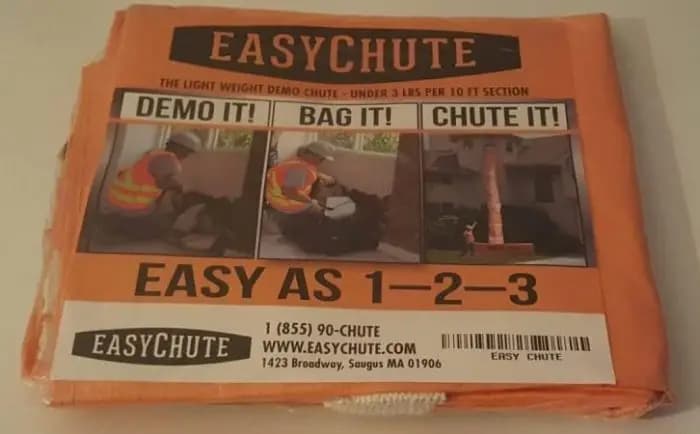
Renovation work in Massachusetts residential neighborhoods comes with a layer of complexity that job sites in industrial parks never face: people live there. Dogs run in fenced yards. Cats nap on front stoops. Kids play within earshot of your dumpster. And the homeowner who hired you is not going to be happy if falling debris scatters across a yard full of family pets and outdoor furniture.
That is exactly why debris chute setup matters so much in these neighborhoods — and why getting it right protects your crew, your reputation, and every living thing on that job site. This guide walks through everything a Massachusetts contractor needs to know about setting up a debris chute safely, efficiently, and considerately when pets and neighbors are part of the equation.
Why Pet-Friendly Neighborhoods in Massachusetts Demand a Different Debris Approach
Drive through Somerville, Jamaica Plain, Arlington, or any of the dense residential pockets along Route 128 and you will notice one thing immediately: people are outside with their animals. Massachusetts has one of the highest rates of dog ownership on the East Coast, and in walkable neighborhoods, that means pets are present at ground level around job sites constantly.
The risks of uncontrolled debris in these environments are not theoretical. Loose shingles tumbling off a roof edge can land on a dog run. Plaster chunks thrown from a second-floor window can bounce unpredictably. Even the dust cloud from a bucket of drywall scraps dropped into a dumpster can irritate a pet's respiratory system when the wind is wrong.
The Ground-Level Risk Zone
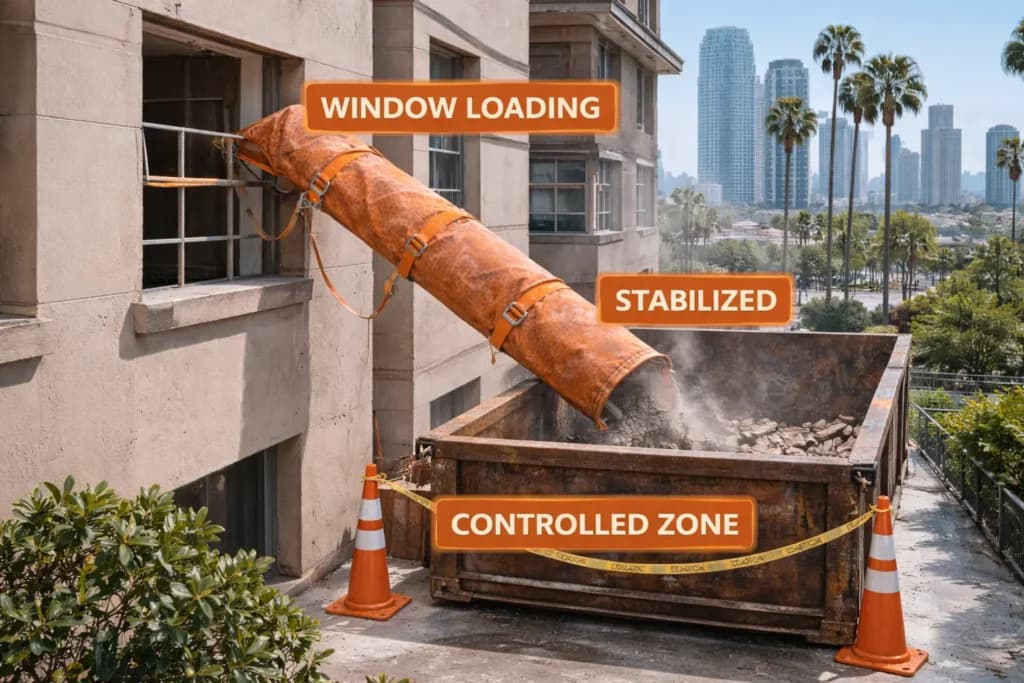
When debris is dropped or tossed, the actual point of contact — the dumpster or debris pile — becomes an active hazard radius extending several feet in every direction. Dogs on leashes, cats in outdoor enclosures, and small animals in nearby yards are all within that radius. A properly installed debris chute redirects that risk dramatically by confining the debris path to a controlled, enclosed channel from the upper floor straight to the dumpster.
Neighbor Expectations in Dense Massachusetts Communities
In communities like Brookline, Newton, and Cambridge, homeowners and renters expect contractors to operate with a high degree of consideration. Local ordinances in many of these municipalities require permits for dumpsters on public streets and may carry noise or dust restrictions. Setting up a debris chute that keeps mess contained is not just good practice — it is often the only way to stay on the right side of a watchful neighborhood.
Choosing the Right Debris Chute Length for Massachusetts Job Sites
Massachusetts homes are predominantly two-story and three-story wood-frame or masonry structures. The typical working height ranges from about 15 feet for a standard cape to over 35 feet for a triple-decker or older Victorian. Matching your chute length to that height is the first decision on every setup.
EasyChute sections come in 10 ft, 25 ft, and 50 ft lengths. A single 25 ft section handles the majority of two-story cape and colonial roof tear-offs with room to spare. For a three-story triple-decker gut job, two 10 ft sections combined with a 25 ft section gives you 45 feet of drop coverage — more than enough to reach a street-level dumpster from a third-floor window. Sections connect with a simple 1.5 ft overlap, so adding coverage is a matter of minutes, not a call to a rental yard.
Calculating Drop Height on Common Massachusetts Home Types
- Cape Cod / Ranch (1 story, low pitch): 10 ft section is typically sufficient for roofline work.
- Colonial (2 story): One 25 ft section covers roof edge to dumpster with ground clearance.
- Victorian / Multi-Family Triple-Decker: 35–50 ft of chute; combine sections as needed.
- Commercial Renovation (3–5 story): Two 25 ft sections or one 50 ft section; confirm dumpster placement allows for a straight or gently angled drop.
When in doubt, go a little longer. A chute that hangs 2 feet above the dumpster rim is far easier to manage than one that is 2 feet short and dumps debris onto the sidewalk — especially in a neighborhood where a dog could wander into that gap.
Debris Chute Placement Strategy Around Pets and Outdoor Living Spaces
Before the first section goes up, walk the entire perimeter of the property with the homeowner or property manager. You are looking for pet-specific hazards: dog runs, invisible fence boundaries, cat enclosures, bird feeders (which attract wildlife), rabbit hutches, and any outdoor food or water bowls that could collect dust or debris fragments.
Identifying the Cleanest Drop Zone
The ideal chute placement directs debris to a dumpster that is:
- Positioned away from fenced pet areas by at least 10–15 feet
- On a hard, flat surface (asphalt driveway or street) rather than soft ground where debris could scatter into grass
- Accessible from the upper anchor point without requiring the chute to angle over an outdoor living area
- Visible from your working position so you can monitor the drop zone
Temporary Barriers and Signage
Even with a chute in place, the dumpster zone needs physical separation in pet-heavy neighborhoods. Temporary construction fencing (the orange plastic mesh type) around the dumpster footprint is inexpensive and effective. Post a sign on the barrier that says the area is an active construction zone — it communicates professionalism to neighbors and gives pet owners a clear visual cue to keep animals back during active loading.
Talk to the homeowner about timing. If they let the dog out at 7:00 AM and 5:00 PM every day, schedule your most active debris drops around those windows when the yard is clear. That kind of coordination costs nothing and builds tremendous goodwill.
Step-by-Step Debris Chute Setup Process on a Massachusetts Residential Job
Proper installation takes under 20 minutes with one person. Here is the full sequence, adapted for the tight yards and dense surroundings typical of Massachusetts neighborhoods. For a visual walkthrough, check out the EasyChute step-by-step setup guide.
- Confirm the anchor point. Choose a window opening, roof edge, or scaffold rail at the top floor where the chute will hang. The anchor needs to support the weight of the chute plus the brief impact load of debris moving through it — a solid structural member like a window frame, roof truss tail, or scaffold pipe.
- Attach carabiners or quick-connects to the four woven loops. EasyChute sections include four reinforced woven loops at the top. Standard carabiners clip through these loops and over the anchor point in seconds. No tools required.
- Position the top section and let it drop. Confirm it hangs plumb and the lower opening aligns over the dumpster. If the chute rides against the siding, add a standoff or angle the top anchor point outward slightly.
- Connect additional sections with the 1.5 ft overlap. Slide the upper section into the lower section's opening until the overlap is fully engaged. The weight of debris moving through will keep sections aligned during use.
- Verify the lower opening clears the dumpster rim. The chute should terminate inside the dumpster or within 12 inches above the rim to prevent debris from bouncing out.
- Brief the crew on loading protocol. No oversize pieces that could jam. No heavy concentrated loads dropped at once. Feed debris in steadily, not in large batches.
- Strike the perimeter barrier. Confirm the temporary fencing is in place around the dumpster zone before beginning work.
You can watch the full installation process on the EasyChute video library — it makes the process even clearer for newer crew members.
Avoiding Common Setup Mistakes in Tight Residential Yards
Massachusetts residential lots in older suburbs and urban neighborhoods are frequently compact. A yard that looks spacious in a photo can become a chess puzzle when a dumpster, a chute, a crew, and a family pet enclosure are all competing for the same 20 feet of space. Common debris chute setup mistakes translate directly to Massachusetts job sites — and the consequences are amplified when pets and neighbors are close.
Mistake 1: Placing the Dumpster Too Close to a Fence or Structure
When a dumpster is butted against a fence, the chute's lower opening has no room to deliver debris cleanly into the container. Debris rolls off the rim into the gap between the dumpster and the fence — exactly where a dog might be on the other side. Keep at least 3 feet of clearance on all sides of the dumpster.
Mistake 2: Skipping the Walk-Through with the Property Owner
The homeowner knows where the dog runs, where the invisible fence transmitter is buried, and where the neighbor's cat likes to squeeze under the gate. That five-minute conversation before setup can prevent a situation that halts your workday or damages a client relationship.
Mistake 3: Underestimating Section Count
Running short on chute length in the middle of a job and improvising with a bucket-and-rope system negates every safety and efficiency benefit the chute provides. Always calculate your drop height before the job and add one additional 10 ft section to the order as a buffer. At under 3 lbs per section, there is no meaningful weight or cost penalty for carrying a spare.
Mistake 4: Ignoring Wind Direction
Massachusetts coastal and inland neighborhoods experience significant wind, especially in fall and winter during roofing season. Light debris like insulation fibers and roofing granules can blow sideways out of the dumpster and across adjacent yards. Orient the dumpster opening away from prevailing wind or use a tarp over the top during active loading on gusty days.
OSHA Compliance and Worker Safety at the Chute Anchor Point
Worker safety at height is non-negotiable on any Massachusetts job site, regardless of neighborhood character. OSHA's construction industry standards require fall protection for workers at or above 6 feet on residential construction sites. Installing a debris chute anchor at a second- or third-floor window involves working at height, and that means fall protection protocols apply before you clip a single carabiner.
Fall Protection Considerations During Chute Hanging
- Use a safety harness and anchor line any time the installer leans out of a window opening to position the chute.
- Keep a second crew member inside the structure as a spotter and anchor during the hanging process.
- Do not lean over a roof edge without a full fall arrest system in place, even for the brief moment of attaching loops to carabiners.
- Once the chute is hung and secured, the ongoing debris loading process should be conducted from inside the window opening or from a scaffold platform — not from the edge itself.
Ergonomics matter at ground level, too. OSHA ergonomic guidance recommends keeping repetitive lifting loads under manageable thresholds and using mechanical assists where available. A debris chute is itself an ergonomic tool — it eliminates the carrying of heavy loads down stairs, which is one of the most common sources of back injury on renovation jobs.
Debris Volume, Waste Types, and EPA Compliance for Massachusetts Renovations
Massachusetts contractors working on residential renovations generate a mix of debris types — roofing shingles, plaster and lathe, insulation, lumber, drywall, and packaging. According to the EPA's construction and demolition debris data, the United States generates hundreds of millions of tons of C&D debris annually, and residential renovation accounts for a significant portion of that stream.
In Massachusetts, the state has progressive recycling and diversion requirements for construction waste. Many Massachusetts municipalities require contractors to submit a waste management plan for permitted projects. Using a debris chute supports compliance by keeping material streams separated — you can direct different debris types into different containers by repositioning the chute drop zone, rather than sorting from a pile after the fact.
Separating Recyclable Material Streams
If your project involves significant volumes of recyclable materials (clean wood, metals, clean concrete, or intact drywall), consider setting up a secondary container specifically for those streams. Run the chute into whichever container matches the debris type coming down at any given time. This is easier to manage than it sounds and can meaningfully reduce your disposal costs and tipping fees over the course of a large project.
Pet-Safe Job Site Best Practices Beyond the Chute Itself
A well-installed debris chute solves the debris control problem, but a truly pet-safe job site requires a few additional habits. These practices cost nothing and distinguish professional crews from ones who leave homeowners anxious throughout the project.
- Secure all chemical containers. Paint, solvents, adhesives, and roofing compounds are acutely toxic to dogs and cats. Store them in a locked gang box or a closed vehicle, never on the ground at the site perimeter.
- Sweep the perimeter daily. Nails, staples, roofing tacks, and wire fragments accumulate around active job sites. A dog walking through the work area after hours can step on or ingest these. Daily perimeter sweeps — especially with a magnet on a stick — are non-negotiable on pet-heavy residential jobs.
- Communicate site hours clearly. Let the homeowner know exactly when the crew arrives and departs. That information lets them plan pet access accordingly and prevents an unplanned interaction between a curious dog and an open dumpster.
- Identify and block secondary hazard points. Open foundation access, exposed basement windows, and unfinished framing openings are spaces that attract curious pets. Temporary covers or boarding during off hours prevents accidents.
- Brief the full crew. Every person on the job should know that the homeowner has pets and understand what that means in practice. One crew member leaving a gate open at the end of the day can undermine everything else you have done right.
How EasyChute Handles the Logistics of Massachusetts Job Sites
One of the practical challenges on dense Massachusetts neighborhood jobs is logistics. You may be working in a neighborhood where parking is limited, staging space is tight, and deliveries need to arrive at the right time and right place. EasyChute ships free to job sites across the United States, which means you can order directly to the site address and have sections on the porch or in the garage when the crew arrives.
The lightweight fabric construction — under 3 lbs for a 10 ft section — means one person can carry the entire chute assembly for a typical two-story job without a second trip. That matters enormously when you are working on a triple-decker in Somerville with no driveway, or a row house in Worcester where the only access is a narrow alley.
Compare that to rigid aluminum or steel chute systems, which require two or three people to carry, a vehicle large enough to transport them, and significant setup time. For the full breakdown of how fabric trash chutes differ from rigid alternatives, the comparison is worth reading before your next bid.
Reusability and Cost Per Job
EasyChute sections are designed to be used job after job. The woven, coated poly fabric sheds debris cleanly, and the sections fold into compact packages that fit in a truck bed or crew cab storage area. For contractors doing regular renovation work in Massachusetts neighborhoods — roofing crews, interior gut contractors, junk removal operators — the per-job cost of ownership drops with every use. That is a meaningfully different economic model than renting rigid chute sections at a daily rate from an equipment yard.
Speaking of costs, if you are comparing ownership against rental, the real-world breakdown of trash chute rental costs makes the math very clear for most contractors.
Roofing Tear-Offs in Massachusetts: Chute Setup for Pet-Adjacent Yards
Roofing tear-offs are arguably the highest-stakes scenario for debris control in residential neighborhoods. A full shingle tear-off on a 2,000 square foot cape generates thousands of pounds of shingles, nails, and underlayment. Without a chute, that material comes off the edge in an uncontrolled stream. With a chute, it moves in a directed, predictable path.
For the specifics of roofing chute installation and operation, the complete roofing trash chute guide goes deep on roofline anchor methods, slope-to-chute angles, and how to handle hip and valley roofs where the debris path changes throughout the job.
Timing Roof Work Around Pet Schedules
Most homeowners let dogs out first thing in the morning and again in the late afternoon. The heaviest debris volumes in a tear-off typically come mid-morning after the crew has established a rhythm. Try to coordinate the most intensive tear-off and drop sessions between 9:00 AM and 3:00 PM when pets are most likely to be inside. That window also avoids the early morning noise sensitivity that neighbors in dense communities are most likely to complain about.
Debris Chute Setup for Interior Gut Renovations in Massachusetts Neighborhoods
Interior gut work — kitchen and bathroom renovations, full-floor demo, basement finishing — generates debris that has to come out through windows or be carried down stairs. In any multi-story home, carrying demolition debris down stairs is slow, physically demanding, and creates secondary hazards from dropped material in stairwells.
A debris chute hung from a second- or third-floor window turns that entire process into a one-person operation from inside. Load debris into the chute opening, let gravity do the work, and the material lands in the dumpster below. The complete guide to demolition chutes for interior gut work covers the specific techniques for plaster, tile, concrete block, and mixed debris loads.
Protecting Interior Surfaces During Chute Loading
When loading through a window opening, the window sill, frame, and surrounding interior wall finish are at risk of damage from repeated debris contact. Use a folded moving blanket or a cut piece of foam board as a temporary threshold protector over the sill during active loading. Remove it at end of day. That two-minute setup protects the finished work you are likely being paid to preserve around the demo zone.
What Massachusetts Contractors Are Saying About Neighborhood-Specific Setup
Contractors working in the dense residential corridors of eastern Massachusetts consistently identify the same factors as making or breaking a job: neighbor relations, pet and child safety concerns, and the speed with which a site can be made clean and orderly at the end of each day. A debris chute addresses all three simultaneously.
It keeps the work area tight. It eliminates the scatter of uncontrolled throws. And it allows a crew to fully load a dumpster and clear the visible site surface in a fraction of the time it takes to manage debris without a chute. For contractors building a reputation in specific neighborhoods — whether that is the North Shore, Metro West, or the Greater Boston urban core — that reputation for clean, considerate operation is a direct business asset.
Learn more about how EasyChute fits into your operation on the About EasyChute page, or browse the EasyChute FAQ for answers to the most common questions about sections, shipping, and setup.
Frequently Asked Questions
How do I keep pets safe around an active debris chute in a residential backyard?
The most effective approach is a combination of physical separation and scheduling. Use temporary construction fencing around the dumpster zone to create a no-access perimeter, and coordinate with the homeowner to keep pets inside during active loading periods. Brief every crew member on the protocol. Sweep the perimeter daily for nails, staples, and small debris fragments that dogs and cats can step on or ingest. A debris chute itself dramatically reduces scatter compared to throwing debris from height, but the perimeter barrier is the final layer of protection.
What EasyChute section length do I need for a typical Massachusetts two-story colonial?
A single 25 ft section handles most two-story colonial and cape-style homes comfortably. The working height from a second-floor roofline to a street-level dumpster is typically between 18 and 24 feet, and the 25 ft section gives you clearance to position the dumpster a foot or two back from directly under the anchor point. If you are working on a taller Victorian or a triple-decker, combine a 25 ft section with one or two 10 ft sections using the standard 1.5 ft overlap connection.
Do I need a permit to use a debris chute in Massachusetts residential neighborhoods?
The debris chute itself typically does not require a separate permit, but the dumpster placed in a public street or sidewalk right-of-way usually does. Most Massachusetts municipalities require a dumpster permit from the public works or building department before a container can be placed on a public way. Check with the local building department in the specific town or city where you are working — requirements vary considerably between municipalities like Boston, Cambridge, Newton, and smaller suburban communities.
Can a single worker install and strike an EasyChute setup?
Yes. Each 10 ft EasyChute section weighs under 3 lbs and attaches via four woven loops and standard carabiners. One person can carry, hang, connect, and strike a full multi-section chute assembly in under 20 minutes. The only exception is working at height: when the anchor point requires leaning out of a window or over a roof edge, a second person as a safety spotter is strongly recommended and may be required by OSHA fall protection standards depending on the working height and site conditions.
How do I handle debris chute setup when the dumpster has to go on a narrow Massachusetts street?
Narrow street placement is common in older Massachusetts neighborhoods. Confirm the dumpster permit allows the specific placement and get the container as far to the curb as possible to preserve vehicle lane clearance. Position the chute anchor point so the chute drops close to the street-side edge of the dumpster rather than the sidewalk side, minimizing the debris arc over pedestrian and pet traffic areas. Coordinate with the hauler to place the dumpster at the optimal angle — many can position them perpendicular or parallel to the curb depending on space constraints.
What debris types should not go through a fabric debris chute?
EasyChute's woven, coated poly fabric handles the full range of standard renovation and roofing debris — shingles, plaster, drywall, wood framing, insulation, tile, and mixed light demo material. Avoid feeding concentrated loads of loose liquids, fresh concrete or mortar in large volumes, or single pieces significantly wider than the chute opening, as these can jam or stress the overlap connections. For very heavy concentrated loads like large sections of masonry, break them into manageable pieces before loading. Never send hazardous materials like asbestos-containing debris through any chute without following applicable state and federal hazmat handling requirements.
How does a debris chute help with Massachusetts construction waste recycling requirements?
Massachusetts has progressive construction waste diversion requirements that apply to many permitted renovation projects. A debris chute lets you direct different material streams into separate containers simply by repositioning the dumpster or the chute drop zone as the debris type changes during the job. This is far easier than sorting from a mixed pile after the fact and supports documentation for waste management plans. Clean wood, metals, and clean drywall can be segregated into dedicated containers, reducing tipping fees and helping you meet project-specific recycling targets.
Ready to Set Up a Debris Chute on Your Next Massachusetts Job?
Whether you are tearing off a roof in Saugus, gutting a triple-decker in Somerville, or running a bathroom renovation in a pet-filled backyard in Newton, the right debris chute setup makes the job cleaner, faster, safer, and more professional. EasyChute sections ship free to job sites across Massachusetts — order the sections you need, hang them in minutes, and move debris safely from any height straight into the dumpster below.
Explore your options on the construction chute overview page or head to the contact page to ask a question before you order. The right setup is a 20-minute investment that pays dividends on every job after this one.