

Index
- Permitting and Local Compliance
- Safety Planning Before Season Starts
- Chute Selection for Spring Demo Scope
- Equipment and Dumpster Logistics
- Crew Training and Operational Readiness
- Debris Containment and Cleanup
- Weather and Seasonal Factors in Pennsylvania
- Budget and Cost Allocation
- Pre-Project Site Inspection Checklist
- Maintenance During the Project
- Daily and Weekly Operational Tracking
- Frequently Asked Questions
- Ready to Launch Your Spring Demo Project?
Permitting and Local Compliance
Pennsylvania municipalities have distinct rules for debris chutes on demolition projects. Before installing any chute system, verify whether your site is in a city, township, or county jurisdiction—each has its own zoning and building-code enforcement. Contact your local code official early to confirm whether a permit is required and what documentation is expected.
Most Pennsylvania jurisdictions require a demolition permit that must be posted on-site. Some also require a temporary structure permit if the chute will be mounted to the building for more than 30 days. Here’s what to gather:
- Site plan showing chute location, mounting points, and dumpster placement
- Proof of liability insurance (typically $1M minimum)
- List of contractors and subcontractors working on-site
- Structural engineer’s sign-off if the chute is mounted above certain weight thresholds
- Environmental compliance forms (recycling plan, if required by county)
Pennsylvania counties that include Philadelphia, Pittsburgh, Allegheny, and Lancaster often have stricter demolition oversight. Call ahead or visit the county-level building department website to confirm submission timelines. Spring demolition season (March–May) sees surging permit applications, so allow 2–3 weeks for approval before your planned start date.
Key compliance tip: Some Pennsylvania jurisdictions mandate that C&D (construction and demolition) debris be separated into recyclable categories (wood, metal, drywall, etc.). Factor this into your chute workflow and post-disposal plan before the project begins.
Safety Planning Before Season Starts
Spring weather in Pennsylvania—sudden rain, temperature swings, muddy ground conditions—can create hazards for crews working at heights with debris chutes. Safety begins with a written plan distributed to all workers before they arrive on-site.
Review these OSHA Construction Industry safety standards and ensure your site aligns with them. Key areas to address:
- Fall protection: Chute installation workers must use harnesses when working above 6 feet. Inspect all anchor points and tie-offs.
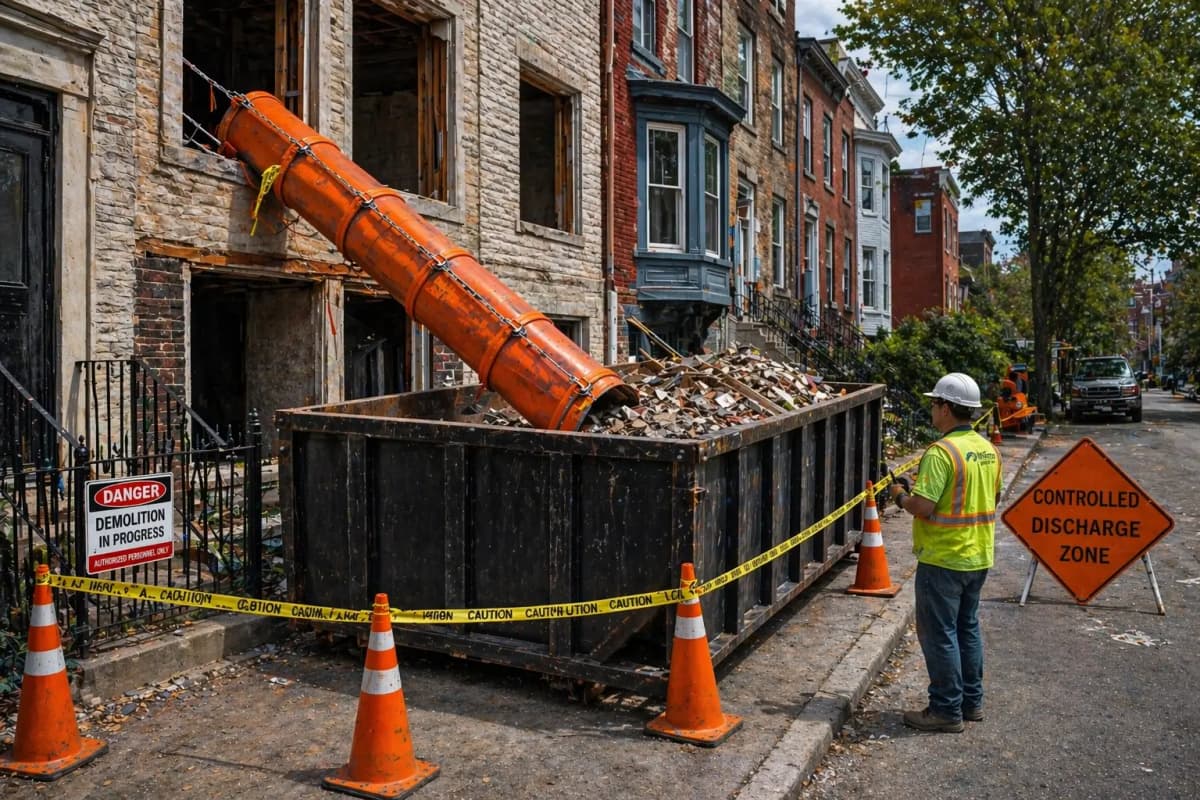
- Loading zone control: Designate a 15-foot perimeter around the chute discharge point as a debris-fall zone. Post warning signs and barricades.
- Ground stability: Spring mud and thaw can soften ground. Inspect dumpster pad and chute support footings daily.
- Noise and dust: Debris chutes can generate noise complaints, especially on residential sites. Plan collection times and notify neighbors in writing.
- Proper lifting: Train crews on safe loading ergonomics—never overfill chute sections or throw debris from excessive heights. Reference OSHA ergonomics guidelines for load-weight limits.
Assign a safety officer to conduct daily toolbox talks with your crew and document all near-misses or incidents.
Chute Selection for Spring Demo Scope
Spring demolition projects in Pennsylvania range from small residential teardowns to multi-story commercial gutting. Choosing the right chute system depends on debris volume, building height, and project timeline.
For small residential jobs (single-story): A Lite Duty Trash Chute or window drop-chute system is cost-effective. These are ideal for roofing tearoffs, deck demolition, or interior gutting where debris volume is moderate.
For multi-story commercial or large residential demolition: A Heavy Duty Trash Chute with modular sections offers durability and capacity. Modular systems allow you to scale the chute length (25ft, 50ft, or longer) to match the building height and match the project’s debris flow rate.
Use the Trash Chute Capacity Calculator Guide to estimate your project’s daily debris volume. This ensures you rent or purchase a chute with adequate capacity and prevents bottlenecks on-site.
Spring-specific consideration: Spring conditions (occasional rain, wind) are less extreme than winter or peak summer in Pennsylvania. However, verify that your chute mounting hardware is rated for Pennsylvania wind speeds (typically 90 mph design standard for residential installations).
Equipment and Dumpster Logistics
Coordinating chute delivery, dumpster placement, and access is critical to a smooth spring project. Begin logistics planning 4–6 weeks before your demolition start date.
- Chute delivery: Arrange for the debris chute system to arrive 2–3 days before crew mobilization. Inspect all sections for damage and verify you have all connecting hardware and safety belts.
- Dumpster drop-off: Schedule the dumpster to arrive on your first setup day, positioned directly below the chute discharge point. Confirm the driver knows the exact location and has access to your site.
- Dumpster capacity sizing: For spring demolition, a 20-yard dumpster is standard for small jobs; 30–40 yards is typical for multi-story work. Factor in Pennsylvania’s C&D recycling requirements if the county mandates separation.
- Access routes: Map out the path from chute discharge to dumpster. Confirm that ground conditions (potentially muddy in spring) won’t impede dumpster placement. Test the route with the dumpster driver before delivery day.
- Overflow plan: If your demolition runs longer than expected, have a backup dumpster scheduled for mid-project pickup and replacement.
Document all logistics in a site-specific plan. Share it with your crew, the dumpster company, and the permit office if requested.
Crew Training and Operational Readiness
Even experienced demolition crews need a project-specific briefing on your chute setup. Start every spring demolition project with a 30–45-minute crew orientation.
Orientation topics:
- Chute assembly and safety features (no climbing on chute, no riding the sections, proper loading angle)
- Debris types that are acceptable (wood, drywall, metal, concrete) and those that must be segregated or removed separately (hazmat, asbestos, large structural members)
- Load-weight limits and how to spot overloading (backup if you hear dragging or binding inside the chute)
- Emergency stop procedures if debris jams the chute
- Personal protective equipment (hard hat, safety vest, gloves) required at all times in the loading zone and discharge area
- Neighbor and pedestrian awareness—no debris thrown outside the designated zone
Assign a lead supervisor to oversee chute operations daily. This person monitors debris flow, checks for jams, and ensures the crew follows protocol.
Debris Containment and Cleanup
Spring weather—rain, wind, melting snow—increases the risk of debris escape from the collection zone. Implement containment measures from day one.
- Tarping: If rain is forecast, cover the dumpster or use tarps around the discharge area to prevent debris scatter and mud tracking.
- Perimeter sweeping: Assign a crew member to sweep the ground around the dumpster twice daily (morning and end-of-shift) to catch loose debris before it spreads.
- Discharge baffles: If wind is an issue, install removable screens or chute-discharge covers to reduce horizontal dispersal.
- EPA compliance: Ensure that all EPA construction and demolition debris handling standards are met; separate recyclables from landfill material if your jurisdiction requires it.
Document daily cleanup efforts in your site log. Photograph the site at the start and end of each week to prove compliance with local cleanliness ordinances.
Weather and Seasonal Factors in Pennsylvania
Spring in Pennsylvania is unpredictable. Temperatures can swing from 40°F to 70°F within a week; rain is frequent; and wind patterns can shift rapidly. All of these affect chute performance and safety.
Rain preparation: Heavy spring rains can make debris heavier and increase chute internal friction. Inspect the chute daily for water buildup and ensure drainage holes (if present) are clear. Wet debris also increases the dumpster’s weight—account for this when calculating disposal capacity.
Ground conditions: Spring thaw softens ground. Check the dumpster pad and chute-support footings every morning. If you see settling or tilting, halt operations and call a structural contractor or equipment provider.
Wind and gusts: Spring wind can be erratic. Secure all loose materials near the chute and ensure tie-offs are rated for Pennsylvania’s wind standards. If gusts exceed 35 mph, consider reducing loading or pausing operations.
Temperature sensitivity: Plastic or poly chutes can become brittle in late-winter cold or expand in spring warmth. Visually inspect sections before assembly for cracks or distortion.
Spring is also when landscaping around residential projects starts to green. Notify neighbors if vibration or noise from the chute may affect newly seeded lawns or young plantings.
Budget and Cost Allocation
Spring demolition projects require upfront capital for chute rental, dumpster fees, permitting, and labor. Build a comprehensive budget 6–8 weeks before startup.
Use the Renovation Debris Chute Cost Estimate Checklist to itemize all debris-related costs:
- Chute system rental or purchase (daily/weekly/monthly rate)
- Delivery and pickup fees
- Dumpster rental and haul-away (per yard or per ton)
- Disposal surcharges (hazmat, asbestos abatement, heavy items)
- Labor for setup, daily sweeping, and breakdown
- Permits and inspections
- Insurance rider (if applicable)
- Signage, barricades, and safety equipment
Add a 10–15% contingency for unexpected conditions (ground issues, weather delays, disposal surcharges). Spring projects often run longer than planned due to weather interruptions, so budget for extended rental periods.
Pre-Project Site Inspection Checklist
One week before demolition begins, conduct a thorough site walkthrough. Document findings in photos and notes for your records and to share with your crew.
Site walkthrough items:
- Measure building height and confirm chute length requirement; compare to your ordered system
- Identify all mounting points (wall anchors, roof edges, existing structures) and assess their integrity
- Verify electrical lines, gas lines, or other utilities don’t obstruct chute placement
- Check ground conditions (asphalt, soil, gravel) and mark the dumpster spot; ensure it’s level and compacted enough for a loaded truck
- Identify pedestrian pathways and confirm the debris-fall zone doesn’t overlap with public walkways
- Photograph existing property conditions (neighbor’s fence, landscaping, vehicles) to establish a baseline for any damage claims
- Confirm that permit signage is ready and the permit number is posted on-site
- Walk the neighborhood and personally inform neighbors of the project timeline and expected noise/disruptions
If any issues are found (structural weakness, ground settling, utility conflicts), resolve them before crew arrival. Delays at this stage are far cheaper than emergency shutdowns mid-project.
Maintenance During the Project
Debris chutes require regular inspection and maintenance to operate safely and efficiently. Trash Chute Cleaning & Maintenance Tips outlines best practices; apply them daily during spring demolition.
Daily maintenance tasks:
- Inspect all visible chute sections for cracks, separations, or debris buildup outside the chute
- Check all bolts and connectors; tighten if loose (vibration from debris impact can loosen fasteners)
- Clear any blockages inside the chute by gently tapping the exterior with a rubber mallet; never put hands or tools inside
- Verify tie-offs, straps, and mounting brackets are intact and secure
- Sweep around the base and dumpster area to remove spillage
- Check ground support footings and dumpster pad for settling
If a jam occurs, stop loading immediately. Do not force debris down or use water pressure (it can damage seals). Instead, contact your equipment provider for guidance or rent a jetting service if necessary.
Daily and Weekly Operational Tracking
Maintain a simple on-site log to track operations, incidents, and compliance. This protects you legally and helps you optimize efficiency for future spring projects.
Daily log entries:
- Date, time, crew size
- Debris volume loaded (estimate in cubic yards or count of dumpster fills)
- Any equipment issues or safety near-misses
- Weather conditions (rain, temperature, wind speed if observed)
- Permit inspector visits or neighborhood complaints
- Maintenance performed
Weekly summary: Total volume disposed, disposal costs incurred to date, schedule adherence, and any corrective actions taken.
This log becomes invaluable if a dispute arises with neighbors, insurance carriers, or the permit office. It also provides data for your spring 2027 budget and timeline planning.
Frequently Asked Questions
Do I need a permit for a demolition debris chute in Pennsylvania?
Most Pennsylvania municipalities require a demolition permit, which typically covers the debris-removal plan. Some jurisdictions also require a separate temporary-structure or building permit for the chute itself, especially if it will be in place for more than 30 days. Check with your local code office at least 3 weeks before your project start to confirm requirements and allow time for approval.
What’s the weight limit for a debris chute, and how do I know if my chute can handle my project?
Weight limits vary by chute type and material. A Debris Chute Weight Capacity Guide breaks down load ratings for different models. Factors include debris type (concrete is much heavier than drywall), the angle of the chute, and section length. When in doubt, consult your chute provider or a structural engineer.
Can I use a debris chute in wet or rainy spring weather?
Yes, but with precautions. Wet debris is heavier and can increase friction inside the chute. Ensure drainage is clear, inspect the chute daily for water accumulation, and monitor for jams. Reduce loading rates during heavy rain. If weather is extreme, consider temporarily halting operations until conditions improve.
How often should the chute be cleaned or maintained during a multi-week project?
Inspect and perform basic maintenance (bolt checks, clearing external debris) daily. Deep cleaning or internal inspection should occur weekly or whenever you notice reduced flow or odd sounds. If the chute is heavily used, a professional cleaning service can be called mid-project if needed. Reference the Trash Chute Cleanliness Maintenance Checklist for a complete list.
What should I do if debris is escaping or scattering outside the designated zone?
Stop loading immediately and investigate. Common causes include overloading, an angled or misaligned chute section, wind, or ground-level impact turbulence. Check the chute alignment, reduce load size, install wind screens if needed, and sweep more frequently. If the issue persists, contact your equipment provider or consider repositioning the dumpster.
Are there Pennsylvania-specific environmental rules for demolition debris disposal?
Yes. Many Pennsylvania counties and municipalities require that construction and demolition debris be separated into recyclable streams (wood, metal, drywall) and non-recyclable waste. Some areas mandate diversion rates (e.g., 50% of debris must be diverted from landfills). Confirm your county’s rules early and plan your sorting strategy accordingly. The EPA’s construction and demolition debris data provides national context, but your local waste authority has final say.
How far in advance should I schedule my dumpster and chute system for a spring project?
Aim for 4–6 weeks. Spring is peak demolition season in Pennsylvania, and both dumpster companies and chute rental providers have limited availability. Booking early ensures you get your preferred dates and may secure better pricing. If you wait until 2 weeks before, you risk availability issues or expedited fees.
Ready to Launch Your Spring Demo Project?
Spring demolition in Pennsylvania demands careful planning, compliance with local regulations, and operational diligence—but a well-executed project keeps your crew safe, satisfies your neighbors, and protects your bottom line.
Start by downloading our comprehensive Trash Chute for Demolition Contractors guide and our Renovation Debris Chute Cost Estimate Checklist to align your planning and budget.
If you’re selecting a chute system for the first time, our Debris Chute Installation: Complete Step-by-Step Guide walks you through the full assembly and deployment process. For Pennsylvania-specific guidance on local compliance and best practices, reach out to the EasyChute team at +1-855-902-0883 or visit https://easychute.com.
Your spring project is the start of a busy season. Set it up right, and you’ll run like clockwork. Good luck out there.