

Table of Contents
- Key Cost Drivers for Renovation Debris Chutes
- Rental vs. Buy: Pricing Models for 2026
- Site Assessment and Measurement Checklist
- Chute Type and Capacity Selection
- Installation and Labor Cost Breakdown
- Permits, Insurance, and Compliance Costs
- Hidden Fees and Contingency Planning
- Complete Cost Estimation Checklist
- ROI and Payback Timeline
- Regional Cost Variation and Local Factors
- Common Cost Estimation Mistakes
- Frequently Asked Questions
- Get Started with Your Cost Estimate
Key Cost Drivers for Renovation Debris Chutes
Renovation debris chute costs are not one-size-fits-all. Your final bill depends on several interconnected factors that compound quickly if overlooked. The largest variables are project duration, building height, debris volume, and installation accessibility.
Duration is the primary lever. A two-week kitchen remodel will rent a chute for 14 days; a six-month gut renovation for multiple units will either rent for 180 days or buy a system outright. Rental rates drop on a per-day basis the longer you contract, but fixed setup fees apply regardless.
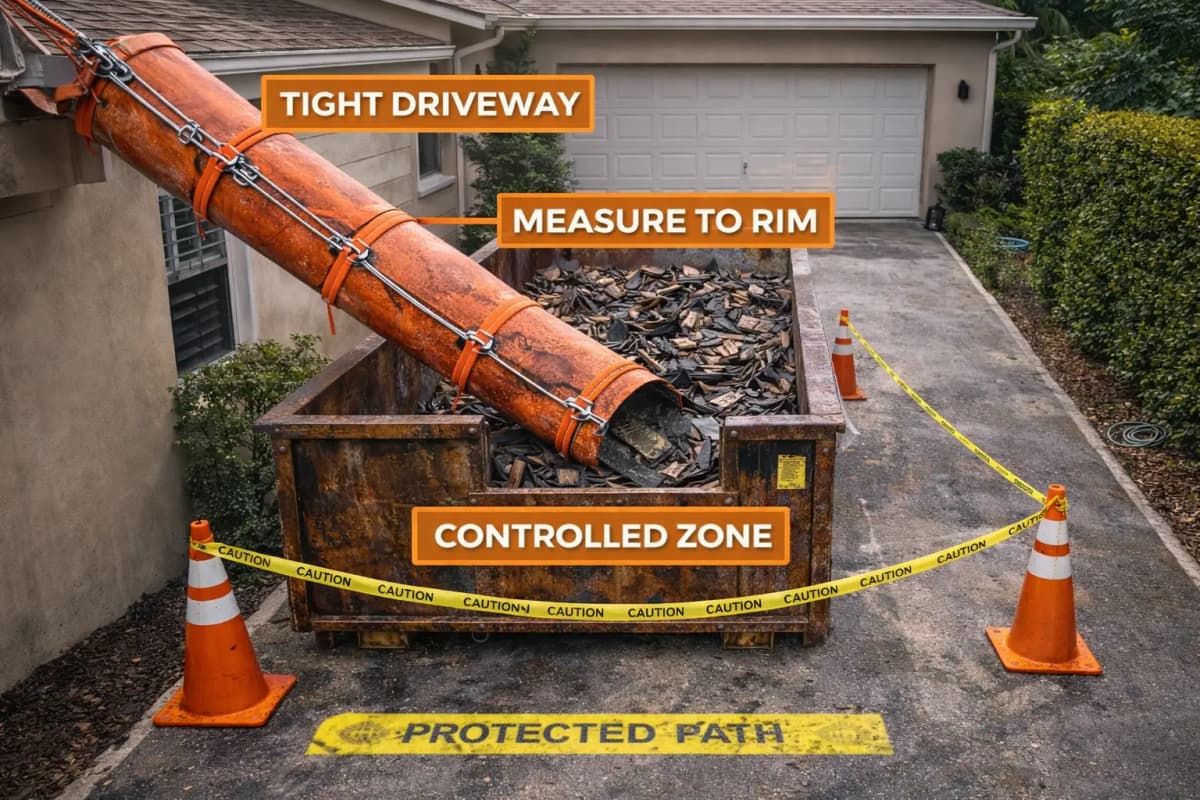
Building height and chute length scale your costs linearly. A single-story renovation needs 20–30 feet of chute sections; a four-story townhouse needs 50+ feet. Each additional 10-foot section adds material, labor, and structural fastening. Taller installations also require more bracing, tie-offs, and scaffolding—costs that climb fast on multi-story jobs.
Debris volume and type determine chute capacity and dumpster count. A roofing tear-off generates dense, heavy material (shingles, felt, plywood, nails). A drywall and flooring removal generates lower-density but voluminous waste. Misestimating volume leads to oversized chutes (wasted rental fees) or undersized chutes (missed dumpster swaps, production delays, penalties).
Rental vs. Buy: Pricing Models for 2026
The decision between renting and buying your debris chute system is the foundation of your cost estimate. Each model has distinct breakeven points and hidden expenses.
Rental Pricing Structure
Trash chute rental cost per day typically ranges from $35–$75 per day for a basic 24-foot system, depending on region, chute type (poly vs. metal), and capacity tier. Monthly rates (30 days) typically offer 10–15% discounts; multi-month contracts offer 20–30% savings versus daily rates.
- Delivery and setup: $200–$500 per site (one-time, non-refundable).
- Pickup and takedown: $150–$400 (separate from delivery if site conditions change).
- Weekly cleaning and inspection: $50–$100 per visit (mandatory on many contracts to prevent spillover and liability).
- Damage fees: Dents, bent sections, or improper tie-off anchoring can incur $100–$500 per repair or replacement.
- Overage dumpster swaps: If you fill dumpsters faster than forecast, swap fees ($150–$300 per dumpster) add quickly.
Monthly rental cost example: 30-day rental of a 40-foot chute system at $50/day base rate = $1,500. Add delivery ($300), weekly cleaning (4 visits × $75) = $300, and one overage dumpster ($200). Total: ~$2,300.
Buy (Modular Kit) Pricing
Purchasing a modular debris chute system is viable if you anticipate 3+ projects per year or your business focuses on high-volume renovations. See our modular trash chute kit cost breakdown for detailed per-section and system-level pricing.
- Modular section cost: $250–$400 per 10-foot section (poly systems are cheaper; heavy-duty metal are pricier).
- A complete 40-foot system: $1,500–$2,400 in sections alone.
- Fasteners, brackets, tie-off hardware: $300–$600 per installation.
- Installation labor (first-time setup): 6–10 hours at $50–$100/hour per worker = $600–$1,500.
- Storage and maintenance: Annual inspection, repairs, and secure storage = $200–$500/year.
Full buy cost for a 40-foot system: System $2,000 + fasteners $450 + labor $900 + year-one maintenance $300 = ~$3,650 first year. Year two and beyond drop to ~$500/year (inspection and minor repairs) if reused on multiple projects.
Breakeven Calculation
If your rental cost per project averages $2,300 and a buy system costs $3,650 first year, you break even at 1.6 projects per year. If you run 2–3 renovation jobs annually, buying becomes profitable by year two.
Site Assessment and Measurement Checklist
Before you can estimate chute cost accurately, you must walk the renovation site and measure three critical dimensions: vertical drop height, building facade access, and dumpster placement proximity.
Vertical Drop Height
Measure from the roof line, window opening, or highest working platform straight down to ground level or dumpster-discharge point. Do not round down; a three-story building with a peaked roof may measure 45–50 feet, not the assumed 35 feet of three floors at ~12 feet per floor.
- Use a long tape measure or laser distance meter.
- Account for gutters, soffits, and overhanging eaves; the chute must clear them or be mounted further out.
- Document the exact height in feet. Each 10-foot section costs money; undersizing costs time and overage dumpster fees later.
Building Facade Access
Identify where the chute will mount. Check for:
- Existing fastening points: Are there roof parapets, ledges, or roof-mounted HVAC to anchor chute bracing? Or will you need to drill into masonry, siding, or metal flashing?
- Window or roof-opening dimensions: If discharging through a window or removal opening, measure width and height to confirm clearance.
- Structural concerns: Historic buildings, HPO-restricted areas, or HOA rules may require engineer sign-off or special mounting. Budget for consultation: $200–$500.
- Rooftop access: Can you safely position a forklift or crane to raise chute sections, or will manual hand-carry and rigging take longer (and cost more in labor)?
Dumpster Placement
The chute discharges into a dumpster on the ground. Verify:
- Distance from building to dumpster placement zone: Longer vertical drops may need angled-discharge guidance or impact-dampening bags to prevent spillover and property damage. Budget an extra $200–$400 for discharge containment.
- Driveway or ground condition: Can a heavy dumpster sit safely without sinking or cracking the surface? If not, you may need plywood or steel plates ($100–$300).
- Neighbor proximity: If the dumpster is near a property line, noise and dust-control measures may be required. Budget for containment tarp and weekly cleaning.
Chute Type and Capacity Selection
Not all debris chutes are equal. Your choice of material and capacity directly affects both rental and buy costs.
Chute Material Options
Polyethylene (Poly) Chutes: Lighter weight, cheaper to rent ($35–$50/day), easier for first-time contractors to handle. Best for smaller, shorter-duration projects. Poly degrades slightly in UV exposure over 6+ months, so not ideal for long-term outdoor storage.
Metal (Galvanized or Steel) Chutes: More durable, withstand heavier impacts and sharper debris (roofing nails, glass, metal studs). Rental rates are 20–30% higher ($50–$75/day). Recommended for demolition and roofing tear-off projects where debris is aggressive. Rust risk if not galvanized; verify coating before rental.
Capacity Tiers
Chutes come in lightweight, standard, and heavy-duty ratings. Exceed your rating and you risk section collapse, fastening failure, or discharge jam.
- Lightweight (6,000–8,000 lbs/day capacity): Interior renovation (drywall, flooring, fixtures). ~$35–$45/day rental.
- Standard (10,000–15,000 lbs/day): Mixed renovation, small roofing, selective demolition. ~$50–$60/day.
- Heavy-duty (20,000+ lbs/day): Full roofing tear-offs, foundation demo, full-gut renovations. ~$70–$85/day. Buy cost: $400–$500 per 10-foot section.
Use our trash chute capacity calculator to estimate your daily debris volume based on project scope.
Installation and Labor Cost Breakdown
Chute installation is labor-intensive. On a rental, the provider may include basic setup; on a buy, you cover all labor.
Professional Installation (Contracted)
If you hire a licensed contractor or the chute provider’s installation crew to assemble, measure, and brace the system:
- Setup labor: 4–8 hours for a 40-foot system. At $60–$100/hour per worker, budget $240–$800 per setup.
- Multiple workers: Larger systems require 2–3 people for safety and speed; factor accordingly.
- Scaffolding or lift rental: If roof access is difficult, a 40-foot lift rental is $300–$600/day for one day of setup.
- Tie-off and bracing material: Professional fastening (lag bolts, metal brackets, load-rated anchors) runs $300–$600 in hardware alone.
In-House DIY Installation
Many contractors install chutes themselves to save money. This is viable if your crew has experience; it is not recommended for first-time contractors. See our trash chute installation guide for step-by-step procedure.
- Labor cost: Your crew’s time (billable or opportunity cost). On a rental contract, setup time is typically included or discounted.
- Risk: Improper fastening or bracing can result in chute collapse, debris spillover, property damage, or worker injury. This can nullify insurance and trigger fines. Professional installation + insurance is often cheaper than the liability of a DIY error.
Permits, Insurance, and Compliance Costs
Many jurisdictions require debris chute permits, especially for work in historic districts or multi-unit buildings.
Permit Costs
- City/town renovation permit: Usually included in your general renovation permit. Cost varies: $0–$500 depending on jurisdiction.
- Chute-specific permit (if required): Some cities (Philadelphia, Hartford, Los Angeles, Chicago) require a separate debris-removal or chute-installation permit. Budget $100–$300.
- Inspection and sign-off: Many permits require a city inspector to approve chute installation before use. Plan for a 1–2 week delay and possible callbacks ($0 permit fee, but labor delay costs).
Insurance and Liability
Debris chute rental agreements typically require your project to carry general liability insurance with debris removal coverage. If you’re renting a chute, the rental company may also require you to add them as an additional insured ($25–$75 administrative fee).
- Additional insured endorsement: $25–$75 per rental contract.
- Coverage bump for elevated risk: If your renovation involves roofing or demolition in a high-density area, your insurer may require higher limits. Budget for a policy adjustment: $200–$500.
OSHA and Safety Compliance
Following OSHA construction safety guidelines is non-negotiable. Chute safety includes:
- Proper tie-off and bracing (covered under installation).
- Worker training on chute use and debris-height limits.
- Weekly chute inspection (may be bundled with rental maintenance or require your crew’s time).
While OSHA compliance itself has no fee, violations can trigger fines up to $15,000+ per violation. Budget defensively.
Hidden Fees and Contingency Planning
Real-world renovation projects rarely follow the estimate. Plan for these surprises.
Project Extension Fees
Your 30-day rental estimate assumes the chute comes down day 31. If the renovation runs five extra days, you pay five more days of rental plus storage. If the final pickup is rescheduled twice, you incur rescheduling fees ($50–$150 per reschedule).
Mitigation: Negotiate a 5–7 day grace period into your rental contract. Add a 10% duration buffer to your estimate.
Damage and Repair Costs
Dropped debris, impact from falling tools, or improper loading can dent or crack chute sections. If the damage prevents safe operation, the rental company charges for repair ($150–$500 per section) or replacement. Some contractors carry damage waivers ($50–$100 one-time fee) that waive minor damage charges.
Mitigation: Train crew on proper use. If your project has high demolition or roofing risk, buy a damage waiver.
Dumpster Overage and Swap Fees
You estimated 4 dumpsters over 30 days; your crew fills 6. Each additional dumpster swap costs $150–$300. On a multi-dumpster project, this can add $500–$1,500 to the bill.
Mitigation: Use our capacity calculator to forecast volume. When in doubt, overestimate dumpster count; an empty dumpster costs less than frantic overage swaps.
Seasonal Surcharges
In winter months (November–March), chute providers charge 10–20% surcharges for snow removal, icing hazards, and reduced crew availability. Summer (June–August) demand also drives rates up slightly.
Mitigation: Schedule renovations in shoulder seasons (April–May, September–October) when chute rental rates are typically 5–10% cheaper.
Disposal and Waste-Stream Costs
Your chute provider’s dumpsters typically cover basic disposal. However, some jurisdictions or waste streams (appliances, HVAC units, hazardous materials) incur additional fees. If your renovation includes demolition of old kitchen appliances, budget $50–$150 per appliance for disposal.
Mitigation: Separate recyclable materials (metal, cardboard) from general debris. Recycling often reduces disposal fees by 10–20%.
Complete Cost Estimation Checklist
Use this checklist to build your final renovation debris chute cost estimate. Print or copy and fill in site-specific values.
Site Measurement & Assessment
- Vertical drop height (feet): ___
- Recommended chute length (add 5–10% overhead): ___
- Building facade access difficulty (easy / moderate / hard): ___
- Structural engineer consultation needed (Y/N): If Y, budget $200–$500.
- Distance from building to dumpster placement (feet): ___
- Dumpster ground prep needed (plywood, leveling)? (Y/N): If Y, budget $150–$300.
- Historic district or HOA restrictions? (Y/N): If Y, budget $200–$500 for compliance review.
Chute System Selection
- Material (poly / metal): ___. Cost impact: Poly = baseline; metal = +20–30%.
- Capacity tier (lightweight / standard / heavy-duty): ___.
- Estimated daily debris volume (lbs/day): ___.
- Chute sections needed (10-foot sections): ___.
Rental vs. Buy Decision
- Project duration (days): ___.
- Estimated projects per year (if buy): ___.
- Decision (rent / buy / hybrid): ___.
- If rent: daily rate ($) × project days + delivery ($300) + weekly cleaning ($75 × 4) + contingency overage ($200) = rental subtotal: $___.
- If buy: system sections ($) + fasteners ($) + first setup labor ($) + annual maintenance ($) = buy subtotal year 1: $___.
Installation and Labor
- Professional installation required? (Y/N): ___.
- If Y: labor hours × hourly rate = $___.
- Lift or scaffolding rental (if required): $___.
- Fastening hardware and tie-offs: $___.
- Installation subtotal: $___.
Permits, Insurance, and Compliance
- Renovation permit (included in general permit?): $___.
- Chute-specific permit (if required): $___.
- Additional insured endorsement: $___.
- Insurance coverage bump (if needed): $___.
- Compliance and safety subtotal: $___.
Contingency and Hidden Fees
- Project extension buffer (5–10% of duration days × daily rate): $___.
- Damage waiver or damage reserve (2–3% of chute cost): $___.
- Dumpster overage reserve (1–2 extra swaps × $200): $___.
- Seasonal surcharge (if applicable): $___.
- Waste disposal fees (appliances, hazmat): $___.
- Contingency subtotal: $___.
TOTAL COST ESTIMATE
Rental base + Installation + Permits + Contingency = Final Estimate: $___
Recommended markup for your bid (15–25% gross margin): Final Estimate × 1.20 = Client Quote: $___.
ROI and Payback Timeline
If you’re considering buying a modular system, calculate breakeven and long-term ROI to justify the capital outlay.
Rental-Only Scenario (3 projects/year)
- Average rental cost per project: $2,300.
- 3 projects × $2,300 = $6,900/year rental cost.
- Over 5 years: $34,500 with no asset.
Buy Scenario (3 projects/year)
- Year 1: $3,650 system + $300 annual maintenance = $3,950.
- Years 2–5: $500/year maintenance only (no additional purchase).
- 5-year total: $3,650 + ($500 × 4) = $5,650.
- 5-year savings: $34,500 – $5,650 = $28,850.
Even accounting for depreciation and occasional section replacement, a buy system pays for itself within 18–24 months if you run 2+ projects quarterly. See our modular trash chute kit cost breakdown for more detailed ROI scenarios by project volume and region.
Regional Cost Variation and Local Factors
Debris chute costs vary significantly by region due to local labor rates, permitting, and waste-disposal fees. Here are key regional notes:
Northeast (New England, Mid-Atlantic)
Tight urban lots, historic building restrictions, and higher labor rates ($70–$100/hour) inflate costs 15–25% above national averages. Permit delays are common (2–3 weeks). Winter surcharges (Nov–Mar) are standard. See our guides for Philadelphia debris chute contractors and Hartford debris chute setup.
Midwest (Illinois, Ohio, Indiana, Wisconsin, Minnesota)
Labor and waste-disposal costs are moderate. Permitting is typically faster (5–10 days). Winter is unavoidable; budget winter surcharges Dec–Feb. See Chicago and Minneapolis guides for regional specifics.
South (Texas, Virginia, Georgia)
Lower labor costs ($50–$75/hour) can offset longer project timelines due to heat and humidity. Coastal areas (Charleston, Norfolk, Virginia Beach) require additional wind tie-off engineering for hurricanes. Permit costs are generally lower. See our Texas debris chute guide for state-level considerations.
West (California, Washington, Colorado, Arizona)
High labor costs ($80–$120/hour) and strict environmental regulations (recycling mandates) increase disposal costs. California’s construction debris recycling law (Title 24) requires 75% of debris to be diverted; budget for sorting and separate waste streams. Permitting in major metros (LA, SF) is complex and slow. See Los Angeles debris chute guide for California specifics.
Common Cost Estimation Mistakes
Avoid these pitfalls to keep your renovation on budget and on schedule.
Underestimating Project Duration
Contractors routinely estimate 20–25 days for a project that actually takes 30+. If your chute rental is for 20 days and the project runs 30, you’re paying full daily rates for those extra 10 days (often higher than a 30-day contract rate). Always add 20–25% buffer to your timeline estimate.
Oversizing or Undersizing the Chute
Choosing a heavy-duty 20,000 lbs/day chute for a light drywall removal wastes $15–$25/day in overage capacity. Conversely, undersizing forces multiple dumpster swaps and spillover fees. Use our capacity calculator to right-size; when in doubt, stay standard capacity and add dumpsters.
Ignoring Local Permitting Requirements
Assuming your chute doesn’t need a permit or failing to factor in inspection delays can cost you 1–2 weeks of project stall time. Always check your city or county building department website before quoting. If you’re unfamiliar with the jurisdiction, budget $200–$500 for a permit consultant.
Forgetting Tie-Off and Bracing Hardware
Many contractors quote “rental cost” but forget to budget fasteners, brackets, and tie-off rope. If you’re installing yourself, hardware alone runs $300–$600 per system. Always include this line item in your estimate, or hire a professional installation.
Not Accounting for Seasonal Rates
Summer and winter are peak seasons; chute rentals cost 10–20% more. Spring and fall are cheaper. Plan renovation timelines around rate cycles when possible, or negotiate fixed-price contracts that ignore surcharges.
Underestimating Dumpster Count
A full roofing tear-off generates far more volume than a kitchen remodel. Oversizing your dumpster estimate is safer than running out halfway through and paying overage swaps. Budget generously; one extra dumpster ($200) is cheaper than emergency rentals ($500+).
Frequently Asked Questions
What’s the average cost of renting a debris chute for a 30-day renovation project?
A typical 30-day rental for a standard 40-foot chute runs $1,400–$1,800 in base rental fees, plus delivery ($300), weekly cleaning ($300), and contingency buffer ($200–$400). Total: $2,200–$2,700. Actual cost depends on your region, chute type (poly vs. metal), capacity tier, and dumpster count. Northeast metro areas run 15–25% higher; rural areas may run 10–15% lower.
Should I rent or buy a debris chute system for my contracting business?
If you run fewer than 2 projects annually that require a chute, renting is more cost-effective. If you consistently run 3+ projects per year or have high-volume demolition work, buying breaks even in 18–24 months. Factor in storage, maintenance, and crew training costs. Buying also gives you flexibility in scheduling and eliminates rental surcharges and extension penalties.
What hidden costs do most contractors forget when estimating a debris chute?
The biggest oversight is dumpster overage swaps. Contractors often underestimate debris volume, leading to unexpected swap fees ($150–$300 per dumpster). Other surprises: project duration overruns (costing 5–10 extra days of rental), damage waivers (not purchased until damage occurs), seasonal surcharges, and disposal fees for special waste (appliances, hazmat). Always build in a 10–15% contingency buffer to your estimate.
Are permits required for installing a debris chute on a renovation project?
It depends on your jurisdiction and project scope. Many cities require a chute-specific permit or inclusion in your renovation permit; some don’t. High-density urban areas (Philadelphia, Hartford, New York, Chicago) typically mandate permits. Historic districts often require engineer certification. Call your local building department to confirm; if required, budget 2–3 weeks for permitting and $100–$300 in fees. Skipping permits can result in fines ($500–$5,000) and project shutdowns.
How do I estimate the volume of debris my project will generate?
Use the EPA’s construction and demolition debris statistics as a baseline. Roofing tear-offs generate 2–3 lbs/sq. ft. of debris; drywall removal (interior only) generates 0.5–1 lbs/sq. ft.; full structural demolition generates 5+ lbs/sq. ft. Multiply your project’s square footage by the relevant factor, then divide by the number of days. This gives you a daily volume estimate. Our capacity calculator automates this for you based on project type and scope.
What’s the typical payback timeline for buying a modular debris chute system?
For a contractor running 3 projects per year, a buy system (costing ~$3,650 with installation) pays for itself versus renting in about 18–24 months. The breakeven point assumes average rental costs of ~$2,300 per project. If your projects are longer (multi-month jobs) or if you operate in high-rate regions (Northeast), breakeven accelerates. By year 3, annual chute costs drop to maintenance only (~$500/year), making buying highly profitable for active contractors.
Do I need to buy liability insurance specifically for the debris chute, or is it covered under general construction insurance?
Most general liability policies cover debris chute use under construction work. However, the rental company may require you to add them as an additional insured ($25–$75 fee) and may request proof of coverage before rental approval. If your policy has a high deductible or you’re unsure about chute coverage, ask your insurance agent to confirm and request an endorsement. It’s cheaper to clarify upfront than to face a denial claim after an accident.
Get Started with Your Cost Estimate
A detailed cost estimate is the foundation of a profitable renovation bid. Use the checklist above to walk your site, measure dimensions, select your chute system, and calculate your true all-in cost. Don’t rely on rough averages; every project is unique.
If you’re new to debris chutes or managing a large-scale renovation, consider consulting with a trash chute for renovation specialist to validate your measurements and scope. Review our trash chute setup mistakes to avoid guide to prevent costly errors during installation.
For crews executing their first chute installation, our installation guide provides step-by-step procedures to ensure safety and cost compliance. And if you’re planning a demolition or roofing tear-off project, note that these high-volume debris streams require heavy-duty capacity and more-frequent dumpster swaps—budget accordingly.
The cost of getting your estimate wrong is steep: budget overruns, project delays, unhappy clients, and squeezed margins. Spend the time to build an accurate checklist estimate now. Your bottom line will thank you.