

Index
- Why Philadelphia Contractors Need Debris Chutes
- Philadelphia Permits and Local Regulations
- Site Assessment for Philadelphia Jobs
- System Sizing and Capacity Planning
- Installation on Row Homes and Tight Lots
- Street and Neighbor Considerations
- Safety Protocols on Philadelphia Sites
- Waste Management and Disposal in Philadelphia
- Cost and Rental Options
- Common Setup Mistakes in Philadelphia
- Frequently Asked Questions
- Ready to Get Started?
Why Philadelphia Contractors Need Debris Chutes
Philadelphia’s dense urban neighborhoods—from Center City to Northeast row homes—make debris management a critical logistics puzzle. Traditional dumpster hauling on narrow streets, limited alley access, and shared building walls create cost overruns, safety hazards, and neighbor complaints.
A construction debris chute system solves these constraints. By directing debris from upper floors directly into a single street-level dumpster, you reduce labor hours, minimize street obstruction, and protect neighboring properties from dust and scatter.
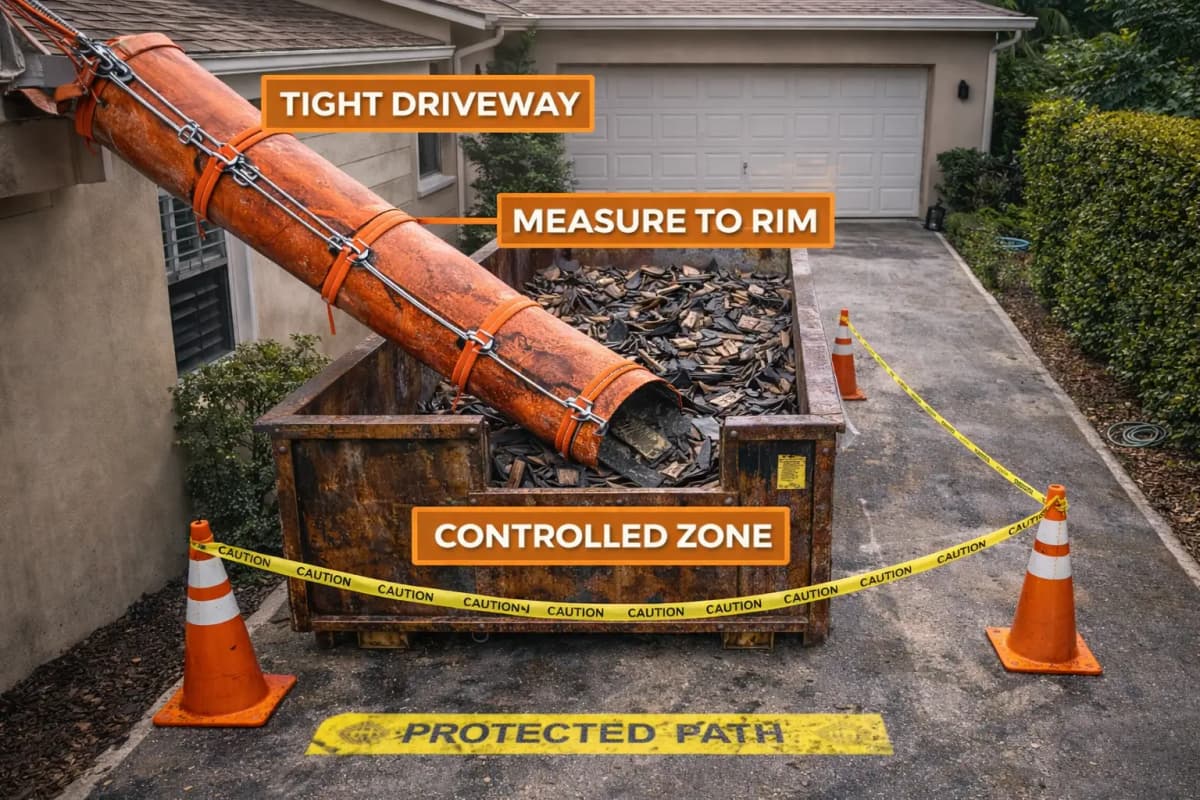
Philadelphia contractors managing roofing tear-offs, gut renovations, and multi-story demolitions rely on debris chutes to maintain schedule predictability and customer satisfaction in tight urban spaces.
Philadelphia Permits and Local Regulations
Philadelphia’s Department of Licenses and Inspections (L&I) requires permits for debris chutes and temporary construction equipment. The city’s Streets Department oversees dumpster placement and street-use agreements.
Key compliance steps:
- Temporary Equipment Permit – Required for any chute system longer than 30 days or on a public street.
- Streets Department Approval – Dumpster and chute footprint on sidewalk or street requires a license.
- Building Code Review – L&I inspectors verify chute attachment to the building and load-bearing design.
- Neighbor Notification – Many row-home blocks expect courtesy notification; some areas have formal community boards.
- OSHA and Fall Protection – Chute anchors and worker staging areas must meet OSHA construction safety standards.
Philadelphia’s trash chute regulations by state guide covers Pennsylvania specifics; always confirm current L&I requirements before ordering materials.
Site Assessment for Philadelphia Jobs
Before equipment arrives, walk the site and document: building height, wall composition, alley or street access, power lines, neighboring windows, and dumpster placement zone.
Philadelphia’s typical constraints:
- Rowhouse Height Variation – Heights range 3–5 stories; chute routing must avoid gutters and dormers.
- Brick Facade Age – Older rowhouses have mortar-and-brick walls; use spreader plates and lag bolts, never drill into decorative corbels.
- Alley Width – Many Philadelphia alleys are 10–15 feet wide; chute discharge angle must clear fence lines and rear windows.
- Utility Clearance – Electric lines, cable conduits, and water mains run overhead and underground; call 811 before drilling.
- Neighbor Access – Verify that dumpster placement doesn’t block egress to adjacent properties.
Schedule a pre-job site survey with your chute supplier to confirm anchor points, dumpster routing, and any variance approvals needed from L&I.
System Sizing and Capacity Planning
Philadelphia job scope varies widely—from 2-story rowhouse reroof (1–2 dumpster loads) to 4-story gut renovation (5–10 loads). Match your chute system to debris volume and project duration.
Capacity Planning Questions:
- What is the total square footage and scope (roofing, framing, drywall, masonry)?
- How many dumpster loads will you generate, and over how many weeks?
- Will debris flow steadily or in spurts (e.g., demo days vs. finishing days)?
- Do you need multiple chute sections to reach from the top floor, or a single tall section with intermediate staging?
Our debris chute weight capacity guide explains load limits per section and how to calculate total system height. Most Philadelphia rowhouse jobs use 3–4 sections of a modular system, allowing flexibility if the project scope changes mid-job.
Installation on Row Homes and Tight Lots
Philadelphia’s iconic rowhouses pose unique anchoring and angle challenges. The typical approach:
- Wall Prep – Use non-penetrating spreader plates where possible. If drilling, use stainless-steel lag bolts and verify mortar quality with a test hole.
- Section Alignment – Modular systems snap together vertically; angle each section slightly (5–10 degrees) away from the building facade to clear gutters and create natural debris momentum.
- Gutter and Soffit Protection – Install cardboard or plywood shield between the chute and building overhang to prevent water intrusion and debris scatter.
- Ground-Level Discharge – Position the dumpster directly under the chute outlet, with a drop-deflector bag to reduce bounce and dust.
- Stabilization Cables – Wind-load tie-offs at every other section prevent swaying on tall Philadelphia sites (especially in Frankford or Kensington, where wind funnels between row blocks).
Refer to our Trash Chute Installation Guide for step-by-step rigging and section connection procedures.
Street and Neighbor Considerations
Philadelphia’s row-home neighborhoods are densely occupied. Dumpster placement and chute operation can affect street parking, fire hydrant access, and neighbor quality of life.
Best Practices:
- Parking Variance – Coordinate with Streets Department 2–3 weeks before equipment delivery. You may need a temporary “No Parking” zone or adjacent lot rental.
- Neighbor Notice – Hand-deliver or mail a 1-week courtesy letter to homes directly adjacent to your dumpster. Include job duration, noise windows (7 a.m.–5 p.m.), and emergency contact info.
- Dust Control – Use a dumpster cover or fabric shroud to minimize wind-blown debris. Wet-sweep the street daily if demo work generates dust.
- Access Maintenance – Ensure your dumpster doesn’t block fire escapes, stoops, or trash-can access for neighbors.
- Noise Limits – Philadelphia enforces noise ordinances (85 dB during daytime). Chute discharge into a dumpster generates ~80–85 dB; brief bursts are typically acceptable if contained to business hours.
Philadelphia community boards (especially in West Philly, Rittenhouse, and Northeast neighborhoods) may request a pre-job meeting. Being proactive avoids delays and complaints.
Safety Protocols on Philadelphia Sites
Debris chute work falls under OSHA ergonomics and safe loading practices, plus general construction fall-protection rules.
Critical Safety Steps:
- Fall Protection at Top – Install guardrails or a safety net around the chute opening on the roof. Workers loading heavy debris must use harnesses if working within 6 feet of an unprotected edge.
- Ground-Level Staging – Keep the dumpster area clear of personnel and bystanders. Post “Caution: Debris Chute” signage at the dumpster and street level.
- Inspection Before Each Shift – Check all bolts, cables, and section seams. A loose section can separate under load and drop debris into the street.
- Load Limits – Never exceed the rated load per section. Overloading causes sagging, misalignment, and potential structural failure.
- Training – Ensure all crews understand chute operation: no metal, no oversized debris, and safe stacking density.
- Weather Protocol – High winds or heavy rain can destabilize chutes and increase splash/scatter. Suspend chute operations if sustained gusts exceed 25 mph.
Our Trash Chute Setup Mistakes to Avoid guide covers common safety oversights and how to prevent them.
Waste Management and Disposal in Philadelphia
Philadelphia’s waste management sector is heavily regulated by the city’s Department of Public Health and the PA Department of Environmental Protection (DEP).
Debris Sorting and Recycling:
- Construction Debris (C&D) Streams – Separate wood, metals, drywall, and other materials into designated bins or dumpsters. Many Philadelphia demolition sites are required to divert 75% of C&D waste from landfills (PA DEP mandate).
- Hazardous Materials – Asbestos, lead-based paint, and HVAC refrigerants must be removed and disposed of by licensed handlers before chute operation. Philadelphia enforces strict pre-demolition surveys.
- Dumpster Service Coordination – Arrange weekly or twice-weekly pickups based on debris volume. Philadelphia-area dumpster operators are familiar with chute discharge and multi-load workflows.
- Recycling Credits – Some Philadelphia processors offer rebates for wood, metals, and clean cardboard. Document tonnage and material type to maximize returns.
The EPA construction and demolition debris facts page provides national benchmarks; Philadelphia’s diversion rate and local processor network are detailed by the city’s Office of Sustainability.
Cost and Rental Options
Philadelphia debris chute costs depend on project duration, system size, and whether you rent or buy.
Rental Pricing (Typical 2026 Estimates):
- Weekly Rental: $150–$300 per week for a 3–4 section modular system (20–30 ft. height).
- Monthly Rental: $400–$700 for unlimited project duration within a calendar month.
- Delivery & Setup: $200–$400 (includes site setup, anchor verification, and safety briefing).
- Pickup: $150–$300 (same-day to 48-hour turnaround).
See our Trash Chute Rental Cost Per Day guide for detailed pricing scenarios and regional variation.
Buy vs. Rent Decision:
- Rent if: You have 1–3 jobs per year, limited storage, or variable project durations.
- Buy if: You consistently run 4+ jobs annually and can store equipment securely off-season.
A modular trash chute system costs $2,500–$5,000 depending on material (polyethylene vs. steel) and height. Rental typically pays for itself in 6–8 weeks of continuous use.
Common Setup Mistakes in Philadelphia
Philadelphia contractors often overlook these pitfalls:
- Underestimating Permit Time – L&I review takes 5–10 business days; submitting permits 2 weeks before job start is standard practice.
- Wrong Dumpster Position – Placing the dumpster under power lines or blocking fire hydrants triggers immediate city violation tickets and work stoppages.
- Ignoring Gutter Interference – A poorly angled chute channel water and debris into building gutters, creating leaks and neighbor disputes.
- Loose Section Bolts – Weather and vibration loosen connections; check and tighten every 3–5 days to prevent separation.
- Inadequate Safety Signage – Missing “Debris Chute in Use” signs invite pedestrians to walk under the discharge zone and create liability exposure.
- Oversized Debris in Chute – Cardboard boxes, drywall sheets, and rebar jams the chute and halt operations. Enforce size limits (typically 2 ft. × 2 ft. × 4 ft. max).
Review Trash Chute Setup Mistakes to Avoid and Scaffold Debris Chute Setup Guide for detailed prevention strategies.
Frequently Asked Questions
Do I need a permit to use a debris chute in Philadelphia?
Yes. Any debris chute system used for more than 30 days or positioned on a public street requires a Temporary Equipment Permit from L&I. If the dumpster sits on the sidewalk or street, you also need Streets Department approval. Permits typically cost $50–$200 and take 5–10 business days to process. Failing to permit can result in fines up to $500 and mandatory project shutdown.
What is the typical cost of a debris chute rental in Philadelphia?
Weekly rentals for a 3–4 section system range from $150–$300 per week, plus $200–$400 for delivery and setup. Monthly rates run $400–$700 if you need the chute for the entire month. Pickup fees are $150–$300. Exact pricing depends on system height, material type, and rental duration. Contact local suppliers for current 2026 rates.
Can I install a debris chute on a rowhouse without damaging the facade?
Yes, with proper anchoring. Use stainless-steel lag bolts and non-penetrating spreader plates where possible. If drilling into brick or mortar, test the wall quality with a small pilot hole first and avoid decorative corbels, cornerstones, or historic elements. Always get L&I approval before drilling and shield gutters and soffits with cardboard to prevent water intrusion.
What happens if my debris chute section comes loose or falls?
A separated chute section is a serious safety hazard and construction site violation. To prevent this, inspect bolts and seams every shift, tighten loose connections, and install wind-load tie-off cables on tall systems. If a section does separate, immediately clear the area, document the incident, notify your supplier, and do not resume operations until a certified inspector clears the system.
Are there waste-diversion or recycling requirements for Philadelphia demolition debris?
Yes. Pennsylvania’s DEP requires 75% diversion of construction and demolition waste from landfills on most projects. Separate wood, metals, drywall, cardboard, and other materials into designated streams. Some Philadelphia processors offer rebates for clean materials. Pre-demolition surveys are required to identify hazardous materials (asbestos, lead paint) that must be removed and disposed of separately.
How do I manage neighbor complaints during chute operation?
Provide advance notice (at least 1 week) to adjacent properties, maintain work hours between 7 a.m. and 5 p.m., use dust-control measures (dumpster covers, wet-sweeping), and ensure your dumpster does not block fire hydrants, stoops, or parking. Respond promptly to concerns and be flexible with operation timing if neighbors have valid issues. Philadelphia community boards may require a pre-job meeting for large projects.
Can I use a debris chute for roofing tear-off debris?
Yes. Roofing tear-off debris (shingles, plywood, fasteners) flows easily through chutes and is ideal for chute use. Our Trash Chute for Roofing Contractors guide covers tear-off logistics, material density, and discharge strategies to minimize scatter and environmental impact.
Ready to Get Started?
Philadelphia contractors trust EasyChute debris chute systems for rowhouse renovations, commercial demolition, and roofing tear-offs. Our modular, rental-friendly equipment is designed for tight urban spaces, rapid deployment, and compliance with local regulations.
Next Steps:
- Confirm your project scope and estimated debris volume.
- Document your site’s building height, wall type, and dumpster placement zone.
- Submit permit applications to L&I and Streets Department at least 2 weeks before job start.
- Contact us at +1-855-902-0883 to request a site survey and rental quote.
- Schedule delivery 3–5 business days before your crew arrives.
Let our team handle the logistics so you can focus on the work. Explore our debris chute rental options and get a personalized estimate for your Philadelphia job today.