

Index
- Hartford Debris Chute Fundamentals for Contractors
- Hartford Permit and Code Requirements
- Choosing the Right Chute Size and Type for Hartford Projects
- Site Assessment and Placement Strategy in Hartford
- Installation Best Practices for Hartford Commercial Sites
- Safety Compliance and Liability in Connecticut
- Debris Flow Management and Dumpster Logistics
- Hartford Multi-Unit and Historic Property Considerations
- Cost and Rental Considerations for Hartford Contractors
- Troubleshooting Common Hartford Site Challenges
- Local Notes: Hartford Resources
- Frequently Asked Questions
- Ready to Deploy a Debris Chute in Hartford?
Hartford Debris Chute Fundamentals for Contractors
A debris chute is a temporary, gravity-fed containment system that directs construction waste, demolition material, and renovation debris from upper floors directly into a dumpster or debris bin at ground level. For Hartford contractors managing roofing tear-offs, interior demolition, window replacements, and multi-unit renovations, a debris chute eliminates the labor-intensive—and liability-heavy—practice of hand-throwing material from scaffolding or windows.
Hartford’s dense urban neighborhoods, proximity of adjacent buildings, and neighbor sensitivity make debris chutes not just a convenience but often a contractual and insurance requirement. When your project abuts a neighbor’s property line or sits in a historic district, a properly installed chute keeps debris on-site, reduces noise complaints, and protects property boundaries.
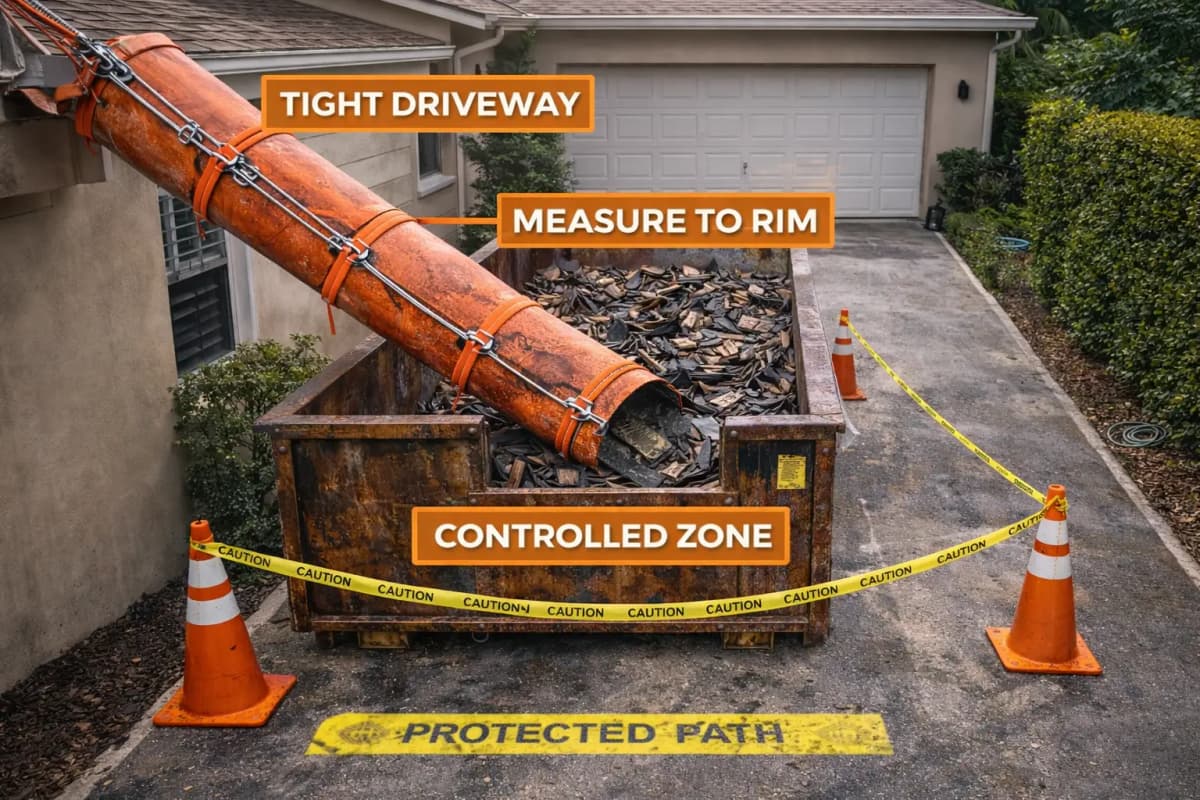
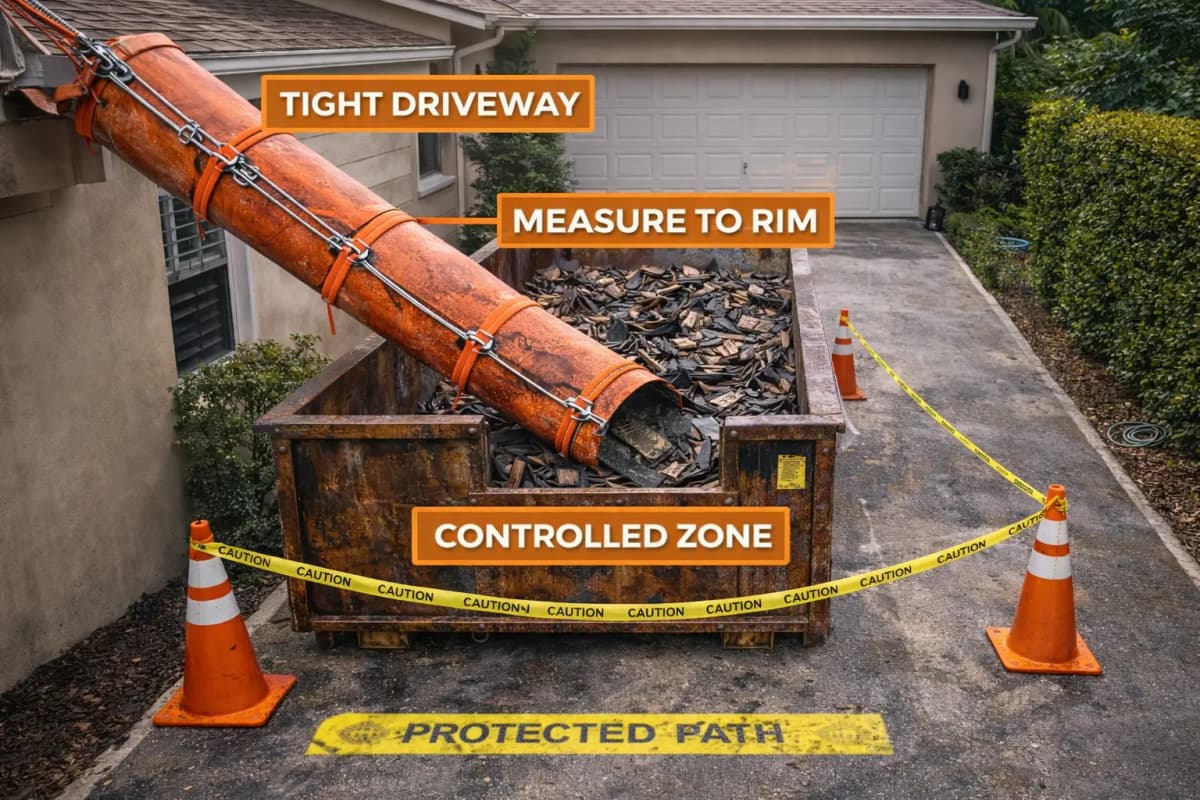
Debris chutes come in modular sections that stack vertically, typically ranging from 10 feet to 50+ feet in total height. Each section is lightweight (usually 20–40 lbs), allowing a two-person crew to assemble and disassemble the system quickly. The chute interior funnels debris downward while the exterior tubing is bright orange for visibility and safety.
Why Hartford Contractors Rely on Debris Chutes
- Neighbor relations: Hartford residential and multi-unit projects require discretion. A chute prevents debris scatter into adjacent yards.
- Insurance and liability: Many Hartford general contractors and sub-contractors carry rider policies that mandate debris containment on urban projects.
- Labor efficiency: Eliminates hand-hauling material down stairs, elevators, or makeshift chutes—saving crew hours and reducing repetitive-strain injuries.
- Code compliance: Connecticut and Hartford municipal codes increasingly require debris containment on multi-story and downtown renovation projects.
- Project timeline: A functioning debris chute keeps cleanup swift and organized, reducing punch-list delays.
Hartford Permit and Code Requirements
Hartford operates under Connecticut State Building Code (CSBC) and the International Building Code (IBC), with additional local amendments in the Hartford Municipal Code. Before setting up a debris chute, confirm permit and inspection requirements with the Hartford Building Department.
Key Hartford Permitting Steps
- Check your renovation/demo permit. Your primary project permit (roofing, interior demo, or full renovation) may list debris-management conditions. Debris chutes are often pre-approved under a general “debris containment” clause.
- Notify Hartford Public Works if the chute crosses the property line or uses street airspace. Some Hartford neighborhoods require a street-use or traffic-control permit.
- Confirm setback distances. Hartford code typically requires debris chutes to be positioned at least 5–10 feet from property lines; adjacent neighbors may require written notice.
- Historic district review (if applicable). If your site is in Hartford’s historic district or near a protected landmark, the Hartford Historic Properties Commission may require a Certificate of Appropriateness—even for temporary systems. Orange chutes are generally acceptable as temporary construction equipment, but submit photos in advance.
- Insurance certificate of liability. Provide proof of commercial general liability (CGL) coverage naming the property owner and any adjacent property owners as additional insureds. Hartford often requires $1M+ aggregate for debris-management scenarios.
Consult Connecticut trash chute regulations for state-level codes and safety standards that apply across Hartford and surrounding towns.
Hartford Municipal Code Reference
Hartford’s municipal code does not mandate debris chutes but does require that debris not scatter beyond property lines. When neighbors adjoin your site, a chute becomes the default best-practice. Most Hartford contractors include chute setup in their project scope to satisfy insurance, code compliance, and neighborly conduct.
Choosing the Right Chute Size and Type for Hartford Projects
Debris chute systems are modular; you buy or rent individual sections and stack them to match your building height. Hartford’s typical project heights range from 2-story residential remodels (20–30 feet) to 5+ story multi-unit buildings (40–80 feet).
Standard Section Heights and When to Use Them
- 10-foot sections: Best for 2-story homes and light-duty interior demolition. Stackable up to 40 feet for typical residential renovation.
- 25-foot sections: Common choice for 3–4 story multi-unit buildings. Reduces the number of connections and labor.
- 50-foot sections: For 5+ story commercial or high-rise residential projects. Fewer seams mean fewer leak points and faster setup.
Most Hartford contractors start with a 10ft or 25ft section combo to keep inventory flexible. For Hartford historic homes or tight urban lots, the 10-foot modular approach offers the most control over placement and neighbor relations.
Chute Material and Duty Rating
Debris chutes come in two main varieties:
- Poly (polyethylene) chutes: Lightweight, corrosion-resistant, affordable. Ideal for roofing tear-offs, interior demo, and standard remodels. Most Hartford contractors prefer poly for its ease of transport and setup.
- Heavy-duty metal chutes: For high-volume demolition or aggressive recycling operations. Less common in Hartford’s residential-focused market but chosen when debris volume or project duration demands durability.
For Hartford’s typical renovation profile, a poly debris chute rented for 2–4 weeks offers the best cost-to-value ratio. Roofing contractors in Hartford particularly favor poly chutes for their light weight and quick setup on high-pitch residential roofs.
Site Assessment and Placement Strategy in Hartford
Before renting or purchasing a debris chute, walk the Hartford site and document the following:
Critical Placement Considerations
- Anchor points and building edge: Identify studs, roof trusses, or floor joists that will support the chute frame. Hartford’s older homes and brick structures often require lag bolts or masonry anchors; modern multi-unit buildings may have pre-drilled connection points.
- Neighbor proximity: Hartford neighborhoods are dense. Measure setback from property lines, note hedge and fence locations, and plan dumpster position to minimize debris scatter or dust drift into adjacent yards.
- Window and opening alignment: For interior demolition, position the chute at a window or floor opening to allow easy loading. Hartford brownstones and multi-unit buildings often have predictable window spacing; use a tape measure and site photos to confirm opening size and clearance.
- Ground clearance and dumpster access: The chute discharge must aim into the dumpster, not onto the adjacent driveway or street. In Hartford’s tight urban lots, you may need to position the dumpster at an angle or use a chute extension to reach it.
- Overhead utilities: Check for electrical lines, cable, and telephone wires above the proposed chute path. Hartford municipal utilities are often clustered on residential streets; clear cable runs with the property owner before setup.
- Loading zones and traffic flow: Confirm that crew members can safely carry debris from the interior of the building to the chute opening without crossing traffic, stairs, or elevator shafts.
Installation Best Practices for Hartford Commercial Sites
Once you’ve assessed the site and secured permits, follow this proven sequence to install your debris chute safely and efficiently on Hartford projects.
Pre-Installation Checklist
- Confirm all sections have arrived and are free of damage.
- Verify anchors, bolts, and safety straps are included in your shipment.
- Notify the property owner and adjacent neighbors of setup day and timeline.
- Arrange for dumpster delivery to coincide with chute installation (within 1–2 hours).
- Schedule a building/safety inspector if Hartford requires pre-use inspection of the chute installation.
Step-by-Step Installation
Follow the step-by-step installation guide for detailed assembly instructions. In brief:
- Position the base section. Carry the first section to the discharge opening (window, floor edge, or roof perimeter). Align the discharge opening with the dumpster. Secure the base section with lag bolts or brackets to the building structure at a minimum of four points.
- Stack middle sections vertically. For each additional section, insert the connection sleeve into the top of the previous section, align, and bolt together using the included hardware. Ensure each connection is tight; a loose seam will leak debris and create a safety hazard.
- Secure with safety straps. Every 10–15 feet of height, wrap a safety strap around the chute and anchor it to the building or a nearby structural element. This prevents the chute from swaying in wind or shifting during loading.
- Final discharge alignment. Once stacked to full height, angle the discharge section into the dumpster and verify that debris will not spill over the side. Adjust the dumpster position if needed.
- Install protective covers (optional). If the chute will be used during rain, apply a weatherproof cover to the top opening to prevent pooling and overflow.
Most Hartford contractors complete a 40-foot chute installation in 2–3 hours with a two-person crew. Take photos of your final installation and share with the property owner and insurance agent as proof of compliance.
Safety Compliance and Liability in Connecticut
Connecticut and Hartford contractors are bound by OSHA construction safety guidelines and state labor regulations. A debris chute is part of your fall-protection and debris-containment strategy.
OSHA and Connecticut Safety Requirements
- Fall protection: Any worker loading debris into a chute from a platform or elevated opening must be protected with a guardrail, safety net, or personal fall-arrest system. Hartford projects above 6 feet require documented fall-protection plans.
- Personal protective equipment (PPE): All crew members loading or monitoring the chute must wear hard hats, safety vests, and steel-toed boots. Hearing protection is required if the chute velocity produces noise above 85 dB (generally true for high-velocity discharges).
- Safe loading practices: Follow OSHA ergonomic best practices for safe lifting. Avoid overloading the chute in one drop; consistent small loads are safer than dumping large chunks or wet debris that may jam or cause dust explosions inside the chute tube.
- Ground-level monitoring: A dedicated crew member must stand clear of the discharge zone and monitor the dumpster fill level. As the dumpster fills, adjust the discharge angle or stop loading to prevent spillover onto adjacent property.
Include debris-chute safety protocols in your Hartford project’s daily toolbox talks and site-safety plan. Photographing your chute setup and safety measures will support any insurance claims and demonstrate due diligence if a neighbor complaint arises.
Hartford Liability and Insurance Considerations
Most Hartford general contractors carry a rider clause covering debris containment. When you subcontract a debris chute, your insurance typically requires:
- Proof that the chute is installed per manufacturer guidelines and local code.
- Certification that anchors and connections are inspected by a qualified person (often your crew lead or a third-party inspector).
- Weekly visual inspections of straps, bolts, and discharge alignment, documented in your site log.
- Clear dumpster fill tracking to ensure no spillover occurs during the project.
Maintain detailed records of setup, inspections, and breakdown. These documents protect you if a neighbor claims debris landed on their property or if a worker is injured during loading.
Debris Flow Management and Dumpster Logistics
Hartford’s tight urban environment and frequent multi-unit projects mean you must coordinate dumpster placement and debris volume carefully to avoid creating a visible or perceived mess that triggers neighbor complaints or code violations.
Optimizing Dumpster Position and Capacity
- Position the dumpster in the contractor’s work area (typically the driveway or front yard). Avoid placing it on the street; Hartford allows on-street dumpsters only with a specific permit and traffic-control plan.
- Calculate your total debris volume before setup. For a typical 2-story roofing tear-off, expect 3–8 cubic yards of shingles and wood; for interior demolition of 1,000 sq. ft., budget 8–15 cubic yards. Use the debris chute weight capacity guide to confirm your chute can handle the expected load.
- Schedule frequent dumpster swaps. Hartford projects that run 2+ weeks benefit from mid-week dumpster changes. A full dumpster under a chute discharge is a hazard and a neighborhood eyesore.
- Contain spillover. Place plywood or tarps under the dumpster discharge point to catch spills and reduce debris scatter onto the ground. This is especially important on corner lots or near shared driveways.
Debris Sorting and Recycling in Hartford
Connecticut actively encourages construction-debris recycling. Many Hartford contractors partner with local recycling facilities to divert roofing shingles, wood framing, and metals from landfills. Separate your debris streams (shingles in one container, wood framing in another, metals in a third) to improve recycling economics and reduce tipping fees.
Learn more about EPA construction and demolition debris facts to understand the environmental and regulatory landscape.
Hartford Multi-Unit and Historic Property Considerations
Hartford is home to dense multi-unit residential buildings and historic brownstones and cape-cod homes. These project types demand extra planning and neighbor management.
Multi-Unit Renovation Logistics
When renovating a multi-family building in Hartford, your debris chute becomes a shared amenity and a potential source of friction between units. Strategies:
- Communicate the schedule to all residents. Post notices in lobbies and common areas detailing debris chute operating hours (typically 8 AM–5 PM weekdays, limited weekend use).
- Use window-opening debris chutes for interior work. This allows you to load from vacant units or work zones without blocking common hallways or elevators.
- Schedule dumpster placement during off-peak hours. Hartford buildings often share driveways; coordinate with the property manager to position the dumpster when residents are least likely to need vehicle access.
- Monitor noise and dust closely. Multi-unit projects attract complaint calls quickly. Use dust-containment netting if your chute will operate during high-wind days, and consider sound-dampening covers if interior demolition runs long.
Historic District and Landmark Considerations
Hartford has several historic districts and protected landmarks. Before deploying a debris chute near a historic structure, confirm whether you need a Certificate of Appropriateness (COA) from the Hartford Historic Properties Commission.
- Orange chutes are typically approved as temporary construction equipment, but submit photos and a brief description of the installation to the commission 5–7 business days before setup.
- For historic home debris chute solutions in Hartford, consider low-profile or neutral-colored alternatives if your project is directly adjacent to or within a visually sensitive historic zone.
- Anchor points on historic masonry require care. Drilling lag bolts into 100+ year-old brick or stone can cause mortar degradation. Hire a masonry contractor to inspect anchor locations and recommend appropriate fastening methods.
- Post-project restoration may be required. Your project permit or COA may stipulate that you patch and paint anchor holes or caulk any masonry that was disrupted. Budget for this before bidding the project.
Careful project planning around Hartford’s historic character builds your reputation and keeps projects moving smoothly.
Cost and Rental Considerations for Hartford Contractors
Debris chute rental costs vary based on system height, rental duration, and delivery distance. Hartford sits in Connecticut’s central region; most rental providers offer next-day or same-day delivery.
Typical Hartford Rental Pricing (2026)
- 10-foot section: $50–100 per week, or $200–350 per month.
- 25-foot system (two stacked sections): $100–200 per week, or $400–700 per month.
- 50-foot system (five stacked sections): $200–350 per week, or $800–1,400 per month.
- Delivery and setup fees: $100–300 per delivery; many Hartford providers include setup in a 4-week rental at no extra charge.
- Damage fees: Minor wear and tear are waived. Major damage (cracked sections, missing bolts, severe dents) typically costs $200–500 per section to replace.
For detailed pricing and options, consult the debris chute rental pricing guide tailored to Hartford and Connecticut rates.
Buying vs. Renting for Hartford Contractors
Most Hartford contractors rent debris chutes rather than buy. Renting keeps capital costs low, eliminates storage burden, and transfers maintenance responsibility to the provider. However, if your crew consistently works on multi-story projects year-round, purchasing a modular system can pay for itself in 12–18 months. Explore modular trash chute kit cost breakdown to model your own ROI.
Troubleshooting Common Hartford Site Challenges
Even with careful planning, Hartford projects encounter unique obstacles. Here’s how to navigate them:
Tight Urban Lots and Limited Driveway Space
Challenge: Many Hartford homes sit on narrow lots with shared driveways or minimal ground clearance.
Solution: Deploy a window-opening debris chute that discharges directly into a smaller, more mobile dumpster. Use a compact 10-foot or 15-foot system angled steeply to reach a dumpster positioned at the street’s edge. Negotiate temporary street parking with Hartford’s Public Works if needed (usually approved for 2–4 weeks).
Brick and Masonry Anchor Concerns
Challenge: Hartford’s historic homes have 12–18 inch solid brick exterior walls. Drilling lag bolts requires precision to avoid mortar failure or interior water infiltration.
Solution: Hire a masonry contractor to install anchors. Use stainless-steel lag bolts (1/2 inch diameter, 4–6 inches long) sunk into the mortar joints, not the brick itself. Seal the holes with high-quality mortar or epoxy after the chute is removed. Budget $200–500 for professional anchoring on a brick home.
Wind and Weather Stability
Challenge: Connecticut’s spring and fall storms can produce sustained winds of 25–35 mph. A tall, lightweight debris chute acts like a sail.
Solution: Install every-10-foot safety straps. Use diagonal guy-wires (cable or rope) anchored to ground stakes or heavy equipment (e.g., a loaded dumpster or ballast block) if the building cannot provide high anchor points. Monitor weather forecasts and temporarily cap or lower the chute if wind advisories are issued.
Neighbor Complaints and Noise
Challenge: Dense Hartford neighborhoods mean close neighbors. High-velocity debris hitting the dumpster can produce loud clang sounds and dust clouds that agitate residents.
Solution: Install sound-dampening foam or rubber liners inside the dumpster. Use a chute extension that discharges material lower and slower (reduces impact noise). Limit operating hours to 8 AM–4 PM on weekdays; offer advance notice and a complaint hotline to demonstrate professionalism. Common debris chute setup mistakes to avoid often include poor noise management—learning from others’ errors saves you conflict.
Clogged or Jammed Chutes
Challenge: Large pieces of wood, wet drywall, or metal can jam inside the chute, halting your project.
Solution: Establish a loading protocol: break large framing into pieces smaller than 12 inches; avoid loading soaking-wet debris; remove metal fixtures and fasteners before sending material down the chute. If a jam occurs, don’t force material from above—lower a crew member (with fall protection and a rope) into the top of the chute to dislodge the blockage from above, or disassemble sections from below to access the jam.
Local Notes: Hartford Resources
Hartford contractors should reference these local and state resources when planning debris chute projects:
- City of Hartford – Official Website: Provides contact information for the Building Department, permits, and code amendments.
- Connecticut Department of Transportation (CDOT): If your chute or dumpster will use street airspace or on-street parking, check CDOT rules and work with Hartford Public Works.
- Hartford Department of Building Safety and Fire: Contact for building permits, inspection scheduling, and clarification on debris-containment code requirements.
- Connecticut General Assembly Legislative Office: Connecticut building codes and labor regulations are published here; reference Public Act 91-222 (Connecticut Construction Debris Recycling Law).
Keep a printed copy of Hartford’s current building code amendments and the Connecticut State Building Code in your truck. Building Departments often accept in-person or phone questions about debris chute compliance, saving you time on permit research.
Frequently Asked Questions
Do I need a permit to install a debris chute on my Hartford renovation project?
Most Hartford debris chutes do not require a separate permit if they are already covered under your primary project permit (renovation, roofing, or demolition). However, check with the Hartford Building Department before setup. If the chute crosses the property line, uses street airspace, or is in a historic district, additional approvals may be needed. Your general contractor or property owner should coordinate with the building department early in the planning phase.
How tall can a debris chute be, and are there Hartford code limits?
Debris chutes can be stacked to 50+ feet (five 10-foot sections or two 25-foot sections). Hartford code does not explicitly limit chute height, but they must be safely anchored and wind-braced. For buildings taller than 40 feet, consult a structural engineer or your building department to confirm that anchor points and guy-wire configurations will safely resist lateral wind loads.
What is the maximum weight capacity of a typical Hartford debris chute system?
Most poly debris chutes are rated for loads between 500–1,000 lbs per vertical foot of chute. Dense materials like concrete or wet demolition debris can quickly reach that limit. Use the debris chute weight capacity guide to confirm your system’s rating and avoid overloading, which can cause buckling or discharge damage.
Can I set up a debris chute on a historic Hartford home without approval from the Historic Properties Commission?
If your historic home is in a designated historic district or is a protected landmark, you should submit photos and a brief description of your chute setup to the Hartford Historic Properties Commission at least 5 business days before installation. Orange temporary construction equipment is typically approved, but getting written confirmation prevents delays and demonstrates professionalism to the property owner and neighbors.
How do I prevent debris from spilling onto my neighbor’s property during a Hartford project?
Position the dumpster directly under the chute discharge, ensure the chute is angled into the dumpster opening, and monitor fill levels throughout the day. Place plywood or tarps under the dumpster to catch spillover, and immediately sweep any debris that lands adjacent to the dumpster back into the bin. For windy days or high-volume projects, use a chute extension or discharge sock (a fabric funnel that narrows the debris stream) to focus material into the dumpster. Proactive containment prevents neighbor conflict and protects your liability coverage.
What should I do if the debris chute jams during the project?
Stop loading material immediately. Do not attempt to force objects through from above. If the jam is visible from the top, reach down carefully (with fall protection if required) and retrieve the blocking object. If the jam is deep inside the chute, contact your equipment rental provider—they often have specialized tools or can dispatch a technician to assist. For future loads, follow the golden rule: no item larger than 12 inches, and avoid wet drywall or oversized metal objects that commonly jam mid-chute.
Are there any Hartford-specific weather or seasonal considerations for debris chute setup?
Connecticut winter snow and ice can accumulate on chute sections, adding weight and potentially shifting the system. If a project spans November through March, inspect the chute weekly for ice buildup and clear it promptly. Spring and fall storms can produce sustained winds; review weather forecasts before and during setup, and install wind-bracing straps every 10 feet. Summer heat can soften poly chutes slightly, but does not materially affect performance. Schedule major chute removals after autumn leaf cleanup (late November) to avoid clogging.
Ready to Deploy a Debris Chute in Hartford?
Hartford contractors who master debris chute logistics gain a competitive edge: faster project timelines, fewer neighbor complaints, and cleaner, safer job sites. Whether you’re tackling a 2-story roofing tear-off, a historic home renovation, or a multi-unit renovation project, the right chute system and local expertise make the difference.
Start by assessing your Hartford site using the checklist in this guide. Confirm permit requirements with the Hartford Building Department, calculate your total debris volume, and contact a local debris chute rental provider for a quote. Most Hartford contractors schedule chute delivery and setup within 2–3 days, so your timeline can be flexible.
For additional guidance on setup, safety, and best practices, explore our detailed resources on step-by-step installation guide and construction debris chute best practices. If you have site-specific questions—tight driveway access, anchor concerns on historic masonry, or noise-management strategies—reach out to our team. We’re here to help Hartford contractors succeed.
Call us today at 1-855-902-0883 or visit EasyChute.com to request a Hartford debris chute rental or to speak with a project specialist about your upcoming renovation or demolition project.