
Chicago is one of the busiest construction markets in the country. On any given weekday you'll find gut renovations underway in Logan Square two-flats, shingle tear-offs on Bridgeport bungalows, and commercial build-outs stacking debris twelve stories above the Loop. Every one of those sites has the same problem: getting the waste down to the dumpster without endangering workers, damaging the building, or blocking the sidewalk for half the day.
A debris chute is the answer most experienced Chicago contractors reach for — and in this guide you'll learn exactly how to pick the right one, set it up correctly, and stay on the right side of city and OSHA rules while you do it.
Why Chicago Job Sites Need a Debris Chute More Than Most
The density of Chicago's built environment makes manual debris carry-down more hazardous than it looks on paper. Narrow gangways between greystones, shared alley dumpsters, and heavy pedestrian traffic on commercial corridors all raise the stakes when workers are hauling materials down stairs or tossing debris out of windows.
Chicago's Department of Buildings enforces strict hoisting and rigging permits for any significant crane activity, and the city's standard permit packages for gut rehabs increasingly call out debris management as a line item. Using a chute that funnels waste directly into a dumpster keeps your crew safer and your site audit-ready.
The Density Factor
A Chicago two-flat or three-flat renovation often has a dumpster parked in the alley — sometimes only 15 to 20 feet from the building. A modular debris chute bridges that distance cleanly, so there's no debris bouncing off a neighboring fence or scattering across the alley surface. On commercial strips like Milwaukee Avenue or Devon Avenue, a chute is often the only practical way to manage debris without occupying the sidewalk.
Weather and the Chicago Work Window
Chicago winters compress the outdoor work season hard. Contractors who want to maximize billable days need systems that set up and strike in minutes, not hours. A lightweight poly fabric chute can be hung, used all day, and folded back into its box before the crew drives home — no scaffolding delay, no tool rental return trip.
What Types of Debris Chutes Are Available in Chicago?
Walk into any contractor supply house in the Chicago area and you'll see a few categories. Each has a different weight class, price point, and job-site fit.
Rigid Plastic Chute Sections
These are the bright-yellow or orange interlocking plastic sections you see on high-rise demolitions. Each section typically weighs 15 to 25 lbs and requires two workers to connect. They're designed for permanent or long-duration installations and must be trucked to the site. Overkill for a residential gut or roofing job, and expensive to purchase or rent.
Aluminum Spiral Chutes
Common on new construction high-rises, spiral aluminum chutes handle high-volume concrete and masonry debris. They're engineered for buildings over fifteen stories and typically installed by a rigging subcontractor. Not a realistic option for a five-flat rehab in Pilsen.
Fabric Debris Chutes
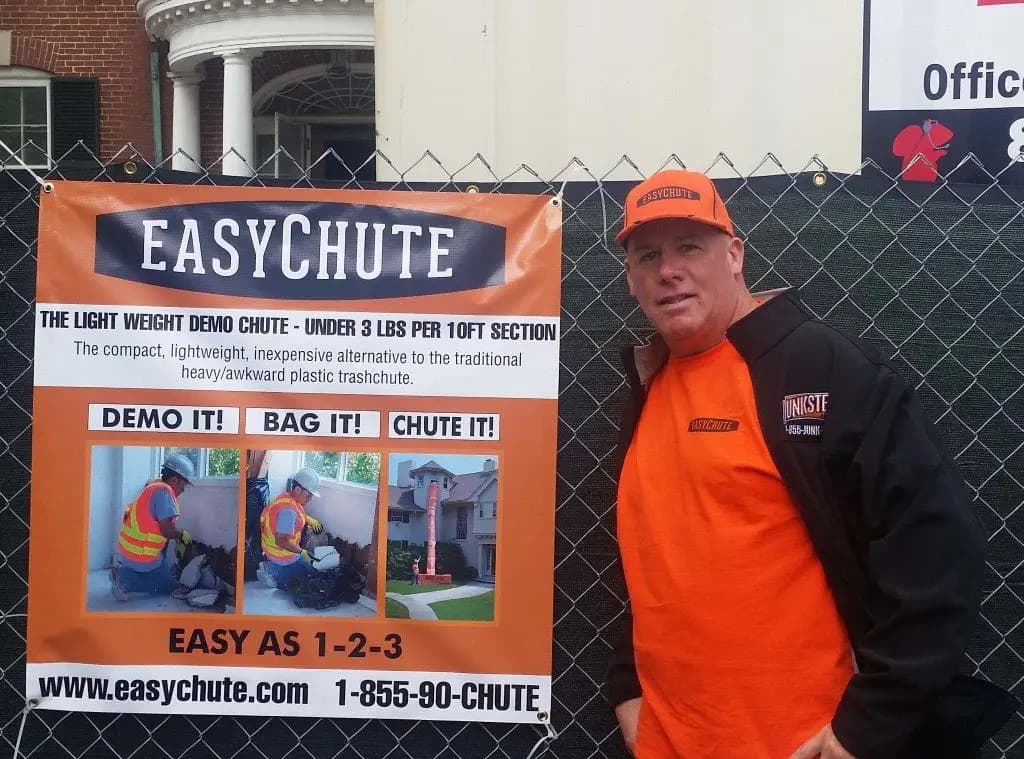
Woven, coated poly fabric chutes — like those made by EasyChute — thread the needle between portability and durability. A 10-foot section weighs under 3 lbs and folds into a small box. Sections overlap by 1.5 feet and connect in minutes; four woven hanging loops and standard carabiners or quick-connects are all the hardware you need. One person can hang a full chute setup before the rest of the crew finishes their coffee.
For Chicago residential renovations, roofing jobs, and light commercial work, a fabric trash chute is almost always the right call — fast, reusable, and priced for contractors who buy their own gear rather than rent from a supply house.
OSHA Rules That Apply to Debris Chutes on Chicago Construction Sites
Federal OSHA regulations apply in Illinois, meaning the same standards that govern sites in Boston or Houston govern sites on Chicago's North Side. The key rule is OSHA 29 CFR 1926.252, which prohibits debris from being allowed to fall freely from height where workers or pedestrians could be struck. A properly hung fabric chute satisfies that requirement by containing the material inside the tube from the drop point down to the dumpster opening.
For a deeper look at OSHA's construction-industry safety framework, the OSHA Construction Industry portal is the authoritative source — bookmark it and check it before any new job type.
Key OSHA Compliance Points for Chute Use
- No free-fall debris: The chute must extend close enough to the dumpster that material can't escape the stream.
- Barricading: The area around the dumpster must be barricaded so no worker or pedestrian walks under the chute while it's in use.
- Weight limits: Don't overload a single section. Distribute heavy masonry debris in smaller loads and allow sections to clear before adding more.
- Secure attachment: Every hanging loop must be rated and properly carabinered to a structural anchor — not just looped over a nail.
OSHA also has clear guidance on ergonomics and safe manual handling. The OSHA ergonomics page is worth a read for crew supervisors: it reinforces why eliminating manual carry-down with a chute is not just faster, it reduces musculoskeletal injury risk on multi-story projects.
Choosing the Right Chute Length for Chicago Building Heights
Chicago's residential building stock runs a distinctive height range. Two-flats sit 18 to 24 feet at the eave. Three-flats push 28 to 36 feet. Six-flats and vintage courtyard buildings often hit 45 to 55 feet. Understanding your drop height before ordering saves you from buying short or paying for length you won't use.
Matching Section Length to Job Type
- 10-foot section (lite-duty or heavy-duty): Best for single-story add-ons, low-slope roofing tear-offs, or as an extension to bridge a gap at the base.
- 25-foot section: Covers a standard two-flat or three-flat from the top-floor window to the alley dumpster — often a one-section solution.
- 50-foot section: Designed for four- to six-story buildings, vintage courtyard apartments, or any project where the dumpster has to sit on the street rather than the alley directly below.
- Stacking sections: Sections connect with a 1.5-foot overlap, so a 25-foot plus a 10-foot gives you 33.5 effective feet, and you can keep stacking to reach any height.
Check out the construction chute guide for a full breakdown of how contractors size chutes for upper-floor debris removal across different building types.
How to Set Up a Debris Chute on a Chicago Job Site
Setup is faster than most contractors expect the first time. Here's the field-tested process that works on Chicago's narrow lots and alley-facing dumpsters.
Step-by-Step Setup
- Position the dumpster: Roll it as close to the building as the alley or street permit. A roll-off 5 to 8 feet from the wall gives the chute a natural angle without kinking.
- Identify your anchor points: Window frame, roof hatch surround, scaffold crossbar, or a structural wall bracket all work. You need a horizontal surface or rail that can accept a carabiner.
- Clip the top section first: Thread the four woven loops onto carabiners clipped to your anchor. The chute should hang plumb with a slight angle toward the dumpster.
- Add lower sections: Each additional section slides over the bottom of the one above, overlapping 1.5 feet. No tools, no connectors — just fabric friction and gravity.
- Aim the discharge: The bottom mouth of the chute should point down into the open dumpster. You can cant it slightly using a bungee or rope tie-off at a lower anchor if the angle needs adjusting.
- Barricade the drop zone: Set cones or barrier tape around the dumpster before the first load goes in.
For a visual walkthrough, the EasyChute installation guide covers each step with diagrams and real job-site notes from the crew that designed it.
Roofing Tear-Offs: The Highest-Volume Use Case in Chicago
Chicago's housing stock is dominated by asphalt shingles — and most of those roofs are on buildings with steep pitches designed to shed heavy snow loads. A roofing tear-off without a chute means shoveling shingles to the edge and hoping they land in the dumpster, or worse, carrying them down a ladder. Neither is acceptable under OSHA's falling-debris standards.
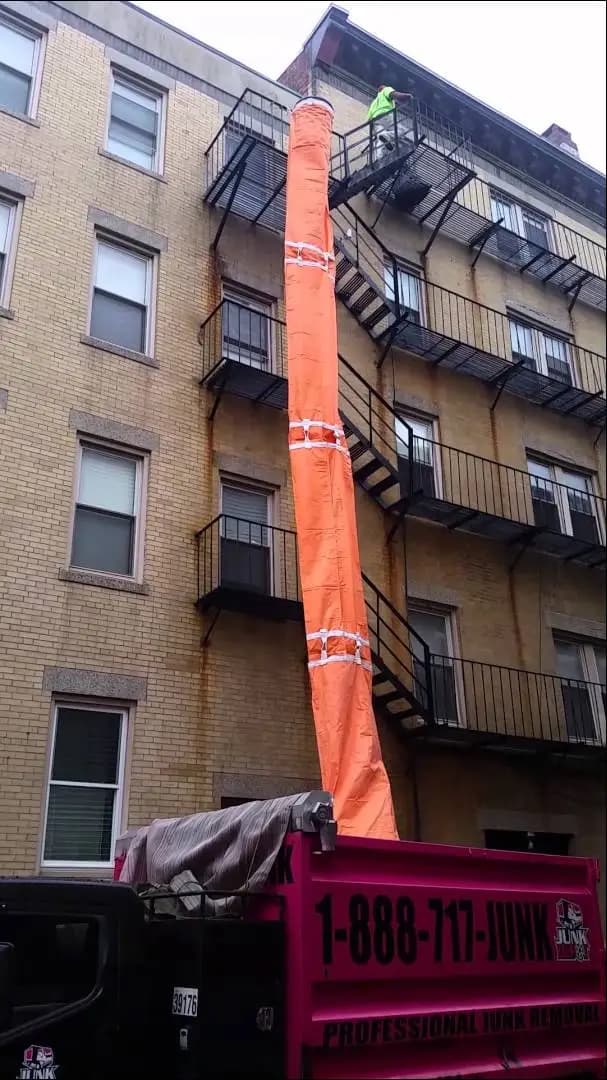
A roofing trash chute changes the workflow entirely. Hang it from the ridge or eave, position the dumpster in the alley or driveway, and let gravity do the hauling. A two-person crew can strip a 20-square rooftop and fill a dumpster without a single trip down the ladder carrying debris.
Shingle Debris Load Considerations
Asphalt shingles are dense — a bundle can hit 80 lbs, and a full square of tear-off material is heavier still when underlayment and ice-and-water shield come with it. Use the heavy-duty 10-foot section at the top anchor point, and feed the roof consistently rather than dumping an entire section's worth of shingles at once. Let each load clear before adding the next.
Interior Gut Renovations: Chutes in Chicago Greystone and Vintage Flats
Chicago's greystone two-flats and three-flats are beloved for their architecture but brutal for debris removal. Original hardwood floors, horsehair plaster ceilings, old-growth lumber framing — all of it has to come out during a gut rehab, and it all weighs more per cubic foot than modern materials.
A demolition chute hung from a window opening on the second or third floor routes all that heavy plaster and lumber directly into the dumpster outside. No carts, no hand trucks, no stairs. One designated crew member feeds the chute from the window while the rest of the crew focuses on demo — productivity on interior gut work goes up noticeably.
Window Selection Tips for Greystone Gut Work
- Choose a window that faces the alley directly if possible — dumpsters in Chicago alleys are almost always closer than street-side placement.
- A double-hung window in the original opening is ideal; remove the sash entirely for the duration of the job to give full clearance.
- Anchor the chute to the window frame header using a temporary wood block screwed across the opening — solid, removable, and doesn't damage the masonry.
- If multiple floors are being demo'd, consider one long chute from the top floor rather than repositioning daily.
Chicago Waste Regulations and C&D Debris Disposal
Illinois follows federal EPA guidelines for construction and demolition debris classification, and Chicago adds its own permitting layer for roll-off placement and debris hauling. Understanding the basics keeps you from getting cited or having your dumpster towed mid-job.
According to the EPA's construction and demolition debris data, C&D materials account for a significant share of total solid waste generation nationally — and that number represents a real cost to contractors who aren't managing separation and recycling efficiently. Using a chute that funnels debris into a single dumpster at least keeps mixed loads consolidated, which simplifies sorting at the transfer station.
Chicago-Specific Permit Notes
- Roll-off placement: Street placement requires a city permit from the Chicago Department of Transportation (CDOT). Alley placement requires property owner consent and may need a separate permit depending on the block.
- Dumpster proximity to fire hydrants: Chicago enforces the 15-foot hydrant clearance strictly. Plan your dumpster position before the truck arrives.
- Asbestos in older buildings: Chicago's greystone and courtyard building stock includes a lot of pre-1980 construction. If your gut reveals suspected ACM (asbestos-containing materials), STOP and call a licensed abatement contractor. No chute carries regulated hazardous material — ever.
Comparing Fabric Chutes to Renting Rigid Chute Systems in Chicago
Rigid plastic chute rental is available through several Chicago-area equipment houses, but the economics rarely favor renting for residential or small commercial work. Here is how the two options stack up for a typical three-flat gut renovation in Chicago.
- Rental (rigid plastic, 30-foot drop): Delivery fee, daily or weekly rental rate, pickup fee, potential damage deposit. Setup typically requires two workers and 30 to 45 minutes. Sections must be returned clean.
- EasyChute fabric system (25-foot or 50-foot section): One-time purchase price, free shipping direct to the job site. One worker hangs it in under 10 minutes. Folds back into its box after the job for reuse on the next one — and the one after that.
For contractors running multiple Chicago job sites per year, the breakeven on owning versus renting is typically reached within two or three jobs. After that, every deployment is pure savings. See the modular trash chute cost breakdown for a detailed look at what you actually pay.
Weight and Portability on Tight Chicago Sites
A 25-foot EasyChute section weighs well under 10 lbs and ships in a box that fits in the back seat of a pickup. Try that with a stack of rigid plastic sections. For Chicago contractors juggling multiple addresses in a week — a Logan Square gut on Monday, a Bridgeport roofing job on Thursday — portability is a genuine operational advantage, not just a marketing point.
Can One Person Set Up a Debris Chute Alone in Chicago?
Yes — and this matters on tight crews. Chicago's small residential renovation market is full of two- and three-person operations where every hour counts. A lightweight fabric chute is designed for solo deployment. Carry it upstairs, clip the four loops to your anchor, feed the remaining sections out the window, and you're done.
Contrast that with rigid chute systems where sections need to be staged, lifted in pairs, and pinned together while someone holds them steady. On a job site where one person is demo'ing and another is running materials, nobody has the bandwidth for a two-person chute assembly.
The EasyChute video library shows single-operator setups in real conditions — worth watching before your first deployment so you know what to expect.
Junk Removal Companies in Chicago: How Chutes Change the Business Model
Junk removal in Chicago is competitive, and the crews that move fastest win the best reviews and the repeat commercial clients. A fabric debris chute is one of the simplest ways a junk removal company can cut load-out time on multi-story cleanouts — basement-to-attic estate clear-outs, hoarder remediation jobs, office strip-outs above the first floor.
Hang the chute from an upper-floor window, position a truck or bag below, and let the crew feed items down while a single operator at the bottom sorts and loads. Instead of relays up and down the stairs with appliance dollies, you run a one-way stream of material from top to bottom. For a fabric chute that costs less than a single day of equipment rental, the labor savings on a large cleanout job can be dramatic.
Bag-to-Chute Workflows
EasyChute was co-founded by junk removal owner Leo Guarente, and the system was explicitly designed to pair with junk bags and flexible containers. Fill a contractor bag on the upper floor, tie it, and slide it into the chute — the bag travels down without tearing, and the bottom operator lifts it directly into the truck or dumpster. Clean, fast, low-injury risk for the crew.
Shipping to Chicago: How Fast Can You Get a Debris Chute on Site?
EasyChute ships free to job sites across the United States, including every Chicago neighborhood and suburb in the metro area — Evanston, Oak Park, Cicero, Berwyn, Skokie, and beyond. Orders placed through the online store go out promptly, and the packaging is compact enough that the sections can be dropped at a job-site address, a contractor's home shop, or a commercial address without special freight arrangements.
If you're planning a project that starts in two weeks, order now and the chute will be on site before your demo permit clears. If the job is already underway and you need sections fast, standard ground shipping to the Chicago area from the East Coast typically arrives in two to three business days.
Have questions before ordering? The EasyChute contact page connects you directly with the team — they're contractors who built this system themselves and can answer sizing questions for any building height or job type.
Common Mistakes Chicago Contractors Make with Debris Chutes
Even experienced crews make avoidable errors when deploying a chute for the first time. Here are the most common issues and how to sidestep them.
- Undersizing the chute: Measuring from the floor inside rather than from the window sill to the dumpster bottom. Always measure the true drop from anchor point to dumpster floor and add 2 to 3 feet of buffer.
- Weak anchor points: Looping a carabiner over a window hardware screw is not a structural anchor. Use a lumber header, scaffold rail, or rated hook plate.
- Overloading sections: Dumping a full wheelbarrow of plaster into the top in one shot. Load continuously in smaller amounts and let the section clear between large loads.
- No barricade at the base: An OSHA violation and a genuine hazard. Always tape off the dumpster zone before the first load drops.
- Dumpster too far from the wall: If the dumpster is 12 or more feet out from the building wall, the chute discharge can miss entirely. Keep it as close as the alley or permit allows.
- Forgetting to check the chute after heavy masonry loads: Brick and concrete can catch at a section overlap if the chute isn't perfectly plumb. Check the hang after the first big masonry run.
If you're comparing chute types before purchase, the construction chute buying guide walks through every decision point — diameter, fabric weight, connection method, and load capacity — so you choose right the first time.
Frequently Asked Questions
Can I use a debris chute on a Chicago job site without a special permit?
In most cases, yes — a portable fabric debris chute hung from a window or scaffold does not require a separate permit in Chicago beyond your standard building permit. However, if your dumpster is placed on the street, you will need a CDOT street occupation permit. If your setup involves scaffolding, the scaffolding permit covers the anchor points. Always check with the Chicago Department of Buildings for your specific project scope, and confirm dumpster placement requirements with CDOT before the roll-off is delivered.
What size debris chute do I need for a Chicago three-flat?
A standard Chicago three-flat typically measures 28 to 38 feet from the third-floor window sill to the alley surface. A 25-foot EasyChute section covers most three-flat drops from the second floor, while a 50-foot section is the safer choice if you're dropping from the top floor of a tall three-flat or if the dumpster sits on the street rather than directly below in the alley. When in doubt, measure the actual drop and add a few feet of buffer — it's better to have extra length than to come up short mid-job.
Are fabric debris chutes OSHA-compliant for Chicago construction sites?
Yes, provided they are set up correctly. OSHA 29 CFR 1926.252 requires that debris not be allowed to fall freely from elevation where it could strike workers or pedestrians. A properly hung fabric chute that directs debris from the drop point into a dumpster satisfies this requirement. You must also barricade the area around the dumpster during use and ensure all anchor points are structurally sound. The OSHA Construction Industry portal has the full regulatory text and guidance documents for jobsite compliance.
Can a junk removal company use a debris chute in a Chicago high-rise?
For mid-rise buildings — say, five to eight stories — a modular fabric chute system can be extended by stacking sections to reach the required drop height. Above eight or ten stories, the load dynamics change and you may need to work with your building management contact and potentially the Chicago Department of Buildings to confirm any additional rigging requirements. For standard Chicago two-flats, three-flats, and low-rise commercial buildings, a fabric chute is straightforward and effective for junk removal cleanouts.
How do I clean a fabric debris chute after use in Chicago winter conditions?
EasyChute's woven, coated poly fabric resists adhesion from most common debris including plaster dust, shingle granules, and wet concrete splash. After use, shake loose material out from both ends, then rinse with a standard garden hose. Allow the chute to dry fully before folding — in Chicago winters, bring it inside to dry overnight rather than leaving it on the truck. Do not use pressure washers on the seams at high settings, and inspect the carabiner loops for wear after every five or six deployments.
Does EasyChute ship directly to Chicago job sites?
Yes. EasyChute ships free to job sites across the United States, including all Chicago neighborhoods and suburbs. You can ship to a street address, a commercial property, or a contractor's shop. Standard ground shipping to the Chicago area typically takes two to three business days from dispatch. The sections package into compact boxes that do not require freight or liftgate delivery, so standard carrier drop-off works for most addresses.
What is the difference between a debris chute and a trash chute for Chicago contractors?
In practice, the two terms describe the same tool when used on a construction or demolition site — a tube that routes waste materials from an upper floor to a dumpster below. Some manufacturers use "debris chute" to imply heavier-duty or construction-specific use and "trash chute" for lighter residential work, but the function is identical. For a full breakdown of how the terminology is used in the industry, the debris chute vs trash chute guide covers every distinction that actually matters for job-site purchasing decisions.
Ready to Order Your Debris Chute for Your Chicago Job Site?
Whether you're stripping a Bridgeport bungalow roof, gutting a Lincoln Square three-flat, or clearing out a five-story courtyard building in Uptown, the right debris chute makes the job faster, safer, and cheaper than any alternative. EasyChute ships free, arrives ready to hang, and goes back in the box when the job is done — so you own it for every project after this one too.
Browse the full lineup of section lengths and configurations on the EasyChute services page, or visit the EasyChute FAQ if you have questions about sizing, materials, or load ratings before you order. When you're ready, place your order online and your chute will be on its way to Chicago within the business day.