
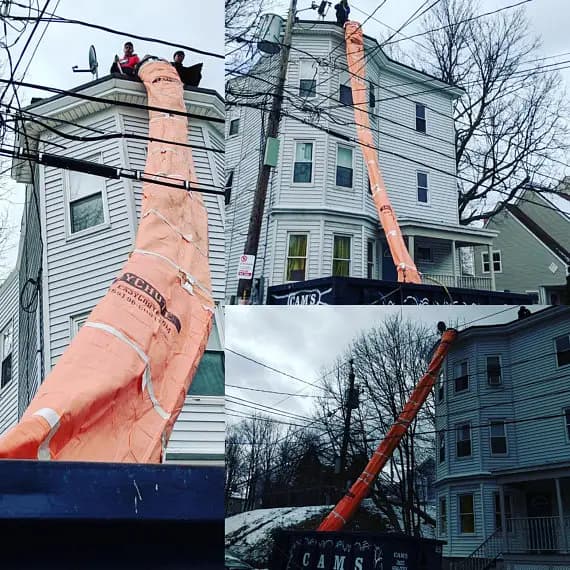
Fall in Maine hits differently than it does in the mid-Atlantic or the South. By mid-October you are dealing with cold mornings, wet leaves blowing across roof decks, and pressure from homeowners and property managers to close out projects before the first hard freeze. If debris removal is slowing you down — or putting your crew at risk on slick surfaces — a properly rigged debris chute changes the equation completely.
This guide is written specifically for Maine contractors: roofers working shingle tear-offs on coastal and inland homes, demo crews gutting older houses and camp buildings, and junk removal operators clearing out seasonal properties before winter. Every tip here accounts for the conditions you actually face in September, October, and November across Cumberland, York, Penobscot, Androscoggin, and Knox counties.
Why Fall Is Prime Season for Debris Chute Use in Maine
Maine's construction calendar compresses hard once Labor Day passes. Roofers are racing to beat freeze-up. Remodelers are finishing gut jobs before heating season. Junk removal crews are emptying cottages and camp properties before owners winterize. The volume of debris moving off structures spikes, and so does the pressure on crews to work faster.
At the same time, the physical environment gets more demanding:
- Morning frost leaves roof decks and scaffold planks dangerously slick from September onward
- Wet leaves accumulate on flat and low-pitch surfaces, creating hidden slip hazards
- Shorter daylight hours mean more work done in marginal light
- Wind picks up along coastal and island properties, making carried loads harder to control
A debris chute addresses the core problem: it eliminates the trips. Instead of workers carrying shingles, drywall chunks, or demo rubble down a ladder run after run, debris drops directly from the work level into the dumpster below. That single change reduces fall exposure, cuts labor hours, and keeps the job site cleaner at a time of year when a cluttered deck is a liability.
Choosing the Right Chute Length for Maine Job Sites
EasyChute sections come in 10 ft, 25 ft, and 50 ft lengths, and they connect with a 1.5 ft overlap so you can build to any height your job requires. Choosing the right configuration before you show up saves setup time and avoids the frustration of being a section short on a tall structure.
Matching Sections to Common Maine Building Heights
Maine residential stock is diverse. You have one-and-a-half-story Capes and bungalows common in Portland's West End and the Kennebunks, two-story colonials throughout the suburbs, and older three-story wood-frames in Lewiston, Auburn, and Biddeford. Here is a practical length guide:
- Single-story ranches (8-12 ft eave): One 10 ft section is typically enough to reach a low dumpster
- Standard two-story (18-22 ft eave): Two 10 ft sections or one 25 ft section with slack adjustment
- Three-story or steep-pitch Cape: Three 10 ft sections or one 25 ft plus one 10 ft section
- Four-story commercial or multifamily: Two 25 ft sections, or one 50 ft section for a straight drop
- Church or barn demo with high plate lines: Measure the drop first; a 50 ft section handles most barn peaks in central Maine
When in doubt, go a section longer than you think you need. A little extra drape into the dumpster opening is an asset, not a problem — it guides debris in and reduces splash-back. You can read more about configuration choices in the full canvas trash chute guide if you want to compare material and section options side by side.
Weight Considerations for One-Person Setup
One of EasyChute's practical advantages for Maine crews working short-handed in the fall rush is weight. A 10 ft section comes in under 3 lbs and folds into a small box. That matters when your most experienced person is on the roof and the new hire is handling equipment. One person can carry, hang, and strike the entire chute without a second set of hands — which is exactly the scenario on most Maine residential jobs.
Pre-Setup Inspection: What to Check Before You Hang
Fall conditions in Maine mean your pre-setup walk changes slightly compared to summer work. Run through this checklist before you hang a single section:
- Identify your hang points. Look for a window frame, roof edge, scaffold rail, or structural overhang that can bear load. The chute hangs from four woven loops using carabiners or quick-connects — confirm the anchor point is solid, not just decorative trim.
- Check for frost or wet leaves on the deck. Clear your work surface before you start loading debris. A clean deck is a non-negotiable in October in Maine.
- Assess wind direction. On coastal and island jobs, morning wind can run 15-20 mph. Position the dumpster so the chute drops with or across the wind, not directly into it.
- Confirm dumpster placement. The dumpster should be as close to the base of the chute as possible, ideally within 2-3 ft of the drop zone. On sloped driveways common in coastal Maine towns, chock the wheels and confirm it will not shift during loading.
- Check fabric for damage from prior jobs. Run your hand along the section seams and inspect the loop stitching. Cold storage over winter can stiffen fabric and reveal wear points. If you see fraying at a loop, retire that section before hanging it at height.
This five-minute walk saves the two-hour delay that comes from discovering a problem after the chute is rigged. See the step-by-step EasyChute installation guide for a full visual walkthrough of the hang process.
Rigging in Cold and Wet Conditions: Maine-Specific Techniques
Hanging a chute in October in Rockland or Bangor is not the same as hanging one in July. Cold affects your gloves, your grip, and the hardware you are working with. Here is how to adapt:
Carabiner and Quick-Connect Best Practices in Cold Weather
- Use locking carabiners rather than basic snap-hooks when temperatures drop below 40°F — cold hands make it harder to confirm a gate is fully closed
- Carry a few extra carabiners in your vest pocket so they stay warm and the gates move freely
- Wipe anchor points dry before attaching — frost on a metal rail can cause a carabiner gate to stick partially open
- After hanging, give each loop a firm tug downward before you load any debris
Managing Fabric Stiffness in Cold Temperatures
EasyChute's woven, coated poly fabric handles cold better than canvas (which can stiffen dramatically below freezing), but you will still notice the material is less flexible on a 28°F morning in November compared to a 70°F afternoon in August. A few practical adjustments:
- Unroll the sections on the ground in a sunny spot for 10-15 minutes before rigging if temperatures are below 35°F
- Avoid loading heavy concentrated loads (single large chunks of concrete or timber) through a cold, stiff chute — break debris into smaller pieces and feed it progressively
- If sections were stored in an unheated barn or trailer, let them equilibrate to ambient temperature before expecting full flexibility at the connection overlap
Roofing Tear-Offs in Fall: Getting the Most Out of Your Chute
Shingle tear-offs represent the single largest use case for debris chutes on Maine job sites. A typical asphalt shingle roof on a mid-size colonial in Falmouth, South Portland, or Brunswick produces 15-25 squares of old shingles, roofing felt, and nails — that is a lot of weight moving off a steep pitch. When fall weather is in the mix, the chute becomes less optional and more essential.
Positioning the Chute Relative to the Tear-Off Direction
The most efficient shingle-removal workflow keeps the chute mouth close to where your tear-off is happening at any given moment. On a straight gable, start the tear-off from the ridge down on the side closest to the chute. This keeps carries short — 3-5 ft from the tear-off point to the chute mouth — rather than walking debris across the full width of the deck.
On hip roofs common in coastal Maine colonials, hang the chute off the lowest valley or at the front edge. Plan your tear-off sequence so the last quadrant is the one farthest from the chute, keeping your longest carry at the end of the job when the deck is clear and the footing is better.
Keeping Nails and Small Debris Contained
Loose nails are a constant on tear-offs. A properly positioned dumpster with the chute dropping directly inside keeps nails contained rather than scattered across the driveway or lawn — a small but real customer-service win on residential jobs where the homeowner is watching. For more detail on chute positioning for roofing work, the full roofing trash chute guide covers pitch angles, dumpster sizing, and protecting landscaping below the drop zone.
Demo and Interior Gut Work: Fall-Specific Considerations
Interior demo picks up in fall as contractors close out renovation projects before heating season. In older Maine housing stock — think 1890s-1940s wood-frames in Portland, Lewiston, and Augusta — you are dealing with plaster, lath, old-growth framing scraps, and occasionally asbestos-containing materials (ACM) that require separate handling. A debris chute is the right tool for the non-hazardous stream; it keeps your clean demo debris moving efficiently while your crew keeps hazardous materials segregated per protocol.

Window-Based Drops for Interior Gut Jobs
Most Maine interior jobs use a window opening as the hang point. This works well on the first through third floors. Practical tips for fall interior work:
- Remove the window sash completely before rigging — it protects the glass and gives you a clean, wide opening to work through
- Pad the window sill with a scrap of carpet or rubber mat before the chute loops make contact — older window frames in Maine homes are often painted with lead-based paint and you do not want chips in the dumpster mixing with your general debris stream
- Keep the inside of the window opening clear of debris accumulation — a pile of rubble at the sill creates a trip hazard for the person feeding the chute
Managing Dust in Cold, Still Air
Cold fall air is often calm and dry in Maine's interior counties. Plaster dust from lath-and-plaster demo travels farther in still air than it does in summer humidity. Use the chute to move demo material in controlled loads rather than dumping loose buckets — a steady feed down the chute creates less turbulence and less airborne dust than a single large dump. Keep a wet-mop or misting spray at the chute mouth for dusty loads.
For a comprehensive look at how debris chutes work in full interior gut scenarios, see the demolition chutes guide for interior gut work.
Junk Removal at Seasonal Properties: The Fall Window
Maine has tens of thousands of seasonal cottages, camps, and waterfront properties. Every fall, owners either prepare these properties for winter or sell them off, and junk removal crews get the call to clear them out — sometimes with multi-story contents that need to come down from upper floors fast. The EasyChute system is a natural fit here because it is fast to deploy and fast to strike.
For a junk removal operator working a week of camp and cottage clearances across Lincoln County or down the Midcoast, one or two 10 ft sections in the van handle the majority of single-story and two-story jobs. Add a 25 ft section for the occasional farmhouse or converted barn. The reusable nature of the chute means no rental pickups, no per-day charges adding up over a multi-property week — just grab the sections, hang, fill the dumpster, strike, and drive to the next stop.
Compare that to the alternative: multiple trips down stairs carrying load after load, with wet leaves on outdoor steps and gravel paths. OSHA's ergonomics guidance is clear that repeated heavy carries on uneven or slippery surfaces are among the highest-risk manual handling activities in construction and removal work. Eliminating those carries is not just a productivity move — it is a safety move.
OSHA Compliance and Site Safety During Fall Setup
Fall brings OSHA construction safety into sharper focus because the same conditions that make the season busy — elevated work, changing weather, time pressure — are the conditions that drive incidents. A few non-negotiables when rigging and operating a debris chute in fall:
- Establish a drop zone. Rope off or cone the area beneath the chute. No one walks under a loaded chute, period. This is especially important on Maine properties where curious neighbors or returning homeowners may approach the work area.
- Communicate the load. On multi-person crews, the person at the top feeds the chute, the person below manages the dumpster and clears the zone. Establish a verbal or visual signal before each major load.
- Do not overload. The chute is designed for continuous debris flow, not for dropping single heavy objects like whole sections of framing or bathtub units. Break large items down before they go in the chute mouth.
- Inspect connections before each shift. On multi-day jobs, cold nights and morning moisture can loosen carabiner gates or stiffen overlap connections. Walk the rig at the start of every day.
Debris Disposal and Environmental Responsibility in Maine
Maine contractors operate under state solid waste rules that align with broader federal guidance on construction and demolition debris. The EPA's construction and demolition debris data shows that C&D waste is one of the largest waste streams in the United States, and Maine's own DEP has long emphasized keeping recyclable materials — metal, clean wood, concrete — out of the general waste stream.
A debris chute helps here in a practical way: when debris drops directly into a dumpster rather than being scattered across a lawn or driveway, sorting for recycling is cleaner and easier. Some contractors run two dumpsters side by side — one for general C&D, one for clean wood or metal — and position the chute mouth to direct loads into the appropriate container. It is a simple operational choice that can reduce disposal costs and satisfy municipal recycling requirements in towns like Portland, South Portland, and Westbrook that have active C&D diversion programs.
Storing and Transporting Your Chute Between Fall Jobs
Maine fall jobs are often back-to-back with minimal downtime between sites. Here is how to handle the chute between jobs without creating problems for the next setup:
Post-Job Cleanup
- Shake loose debris from the chute before rolling — shingle granules and plaster grit that sit inside a folded section abrade the fabric over time
- Wipe down loops and connection points with a dry rag
- If the chute is wet from rain or morning dew, hang it briefly in an open garage or shed to dry before boxing — storing wet fabric encourages mildew in a sealed box
Van and Trailer Storage
EasyChute sections fold small enough to fit in a van shelf, a truck bed toolbox, or a trailer cargo bay without taking up meaningful space. Keep sections in their boxes during transport — the box protects the loop stitching from abrasion against metal shelving. Label boxes by length so you grab the right section without unpacking everything at the job site.
For crews running multiple vehicles across the Maine coast or into western Maine's hill towns, consider keeping a base kit (two 10 ft sections) in every vehicle so you are never caught on a job without chute capacity. Watch the EasyChute setup videos for a quick refresher on the fold-and-box process if a newer crew member is handling storage.
Cost Efficiency: Owning vs. Renting for Maine's Fall Season
Maine contractors doing fall work face a simple math problem. If you are running 6-10 roofing or demo jobs between September and November, paying daily rental rates for a debris chute every time adds up fast. The trash chute rental cost breakdown shows that rental rates typically run $50-$150 per day depending on length and supplier, and in rural Maine the nearest rental yard may be 30-45 minutes from your job site — adding a half-day of windshield time per job just for pickup and return.
Owning a set of EasyChute sections eliminates both the daily cost and the logistics problem. The chute ships free directly to your address. It is reusable job after job. And because it is lightweight and compact, it stores in your vehicle rather than at a yard you have to visit. For high-volume fall operators, ownership pays for itself in a single busy month.
You can also look at the modular trash chute kit cost breakdown to see exactly what different section combinations cost and how to spec a kit that covers your typical Maine job profile without over-investing.
Special Considerations for Coastal and Island Maine Job Sites
Contractors working on Maine's coast — from Kittery up through York, Kennebunk, Portland, Brunswick, Bath, Rockland, Camden, and beyond — and especially those doing island work on Vinalhaven, North Haven, Peaks Island, or the Cranberry Isles, face a few challenges that inland crews do not.
- Wind: Coastal and exposed island sites can see sustained winds of 20-30 mph in October and November. Use all four hang loops and consider adding a secondary tie-down at the mid-point of a long chute run to prevent the chute from swinging laterally in gusts.
- Salt air: Rinse metal hardware (carabiners, quick-connects) with fresh water after island or waterfront jobs to prevent salt corrosion on gate mechanisms.
- Ferry logistics: On island jobs, every piece of equipment that goes on the ferry has a size and weight cost. EasyChute sections fold into compact boxes — they go in a truck bed, a cargo van, or even a large duffle. This is a real operational advantage over heavy-gauge steel chute systems that require their own pallet or trailer space.
Frequently Asked Questions
How many chute sections do I need for a typical Maine two-story house?
For a standard two-story colonial or cape with an eave height of 18-22 ft, two 10 ft EasyChute sections or one 25 ft section will reach from the roof edge or a second-floor window into a dumpster on the driveway. If you are working off the ridge of a steep-pitch cape or a third-floor window, add one more 10 ft section. It is always better to have a little extra length than to be a foot short at the dumpster opening.
Can I use a debris chute in below-freezing temperatures?
Yes. EasyChute's woven, coated poly fabric handles cold significantly better than canvas, which stiffens and cracks under repeated freeze-thaw cycling. In sub-freezing temperatures, let sections warm up slightly before rigging to restore flexibility, avoid concentrated heavy loads through a stiff section, and inspect carabiner gates carefully since cold metal gates can stick. Normal operational use in Maine's November temperatures is well within the material's range.
Is a debris chute required by OSHA on Maine construction sites?
OSHA does not mandate debris chutes by name on all sites, but its construction safety standards require that debris be managed to prevent hazards to workers and others on or near the site. Carrying heavy loads of debris down ladders repeatedly — especially on frost-covered decks — creates the kind of fall and musculoskeletal hazard that OSHA citations target. A debris chute is the practical engineering control that eliminates those exposures. Many general contractors in Maine now require chute use on multi-story projects as part of their site safety plans.
How do I keep the chute from blowing around on coastal Maine job sites?
Use all four woven hang loops when rigging, and on exposed coastal or island sites add a mid-point tie-down using a short length of nylon webbing or rope anchored to the building or scaffold. Position the dumpster so the chute drops with the prevailing wind rather than crosswind. On days with sustained gusts above 25 mph, consider pausing chute use during the strongest gusts and feeding debris in controlled batches rather than continuous flow.
Can one person set up and strike an EasyChute on a Maine job site?
Yes. Each 10 ft section weighs under 3 lbs and folds into a small box, so a single worker can carry all the sections needed for most Maine residential jobs in one trip. The hang loops attach to carabiners or quick-connects that one person can clip from a ladder. Setup from box to operational typically takes under 10 minutes for a crew member who has done it once. Strike at the end of the day is similarly fast — unclip, lower sections to the ground, fold, and box.
How does a debris chute help with environmental compliance in Maine?
Maine DEP and EPA both emphasize diverting recyclable C&D materials from landfill. A debris chute drops material directly and cleanly into a dumpster, making it far easier to sort metals, clean wood, and concrete into separate containers for recycling. It also prevents debris from scattering across the site and potentially entering storm drains or adjacent wetlands — a real concern on the many Maine properties that sit near tidal areas, ponds, or streams. Controlled debris handling is both a regulatory and a site-stewardship win.
Where does EasyChute ship in Maine?
EasyChute ships free to job sites and business addresses across the entire United States, including all Maine locations. Whether your site is in Portland, Bangor, Augusta, Lewiston, or a rural town in Aroostook or Washington County, sections arrive at your address with no shipping charge. Orders are placed online at fixed prices — no negotiation, no rental logistics, no pickup required. Contact the team through the EasyChute contact page if you have questions about a specific order or delivery timeline.
Get Your Fall Chute Setup Right — Order Before the Rush
Maine's fall construction window is short and the jobs pile up fast. The contractors who finish the season efficiently and safely are the ones who have their equipment sorted before October, not scrambling to rent or borrow at the last minute.
EasyChute sections are lightweight, reusable, and ship free to any Maine address. Whether you are rigging your first debris chute or replacing a heavy canvas system that has been slowing you down, the right kit is a straightforward decision. Review the fabric trash chute overview to compare section options, check the EasyChute FAQ for any setup questions, or head straight to the EasyChute product pages to spec your kit and place your order.
Demo it. Bag it. Chute it. — and get Maine's fall season done right.