
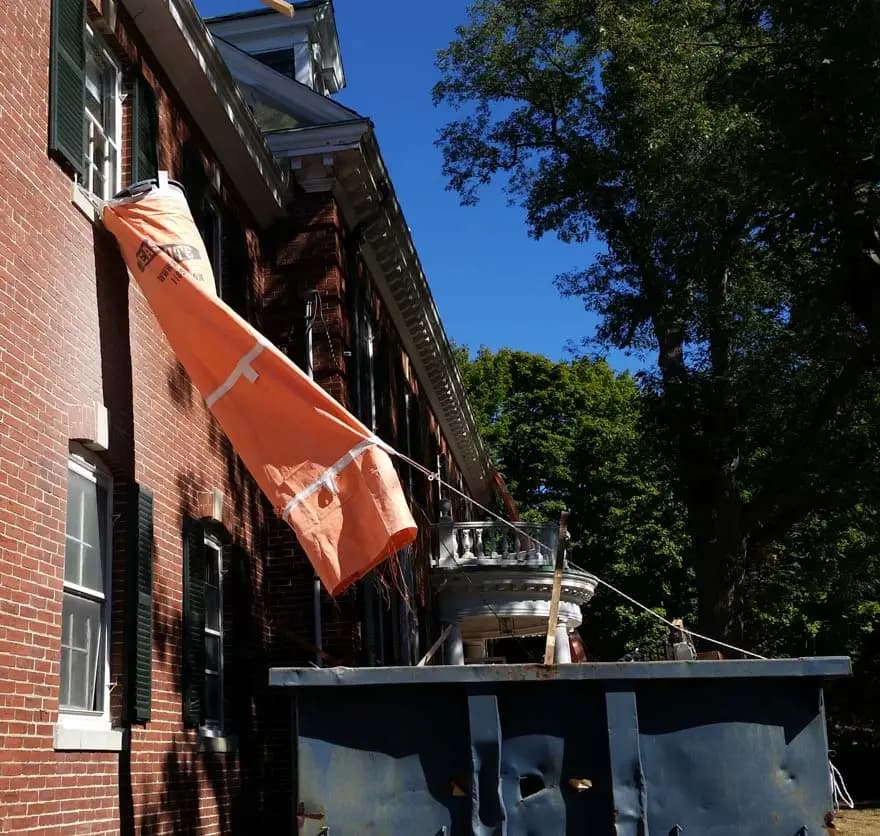
Gut a second-floor bathroom in a Philadelphia rowhome. Tear off a slate roof on a 1920s farmhouse in Lancaster County. Strip a kitchen down to studs in a Pittsburgh Victorian. These are the kinds of jobs Pennsylvania families hire contractors for every single year — and in every one of these scenarios, getting debris from the upper floor to the dumpster below is the most underestimated part of the project.
Bucket brigades are slow. Stairwell hauls beat up walls, bang up trim, and risk back injuries on every trip. Tarps flapping off a third-floor scaffold become a neighborhood hazard. That's exactly where a lightweight fabric debris chute earns its keep — and why more Pennsylvania contractors and family renovation crews are adding one to their standard setup on every multi-story job.
This guide covers everything you need to know: why Pennsylvania job sites have their own quirks, how to choose the right chute length, how to hang it safely, common mistakes to avoid, and how to get your debris moving in minutes instead of hours.
Why Pennsylvania Family Renovations Create Unique Debris Challenges
Pennsylvania is home to some of the most architecturally diverse residential housing stock in the country. You'll find 19th-century brick rowhouses in Philadelphia and Allentown, timber-frame farmhouses outside Harrisburg, two-and-a-half-story Foursquares in Erie, and dense triple-deckers across Pittsburgh's hilltop neighborhoods. That variety creates specific debris-removal headaches you won't find in a newer suburban subdivision.
Tight Urban Lots and Limited Staging Area
In cities like Philadelphia, Allentown, or Scranton, lot widths can be 15 feet or less. There's often no side yard, no rear alley access, and a public sidewalk that needs to stay clear. That means your dumpster placement is dictated by the street permit — and your debris path needs to go vertically, straight down into the container, not diagonally across a neighbor's property line.
- A fabric chute lets you direct debris precisely into a dumpster footprint, even on lots where horizontal distance is zero.
- No materials pile up on the sidewalk between trips, reducing liability and keeping the homeowner happy with the neighbors.
- Setup and strike can happen in minutes, which matters when street permits have time restrictions.
Multi-Story Heights Common in Older Pennsylvania Homes
Many pre-war Pennsylvania homes have full third floors used as bedrooms or storage, plus an attic above that. If you're doing a whole-house renovation — stripping insulation, replacing windows, gutting bathrooms on every level — you may be working at 25 to 35 feet above grade before you even account for the dumpster sitting at curb level. Standard 10-foot chute sections aren't going to cut it at that height. Planning your chute length before the job starts saves a mid-project scramble.
Weather Windows That Demand Speed
Pennsylvania winters arrive fast and linger. A roofing crew tearing off a Lancaster farmhouse in October has maybe a 4-to-6-hour weather window on any given day. The faster debris moves off the roof, the faster fresh underlayment goes down. A roofing trash chute that one person can hang in under ten minutes means the whole crew stays in productive motion rather than shuttling bundles of old shingles down a ladder by hand.
Choosing the Right Chute Length for Your Pennsylvania Job
EasyChute sections come in 10 ft, 25 ft, and 50 ft lengths, and they connect end-to-end with a 1.5 ft overlap — so you can stack them to match almost any building height. Here's how to think through the right configuration before you order.
Measuring Drop Height Correctly
Start at the attachment point — the window sill, roof edge, or scaffold rail where the top loop will hang — and measure straight down to the top of the open dumpster. That's your required chute length. Add a few feet of buffer so the chute's bottom mouth sits just inside the dumpster lip rather than hovering above it.
- One-story jobs (8-12 ft drop): A single 10 ft section handles most single-floor window debris or low-slope roof edges.
- Two-story jobs (18-24 ft drop): Two 10 ft sections or one 25 ft section — the 25 ft single is easier to manage solo.
- Three-story and higher (30-40 ft drop): A 25 ft plus a 10 ft, or a single 50 ft section. Many older Pennsylvania homes land here.
- Four-story rowhouses and above: Stack a 50 ft with a 10 ft or 25 ft addition to cover the full drop.
Weight Ratings and What Gets Thrown Down
Not all debris is equal. Old slate roof tiles, cast iron pipe sections, and masonry rubble hit a chute much harder than drywall scraps or blown-in insulation. EasyChute offers both lite-duty and heavy-duty 10 ft sections — the heavy-duty variant uses a thicker woven poly fabric rated for dense, angular material. For Pennsylvania gut renovations that mix plaster, lath, and old masonry, the heavy-duty section at the top (where debris enters fastest and hardest) is the smarter call.
Tools and Materials You Need Before You Hang the Chute
One of the reasons EasyChute became popular with contractors in New England and has been spreading to mid-Atlantic markets like Pennsylvania is the minimal tool requirement. You don't need a crane, a permit for the chute itself, or a crew of four. Here's the realistic pre-hang checklist.
- Carabiners or quick-connect clips: Four per section, rated for the load. Standard locking carabiners from any hardware store work fine with the woven loop hangers built into each section.
- Anchor points: A scaffold rail, a window frame reinforced with a 2x4 spreader bar, or roof anchor hardware. You need four secure anchor points per top section.
- Tape measure: To confirm drop height before you commit to your chute configuration.
- Gloves: When you're feeding heavy debris in, edges matter.
- A second person for initial setup: While one person can solo-install on many jobs, having a second person on the ground to guide the bottom of the chute into the dumpster speeds the process significantly.
That's it. No power tools, no welding, no heavy rigging. The whole kit for a 25 ft setup weighs under 6 lbs and fits in a duffle bag on the back seat of a pickup.
Step-by-Step: How to Set Up a Debris Chute on a Pennsylvania Job Site
The EasyChute installation process follows the same logic on a Philadelphia rowhome as it does on a Lancaster farmhouse, with minor variations based on anchor points. Here's the full setup sequence.
Step 1 — Position the Dumpster First
Everything flows from dumpster placement. Get it as close to the building face as legally allowed under your street-use permit. Confirm the open end or the side you'll be directing debris into is accessible from above. Lock the wheels if the container has them so it doesn't shift when heavy material hits it.
Step 2 — Identify and Test Your Anchor Points
At the top of your drop, identify four structurally sound anchor points that can handle downward and lateral load. On a scaffold: use the horizontal scaffold tubes with appropriate clamps. On a window opening: install a 2x4 or 4x4 spreader bar across the rough opening and attach carabiners to the bar. On a roof edge: use temporary roof anchor hardware secured to the decking. Test each anchor before loading the chute by applying firm manual pressure.
Step 3 — Attach the Top Section
Unfold the top chute section. Thread a carabiner through each of the four woven loops at the top of the section and clip each carabiner to its anchor point. The chute should hang vertically, not at an angle. If it's pulling toward the building face, adjust your anchor bar position outward a few inches so gravity does the alignment work for you.
Step 4 — Add Additional Sections as Needed
Feed each additional section up from below — or have a ground person hold it while the person above guides it into the overlap. The 1.5 ft overlap locks the sections together under the weight of flowing debris; there's no hardware connection needed between sections. The upper section's bottom lip sits inside the lower section's upper opening. Gravity keeps them mated.
Step 5 — Guide the Bottom into the Dumpster
The bottom mouth of the assembled chute should sit at or just below the top lip of the dumpster. If it's too high, debris can bounce or scatter. If the chute is too long and the bottom is pooling, retract a section. Secure the bottom loosely to the dumpster rim with a bungee cord or rope tie-off if wind is a factor — a common issue on exposed Pennsylvania ridge sites in the fall.
Step 6 — Do a Test Drop Before Full Production
Toss a single piece of light debris — a cardboard scrap, a small piece of drywall — and watch the full path. Confirm the material travels through without snagging at section joints and lands inside the dumpster. Adjust anchor positions or section lengths before the crew starts throwing full loads.
Common Debris Chute Setup Mistakes on Pennsylvania Job Sites
Even experienced crews make avoidable mistakes on the first setup of a new chute system. These are the ones that show up most often on mid-Atlantic renovation sites — and how to avoid them.
Mistake 1 — Underestimating the Drop Height
Contractors routinely measure the building height and forget to account for the dumpster sitting 4 feet above grade, or they forget the first floor ceiling height differs from the upper floor heights in older Pennsylvania homes with high Victorian ceilings. Always measure the actual vertical distance from your anchor point to the dumpster opening, not from grade to your work floor.
Mistake 2 — Using Inadequate Anchor Points at a Window Opening
A single 2x4 nailed loosely to a rotted rough opening isn't a structural anchor. On gut renovations where the window frame may already be compromised, use a solid spreader bar that bears against the structural masonry or framing on both sides of the opening. OSHA construction safety standards treat overhead work as a category requiring positive load control — your anchor points need to match that standard.
Mistake 3 — Letting the Chute Swing Against the Building
A chute that swings and rubs against brick or siding will abrade over time and can mark up a freshly prepared facade. If the bottom isn't reaching the dumpster cleanly, don't let it drag on the building. Use a simple rope guide tied to a ground stake or the dumpster edge to keep the chute vertical. This matters especially on narrow Pennsylvania rowhouse fronts where the building face and the dumpster are almost in the same plane.
Mistake 4 — Overloading with Long, Rigid Material
A fabric chute handles chunk debris exceptionally well: broken drywall, shingles, plaster, insulation, lumber scraps. What it isn't designed for is long, rigid material — an 8-foot 2x4 thrown end-first will stall in the chute and jam. Cut long boards before they go in, or dispose of them separately. This isn't a chute limitation so much as a physics reality no debris chute system solves.
Mistake 5 — Skipping the Strike Plan
Setup gets all the attention, but strike — taking the chute down at the end of the job or end of the day — is where injuries happen. Plan the strike sequence before you hang the chute: who's on the upper level releasing anchors, who's on the ground collecting the sections, and where the material goes once it's down. For more on Pennsylvania-specific setup and strike considerations, the fall debris chute setup guide for Maine contractors covers cold-weather and wind logistics that translate well to Pennsylvania fall and winter conditions.
OSHA Compliance and Debris Chute Use in Pennsylvania
Pennsylvania construction sites fall under federal OSHA jurisdiction for most commercial and multi-family work. Residential remodeling has some exemptions, but family renovation projects that bring in a contractor crew are typically covered. Here's what matters from a compliance standpoint when you add a debris chute to the job.
- Overhead protection: Any chute setup must include a clear debris-fall zone below — no foot traffic under or adjacent to an active chute without barriers and signage. This applies at every Pennsylvania job site regardless of size.
- Load handling: OSHA ergonomics guidance emphasizes reducing manual load carrying on stairs and ladders. A debris chute is a direct ergonomic control — it eliminates the stairwell carry almost entirely.
- Fall hazard at the loading point: Workers feeding material into the top of the chute are working near a window or roof edge. Fall protection for those workers — harness and anchor system, or a guardrail system — is required separately from the chute itself. The chute doesn't substitute for fall protection for the person using it.
- Signage: Post "Debris Drop Zone — No Entry" at the base whenever the chute is active.
For a fuller picture of your construction safety obligations under federal rules, the OSHA Construction Industry page is the authoritative starting point. Pennsylvania OSHA (PA DOL) mirrors federal standards for most categories.
Debris Chute Setup for Specific Pennsylvania Renovation Types
Different job types create different chute configurations and debris profiles. Here's how the setup logic shifts by project category.
Roof Tear-Offs in Pennsylvania
Steep-pitch roofs are common on Pennsylvania farmhouses and older Victorians. For a roof tear-off, the top anchor typically goes at the peak or at the eave line, depending on where the decking is accessible. The crew throws bundles of old shingles directly into the top opening. Because shingle weight concentrates on impact at the section joints, a heavy-duty top section is recommended. A roofing trash chute setup can keep an entire roofing crew moving continuously without stopping to clear material from the deck.
Interior Gut Renovations
For whole-house gut work in Pennsylvania, the typical anchor point is a second- or third-floor window. Material comes from multiple rooms across multiple floors on the same day. The key logistics decision is whether one chute stays in one window position for the whole job, or whether the crew moves it room to room. Because EasyChute sections hang in minutes, moving the whole setup to follow the demo progress is realistic — especially on tight rowhouse floor plans where windows on different sides of the building serve different dumpster positions.
The demolition chute guide for interior gut work goes deeper on this specific scenario with tips for managing mixed debris streams from multiple floors at once.
Bathroom and Kitchen Remodels
Even a single-room remodel on an upper floor generates a surprising volume of debris: tile, concrete backer board, cabinets, old fixtures. For a second-floor bathroom on a Pennsylvania Colonial, a 10 ft or 25 ft section from the window to a dumpster below cuts a 90-minute bucket-brigade haul to a 20-minute chute drop. The homeowner also appreciates that walls and stair treads don't take damage from repeated trips with heavy materials.
Environmental Responsibility: Debris Separation and Recycling
Pennsylvania has active construction and demolition debris recycling infrastructure, particularly in the Philadelphia metro and around Pittsburgh. Using a debris chute actually makes debris separation easier, not harder, when you plan the workflow intentionally.
- Use separate dumpsters or collection bins for recyclable material (clean wood, metal, concrete) and mixed waste — position each one at different drop points if the site layout allows it.
- Brief the demo crew before the job: what goes in the chute (chunk debris), what gets sorted separately (metals, salvageable lumber), and what gets bagged for special disposal (lead paint, asbestos-containing tile).
- The EPA construction and demolition debris data shows that the vast majority of C&D waste is recoverable — concrete, wood, metals, and drywall are all recyclable when separated at the source.
A fabric chute doesn't sort for you, but it speeds up the gross removal step fast enough that the crew has time to do light sorting before material goes in. That's a net positive for C&D diversion rates on Pennsylvania family renovation projects.
Cost vs. Renting: Why Pennsylvania Contractors Are Buying
Debris chute rental is an option in some Pennsylvania markets, but the economics shift fast when you're doing more than one or two jobs per season. A fabric-based chute system purchased outright and reused across dozens of jobs is a fundamentally different cost model than a rental that charges by the day or week.
- Rental model: Daily or weekly fee plus delivery and pickup charges. If a job runs long — as Pennsylvania gut renovations frequently do — costs compound. The chute sits idle on days you're not throwing material, but the meter still runs.
- Ownership model: One fixed purchase price, free shipping to your job site, and the ability to use the chute on every job after that. A contractor running 15 jobs per year amortizes the cost to pennies per use in the first season.
- Portability advantage: At under 3 lbs per 10 ft section, EasyChute sections travel in a pickup bed alongside other gear. No delivery scheduling, no waiting for a rental company to drop off, no return logistics.
For a detailed breakdown of what rental typically costs in nearby markets, the debris chute rental cost estimate for New York contractors provides a useful regional comparison — Pennsylvania pricing tends to track similarly in urban markets like Philadelphia and Pittsburgh.
How EasyChute Sections Connect and Why It Matters for Pennsylvania Job Heights
The connection mechanism between EasyChute sections is worth understanding before you configure a job, because the overlap system handles variable heights cleanly without custom cutting or hardware.
- Each section overlaps the next by 1.5 ft — the upper section's lower end slides inside the upper end of the section below it.
- Under debris load, the weight of falling material keeps the overlap seated. There's no clamp, bolt, or zip tie required at section joints.
- If your measurement puts the bottom 4 feet short of the dumpster, you add a 10 ft section and have 6 feet of slack to manage — either tie it off at the dumpster rim or let the last few feet rest inside the container.
- At full 50 ft extension, the system handles most four-story Pennsylvania rowhouses and commercial buildings without adding further sections.
You can watch the assembly and hang process in real time at the EasyChute video library — seeing the overlap mechanism in action is faster than reading about it, especially for crews that are setting up for the first time.
Tips for Homeowners Managing Contractor Debris on a Family Renovation
Not every person reading this is the contractor. Plenty of Pennsylvania homeowners are managing their own gut renovation with a mix of family labor and hired specialty trades. Here's what you need to know about overseeing debris chute use when you're the owner rather than the GC.
Permit Your Dumpster Early
Philadelphia, Pittsburgh, and most Pennsylvania boroughs require a right-of-way permit to place a dumpster on a public street. Processing times vary — sometimes 48 hours, sometimes two weeks depending on the municipality. Get this done before the demo crew shows up, not after. The chute is useless without a legal container to drop into.
Establish a Drop Zone With Your Contractor
Before work starts, walk the site with your contractor and agree on exactly where the dumpster sits, where the chute anchor will be, and what the debris-free zone below the chute looks like. Mark it with cones or barrier tape. If you have children or pets, that zone needs to be inaccessible during working hours — no exceptions.
Understand What Can't Go Down the Chute
Ask your contractor to give you a plain-language list of materials that need separate handling: hazardous waste, asbestos-containing materials in pre-1980 Pennsylvania homes, lead paint debris, mercury-containing appliances. These require regulated disposal that a standard dumpster doesn't accommodate. A fabric chute doesn't change those regulations — it just makes the non-hazardous volume move faster.
For a broader overview of how fabric debris chutes differ from other systems, the fabric trash chute guide breaks down material types, weight ratings, and use cases in plain language that works equally well for homeowners and contractors.
Frequently Asked Questions
How long does it take to set up a debris chute for a Pennsylvania family renovation?
An experienced person can hang a single 25 ft EasyChute section in under 10 minutes once anchor points are in place. A three-section setup covering 35 to 40 feet of drop takes 20 to 30 minutes for one person working alone, or 10 to 15 minutes with a second set of hands on the ground. The bigger time investment is positioning the dumpster and rigging your anchor points — the chute itself goes up fast. For first-time setups, budget an extra 15 minutes for familiarization.
Do I need a permit to use a debris chute in Pennsylvania?
The debris chute itself generally doesn't require a separate permit in Pennsylvania municipalities. What does require permitting is the dumpster placed on a public right-of-way — most cities and boroughs mandate a right-of-way or occupancy permit for containers on public streets. Scaffold-mounted chutes may also interact with existing scaffold permits. Always check with your local municipality before setup. Your contractor or GC should handle permit logistics as part of job planning.
What's the best chute length for a two-story Pennsylvania rowhouse?
For a standard two-story Pennsylvania rowhouse, the drop from a second-floor window to a dumpster at street level is typically 18 to 24 feet. A single 25 ft EasyChute section covers that range comfortably with a few feet to spare at the bottom. If the ceiling height is unusually tall — common in pre-war Philadelphia homes — measure the actual drop before ordering. Two 10 ft sections are an alternative, but the 25 ft single is easier to manage solo and reduces the number of connections in the chute path.
Can a homeowner set up a debris chute without a contractor?
Yes, with appropriate safety precautions. The EasyChute system is designed for one-person setup, and there's no specialized trade license required to hang it. What you do need: a structurally sound anchor point at the upper level, proper fall protection for whoever is working near the window or roof edge, a clear debris drop zone below, and an understanding of what debris is safe to put in the chute. Homeowners managing DIY gut projects on two-story Pennsylvania homes use fabric chutes regularly and effectively.
What types of debris can go through an EasyChute on a Pennsylvania renovation?
EasyChute handles chunk debris well: broken drywall, old plaster and lath, roofing shingles, insulation batts, cabinet pieces, tile, lumber scraps, and similar renovation waste. What it isn't designed for: long rigid boards over 4 to 5 feet (cut them first), liquids, bagged hazardous materials, or extremely large single pieces like full cabinet boxes. For dense, heavy material like masonry or old cast iron, use the heavy-duty 10 ft section at the top of the chute where initial impact is highest.
How do I keep the chute from swinging in wind during outdoor Pennsylvania jobs?
Wind management is a real consideration for Pennsylvania fall and winter jobs, particularly on exposed ridge lines or urban high-rises where wind channels between buildings. The most effective solution is a simple rope guide: tie a length of rope from the lower portion of the chute to a fixed point at ground level — a dumpster handle, a ground stake, or a temporary anchor — to keep the chute vertical and prevent lateral swing. If wind is severe enough that the chute is swinging significantly even with a guide rope, pause debris operations until conditions improve.
Is EasyChute reusable across multiple Pennsylvania jobs?
Yes — reusability is a core design feature. The woven, coated poly fabric is built to withstand repeated use across many jobs. A contractor who buys a 25 ft section in October can use it on roofing tear-offs, interior gut work, and bathroom remodels throughout the following season. After each job, fold the sections compactly, store in a dry location, and inspect the loops and seams before the next use. EasyChute sections weigh under 3 lbs per 10 ft and store in a small box, making job-to-job transport a non-issue.
Ready to Move Pennsylvania Renovation Debris the Right Way?
Whether you're a roofing crew tearing off in Lancaster County, a GC managing a full gut in a Philadelphia rowhouse, or a Pennsylvania family taking on a second-floor bathroom remodel with a mix of DIY and hired help, the debris handling step doesn't have to be the slowest part of the job.
EasyChute's lightweight fabric sections ship free to job sites across Pennsylvania and the entire United States. You pick the length that matches your drop, hang it in minutes, and strike it just as fast. No rental fees, no scheduling headaches, no bucket brigades up and down a narrow stairwell.
Visit the EasyChute FAQ page if you have questions about sections, weight ratings, or which configuration fits your specific project. When you're ready to order, head to the contact page or browse the full product line to get a setup shipped directly to your job site — fast.
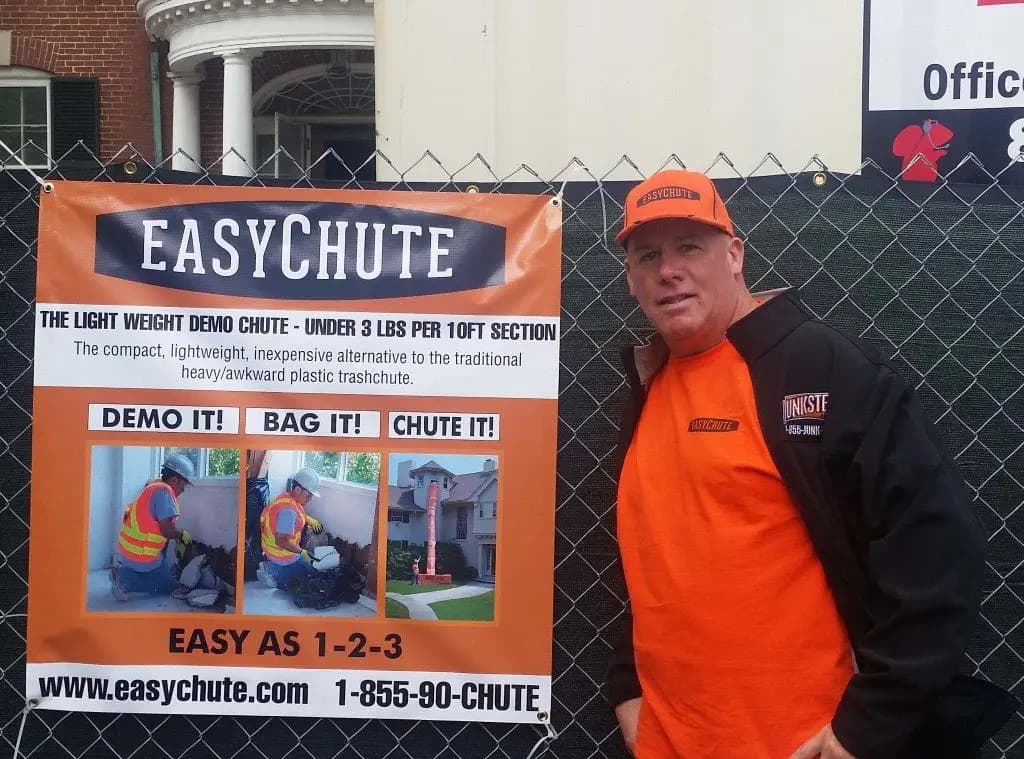
Demo it. Bag it. Chute it.