
If you are pricing out a renovation, roofing tear-off, or gut demo job in Salem, MA and trying to figure out what a debris chute is going to cost you, this guide is exactly what you need. The North Shore construction market has its own rhythm — tight colonial-era lots, three-story Victorians, busy downtown streets, and a city inspectorate that takes fall-protection and debris-containment seriously. That combination means how you move material off upper floors matters a lot, and so does your budget for doing it right.
Below you will find a realistic breakdown of debris chute rental costs in the Salem area, what drives those numbers up or down, the hidden fees that catch crews off guard, and a straight comparison of renting versus buying — so you can make a decision that actually serves your bottom line across multiple jobs.
What Is a Debris Chute and Why Do Salem Contractors Use Them?
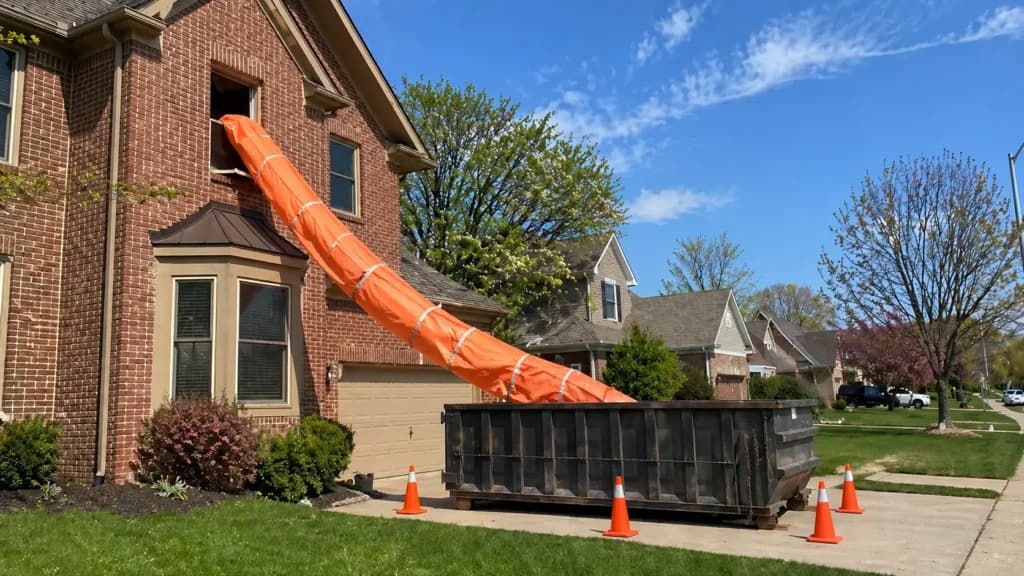
A debris chute is a vertical tube or sleeve — typically made from woven poly fabric, rigid plastic, or steel — hung from a window opening, roof edge, or scaffold to channel demolition waste directly into a dumpster below. Rather than carrying load after load of shingles, drywall, concrete rubble, and old flooring down interior stairs (or tossing it out windows unsafely), crews slide material down the chute. It lands in the bin, not in someone's path.
In Salem specifically, debris chutes show up on a wide range of job types:
- Roofing tear-offs on the multi-story Victorians in the McIntire Historic District and along Chestnut Street
- Interior gut renovations on older mill conversions near Derby Wharf and the South River waterfront
- Window replacements and siding jobs on three-decker rental properties throughout the Ward 1 and Ward 5 neighborhoods
- Commercial fit-outs and tenant improvements in downtown Salem's mixed-use buildings
- Attic cleanouts and junk removal jobs where hauling through narrow stairwells would take three times as long
According to OSHA's construction industry safety standards, debris that is dropped or thrown from height is one of the leading causes of struck-by injuries on job sites. A contained chute solves that problem systematically, which is why project owners, general contractors, and site safety officers increasingly require one before work begins.
Typical Debris Chute Rental Cost in Salem, MA: Real Numbers
Rental pricing for debris chutes in the greater Salem area — covering companies that serve Essex County from Peabody to Marblehead — generally falls into two models: a flat weekly rate or a per-day rate with a minimum. Here is what you can realistically expect to pay in 2026:
Daily and Weekly Rental Rate Ranges
- Short steel or rigid plastic chute (up to 20 ft): $75–$130 per day, or $280–$450 per week
- Standard modular chute system (40–60 ft): $150–$250 per day, or $500–$850 per week
- Full scaffold-integrated chute system (60–100 ft): $300–$600 per day — often bundled with scaffold rental
- Lightweight fabric chute (10–50 ft range): Rarely available as a standalone rental; more commonly purchased outright (more on that below)
Minimum Rental Periods and Delivery Windows
Most North Shore rental yards — including those operating out of Peabody, Beverly, and Lynn — require a three-day minimum rental even if your job wraps in one day. That means a small roofing job on a Pickering Street triple-decker could easily cost you $240–$390 just in minimum rental fees before you factor in delivery.
- Delivery charges: typically $60–$120 each way within Salem and surrounding towns
- Fuel surcharges: added since 2023, usually 5–10% of the base rental
- Deposit: $150–$500 held until equipment is returned undamaged
What Drives Debris Chute Rental Costs Higher on Salem Job Sites
Not every job pays the same rate, and several factors specific to Salem and the broader Essex County market push costs upward. Understanding these before you call a rental yard saves you from sticker shock when the invoice arrives.
Building Height and Section Count
Salem's historic neighborhoods are full of three- and four-story structures, and the new mixed-use developments downtown push even higher. Every additional chute section you need adds to your rental cost. A 30 ft drop might be manageable with a standard package; a 60 ft drop from a rooftop to a street-level dumpster on a downtown Salem commercial project can double or triple your section count — and your bill.
Job Duration and Overtime Days
Renovation timelines in older Salem buildings almost always run longer than expected. Original lath-and-plaster walls, asbestos abatement surprises, and permit delays are all common. If your rental was scoped for a week and the job runs twelve days, you will pay daily overage rates that are often higher per day than the original weekly rate.
Street-Level Access Restrictions
Derby Street, Washington Street, and much of downtown Salem require curb permits and sometimes traffic control for dumpster placement. If your dumpster cannot go where you planned, the chute drop angle changes, and you may need longer sections or a repositioned hang point. That means more equipment, more time, and more cost.
Seasonal Demand Spikes
Salem's October tourist season creates a secondary demand spike for contractors trying to finish exterior work before the city fills with visitors. Rental yards know this and pricing reflects it. Spring (April–June) is the other peak period for roofing and exterior renovation. Booking early or working outside these windows can save you 10–20%.
Hidden Fees That Inflate Your Actual Debris Chute Rental Cost
The base rental rate is rarely the final number on the invoice. Here are the most common add-ons crews in the Salem area get surprised by:
- Cleaning fees: Some rental companies charge $50–$150 if the chute is returned with concrete residue, roofing tar, or caked debris. Fabric chutes you own avoid this entirely.
- Damage assessments: A single torn section or bent coupler on a rigid system can cost $80–$200 to repair — deducted from your deposit.
- Late return penalties: Charged per day, often at a punitive rate, when the job runs over.
- Re-delivery fees: If the initial drop is refused because a site permit is not yet in place, some yards charge a second delivery fee.
- Setup labor charges: A handful of rental companies in Essex County now charge separately for hang assistance if you do not have a crew member who has used their specific system.
When you add all of that together, a job you estimated at $350 in debris chute rental can land at $550–$700 by the time the final invoice clears. That gap matters on a tight bid.
Buying vs. Renting a Debris Chute for Salem Area Jobs
This is the question every North Shore contractor eventually faces, and the math is clearer than most people think. Understanding what a debris chute actually costs to own versus rent is the key to making the right call.
The Break-Even Point Is Closer Than You Think
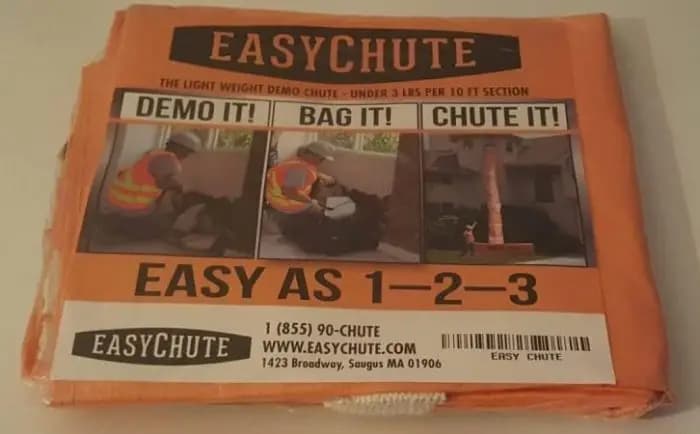
A lightweight woven poly fabric chute system like EasyChute — covering 10, 25, or 50 ft drops — is available at a fixed purchase price with free shipping. If a comparable rental in the Salem market runs $300–$500 per job week (before delivery and fees), a crew doing even two or three roofing or renovation jobs per season reaches break-even before summer ends.
- Rental for 5 jobs at $400 average = $2,000 spent, with nothing to show for it
- Purchase of a comparable fabric chute system = one fixed cost, reused across dozens of jobs
- Weight advantage: a 10 ft EasyChute section weighs under 3 lbs and folds into a small box — one person sets it up, no rental yard trip needed
When Renting Still Makes Sense
Renting is the right call in a few specific situations:
- You are a one-time homeowner managing a single large cleanout and will never use a chute again
- You need a scaffold-integrated system with engineered brackets that your crew has no experience with
- The project requires a very large-diameter rigid chute for heavy concrete rubble that exceeds fabric chute weight ratings
- Your GC or project specs require a specific certified system that is specified by name
Outside of those scenarios, most Salem-area roofing crews, demo contractors, and junk removal operators are better served by owning a system they can deploy in minutes. See how roofing crews specifically use debris chutes on tear-offs to understand the operational advantage.
How to Estimate Your Debris Chute Needs Before Calling Anyone
Before you call a rental yard or place an order, do a quick site assessment. Getting this right on the front end saves you from under-ordering sections or over-spending on more chute than the job requires.
Step 1: Measure Your Drop Height
Stand at the window, roof edge, or scaffold level where you plan to hang the chute. Measure the vertical distance to the top of the dumpster (not the ground). Add 2–3 ft of slack. That is your minimum chute length. For a typical Salem three-story building, you are looking at 24–32 ft of drop, so a 25 ft section plus a 10 ft overlap section is usually right.
Step 2: Identify Your Hang Points
EasyChute's design uses four woven loops at the top of each section that connect to ordinary carabiners or quick-connects. You need a solid anchor — a window frame, roof edge bracket, scaffold rail, or structural support — that can safely handle the dynamic load of debris moving through the chute. Walk through the full installation process here before your crew arrives on site.
Step 3: Confirm Dumpster Position
The chute exit needs to be directly above or within about 2 ft of the dumpster opening. In Salem's congested downtown streets, confirm your dumpster permit and position before you hang the chute. Repositioning a fully loaded chute mid-job is a pain and sometimes impossible without taking the whole thing down.
Step 4: Account for Wind and Building Geometry
Salem sits right on the coast. Wind off Salem Harbor or the North River can be significant, especially on rooftop jobs. For taller drops, consider whether the chute path passes by any windows on lower floors that could be damaged by swinging material. Fabric chutes have enough flex to absorb minor oscillation, but you want the trajectory planned before material starts moving.
OSHA and Safety Considerations for Debris Chutes in Massachusetts
OSHA's ergonomic and manual-handling guidelines make clear that repetitive heavy lifting — like carrying 60-lb bundles of old shingles down three flights of stairs repeatedly — is one of the leading causes of musculoskeletal injuries in the construction trades. A debris chute eliminates most of that loading entirely.
Beyond ergonomics, Massachusetts OSHA (enforced through the state's Division of Occupational Safety) aligns with federal 29 CFR 1926 construction safety standards. Key requirements relevant to debris handling on Salem job sites include:
- Debris must not be dropped or thrown to lower levels in a manner that creates a hazard to workers or the public
- Chutes used for debris must be enclosed, and the bottom of the chute must discharge into a container or other controlled area
- Warning barriers and signage must be posted at the base of any chute where public access could occur
- Loads through any chute system must stay within rated capacity — do not send large concrete blocks through a system rated for lighter demolition debris
Working in Salem's historic downtown, where pedestrian foot traffic is heavy, makes compliance especially important. A properly rigged chute feeding directly into a closed-top dumpster is both the safest and most neighbor-friendly approach. Learn what to expect from debris chute installation across Massachusetts job sites.
Environmental and Waste-Sorting Considerations for Salem Demolition Projects
The EPA estimates that construction and demolition debris accounts for more than twice the volume of all municipal solid waste generated in the United States. In Massachusetts, the state's solid waste master plan puts real pressure on contractors and municipalities to divert more of that material from landfill.
How does a debris chute fit into that picture? A well-managed chute system actually improves material sorting on many jobs because it concentrates debris at a single point — the dumpster. When material comes down in a controlled stream rather than being thrown from windows or carried down haphazardly, crews can position separate bins for wood, metal, roofing material, and mixed debris more effectively.
- Roofing shingles can often be recycled separately — some manufacturers and regional processors accept them for asphalt reclamation
- Clean wood framing can be diverted to lumber recyclers or habitat-for-humanity-style reuse programs
- Metal flashing, gutters, and pipe are almost always worth separating for scrap value
For more on responsible waste management practices, the EPA's recycling resources provide useful guidance on construction waste diversion strategies.
Debris Chute Setup Mistakes to Avoid on Salem and North Shore Job Sites
Even crews who have used chutes before make setup errors that cost time, money, or both. Here are the most common ones specific to the conditions you will find on Salem-area projects:
Underestimating Drop Length
Many crews measure the wall height and forget that the dumpster adds 4–5 ft of elevation that reduces effective drop. A chute that ends 3 ft above the dumpster opening is useless — debris will catch the rim and jam. Measure to the top of the dumpster, not the ground. Review common debris chute setup mistakes that apply equally to Massachusetts job sites.
Using Inadequate Hang Points
Hanging a loaded chute from a window sash, a vinyl trim board, or any decorative architectural element is asking for trouble. Salem's historic buildings have beautiful trim and ornate woodwork — none of it is structural. Use a properly rated anchor bracket, scaffold rail, or framed window rough opening.
Ignoring the Chute Swing Radius
When debris accelerates through the chute, the system naturally wants to swing. If lower-floor windows or neighboring structures are within the swing radius and the chute is not properly braced mid-span on taller drops, you can end up breaking glass or damaging adjacent property. Intermediate tie-off points on longer drops are not optional — they are basic site management.
Not Briefing the Whole Crew
One person knowing how to use the chute is not enough. Every crew member feeding material into the top needs to know the load limits, what cannot go in (large rigid items that could jam), and what to do if a blockage occurs. A jammed chute under load can be dangerous to clear.
Comparing Debris Chute Options: Fabric vs. Rigid vs. Scaffold-Integrated
Not all chutes are built the same, and the right choice depends on your job type, crew size, and how often you work at height. Here is a practical comparison for Salem-area contractors:
- Lightweight woven poly fabric chutes (EasyChute): Under 3 lbs per 10 ft section. One person sets up and strikes in minutes. Folds into a small box. Reusable across dozens of jobs. No rental yard needed. Best for roofing, renovation, and junk removal crews who move from site to site. Learn more about fabric trash chutes.
- Rigid plastic modular chutes: Heavier (8–15 lbs per section), more durable for coarse concrete rubble. Typically rented. Require a truck to move between sites. Setup takes longer and usually needs two people.
- Scaffold-integrated steel chute systems: Engineered for high-rise and commercial applications. Expensive to rent, requires a certified installer in many jurisdictions. Overkill for typical residential renovation in Salem.
- Canvas chutes: Traditional material, heavier than woven poly, absorbs moisture and debris more than coated fabric. Compare canvas trash chutes to modern fabric alternatives.
For the vast majority of Salem-area roofers, demo crews, and junk removal operators, the lightweight fabric option is the most practical and cost-effective choice over any multi-job season. Watch EasyChute in action on real job sites to see how fast setup and breakdown actually goes.
How Much Can You Save Over a Full Season by Owning vs. Renting in the Salem Market
Let's run the numbers concretely for a North Shore roofing crew or renovation contractor doing a typical Salem-area workload:
- Assumed jobs using a debris chute: 8 per season (April through October)
- Average rental cost per job including delivery and fees: $420
- Total rental spend for the season: $3,360
Now compare that to purchasing a fabric chute system sized for your typical jobs — 10 ft sections, a 25 ft section, and the hardware to connect them — at a one-time cost with free shipping. Even in the first season, the math favors ownership if you are doing more than three or four jobs that require a chute. By season two, every job where you hang your own equipment instead of renting goes straight to margin.
There is also a productivity dividend. When you own the equipment, there is no waiting for a rental yard to deliver, no pickup window to schedule around, and no rushed site work trying to stay inside a rental period. Your crew hangs the chute when the job calls for it and strikes it when you are done — not when the rental clock says you have to. Get answers to common debris chute questions before you decide.
Frequently Asked Questions
How much does it cost to rent a debris chute in Salem, MA?
In 2026, debris chute rentals in the Salem and greater Essex County area typically run $75–$250 per day or $280–$850 per week depending on chute length and system type. Add delivery charges of $60–$120 each way, minimum rental period fees (usually three days), and potential cleaning or damage fees, and a single-job rental often lands between $350 and $700 total. Longer jobs on taller buildings push costs higher. Buying a reusable lightweight fabric chute system is more cost-effective for crews doing more than three or four chute jobs per season.
Do I need a permit to use a debris chute in Salem, MA?
Salem does not require a separate permit specifically for hanging a debris chute, but your dumpster placement on a public street or sidewalk typically requires a curb permit from the City of Salem Department of Public Works. If the job itself requires a building permit — which most renovation and roofing projects do — the debris management method may be reviewed as part of site safety compliance. Always confirm permit requirements with the city before placing a dumpster or hanging a chute in a public right-of-way.
What size debris chute do I need for a typical Salem three-story building?
Most Salem three-deckers and three-story Victorians have a roof or top-floor window height of 28–36 ft from grade. Measuring to the top of your dumpster (not the ground) gives you the working drop distance — usually 24–32 ft on these buildings. A 25 ft chute section with a 10 ft overlap section at the bottom to fine-tune the exit point covers most scenarios. For attic dormer or roof-ridge hangpoints, add an extra 10 ft section to be safe.
Is a fabric debris chute safe for heavy demolition debris?
Woven, coated poly fabric chutes like EasyChute are designed for typical renovation and roofing debris — shingles, drywall, light framing, insulation, flooring, and similar materials. They handle the dynamic loads of moving debris well because the fabric has controlled flex. They are not designed for heavy masonry or large concrete chunks, which are better suited to rigid plastic or steel chute systems. For mixed residential demo work, fabric chutes handle the vast majority of material types encountered on Salem-area job sites without issue.
How long does it take to set up a debris chute on a job site?
A lightweight fabric chute system can be hung by a single person in five to fifteen minutes once your anchor point and dumpster are in position. The sections connect with a 1.5 ft overlap, and the loops at the top of each section clip to carabiners or quick-connects on your anchor. Striking the chute at the end of the job takes about the same amount of time. This is significantly faster than rigid modular systems, which often require two people and 30–60 minutes of assembly.
Can a debris chute be used in winter on North Shore job sites?
Yes, but winter use on Massachusetts coastal job sites requires a few extra precautions. Fabric chutes remain flexible in cold temperatures, but wet debris — especially roofing material mixed with snow or ice — can freeze and slow flow through the chute. Debris loads should be kept moving rather than left sitting inside a cold chute overnight. Hardware connections (carabiners and quick-connects) should be rated for cold temperatures. Refer to winter-specific guidance for more detail on cold-weather chute maintenance in the region.
Where does EasyChute ship to, and how fast does it arrive?
EasyChute ships free to job sites across the United States, including Salem, Peabody, Beverly, Marblehead, and all surrounding Essex County communities. Orders are placed online at fixed prices — no rental negotiation, no yard pickup required. Shipping timelines vary by carrier and destination, so placing your order at least a few days before the job start date is recommended. Contact EasyChute directly for order status or specific shipping questions.
Ready to Stop Renting and Start Owning Your Debris Chute?
If you are a roofer, renovation contractor, or junk removal crew working regularly in Salem and across the North Shore, the numbers on debris chute rental simply do not add up over a full season. Every time you pay a rental yard, you are paying for the same equipment again — with delivery fees, minimum periods, and damage deposits stacked on top.
EasyChute was built by contractors who ran those same numbers and decided there was a better way. Lightweight. Reusable. Ships free. Sets up in minutes. Contact EasyChute to ask about the right section lengths for your typical Salem job sites, or learn more about EasyChute's story and products. When your next roofing or demo job comes up, you will be glad you own the equipment instead of waiting on a rental yard delivery window.
Start with our complete debris chute guide to understand all your options — then come back when you are ready to order.