
When you type "trash chute cleaning near me" into a search bar, you are usually dealing with one of two situations: a building superintendent managing a residential high-rise with a permanent chute that smells like a problem, or a contractor who just finished a job and is trying to figure out how to care for a debris chute system before returning or reusing it. Both situations are legitimate — but they call for very different answers.
This guide breaks down everything you need to know about trash chute cleaning: what it means in a residential context, what it means on a construction job site, what services actually do, what they cost, and how choosing the right chute system in the first place can dramatically cut your cleaning burden and long-term overhead.
What "Trash Chute Cleaning" Actually Means
The phrase covers two distinct industries that share almost nothing in common except the word "chute."
Residential and Commercial Building Chutes
Permanent trash chutes in apartment buildings, hotels, hospitals, and office towers are fixed metal structures — typically galvanized steel or stainless steel — that run vertically through every floor. Residents drop garbage bags through intake doors and the debris falls into a compactor or collection room at ground level. Over time, grease, food waste, moisture, and organic material coat the interior walls. That buildup breeds bacteria, mold, and pests, and produces the distinctive odor anyone who has lived in a tall residential building knows well.
Cleaning these chutes requires specialized pressure-washing equipment, deodorizing agents, and usually some form of access scaffolding or rope system to reach the upper sections. It is a licensed, professional service and not a DIY task.
Construction Debris Chutes
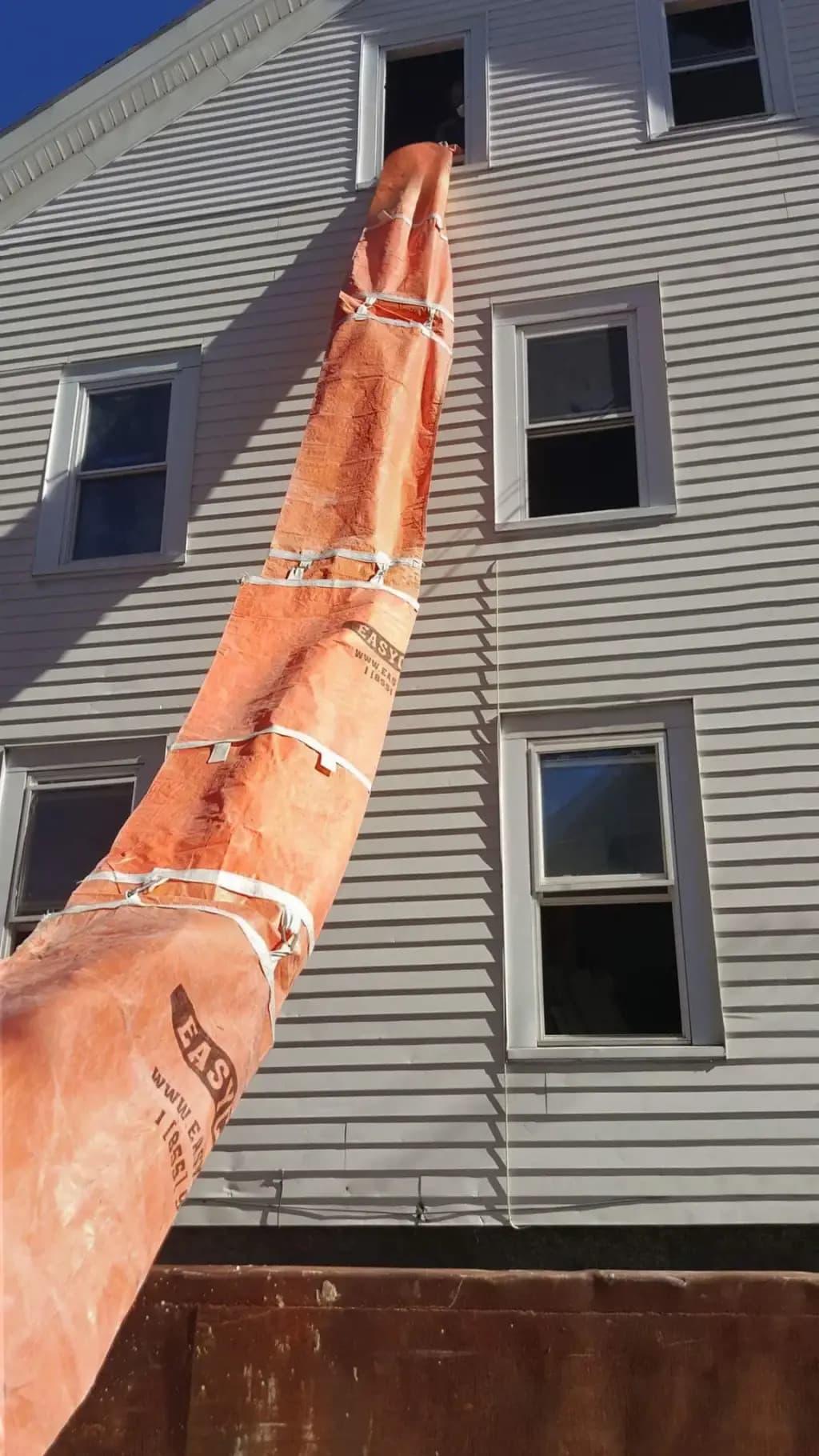
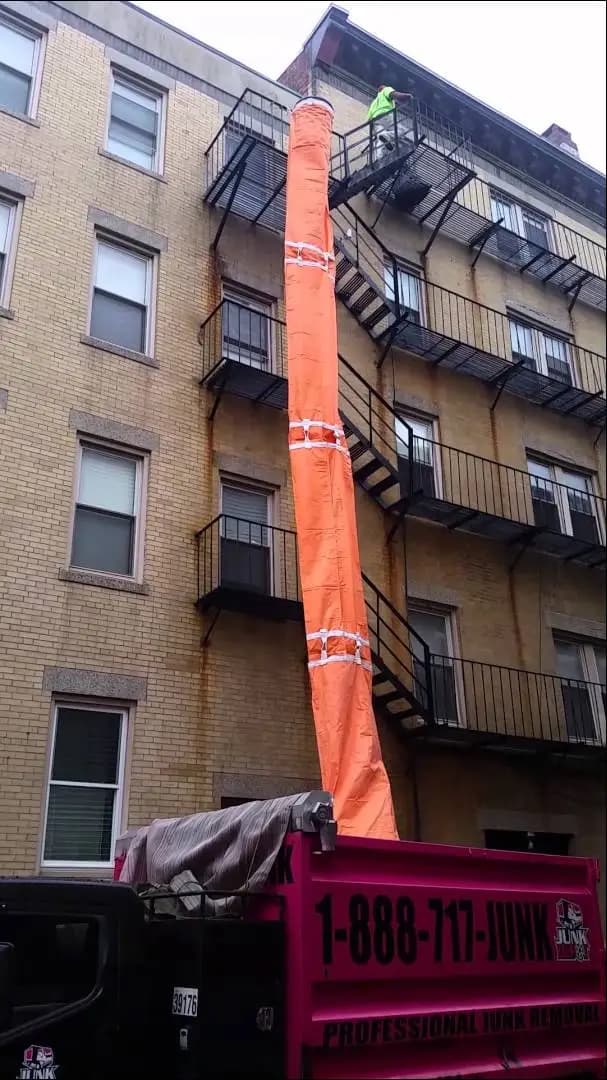
A construction or demolition debris chute — the kind described in detail on our debris chute overview page — is a temporary fabric or plastic sleeve hung on the outside of a building to channel demolition material, shingles, drywall, and waste directly into a dumpster. These chutes do not carry food waste or liquids, so they do not develop the same bacterial buildup as residential chutes. Their cleaning needs are closer to what you would do with any reusable job-site tool: knock out loose debris, rinse if needed, and store dry.
Who Searches for Trash Chute Cleaning Near Me — and Why It Matters
Understanding your own situation before you call or book a service saves time and money. Here is how to identify which category you fall into.
- Building manager or property owner: You manage a multi-story residential or commercial property with a permanent built-in chute. You likely need a professional cleaning company that specializes in vertical chute systems.
- Contractor or roofer: You own or rent a fabric or plastic debris chute for job-site use. After heavy jobs, you want to clean and store it properly before reuse.
- Junk removal operator: You run a junk removal crew and use a portable chute system to speed up pickups on multi-story jobs. Maintenance between jobs is part of your workflow.
- Building owner post-construction: A renovation just finished and you want to verify the building's permanent chute system was not contaminated or damaged during the work.
Knowing which category you are in shapes every decision that follows — the type of service you hire, the frequency you need, and the cost you can expect to pay.
How Professional Residential Chute Cleaning Works
If you manage a building with a permanent steel trash chute, here is what a professional cleaning service actually does during a standard visit.
Pre-Inspection and Access
Technicians typically start at the roof access point or the highest intake door. They inspect for visible blockages, structural damage, broken intake door hinges, and signs of pest activity. Any blockage at an upper intake door can trap debris mid-chute, creating a fire hazard and an odor source that no amount of deodorizing will fix until the blockage is cleared.
High-Pressure Washing
Industrial-grade pressure washers send hot water or steam through the chute interior from the top. The force dislodges grease, food residue, and dried organic material from the walls. Technicians at the bottom manage the runoff and confirm debris exits cleanly into the collection room. Some services use rotating nozzle heads that scrub the entire circumference of the chute as the head descends.
Sanitizing and Deodorizing
After washing, an EPA-registered sanitizing agent is applied to kill bacteria and mold. A deodorizing treatment — often enzyme-based — is applied to break down organic compounds that survive the wash cycle. This step is what actually eliminates odor rather than masking it.
Intake Door Cleaning and Lubrication
Every intake door on every floor gets wiped down, deodorized, and lubricated. These doors accumulate grease on their hinges and seals, and a sticky or misaligned intake door is one of the most common odor sources in residential buildings because it allows air (and smell) to pass back into the hallway.
Documentation and Sign-Off
Reputable services provide a written report noting what was found, what was done, and any recommended repairs. This documentation matters for building code compliance and for insurance purposes if a fire or pest issue is ever traced back to the chute system.
How Often Should a Building Chute Be Cleaned?
Frequency depends on building size, resident density, and local code requirements. As a general framework:
- High-density residential (100+ units): Every 3-4 months minimum. Many property managers in major cities schedule monthly service.
- Mid-size residential (30-100 units): Every 6 months is a common standard, with quarterly service in warmer climates where bacteria multiply faster.
- Small multi-family (under 30 units): Annual cleaning plus a mid-year inspection. If odor complaints come in, treat that as a signal to increase frequency.
- Commercial buildings (offices, hotels, hospitals): Follow local health code requirements. Hospitals and food-service buildings often require quarterly or more frequent service.
Local fire codes in many jurisdictions also specify minimum cleaning frequencies for trash chutes, since grease and debris accumulation is a recognized fire risk. OSHA's construction industry safety standards address debris management broadly, and state fire marshals often publish supplemental guidance for high-rise building chute maintenance.
What It Costs to Have a Building Chute Professionally Cleaned
Pricing varies by region, building height, chute diameter, and service scope. Here is a realistic cost framework based on typical market rates in 2026.
- Per-floor pricing: Many vendors charge per floor serviced, typically in the range of $15-$40 per floor depending on the market. A 20-story building might run $300-$800 for a standard clean.
- Flat-rate small buildings: For buildings under 10 stories, some vendors quote a flat rate starting around $200-$350 for a basic wash and deodorize.
- Premium services (steam clean, sanitize, pest treatment): These add $100-$300 to the base price but are often worth it for buildings with documented odor or pest issues.
- Service contracts: Annual contracts with quarterly or monthly visits tend to run 10-20% less per visit than one-off bookings, and they ensure you are not scrambling when a complaint comes in.
When comparing quotes, ask specifically whether intake door cleaning, documentation, and any minor hardware repairs are included in the base price. These are often billed as add-ons that can double the apparent low quote.
Finding a Reputable Trash Chute Cleaning Service in Your Area
"Near me" searches on Google surface a mix of genuine specialists, general janitorial services that have added "chute cleaning" to their service list, and some listings that do not perform the work at all. Here is how to filter for quality.
What to Look for in a Vendor
- Specific mention of high-rise or vertical chute cleaning (not just duct cleaning or pressure washing)
- References from property management companies, not just homeowners
- Proof of liability insurance and worker's compensation coverage
- Written scope of work before the visit — not just a verbal quote
- EPA-registered or compliant sanitizing products (ask for the product data sheet)
- A signed service report provided after each visit
Red Flags to Avoid
- No before/after photos or documentation offered
- No mention of intake door cleaning in the scope
- Quotes delivered only verbally with no written breakdown
- No proof of insurance when asked
- Unusually low quotes that do not reflect the floor count or building size
Trash Chute Cleaning for Construction and Demolition Sites
Now let us shift to the contractor side of this search. If you are a roofer, general contractor, or junk removal operator looking after a portable fabric debris chute, your cleaning and maintenance needs are very different — and much simpler.
Fabric debris chutes like those from EasyChute are designed for reuse across dozens of jobs. They do not carry food waste, grease, or liquids under normal use. What they collect is dry debris: shingles, drywall, wood scraps, concrete dust, insulation. That material does not breed bacteria or create odor the way residential waste does. What it does do is abrade the fabric over time if debris is allowed to cake on and sit.
Cleaning a Fabric Debris Chute After a Job
- Shake it out while hanging, before you strike it. Let gravity do the work. Most loose debris exits the bottom during normal use, but dust and small particles cling to the interior walls. A few shakes while the chute is still hung clears the majority of residue.
- Lay it flat and brush out interior. A stiff-bristle brush removes dust, insulation fibers, and drywall particles that the shake-out missed. Do this outdoors or at the dumpster edge — not in the back of a vehicle.
- Rinse with a garden hose if needed. For heavy dust jobs (concrete demolition, old insulation removal), a quick rinse with a garden hose and air-dry is sufficient. Avoid pressure washers on lightweight fabric sections — they can stress the seams over time.
- Dry completely before folding and storing. Moisture trapped in a folded chute causes mildew and shortens fabric life. Hang it over a fence or railing for 30-60 minutes in good weather before boxing it up.
- Inspect seams, loops, and overlap areas. Run your hand along each woven hanging loop and inspect the overlap connection zones. These are the high-stress points. A small tear caught early is a 5-minute repair; ignored, it becomes a safety issue on the next job.
For a visual walkthrough of how the EasyChute sections hang, connect, and strike, the EasyChute installation guide walks through every step in detail.
Why the Right Chute System Reduces Your Cleaning Overhead
The single biggest factor in how easy your chute is to clean is what it is made of. Here is how material choice affects long-term maintenance.
Woven Coated Poly Fabric
EasyChute sections use woven, coated polyethylene fabric. The coating prevents debris from embedding in the weave — material slides through and exits cleanly rather than sticking to porous inner walls. After a shingle tear-off, granules and tar paper dust exit the chute bottom without leaving significant residue. A brush-out is usually enough.
Uncoated Canvas or Felt-Interior Chutes
Some older-style construction chutes use canvas or felt-lined interiors meant to soften the impact noise of falling debris. These materials trap dust and fibers aggressively. After a heavy demolition job, they can hold pounds of residual material. For more on canvas options, see our canvas trash chute guide, which covers the trade-offs in detail.
Rigid Plastic or Steel Sections
Rigid plastic chutes are easy to rinse but heavy to handle. A single rigid section can weigh 20-30 lbs; a 30-ft setup requires a full crew just to hang and strike. The cleaning is simpler, but the total labor cost of setup, cleanup, and transport offsets that advantage on most residential or light commercial jobs. See our fabric trash chute guide for a fuller comparison of fabric versus rigid systems.
When a Debris Chute Prevents the Need for a Cleaning Service
One underappreciated argument for using a proper debris chute on renovation and demolition work is that it protects the building's permanent trash chute — if one exists — from contamination.
On renovation projects in older multi-family buildings, workers sometimes attempt to use the building's residential trash chute to move construction debris. This is a serious problem. Construction material — especially drywall dust, insulation, and broken tile — clogs compactor mechanisms, embeds in the walls of the residential chute, and can require an emergency cleaning service call that the contractor ends up paying for. Using a proper exterior construction chute eliminates that risk entirely and keeps your relationship with the building manager intact.
According to EPA data on construction and demolition debris, C&D material represents a substantial share of total solid waste generated in the United States each year. Managing that volume safely — including containing it to dedicated chutes and dumpsters — is both a regulatory expectation and a site safety standard.
Trash Chute Cleaning and Fire Safety: What Every Building Manager Must Know
Grease and organic residue inside a residential trash chute are legitimate fire hazards. Fires that start in or near a chute room travel vertically through the chute shaft quickly, exposing every floor to risk. Many local fire codes classify chute cleaning as a mandatory preventive maintenance item, not an optional service.
The intake doors on each floor also serve as fire separations — they are rated to slow the spread of fire and smoke between floors. A damaged, warped, or poorly sealing intake door fails that function. Part of a thorough chute cleaning visit should include confirming that every intake door closes and latches correctly and that the fire rating integrity is intact.
If you are a property manager wondering whether your building is in compliance, OSHA's ergonomics and safe handling guidelines provide context for safe debris management broadly, and your local fire marshal's office can clarify jurisdiction-specific chute maintenance requirements.
Portable Debris Chutes for Contractors: The Maintenance-Light Alternative
For contractors who have been renting rigid chute sections from a local supplier — paying rental fees, delivery charges, and pickup fees for every job — a reusable fabric system changes the math significantly.
EasyChute sections weigh under 3 lbs per 10-ft section. One person can carry a full 50-ft setup in a single bag. Because the fabric is coated and smooth, post-job cleanup takes minutes, not an hour of hosing down rigid panels before the rental company will accept them back. And because you own the system outright, there are no rental fees, no pickup windows to coordinate, and no surprise charges for debris stuck in the sections.
For roofing crews specifically, the roofing trash chute guide covers how to configure a chute from a roof edge down to a dumpster, including the hanging hardware and working height considerations that matter most on a typical residential tear-off. And for interior gut work where debris needs to come out of a window or floor opening, the demolition chutes guide walks through configuration options for tight urban sites.
What Happens If You Neglect Chute Cleaning
Whether you manage a residential building or operate a reusable job-site chute, deferred maintenance has predictable consequences.
For Building Managers
- Persistent odor complaints from residents on every floor — especially near intake doors
- Pest infestations as rodents and insects are drawn to organic buildup in the chute and collection room
- Mold growth inside the chute shaft, which can eventually affect air quality in adjacent spaces
- Fire code violations and potential fines during building inspections
- Compactor damage as hardened debris clogs or jams the compactor mechanism
For Contractors and Roofers
- Shortened chute life as debris left to cure on fabric walls stiffens the material and stresses seams
- Odor buildup in the storage bag or box, which transfers to the job site on the next use
- Stuck debris blocking flow mid-chute during a job, requiring someone to clear the blockage while the chute is hanging — a safety nuisance
- Missed damage that is only caught when a seam fails during a job
None of these outcomes are dramatic on their own, but all of them are preventable with a consistent 15-minute post-job maintenance routine.
How EasyChute Fits Into Your Debris Management Workflow
EasyChute was built by contractors for contractors. Tim Hogan and Leo Guarente designed the system specifically because they needed a debris chute that one person could hang, use, clean, and reuse without a production — something that could live in the back of a truck and be ready for the next job without a cleaning crew or a rental company involved.
The 10-ft sections (available in lite-duty and heavy-duty versions), 25-ft sections, and 50-ft sections connect with a simple 1.5-ft overlap. Hanging hardware is nothing more than four woven loops and a standard carabiner or quick-connect — hardware any contractor already has. The system ships free to job sites across the United States, and pricing is fixed and transparent with no rental fees or pickup charges.
To see the product in action before ordering, the EasyChute videos page shows real job-site setups, including how the sections connect and how quickly one person can strike a full 50-ft setup. For any questions before ordering, the EasyChute FAQ addresses the most common questions about capacity, compatibility, and configuration, and you can always reach the team directly through the contact page.
Frequently Asked Questions
How do I find a trash chute cleaning service near me?
Search for vendors who specifically list high-rise or vertical chute cleaning as a core service — not just general pressure washing or janitorial work. Ask for references from property management companies, request a written scope of work before the visit, and confirm that intake door cleaning and a written service report are included in the base price. Local property management associations often maintain vetted vendor lists for building services, which is a reliable starting point in most metro areas.
How often should a residential building trash chute be cleaned?
High-density buildings with more than 100 units typically need cleaning every 3-4 months. Mid-size buildings of 30-100 units can often manage on a 6-month schedule, while smaller multi-family properties may do well with annual cleaning plus a mid-year inspection. Local fire codes may mandate a minimum frequency regardless of building size, so check with your local fire marshal's office for jurisdiction-specific requirements before setting a maintenance schedule.
Can I clean a construction debris chute myself, or do I need a service?
For fabric debris chutes used in construction and demolition work, professional cleaning services are rarely necessary. A shake-out while hanging, a brush-out of the interior, and a rinse with a garden hose for heavy dust jobs is typically all that is needed. The key is drying the chute completely before folding and storing it. Professional services are only warranted for permanent residential or commercial building chutes that carry food waste and develop bacterial buildup over time.
What is the difference between a construction debris chute and a residential building trash chute?
A construction debris chute is a temporary fabric or plastic sleeve hung on the exterior of a building during a renovation or demolition project to channel dry waste into a dumpster. A residential building trash chute is a permanent steel structure built into the building's interior that residents use daily to dispose of household garbage. The two serve completely different purposes, have different maintenance needs, and require different cleaning approaches. Using a residential building chute for construction debris is a common mistake that damages compactors and voids building maintenance agreements.
What are the fire safety risks of a neglected trash chute?
Grease, food residue, and organic material that accumulates inside a permanent residential trash chute is combustible. Fires that start in or near a chute room travel rapidly upward through the shaft, exposing every floor. Additionally, intake doors on each floor act as fire separations — if they warp, fail to close, or lose their rated seal due to buildup or physical damage, they can no longer slow the spread of fire and smoke between floors. Many local fire codes classify regular chute cleaning as mandatory preventive maintenance for this reason.
How long does a professional trash chute cleaning service take?
For a standard residential building, a professional crew typically completes a full cleaning — including pressure washing, sanitizing, deodorizing, and intake door service — in 2-4 hours depending on building height and the number of floors. Buildings with significant buildup, blockages, or pest activity take longer. The crew usually works from the top floor down to the collection room, so access to the roof or upper floor utility spaces needs to be arranged in advance.
Can I use EasyChute sections at any building height?
Yes. EasyChute sections connect with a 1.5-ft overlap and can be combined to reach virtually any working height. The 10-ft, 25-ft, and 50-ft sections can be mixed and matched to match the specific drop distance on a given job. Each section hangs from four woven loops using standard carabiners or quick-connects, and the connections are designed to handle the weight and impact of construction debris without slipping. See the installation guide and videos for configuration examples at different heights.
Ready to Stop Worrying About Your Debris Chute?
If you are a contractor, roofer, or junk removal operator who wants a debris chute system that is easy to clean, easy to store, and ready for the next job without a rental company or a cleaning crew involved, EasyChute is built for exactly that workflow.
Browse the full product lineup, read the specs, and place your order directly at EasyChute.com — fixed pricing, free shipping to your job site, and no rental clock ticking. For questions about which section lengths are right for your typical jobs, visit the EasyChute FAQ or reach out through the contact page and get a straight answer from the people who built the system.