
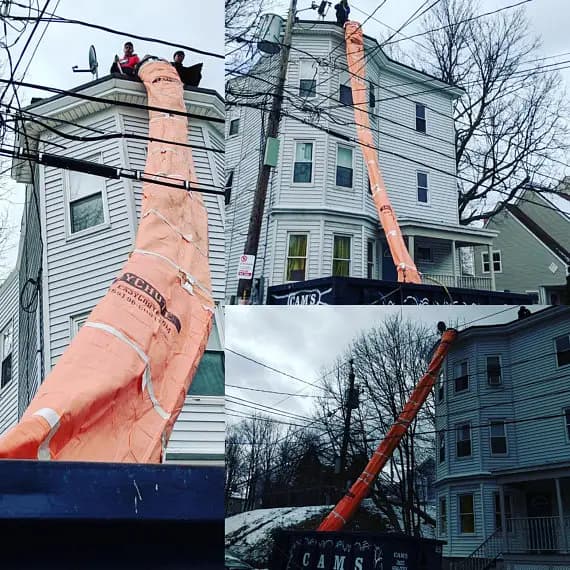
You landed your first real demolition or renovation job somewhere in New Jersey — maybe a gut rehab in Hoboken, a roofing tear-off in Toms River, or a multi-room renovation in Cherry Hill. The debris is piling up, the dumpster is on the street below, and someone on the crew mentions a debris chute. You've seen them on job sites before, but you've never set one up yourself.
This guide is for you. We'll walk through everything a first-time contractor in New Jersey needs to know about debris chutes — what they are, what gear to buy, how to hang one correctly, how to stay on the right side of OSHA, and how to get debris moving safely from an upper floor to the dumpster below without injuring your crew or your neighbors.
By the time you finish reading, you'll be able to set up your first debris chute faster than most experienced crews — because you'll understand the why behind every step, not just the mechanical motions.
Why Debris Chutes Matter More in New Jersey Than Almost Anywhere Else
New Jersey is one of the densest construction markets in the United States. Contractors here deal with tight urban lots in Jersey City and Newark, narrow residential streets in Montclair and Summit, beachfront properties in Asbury Park, and everything in between. Space is almost always at a premium.
That tight-site reality makes debris management a genuine safety and logistical problem. Carrying demolition waste down staircases by hand isn't just slow — it's physically punishing, and OSHA's ergonomics guidelines are clear that repetitive lifting of heavy loads is a primary driver of musculoskeletal injuries on construction sites. A debris chute eliminates that exposure by letting gravity do the heavy lifting.
Beyond worker safety, throwing debris from windows or roof edges without a chute creates flying hazards for pedestrians and neighboring properties — something municipal building inspectors in New Jersey actively look for and cite. A properly installed chute keeps debris contained from opening to dumpster.
What Is a Debris Chute, Exactly?
A debris chute is a connected series of tube-shaped sections — made from rigid plastic, metal, or flexible fabric — that channels construction waste downward from a window, roof edge, or scaffold opening directly into a dumpster or collection bin below. Think of it as a contained slide for rubble, shingles, drywall, and anything else your demolition generates.
Rigid vs. Fabric Chutes
Traditional rigid plastic chute systems are what most people picture from large commercial construction sites. They're effective but heavy, expensive, and slow to assemble. Each section can weigh 15 to 30 lbs, requiring multiple workers to hang and connect them.
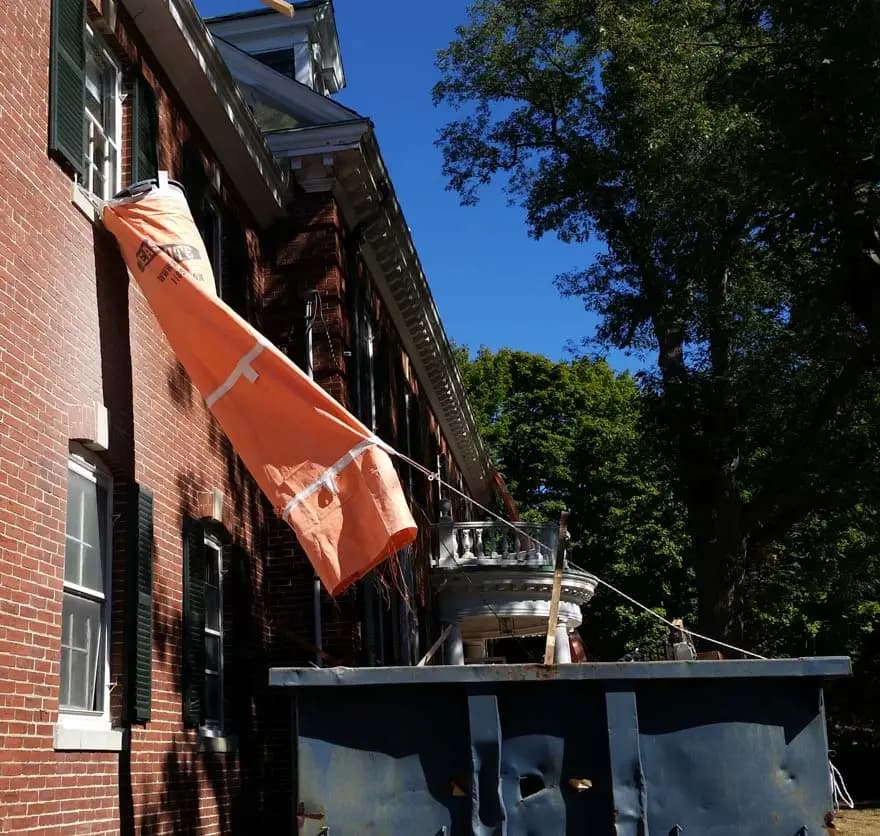
Modern fabric trash chutes solve those problems. EasyChute's sections are made from woven, coated poly fabric — a 10 ft section weighs under 3 lbs and folds into a box small enough to fit in the back of a pickup or van. One person can carry the entire chute for a typical two-story job site. That portability is a major advantage on New Jersey job sites where parking and staging space are often severely limited.
Section Lengths and When to Use Each
- 10 ft sections (lite-duty and heavy-duty): The most flexible option. Stack as many as you need. Perfect for roofing tear-offs, single-story windows, or as the bottom section funneling into the dumpster.
- 25 ft sections: Covers a two-to-three story drop in a single piece. Good for mid-rise residential rehabs common in Essex and Hudson Counties.
- 50 ft sections: Ideal for taller buildings — four to five stories. If you're working on a mid-rise in Hoboken or a multi-family building in Paterson, a 50 ft section reduces connection points and speeds up setup.
Sections connect with a 1.5 ft overlap, so if you need to reach 35 ft, combine a 25 ft and a 10 ft section and they'll meet with a solid overlap that keeps debris moving in a straight line.
Tools and Hardware You'll Need Before You Start
One of the biggest mistakes first-time contractors make is showing up to hang a chute without the right hardware. Here's your pre-job checklist:
- Carabiners or quick-connect clips: EasyChute sections hang from four woven loops. Standard locking carabiners work perfectly. Buy a 10-pack so you have extras.
- Rope or nylon webbing: You'll tie off the top section to a structural anchor point — a scaffold rail, a window frame anchor, a roof edge bracket, or a roof jack. Bring at least 20 ft of utility rope per top section.
- Work gloves: Fabric edges are smooth, but carabiners and rope can be unforgiving on bare hands during setup.
- A helper for initial hang: While one person can manage the job solo once the chute is up, having a second set of hands during the initial hang makes it faster and safer, especially at height.
- Dumpster placement confirmation: Before you hang anything, confirm the dumpster is positioned directly below the exit point of the chute. Even a 2 ft misalignment can send debris sideways at the bottom.
What You Don't Need
You do not need power tools, specialized brackets, or any proprietary mounting hardware to hang an EasyChute. The simplicity is intentional — the system was designed by Tim Hogan and Leo Guarente, both working contractors themselves, who wanted something a solo operator could deploy without calling for extra hands.
Step-by-Step: How to Set Up Your First Debris Chute
The following sequence works for a typical two-to-three story residential renovation or roofing job in New Jersey. If your situation involves scaffolding, skip to the scaffold-specific notes below.
Step 1 — Measure the Drop
Stand at the window or roof edge where the chute will exit and estimate the vertical distance to the top of the dumpster. Add 2 to 3 ft of clearance so the bottom of the chute opens cleanly above the dumpster lip without touching. If the distance is 22 ft, you need at least 25 ft of chute sections connected together.
Step 2 — Identify Your Anchor Point
The top section of the chute must be tied to something structurally solid. Common options on New Jersey job sites include:
- A roof jack secured to the roof deck
- A scaffold crossbar or horizontal brace
- A structural window frame or header with a rope looped through and knotted behind it
- A temporary rigging point attached to a wall stud through the rough opening
Never anchor to a loose piece of trim, an unsecured plywood panel, or anything that would move under a few hundred pounds of dynamic load from cascading debris.
Step 3 — Hang the Top Section First
Clip two of the four woven loops on the top of the chute to your anchor point with carabiners. Use the remaining two loops for redundant tie-off with rope back to your structural anchor. The chute should hang vertically with no significant lateral lean. If it's leaning, adjust your rope lengths.
Step 4 — Connect Additional Sections
Slide the top of the next section up into the bottom of the first section, maintaining the 1.5 ft overlap. The inner section's fabric will nest naturally inside the outer section due to the tube geometry. You don't need clamps or tape — the overlap and gravity keep them together under normal use.
Step 5 — Confirm Bottom Alignment
Have your helper look up from street level while you drop a small piece of scrap through the chute from the top. Watch where it exits. If it's landing outside the dumpster, adjust the dumpster position (always easier than re-hanging the chute) or add a bottom guide rope to angle the final few feet.
Step 6 — Test Load Before Full Use
Push through a medium-weight piece of debris — a chunk of drywall or a few shingles — before you open the floodgates. Watch the chute for any unexpected twisting, sections separating, or anchor points shifting. Fix anything that moves before your crew starts pushing full loads.
For a visual walkthrough of the entire process, check the step-by-step EasyChute installation guide and browse EasyChute's video library to see it in action on real job sites.
OSHA Compliance: What First-Time Contractors in New Jersey Must Know
New Jersey follows federal OSHA construction industry standards, with the New Jersey Department of Labor and Workforce Development administering the state plan. When it comes to debris chutes, there are several compliance points that matter on a real job site.
Chute Opening Guarding
OSHA requires that any opening in a floor, wall, or roof edge through which a chute passes must be properly guarded to prevent workers from falling through or into the opening. If you're using a window rough opening as your chute exit point, install a temporary guardrail or barricade around the perimeter of that opening when workers are near it. This applies whether you're on the first floor or the tenth.
Debris Below — Exclusion Zones
The area directly below and around the dumpster must be barricaded from pedestrian and vehicle traffic during chute operations. Flying or bouncing debris at the bottom of a chute is a real hazard. Standard practice is to establish an exclusion zone of at least 6 ft around the dumpster perimeter and post visible signage on a New Jersey street-facing job site. Some municipalities require flaggers during active debris loading if the work is adjacent to a sidewalk.
Chute Structural Integrity
OSHA's standards for temporary structures require that any rigging used to hang a chute be rated for the loads it will bear. This isn't just regulatory box-checking — an anchor failure on a loaded chute can send 50 to 100 lbs of debris in a sudden uncontrolled drop. Use carabiners and rope with working load limits well above your anticipated debris load per drop cycle.
Common Mistakes First-Time Contractors Make (and How to Avoid Them)
Even experienced contractors who are new to debris chutes make the same handful of errors on their first setup. Here's what to watch for:
- Underestimating the drop distance: Always add 2 to 3 ft to your measurement. Coming up 2 ft short means your bottom section is hitting the dumpster sidewall instead of opening above it.
- Anchoring to lightweight framing: A window header made from doubled 2x4s is not the same as a structural LVL beam. When in doubt, run your rope back to a roof jack or scaffold steel.
- Loading too fast at the top: Pouring 40 lbs of shingle debris in at once creates a pressure wave that can pop sections apart at the overlap. Steady, controlled loading keeps sections seated and reduces chute movement.
- Skipping the bottom alignment check: This is the most common and most embarrassing first-time mistake. Run the test drop before your crew commits to full-speed loading.
- Not tying off the bottom: On windy New Jersey days — especially coastal and waterfront sites — the bottom of an unsecured chute can swing wide. A light guide rope from the bottom of the chute to the dumpster rim solves this.
- Using the wrong section lengths: Ordering all 10 ft sections when you're on a 40 ft drop just creates four connection points that could have been two. Match your section lengths to your most common job heights.
Choosing the Right Chute for New Jersey Job Site Types
New Jersey's construction landscape is unusually varied — from Victorian-era Victorians in Cape May to 1960s mid-rises in Union City to modern commercial builds in Edison. The right chute configuration depends on where you're working.
Residential Roofing Jobs (1-2 Stories)
Most residential roofing tear-offs in central and south Jersey — think Ocean County, Monmouth County, Burlington County — involve drops of 15 to 25 ft. Two 10 ft sections or a single 25 ft section is typically enough. The roofing trash chute guide has specific guidance on anchoring to roof edges without damaging the structure.
Gut Rehabs in Urban Walk-Ups (2-4 Stories)
Row houses and older apartment buildings in Newark, Trenton, and New Brunswick often present 30 to 45 ft drops from the upper floors to street level. A 25 ft plus 10 ft combination, or a single 50 ft section, is the right choice. These are also the job sites where demolition chute selection matters most — you're moving heavy demo waste like plaster, lath, cast-iron pipe, and masonry fragments, so heavy-duty fabric sections outperform lite-duty on volume loads.
Junk Removal and Light Demo
If you're running a junk removal operation or doing light interior work — furniture removal, carpet tear-out, light drywall — lite-duty 10 ft sections are perfectly adequate and give you maximum flexibility to stack and reconfigure on the fly. The low weight of EasyChute sections means your crew isn't exhausted from setup before the actual work starts.
How to Strike (Take Down) a Debris Chute Fast
Job sites in New Jersey — especially urban lots in Hudson County or Essex County — often need to have the chute down before end of day if the dumpster sits on a metered street or in a no-overnight-parking zone. EasyChute's fabric design makes strike incredibly fast.
- Clear any remaining debris from inside the chute by running a final load through.
- Unclip the bottom sections first, pulling each inward and folding as you go. One person can walk the chute up section by section from the bottom while another holds tension at the top anchor.
- Once all sections are disconnected, unclip the top anchor carabiners, coil the rope, and fold the top section.
- Each section folds into a compact rectangle that fits back in its original box or a standard gear bag.
- Wipe down sections with a dry rag if heavily loaded with dust — fabric cleans easily and dries fast, so the same chute is ready for tomorrow's job.
A two-person crew can strike a 30 ft chute in under 10 minutes. That's a significant operational advantage over rigid plastic systems, which can take 45 minutes or longer to disassemble, clean, and stack on a truck.
Debris Disposal and Environmental Compliance in New Jersey
Getting debris into the dumpster is only half the job. New Jersey has specific rules around construction and demolition (C&D) debris disposal that every contractor should understand from day one.
The EPA estimates that construction and demolition debris accounts for more than twice the volume of municipal solid waste in the United States. New Jersey's Department of Environmental Protection enforces separate requirements for certain material types, including asbestos-containing materials, treated wood, and certain masonry products from pre-1980 buildings.
Key compliance points for NJ contractors:
- Asbestos: Any demolition of pre-1980 structures requires a licensed asbestos survey before work begins. Asbestos-containing materials cannot be loaded into a standard debris chute — they require licensed abatement and segregated disposal.
- Lead paint: Renovation, repair, and painting (RRP) rules apply to pre-1978 structures. Lead-paint dust must not be released into chute airflow in a way that creates off-site contamination.
- Recyclable materials: New Jersey actively promotes diversion of clean concrete, metal, and wood from landfill. Sorting these materials before they go down the chute can reduce disposal costs significantly.
For general guidance on sustainable debris handling, the EPA's recycling resources provide a solid foundation for building a material diversion habit into your workflow from the start.
Debris Chute Safety Culture: Building Good Habits from Job One
The technical setup of a debris chute is straightforward. The harder part for first-time contractors is building the safety habits that prevent the one-in-a-hundred incident that gets someone hurt or gets your site shut down.
Brief Your Crew Before Every Setup
Even if the person next to you has hung a hundred chutes, run a 90-second verbal brief before each new setup. Cover: anchor point, exclusion zone below, loading protocol, and who's responsible for checking the bottom alignment. It takes less time than a coffee break and prevents the casual oversights that cause incidents.
Never Load While Someone Is Below
This sounds obvious, but on a busy multi-trade job site in New Jersey — especially in the middle of a big gut rehab — it's easy for a sub to wander into the exclusion zone without warning. Put a designated person at the bottom to manage the zone whenever the chute is active, and use a simple hand-signal or radio protocol between top and bottom before any load goes in.
Inspect the Chute Daily
Fabric chutes are durable, but they're not indestructible. Run a quick visual inspection at the start of each day: check the woven loops for fraying, look at the overlap connections for any signs of section separation under load, and confirm the anchor point hardware hasn't shifted overnight (especially after wind or rain).
Renting vs. Buying a Debris Chute for Your First NJ Job
Many first-time contractors search for debris chute rentals before they realize that the economics almost always favor buying a fabric chute outright. Here's why:
- Rental costs add up fast: Rental rates for rigid debris chutes in the Northeast typically run $200 to $600 per week depending on length and supplier. A single two-week renovation job can cost you $400 to $1,200 in rental fees alone.
- EasyChute ships free: With free shipping to job sites across the United States, your EasyChute arrives ready to work without a delivery fee on top of the rental price.
- Reuse it job after job: A fabric chute that weighs under 3 lbs per 10 ft section gets reused on every future project. After two or three jobs, it's paid for itself entirely compared to renting.
- No return logistics: At the end of a rental period, you're coordinating pickup with a supplier while trying to close out a job. With an owned chute, you fold it, bag it, and it's ready for the next call.
For more context on local cost dynamics, the debris chute rental cost guide for the Northeast breaks down the numbers in detail — the patterns are consistent across the region.
What Makes EasyChute the Right Choice for New Jersey Contractors
EasyChute was built by working contractors — Tim Hogan, a Massachusetts contractor, and Leo Guarente, a junk removal business owner — who were frustrated with debris management options that were too heavy, too expensive, or too complicated for real job site use. The result is a system designed around the actual constraints of field work.
- Lightweight and packable: A full 50 ft chute setup that covers a five-story drop fits in the back of a pickup bed with room to spare. No dedicated equipment trailer needed.
- One-person setup: You can hang, connect, and confirm a 25 ft chute in under 15 minutes working alone. That matters on solo or small-crew residential jobs across New Jersey's suburbs.
- Fixed online pricing with free shipping: No quote process, no negotiation, no delivery fee. Order online, ship to the job site address, and the chute arrives ready to hang.
- Reusable construction: The woven, coated poly fabric is built for repeated use in dusty, wet, and abrasive debris environments. Clean it, fold it, and it goes job after job.
Explore the canvas and fabric chute options in detail, or head to the EasyChute FAQ if you have specific questions about sizing, shipping, or which section is right for your job type.
Frequently Asked Questions
How long does it take to set up a debris chute for the first time?
For a first-time contractor with a helper, expect 20 to 30 minutes for initial setup on a two-to-three story job. That includes measuring the drop, identifying the anchor point, hanging and connecting sections, and confirming bottom alignment with a test drop. By your second or third job, the same setup typically takes 10 to 15 minutes. The EasyChute's lightweight fabric sections make the physical part of the job significantly faster than rigid plastic alternatives.
Do I need a permit to use a debris chute in New Jersey?
Most municipalities in New Jersey require a permit for the dumpster placement itself, not specifically for the chute. However, if the chute extends over a sidewalk, street right-of-way, or any public area, you may need an additional encroachment or scaffolding permit depending on the town. Always check with the local building department before your first job in a new municipality. Urban areas like Jersey City, Newark, and Hoboken tend to have more specific requirements than suburban or rural towns.
What size debris chute do I need for a typical New Jersey ranch house roofing job?
A standard ranch house in New Jersey has an eave height of roughly 10 to 14 ft. Add the distance from the eave to the top of the dumpster, and most roofing jobs need 15 to 20 ft of chute. Two 10 ft sections connected with a 1.5 ft overlap gives you an effective drop length of about 18.5 ft, which covers the vast majority of single-story and ranch-style roofing tear-offs. For a cape or two-story colonial, step up to a 25 ft section or three 10 ft sections.
Can one person hang an EasyChute alone?
Yes. EasyChute sections weigh under 3 lbs per 10 ft, so carrying and positioning sections at a window or roof edge is entirely manageable solo. The four woven hanging loops clip to carabiners or quick-connects that one person can attach from inside the building or from a secure roof position. That said, having a second person on the ground to confirm dumpster alignment during the test drop is always a smart move, especially on your first few setups.
What debris can and cannot go through a fabric chute?
Fabric chutes handle the full range of typical construction and renovation debris: shingles, drywall, plaster, light masonry, wood framing scraps, insulation, carpeting, and general interior demo waste. What you should not send through any chute: asbestos-containing materials (which require licensed abatement), large concrete blocks or slabs that exceed the chute's diameter, and sharp structural steel members that could puncture or tear the fabric wall. For heavy demo with large masonry, break material down to manageable pieces before loading.
Is a debris chute required by OSHA on New Jersey job sites?
OSHA does not specifically mandate debris chutes on all construction sites. However, OSHA's construction safety standards prohibit throwing or dropping materials from heights in a way that creates a hazard for workers or the public below. Using a debris chute is the standard method of complying with that requirement. Additionally, many New Jersey municipal building departments and general contractors require chutes in their project specifications or site safety plans, particularly in densely developed areas.
How do I keep the chute from swinging on windy days?
Wind is a real factor on New Jersey coastal and elevated job sites. The most effective fix is a light guide rope or bungee cord running from the bottom of the chute's lowest section to the dumpster rim or a stake in the ground nearby. This restrains lateral swing without restricting debris flow. On extremely windy days, consider temporarily pausing chute operations until conditions settle — an unsecured 50 ft chute in high winds can create a hazard for people below even with an exclusion zone in place.
Ready to Set Up Your First Debris Chute?
You've got the knowledge — now it's time to get the gear. EasyChute ships free to job sites across New Jersey, with 10 ft, 25 ft, and 50 ft sections available to mix and match for any drop height. Order online at fixed prices with no quote process, and your chute arrives ready to hang.
If you want to dig deeper before you buy, the construction chute guide covers how contractors across job types use chutes to protect their crews and speed up their work. The installation guide gives you the full visual walkthrough. And if you have a specific question about your New Jersey job, reach out directly — the people behind EasyChute are contractors themselves and they'll give you a straight answer.
Demo it. Bag it. Chute it. Your first setup is closer than you think.