
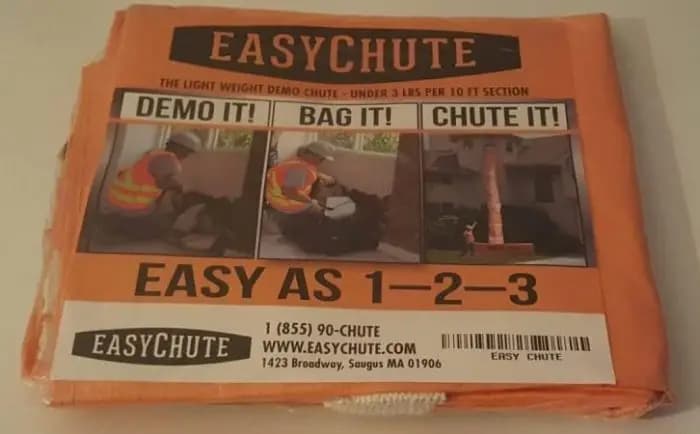
Vermont family renovation projects have a character all their own. Whether you're stripping a 1920s colonial in Montpelier, gutting a lake house in Burlington's South End, or renovating a farmhouse in Woodstock, the debris problem is always the same: you've got shingles, drywall, old flooring, and insulation to move from upper floors to a dumpster below — and you need to do it without destroying the yard, the garden, the front porch railings, or anyone's back.
That's exactly where a lightweight fabric debris chute earns its keep. This guide covers everything a Vermont contractor or family renovation crew needs to know about debris chute setup — from choosing the right length to hanging a chute safely off a window in a two-story colonial while your client's kids are still using the driveway.
Why Vermont Family Renovations Are a Debris Chute Sweet Spot
Vermont homes skew older. Burlington, Montpelier, Barre, Rutland — the housing stock in these communities is loaded with pre-1960 construction: plank subfloors, horsehair plaster, old-growth framing, and multiple layers of shingles on steep-pitch roofs. When families renovate these homes, the debris volumes are substantial and the material is heavy.
At the same time, Vermont renovation sites tend to be tighter on logistics than big-city job sites. You're often dealing with:
- A narrow driveway shared with the homeowner's vehicles
- Mature landscaping that the family specifically asked you not to damage
- Children or elderly parents still living in part of the home during the renovation
- Neighbors close enough that flying debris or repeated wheelbarrow trips become a genuine community relations issue
A fabric trash chute solves almost all of these constraints at once. Debris drops straight down into a dumpster positioned at the base of the building — no wheelbarrows through the living room, no bucket brigades on the staircase, no debris scattered across the lawn.
Understanding Debris Chute Sections: Which Length Do You Need?
EasyChute's modular system comes in 10 ft, 25 ft, and 50 ft sections. They connect with a 1.5 ft overlap, which means you can stack them to match virtually any building height. Here's how to think through section selection for a typical Vermont renovation:
Single-Story Roof Access (8–12 ft)
A single 10 ft section is usually enough when you're working off a first-floor roofline — common on Vermont ell additions, mudroom roofs, or single-story garage conversions. At under 3 lbs per 10 ft section, one person can hang it in minutes off a standard window opening or roof edge using carabiners through the woven corner loops.
Two-Story Colonial (18–24 ft)
The classic Vermont two-story colonial puts second-floor windows at roughly 18 to 22 ft above grade. Two 10 ft sections connected with a 1.5 ft overlap gets you there. For attic gut jobs on a full two-story, consider adding a third 10 ft section to make sure the chute's exit clears the dumpster lid cleanly.
Three-Story Victorian or Multi-Unit (28–36 ft)
Barre and Burlington both have Victorian-era multi-family homes with significant height. A 25 ft section plus a 10 ft section gives you approximately 33.5 ft of effective drop — enough to work from third-floor windows on most Vermont residential stock. The 50 ft section is best reserved for commercial or four-plus-story work.
Stacking Mixed Sections
One of the most practical features of the EasyChute system is that all sections connect to each other regardless of length. If you have a 25 ft and a 10 ft on the truck, you can configure 33.5 ft of chute for one job and redeploy just the 25 ft on the next job in the same day. See the step-by-step installation guide for connection details.
Site Assessment: What to Check Before You Hang a Chute in Vermont
Spending five minutes on a proper site walk-around before setup will save you an hour of repositioning. Here's what to look for on a Vermont family renovation site specifically:
Dumpster Placement
Vermont municipal rules on dumpster placement vary by town. Burlington has specific street-use permit requirements; smaller towns like St. Johnsbury may be more flexible. Either way, your dumpster should be as close to the building foundation as possible, directly below the window or roof edge you're chuting from. Offset placement means debris doesn't land clean — it hits the rim and scatters.
- Aim for the center-third of the dumpster's length
- Confirm the chute exit sits 2–4 ft above the dumpster's open top
- If dumpster placement is street-side, verify local permit requirements before the dumpster arrives
Window or Anchor Point Selection
Not every window makes a good chute anchor. For EasyChute's loop-and-carabiner system, you need something solid within reach of the loops — a window buck, a roof edge, scaffold tubing, or a purpose-built anchor board wedged in the opening. On Vermont farmhouses with true divided-light windows, be careful: older window frames can be fragile. A simple 2x6 anchor board across the opening distributes load far better than relying on the window frame itself.
Ground Obstacles
Vermont renovation clients love their gardens. Walk the drop zone and confirm there are no:
- Garden beds or landscaping inside the debris fall radius
- Basement window wells that a dumpster could block
- Electrical service entrances directly below the planned drop point
- Pets, play equipment, or outdoor furniture that hasn't been moved yet
Weather Considerations
Vermont weather is real. Even in summer, afternoon thunderstorms roll in fast. Fabric chutes handle rain fine — the coated poly sheds water — but high winds are a different story. If you're working during a breezy Vermont fall day and the chute is unloaded, it can swing. Keep it weighted at the top while in use and consider a simple guide rope near the bottom in sustained winds over 20 mph.
Step-by-Step Debris Chute Setup for a Vermont Family Renovation
Here's a practical field-level setup sequence refined for Vermont conditions and family-occupied job sites specifically:
- Position the dumpster first. Nothing else matters until the dumpster is exactly where you need it. Work with your roll-off company to confirm placement before they set it — moving a full dumpster is a half-day problem.
- Measure your drop height. Count floor heights from the drop window to the dumpster top. Vermont two-stories typically run 18–22 ft. Add a section if you're uncertain — excess chute length at the bottom is easier to manage than a chute that falls short of the dumpster opening.
- Assemble sections on the ground. Lay out your sections and connect them before hanging. Overlap each connection by 1.5 ft, confirm all connection points are snug, and thread the bottom section so its exit opening faces the dumpster.
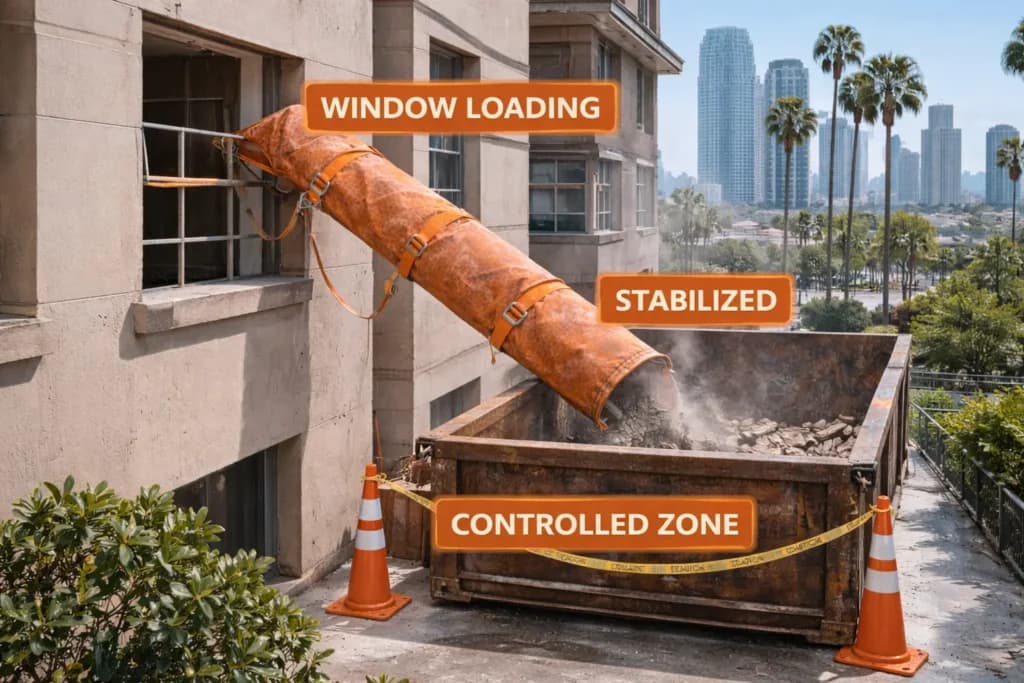
- Install the anchor at the top opening. Place your 2x6 or anchor board across the window opening. Run the carabiners from the chute's top four woven loops through the anchor hardware. Clip securely and tug-test before loading.
- Lower the chute from the window. Feed it out the opening and let gravity unroll it toward the dumpster. Have a second person at ground level to guide the bottom into position above the dumpster opening.
- Verify alignment from both levels. Look down from above — does the bottom of the chute sit cleanly above the dumpster center? Walk down and confirm from ground level. Adjust anchor position if needed.
- Brief everyone on the loading protocol. On family renovation sites, communication matters. Everyone feeding debris into the top of the chute needs to know not to overload it and not to drop large rigid pieces (like full sheets of drywall) end-first. Break large pieces before loading.
For a visual walkthrough, the EasyChute video library shows real job site installs that mirror the conditions you'll encounter on a Vermont renovation.
Loading the Chute: Materials Common on Vermont Renovation Sites
Vermont homes generate a distinctive mix of renovation debris. Here's how to handle the most common materials through a fabric chute:
Old Roof Shingles
Three-tab asphalt shingles and older wood shingles are the bread-and-butter of Vermont roofing tear-offs. Shingles load beautifully through a fabric chute — they're flat, they flow, and they clear the chute fast. Avoid bundling more than an armful at once into the top opening, as large clumps can momentarily jam against the chute wall and create pressure on the fabric. For roofing-specific setup tips, see the full roofing trash chute guide.
Plaster and Lath
Pre-1940 Vermont homes are loaded with horsehair plaster over wood lath. This material is dense and chunky. Break lath strips before loading — full 4 ft strips laid crosswise will bridge the chute opening and cause a plug. Loose plaster chunks under 12 inches flow well. Bucket the dense plaster rubble rather than trying to push large chunks through.
Old Insulation
Blown cellulose and old batt insulation are lightweight and move through a chute easily, but they generate significant dust. On family-occupied sites, consider a quick tarp across the dumpster opening to reduce dust scatter at the bottom. According to the EPA, construction and demolition debris — including insulation and drywall — represents a significant portion of total US solid waste, making proper containment both a jobsite and environmental priority.
Drywall and Subflooring
Sheet goods need to be broken down before they enter the chute. A full 4x8 sheet of drywall slid into a 10-inch-diameter chute will not end well. Score and snap drywall into pieces no wider than 18 inches. Plywood and OSB subfloor panels should be cut or broken similarly. The chute handles the volume; your demo work handles the sizing.
Flooring Materials
Old hardwood strips, vinyl tile, and ceramic tile all chute well when broken into manageable pieces. Avoid loading long strips of hardwood lengthwise — they'll jam. Stack them short-side-first or break them down. Ceramic tile in small chunks flows cleanly and fast.
Safety Standards and Why They Matter on a Family Job Site
When a family is still living in part of the home — which is common on Vermont renovation projects — the safety stakes are higher than on a vacant commercial site. A debris chute is itself a safety tool, but it needs to be deployed correctly to deliver that benefit.
OSHA's construction safety guidelines emphasize controlled debris removal as a core component of maintaining a safe work zone. Bucket brigades down staircases, workers carrying heavy loads through occupied living areas, and debris tossed from upper floors without a chute all create injury exposure that a properly hung chute eliminates entirely.
Specific safety practices for family-occupied Vermont renovation sites:
- Tape off the dumpster zone at ground level so occupants and visitors can't walk under the chute while it's being loaded
- Never leave the chute hanging unattended and loaded — debris can shift and fall if the chute shifts position
- Brief the homeowner on the loading and strike schedule so they know when the drop zone is active
- Follow OSHA ergonomics guidelines for the workers feeding the chute — even with a chute in place, repetitive loading of heavy debris is a strain-injury risk; use proper lifting technique and rotate loading duties
How a Debris Chute Protects Vermont Properties During Renovation
One of the most underappreciated benefits of a debris chute on a Vermont family renovation is property protection. Vermont clients take their landscaping seriously — stone walls, perennial gardens, mature maples, and heritage apple trees are common features on older Vermont properties. These are not replaceable mid-project.
When debris is thrown or walked out without a chute:
- Lawn and garden beds get compacted by repeated wheelbarrow traffic
- Plantings get crushed by material that lands outside the dumpster
- Walkways, decks, and porches become debris highways that increase trip-hazard exposure
- The homeowner sees the collateral damage and it affects the relationship — even if the renovation itself goes perfectly
A debris chute keeps everything vertical. Debris goes up, over, and down — directly into the box. The lawn stays intact, the garden survives, and you don't spend your last afternoon on-site repairing landscaping you accidentally destroyed.
This is especially relevant in historic Vermont neighborhoods where the landscaping around an older home is considered part of the property's character and value. For more on how chute setup protects occupied renovation sites, see the family renovation debris chute guide for Rhode Island — many of the same dynamics apply across New England.
Chute Placement on Common Vermont Home Types
New England Colonials and Capes
The gable-end window on a Cape or Colonial is often the ideal anchor point for a debris chute. It's high, accessible from the interior, and positions the chute drop directly over the driveway or side yard where your dumpster sits. If the gable window is narrow, an anchor board across the frame works well. The construction chute guide covers anchor board setup in detail.
Vermont Farmhouses with Ells
Many Vermont farmhouses have a connected sequence of structures — main house, ell, woodshed, barn — each at different heights. The ell roofline is often the most practical drop point because it's lower (easier to hang a shorter chute) and positions the dumpster away from the main driveway. A single 10 ft or 25 ft section typically covers ell roof heights.
Lake House and Camp Renovations
Lake Champlain and Vermont's Northeast Kingdom are full of seasonal camps being converted to year-round homes — a renovation type that generates heavy debris volumes from insulation upgrades, foundation work, and full gut interiors. These structures are often on sloped lots, which complicates dumpster placement. On sloped sites, position the dumpster on the uphill side of the building if possible so the chute can run from a lower relative window height.
Multi-Family Victorian in Burlington or Barre
These buildings are tall, dense, and often in tight urban settings where debris management is a neighbor relations issue as much as a logistics one. A chute keeps the work contained, reduces noise from repeated staircase trips, and makes the job look professional to the neighbors watching from across the street. See how similar chute considerations apply in urban settings with the debris chute setup guide for New York contractors.
Avoiding Common Setup Mistakes on Vermont Renovation Sites
These are the mistakes that show up most often when crews set up debris chutes for the first time on a Vermont family renovation:
Mistake 1: Placing the Dumpster Too Far from the Building
Dumpster drivers have their own preferences for placement. If you're not specific, they'll put it wherever is easiest for the truck — which is often too far from the wall. The chute exit ends up 6 ft above and 4 ft away from the opening, debris hits the rim, and you have a mess. Mark your dumpster location with chalk or cones before the truck arrives and confirm with the driver before they set it.
Mistake 2: Insufficient Section Length
Measure first. It seems obvious, but crews regularly hang a chute and discover it's 3 ft short of the dumpster opening. Add a section — it takes five minutes to connect and saves a full day of awkward debris redirection.
Mistake 3: Weak Anchor Points
The chute itself is light, but loaded with debris it can carry significant impulse loads. A carabiner clipped to a rotted window frame or a crumbling brick sill is not a safe anchor. Inspect anchor points and reinforce with an anchor board across the opening when in doubt.
Mistake 4: Overloading Large Debris Pieces
The chute has a diameter. Pieces wider than the opening won't fit and jamming them will stress the fabric. Break your demo material down to chute-compatible dimensions before it reaches the loading point. This is a workflow issue, not a chute issue — build the breakdown step into your demo sequence.
Mistake 5: Forgetting to Brief the Homeowner
On a family renovation site, the homeowner or their family members may be curious, helpful, or simply walking through the work zone. Brief them on where not to stand when the chute is active, and when you'll be loading versus when the zone is clear. This is a simple professional courtesy that also significantly reduces liability exposure.
Reusing Your Chute Across Multiple Vermont Jobs
EasyChute sections are built for reuse. The woven, coated poly fabric is designed to handle repeated loading of abrasive materials — shingles, plaster, tile — job after job. After each use:
- Shake out any residual debris from the interior of each section
- Inspect the loops and connection zones for wear or damage
- Fold or roll the sections and store them in the original box or a simple contractor bag
- Keep carabiners with the chute kit so nothing gets separated between jobs
At under 3 lbs per 10 ft section, the entire chute kit fits in the bed of a pickup or the back of a cargo van with zero meaningful storage footprint. Vermont contractors doing kitchen gut jobs in the morning and roofing tear-offs in the afternoon can run the same chute sections on both jobs the same day.
This reusability is also an environmental benefit worth noting: a fabric chute that gets reused across dozens of jobs represents far less material waste than disposable alternatives. The EPA's recycling and waste-reduction guidance consistently emphasizes reusable equipment as a preferred approach over single-use disposable options in professional settings.
Ordering and Shipping to Vermont Job Sites
EasyChute ships free to job sites across the United States, including every Vermont zip code — from Burlington to Brattleboro, St. Albans to Springfield. You order at fixed online prices, and the sections ship direct to the job site address so they're there when you need them.
Planning tip: order your chute sections before the demo phase of the project begins, not after. If you're scheduling a kitchen gut or roofing tear-off in Vermont, add the chute order to your pre-job checklist the same week you schedule the dumpster. That way everything arrives on the same timeline and you're not improvising debris removal on day one of demo.
Questions about which configuration is right for your specific Vermont project? The EasyChute FAQ covers common sizing and setup questions, or reach out directly through the contact page.
Frequently Asked Questions
What size debris chute do I need for a typical Vermont two-story home renovation?
Most Vermont two-story colonials and Capes have second-floor window heights between 18 and 22 feet above grade. Two connected 10 ft EasyChute sections give you roughly 18.5 ft of effective drop, which works for many installs. For attic work or taller second floors, add a third 10 ft section to ensure the chute exit clears the dumpster top cleanly. When in doubt, adding a section is always easier than coming up short mid-job.
Can I use a fabric debris chute on a Vermont farmhouse with an uneven or sloped lot?
Yes. Sloped lots simply require more thought about dumpster placement. Position the dumpster on the uphill side of the building when possible to reduce the effective drop height from your anchor window. If the dumpster must go on the downhill side, you'll need extra section length to reach it cleanly. Measure the actual vertical drop from your anchor point to the dumpster top — not just the floor count — before deciding on section configuration.
Is a debris chute safe to use on a family-occupied Vermont renovation site?
When set up and used correctly, a debris chute is significantly safer than the alternatives — bucket brigades on stairs, wheelbarrows through occupied living space, or debris tossed from upper floors. On occupied sites, tape off the ground-level drop zone, brief the homeowner on when the chute is active, never leave the chute hanging unattended while loaded, and inspect anchor points before each use. OSHA construction safety guidance supports controlled debris removal as a standard injury-reduction measure.
What Vermont renovation debris materials can I put through a fabric chute?
Asphalt shingles, wood shingles, broken plaster and lath, insulation batts and blown-in cellulose, broken drywall pieces, vinyl flooring, ceramic tile, and similar renovation debris all move through EasyChute sections well. The key rule is size: break material down so pieces are smaller than the chute opening. Full sheets of drywall, long planks, and bulky rigid objects need to be broken or cut down before loading. The chute handles the volume; your demo crew handles the sizing.
How do I anchor a debris chute to an older Vermont home with fragile window frames?
Use an anchor board — a 2x6 or similar piece of dimensional lumber cut to span the width of the window opening. Rest or wedge it across the opening and clip the chute's corner loops to the board with carabiners. This distributes the load across the window buck and structure rather than concentrating it on the frame itself. Avoid clipping directly to old wood or decorative trim that wasn't designed to carry load. The EasyChute installation guide covers anchor board setup in detail.
Can one person set up a debris chute alone on a Vermont job site?
Yes — one of EasyChute's core design goals is single-person setup. Each 10 ft section weighs under 3 lbs. You can connect sections on the ground, carry the assembled chute upstairs, and hang it out the window solo. Having a second person at ground level to guide the bottom into position above the dumpster makes the process faster and more precise, but it's genuinely a one-person job when necessary. Strike is equally fast: unclip, pull the chute in, fold, and you're done.
Does EasyChute ship free to Vermont?
Yes. EasyChute ships free to job sites across the entire United States, including all Vermont locations. You order at fixed online prices — no negotiating, no freight quotes, no surprise shipping charges at checkout. Sections ship directly to your job site address. Order before your demo phase begins so the chute arrives on the same schedule as your dumpster, and you're not improvising debris removal on day one.
Get Your Vermont Renovation Debris Chute Ordered Today
Vermont family renovation projects move fast once demo starts. The debris is there whether you're ready for it or not. A lightweight, reusable EasyChute fabric chute lets one person get the drop zone set up in minutes, keeps the homeowner's property protected, and gets debris into the dumpster safely from any height — without the stair trips, the lawn damage, or the safety exposure.
Review the full debris chute product overview to see section options, then head to the installation guide to confirm the right configuration for your Vermont job. Ready to order? Visit the EasyChute product page and get your sections shipped free to your Vermont job site. Questions first? The contact page is the fastest way to get a straight answer from the team that built this system for contractors exactly like you.