

Index
- Why Senior-Friendly Debris Chutes Matter
- Understanding Senior-Neighborhood Regulations
- Ergonomic Chute Placement and Loading Heights
- Noise and Vibration Control Strategies
- Liability Insurance and Senior-Proximity Work
- Communication Protocols for Senior Residents
- Managing Air Quality, Dust, and Odor
- Accessibility and Pathway Safety
- Chute Capacity and Debris Flow in Tight Lots
- Maintenance and Cleanliness in Senior Areas
- Common Mistakes and How to Avoid Them
- Frequently Asked Questions
- Ready to Get Started
Why Senior-Friendly Debris Chutes Matter
Renovating homes in senior-focused neighborhoods — whether age-restricted communities, neighborhoods with a high concentration of residents 65+ years old, or mixed-age areas with nearby senior housing — requires more than standard debris management. Seniors often have heightened sensitivity to noise, dust, vibration, and safety disruptions. A poorly planned chute installation can disrupt medications, sleep schedules, and daily routines, creating both liability and goodwill challenges for contractors.
Senior-friendly debris chute setup is not just a courtesy — it’s a risk-mitigation strategy. Falls caused by debris on walkways, exposure to dust affecting respiratory conditions, noise interfering with hearing aids, and blocked emergency vehicle access are all real concerns. When you design your debris chute system with seniors in mind, you reduce complaints, insurance claims, and project delays.
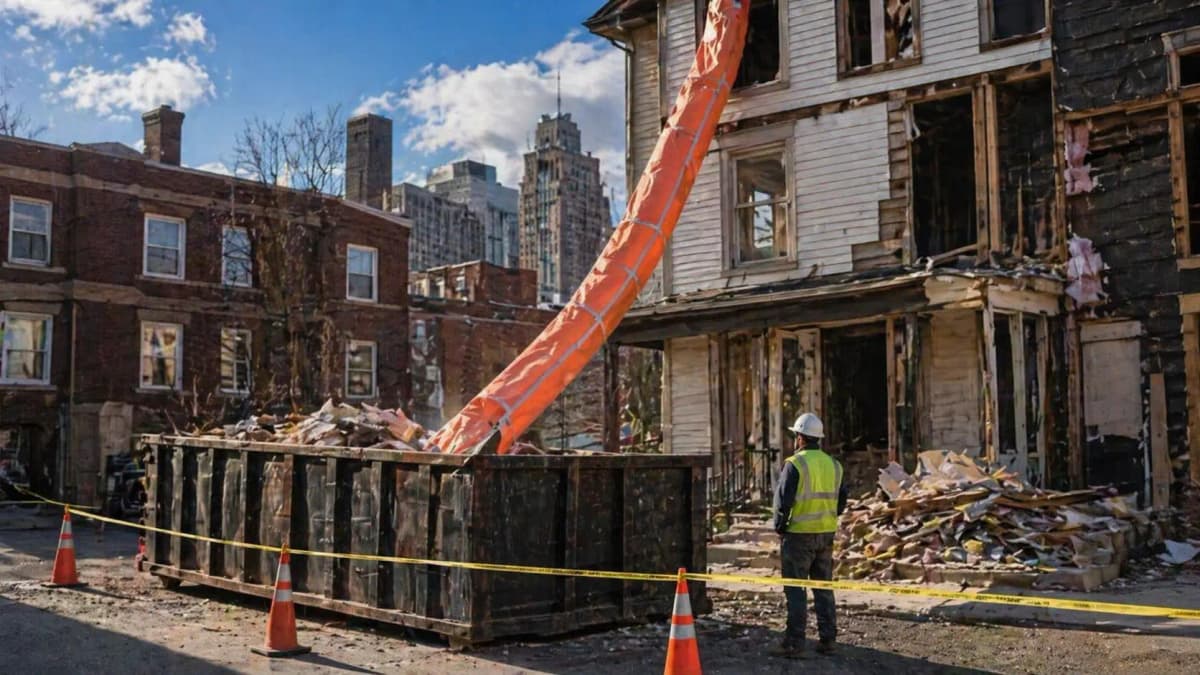
Understanding Senior-Neighborhood Regulations
Senior neighborhoods, particularly age-restricted communities and assisted living campuses, often enforce stricter environmental and safety regulations than standard residential areas. Before you mobilize your chute, check local ordinances and HOA rules specific to construction timelines, noise ordinances, and debris management.
Key regulatory considerations:
- Construction hours: Many senior neighborhoods restrict work to 7 a.m.–5 p.m. weekdays only, with no weekend or holiday work.
- Noise limits: Senior areas frequently have noise caps of 70–75 dB during work hours (well below standard construction zones). A debris chute impact can easily exceed this if not buffered.
- Dust control ordinances: Respiratory sensitivity among seniors often triggers stricter dust suppression rules; violations can result in stop-work orders.
- Vehicle access: Emergency services must always have clear pathways. Debris chutes and dumpsters cannot block fire lanes or emergency exits.
- Recycling mandates: Some senior communities require 75%+ diversion from landfill, affecting how you sort and dispose of debris.
Contact your local municipality and the property’s HOA or management company before scheduling work. Document all approvals in writing.
Ergonomic Chute Placement and Loading Heights
Ergonomic chute placement protects not only your crew but also nearby residents. Poor positioning — especially at heights that encourage awkward lifting or that spray debris into neighboring yards — increases injury claims and complaints.
Loading height best practices:
- Optimal loading zone: Position the chute opening between elbow and chest height (approximately 38–54 inches from ground). This minimizes repetitive strain and awkward overhead lifting.
- Avoid high placement: Never mount the chute opening above shoulder height in residential senior areas. Workers will resort to overhand throws, creating noise, spillage, and safety hazards.
- Use gravity, not force: Allow debris to slide naturally into the chute rather than requiring workers to compact or force material in.
- Distance from windows: Keep the chute at least 8 feet away from neighboring windows and ventilation intakes to minimize dust and noise transmission.
Following OSHA ergonomics standards will guide you toward safer, quieter operations. A modular chute system allows you to adjust section height during setup, giving you flexibility that fixed systems don’t offer.
Noise and Vibration Control Strategies
Noise is the number-one complaint in senior neighborhoods. Impact noise from debris hitting the chute and discharge point travels far, penetrates hearing aids, and disrupts medication schedules and sleep. Vibration from a swinging or loosely mounted chute can rattle windows and doors in adjacent homes.
Noise reduction tactics:
- Install vibration dampeners: Use rubber isolation pads or silicone mounts at all chute attachment points. This decouples the chute from the structure, reducing resonance.
- Line the discharge: Place a rubber mat or wood baffle inside the dumpster beneath the chute outlet. This absorbs impact and reduces the “bang” noise that echoes through neighborhoods.
- Restrict drop heights: Keep debris falling less than 10 feet into the dumpster. Longer drops create louder impacts.
- Use canvas or poly wraps: Outer sleeve layers on the chute help dampen sound transmission. A modular vs. traditional chute comparison will show you how materials affect noise profiles.
- Schedule drops during daytime hours: Never discharge heavy debris early morning, evening, or at night in senior areas.
- Warn neighbors in advance: 24-hour notice before high-impact debris drops allows residents to plan around noise.
Aim for a maximum of 80 dB at the chute opening. Use a smartphone decibel-meter app during setup to verify compliance.
Liability Insurance and Senior-Proximity Work
Working adjacent to seniors introduces liability exposure beyond standard residential renovation. Senior residents may fall more easily, recover more slowly from injuries, and are more likely to pursue legal claims for disruption and harm. Your insurance must reflect this elevated risk profile.
Key insurance considerations for senior neighborhoods:
- General liability minimum: Carry at least $1–2 million in coverage. Senior-focused work often warrants the higher end.
- Property damage rider: Include specific coverage for damage to neighboring homes, vehicles, and yards caused by debris spillage.
- Workers’ compensation: Ensure full coverage for your crew; a worker injury during senior-area work is a compounded liability.
- Tools and equipment floater: If your chute or dumpster damages property or is itself damaged, you need coverage.
- Disclosure and waiver: Have the property owner sign a construction-liability waiver. This doesn’t eliminate your duty of care, but it documents informed consent.
Review your policy with your insurance broker before bidding work in senior communities. Many carriers now offer senior-friendly renovation coverage upgrades that lower premiums for demonstrating extra safety measures.
Communication Protocols for Senior Residents
Clear, frequent communication is the backbone of senior-friendly project management. Seniors appreciate transparency and advance notice more than younger demographics. Miscommunication — or silence — breeds anxiety, complaints, and liability.
Pre-work communication checklist:
- Written notice: Deliver a printed schedule to neighboring homes at least 7 days before work begins. Include start/end times, expected noise level, emergency contact, and debris-drop schedule.
- Phone call or in-person visit: For immediate neighbors (within 50 feet), make personal contact. Ask if any residents have health concerns (hearing aids, sleep disorders, medical equipment sensitivity) that should inform your operations.
- Weekly updates: For projects lasting more than one week, leave a brief update on each neighbor’s porch or email on Mondays.
- Courtesy courtesy phone number: Provide a direct contractor line (not just voicemail) for noise or safety complaints. Respond within one hour.
- Post-work notification: Thank neighbors in writing when the project ends, including a final cleanup certification.
Effective communication often prevents complaints before they start, reducing the likelihood of anonymous calls to code enforcement or your local health department.
Managing Air Quality, Dust, and Odor
Dust and odor from debris management can aggravate respiratory conditions (asthma, COPD) common in older adults. Dust can also settle on siding, windows, and outdoor furniture, creating maintenance burden for residents. Odor from exposed debris — especially if the project hits old insulation, mold, or animal nesting material — can be overwhelming.
Air quality and dust mitigation tactics:
- Use dust containment: Erect temporary plastic sheeting around the chute and dumpster area, especially on the side facing neighbor windows. A 6-foot barrier is usually sufficient.
- Damp debris before loading: Lightly mist with water to reduce airborne particles. This is especially important for drywall, insulation, and siding debris.
- Cover the dumpster: Use a tarp or hard cover between drops to trap dust and odor. Open it only when actively loading or removing the dumpster.
- Schedule dusty work off-wind hours: If possible, avoid loading dusty debris when prevailing winds push toward neighboring homes.
- Provide advance air-quality warning: Notify neighbors on days when heavy asbestos surveys, lead abatement, or mold remediation occurs. Some seniors may choose to visit family or stay indoors.
- Comply with EPA debris rules: EPA construction and demolition debris data shows that proper segregation (lead-free, asbestos-free, recyclable) reduces hazardous-dust exposure downstream.
If a neighbor reports respiratory distress, pause work immediately and address the issue. Document the complaint and your response for liability protection.
Accessibility and Pathway Safety
Seniors often use mobility aids — walkers, canes, wheelchairs — and may have reduced balance and peripheral vision. A debris-laden walkway, a rogue dumpster wheel, or an uneven surface created by your chute foundation poses a serious fall risk. Falls are the leading cause of injury and death among seniors, and a fall during your project is a direct liability.
Pathway and accessibility safety checklist:
- Keep walkways 100% clear: Never allow debris, equipment, cords, or dumpster wheels to encroach on pedestrian pathways, especially the primary entry/exit route from neighbors’ homes.
- Use edge protection: If your chute crosses a walkway, build a 4-inch-high bumper or protective barrier on the approach side so residents don’t trip on the setup.
- Maintain lighting: If work extends into early morning or evening, ensure all pathways remain well-lit. Seniors have reduced night vision; poor lighting increases fall risk.
- Mark hazards visibly: Use caution tape and reflective signage on chute supports, dumpster corners, and any uneven ground.
- Keep emergency lanes open: Fire trucks, ambulances, and police must always have clear access. Never block driveways, hydrants, or fire lanes.
- Offer temporary handrails: For multi-step entries into senior homes, consider portable handrails during debris-chute operation.
Document your pathway-safety measures with photos taken on day one and weekly. This evidence protects you if a fall occurs and is attributed to your work site.
Chute Capacity and Debris Flow in Tight Lots
Senior neighborhoods often feature smaller lots, tighter driveways, and more dense housing than suburban sprawl. This limits chute positioning and dumpster access, forcing you to optimize capacity and flow to minimize the number of dumpster trips — and thus noise and disruption.
Capacity planning for constrained spaces:
- Calculate debris volume in advance: Use our capacity calculator to estimate total debris and required dumpster size. Undersizing means more frequent pickups and more noise events.
- Choose modular sections wisely: A 50-foot modular chute can be disassembled and repositioned mid-project. A 25-foot section may fit tighter lots but requires more trips to the dumpster.
- Prioritize flow efficiency: Load smaller, lighter debris pieces regularly so the chute doesn’t become clogged. A clogged chute requires manual clearing, which is noisy and disruptive.
- Coordinate with the dumpster service: Schedule pickups during mid-day (10 a.m.–2 p.m.) when more seniors are active and aware, not at 6 a.m. when they’re sleeping.
- Use staged debris sorting: Segregate debris on-site (metals, wood, drywall) so that different material streams can be removed separately, reducing overall dumpster volume and pickup frequency.
Tight-lot projects in senior areas benefit significantly from a cost estimation and planning checklist done before work begins. This prevents surprises and mid-project repositioning that alarm residents.
Maintenance and Cleanliness in Senior Areas
Cleanliness is non-negotiable in senior neighborhoods. Debris scattered on sidewalks, driveway stains, or accumulated dust on neighboring homes signals negligence and erodes trust. A clean, well-maintained chute and surrounding area shows professionalism and respect.
Daily maintenance and cleanliness protocol:
- Inspect the chute every morning: Check for loose sections, bent edges, or debris buildup that could fall or create hazards.
- Clear spillage immediately: If debris falls outside the dumpster, remove it within 30 minutes. Don’t let it accumulate.
- Wipe chute exterior weekly: Dust and dirt that accumulates on the chute can blow onto neighboring properties. A damp cloth wipe-down takes 15 minutes and shows care.
- Contain dumpster seepage: Place a plastic tarp beneath and around the dumpster to catch leachate or spills. Never let dumpster liquids run onto the neighbor’s driveway.
- End-of-day site sweep: Spend 10 minutes sweeping or vacuuming the work area each day. This prevents small debris from spreading overnight.
- Deep-clean before project end: Once the chute is dismantled, use a pressure washer on low setting to remove any marks or residue from mounting brackets. Restore the area to pre-project condition.
For longer-term guidance, review our cleaning and maintenance procedures to keep your chute performing optimally throughout the renovation.
Common Mistakes and How to Avoid Them
Learning from others’ missteps can save you time, money, and reputation. Here are the most common pitfalls contractors encounter when working in senior neighborhoods — and how to sidestep them.
Mistake #1: Underestimating Noise Impact
Many contractors assume debris chutes are “no louder than standard construction.” They’re not. A 100-pound piece of drywall falling 20 feet into a metal dumpster creates an impact comparable to a car door slamming. In a quiet residential area, this is jarring. In a senior neighborhood where residents are home all day, it’s a recurring disruption. Solution: Install vibration dampers, use a rubber-lined discharge, and schedule drops only during daytime hours.
Mistake #2: Skipping Neighbor Communication
Silent work that “speaks for itself” is a mistake in senior communities. Even professional, safe work becomes a liability if neighbors feel ignored. Solution: Provide written notice one week before work, follow up with a phone call to immediate neighbors, and send weekly progress updates. See our safety practices with vulnerable populations on site for detailed communication templates.
Mistake #3: Blocking Pathways and Emergency Access
It’s tempting to position a dumpster for your convenience, not theirs. A dumpster that eats up the driveway forces seniors to navigate around it, raising fall risk. A chute that shadows a neighbor’s front door makes them feel unsafe. Solution: Always ask yourself, “Can a person with a walker safely navigate around this equipment?” If the answer is no, reposition.
Mistake #4: Ignoring Dust and Air Quality
Dry debris creates dust that travels. Seniors with asthma or COPD can experience exacerbation within hours of dust exposure. Solution: Damp debris before loading, erect temporary dust barriers, and provide air-quality warnings when hazardous materials (lead, asbestos) are being removed.
Mistake #5: Oversizing or Undersizing the Chute
An oversized chute in a small lot looks industrial and invades the residential aesthetic. An undersized chute clogs frequently, requires manual clearing, and needs extra dumpster trips. Solution: Use our common mistakes checklist to right-size your system before mobilizing to the site.
Frequently Asked Questions
Are debris chutes allowed in senior-restricted communities?
Most age-restricted and senior communities allow debris chutes for renovations, but they often require advance approval from the HOA or property management. Some communities have specific rules about chute size, placement, noise limits, and operational hours. Always request written approval before ordering your chute system. If approval is denied, you may need to arrange hand-removal of debris into smaller containers, which is slower and costlier but sometimes the only option in strictly regulated senior communities.
What’s the best time of day to discharge debris in a senior neighborhood?
Mid-morning (10 a.m.–noon) and early afternoon (1 p.m.–3 p.m.) are ideal. Avoid 6–8 a.m. (when seniors are waking or taking medication) and 5–7 p.m. (early dinner and wind-down time). Never discharge on weekends or holidays unless explicitly approved in writing. Some senior communities have “quiet hours” — typically 7 p.m.–8 a.m. — when no construction sounds are permitted.
How do I manage odor from old insulation or animal nesting debris?
Seal the dumpster with a hard cover or heavy tarp between loads. If the odor is severe (e.g., from animal waste or mold), notify neighbors in advance and consider removing that specific debris in sealed containers rather than via the chute. Provide air-freshening measures on your end (enzymatic odor neutralizers around the dumpster) and offer a courtesy call to check on neighbors’ comfort level.
Do I need special insurance for senior-adjacent renovation work?
Your standard general liability policy may be sufficient, but senior-proximity work is higher-risk due to potential fall injuries and health disruptions. Contact your insurance broker to discuss adding a rider for senior communities, which typically costs 10–15% more but provides higher liability coverage and may reduce overall premiums by demonstrating elevated safety awareness. Always carry at least $1 million in general liability.
What should I do if a neighbor falls or gets injured near my work site?
Call 911 immediately. Provide first aid if trained. Document the incident with photos, witness statements, and a written timeline. Report the incident to your insurance carrier within 24 hours. Do not admit fault or apologize in a way that implies negligence — stick to facts. Notify the property owner in writing the same day. Even if you believe you had nothing to do with the injury, proper documentation protects you against later claims.
Can I run a debris chute overnight or early morning if I’m quiet about it?
No. Local noise ordinances in senior neighborhoods typically prohibit construction activity before 7 a.m. or after 6 p.m. Even if you believe your chute is “quiet,” the legal restriction stands. Violating noise ordinances can result in fines, stop-work orders, and civil complaints from neighbors. Stick to approved daytime hours.
What’s the best way to handle a neighbor complaint about noise or dust?
Respond promptly and professionally. Acknowledge their concern without admitting liability. Ask for specific details (time, duration, type of noise). If the complaint is valid, implement immediate corrective action: add vibration dampers, reduce drop frequency, erect dust barriers, or adjust scheduling. Document your response in writing and follow up within 48 hours to confirm the neighbor feels heard. Many disputes are resolved by showing you care and took action, not by defending yourself.
Ready to Get Started
Senior-friendly debris chute management is a competitive advantage for contractors who take it seriously. By prioritizing ergonomics, noise control, communication, and cleanliness, you transform a potential liability into a reputation-builder. Seniors remember contractors who respected them — and they refer.
Start with a project-planning checklist: review local ordinances, confirm HOA approval, notify neighbors in writing, and size your chute using a capacity calculator. Schedule a follow-up conversation with your insurance broker to confirm coverage. Then follow our step-by-step installation guide to ensure a safe, professional setup.
For more best practices, explore our first-time contractor guide or reach out to our team at 1–855–902–4883 with questions about chute sizing or regional regulations. We’re here to help you finish strong and leave senior neighborhoods feeling respected.