
Need a trash chute in Wisconsin? Whether you're tearing off a roof in Milwaukee, renovating a mid-century commercial building in Madison, or gutting an older storefront in Green Bay, moving debris safely off an elevated structure is one of the most important — and most overlooked — parts of a clean, OSHA-compliant job. EasyChute ships our fabric debris chutes free to job sites anywhere in Wisconsin, so you can order today and get back to work.
Wisconsin crews deal with everything from compact downtown buildings and older brick flats to sprawling suburban remodels and lakefront properties. What they all have in common is the need to get waste — shingles, drywall, plaster, insulation, wood scraps — off the roof or upper floors and into a dumpster without damaging the building, injuring workers, or scattering debris across the property. A lightweight, reusable chute makes that job straightforward on every project, every season.
Trash chutes shipped free to Wisconsin
Free shipping on every order. See the full shop.
Why Wisconsin Contractors Choose a Fabric Trash Chute
Wisconsin's building stock is varied. Milwaukee's older neighborhoods are filled with brick two- and three-flats, bungalows, and century-old commercial blocks. Madison has a dense mix of university-area rental housing, Capitol Square historic buildings, and fast-growing suburban development. Green Bay, Racine, Kenosha, Appleton, and Oshkosh all have their own concentrations of older residential and light commercial properties — exactly the kind of stock that generates serious demo debris when it's time to reroof, renovate, or gut-rehab.
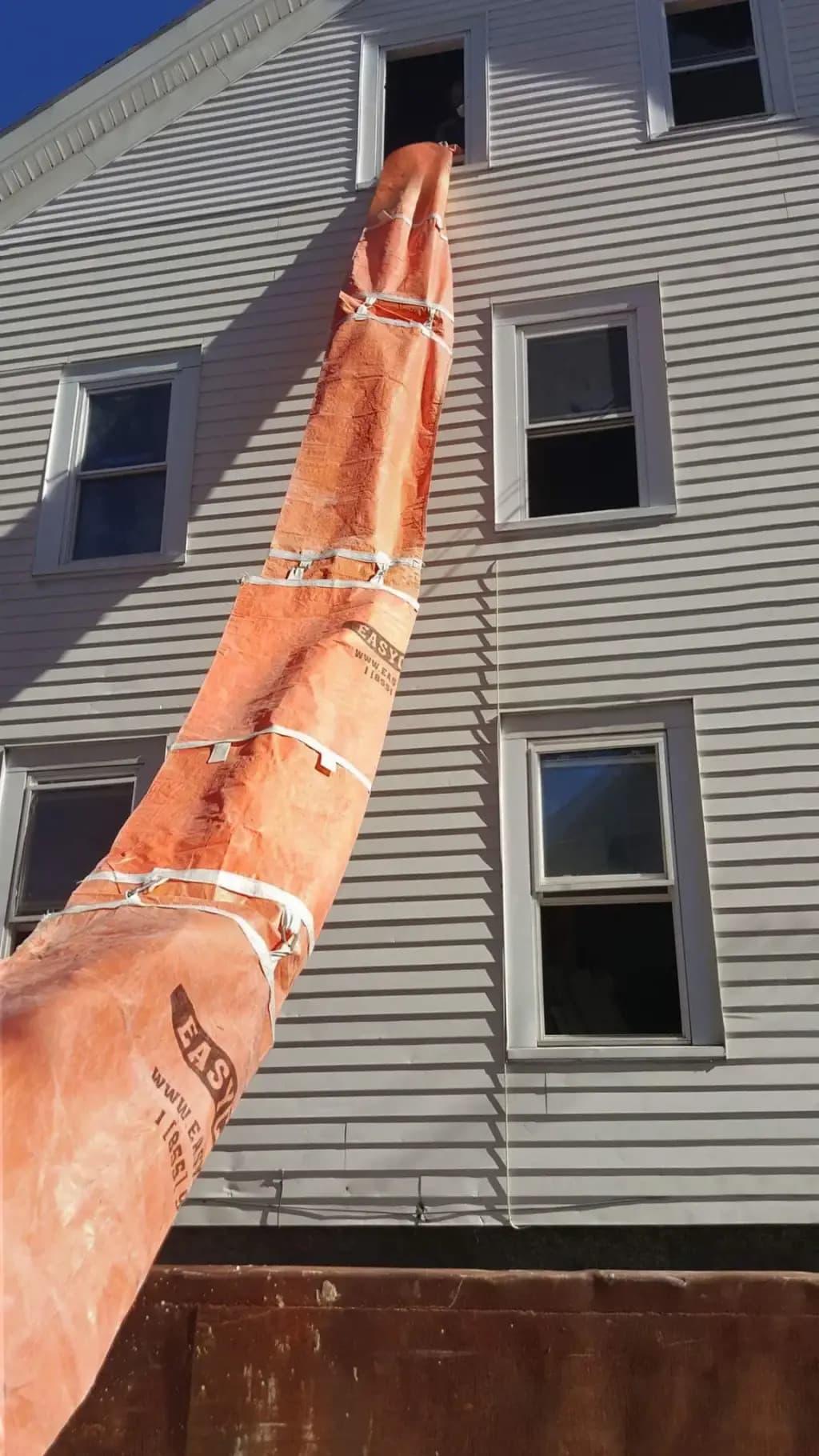
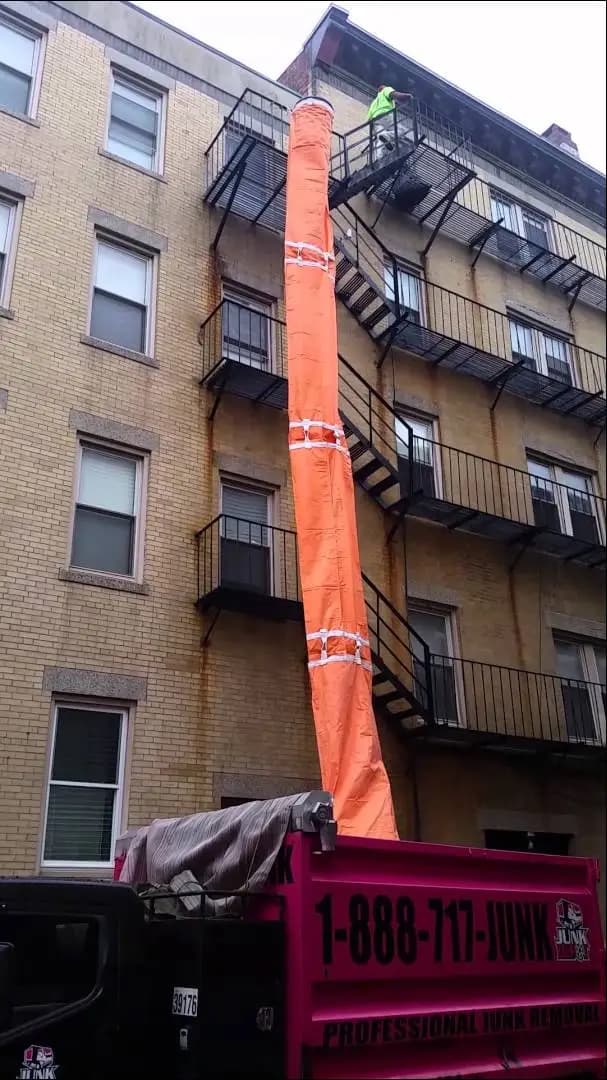
On a typical Wisconsin job, a crew without a chute is throwing shingles or drywall chunks from an upper window or roof edge and hoping everything lands in — or near — the dumpster. That approach risks injury, property damage, and OSHA violations. A fabric debris chute channels the waste in a controlled stream, keeps dust contained at every joint, and protects siding, landscaping, and neighboring property. It also means one person can manage debris flow from the top while the rest of the crew stays productive.
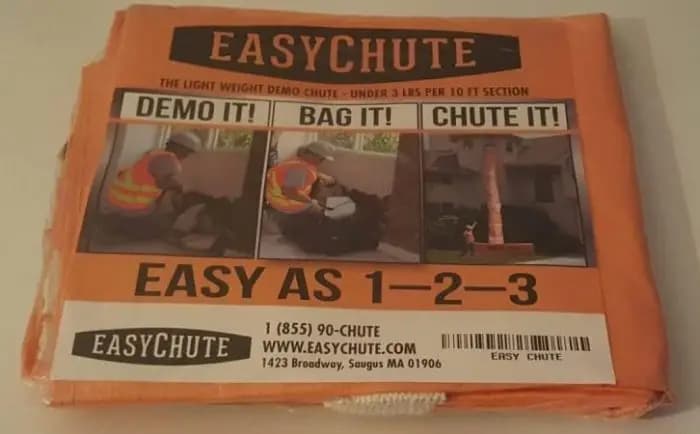
EasyChute's chutes are made of woven, coated poly fabric that is tear-resistant and light enough to carry to any job. A 10-foot section weighs under 3 pounds and folds down small enough to fit in a drawer or tool bag. You're not renting a heavy steel chute system or waiting on a specialty contractor — you own the chute and reuse it job after job.
Choosing the Right Trash Chute Section for Wisconsin Buildings
Picking the right length comes down to building height. EasyChute sections are sized to match common construction scenarios:
- 10 ft section (~one story): Good for single-story additions, low-slope roofs, or as an add-on section when you need a little more reach. Lite-Duty 10 ft — $99 or Heavy-Duty 10 ft — $149.
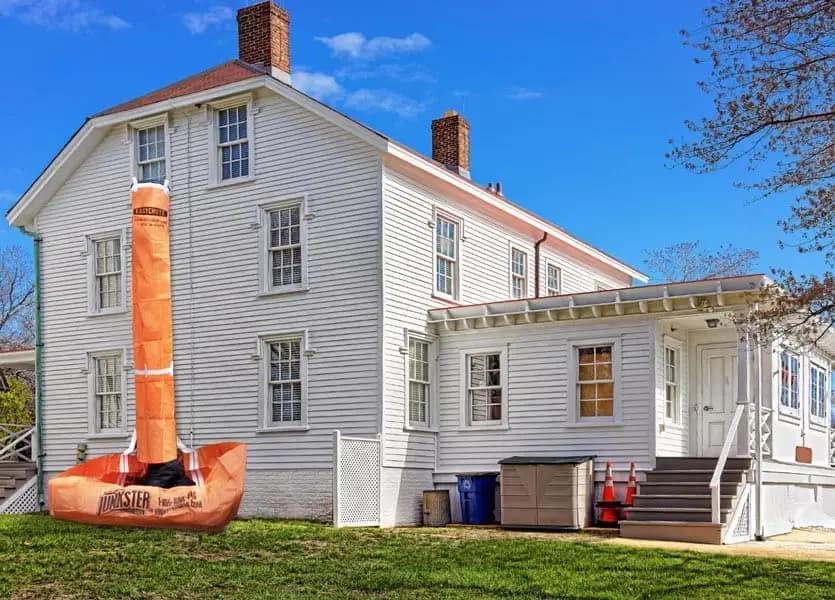
- 25 ft section (~two and a half stories): The go-to for the two- and three-story residential buildings common across Milwaukee's older neighborhoods and throughout the Fox Valley. 25 ft Section — $277.
- 50 ft section (~five stories): Right-sized for larger commercial renovations, mid-rise apartments, or multi-story buildings in downtown Milwaukee or Madison. 50 ft Section — $596.
Need more reach? Sections connect loop-to-loop with carabiners or quick-connects, and every joint overlaps 1.5 feet to keep dust and debris inside the chute rather than escaping at the seam. Middle shortening straps let you fine-tune the total length. You can start with one section and add more as your work expands to taller structures.
The OSHA Enclosed-Chute Rule: What Wisconsin Crews Need to Know
If you're dropping debris more than 20 feet to any point outside the exterior walls of a building, federal OSHA regulation 29 CFR 1926.252(a) requires an enclosed chute. That rule applies on Wisconsin job sites the same as everywhere else in the country, and it's worth taking seriously. Violations can result in fines, project shutdowns, and — far more importantly — serious injuries to workers or bystanders below.
EasyChute meets or exceeds applicable OSHA regulations. The overlapping loop connections and consistent 22-inch diameter keep the debris stream enclosed from the drop point all the way to the dumpster. If you have questions about specific permit or inspection requirements for your municipality — Milwaukee, Madison, Green Bay, or anywhere else in Wisconsin — check with your local building department, because those rules can vary by city and project type.
Wisconsin Weather and Job-Site Planning
Wisconsin is known for genuine four-season weather: humid summers, snowy winters, and everything in between in spring and fall. When you're planning an exterior renovation or roofing project, keep the weather window in mind. Schedule debris removal so it doesn't coincide with high-wind days that could make managing a hanging chute more difficult. In wet conditions, debris like drywall or insulation can clump and slow the flow — break it into smaller pieces before feeding it in. Securing the bottom of the chute close to the dumpster opening helps contain any mess at the landing zone.
Because EasyChute is lightweight and compact, storing it between Wisconsin jobs is simple. It doesn't rust, it doesn't require a trailer, and it doesn't take up space in the shop. A 25-foot section weighs under 8 pounds; the 50-foot section comes in under 15 pounds.
How to Set Up Your EasyChute on a Wisconsin Job Site
Setup takes a few minutes and requires no special tools, outriggers, frames, or rental crew. Here's the basic process:
- Choose your anchor point. The chute hangs from a window frame, roof edge, scaffold, or fire escape using the four woven connection loops at the top. Select a point directly above your dumpster.
- Set up a hopper. A standard 32-gallon commercial trash can with the bottom removed works as an excellent hopper at the top of the chute. It gives workers a stable opening to toss debris into without it scattering.
- Connect your sections. If you need more than one section, join them loop-to-loop with carabiners or quick-connects. Each connection overlaps 1.5 feet to keep the chute sealed.
- Position the dumpster. Line up your dumpster directly below the chute's bottom opening. Keep the bottom end of the chute as close to the dumpster as practical.
- Start moving debris. Feed material steadily — don't overload the chute with a single large dump. Break up bulky debris like large sheets of drywall or bundles of shingles before they go in.
When the job is done, disconnect the sections, fold them up, and store them for the next project. The chute is reusable job after job — that's what makes it a tool rather than a one-time expense.
Order a Trash Chute for Your Wisconsin Job Site
EasyChute ships free to job sites anywhere in Wisconsin — Milwaukee, Madison, Green Bay, Racine, Kenosha, Appleton, Wausau, La Crosse, Eau Claire, and everywhere in between. Order online at fixed prices with no negotiation needed. If you have questions before you order, call us at 855-902-4883 (Monday–Friday, 8 AM–10 PM Eastern) or email orders@easychute.com.
Browse all available sections and find the right fit for your next Wisconsin project at our full shop. Working specifically in Milwaukee? See our Milwaukee debris chute page for more detail on the city's common building types and roofing projects, or check out our guide to Milwaukee roofing cleanup and shingle flow control.
Frequently asked questions
Does EasyChute ship free to Wisconsin job sites?
Yes. Every EasyChute order ships free to any job site in the United States, including anywhere in Wisconsin. Just place your order online and we ship directly to the address you provide — whether that's a Milwaukee renovation, a Madison apartment building, or a rural job site anywhere in the state.
Which section length should I order for a typical Wisconsin two- or three-story building?
The 25-foot section is a strong match for two- and three-story buildings, which are common in Milwaukee's older neighborhoods, downtown Green Bay, and similar areas across Wisconsin. It covers roughly two and a half stories. For taller commercial or multi-unit buildings, the 50-foot section handles around five stories, and sections can be connected if you need more reach.
Does the OSHA enclosed-chute rule apply on Wisconsin job sites?
Yes. OSHA 29 CFR 1926.252(a) is a federal regulation that applies on job sites nationwide, including Wisconsin. It requires an enclosed chute when dropping debris more than 20 feet to any point outside a building's exterior walls. EasyChute meets or exceeds applicable OSHA regulations. For any local permit or inspection requirements specific to your city or county, check with your local building department.
Can I connect multiple EasyChute sections for a taller building?
Absolutely. Sections connect loop-to-loop at the top and bottom using carabiners or quick-connects, and each joint overlaps 1.5 feet to keep the chute sealed. You can combine a 25-foot section with a 10-foot section, for example, to get the exact reach you need. Middle shortening straps let you fine-tune the length as well.
What kinds of debris can I run through an EasyChute on a Wisconsin renovation project?
EasyChute is built for common construction and renovation debris: roofing shingles, drywall, plaster and lath, wood scraps, and insulation. Break up large or bulky pieces before feeding them in to keep the material moving smoothly through the 22-inch diameter chute.