
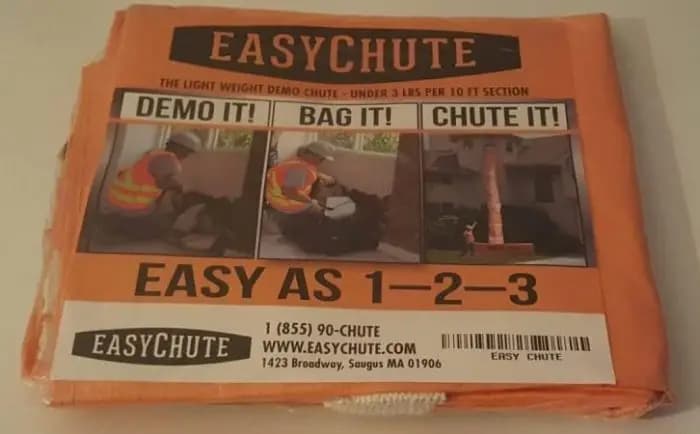
When you're tearing out a roof in Charleston, gutting a historic row house in Wheeling, or renovating a multi-story rental in Morgantown, moving debris off upper floors is one of the slowest and most hazardous parts of the job. A trash chute for West Virginia job sites lets you drop drywall scraps, old shingles, plaster, and wood waste straight into a dumpster — without bucket brigades, overloaded wheelbarrows, or workers carrying loaded bags down steep staircases. EasyChute manufactures lightweight, woven coated poly fabric chutes and ships them free to job sites anywhere in West Virginia.
Whether you're working a single-story gut-rehab in Huntington or a five-story commercial strip-out in Parkersburg, there's a chute section sized for your building. Every section connects to the next with simple carabiners, overlaps 1.5 feet at each joint to keep dust contained, and folds down small enough to toss in a pickup truck bed when the job wraps. No rental crew, no outrigger frames — just hang it and work.
Trash chutes shipped free to West Virginia
Free shipping on every order. See the full shop.

Why West Virginia Crews Rely on a Fabric Trash Chute
West Virginia's building stock is as varied as its terrain. The state's older neighborhoods — from the hilltop Victorians of Lewisburg to the stacked mill-era apartments along the Monongahela in Morgantown — were built before dumpsters and modern waste-handling equipment existed. That means steep lots, narrow alleyways, and limited ground-level access. Carrying debris down three or four flights in a building with a tight interior staircase isn't just exhausting; it's a liability waiting to happen.
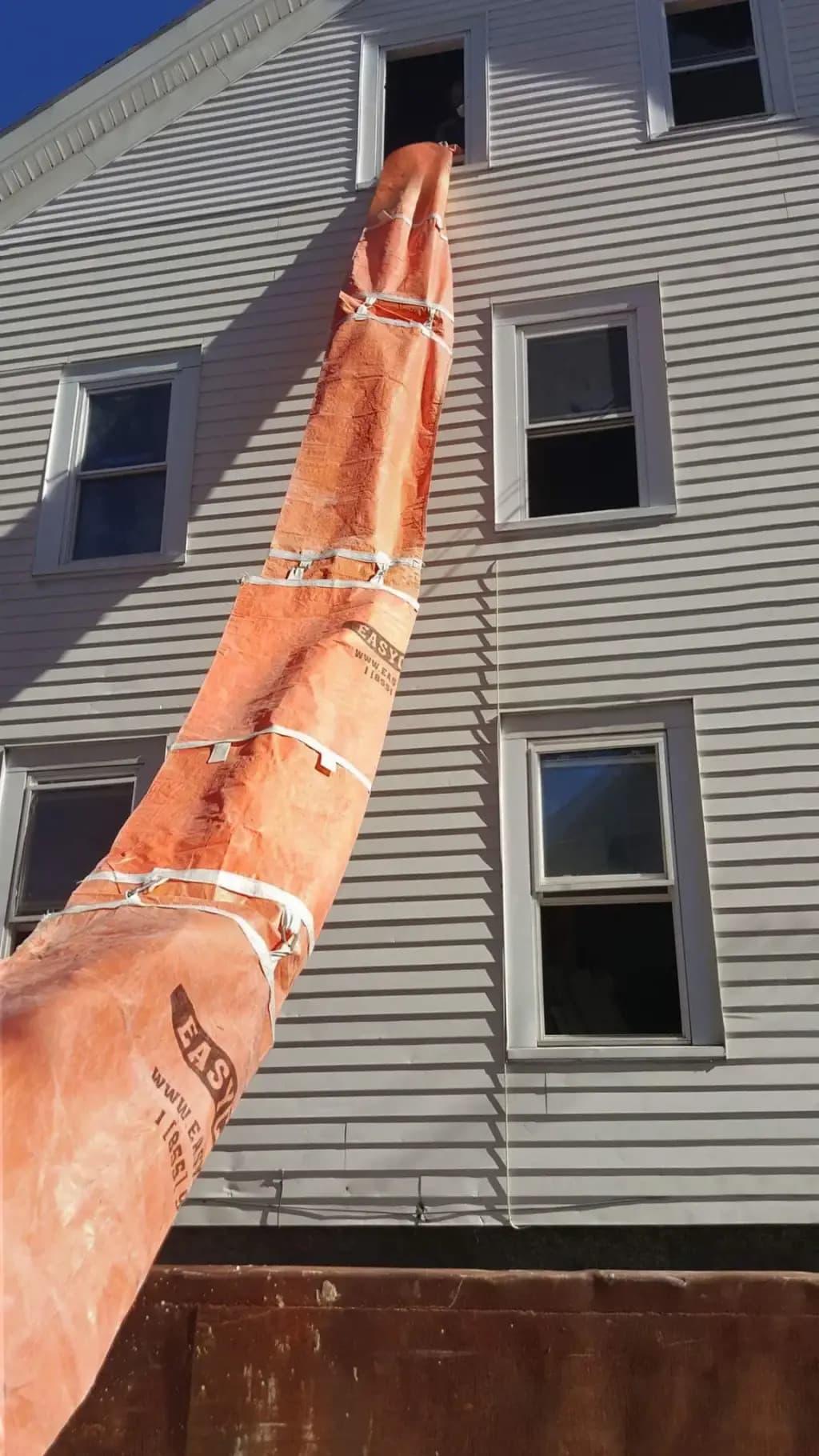
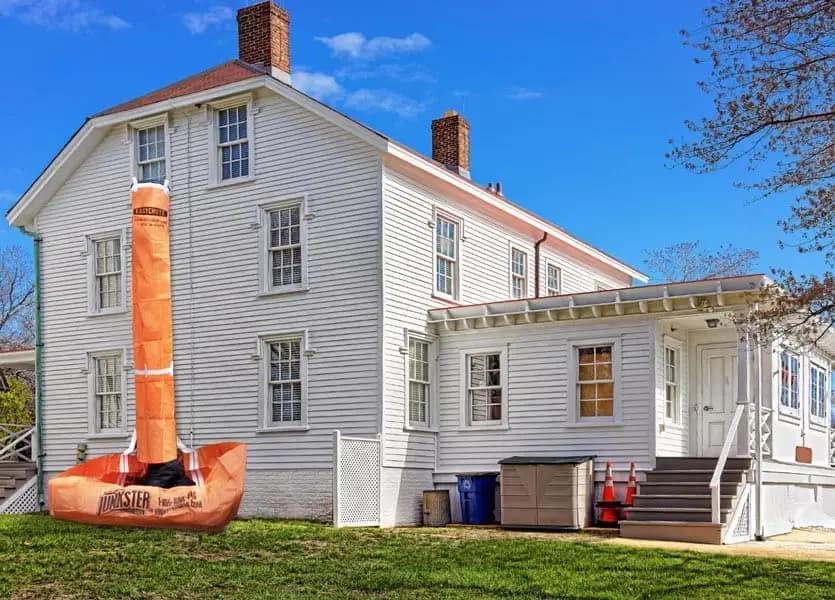
Fabric debris chutes solve that problem cleanly. Hang the chute from a window frame, a roof edge, or a scaffold rail, set a standard 32-gallon commercial trash can with the bottom removed at the top as a hopper, and your crew feeds debris straight down from the floor they're working on. Workers stay on-task, foot traffic on stairways drops, and the job site runs cleaner. Chutes built from tear-resistant woven coated poly fabric handle the everyday debris of renovation work: drywall chunks, plaster and lath, roofing shingles, insulation batts, and wood scraps.
OSHA's 20-Foot Rule and West Virginia Job Sites
If your West Virginia project involves dropping material more than 20 feet to a point outside the building's exterior walls, federal OSHA regulation 29 CFR 1926.252(a) requires an enclosed chute. That threshold is easy to hit on a standard two-story house, let alone a downtown commercial building. EasyChute chutes meet or exceed applicable OSHA requirements, so you can document compliance and keep your site inspection-ready.
West Virginia also has its own state plan considerations. For site-specific permit and regulation questions, always check with your local building department or the West Virginia Division of Labor before work begins — requirements can vary by municipality and project type.
Choosing the Right Chute Section for Common WV Building Heights
EasyChute sections come in three lengths, and you can connect as many as you need for taller structures. Here's how they map to typical West Virginia building types:
- 10-foot section (≈ one story): Ideal for single-story additions, shed demolitions, or as an add-on section to extend an existing run. Weighs under 3 lbs and fits in a drawer or small box. Available in Lite-Duty ($99) or Heavy-Duty ($149).
- 25-foot section (≈ two and a half stories): The go-to for the two- and three-story Queen Anne and Foursquare houses common in Wheeling, Clarksburg, and Elkins. Weighs under 8 lbs. Order the 25 ft section for $277.
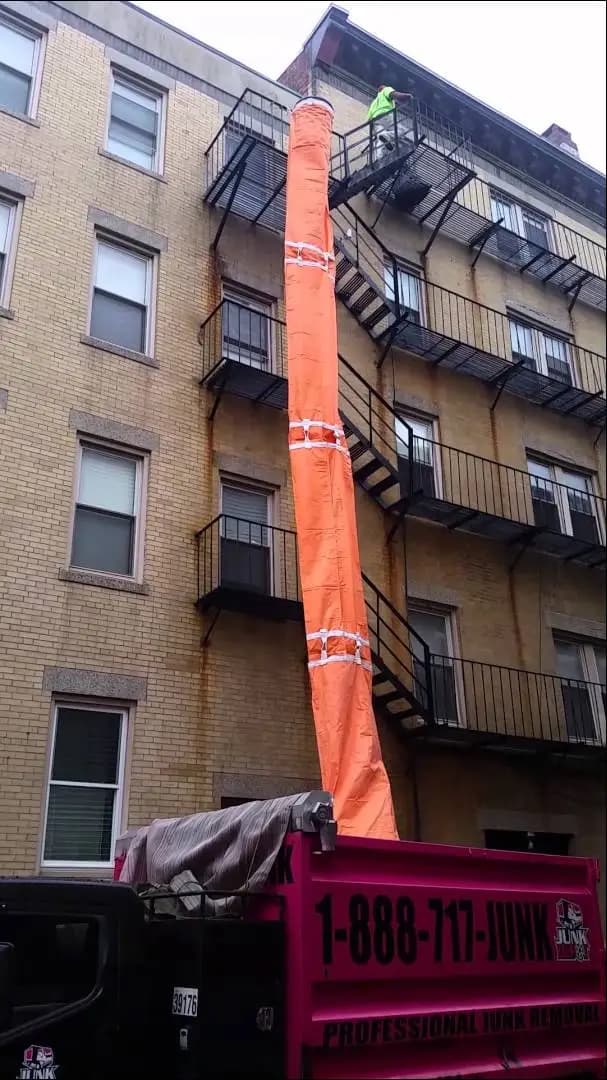
- 50-foot section (≈ five stories): Built for downtown Morgantown or Charleston commercial work, multi-story university buildings, or stacked apartments. Weighs under 15 lbs unfolded. Order the 50 ft section for $596.
Sections connect loop-to-loop — four woven connection loops at the top of each section, four at the bottom — using carabiners or quick-connects. Every joint overlaps 1.5 feet, so dust and small debris stay inside the chute rather than scattering across the ground or neighboring property.
Working Through West Virginia's Climate
West Virginia sits in the Appalachian highlands, which means crews deal with four genuine seasons. Winters bring cold snaps and snowfall, particularly at elevation in the eastern highlands around Elkins and Snowshoe. Spring and fall often mean wet conditions on the job site. Summers can run warm and humid in the lower river valleys around Huntington and Charleston.
A fabric chute doesn't change the weather, but it keeps material moving efficiently regardless of conditions. The lightweight sections are easy to carry up and hang even when you're working in bulky cold-weather gear, and the middle shortening straps let you dial in the length so the chute mouth lands right over your dumpster even on an uneven site. When the job is done, the chute folds back into a compact bundle, dries out, and stores clean for the next project.
How to Set Up an EasyChute on a West Virginia Job Site
- Measure your drop. Count the floors from your highest work point to dumpster level. Match that distance to your section choice — a 25 ft section covers most two-to-three-story homes; link a 50 ft section for taller commercial buildings.
- Anchor the top. Hook the top connection loops over a window frame, roof edge anchor point, scaffold railing, or fire escape. No special hardware or rental equipment required.
- Attach the hopper. Remove the bottom of a standard 32-gallon commercial trash can and set it at the chute's top opening. This gives your crew a wide, stable target to toss debris into.
- Connect additional sections if needed. Loop carabiners or quick-connects through the bottom loops of the upper section and the top loops of the lower section. Each joint overlaps 1.5 feet automatically.
- Adjust length. Use the middle shortening straps to fine-tune the chute's hang so the bottom mouth sits directly over or inside your dumpster.
- Start clearing. Feed debris in from the top. The 22-inch diameter handles bulky pieces — full sheets of drywall need to be broken down, but standard demo debris moves freely.
Order a Trash Chute with Free Shipping to West Virginia
EasyChute ships every order free to job sites anywhere in West Virginia — Charleston, Huntington, Morgantown, Parkersburg, Wheeling, Martinsburg, Beckley, and every smaller town and rural site in between. There are no local pick-up counters or branch offices; you order online at fixed prices, and the chute ships directly to your job site address.
Every section is reusable job after job. When a project wraps, fold it up, throw it in the truck, and it's ready for the next site. That makes it a one-time purchase that pays for itself across multiple projects.
Browse all available sections at the EasyChute shop, or check the FAQ page if you have questions about sizing and connections. You can also reach the team directly at 855-902-4883 or orders@easychute.com, Monday through Friday, 8 AM to 10 PM Eastern. If you have other questions before ordering, visit the contact page.
Working in neighboring states? See our pages for trash chutes in Virginia and trash chutes in Wyoming for more regional information.
Frequently asked questions
Does EasyChute ship trash chutes to West Virginia job sites?
Yes. EasyChute ships every order free to any job site address in West Virginia, from major cities like Charleston and Morgantown to smaller towns and rural locations. You order online at fixed prices and the chute arrives directly at your site.
Which chute section works best for a typical two-story West Virginia house?
The 25-foot section is designed for approximately two and a half stories, making it the right fit for most two- and three-story homes common throughout West Virginia. If you need more reach for a taller building, you can link a 10-foot section to it using carabiners at the connection loops.
Does using a debris chute help with OSHA compliance in West Virginia?
Federal OSHA regulation 29 CFR 1926.252(a) requires an enclosed chute when material is dropped more than 20 feet to any point outside the building's exterior walls. EasyChute chutes meet or exceed applicable OSHA requirements. For state-specific or local permit questions, check with your local building department.
Can I use the chute for roofing work in West Virginia?
Absolutely. EasyChute chutes are built to handle common roofing debris including asphalt shingles, wood shakes, and underlayment. Hang the chute from the roof edge, set a hopper at the top, and tear-off debris drops straight into the dumpster below — no hauling bags down ladders.
How many sections do I need for a five-story building in downtown Charleston or Morgantown?
A single 50-foot section covers approximately five stories on its own and is the most efficient choice for taller commercial buildings. If your drop is somewhere between two and five stories, a 25-foot section plus one or more 10-foot add-on sections lets you build exactly the length you need.