
Whether you're tearing off a cedar-shake roof in Spokane, gutting a mid-rise condo in Seattle, or remodeling a craftsman bungalow in Tacoma, you need a safe, controlled way to move construction debris from height to ground level. A trash chute in Washington keeps material contained, protects workers and passersby below, and satisfies the OSHA enclosed-chute rule that kicks in whenever debris drops more than 20 feet outside a building's exterior walls. EasyChute ships its lightweight, woven coated-poly fabric debris chutes free to job sites anywhere in Washington state — no rental yard, no freight broker, no local pickup required.
EasyChute sections connect in minutes, hang from a window, roof edge, scaffold, or fire escape without outriggers or a rental crew, and fold down small enough to stow in a truck toolbox when the job wraps up. One crew member can set up the entire chute before the demo even starts. This page covers which sections fit the buildings Washington contractors work on most, how to handle the state's climate conditions on site, and exactly how to order with free shipping delivered right to your job.
Trash chutes shipped free to Washington
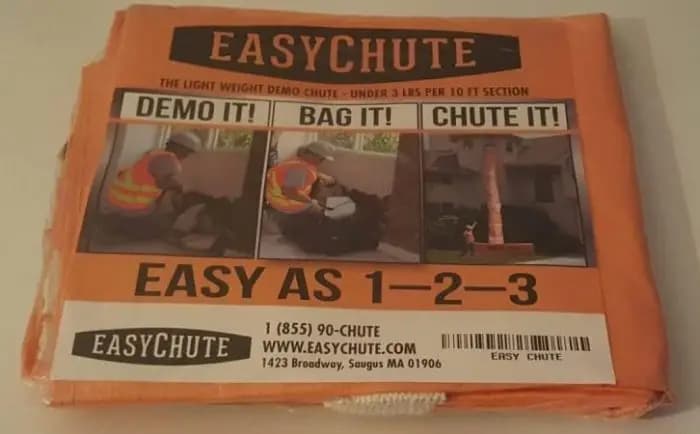
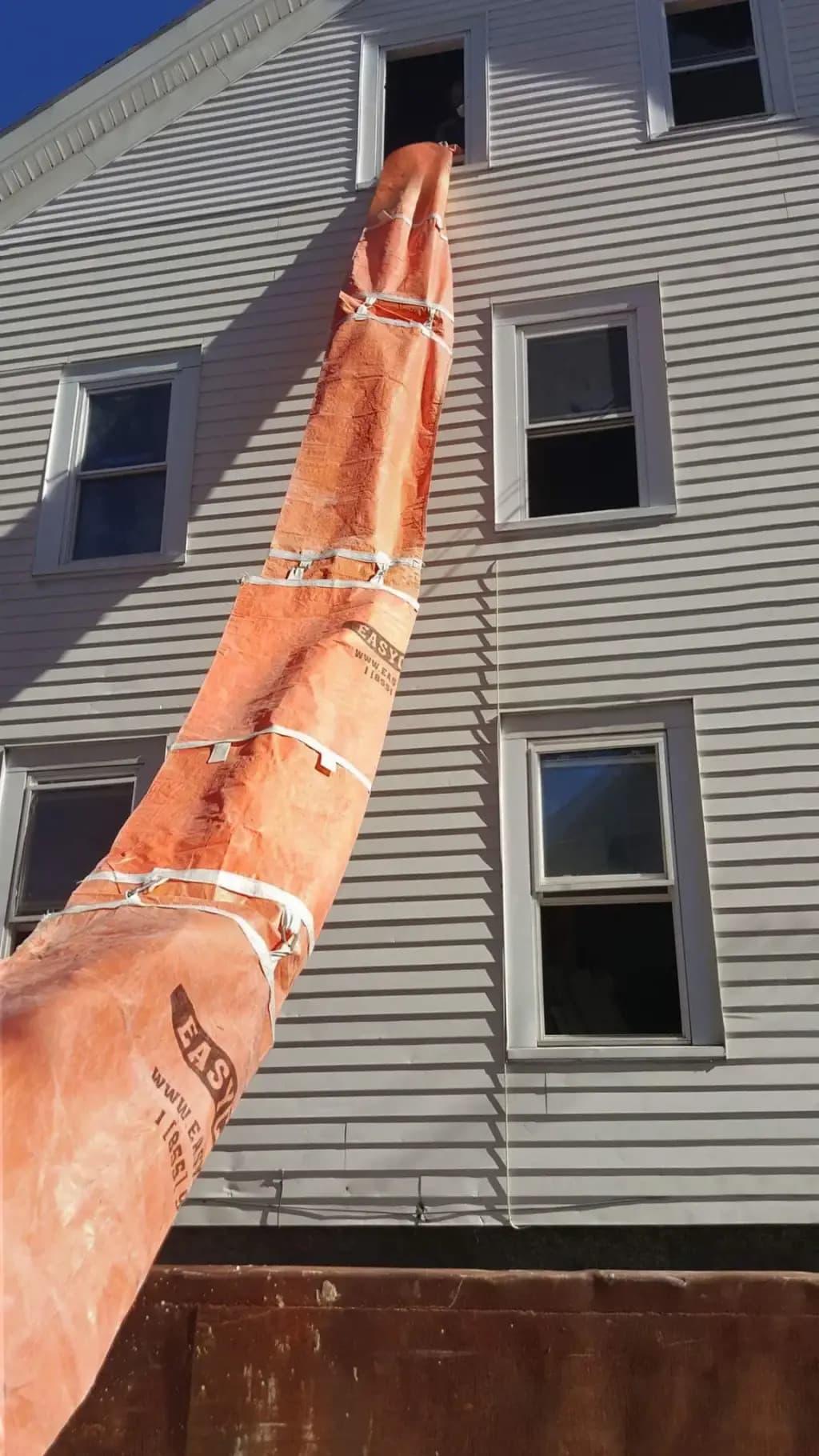
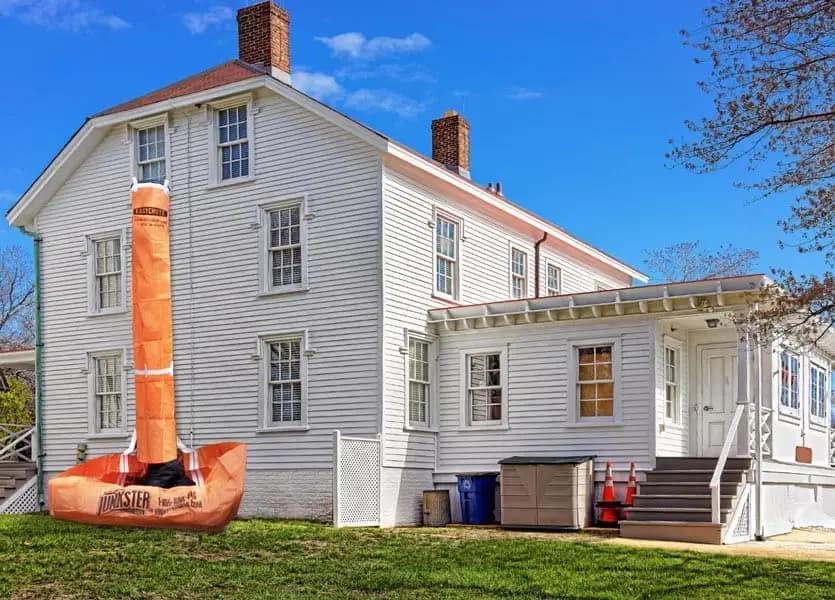
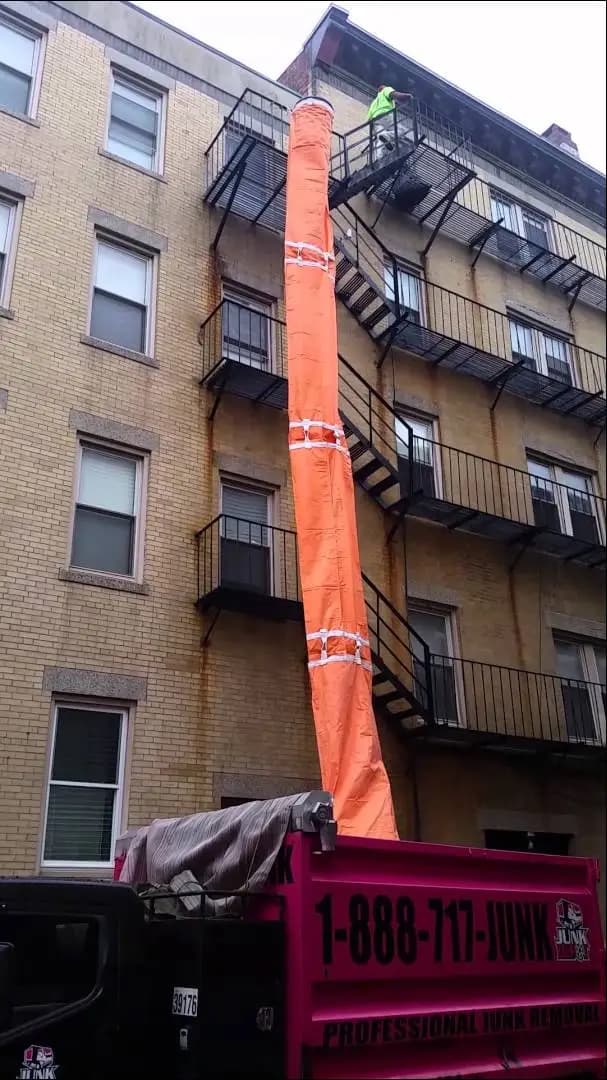
Free shipping on every order. See the full shop.
Why Washington Contractors Rely on a Fabric Debris Chute
Washington's building stock is as varied as its geography. In Seattle and Bellevue you'll find dense urban neighborhoods packed with early-20th-century craftsman homes, brick apartment buildings from the 1940s and '50s, and a growing inventory of modern mid-rise and high-rise residential towers. Tacoma has a large stock of Victorian-era wood-frame houses that regularly need gut remodels. Spokane, on the eastern side of the Cascades, mixes historic downtown commercial buildings with suburban ranch homes. Olympia, Bellingham, and Everett all have active renovation markets driven by aging housing stock and steady population growth across the state.
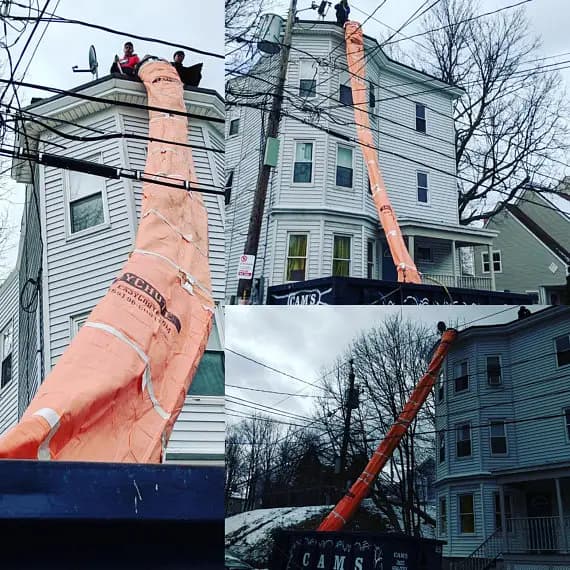
What these projects share is height. Even a modest two-story craftsman sits 18 to 22 feet above grade at the roofline — right at the threshold where OSHA requires an enclosed chute. Strip that roof or gut the second floor, and without a chute you're either doing slow bucket-brigade work or risking a violation. A fabric trash chute solves both problems: material moves fast, stays contained, and lands where you want it.
Common debris types on Washington job sites — roofing shingles, plaster lath, drywall, insulation batts, wood framing scraps — are exactly what EasyChute is built for. The chute's 22-inch diameter accepts bulky chunks without jamming, and the woven, coated poly fabric is tear-resistant enough to handle broken shingles and jagged plaster without splitting.
Choosing the Right Trash Chute Section for Washington Buildings
EasyChute is available in four section lengths. Matching your section to your building height is the most important buying decision you'll make:
- 10-foot section (≈ one story): Weighs under 3 pounds and folds small enough to fit in a drawer. Perfect for single-story additions, low porch roofs, or as an extension piece when you need a few extra feet. Available in Lite-Duty ($99) or Heavy-Duty ($149).
- 25-foot section (≈ two and a half stories): Weighs under 8 pounds. Covers a classic two-story craftsman or a three-story Victorian from roofline to dumpster. The 25 ft section is $277 and handles the majority of residential renovation work across Washington.
- 50-foot section (≈ five stories): Weighs under 15 pounds. Built for mid-rise apartment buildings, commercial gut jobs, and the taller urban buildings found in downtown Seattle, Bellevue, or Spokane's central district. The 50 ft section is $596.
Sections connect loop-to-loop using carabiners or quick-connects, with every joint overlapping 1.5 feet so dust and debris stay inside the chute rather than escaping at the seam. Middle shortening straps let you dial in the exact length so the chute mouth sits right above your dumpster or trash can. You can combine multiple sections for taller structures — a 25 ft plus a 10 ft gives you 35 feet, for example.
Working Through Washington's Weather on the Job Site
Washington's climate ranges widely. Western Washington — Seattle, Tacoma, Olympia, Everett, Bellingham — sees overcast skies and steady rainfall through much of the fall and winter. Eastern Washington around Spokane runs hotter and drier in summer and colder in winter, with occasional snow and ice. Year-round outdoor work is common across the state, which means your equipment needs to be practical in wet and cold conditions.
EasyChute's woven, coated poly fabric is tear-resistant and holds up to the physical demands of construction debris. For site-safety reasons when working in wet conditions, always secure the chute's anchor points carefully and make sure connection hardware is snug before starting demo. Wet debris — saturated insulation, for instance — is heavier than dry material, so pace your loading accordingly and don't overload the chute in one push. On snowy or icy days in Spokane or the mountain communities, confirm that your anchor points (window frame, roof edge, or scaffold rail) are clear of ice before hanging the chute.
Because the chute folds down small and weighs so little, you can bring it in and out of the building or truck between shifts rather than leaving it exposed overnight. That's a practical advantage on any multi-day job in western Washington's wet season.
The OSHA 20-Foot Rule Every Washington Contractor Should Know
OSHA regulation 29 CFR 1926.252(a) is straightforward: when construction material is dropped more than 20 feet to any point outside the exterior walls of a building, an enclosed chute must be used. In practical terms, that's a two-story house in most of Washington. Violating it puts your crew and anyone walking by at risk, and it exposes your company to fines and liability.
EasyChute meets or exceeds applicable OSHA regulations for enclosed chutes. If you're unsure whether a specific project or municipality has additional requirements beyond federal OSHA rules, check with your local building department or Washington Labor & Industries office before starting work. Rules can vary, and local inspectors are the authoritative source.
How to Set Up Your EasyChute on a Washington Job Site
- Pick your hang point. A second-floor window, roof edge, scaffold rail, or fire escape all work. The chute hangs from its four woven connection loops at the top — two in front, two in back.
- Make a hopper. A standard 32-gallon commercial trash can with the bottom removed slides over the top of the chute and acts as a funnel. Workers load debris into the can; it feeds into the chute automatically.
- Position your dumpster. Roll or park your dumpster directly below the chute's lower end. The bottom loops let you guide the chute mouth right over the opening.
- Connect additional sections if needed. Loop-to-loop connections with carabiners take about 30 seconds per joint. Each joint overlaps 1.5 feet to keep material contained.
- Adjust length. Use the middle shortening straps to fine-tune so the chute end sits just above your dumpster — not dragging on the ground, not swinging free.
- Start demo. Load debris into the hopper. Material travels down the chute and drops into the dumpster. No lifting, no throwing, no trips down the stairs.
Teardown is just as fast. Disconnect the carabiners, collapse each section, fold it up, and store it in your truck. The entire chute — even a 50-foot section — weighs under 15 pounds and takes up minimal space.
Order Your Trash Chute for Washington — Free Shipping Included
Every EasyChute order ships free to any job site in Washington state, whether that's a downtown Seattle condo building, a residential remodel in Bellevue, a historic renovation in Tacoma, or a roofing job in Spokane. You order online at fixed prices — no quotes, no freight surprises.
Browse all available sections at the EasyChute shop. If you have questions before ordering, call 855-902-4883 (Mon–Fri, 8 AM–10 PM Eastern) or email orders@easychute.com. You can also check the FAQ page for answers on setup, section sizing, and connection hardware.
Working on a roofing project in the Seattle area? See our focused guide at /rain-ready-roofing-debris-chute-seattle for roofing-specific setup tips. Or explore the full debris chute Washington resource for more job-type guidance across the state.
Frequently asked questions
Does EasyChute ship to job sites anywhere in Washington state?
Yes. EasyChute ships free to any job site in Washington — Seattle, Spokane, Tacoma, Bellevue, Everett, Bellingham, Olympia, or anywhere else in the state. You order online and the chute comes straight to your address. There are no local pickup locations; everything ships from our Saugus, MA facility.
Which section length is right for a typical two-story craftsman in Seattle or Tacoma?
The 25-foot section (approximately two and a half stories) is the right fit for most two-story homes in Washington. It covers the roofline to ground level with room to position your dumpster underneath. If you need a little more reach — say, for a steep roof with a tall ridge — you can add a 10-foot section to extend the run.
Does EasyChute meet OSHA's enclosed-chute requirement?
Yes. EasyChute meets or exceeds applicable OSHA regulations, including 29 CFR 1926.252(a), which requires an enclosed chute when debris is dropped more than 20 feet outside a building's exterior walls. Every joint overlaps 1.5 feet so material stays inside the chute rather than escaping at the seams.
Can I use the chute on multiple jobs, or is it single-use?
EasyChute is fully reusable job after job. The woven, coated poly fabric is tear-resistant, and the loop-and-carabiner connection system is designed to be connected and disconnected repeatedly. After each job, fold the sections down — a 10-foot section fits in a drawer or small box — and store them in your truck until the next project.
Do I need special tools or a crew to set up the chute on a Washington job site?
No special tools or crew are needed. The chute hangs from its built-in woven loops using carabiners or quick-connects (sold separately at any hardware store). One person can set up a full chute run before demo begins. No outriggers, frames, hoists, or rental equipment are required.