
Whether you're tearing off a slate roof in Portsmouth, gutting a Colonial in Concord, or stripping plaster from a Victorian triple-decker in Manchester, a trash chute for your New Hampshire job site keeps debris moving down safely and keeps your crew off the ground hauling buckets. EasyChute manufactures lightweight, woven coated poly fabric debris chutes in sections that connect in minutes — and we ship every order free to job sites anywhere in the Granite State.
New Hampshire's housing stock runs deep with older homes: cape cods, gambrel-roofed farmhouses, mill-era brick buildings, and multi-story downtown blocks in cities like Nashua, Manchester, Dover, and Keene. Renovation and roofing work on these structures means dealing with multiple stories of material that needs to come down fast and cleanly. A fabric construction chute is the straightforward answer — no rental crew, no outrigger frame, no waiting on a dumpster-side chute that may not even be available locally.
Trash chutes shipped free to New Hampshire
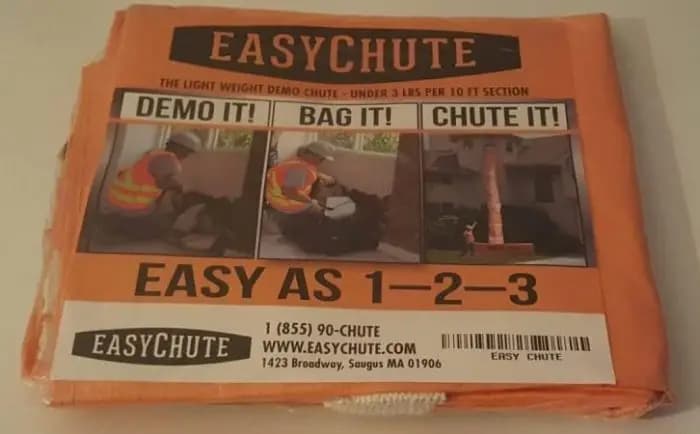
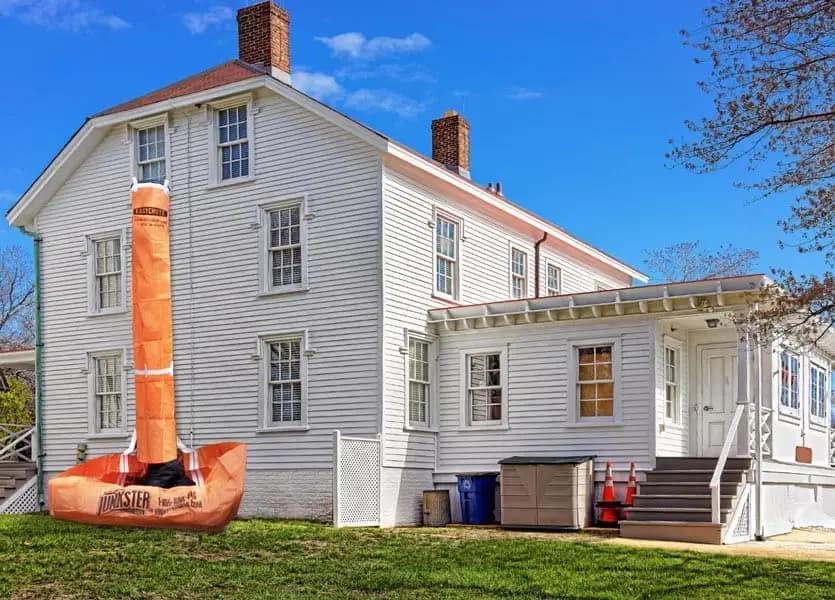
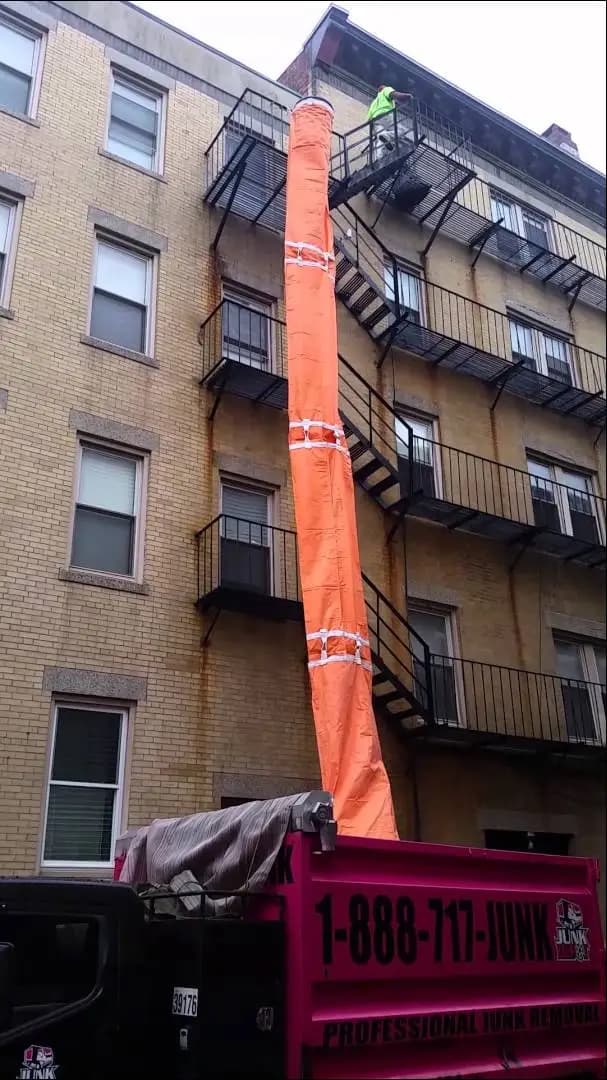
Free shipping on every order. See the full shop.
Why New Hampshire Crews Rely on a Fabric Trash Chute
New Hampshire contractors face a combination of older building stock and tight job-site conditions that make a chute the practical choice over hand-carrying debris. Downtown Manchester and Nashua have narrow lots where dumpsters sit close to the building face. Portsmouth's historic district means scaffolding goes up on structures three and four stories tall. In the Lakes Region and White Mountains foothills, roofing season is compressed and every hour matters.
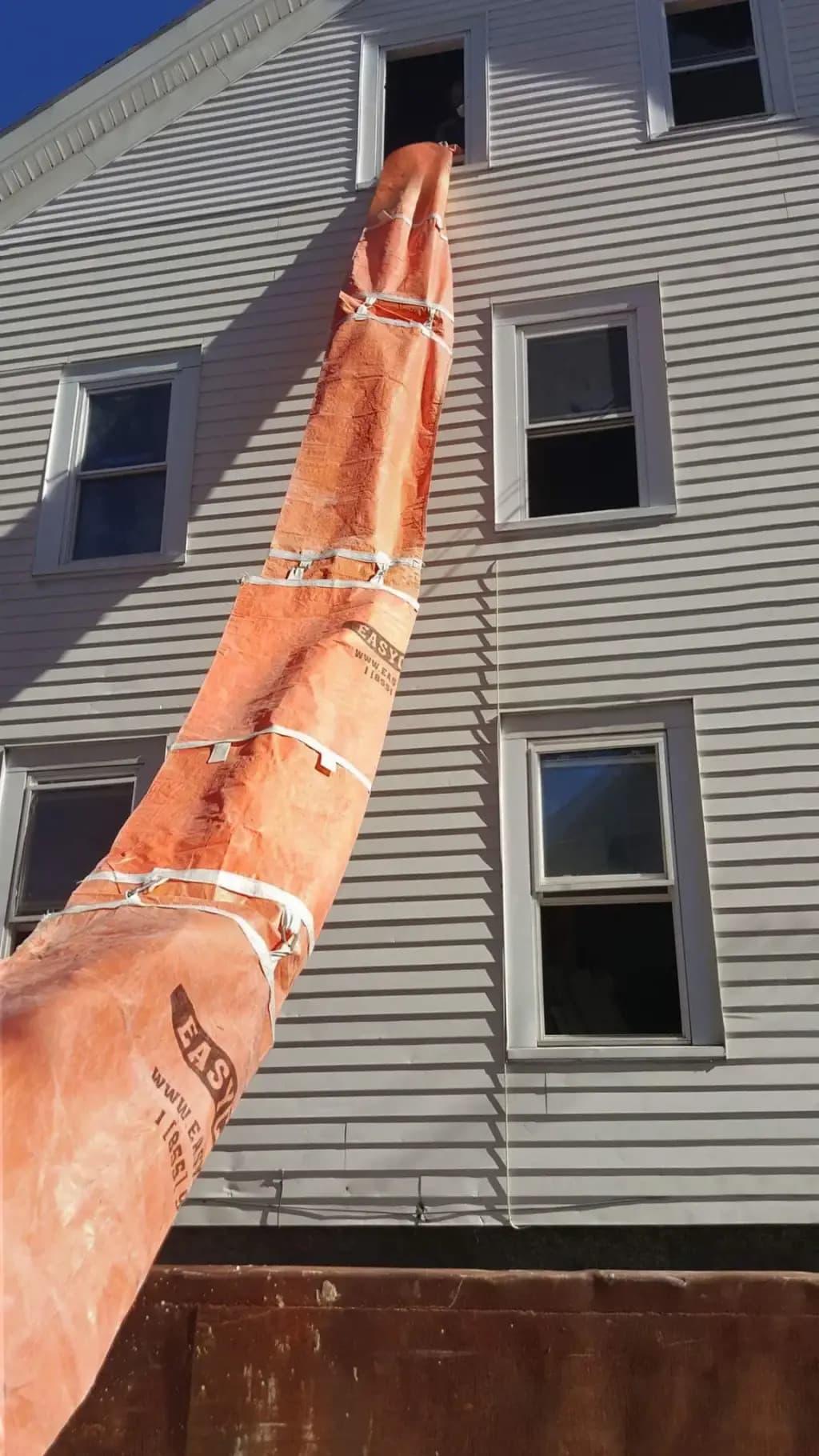
A fabric debris chute solves all of these situations the same way: hang it from a window, a roof edge, or scaffold planking; load debris at the top; let gravity do the work. No rental crew, no outrigger, no hoisting equipment. One worker at the top feeds the chute; another at the bottom minds the dumpster or trash can. That's it.
EasyChute sections connect loop-to-loop using carabiners or quick-connects. Each joint overlaps 1.5 feet, so dust and fine debris stay inside the chute rather than drifting onto the property or a neighboring lot — a real concern in Portsmouth's densely built neighborhoods and Manchester's residential streets.
Choosing the Right Sections for New Hampshire Building Heights
EasyChute sections are sized to common building heights, so picking the right combination is straightforward:
- 10 ft section ≈ one story. The EasyChute Lite-Duty 10 ft Section ($99) works for single-story additions, garage demolitions, or low rooflines. The Heavy-Duty 10 ft Section ($149) handles heavier loads like shingles or plaster.
- 25 ft section ≈ two and a half stories. The EasyChute 25 ft Section ($277) covers the two- and three-story homes that make up the bulk of New Hampshire's older housing stock — perfect for a full gut renovation in Concord or a roofing job on a farmhouse in Exeter.
- 50 ft section ≈ five stories. The EasyChute 50 ft Section ($596) reaches the taller mill conversions and mixed-use downtown buildings in Nashua and Manchester, where upper-floor work otherwise means carrying debris down multiple flights of stairs.
Sections connect together, so if a job runs taller than one section covers, you can link a 25 ft and a 10 ft, or a 50 ft with an additional 10 ft, to reach the landing zone cleanly. Middle shortening straps let you fine-tune the drop without cutting or rigging. Each section weighs under 15 lbs and folds down small enough to stow in a work van between jobs.
Working Through New Hampshire's Weather
New Hampshire gets real seasons — cold, snowy winters, warm and sometimes humid summers, and a mud season in spring that contractors know well. Renovation and roofing work often continues through shoulder-season conditions: overcast October days in the Lakes Region, early snow on a Concord rooftop in November, or a wet spring demo in Dover.
EasyChute's woven, coated poly fabric is tear-resistant and built for the physical demands of construction debris — drywall chunks, roofing shingles, plaster lath, wood scraps, and insulation. Because the chute is reusable job after job, you're not buying a new solution every season. When the job wraps, fold it up and throw it in the van.
One practical tip for cold-weather work: debris can be heavier and more compacted when wet or frozen. Use the heavy-duty sections when handling shingles or dense plaster on winter roofing jobs, and make sure the bottom of the chute clears your dumpster opening cleanly so material doesn't back up in the chute.
The OSHA 20-Foot Rule on New Hampshire Job Sites
OSHA 29 CFR 1926.252(a) is clear: when material is dropped more than 20 feet to any point outside a building's exterior walls, an enclosed chute must be used. That rule applies on job sites across New Hampshire just as it does everywhere else in the country. A three-story farmhouse in Keene, a mill-era apartment block in Manchester, a commercial building in Nashua — any time debris drops more than 20 feet outside the wall line, you need an enclosed chute.
EasyChute meets or exceeds applicable OSHA regulations, so you can use it confidently on OSHA-covered job sites. If you have questions about specific permit requirements or local building department rules for your New Hampshire project, check directly with the municipality — requirements can vary by city and by project type.
For more on setup and local considerations, see our guides for Manchester NH chute setup and Nashua NH chute setup, or review rental cost comparisons for Manchester and Nashua.
How to Set Up Your EasyChute on a New Hampshire Job Site
- Pick your hang point. A window opening, roof edge, scaffold plank, or fire escape all work. The chute's four woven connection loops at the top attach directly — no additional hardware beyond carabiners or quick-connects, which you likely already carry.
- Connect your sections. Loop-to-loop with carabiners. Each joint overlaps 1.5 ft automatically. If you're combining a 25 ft and a 10 ft, start at the top and work down.
- Set up a hopper. A standard 32-gallon commercial trash can with the bottom cut out makes a clean hopper at the top opening. Set it in the window or on the scaffold and load debris straight into it.
- Position the dumpster. The bottom of the chute should hang inside or just above your dumpster. Adjust length with the middle shortening straps if needed.
- Load and go. One person feeds debris at the top; one minds the dumpster below. Keep the chute clear between loads if you're running heavy material like bundles of shingles.
Order a Trash Chute for Your New Hampshire Job Site
EasyChute ships free to job sites anywhere in New Hampshire — whether that's a roofing job in Portsmouth, a gut renovation in Manchester, or a seasonal camp teardown in the White Mountains foothills. There's no freight charge, no local pickup required, and no minimum order. You order online at a fixed price and the chute comes to you.
Browse all sections and pick the right length for your project at our online shop. Have a question before you order? Reach us by phone at 855-902-4883 (Mon–Fri, 8 AM–10 PM Eastern) or email orders@easychute.com. We're also happy to help you figure out how many sections you need for a multi-story job. If you're working on projects in neighboring states, see our pages for New Jersey and New Mexico as well.
Frequently asked questions
Does EasyChute ship trash chutes to New Hampshire job sites?
Yes — EasyChute ships free to job sites anywhere in New Hampshire, from Portsmouth and Manchester to Keene and North Conway. You order online at a fixed price and the chute ships directly to you. There's no local pickup required.
Which section length is right for a typical two- or three-story New Hampshire home?
The 25 ft section (approximately two and a half stories) covers most two- and three-story homes common across New Hampshire. If you need a little more reach, pair it with a 10 ft section. Sections connect loop-to-loop with carabiners and each joint overlaps 1.5 ft to contain dust and debris.
Does EasyChute comply with the OSHA enclosed-chute rule?
Yes. EasyChute meets or exceeds applicable OSHA regulations, including OSHA 29 CFR 1926.252(a), which requires an enclosed chute when material is dropped more than 20 feet outside a building's exterior walls. If you're unsure about additional local requirements in your New Hampshire municipality, check with the local building department.
Can I use an EasyChute debris chute on a roofing job in New Hampshire?
Absolutely. EasyChute is built for roofing debris including shingles, plaster, drywall, insulation, and wood scraps. Hang it from the roof edge or scaffold, set up a 32-gallon trash can with the bottom removed as a hopper, and load shingles directly in. For heavier roofing material, use the Heavy-Duty 10 ft sections.
Can I connect multiple EasyChute sections together for a taller building?
Yes. Sections connect loop-to-loop using carabiners or quick-connects, and each joint overlaps 1.5 ft to keep debris contained. You can combine a 50 ft section with additional 10 ft or 25 ft sections to reach whatever drop your New Hampshire job site requires. Middle shortening straps let you fine-tune the overall length.
Nearby states
Related guides
- Debris Chute Rental Cost Estimate for Manchester, NH: 2026 Complete Pricing & Budget Guide
- Debris Chute Rental Cost Per Day in Nashua, NH: 2026 Contractor Pricing & Budget Guide
- Debris Chute Setup for Manchester, NH Contractors: 2026 Complete Local Guide
- Debris Chute Setup for Nashua, NH Contractors: 2026 Complete Local Guide