
When you need a trash chute in Nebraska, EasyChute ships one directly to your job site — no rental counter, no freight broker, no waiting on a local supplier. Whether you're tearing off a roof in Omaha, gutting a historic commercial building in Lincoln, or remodeling a house in Grand Island or Kearney, a fabric debris chute lets your crew drop drywall, shingles, and plaster scraps straight into a dumpster below without carrying load after load down a ladder.
EasyChute's construction trash chutes are made from woven, coated poly fabric, weigh under 15 lbs for even the longest section, and fold down small enough to toss in a job-site bag between projects. Every order ships free to any address in Nebraska — residential, commercial, or a bare lot — so you can get the right section length ordered and move on to the work.
Trash chutes shipped free to Nebraska
Free shipping on every order. See the full shop.
Why Nebraska Crews Rely on a Fabric Trash Chute
Nebraska's building stock reflects its geography. Omaha's older neighborhoods are full of early-twentieth-century brick bungalows and two-story frame houses that generate heavy debris loads during gut renovations — think plaster-and-lath walls, original hardwood, and blown-in insulation. Lincoln sees steady commercial and university-adjacent remodeling work. Smaller cities like Hastings, Norfolk, and Columbus have a mix of aging retail blocks and residential infill projects. Across all of them, the challenge is the same: how do you move a lot of heavy debris off an elevated structure without risking an injury or a citation?
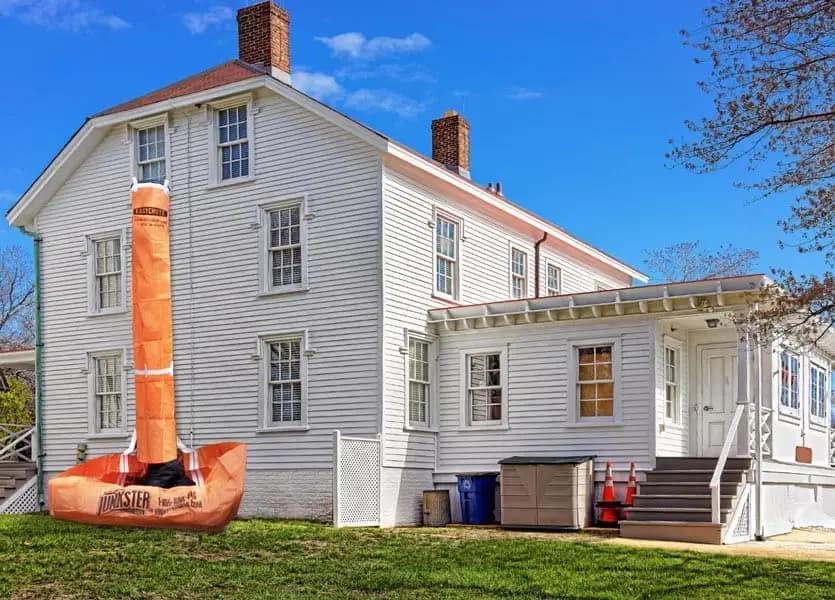
A debris chute solves that problem. Instead of staging material on a scaffold deck until it's full, then shoveling it into a wheelbarrow and muscling it down a ramp, your crew feeds debris into the top of the chute and gravity does the rest. The 22-inch diameter handles shingles, broken drywall sheets, wood framing scraps, and chunks of plaster without jamming. Each section overlaps the next by 1.5 feet at every joint, so dust and fine debris stay inside the chute and don't drift across the neighbor's property or into traffic.
The OSHA Rule Every Nebraska Contractor Should Know
OSHA 29 CFR 1926.252(a) is clear: when material is dropped more than 20 feet to any point outside the exterior walls of a building, an enclosed chute must be used. That threshold is easy to hit on a two-story house — roofline to dumpster on the ground can clear 20 feet quickly once you factor in the pitch of the roof and the height of the dumpster's walls. Nebraska OSHA enforces federal construction standards, so the rule applies on any job site in the state. Always check with your local building department for any site-specific requirements, but the enclosed-chute mandate is a federal baseline your crew needs to meet on taller work.
EasyChute meets or exceeds applicable OSHA regulations, giving you a straightforward way to stay compliant without renting specialty equipment or calling in a rigging crew.
Choosing the Right Section Length for Nebraska Buildings
Most Nebraska residential projects involve one- and two-story structures, but commercial renovations and roofing jobs on larger buildings push debris drops higher. Here's how EasyChute section lengths map to typical building heights:
- 10 ft section ≈ one story. The EasyChute Lite-Duty 10 ft Section ($99) works well on single-story additions, low-slope commercial roofs, or as an add-on section to extend a longer run. The Heavy-Duty 10 ft Section ($149) is the better call for roofing shingles and dense debris that hits the chute walls hard.
- 25 ft section ≈ two and a half stories. The EasyChute 25 ft Section ($277) covers the majority of Nebraska residential tearoffs — a two-story house with a steep roof to a ground-level dumpster is a common use case. Under 8 lbs and folds to fit in a duffel.
- 50 ft section ≈ five stories. The EasyChute 50 ft Section ($596) handles larger commercial jobs: multi-story office buildings, Omaha warehouse conversions, or mixed-use blocks in Lincoln's downtown corridor. Under 15 lbs total weight.
You can also connect sections using the four woven loops at the top and bottom of each piece. Link them loop-to-loop with carabiners or quick-connects and you've got a longer custom run. Middle shortening straps let you fine-tune the drop so the bottom of the chute lands right at the dumpster opening.
Working Through Nebraska's Climate
Nebraska sees serious seasonal swings — cold, windy winters on the plains and hot, humid summers. Those conditions don't stop construction work; they just change how you manage the site. When wind picks up across an open Nebraska lot, loose debris on a scaffold deck or tossed from a roof edge becomes a hazard to workers and bystanders below. A closed chute keeps material contained so it goes where you want it regardless of what's blowing across the site. In winter, ice and packed snow on a roof can make multiple trips down a ladder with loaded buckets genuinely dangerous. Getting debris into the chute from a safe position near the roof edge reduces the number of trips and keeps your crew's footing where it matters most.
Setting Up Your EasyChute on a Nebraska Job Site
Setup takes a few minutes and requires no outriggers, frames, or rented hoists. Here's the basic process:
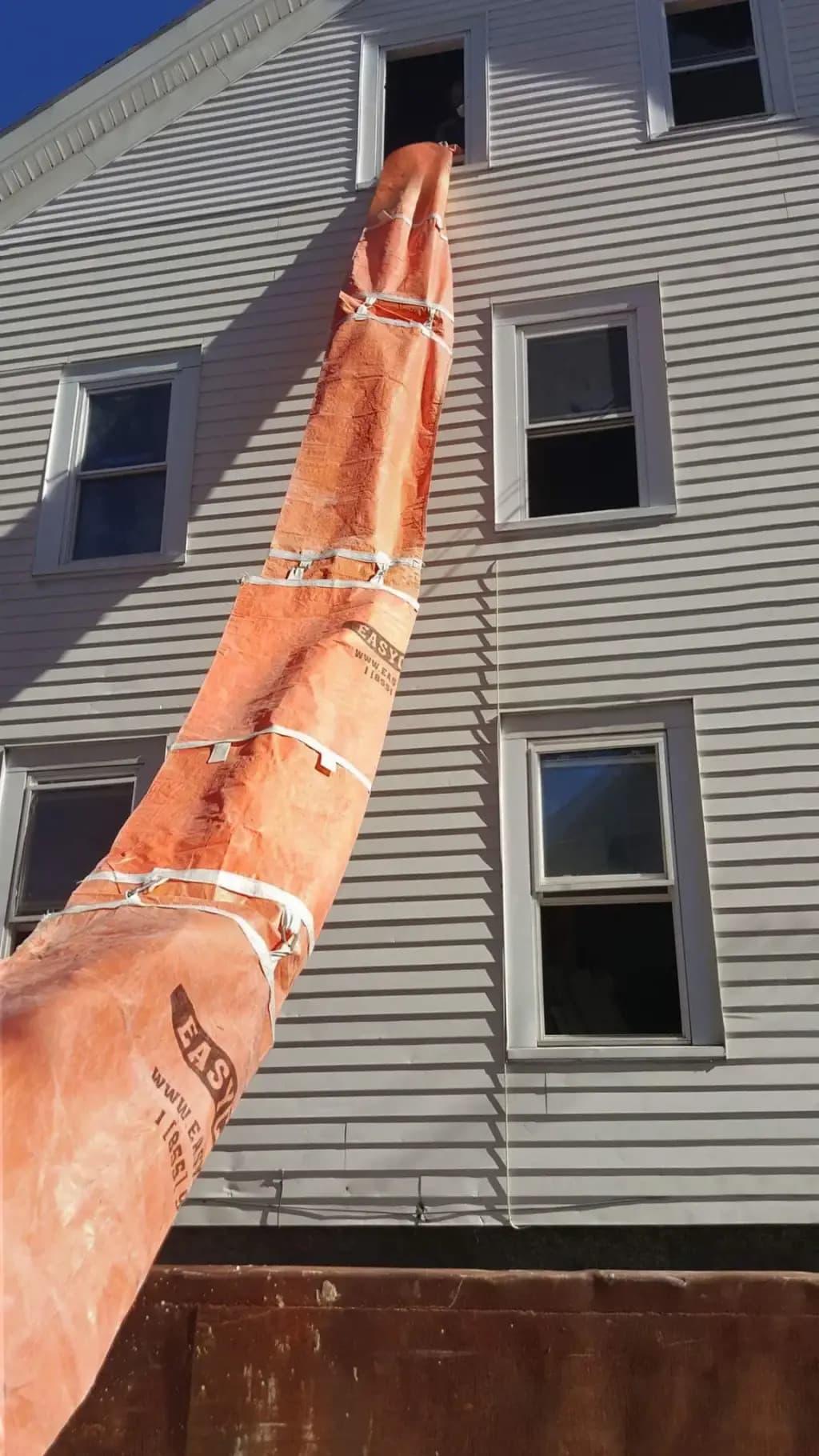
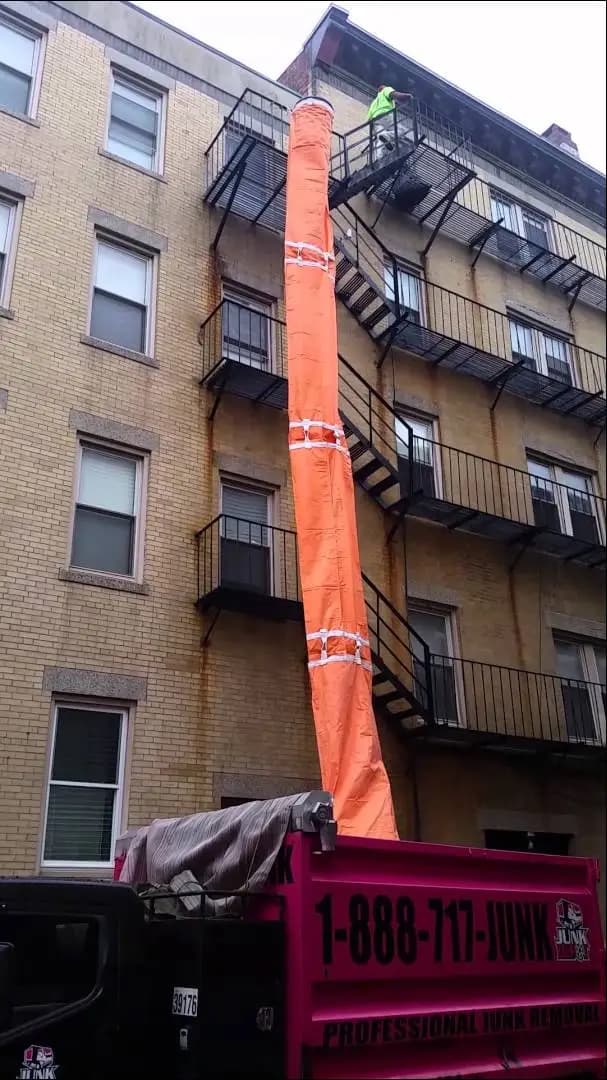
- Choose your anchor point. The chute hangs from a window opening, roof edge, scaffold rail, or fire escape. Pick the point closest to where your debris is concentrated.
- Attach the top loops. Clip the four woven loops at the top of the chute to your anchor using carabiners or quick-connects. The chute hangs vertically by gravity.
- Add a hopper (optional but helpful). A standard 32-gallon commercial trash can with the bottom cut out makes an effective funnel at the top opening, keeping debris directed into the chute and reducing spillage at the feed point.
- Connect additional sections if needed. Loop-to-loop connections with a 1.5-foot overlap at each joint keep the run sealed. Use the shortening straps to dial in the final length.
- Position the dumpster. Get the rim of the dumpster under the bottom of the chute. Debris falls directly in. Reposition the dumpster as it fills.
- Feed and work. Load debris into the top — shingles, drywall, plaster, insulation, wood scraps — and let gravity do the hauling.
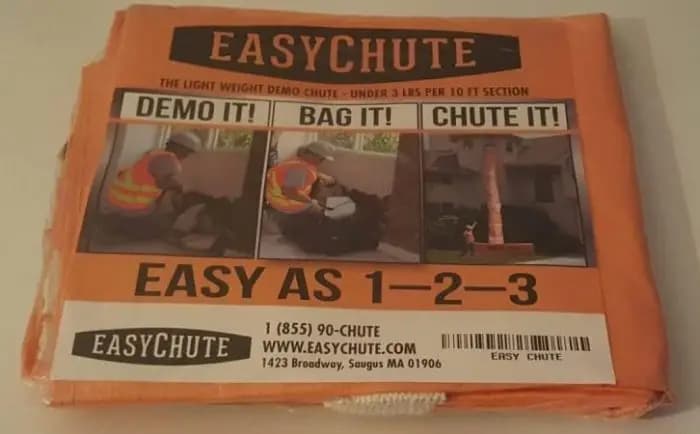
When the job wraps, the chute folds back down small. A 10 ft section fits in a drawer or small box. The whole system is reusable job after job, so the cost spreads across every project you bring it to.
Order a Trash Chute for Your Nebraska Job Site
Every EasyChute order ships free anywhere in the United States — that includes every Nebraska job site from Omaha and Lincoln to the smallest town in the Sandhills. Fixed online pricing means no haggling and no hidden freight charges. If you have questions before you order, call us at 855-902-4883 (Monday through Friday, 8 AM–10 PM Eastern) or email orders@easychute.com. You can also browse the FAQ page for answers on section lengths, connections, and OSHA compliance.
Ready to put a chute on your next project? Shop all EasyChute sections and get free shipping straight to your Nebraska job site.
Also working across state lines? See our pages for trash chutes in Missouri and trash chutes in Nevada for job sites in neighboring regions.
Frequently asked questions
Does EasyChute ship to job sites in Nebraska?
Yes. Every EasyChute order ships free to any address in the United States, including Nebraska job sites — whether you're in Omaha, Lincoln, Grand Island, or a rural location. Just enter your job-site address at checkout.
What section length should I order for a two-story house tearoff in Nebraska?
The 25 ft section is the most common choice for two-story residential work. At roughly two and a half stories, it typically reaches from the roofline or second-floor window to a ground-level dumpster with room to spare. If your drop is tighter, a 10 ft section can extend the run.
Does Nebraska require an enclosed chute on construction projects?
Federal OSHA regulations (29 CFR 1926.252(a)) require an enclosed chute when material is dropped more than 20 feet to any point outside a building's exterior walls. Nebraska enforces federal OSHA construction standards, so this rule applies on Nebraska job sites. Always confirm any additional local requirements with your building department.
Can the chute handle roofing shingles and plaster debris?
Yes. EasyChute is built for common construction debris including roofing shingles, plaster and lath, drywall, insulation, and wood scraps. The heavy-duty 10 ft section is a good choice when debris is dense or hits the chute walls with force, such as when sliding shingles in from a steep pitch.
How do I connect multiple EasyChute sections for a longer drop?
Each section has four woven loops at the top and four at the bottom. Connect sections loop-to-loop using carabiners or quick-connects. Every joint overlaps by 1.5 feet to keep debris and dust contained inside the chute. Use the middle shortening straps to adjust the final length to your specific drop.