
When you need a trash chute for a New Jersey job site, EasyChute ships directly to you — no local pickup, no freight broker, no rental crew. Whether you're gutting a century-old Victorian in Cape May, re-roofing a mid-rise in Newark, or renovating a condo tower in Jersey City, our woven, coated poly fabric chutes get debris from upper floors to a ground-level container safely and cleanly.
New Jersey has one of the most varied building stocks on the East Coast: dense urban rowhouses and brownstones, post-war apartment buildings, commercial strips, and everything from beach bungalows to high-rise towers. That variety means debris removal is rarely simple. A lightweight, modular trash chute that sets up in minutes — and ships free to any job site in the state — makes the job a lot easier.
Trash chutes shipped free to New Jersey
Free shipping on every order. See the full shop.
Why New Jersey Contractors Rely on a Fabric Trash Chute
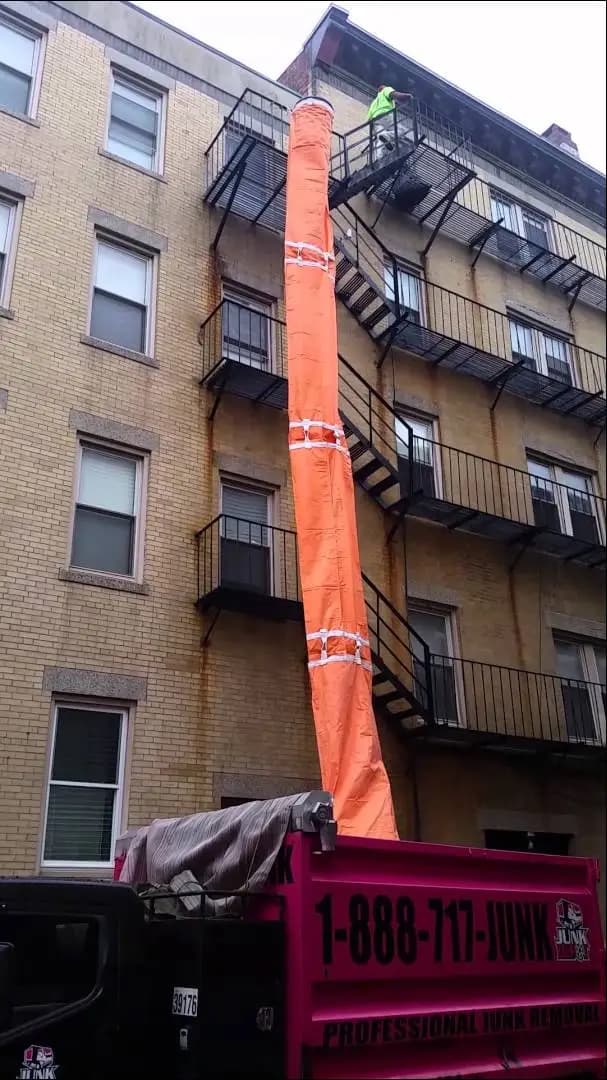
From Paterson to Trenton to Atlantic City, New Jersey crews deal with a wide range of building types and project scopes. Urban jobs in Newark and Jersey City often involve multi-story brick or concrete buildings where carrying debris down stairwells is slow, dangerous, and hard on the crew. Suburban remodels in towns across Morris, Essex, and Middlesex counties frequently involve tight lots where a dumpster on the street is the only option — meaning debris has to travel from an upper window or roof edge straight down.
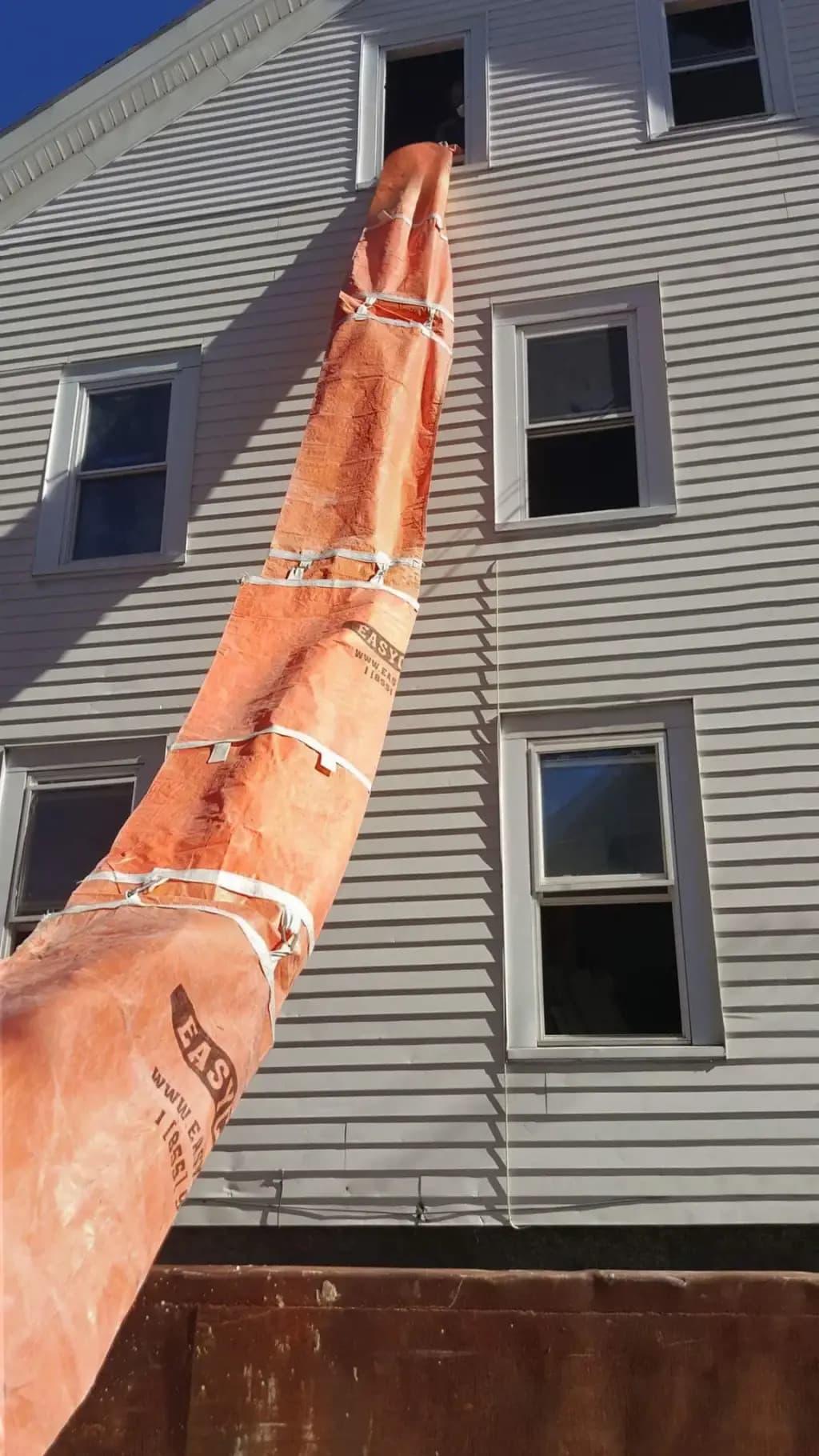
A fabric debris chute solves both problems. It channels drywall, plaster and lath, roofing shingles, wood scraps, and insulation from the work area directly into a dumpster or roll-off below. No more relay-carrying through stairwells, no more tossing material off a roof into a pile. The enclosed design keeps dust and debris contained, which matters in New Jersey's dense neighborhoods where neighboring properties are often just a few feet away.
Check out our alley debris chute setup guide for Newark jobs and our condo debris chute workflow for Jersey City for project-specific tips.
The OSHA Rule Every New Jersey Crew Needs to Know
OSHA 29 CFR 1926.252(a) is federal law, and it applies on every New Jersey job site: when material is dropped more than 20 feet to any point outside a building's exterior walls, an enclosed chute must be used. That threshold is reached at roughly the second or third floor on most structures.
New Jersey has a lot of buildings that hit that threshold fast — two- and three-family homes, four-story walkups, older industrial buildings being converted to lofts. Using an enclosed trash chute isn't just smart practice on those jobs; it's required. EasyChute meets or exceeds applicable OSHA regulations, so you're covered.
Trash Chute New Jersey: Choosing the Right Section Length
EasyChute sections are modular and connect to each other, so you can match the chute to your building's height. Here's a quick reference:
- 10 ft section ≈ one story. A two-story house needs two 10 ft sections; a three-story needs three. Mix and match as the job changes.
- 25 ft section ≈ two and a half stories. A good choice for a three- or four-story building when you want fewer connection points.
- 50 ft section ≈ five stories. Ideal for mid-rise apartment renovations in cities like Newark, Jersey City, or Hoboken.
Sections connect loop-to-loop using carabiners or quick-connects, with a 1.5 ft overlap at every joint that keeps dust and debris inside the chute rather than spilling at the seams. Middle shortening straps let you fine-tune the length without cutting anything.
Browse all options at the EasyChute shop:
- EasyChute Lite-Duty Trash Chute — 10 ft Section — $99
- EasyChute Heavy-Duty Trash Chute — 10 ft Section — $149
- EasyChute Trash Chute — 25 ft Section — $277
- EasyChute Trash Chute — 50 ft Section — $596
Working Through New Jersey's Climate
New Jersey gets all four seasons in full force — hot, humid summers along the shore and inland, cold and sometimes snowy winters, and a fair amount of rain year-round. Construction and renovation work in the state rarely stops for the calendar, which means your debris removal equipment has to hold up through real working conditions.
EasyChute is made from tear-resistant, woven coated poly fabric that handles the physical demands of construction debris — heavy shingles, jagged plaster chunks, broken lumber. It folds down small enough to stow in a truck or a storage box between jobs, and it's reusable job after job. Plan your setup so the bottom of the chute deposits directly into your container, minimizing exposure to whatever the weather is doing that day.
How to Set Up a Trash Chute on a New Jersey Job Site
Setup is straightforward and doesn't require any outriggers, frames, hoists, or rental crew. Here's how it works:
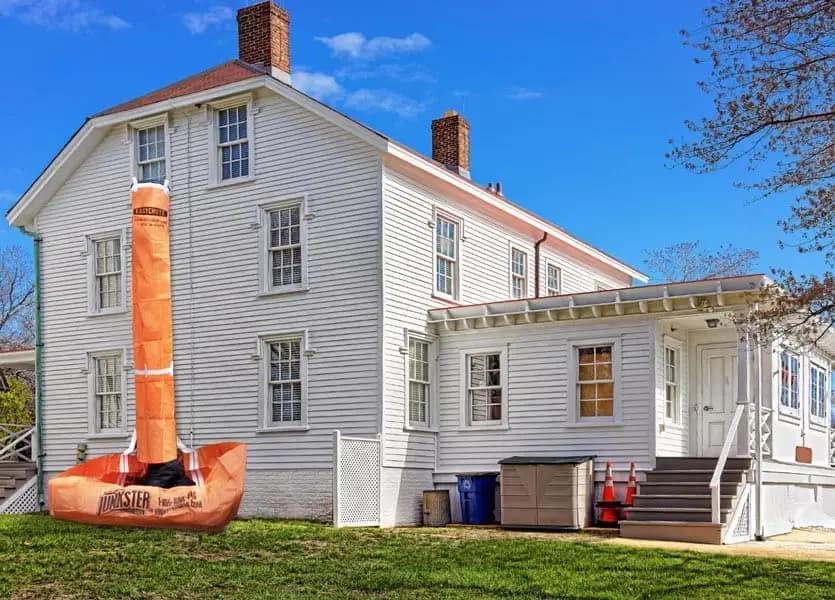
- Position your container. Place your dumpster, roll-off, or roll-off bag directly below the drop point — a window, roof edge, scaffold platform, or fire escape.
- Make a hopper. A standard 32-gallon commercial trash can with the bottom removed works as a funnel at the top of the chute. It catches debris from workers above and directs it into the chute opening.
- Hang the top section. Use the four woven connection loops at the top of the first section to tie or hook the chute to the anchor point. The chute has two loops in front and two in back for a stable hang.
- Add sections as needed. Connect additional 10 ft, 25 ft, or 50 ft sections loop-to-loop with carabiners or quick-connects. Each joint overlaps 1.5 ft.
- Adjust length. Use the middle shortening straps to dial in the final length so the chute mouth sits just above the open container below.
- Load debris. Feed material into the hopper. Keep loads manageable — don't drop heavy single items that could bunch the chute.
For more tips specific to New Jersey projects, see our guide on common debris chute mistakes New Jersey contractors make.
Free Shipping to New Jersey Job Sites
Every EasyChute order ships free anywhere in the United States — including every job site in New Jersey, from Bergen County in the north to Cape May County at the southern tip. You order online at a fixed price, and we ship to your job site address. No freight surcharges, no rural delivery fees.
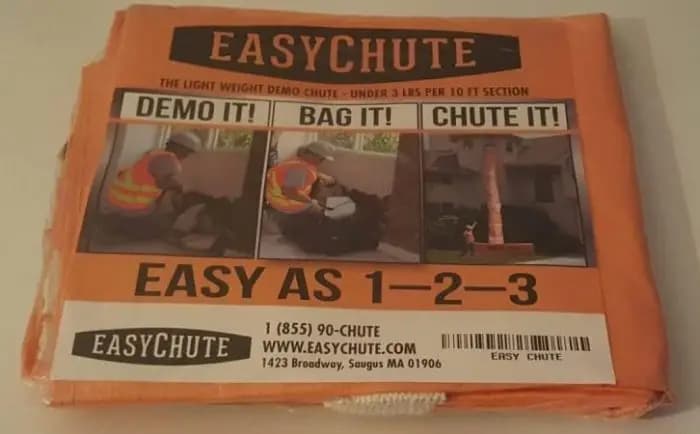
A 10 ft section weighs under 3 lbs and folds into a space no bigger than a small box. A 50 ft section weighs under 15 lbs. Your crew won't need a forklift or a loading dock to receive the shipment.
If you have questions before ordering, call us at 855-902-4883 (Mon–Fri, 8 AM–10 PM Eastern) or email orders@easychute.com. Otherwise, head straight to the shop and order the sections you need today.
Also working in nearby states? See our pages for trash chutes in New York and trash chutes in New Hampshire.
Frequently asked questions
Does EasyChute ship trash chutes to job sites anywhere in New Jersey?
Yes. EasyChute ships free to any job site address in New Jersey — from urban sites in Newark or Jersey City to suburban and shore locations throughout the state. You order online and we ship direct to you.
How many sections do I need for a typical New Jersey rowhouse or two-family home?
A standard two-story rowhouse or two-family home typically needs two 10 ft sections, since each 10 ft section covers approximately one story. For a three-story building, add a third section. You can also use a single 25 ft section for a two-and-a-half story drop.
Is an enclosed trash chute legally required on New Jersey job sites?
Under federal OSHA regulation 29 CFR 1926.252(a), an enclosed chute is required whenever material is dropped more than 20 feet to any point outside a building's exterior walls. That's a federal rule that applies on New Jersey job sites. Check with your local building department for any additional local requirements.
Can I connect multiple EasyChute sections for a taller building?
Yes. Sections connect loop-to-loop using carabiners or quick-connects, and each joint overlaps 1.5 ft to keep debris inside the chute. You can combine 10 ft, 25 ft, and 50 ft sections in any combination to reach the height you need.
What types of debris can I run through an EasyChute on a New Jersey renovation?
EasyChute is built for common construction and renovation debris including drywall, plaster and lath, roofing shingles, wood scraps, and insulation — the typical waste on most New Jersey remodel and re-roofing jobs. Keep loads manageable and avoid dropping single heavy or sharp objects that could bunch or stress the chute.