
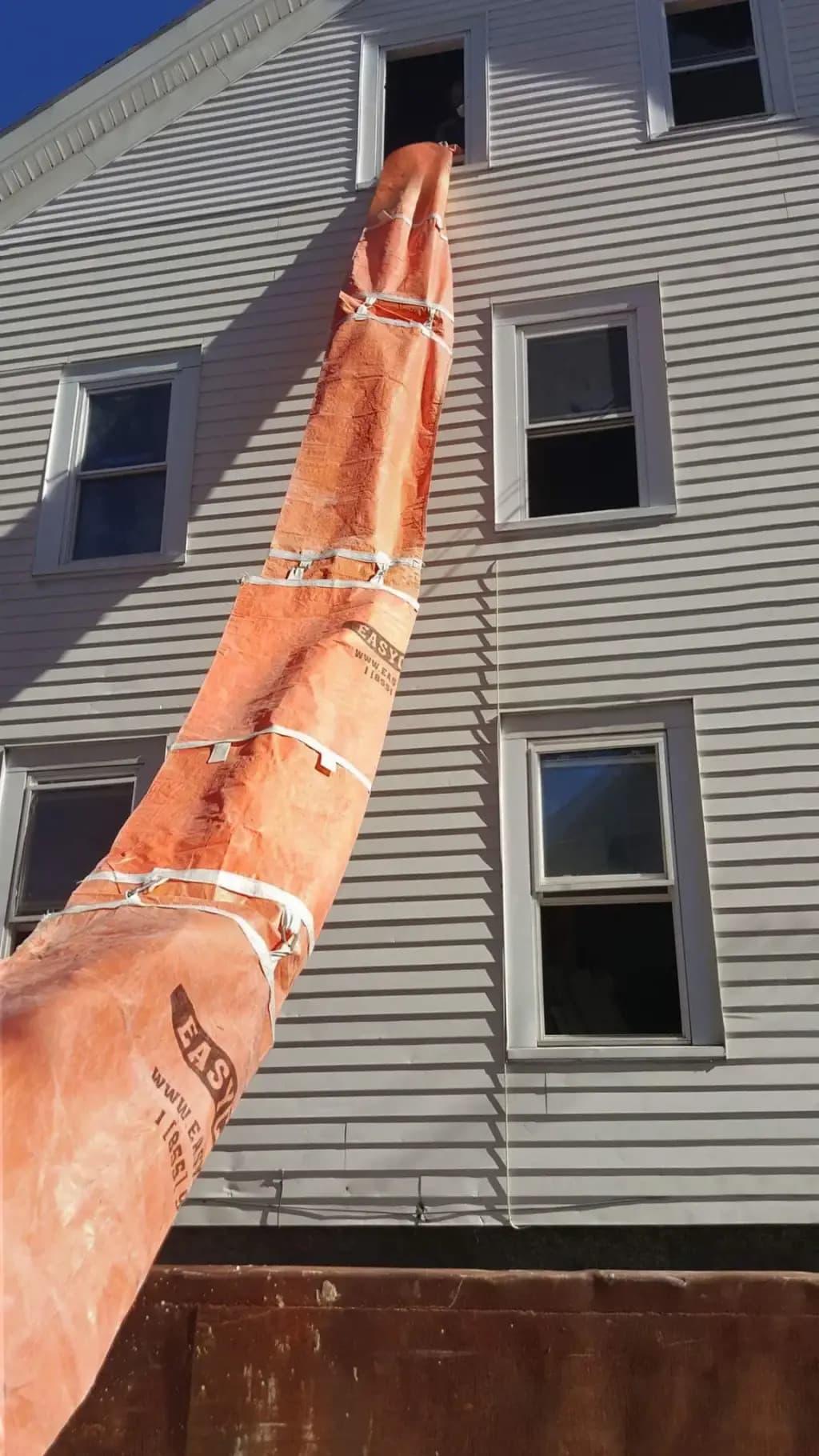
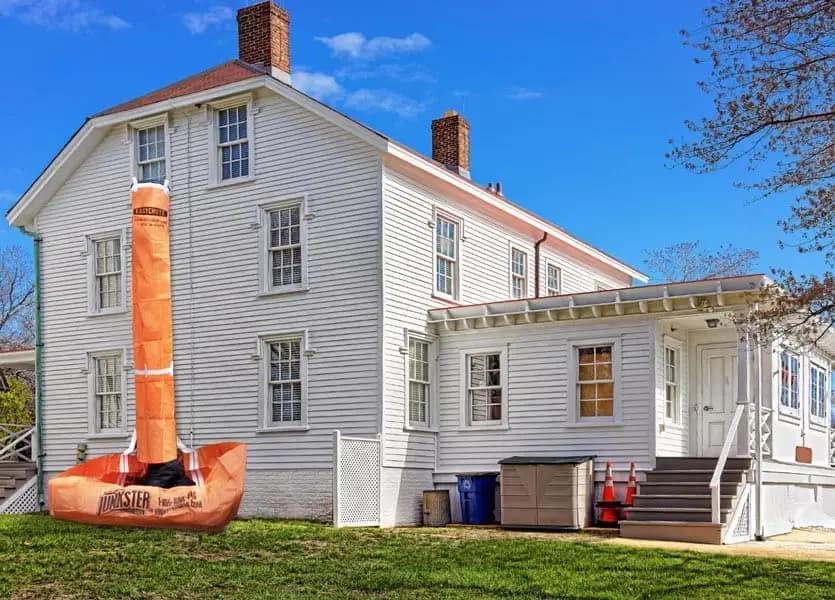
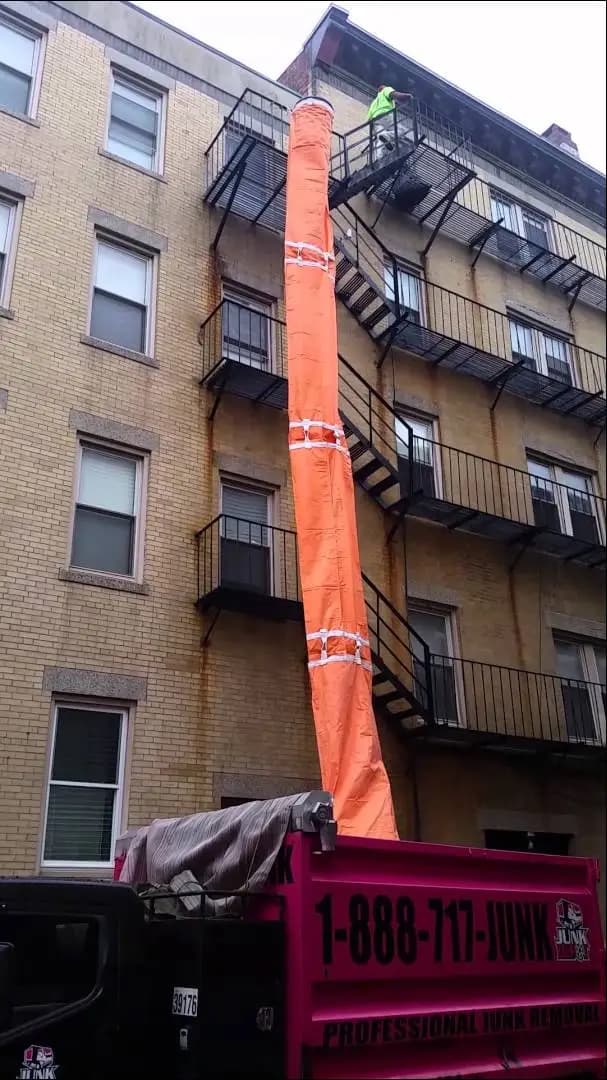
If you're running a renovation, roofing job, or gut-rehab anywhere in Connecticut — from a triple-decker in Bridgeport to a colonial in Hartford or a mid-rise in New Haven — a trash chute Connecticut crews can rely on makes a real difference. Tossing debris out a window or carrying it down flights of stairs slows every trade down and creates unnecessary safety hazards. A fabric debris chute channels material straight into a dumpster at street level, cleanly and in compliance with OSHA's enclosed-chute requirement.
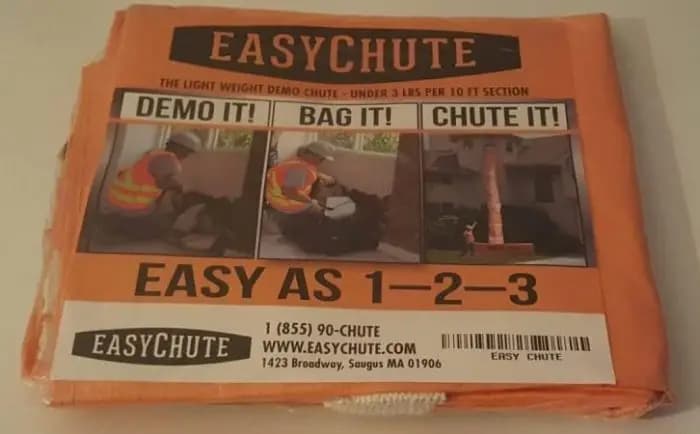
EasyChute manufactures a lightweight, woven coated poly debris chute that ships free to job sites anywhere in Connecticut. There's no rental counter to call, no deposit, and no crew to wait on — just order online, receive it at your site, hang it from a window or roof edge in minutes, and get back to work. This page walks you through which sections fit Connecticut's common building types, how to set up the chute, and how to stay on the right side of OSHA.
Trash chutes shipped free to Connecticut
Free shipping on every order. See the full shop.

Why Connecticut Crews Use a Fabric Trash Chute
Connecticut's building stock is older and denser than most people outside New England expect. Downtown Bridgeport, New Haven, and Hartford are packed with multi-story wood-frame buildings, brick apartment blocks, and century-old commercial structures that are constantly being rehabbed. Smaller cities like Waterbury, Stamford, and Norwalk have equally old housing stock — two- and three-story colonials, Cape Cods, and Victorian multi-families — alongside newer mixed-use developments going up along transit corridors.
On jobs like these, debris management is a daily problem. A fabric chute solves it by creating a single, controlled path for drywall chunks, plaster and lath, roofing shingles, wood scraps, and insulation from upper floors straight to the dumpster. No relay teams on the stairs. No wheelbarrows on scaffolding. No debris raining past bystanders on a busy sidewalk.
The EasyChute system uses 22-inch-diameter sections made of tear-resistant, woven coated poly fabric. Each section weighs under 15 pounds even at 50 feet, folds small enough to fit in a truck bed bag, and connects to additional sections with carabiners at the woven loops — no tools required. You buy it once and reuse it from job to job.
Choosing the Right Trash Chute Sections for Connecticut Buildings
Connecticut's most common renovation targets range from two-story single-families up to five- and six-story apartment buildings in the urban cores. Here's how EasyChute's section lengths map to those heights:
- One story (~10 ft): A single EasyChute Lite-Duty 10 ft Section ($99) covers a one-story drop for lighter materials like drywall and insulation. For heavier loads — roofing shingles, demo rubble — step up to the Heavy-Duty 10 ft Section ($149).
- Two to three stories (~20–30 ft): The EasyChute 25 ft Section ($277) covers roughly two and a half stories in a single piece. For a three-story building, pair it with a 10 ft section connected loop-to-loop — each joint overlaps 1.5 feet to keep dust and debris inside the chute.
- Four to five stories (~40–50 ft): The EasyChute 50 ft Section ($596) handles up to five stories. It weighs under 15 pounds and two workers can hang it without any outrigger, hoist, or rental frame.
- Taller buildings or flexible coverage: Sections link together, so a 50 ft plus a 10 ft gives you six stories of drop. Mix and match based on what your current project requires.
Not sure which length fits your job? Check the FAQ page or call us at 855-902-4883 (Mon–Fri 8 AM–10 PM Eastern) and we'll help you figure it out.
The OSHA Enclosed-Chute Rule Every Connecticut Contractor Should Know
OSHA 29 CFR 1926.252(a) is federal law that applies on every construction site in Connecticut: when material is dropped more than 20 feet to any point outside the exterior walls of a building, an enclosed chute must be used. That threshold is easy to hit — it's roughly two stories. Most gut-rehabbed triple-deckers, apartment buildings, and commercial structures in Bridgeport, New Haven, or Hartford will trigger this requirement as a matter of course.
EasyChute meets or exceeds applicable OSHA regulations. If you're on a job where debris is going over 20 feet and outside the building envelope, an enclosed fabric chute isn't just smart — it's required. Check with your local building department or job-site safety officer regarding any Connecticut-specific requirements that may apply to your project.
Working Through Connecticut's Weather
Connecticut has a full four-season climate: cold, snowy winters and warm, humid summers. Fall and spring bring plenty of rain. Because exterior renovation work often has to push through imperfect weather, it's worth knowing what to expect from your chute setup in those conditions.
The EasyChute fabric is woven coated poly — tear-resistant and built for job-site use. When conditions get rough, debris still needs to move, and the chute keeps doing its job. That said, always exercise standard job-site caution in high winds: secure the chute at multiple attachment points and check that your anchors at the top are solid before loading debris.
Connecticut's winters also mean frozen or compacted shingle material on roofing jobs. Make sure debris is broken into manageable pieces before loading the chute — oversized chunks can bridge across the 22-inch diameter and create a blockage. The middle shortening straps let you adjust the chute's length on the fly, which can also help manage flow rate on steeper drops.
How to Set Up a Trash Chute on a Connecticut Job Site
Setup is straightforward and doesn't require a crew or any special equipment:
- Rig the top anchor. Hang the top of the chute from a window frame, roof edge, scaffold rail, or fire escape. No outrigger or hoist needed — the woven loops at the top (two front, two back) give you four solid attachment points.
- Add a hopper. A standard 32-gallon commercial trash can with the bottom cut out, set in the window opening above the chute, creates a clean loading funnel. Workers on upper floors dump debris into the can; it feeds straight into the chute.
- Connect additional sections if needed. Line up the bottom loops of the upper section with the top loops of the next section. Clip them together with carabiners or quick-connects. Each joint overlaps 1.5 feet so dust and material stay inside.
- Position the dumpster. Place your dumpster or debris container directly below the chute's bottom opening. Keep the area clear of foot traffic.
- Adjust with shortening straps. Use the middle shortening straps to fine-tune the chute's hang so the bottom opening is positioned safely above the container.
For job-site-specific guidance, see our chute setup walkthrough for Avon, CT — the same principles apply across the state.
Free Shipping to Connecticut Job Sites
EasyChute ships free to every job site in Connecticut — Bridgeport, New Haven, Hartford, Stamford, Waterbury, Norwalk, Danbury, and everywhere in between. Order directly at easychute.com/shop at the fixed prices listed. No quotes, no negotiations, no rental contracts. When the job is done, fold the chute up and take it to the next site.
If you want to compare ownership costs against renting locally, take a look at our rental-cost breakdowns for Bridgeport, Bristol, and Wallingford. For questions, reach us at orders@easychute.com or call 855-902-4883 Monday through Friday, 8 AM to 10 PM Eastern. You can also visit our contact page.
Frequently asked questions
Does EasyChute ship trash chutes to Connecticut job sites?
Yes — EasyChute ships free to job sites anywhere in Connecticut, including Bridgeport, New Haven, Hartford, Stamford, Waterbury, and all smaller towns. Order at the fixed prices listed on our shop page. There are no rental contracts and no local pickup required.
Which section length should I order for a three-story building in Connecticut?
A three-story building is roughly 30 feet. The 25 ft Section covers about two and a half stories, so pairing it with a single 10 ft Section gives you full coverage. The sections connect loop-to-loop with carabiners in minutes, and each joint overlaps 1.5 feet to contain dust and debris.
Does Connecticut require an enclosed chute under OSHA rules?
Federal OSHA regulation 29 CFR 1926.252(a) requires an enclosed chute whenever material is dropped more than 20 feet to any point outside the exterior walls of a building. That threshold applies on Connecticut job sites just as it does nationwide. Check with your local building department or site safety officer for any additional requirements that may apply to your specific project.
Can I reuse the chute on multiple Connecticut job sites?
Absolutely. The EasyChute is built for repeated use — it folds down small enough to store in a truck bed or equipment locker between jobs. A 10 ft section weighs under 3 pounds and a 50 ft section weighs under 15 pounds, so moving it from site to site adds no meaningful burden.
Is renting a debris chute locally in Connecticut cheaper than buying an EasyChute?
Rental costs vary by location and project length. We break down local rental pricing for Bridgeport, Bristol, and Wallingford on dedicated pages so you can compare. Many Connecticut contractors find that ownership pays off after just a few jobs, with no deposit, no pickup fees, and no return deadlines.
Nearby states
Related guides
- Debris Chute Rental Cost Estimate for Bridgeport, CT: 2026 Complete Pricing & Budget Guide
- Debris Chute Rental Cost Estimate for Bristol, CT: 2026 Complete Pricing & Budget Guide
- Debris Chute Rental Cost Estimate for Wallingford, CT: 2026 Complete Pricing & Budget Guide
- Debris Chute Setup for Avon, CT Contractors: 2026 Complete Local Guide