
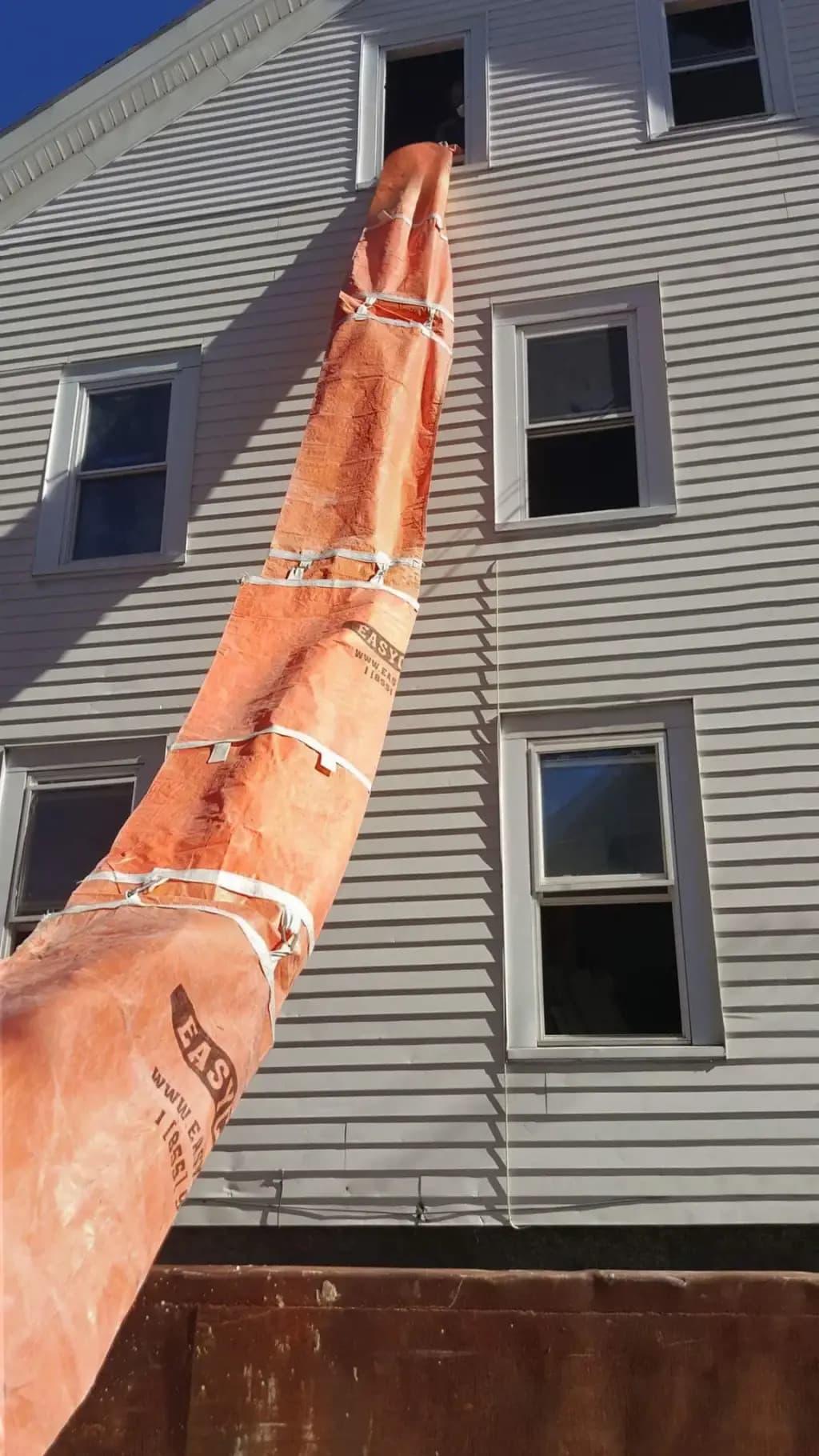
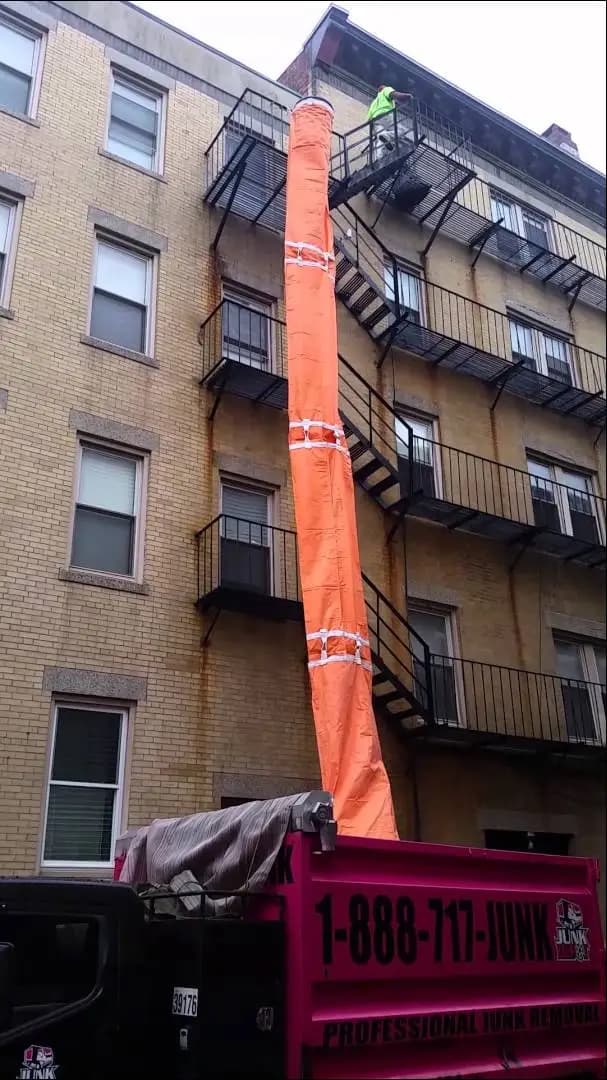
When you're tearing off a roof in Denver, gutting a Victorian in Colorado Springs, or remodeling a condo in Boulder, debris doesn't move itself. A trash chute for Colorado job sites lets one worker drop shingles, drywall, and plaster straight into a dumpster below — no bucket brigades, no hoisting, no tossing material off an open edge. EasyChute ships fabric debris chutes free to job sites anywhere in Colorado, so you can order online today and get to work.
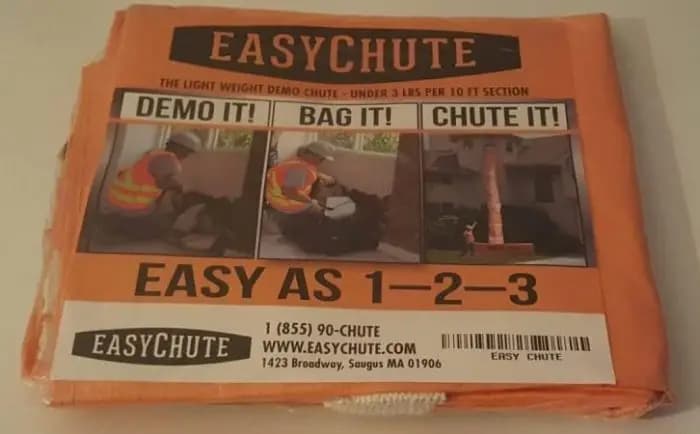
EasyChute construction chutes are built from woven, coated poly fabric that's tear-resistant and folds down small enough to ride in the back of a pickup or a tool bag. Each section connects loop-to-loop with carabiners, hangs from a window, roof edge, or scaffold, and packs up in minutes when the job is done. They're reusable job after job — which makes a real difference when you're moving between the Front Range, the mountain towns, and the Western Slope all season long.
Trash chutes shipped free to Colorado
Free shipping on every order. See the full shop.
Why Colorado Crews Rely on a Fabric Debris Chute
Colorado's building stock is as varied as its geography. The Denver metro is full of mid-century ranch homes and two-story brick bungalows going through full gut renovations. Cities like Fort Collins, Pueblo, and Grand Junction have older commercial blocks and multi-family buildings that need roofing work, window replacements, and structural repairs on a regular cycle. Resort communities — Aspen, Vail, Telluride — see constant high-end remodels where keeping a site clean and safe is non-negotiable.
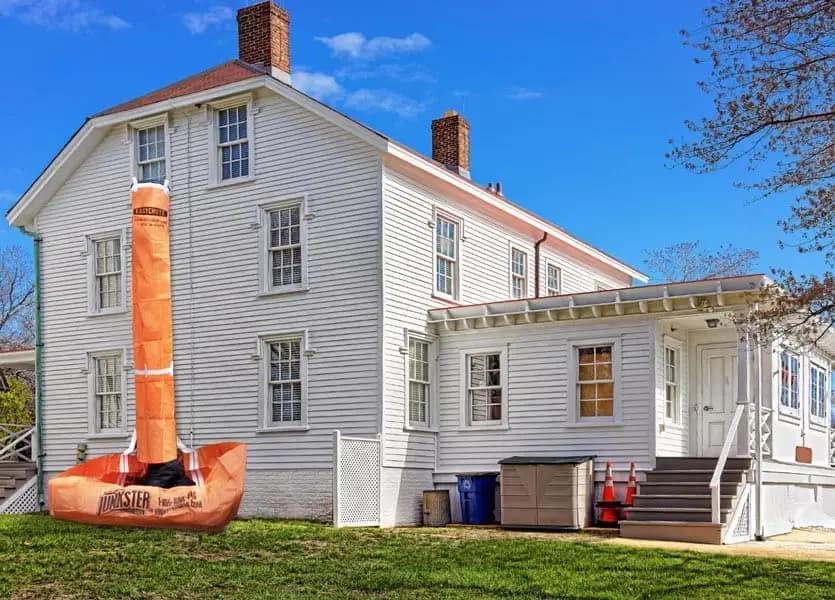
In all of those settings, the problem is the same: debris has to come down from height. Carrying it down by hand is slow and risks a back injury. Tossing it off an open edge creates a hazard for anyone below. A trash chute channels everything through one controlled path — straight into a dumpster or debris pile — so the job moves faster and the site stays safer.
Because EasyChute sections weigh so little (a 10-ft section is under 3 lbs), a single worker can hang the chute, load the sections, and start dropping material without waiting for a second person. That matters when you're running a lean crew on a tight schedule.
Choosing the Right Trash Chute Sections for Colorado Buildings
The right chute length comes down to your building height. Here's a simple way to think about it:
- One story: A single EasyChute Lite-Duty 10 ft Section ($99) reaches from a first-floor window or low roofline to the ground. Good for small residential jobs and one-story commercial work.
- Two to three stories: The EasyChute 25 ft Section ($277) covers roughly two and a half stories. This is the workhorse for the two-story brick bungalows and townhomes common across Denver neighborhoods like Congress Park and Curtis Park, or the older main-street buildings in Fort Collins and Greeley.
- Four to five stories: The EasyChute 50 ft Section ($596) reaches approximately five stories. Use it on mid-rise condo buildings, apartment complexes, and taller commercial structures throughout the Front Range and beyond.
- Heavier debris loads: For roofing tear-offs, concrete board, or heavy lath-and-plaster, the EasyChute Heavy-Duty 10 ft Section ($149) is built to handle the extra impact. Stack multiple sections with carabiners to reach any floor.
Sections connect at four woven loops — two front, two back — and every joint overlaps by 1.5 feet to keep dust and fine debris inside the chute rather than escaping into the air. Middle shortening straps let you fine-tune the length when a standard section is slightly too long for the drop.
Working Through Colorado's Climate
Colorado contractors deal with one of the more demanding weather environments in the country. The Front Range gets intense afternoon sun and rapid temperature swings; the mountains see heavy snow well into spring and again in early fall; afternoon thunderstorms roll through from June through August. Wind is a constant factor across the Eastern Plains and the high country alike.
When you're planning a roofing job or exterior renovation, keep those conditions in mind for your crew's safety and scheduling — but the chute setup itself is straightforward regardless of season. On windy days, position the chute on the lee side of the building where possible, and make sure the top connection points are secured firmly to the roof edge, scaffold rail, or window frame before loading debris. The fabric is tear-resistant and built for job-site conditions, but your crew should always check that all carabiner connections are locked before material goes in.
If you're working in a mountain community and the job pauses for weather, the chute folds down small and stores easily in a truck or on-site until conditions improve. No bulky frame to cover, no rented equipment to worry about.
OSHA's Enclosed-Chute Rule — What Colorado Contractors Need to Know
Federal OSHA regulation 29 CFR 1926.252(a) is clear: when material is dropped more than 20 feet to any point outside the exterior walls of a building, an enclosed chute must be used. EasyChute debris chutes meet or exceed applicable OSHA requirements, so you're covered on any job where the drop exceeds that threshold.
That rule applies across Colorado just as it does everywhere in the country. If you're unsure whether a specific local or municipal ordinance adds additional requirements for your project — particularly in a city like Denver or Boulder where building codes are actively updated — check with your local building department before the job starts. Never assume a permit or code requirement hasn't changed.
How to Set Up Your EasyChute on a Colorado Job Site
- Choose your anchor point. A window opening, roof edge, or scaffold rail all work. The chute hangs from the four woven loops at the top of the first section.
- Build a hopper. A standard 32-gallon commercial trash can with the bottom cut out drops right over the top of the chute and funnels material in without spillage. It's a common job-site solution that costs nothing extra.
- Connect your sections. Clip sections together loop-to-loop using carabiners or quick-connects. Each connection overlaps 1.5 feet automatically. Add sections until you reach the dumpster or debris pile below.
- Adjust the length. Use the middle shortening straps on each section to take up any extra slack and keep the chute hanging straight.
- Load debris and go. Feed material into the hopper at the top. Everything travels down through the enclosed chute and lands in your container below.
- Break it down. Unclip the carabiners, fold each section, and store them. The whole system is ready for the next job.
Order Your Trash Chute with Free Shipping to Colorado
EasyChute ships every order free to job sites across Colorado — Denver, Colorado Springs, Aurora, Fort Collins, Lakewood, Thornton, Pueblo, Greeley, Boulder, Grand Junction, and everywhere in between. There's no minimum order, no freight surcharge, and no need to haul the chute from a local supplier. Order online, and it ships directly to wherever the work is.
Have a question before you order? Call 855-902-4883 Monday through Friday, 8 AM to 10 PM Eastern, or email orders@easychute.com. You can also visit the FAQ page for answers to common questions, or reach out directly.
Ready to put a debris chute to work on your next Colorado project? Shop all EasyChute sections and place your order today.
Also serving contractors in neighboring states: Arkansas and California. See also our dedicated page for debris chutes in Denver.
Frequently asked questions
Does EasyChute ship trash chutes to job sites in Colorado?
Yes. EasyChute ships free to job sites anywhere in Colorado, from the Denver metro and Front Range to the mountain communities and the Western Slope. You order online at fixed prices and the chute ships directly to your site — no local pickup required.
Which chute section should I order for a two-story house renovation in Colorado?
The EasyChute 25 ft Section ($277) covers roughly two and a half stories and is a strong fit for most two-story residential work. If your debris loads are especially heavy — like roofing shingles or lath and plaster — consider adding a Heavy-Duty 10 ft Section at the top where impact is greatest.
Do EasyChute debris chutes meet OSHA requirements for Colorado job sites?
EasyChute construction chutes meet or exceed applicable OSHA requirements, including 29 CFR 1926.252(a), which requires an enclosed chute when material is dropped more than 20 feet outside a building's exterior walls. If you have questions about additional local regulations, check with your local building department.
Can I use an EasyChute on a mountain job site where wind is a factor?
Yes. On windy days, hang the chute on the sheltered side of the building where possible and double-check that all carabiner connections are locked before loading debris. The fabric is tear-resistant and designed for job-site use, and the chute folds down quickly if you need to pause work for weather.
Can I connect multiple EasyChute sections to reach a taller building?
Absolutely. Sections connect loop-to-loop with carabiners or quick-connects, and every joint overlaps 1.5 feet to keep debris contained. You can stack as many sections as the job requires — a 50 ft section reaches about five stories, and additional 10 ft sections can extend the run further.