
When you're stripping a craftsman bungalow in Los Angeles, gutting a Victorian flat in San Francisco, or tearing off a tile roof in San Diego, you need a fast, safe way to move debris from upper floors to the dumpster below. A trash chute in California is the practical answer — no outriggers, no rental crew, no guesswork. EasyChute ships its lightweight woven, coated poly fabric debris chutes free to job sites anywhere in the state, from Eureka to El Centro.
This page walks California contractors, roofers, property managers, and remodeling crews through choosing the right chute length for common California building heights, staying on the right side of OSHA's enclosed-chute rule, setting up on a real job, and placing an order online at a fixed price with free shipping to California.
Trash chutes shipped free to California
Free shipping on every order. See the full shop.
Why California Crews Use a Fabric Trash Chute
California's building stock is as varied as its geography. In Los Angeles you'll find everything from single-story ranch houses to 1920s Spanish-revival two-flats to modern mid-rises in Hollywood and Downtown. San Francisco is famous for its Victorians, Edwardians, and attached row houses — buildings where narrow side yards make wheelbarrow runs nearly impossible. Sacramento has dense neighborhoods of two-story craftsmen and post-war tract homes. San Jose and the broader Bay Area are full of split-levels and three-story condos undergoing value-add renovations. San Diego's coastal neighborhoods mix beach bungalows with two- and three-story townhomes.
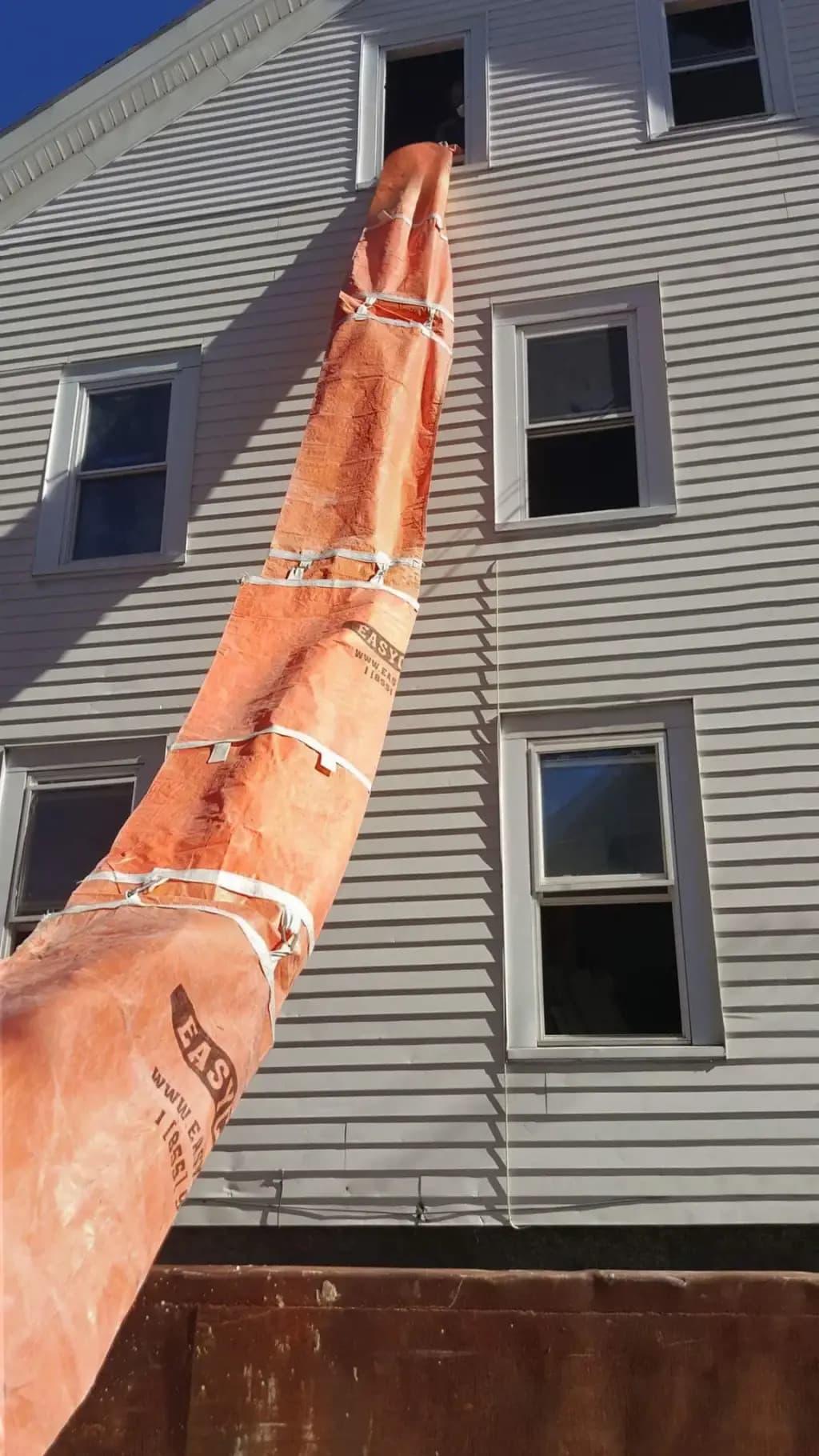
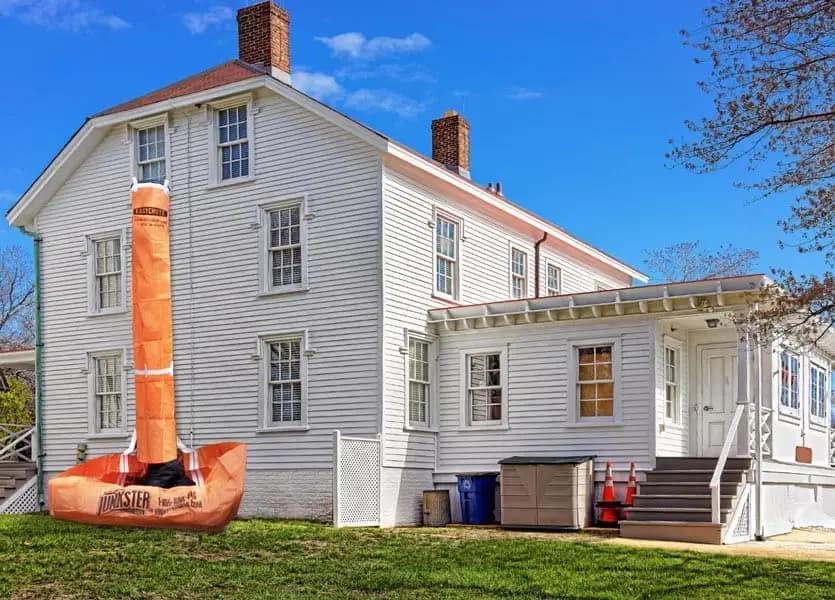
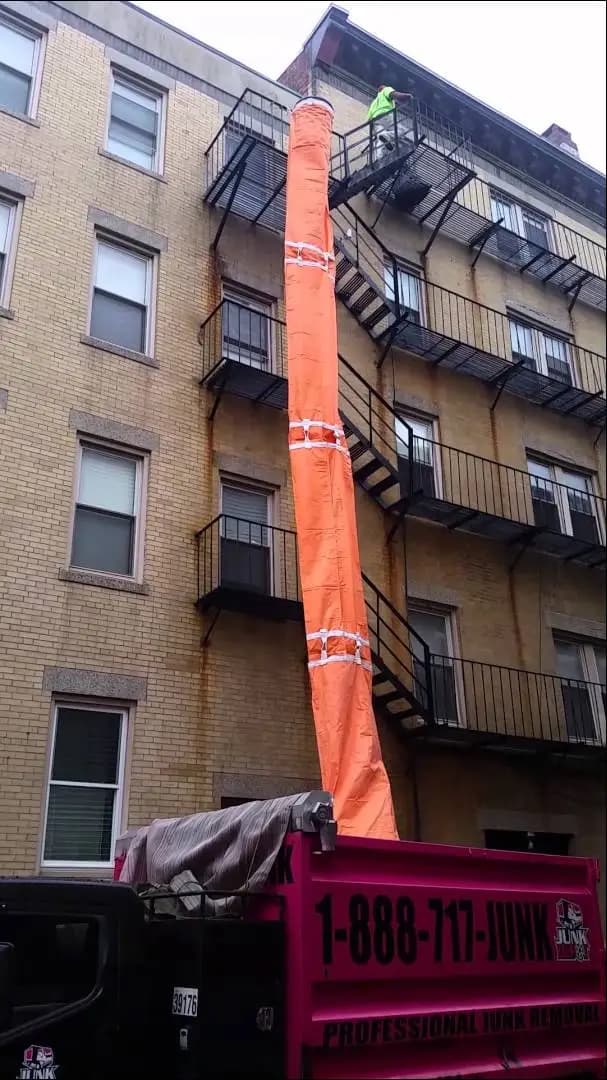
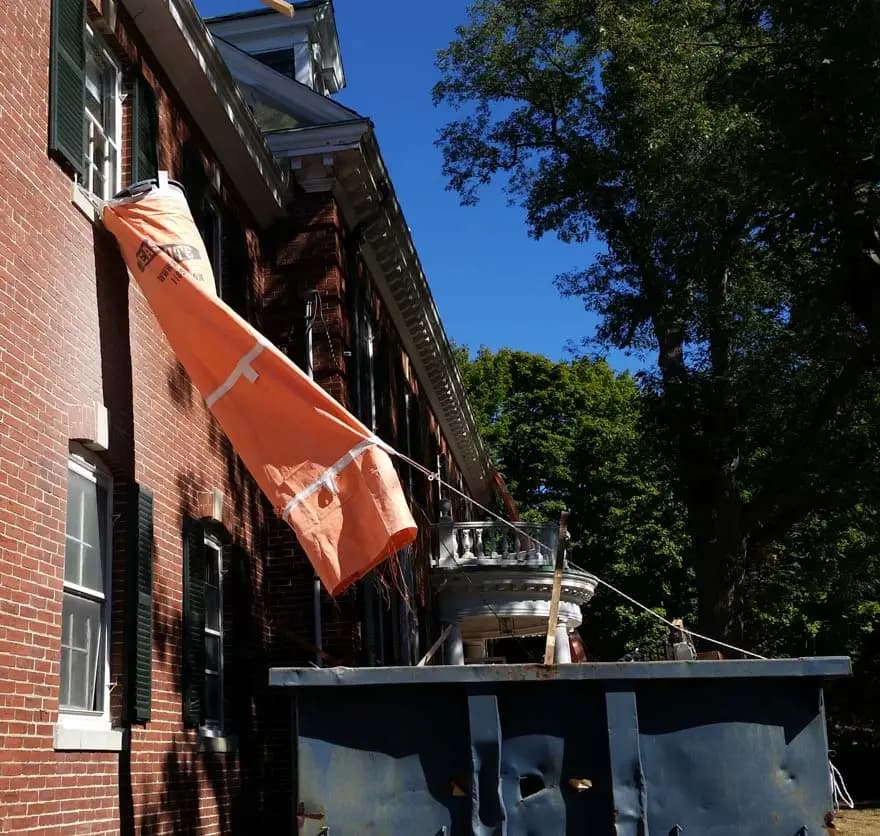
Across all of these project types, the problem is the same: demo debris — drywall, plaster and lath, roofing shingles, wood scraps, insulation — needs to get from an upper floor to a dumpster or commercial trash can on the ground without showering workers below or drifting into a neighbor's yard. A fabric debris chute solves that problem cleanly. It hangs from a window sill, roof edge, scaffold, or fire escape and channels material in a controlled stream straight down. No outriggers, no hoists, no hired crew.
For roofing contractors working on California's many low-slope and clay-tile roofs, a debris chute for Los Angeles or any other California city keeps a clean site, protects landscaping, and helps satisfy general contractors and property owners who expect a tidy worksite.
Choosing the Right Trash Chute Length for California Buildings
EasyChute sections are designed around story heights, which makes sizing straightforward:
- 10 ft section ≈ one story. Use one for single-story work or add sections for taller buildings.
- 25 ft section ≈ two and a half stories. A good fit for the classic San Francisco Victorian or a three-story LA condo gut-out.
- 50 ft section ≈ five stories. Built for mid-rise work in Downtown Los Angeles, San Jose's high-density corridors, or any commercial renovation project running five floors or more.
Sections connect loop-to-loop with carabiners or quick-connects. Four woven connection loops sit at the top of each section and four at the bottom, so adding or removing a section takes minutes. Every joint overlaps 1.5 feet to keep dust and debris contained inside the chute — a real advantage in California's urban neighborhoods where dust complaints travel fast. Middle shortening straps let you fine-tune the total length when your drop doesn't land on an even story boundary.
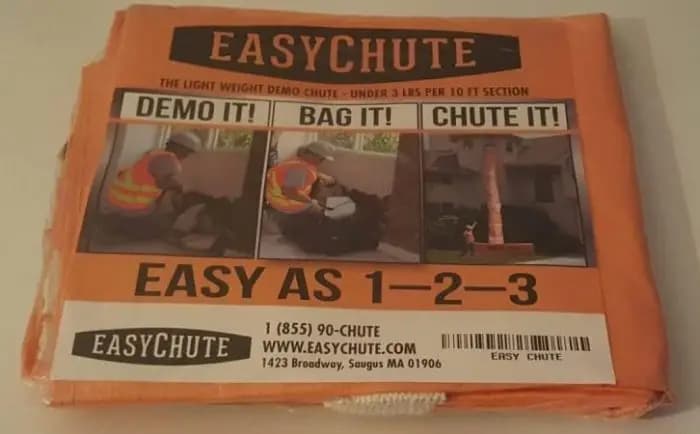
Because a 10 ft section weighs under 3 lbs and folds to drawer size, one person can carry and set up the entire chute. A 25 ft section is under 8 lbs; a 50 ft section is under 15 lbs. These numbers matter when you're hauling gear up a narrow San Francisco staircase or across a flat roof in the Inland Empire heat.
Product Options and Pricing
- EasyChute Lite-Duty Trash Chute — 10 ft Section — $99
- EasyChute Heavy-Duty Trash Chute — 10 ft Section — $149
- EasyChute Trash Chute — 25 ft Section — $277
- EasyChute Trash Chute — 50 ft Section — $596
Every order ships free to any California job site. Browse all chutes in the shop.
California's Climate and Your Debris Chute
California covers an enormous range of conditions — coastal fog in San Francisco, dry desert heat in Palm Springs, wet winters in Sacramento's valley, and warm Santa Ana wind events in Southern California. None of that changes how you use a fabric debris chute in the field, but a few practical points are worth keeping in mind.
On windy days — common along the coast and during Santa Ana events in Los Angeles and Orange County — secure the chute's anchor points carefully and keep debris loads reasonable so the chute hangs plumb. Our coastal wind debris chute setup guide covers anchor strategies for exposed sites. In the Central Valley or Southern California deserts during summer, early-morning setup keeps the crew working before peak heat. During Northern California's rainy season, clean and dry the chute before folding it for storage so it's ready for the next job.
The woven, coated poly fabric is tear-resistant and reusable job after job — that durability matters when you're running a busy California renovation schedule.
OSHA's Enclosed-Chute Rule and California Job Sites
Federal OSHA standard 29 CFR 1926.252(a) states that when material is dropped more than 20 feet to any point outside the exterior walls of a building, an enclosed chute must be used. EasyChute meets or exceeds applicable OSHA regulations, so any California job site where debris drops exceed 20 feet needs a fully enclosed chute — not an open pipe, not a tarp, not bare tossing.
California also operates its own OSHA plan (Cal/OSHA), which is at least as stringent as the federal standard. Always check current requirements with your local building department and Cal/OSHA before starting work — rules can vary by project type and jurisdiction. Using a proper enclosed debris chute is one of the simplest ways to keep your crew compliant and your site safe.
For high-rise projects in Downtown LA or the South Bay, see our high-rise debris chute setup guide for Los Angeles for additional rigging tips.
How to Set Up an EasyChute on a California Job Site
- Anchor the top section. Hang it from a window sill, roof edge, scaffold rail, or fire escape using the four woven loops at the top. No outriggers or special frames needed.
- Add sections below. Connect each additional section loop-to-loop with carabiners or quick-connects. Every joint overlaps 1.5 ft automatically.
- Set your hopper. Place a standard 32-gallon commercial trash can with the bottom removed at the top of the chute. This acts as a funnel and keeps debris aimed into the chute.
- Adjust length. Use the middle shortening straps to fine-tune the total drop so the bottom of the chute sits just above your dumpster or collection point.
- Load debris. Feed drywall, roofing shingles, plaster, insulation, and wood scraps through the hopper. Keep the dumpster positioned directly below for clean collection.
- Break down and store. Disconnect sections, fold each one small, and store for the next job. The whole system packs into a small box or fits in a work vehicle easily.
Order Your Trash Chute for California — Free Shipping Included
EasyChute ships every order free to job sites across California — Los Angeles, San Francisco, San Diego, Sacramento, San Jose, Fresno, Long Beach, Oakland, and every city and town in between. There are no freight surcharges for California delivery. Order online at a fixed price any time, or call 855-902-4883 (Mon–Fri 8 AM–10 PM Eastern) or email orders@easychute.com if you have questions before you buy.
If you work across state lines, we also ship to neighboring states — see our pages for trash chutes in Arizona and trash chutes in Colorado. Have questions about your order or your specific setup? Visit our FAQ page or reach out on the contact page.
Shop EasyChute debris chutes and order online today.
Frequently asked questions
Does EasyChute ship trash chutes to California job sites for free?
Yes. Every EasyChute order ships free to any job site in California, including Los Angeles, San Francisco, San Diego, Sacramento, San Jose, and everywhere in between. There are no added freight charges at checkout.
Which chute length should I order for a two- or three-story California building?
The 25 ft section covers roughly two and a half stories and is a practical fit for the Victorian flats and two-to-three-story row houses common in San Francisco, Oakland, and older LA neighborhoods. If you need more drop, connect a 10 ft section below it using carabiners and the built-in woven loops.
Does California require an enclosed chute for debris drops?
Federal OSHA (29 CFR 1926.252(a)) requires an enclosed chute when material is dropped more than 20 feet outside exterior walls, and Cal/OSHA is at least as strict. EasyChute meets or exceeds applicable OSHA regulations. Always confirm current requirements with your local building department or Cal/OSHA before starting work.
Can I use an EasyChute on a tile-roof tearoff in Southern California?
Yes. EasyChute is built for common construction and renovation debris including roofing shingles, drywall, plaster, wood scraps, and insulation. Hang it from the roof edge or a scaffold and feed broken tiles and underlayment through the hopper straight into your dumpster below.
How many chute sections do I need for a five-story building in Downtown LA?
A single 50 ft section covers approximately five stories and is designed for mid-rise work. If your drop is closer to three or four stories, a 25 ft section plus one or two 10 ft sections connected below will get you there. Sections link together with carabiners at the woven loops, and every joint overlaps 1.5 ft to contain dust.
Nearby states
Related guides
- Coastal Wind Debris Chute Setup for Long Beach Renovations (Contractor Guide)
- Debris Chute Los Angeles: Contractor Setup Guide for Roofing, Demo & Remodels
- Tight-Access Dumpster Alignment for Debris Chutes in San Francisco (Contractor Guide)
- High-Rise Debris Chute Setup in Los Angeles (Condo & Apartment Renovations)