
Whether you're tearing off shingles on a Coral Gables bungalow, gutting a mid-rise condo in Miami, or remodeling a warehouse in Jacksonville, a trash chute in Florida keeps your debris moving safely from the upper floors to the dumpster below — without wheelbarrow runs, thrown scrap, or OSHA violations. EasyChute ships lightweight, woven poly construction debris chutes directly to job sites anywhere in the Sunshine State, with free shipping on every order.
Florida crews deal with a unique mix of building types, project volumes, and climate conditions. High-rise condos line the coasts from Pensacola to Key West, two- and three-story single-family homes dominate neighborhoods across Tampa, Orlando, and Fort Lauderdale, and flat-roofed commercial buildings are everywhere in between. Whatever you're working on, the right debris chute setup will save time, protect workers on the ground, and keep your site in compliance with federal OSHA rules that apply in every state.
Trash chutes shipped free to Florida
Free shipping on every order. See the full shop.
Why Florida Contractors Rely on a Fabric Debris Chute
A construction trash chute solves a problem every Florida contractor knows: how do you get a steady stream of drywall, plaster, old roofing shingles, insulation, and wood scraps from the second, third, or fourth floor down to a dumpster — fast, safely, and without shutting down the sidewalk or parking area below?
Throwing debris out a window or off a roof edge isn't just sloppy — it's a federal OSHA violation once you're dropping material more than 20 feet beyond the exterior walls of a building. OSHA 29 CFR 1926.252(a) requires an enclosed chute for exactly that situation. An open-topped trash chute doesn't cut it; the EasyChute system's overlapping section joints (each connection overlaps 1.5 feet) keep dust and debris fully contained from top to bottom.
Beyond compliance, a fabric chute speeds up the job. Instead of hauling debris by hand down two flights of stairs or rigging a makeshift slide, workers feed material into the hopper at the top and gravity does the rest. Fewer trips mean fewer hours on labor.
Florida Building Stock and Common Project Types
Florida's building stock is as varied as its geography. In Miami and Fort Lauderdale you'll find dense neighborhoods of mid-rise and high-rise condominiums — buildings where HOA rules and tight driveways make controlled debris removal a necessity. If you're working on a condo renovation project, see our dedicated Miami condo debris chute guide.
Tampa and the surrounding Tampa Bay area are packed with two- and three-story commercial strips, apartment complexes, and older single-family homes undergoing full gut renovations. Coastal communities from Clearwater to Naples frequently see roofing tear-offs after storm seasons — that's a high-volume debris situation where a chute pays for itself in a single day. Our coastal debris chute guide for Tampa covers the specifics.
Orlando is a hub for both residential remodeling and light commercial construction. Tight driveways and HOA-managed communities mean debris management can't be improvised. Check our Orlando roofing chute setup guide for tips on navigating confined job sites. Jacksonville, with its sprawling mix of older ranch-style homes and newer suburban builds, keeps roofing and siding crews busy year-round.
Choosing the Right Trash Chute Sections for Florida Buildings
EasyChute sections come in three lengths: 10 ft, 25 ft, and 50 ft. As a rule of thumb, one story equals roughly 10 feet of chute.
- Single-story work: A 10 ft Lite-Duty section ($99) handles one-story drops for lighter materials like insulation and light drywall.
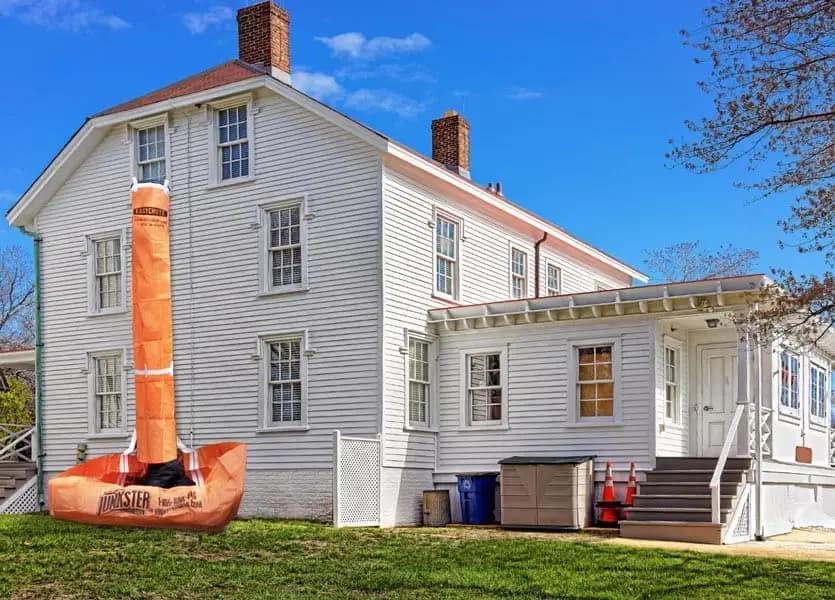
- Two- to three-story homes and townhouses: The 25 ft section ($277) covers roughly two and a half stories — ideal for the typical Florida two-story home or a third-floor condo balcony.
- Mid-rise condos and four- to five-story buildings: The 50 ft section ($596) reaches approximately five stories and is built for the mid-rise residential and mixed-use buildings that define Florida's coastal skylines.
- Heavier roofing and demo debris: Upgrade to the 10 ft Heavy-Duty section ($149) when you're moving shingles, concrete tile, or dense plaster. Sections connect loop-to-loop with carabiners or quick-connects, so you can mix and match lengths to hit the exact drop height you need.
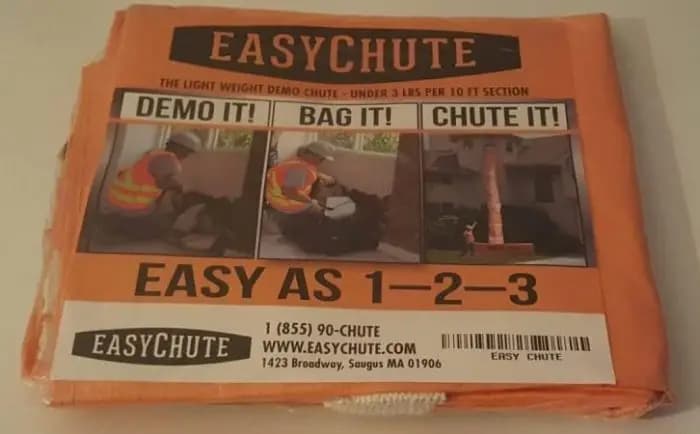
Every section is made of woven, coated poly fabric that is tear-resistant and lightweight — the 10 ft section weighs under 3 lbs, the 25 ft section under 8 lbs, and the 50 ft section under 15 lbs. A full 10 ft section folds down small enough to fit in a drawer or small box. These aren't rental units you return at the end of the week — they're yours to use job after job.
Setting Up a Trash Chute on a Florida Job Site
Setup takes minutes, not hours, and you don't need a rental crew, outriggers, or a hoist. Here's the basic process:
- Set your hopper. Take a standard 32-gallon commercial trash can and remove the bottom. Set it at the top of the opening — a window, roof edge, or scaffold platform — to act as a hopper that catches debris and funnels it into the chute.
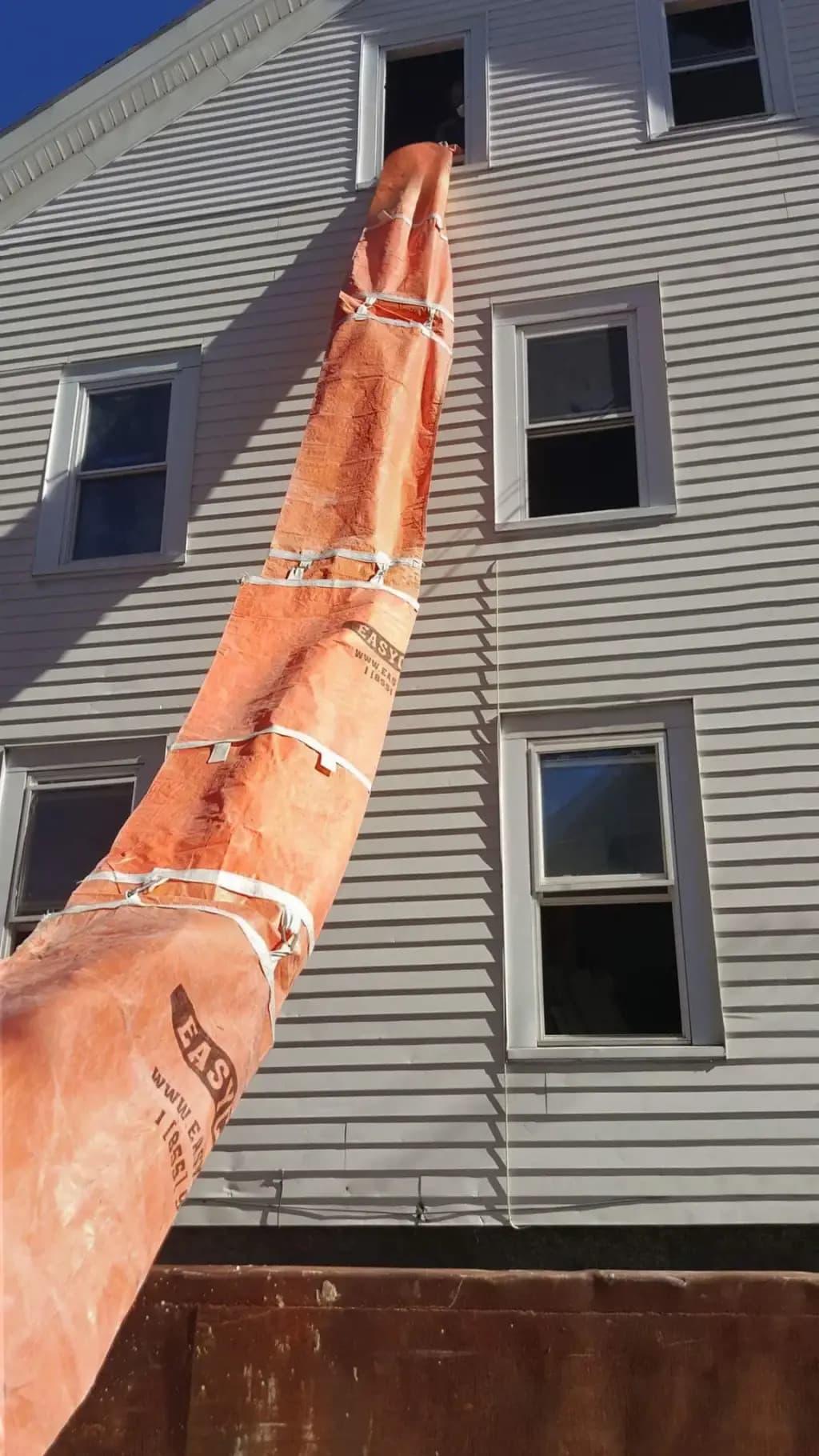
- Hang the first section. Use the four woven connection loops at the top of your first chute section to anchor it to the window frame, roof edge, or scaffold rail. No special hardware required — a few carabiners or quick-connects do the job.
- Connect additional sections. Each section has four loops at the top and four at the bottom (two front, two back). Connect them loop-to-loop; every joint overlaps 1.5 feet, which seals the connection and keeps dust inside.
- Adjust length with shortening straps. Middle shortening straps let you fine-tune the overall drop so the chute mouth lands right over your dumpster or collection point.
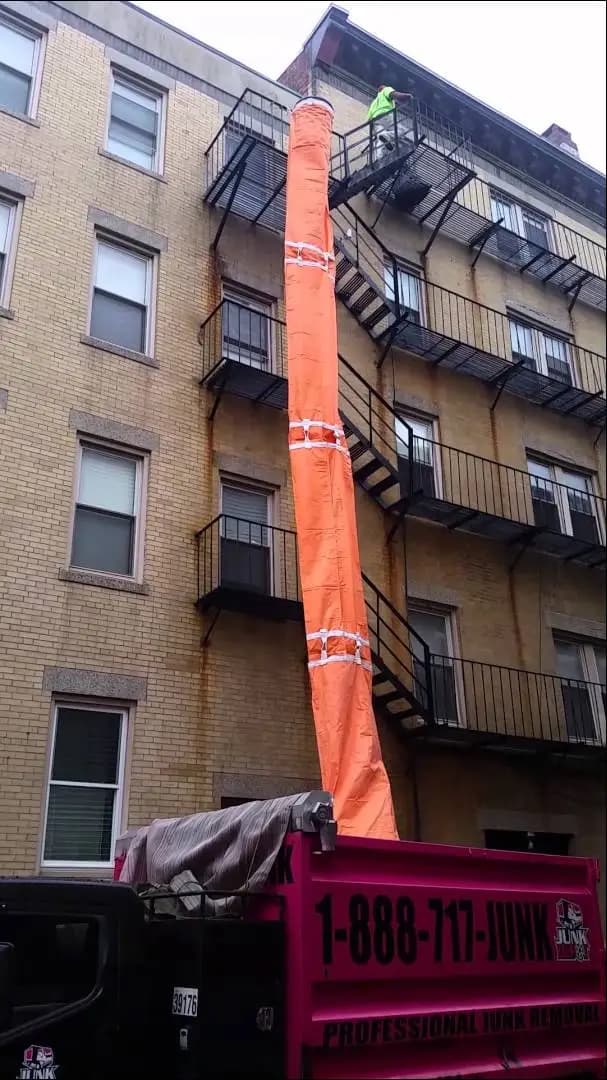
- Point the outlet over the dumpster and start feeding material. Workers above feed debris into the hopper; gravity moves it to the container below. Keep the area around the dumpster barricaded as required.
Working Through Florida's Climate on the Job Site
Florida's combination of heat, humidity, and frequent afternoon thunderstorms is a reality every contractor manages. On days when weather moves in quickly, you'll want to be able to take the chute down fast and re-hang it just as quickly. Because EasyChute sections fold small and weigh so little, breaking down and re-staging the system between weather windows is straightforward — no bulky steel sections to wrestle around. For tips on managing Florida wind conditions during setup, see our Florida wind setup guide. Always use your own judgment about whether conditions are safe to work and follow your site's safety plan.
OSHA Compliance on Florida Construction Sites
Federal OSHA standards apply on construction sites in Florida. Under OSHA 29 CFR 1926.252(a), when debris is dropped more than 20 feet to any point outside the exterior walls of a building, an enclosed chute must be used. EasyChute meets or exceeds applicable OSHA regulations, and the overlapping section design keeps the debris stream fully enclosed from inlet to outlet.
If you have questions about permit requirements or local building department rules for your specific Florida municipality, check directly with that building department — local rules vary by city and county.
Free Shipping to Any Florida Job Site
EasyChute ships every order free to any address in the United States, including job sites throughout Florida — Miami, Tampa, Orlando, Jacksonville, Fort Lauderdale, Pensacola, Sarasota, Naples, and everywhere in between. Order online at fixed prices; no negotiating, no freight quotes, no surprises. Questions before you order? Call 855-902-4883 (Mon–Fri, 8 AM–10 PM Eastern) or email orders@easychute.com.
Browse all available sections and sizes in the EasyChute shop and get the right chute to your Florida job site.
Frequently asked questions
Does EasyChute ship trash chutes to Florida job sites?
Yes — EasyChute ships to any address in the United States, including job sites anywhere in Florida. Free shipping is included on every order, no minimum required.
Which chute section length is right for a typical two-story Florida home?
The 25 ft section is the right fit for most two- to two-and-a-half-story drops and weighs under 8 lbs. If you need to reach a third floor or higher, you can connect a 10 ft section to it using carabiners or quick-connects at the loop joints.
Does Florida require an enclosed trash chute on construction sites?
Federal OSHA 29 CFR 1926.252(a) applies in Florida and requires an enclosed chute when debris is dropped more than 20 feet to any point outside the exterior walls of a building. For local permit or code questions specific to your Florida city or county, contact that local building department directly.
Can one person set up an EasyChute debris chute on a Florida job site?
Yes. EasyChute sections are lightweight — the 50 ft section weighs under 15 lbs — and hang from a window, roof edge, scaffold, or fire escape without a rental crew or special equipment. Most crews have the system hung and ready in a few minutes.
What types of debris can I run through an EasyChute on a Florida roofing or remodel job?
EasyChute is built for common construction and renovation debris including roofing shingles, drywall, plaster and lath, wood scraps, and insulation. For heavy materials like concrete roof tiles or dense plaster, the Heavy-Duty 10 ft section is the right choice.
Nearby states
Related guides
- Coastal Wind Chute Tie-Offs in Tampa: Keep Trash Chutes Aligned to the Dumpster
- Condo Renovation Debris Chute in Miami: Clean, HOA-Friendly Workflow (Contractor Guide)
- Roofing Debris Chute Setup in Orlando (Tight Driveways + Clean Drop Zone)
- Wind-Rated Trash Chute Setup for Florida Jobsites (Coastal & Storm Season)