
Finding the right trash chute for Hawaii job sites takes more than a quick Google search — you need a chute that ships directly to your island location, handles the debris loads common in Hawaiian construction, and meets OSHA's enclosed-chute rules without requiring a rental crew or heavy rigging. EasyChute ships its lightweight, woven coated poly fabric debris chutes free to job sites anywhere in the state, from Honolulu and Kailua on Oahu to Kahului on Maui, Hilo and Kona on the Big Island, and beyond.
Whether you're stripping weathered roofing shingles from a Honolulu bungalow, gutting drywall in a Waikiki mid-rise, or demoing plaster and lath in an older Maui plantation-style home, a fabric construction chute keeps debris moving from upper floors to the dumpster below — without wheelbarrow trips down the stairs, messy window tosses, or OSHA violations. This page walks you through choosing the right sections for Hawaii's typical building heights, setting the chute up, and ordering with free shipping to your island job site.
Trash chutes shipped free to Hawaii
Free shipping on every order. See the full shop.
Why Hawaii Contractors Use a Fabric Debris Chute
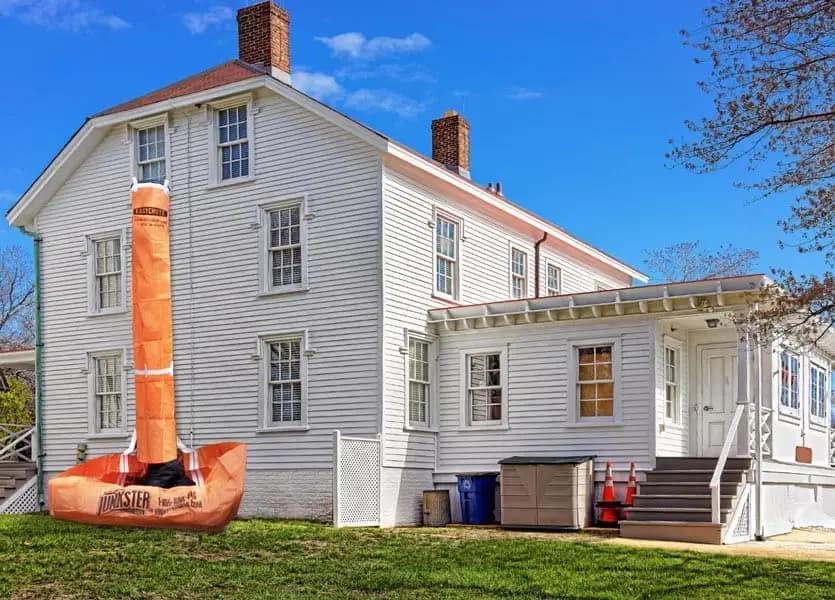
Hawaii's building stock is a mix of low-rise residential homes, mid-century apartment blocks, and taller commercial and resort buildings — most concentrated in metro Honolulu but spread across every island. Many residential properties are one to three stories, which makes a single 10-ft or 25-ft section of EasyChute all you need. On larger jobs — hotels, multi-family renovations, or taller commercial builds in downtown Honolulu — stacking multiple sections gives you the reach you need.
Common debris on Hawaiian job sites includes roofing shingles (single-family reroofs are a staple of Hawaii's contractor market), drywall and insulation from gut renovations, and plaster and lath from older plantation-era homes. All of these materials are exactly what EasyChute is built to handle. Tossing that material out a window or carrying it down a staircase is slow, hazardous, and on drops over 20 feet, a potential OSHA violation. A construction chute solves all three problems at once.
The OSHA 20-Foot Rule — What Hawaii Contractors Need to Know
OSHA regulation 29 CFR 1926.252(a) requires that when material is dropped more than 20 feet to any point outside the exterior walls of a building, an enclosed chute must be used. That rule applies on job sites in Hawaii just as it does anywhere else in the United States. On a two-story or taller building, you'll likely cross that 20-foot threshold quickly — a standard story runs roughly 10 feet, so by the time you're working off the second or third floor you're in enclosed-chute territory.
EasyChute's design addresses this directly. Each section overlaps the next by 1.5 feet at every connection point, keeping dust and debris fully enclosed as it travels from the top of the chute to the dumpster below. If you have questions about local permit requirements or jobsite safety rules beyond federal OSHA standards, always check with your local building department on the relevant island county.
Choosing the Right Trash Chute Sections for Hawaii Building Heights
EasyChute is sold in four section lengths. Here's how they map to the building heights you're likely working with in Hawaii:
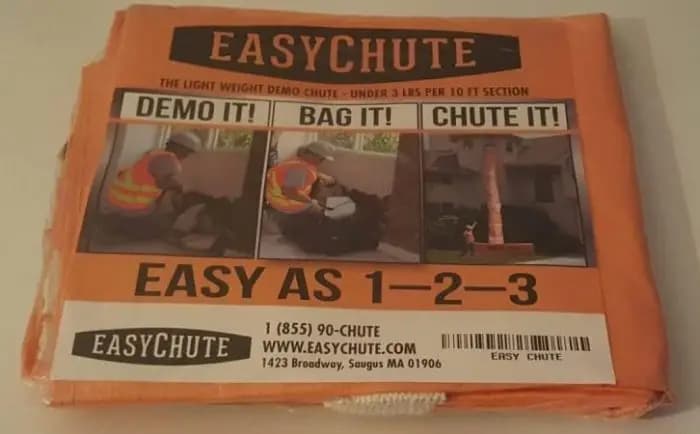
- 10-ft section (≈ one story): Perfect as an add-on section or for single-story work. Both the Lite-Duty 10 ft ($99) and the Heavy-Duty 10 ft ($149) weigh under 3 lbs and fold down to drawer size — easy to stash in a truck or tool bag between jobs.
- 25-ft section (≈ two and a half stories): The most popular choice for Hawaii's residential reroofs and gut renovations. The 25 ft section ($277) weighs under 8 lbs and covers most two- to three-story homes in one drop.
- 50-ft section (≈ five stories): Built for mid-rise work — Honolulu condo renovations, resort hotel demo floors, or commercial builds. The 50 ft section ($596) weighs under 15 lbs and can be extended further by connecting additional 10-ft sections.
Sections connect loop-to-loop using carabiners or quick-connects — no tools, no outriggers, no rental equipment. If your job height falls between standard lengths, the middle shortening straps on each section let you dial in the exact drop you need.
Working in Hawaii's Climate
Hawaii is well known for its warm, humid conditions and the trade winds that keep most of the islands comfortable year-round — but also bring frequent rain on windward coastlines. On a roofing job in Hilo or a renovation project on Oahu's north shore, you may be working in and out of rain throughout the day.
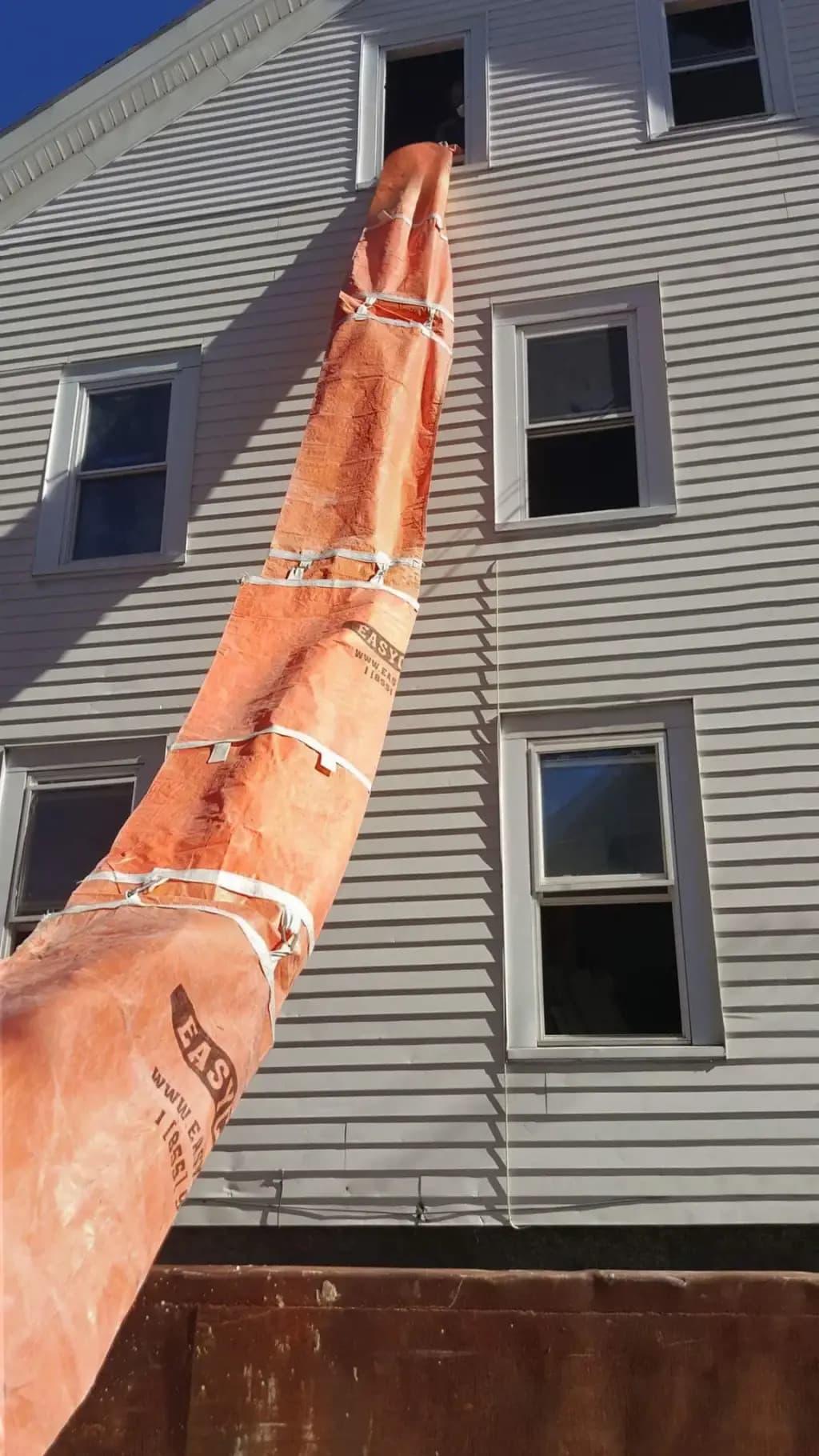
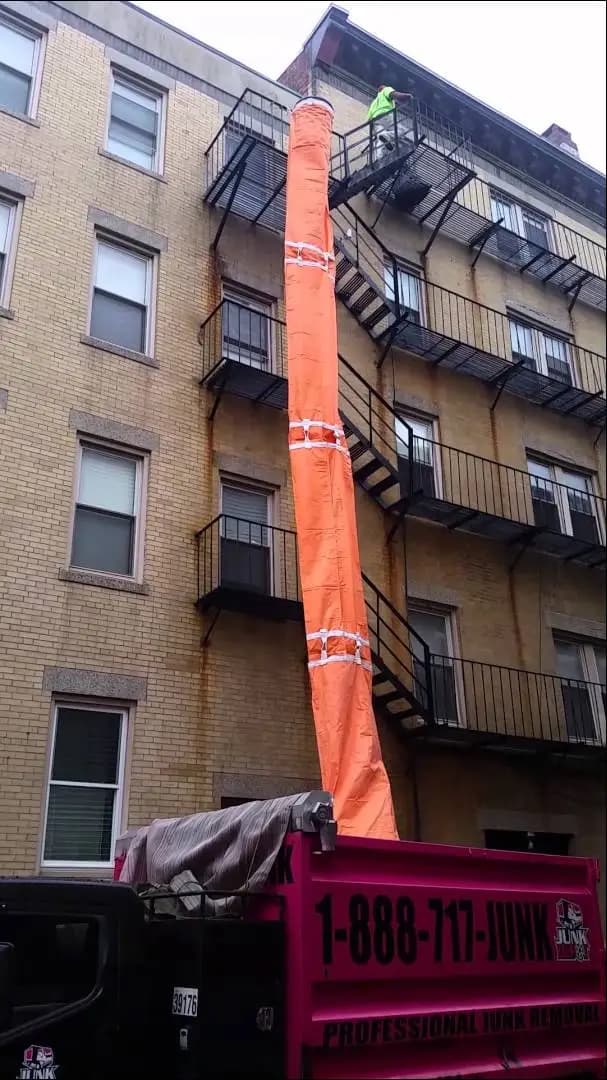
EasyChute's woven, coated poly fabric is tear-resistant and holds up to the physical demands of construction debris day after day. Because Hawaii job sites are often exposed to sun, wind, and periodic rain all in the same shift, the chute's lightweight design works in your favor — it hangs from a window opening, roof edge, scaffold, or fire escape without any frame or rigging, and it packs down small when you need to move it out of the weather or transport it between island job sites.
Ventilation and Dust on Island Job Sites
On tight residential lots — common in Honolulu's older neighborhoods and in the smaller towns on Maui and Kauai — controlling dust is a genuine concern. The enclosed design of EasyChute keeps debris contained from the drop point all the way to the dumpster, reducing the dust cloud that open-window tosses create. That matters for your neighbors, your crew, and your standing with the property owner.
How to Set Up Your EasyChute in 5 Steps
- Anchor the top. Thread rope, a strap, or a carabiner through the four woven loops at the top of the chute. Hang it from a roof edge, window frame, scaffold rail, or fire escape — wherever gives you a clean drop to the dumpster below.
- Position your dumpster. Place the dumpster directly below the chute's exit so debris lands inside without bouncing off the rim.
- Add a hopper (optional but recommended). A standard 32-gallon commercial trash can with the bottom removed, placed at the top of the chute, acts as a funnel and keeps debris moving in cleanly without overfilling the opening.
- Connect additional sections if needed. Loop the bottom loops of the upper section to the top loops of the next section and clip them with carabiners. Each joint overlaps 1.5 ft to keep the chute sealed.
- Adjust length. Use the middle shortening straps to fine-tune the chute's total drop so it lands cleanly in the dumpster without dragging on the ground.
Ordering Your Trash Chute — Free Shipping to Hawaii Job Sites
EasyChute ships free to job sites anywhere in the United States — including all of Hawaii's islands. You order online at fixed prices, no quotes needed, no minimums. Browse the full lineup at the EasyChute shop and pick the section or sections that match your project height.
If you have questions before you order, call 855-902-4883 (Mon–Fri, 8 AM–10 PM Eastern) or email orders@easychute.com. You can also visit the FAQ page for answers on section connections, hanging methods, and more.
Contractors working on projects in other warm-weather states may also find our guides for Florida and Georgia job sites useful — many of the climate and building-type considerations overlap with what you'll encounter on Hawaiian projects.
Frequently asked questions
Does EasyChute ship trash chutes to Hawaii?
Yes. EasyChute ships free to job sites anywhere in the United States, including all Hawaiian islands. You order online at fixed prices and the chute ships directly to your job site address. No freight broker or special arrangement is needed.
Which section length do I need for a typical Hawaii residential roofing job?
Most single-family reroofs in Hawaii involve a one- to three-story drop. A 25-ft section covers roughly two and a half stories and is the most common choice for residential work. If your home has a steep pitch or you're working off a second-floor eave, a 25-ft section will typically clear the threshold. You can always add a 10-ft section to extend the reach.
Do I need a permit to use a debris chute on a Hawaii job site?
Permit and safety requirements vary by island county and project type. Federal OSHA rules require an enclosed chute when dropping material more than 20 feet outside a building's exterior walls, and EasyChute meets or exceeds those requirements. For local permit rules specific to your county, check with the relevant Hawaii building department before starting work.
Can I use EasyChute on a mid-rise condo renovation in Honolulu?
Absolutely. The 50-ft section covers approximately five stories and can be extended by connecting additional 10-ft sections with carabiners. Sections overlap 1.5 ft at every joint to keep the chute fully enclosed — meeting OSHA's enclosed-chute requirement for drops over 20 feet. The Heavy-Duty 10-ft sections are a good choice when you're adding length on heavier demo jobs.
How does EasyChute hold up when I need to move between job sites on different islands?
Every EasyChute section is designed to fold down small and light. A 10-ft section weighs under 3 lbs and fits in a drawer or small box; the 50-ft section weighs under 15 lbs. That makes it easy to pack in a truck, checked luggage, or cargo shipment when you're moving crews between islands. The chute is reusable job after job, so one purchase covers many projects.