
When you need a trash chute in Georgia — whether you're tearing off a roof in Savannah, gutting a midrise in Atlanta, or remodeling a historic bungalow in Macon — EasyChute ships directly to your job site, anywhere in the state, for free. No freight broker, no third-party dealer, no waiting on a local supplier to call you back. You order online at a fixed price and we ship from our Saugus, MA facility straight to wherever the work is.
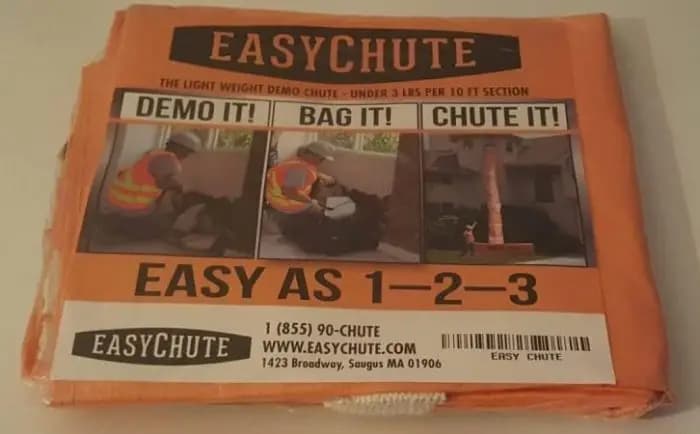
EasyChute's debris chute is a lightweight, woven, coated poly fabric construction chute that folds small enough to fit in a truck cab, connects section to section in minutes, and handles the everyday debris Georgia crews deal with: roofing shingles, drywall, plaster, wood scraps, and insulation. Whether your project is three stories or ten, there's a section length — or a combination of sections — that puts debris on the ground without a dumpster crew, a rental frame, or anyone climbing up and down a ladder all day.
Trash chutes shipped free to Georgia
Free shipping on every order. See the full shop.
Why Georgia Contractors Rely on a Fabric Trash Chute
Georgia's building stock runs the full spectrum. Downtown Atlanta is packed with midrises and high-rises that need OSHA-compliant enclosed chutes the moment debris drops more than 20 feet past the building's exterior walls. Savannah's dense historic district means narrow lots, tight sidewalks, and old wood-frame and brick structures where controlling where debris lands isn't optional — it's a matter of protecting the property and the public right-of-way below. Suburban Atlanta, Columbus, Augusta, and the growing communities around Athens all have a steady flow of residential remodels, roof replacements, and gut-renovation work on ranch homes, split-levels, and two-story colonials.
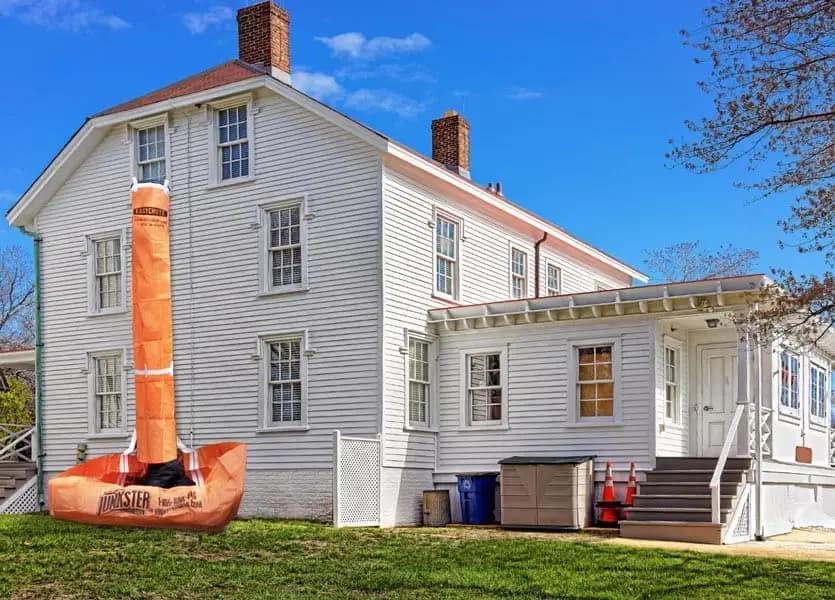
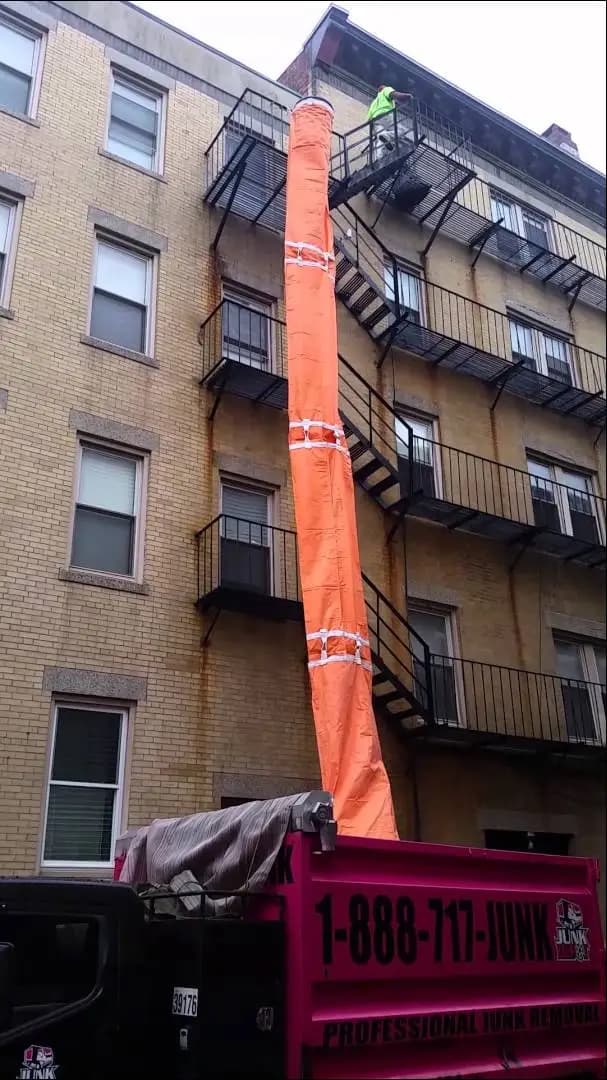
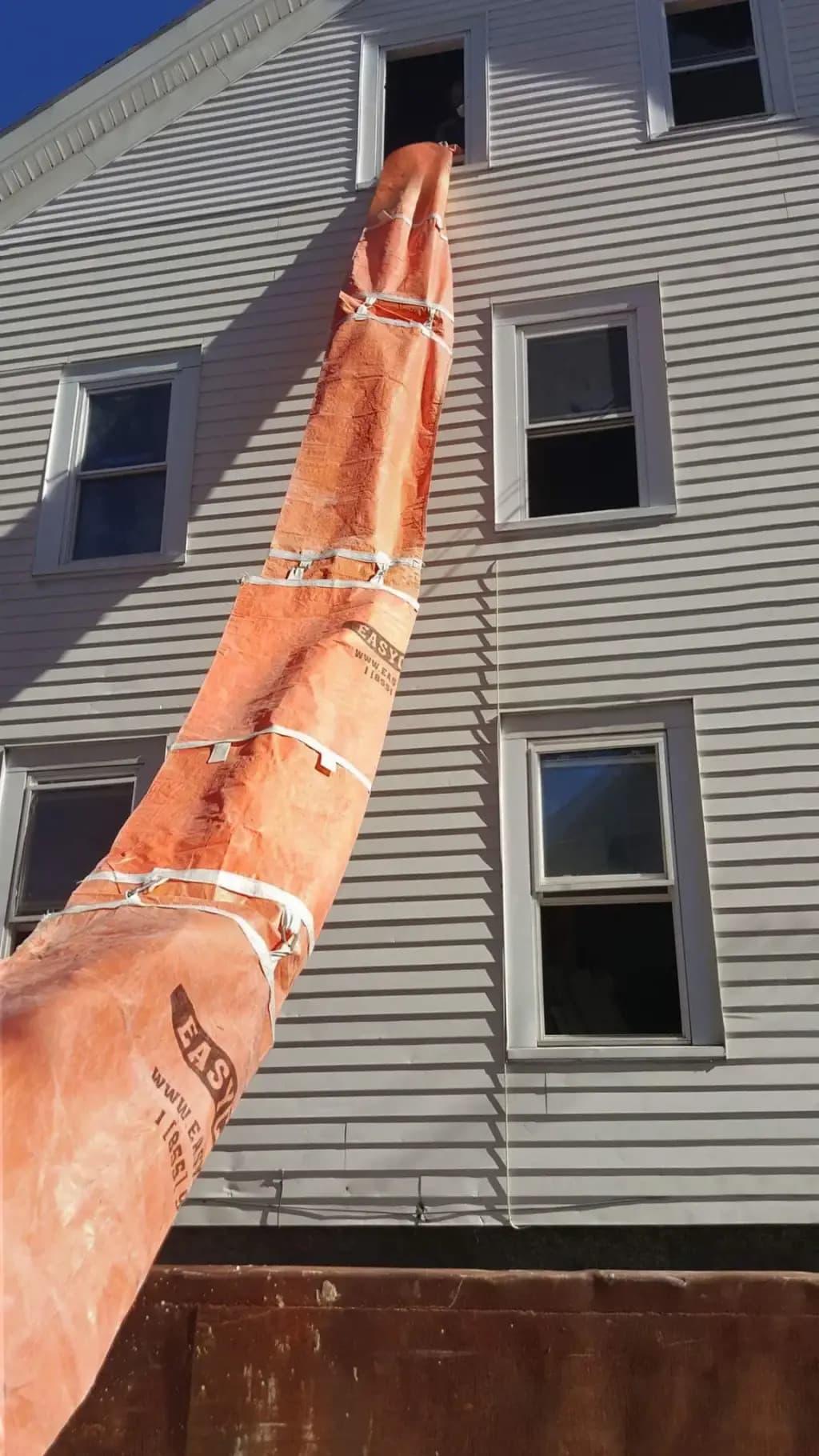
In all of these situations, a debris chute solves the same core problem: how do you move demolition material from an upper floor to a ground-level dumpster without making a mess, without risking a worker or bystander below, and without burning half your crew's time hauling loads up and down? A trash chute answers all three. You hang it from a window, a roof edge, or a scaffold rail — no outriggers, no rental hoists, no extra crew — and material flows straight down into a dumpster or container at the base.
EasyChute's construction chutes are built for this kind of real job-site use. The fabric is tear-resistant woven, coated poly. Every section is reusable job after job. And because the chute folds down small and light, you can throw it in a work truck and move it to the next project when this one wraps up.
Choosing the Right Trash Chute Sections for Georgia Building Heights
EasyChute offers four section lengths. Here's how they map to the building heights you'll actually encounter across Georgia:
- EasyChute Lite-Duty — 10 ft Section ($99): Weighs under 3 lbs and fits in a drawer. One 10 ft section covers roughly one story. Good for single-story additions, low-slope roofs, or any job where you only need a short drop. Lite-duty is right for lighter materials — insulation, light drywall scraps, small wood pieces.
- EasyChute Heavy-Duty — 10 ft Section ($149): Same footprint, built for heavier loads. When you're pulling roofing shingles, dense plaster, or brick veneer on a two-story Georgia home, step up to heavy-duty.
- EasyChute Trash Chute — 25 ft Section ($277): Covers roughly two and a half stories and weighs under 8 lbs. A solid choice for the common two- and three-story residential and light commercial work you'll find in neighborhoods across Atlanta's suburbs, Roswell, Alpharetta, and similar markets.
- EasyChute Trash Chute — 50 ft Section ($596): Covers roughly five stories and weighs under 15 lbs. For Atlanta midrises, Savannah's taller commercial buildings, or any job where material is moving from the upper floors, this is your starting point. Sections connect loop-to-loop with carabiners or quick-connects and overlap 1.5 ft at every joint to keep dust and debris contained inside the chute.
You can combine sections to reach any height. Use the middle shortening straps to fine-tune the length once the chute is hung. If you're unsure which combination fits your project, call us at 855-902-4883 (Monday–Friday, 8 AM–10 PM Eastern) or email orders@easychute.com and we'll help you work it out.
OSHA's Enclosed Chute Rule and What It Means on a Georgia Job Site
Under OSHA 29 CFR 1926.252(a), whenever material is dropped more than 20 feet to any point outside the exterior walls of a building, an enclosed chute must be used. That rule applies on every job site in the country — Georgia included. On a three-story residential project, debris leaving an upper-floor window can easily exceed that 20-foot threshold by the time it clears the wall plane. Using an open-top method at that height puts your crew, bystanders, and neighboring property at risk, and puts you in violation of federal OSHA standards.
EasyChute's debris chutes meet or exceed applicable OSHA regulations. The 22-inch diameter and the overlapping section joints keep material channeled inside the chute from the point of entry all the way to the dumpster. For more detail on how EasyChute chutes fit into a controlled discharge setup, see our guide on controlled discharge zones for Atlanta debris chutes.
Working Through Georgia's Weather
Georgia's climate means hot, humid summers across the state and mild winters in most areas, with the northern mountain counties seeing colder temperatures and occasional ice. Whatever the season, a few job-site practices keep things running smoothly when you're working with a trash chute:
- In summer heat, schedule your heaviest debris runs in the morning when temperatures are lower and the crew has more energy for clearing loads.
- During afternoon thunderstorm season — which is common across much of the state from spring through early fall — secure the chute sections before weather moves in. Each section is light enough to take down and stow quickly if conditions deteriorate.
- On cool winter days in north Georgia, verify that all connection loops and carabiners are seated properly before loading the chute, since cold can make hardware stiffer to work.
How to Set Up Your EasyChute Debris Chute on a Georgia Job Site
Setup is straightforward and doesn't require any specialized equipment or a rental crew. Here's the basic workflow:
- Position your dumpster directly below the window or roof edge where the chute will hang. Leave enough clearance that the bottom of the chute feeds cleanly into the container.
- Build your hopper. A standard 32-gallon commercial trash can with the bottom removed works perfectly as a top hopper — it catches debris and funnels it into the chute opening without spillage.
- Hang the first section. Use the four woven connection loops at the top of the section to attach the chute to the window frame, scaffold rail, or roof edge anchor point. No outrigger or frame required.
- Add sections from the top down. Connect additional sections loop-to-loop using carabiners or quick-connects. Each joint overlaps 1.5 ft automatically to seal the connection.
- Adjust length. Use the middle shortening straps to dial in the final hang length so the bottom of the chute sits just above the dumpster opening.
- Load carefully and steadily. Feed debris in at the top. Avoid dumping heavy concentrated loads all at once — a steady feed keeps the chute stable and the dumpster fill even.
For a more detailed walkthrough tailored to Georgia job-site conditions, see our fast setup workflow guide for Georgia contractors and our Savannah-specific setup guide for work in that city's dense historic neighborhoods.
Order Your Trash Chute for Georgia — Free Shipping Included
Every EasyChute order ships free to job sites anywhere in Georgia — Atlanta, Savannah, Augusta, Columbus, Macon, Athens, Albany, or anywhere else the work takes you. Prices are fixed. There's no quote process, no negotiation, and no freight surcharge added at checkout. What you see in the shop is what you pay.
Browse all available sections and order directly at easychute.com/shop. If you have questions before you order, check the FAQ page or call 855-902-4883 Monday through Friday, 8 AM–10 PM Eastern.
Frequently asked questions
Does EasyChute ship trash chutes to job sites anywhere in Georgia?
Yes. EasyChute ships free to job sites anywhere in the state — from Atlanta and Savannah to smaller cities and rural counties. There are no freight surcharges and no minimum order requirements. You order online and we ship directly to the address you provide.
How many sections do I need for a two-story house in Georgia?
A 25 ft section covers roughly two and a half stories and is a common choice for two-story residential work. If you're working on a taller two-story with a steep roof pitch, you may want to add a 10 ft section for extra reach. The sections connect quickly with carabiners and overlap 1.5 ft at each joint.
Do Georgia contractors need to use an enclosed chute under OSHA rules?
Under OSHA 29 CFR 1926.252(a), an enclosed chute is required when material is dropped more than 20 feet to any point outside the exterior walls of a building. This is a federal standard that applies to all job sites in Georgia. EasyChute's debris chutes meet or exceed applicable OSHA regulations.
Can the chute handle roofing shingles and heavy demolition debris?
Yes. EasyChute chutes are built for common construction and renovation debris including roofing shingles, drywall, plaster and lath, wood scraps, and insulation. For heavier loads like shingles or dense plaster, the Heavy-Duty 10 ft section or the 25 ft and 50 ft sections are the right choice.
What if I need help figuring out which sections to order for my Georgia project?
You can call EasyChute at 855-902-4883, Monday through Friday, 8 AM–10 PM Eastern, or email orders@easychute.com. You can also visit the FAQ page at easychute.com/faq for common sizing questions. All prices are fixed and listed in the shop — there's no quote process.