
When you're tearing out drywall in a Chicago three-flat, stripping shingles off a Peoria ranch house, or gutting a century-old commercial block in Rockford, getting debris to the ground safely and efficiently is the job before the job. A trash chute for Illinois projects lets you drop shingles, plaster, insulation, and wood scraps straight into a dumpster below — no hauling buckets down stairs, no workers crossing below an open drop zone, and no debris piling up on floors where someone can trip over it. EasyChute makes a lightweight, woven coated-poly fabric chute that ships free to any job site in the state, from Chicago's North Side to Carbondale.
This page covers everything an Illinois contractor, roofer, or property manager needs to know: which sections fit common building heights across the state, how to think about Illinois's variable climate when you're planning a project, the federal OSHA rule that makes an enclosed chute mandatory on taller drops, a simple setup walkthrough, and how to order with free shipping right to your site.
Trash chutes shipped free to Illinois
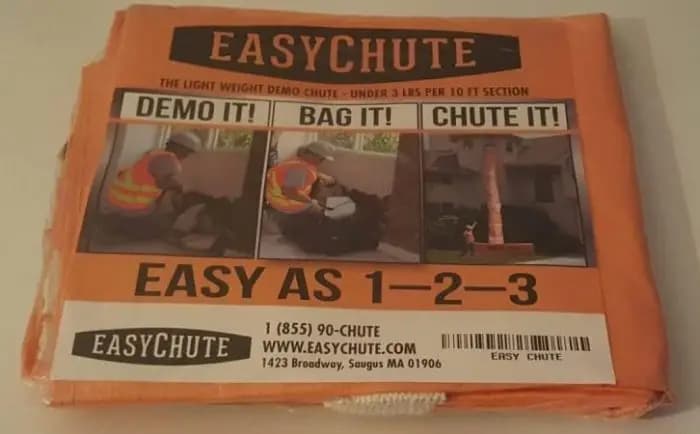
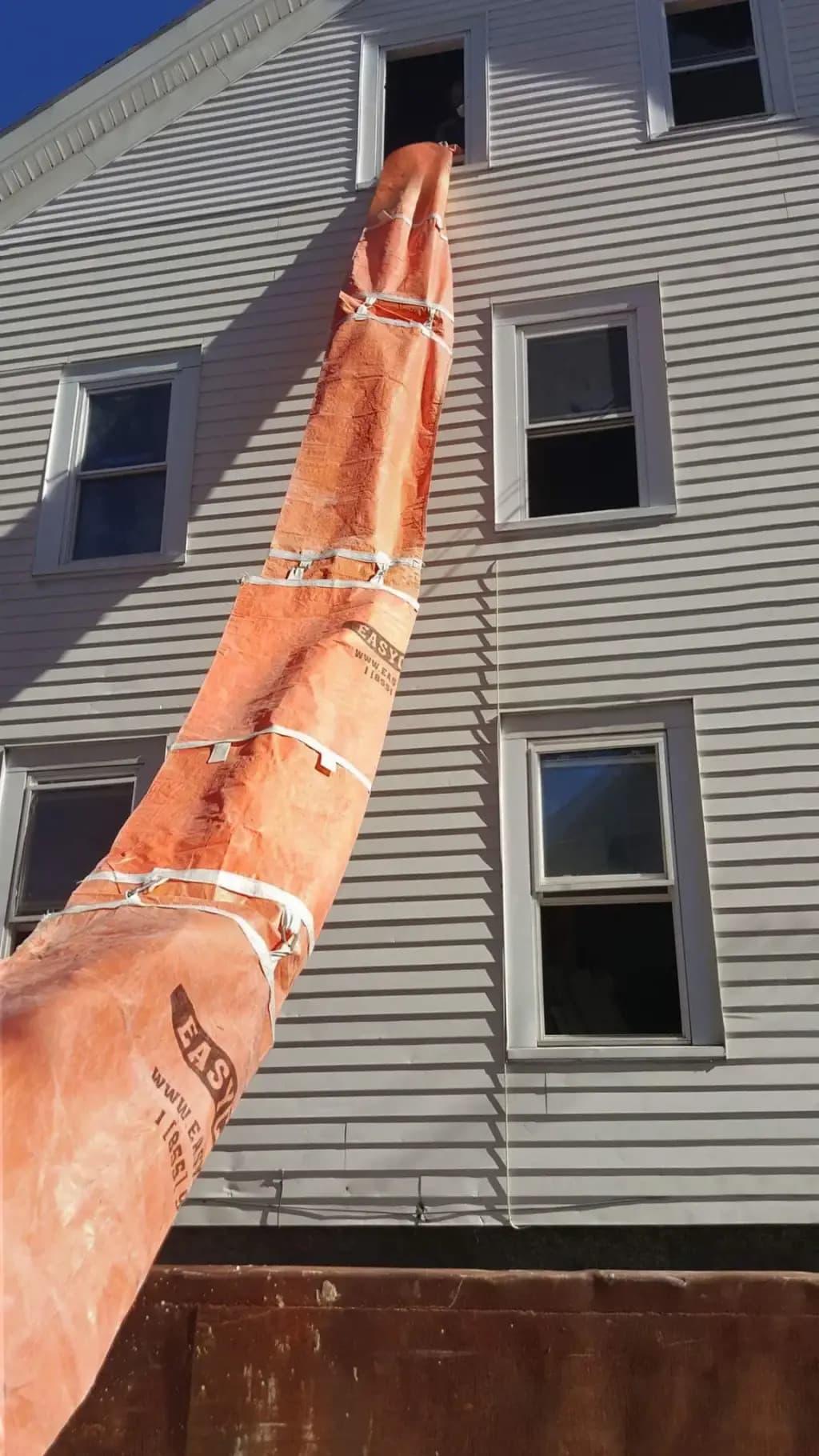

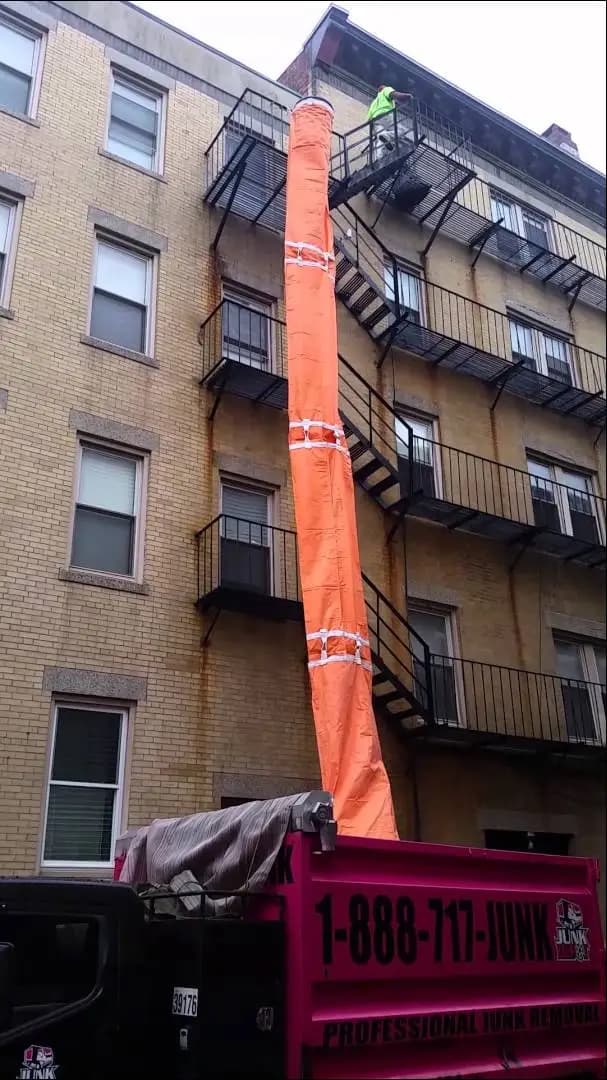
Free shipping on every order. See the full shop.

Why Illinois Crews Rely on a Fabric Debris Chute
Illinois has one of the most varied building inventories in the Midwest. Chicago alone holds thousands of two- and three-flat greystones, brick six-flats, and vintage courtyard buildings — structures that date back more than a century and generate heavy debris loads when interiors are renovated. The suburbs from Naperville to Schaumburg are packed with two-story colonials and ranches built during postwar booms, while downstate cities like Springfield, Decatur, and Bloomington have dense blocks of older commercial and residential stock that keeps remodelers busy year-round.
Across all of those project types, a fabric construction chute solves the same core problem: moving a high volume of debris from an upper floor or roof to a dumpster at grade without putting workers at risk. Instead of relying on crews to carry heavy loads down ladders or staircases — which is slow, exhausting, and hazardous — you hang the chute from a window opening, a roof edge, or a scaffold rail and let gravity do the work. Material travels through the enclosed tube and drops into a standard dumpster or waste bin at the bottom. Everyone on the ground stays out of the fall zone, and the person feeding the chute stays at the opening, not on a ladder balancing a bucket.
For Chicago-specific project planning, see our dedicated debris chute Chicago page, which dives into city-specific building types and setup tips.
Choosing the Right Trash Chute Sections for Illinois Building Heights
EasyChute sections come in three lengths — 10 ft, 25 ft, and 50 ft — and they connect loop-to-loop with carabiners or quick-connects. Each joint overlaps 1.5 ft so dust and fine debris stay inside the chute, not drifting onto the sidewalk or neighboring property. Middle shortening straps let you fine-tune the total length so the bottom of the chute lands right at your dumpster opening.
- 10 ft section (~one story): The Lite-Duty 10 ft section ($99) is the right call for single-story work — a ranch roof tear-off, a one-story addition demo, or a basement walkout. If your debris is heavier — concrete block, thick plaster, or dense roofing material — step up to the Heavy-Duty 10 ft section ($149). Both weigh under 3 lbs and fold small enough to fit in a truck cab or a large toolbox drawer.
- 25 ft section (~two and a half stories): The 25 ft section ($277) covers the two- and three-story greystone flats and brick colonials that are everywhere in Chicago's neighborhoods and in older downstate towns. One section handles the drop; no assembly required. Under 8 lbs and easy for one person to carry to the roof or upper window.
- 50 ft section (~five stories): The 50 ft section ($596) is built for mid-rise work — apartment buildings, older commercial structures, and taller mixed-use buildings in downtown Chicago, Evanston, or other denser Illinois cities. Under 15 lbs, it still ships free and arrives ready to hang.
- Stacking sections: For buildings taller than five stories, connect multiple sections. A 50 ft plus a 25 ft gets you to roughly seven and a half stories. A pair of 50 ft sections reaches ten stories. Every section uses the same four-loop connection system, so mixing lengths is straightforward.
Illinois Climate: What It Means for Your Project Schedule
Illinois weather is genuinely varied. Chicago and the northern part of the state get hard winters with lake-effect snow events, freezing rain, and wind chills that can shut down exterior work for days at a time. Central and southern Illinois are somewhat milder but still see significant snow and ice from December through February. Spring brings heavy rain and mud season; summers are hot and humid, especially in the Chicago metro.
None of that changes how EasyChute's woven, coated poly fabric performs — it's tear-resistant and built for the rough handling of a working job site. What it does mean is that Illinois contractors often batch their demolition and debris-removal work into warmer, drier windows. Planning your chute setup before a multi-day demo run means you're not improvising when the skip is full and the forecast is closing in. The lightweight, compact design makes it easy to store the chute in a van or job-site trailer between uses and pull it out again at the next project.
For tips specific to cold-weather setup and winter project planning in the Chicago area, see our guide on winter-ready debris chute setup for Chicago contractors.
The OSHA 20-Foot Rule: What Illinois Contractors Need to Know
Federal OSHA regulation 29 CFR 1926.252(a) states that when material is dropped more than 20 feet to any point outside the exterior walls of a building, workers must use an enclosed chute. That rule applies on Illinois job sites just as it does everywhere in the country.
In practical terms, that threshold is reached quickly. A standard story is roughly 10 feet, so a drop from a third-floor window — common in Chicago's abundant three-flat and courtyard building stock — puts you right at or above the 20-foot threshold. An open-air toss from that height into a dumpster below is not compliant; an enclosed debris chute is. EasyChute meets or exceeds applicable OSHA regulations, so hanging the chute is not just safer for your crew — it keeps your site in compliance.
If you have questions about local building department requirements or permit conditions specific to your Illinois municipality, check directly with the relevant building department. Rules vary by city and project type, and your inspector is the authoritative source.
How to Set Up a Construction Trash Chute on an Illinois Job Site
Setup takes less time than most crews expect. Here's the basic sequence:
- Choose your anchor point. A window opening, roof edge, or scaffold rail all work. The chute has four woven connection loops at the top — two in front and two in back — that hook directly to your anchor with carabiners or quick-connects. No outrigger frame, no hoist, no rental equipment required.
- Make a hopper (optional but useful). A standard 32-gallon commercial trash can with the bottom cut out seats over the top opening of the chute and gives your crew a wide, stable funnel to toss debris into. It dramatically reduces miss-throws and keeps fine material like insulation dust contained.
- Position your dumpster. Roll the skip close to the building wall directly below the chute outlet. Use the middle shortening straps to dial in the length so the chute bottom hangs just above the dumpster opening — not so high that debris kicks up, not so low that it gets buried under debris.
- Connect additional sections if needed. If one section isn't enough height, clip the next section loop-to-loop. The 1.5-foot overlap at each joint keeps the connection tight and prevents gaps where material can escape.
- Load and clear. Feed debris steadily rather than in huge dumps. Drywall and plaster move easily; bundle loose insulation in bags before dropping it. At the end of the day, unhook the chute, shake it out, fold it, and store it for the next use.
Order a Trash Chute with Free Shipping to Any Illinois Job Site
Every EasyChute order ships free to job sites anywhere in Illinois — Chicago, Aurora, Joliet, Naperville, Rockford, Springfield, Peoria, and everywhere in between. There are no hidden freight charges and no minimum order. Prices are fixed; what you see in the shop is what you pay.
If you need help figuring out which section or combination of sections is right for your project, call us at 855-902-4883 (Mon–Fri, 8 AM–10 PM Eastern) or email orders@easychute.com. You can also visit our FAQ page for answers to common setup and ordering questions.
Ready to order? Shop all EasyChute debris chutes and get your Illinois job site set up with the right section today.
Frequently asked questions
Does EasyChute ship trash chutes to job sites anywhere in Illinois?
Yes — EasyChute ships free to job sites across the entire state, from Chicago and the northern suburbs to Bloomington, Peoria, Springfield, and Carbondale. There are no freight surcharges and no minimum order. You order online at fixed prices and the chute comes straight to your site.
What section length should I use for a Chicago three-flat or two-flat?
A typical Chicago two-flat reaches about two stories, which is well covered by the 25 ft section. A three-flat is around three stories — roughly 30 feet of drop — so a 25 ft section handles the bulk of that height, or you can connect a 25 ft and a 10 ft section for extra reach. If you're uncertain, measure the drop from your planned anchor point to the dumpster and match it to the section lengths listed on the product pages.
When does the OSHA enclosed-chute rule kick in on an Illinois demolition project?
Federal OSHA regulation 29 CFR 1926.252(a) requires an enclosed chute whenever material is dropped more than 20 feet to any point outside the exterior walls of the building. That threshold is reached at roughly the second story on most structures. EasyChute meets or exceeds applicable OSHA regulations, so using one keeps your Illinois job site in compliance.
Can I reuse an EasyChute across multiple Illinois projects?
Absolutely. The chute is made from tear-resistant woven, coated poly fabric and is designed to be reused job after job. After each project, shake out any remaining debris, fold the section down — a 10 ft section fits in a large drawer or small box — and store it in your truck or trailer until the next job.
Do I need any special equipment or a rental crew to hang the chute?
No. EasyChute hangs from a window opening, roof edge, scaffold, or fire escape using the four woven loops at the top of the chute and standard carabiners or quick-connects. There are no outrigger frames, hoists, or additional crew required. One person can set up the chute in a matter of minutes.