

Summer is the busiest season on the construction calendar across Pennsylvania. From the rowhouses of South Philadelphia to the colonial colonials of Lancaster County and the steep-pitched rooftops of Pittsburgh's hill neighborhoods, crews are stacking jobs back-to-back from Memorial Day through Labor Day. That means more debris moving faster — and far less tolerance for slow, dangerous manual hauling.
A well-planned debris chute workflow changes everything. Instead of workers lugging shingles, drywall, and demo waste down staircases in 90-degree heat, the material drops straight from the work zone into the dumpster. This guide covers exactly how Pennsylvania contractors should set up, run, and optimize that workflow all summer long.
Why Summer Specifically Tests Your Debris Removal Setup
It is not just about volume, though summer volume is real. It is about the combination of heat stress, compressed job timelines, dense residential neighborhoods, and the overlap of roofing, gut-renovation, and new-construction cycles all happening at once.
Heat and Ergonomic Risk Go Up Together
When temperatures climb above 85 degrees — a routine occurrence in Pennsylvania from June through August — manual debris hauling becomes a genuine health risk. OSHA ergonomic guidance is clear that repetitive heavy lifting in heat accelerates fatigue and injury. A debris chute removes repeated stair carries from the equation entirely, keeping your crew fresher for the actual trade work.
Neighborhood Density Demands Containment
Pennsylvania suburbs and urban cores alike have tight lots, sidewalk-adjacent homes, and neighbors who will call the city if dust or debris is blowing. A covered chute drop channels material directly into the dumpster without scatter, which matters enormously on a narrow street in Allentown or a row of attached twins in Norristown.
Choosing the Right Chute Section Length for a Pennsylvania Job
EasyChute sections come in 10-foot, 25-foot, and 50-foot lengths. Matching section count to building height is the first decision in any summer workflow setup. Misjudging it means either a chute that is too short to reach the dumpster or excess chute dragging on the ground and creating a tripping hazard.
Single-Story Roofing Jobs (8 to 14 Feet)
For a one-story structure — a ranch, a detached garage, or a low commercial flat roof — a single 10-foot section is typically sufficient to get from the roofline into the dumpster or trailer. The lite-duty 10-foot section weighs under 3 lbs, so one roofer sets it up without a helper.
Two- and Three-Story Residential Work (20 to 36 Feet)
This is the most common Pennsylvania scenario: a two-and-a-half story twin in West Chester, a three-story walkup in Reading, or a colonial in Doylestown where the gutted second floor needs to drop debris to the driveway. Two or three 10-foot sections connected with 1.5-foot overlaps will cover most of these situations. A single 25-foot section also works well here and ships as one compact unit.
Four-Story and Taller Commercial or Multi-Family Work
For apartment buildings, mixed-use structures, or commercial gut jobs over 40 feet, combine a 50-foot section with additional 10-foot sections as needed. The overlap connection system means you can reach virtually any height without specialized hardware — just standard carabiners or quick-connects through the woven hanging loops.
See the full breakdown in our debris chute guide for a height-to-section reference you can bookmark before quoting a job.
The Four-Step Summer Workflow: Hang, Fill, Strike, Reload
Experienced crews run debris chutes on a simple four-step cycle. Building this rhythm into your summer jobs eliminates the most common inefficiencies — chutes left up too long, dumpsters that overflow, or sections stored carelessly and damaged in the heat.
Step 1: Hang the Chute Before Teardown Starts
Position your dumpster or trailer directly below the intended chute drop point before the first crew member touches the roof or demo wall. Hang the chute from the roof edge, window opening, or scaffold rail using the four woven loops. Clip carabiners to a rafter tail, roof bracket, or scaffolding tube — whatever is solid and rated for the load. Confirm the chute mouth is centered over the dumpster opening. This takes under 10 minutes for a two-section setup.
Step 2: Work Into the Chute Continuously
Once the chute is live, all debris from that work zone goes directly in. Assign one crew member to monitor the dumpster fill level from the ground. On a hot day with a four-person roof crew running full speed, a 10-yard dumpster can fill in three to four hours. Do not wait until it is overflowing — call for a swap before the top is heaping, so material does not bounce or scatter.
Step 3: Strike Quickly When Moving Zones
When you shift to a new section of the building — moving from the front slope to the rear, or from the second floor to the third — unhook the carabiners, let the sections collapse, and reposition. EasyChute sections fold small and fast. Striking and rehinging typically takes one person less than five minutes per section, so you are not losing meaningful production time when you move.
Step 4: Store Sections in the Shade
Coated poly fabric is durable, but prolonged UV exposure in direct summer sun will shorten any fabric product's life over seasons of use. At end of day, fold sections and store them in the truck cab, a shaded trailer corner, or inside the building. This is not a major concern for a single day, but it compounds across a full Pennsylvania summer of heavy use.
Roofing-Specific Summer Workflow Tips
Roofing is the highest-volume debris application in Pennsylvania summers. Shingle tear-offs generate dense, heavy material fast, and the combination of roof pitch, heat, and mass creates real safety pressure if debris handling is improvised.
Always Position the Dumpster Before Tear-Off Begins
This sounds obvious but gets skipped constantly. If the dumpster is not in position when tear-off starts, shingles pile on the roof or get tossed to the ground and raked later — wasted labor in peak heat. Lock down dumpster placement and chute hang as a pre-flight checklist item, not an afterthought.
Use the Heavy-Duty 10-Foot Section for Roofing
Shingles are dense and abrasive. For roofing applications, the heavy-duty 10-foot section handles the material weight better over repeated use than lite-duty options. For a full walkthrough of roofing-specific setup, our roofing trash chute guide goes deeper on positioning, pitch angles, and shingle-specific tips.
Coordinate Chute Angle with Roof Pitch
On steep-pitch roofs common in older Pennsylvania homes, material exits the chute at speed. Make sure the bottom of the chute is well inside the dumpster and not angled toward any workers on the ground. Establish a clear no-standing zone below the chute exit during active loading — a simple ground marker or cone is enough.
Our detailed guide on removing roofing debris with a chute covers ground-zone safety setups in more detail.
Interior Demo Summer Workflow: Gut Renovations in Pennsylvania Heat
Interior demolition in summer is brutal. Homes without central air during a gut renovation can reach well over 100 degrees inside. Every time a worker carries demo waste through the building and down the stairs, they are adding heat exposure and fatigue to the trade work ahead of them.
Use Window Openings as Chute Anchor Points
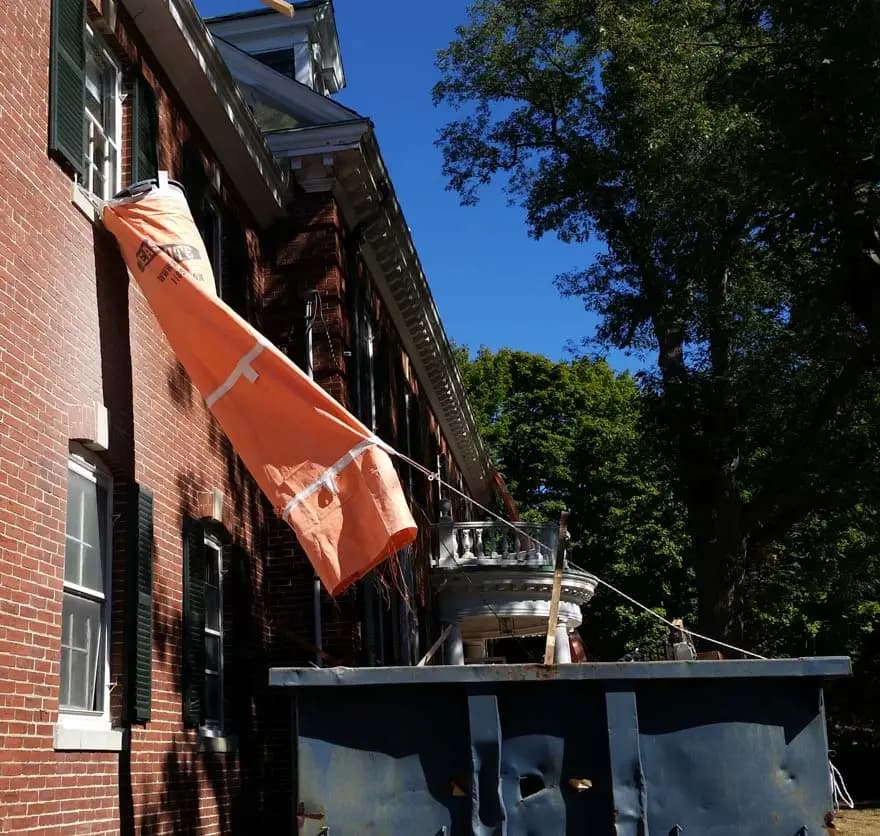
In a gut renovation, existing windows are often removed early in the job. These open bays become ideal chute hang points. Loop the chute through the window frame or attach to a temporary header brace, and debris drops from that floor directly into the dumpster below. No stair carries, no hallway buildup, no second person needed to relay material.
Stagger Chute Positions Across Floors
On a three-story gut job, you do not need a separate chute for every floor simultaneously. Run one chute per active work zone and relocate as the crew moves up or down. The speed of EasyChute's hang-and-strike cycle makes repositioning between floors a minor interruption, not a production stop.
For a comprehensive interior demo approach, see our demolition chutes guide covering everything from framing tear-out to plaster demo.
Permit and Site Compliance Considerations for Pennsylvania Summer Jobs
Pennsylvania municipalities vary significantly in what they require for debris management on job sites. Philadelphia has detailed requirements around dumpster permits, sidewalk protection, and debris containment. Pittsburgh has its own permitting structure. Suburban townships from Bucks to Chester to Dauphin County each have their own rules.
A fabric debris chute is typically compliant with standard construction-site debris containment requirements because it channels material directly into a contained vessel rather than allowing scatter. That said, always confirm local requirements before setup. OSHA Construction Industry standards set a federal floor for debris handling safety that any compliant chute setup should meet.
Document Your Setup for GC and Inspector Visits
If you are a subcontractor on a larger Pennsylvania commercial job, the general contractor may require documentation that your debris handling method meets site safety requirements. A quick photo of the hung chute, the anchor points, and the ground zone clearance creates a paper trail that satisfies most GC safety walk requirements without any significant overhead.
Environmental Considerations: Debris Sorting Mid-Workflow
Pennsylvania contractors working on jobs with green building specs, LEED targets, or municipal recycling requirements need to think about debris sorting before material hits the dumpster. The EPA estimates that construction and demolition debris accounts for over 600 million tons of waste annually in the United States — and sorting at the source is the most effective way to divert recyclable material.
Use Multiple Dumpsters When Sorting Is Required
If a job requires separating clean wood, metal, drywall, or masonry from general waste, position separate dumpsters below designated chute positions. Run one chute for mixed demo waste and hand-carry (or use a secondary chute drop point) for clean sorted material. This adds logistics but is manageable with a planned workflow rather than improvised sorting at the end of the day.
Crew Efficiency Math: Why the Chute Pays for Itself in One Job
Let us run a realistic Pennsylvania summer job scenario. A crew of four is tearing off a two-story colonial roof in Harrisburg. The job generates roughly 40 squares of shingles. Without a chute, two crew members are dedicated to raking debris to the edge, tossing it down, and raking again from the ground — a process that takes continuous labor across the full day.
With a chute hung before teardown starts, those same workers feed material directly into the chute while stripping. Ground cleanup is a fraction of what it would be without the chute. The speed difference on a 40-square roof is typically one to two hours of crew time — at prevailing Pennsylvania labor rates, that more than covers the cost of the chute in the first use.
EasyChute sections are reusable job after job. The economics compound across a full summer season of work. Our fabric trash chute overview goes deeper on durability and reuse cycles.
Common Setup Mistakes Pennsylvania Contractors Make in Summer
Even experienced crews make avoidable mistakes when setting up debris chutes, especially when rushing into peak summer job volume. Here are the most common ones and how to skip them.
- Hanging the chute after teardown starts: You lose the efficiency benefit because material has already piled on the roof or ground. Set it up first, always.
- Using too few sections for the height: A chute that ends three feet short of the dumpster mouth means material bouncing off the rim and landing on the ground — and potentially on workers. Measure the drop before ordering.
- Skipping the no-standing zone: On active pour or tear-off days, ground workers sometimes drift under the chute exit. Cones or tape are enough to fix this risk.
- Overfilling dumpsters and not calling for swaps: When the dumpster is heaping, material starts landing outside it. Monitor fill and call for swaps proactively, not reactively.
- Storing sections in direct sun for weeks: Reusable fabric lasts many seasons when stored out of direct UV exposure. Build this into your end-of-day routine.
- Not using carabiners rated for the load: Standard climbing-grade carabiners are more than adequate, but household hardware-store snap hooks are not. Use proper rated clips through the woven loops.
Our step-by-step installation guide walks through proper anchor setup in detail.
Ordering and Logistics for Pennsylvania Summer Jobs
EasyChute ships free to job sites across the United States, including every corner of Pennsylvania — from Erie to Easton, Scranton to State College. Orders placed at easychute.com ship at fixed prices with no freight surprises.
For a summer workflow with multiple active jobs, consider ordering a standing inventory of sections rather than re-ordering between every job. The compact fold of each section means a full kit of multiple lengths fits in a truck bed or trailer without consuming meaningful space. Having spare sections on hand means a damaged or misplaced section never stops a job.
What to Order for a Typical Pennsylvania Summer Season
If you are running primarily residential roofing and gut-renovation work across a Pennsylvania season, a reasonable starter inventory looks like this:
- Two heavy-duty 10-foot sections — your workhorses for single- and two-story roofing
- One 25-foot section — covers most two-and-a-half-story and three-story residential drops cleanly
- One 50-foot section — for commercial, four-story-plus, or multi-family work
- Extra carabiners and quick-connects — cheap insurance against field losses
This combination gives you flexibility across virtually every job type a Pennsylvania contractor encounters in summer without over-investing in inventory.
You can review all available configurations on our product and services page.
Winter Planning Starts in Summer: Maintenance and Storage
It sounds counterintuitive to think about winter during your busiest summer run, but the contractors who get the most longevity from their EasyChute sections are the ones who maintain them through the season and store them correctly when winter hits Pennsylvania.
Our winter debris chute maintenance checklist for Pennsylvania contractors gives you a full season-end protocol. Building a quick mid-season inspection into your workflow — checking for abrasion wear at high-contact points, confirming loops are intact, clearing any stuck debris — means you will head into the fall rush with equipment in full working order.
Frequently Asked Questions
How many EasyChute sections do I need for a typical Pennsylvania two-story roof tear-off?
For most two-story homes — typically 18 to 24 feet from roofline to ground — two 10-foot sections connected with the standard 1.5-foot overlap will reach comfortably. If the dumpster is positioned slightly further from the building base, a third 10-foot section gives you extra drop length. When in doubt, add one section — extra reach is always better than coming up short.
Can I use a fabric debris chute on a Pennsylvania job site in extreme heat?
Yes. EasyChute sections are made from woven, coated poly fabric that handles heat exposure well. The bigger heat concern is your crew: a chute eliminates repeated heavy hauling in high temperatures, which directly reduces heat stress risk on summer jobs. OSHA ergonomic and heat-exposure guidance both support reducing manual carry loads in hot weather conditions.
Is a debris chute required by OSHA or Pennsylvania state regulations?
OSHA construction standards set requirements around debris management and fall hazard prevention, but do not mandate a specific type of chute for every application. Many general contractors and job-site safety plans do require contained debris handling — meaning material must go into a chute or contained vessel, not tossed loose from upper floors. Confirm your specific GC or municipality requirements before each job.
How do I hang an EasyChute from a roof edge without damaging the new roofing material?
Hang the chute during tear-off, before new material is installed. Clip the woven loops to rafter tails, an existing roof bracket, or a temporary 2x4 set across the opening. If you need to hang after new shingles are down, use a rubber-padded hook or a scaffold tube set above the ridge — avoid metal clips directly on fresh shingles. Our step-by-step installation guide covers anchor point options in detail for different roof types.
Can one person set up an EasyChute section alone on a summer job?
Yes. A 10-foot section weighs under 3 lbs and folds small enough to carry up a ladder in one hand. One person can clip the four loops, verify alignment over the dumpster, and have the chute operational in under 10 minutes. Longer multi-section setups benefit from a second person on the ground to guide alignment, but the hang itself is a solo operation.
What is the best way to handle debris sorting requirements on a Pennsylvania LEED or green-build job?
Use separate dumpsters positioned below designated drop zones and assign specific debris streams to each. Run one chute for mixed waste and either a second chute or supervised hand-carry for clean recyclable material — wood, metal, clean drywall. Pre-job planning is essential: know your sort categories before teardown starts, not mid-demo. The EPA construction debris resources are a useful reference for understanding what materials are most commonly diverted.
Does EasyChute ship directly to Pennsylvania job sites?
Yes. EasyChute ships free to job sites across the United States, including every Pennsylvania location from Philadelphia to Pittsburgh and everywhere in between. Orders are placed at fixed prices online with no freight add-ons. If you are running multiple active jobs across the state in summer, consider ordering a standing inventory so a single section replacement never delays a job.
Get Your Summer Debris Workflow Set Up Before the Rush Hits
Pennsylvania summers fill up fast. The best-prepared crews are the ones who have their chutes, their dumpster relationships, and their workflow rhythm locked in before Memorial Day — not scrambling to figure it out mid-July when every job is stacked.
EasyChute was built by contractors who ran exactly this kind of Pennsylvania and New England summer grind. The system is lightweight, reusable, ships free, and sets up in minutes. If you have questions about which sections fit your job or want to talk through a multi-site summer inventory, reach out through the contact page or browse the EasyChute FAQ for quick answers.
Demo it. Bag it. Chute it.