

Table of Contents
- What Is a Modular Trash Chute Kit?
- The Visible Costs: Hardware and Permits
- Installation Labor and Site Prep
- Hidden Software and Training Costs
- Maintenance, Repair, and Replacement Reserves
- Disposal, Tipping Fees, and Material Handling
- Compliance and Regulatory Costs
- Contingency Budgeting and Project Overruns
- Leasing vs. Buying: Cost Comparison
- Real-World Budget Example
- Strategies to Minimize Hidden Costs
- Frequently Asked Questions
- Ready to Plan Your Chute Budget?
What Is a Modular Trash Chute Kit?
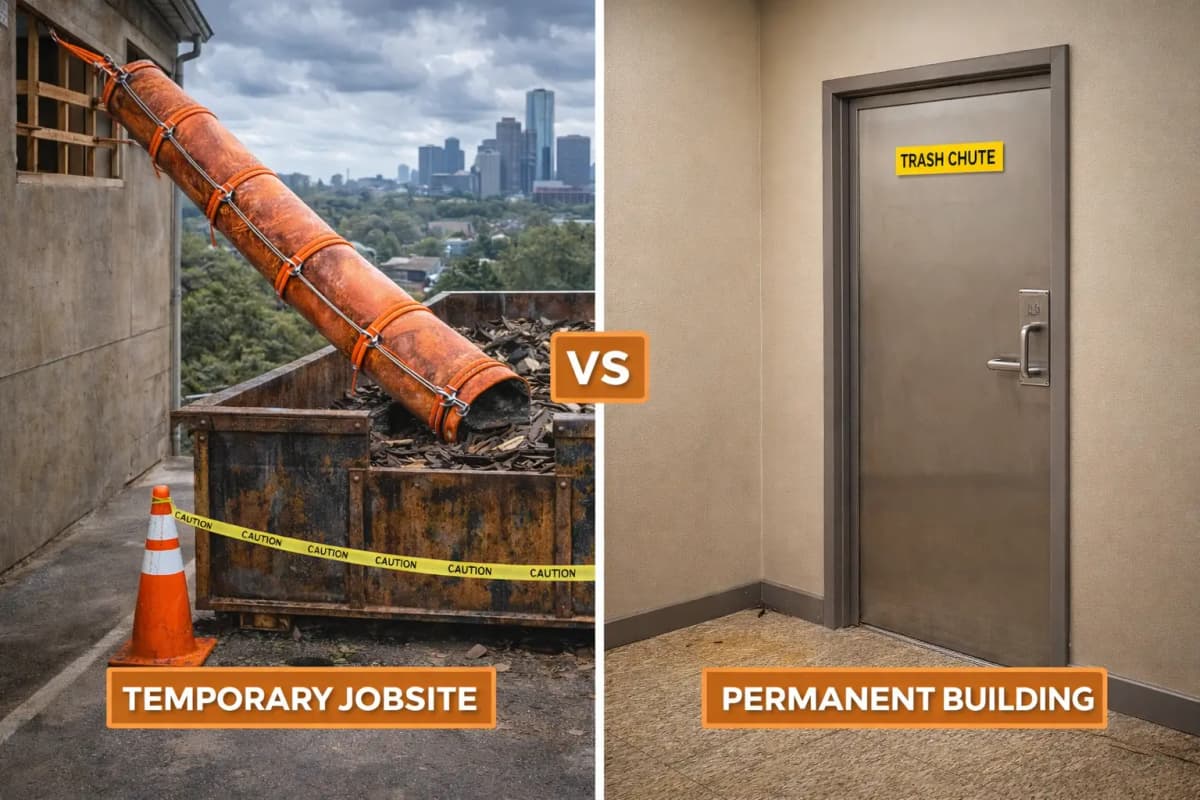
A modular trash chute kit is a segmented system of interlocking tubes, typically made from reinforced polyethylene or galvanized steel, designed to channel construction debris, renovation waste, or demolition material from elevated work areas down to ground-level collection bins. Each “module” is a discrete section—commonly 5–10 feet in length—that fastens to the next via bolts, clips, or threaded connections.
The appeal is straightforward: contractors and property managers can assemble chutes to match any building height, disassemble and move them between jobs, and avoid the fixed footprint of permanent chute infrastructure. This flexibility comes with a cost structure that extends well beyond the purchase price of the hardware itself.
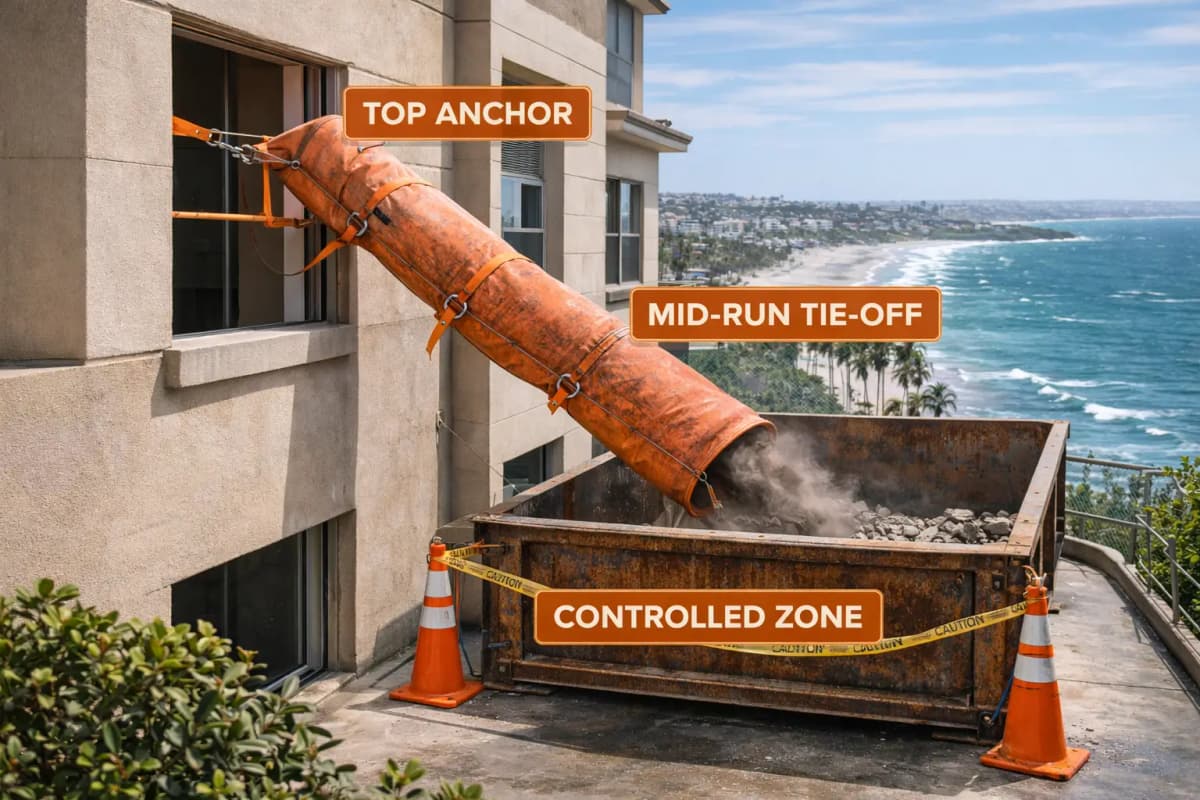
Why hidden costs matter: First-time buyers often quote only the equipment price, then face surprise invoices for delivery, permitting, installation labor, disposal surcharges, and ongoing maintenance. Understanding the full cost picture before you commit helps you bid projects accurately, avoid budget overruns, and make informed buy-vs.-rent decisions.
The Visible Costs: Hardware and Permits
Equipment Purchase or Lease Price
The hardware itself is the most obvious line item. A basic modular kit with 5–6 sections (roughly 30–50 feet of vertical reach) typically ranges from $1,500 to $5,000 for entry-level poly systems, and $3,500 to $12,000 for heavy-duty galvanized versions. Longer runs, specialty sections (like articulating elbows or impact-resistant discharge sections), and pressure-rated components push costs higher.
When comparing vendors, verify what’s included in the base kit. Does it come with fastening hardware, straps, or safety clips? Or are those add-ons? Missing clarity here is a classic hidden-cost trap.
Permit and Inspection Fees
Many municipalities require permits for debris chutes on multi-story buildings or in dense urban areas. Permit fees vary widely—anywhere from $50 to $500 per application, depending on local jurisdiction and project scope. Some regions also mandate third-party inspections before and after use, adding $200–$1,000 per inspection.
Check with your local building or public works department early in the planning phase. Our guide to Debris Chute Permit Requirements New Jersey 2026 walks through one state’s process; your region will have its own rules. Failing to budget for permits can delay project timelines and incur late-application surcharges.
Installation Labor and Site Prep
Professional Installation vs. DIY Assembly
Assembling a modular chute sounds straightforward, but doing it safely requires two to four skilled workers, proper fall protection if you’re working at heights, and knowledge of load-bearing anchoring. Professional installation typically costs $800–$3,000, depending on building height, access difficulty, and local labor rates.
Many contractors underestimate the time required. A 40-foot chute can take 6–10 hours to assemble, align, and secure—longer if the building has irregular geometry, limited rooftop access, or obstructing HVAC equipment. That labor compounds quickly.
If you attempt DIY assembly, budget for tool rental (hoists, scaffolding, safety harnesses) and ensure your crew has completed OSHA Construction Industry safety standards training. Injuries or accidents will erase any savings from skipped professional installation.
Site Preparation and Dumpster Positioning
Before the chute goes up, the ground-level collection area must be reinforced. This might involve temporary wooden decking or steel plates to distribute the weight of a full dumpster (which can exceed 20 tons). Inadequate ground prep leads to settling, driveway damage, and costly repairs post-project.
Dumpster positioning is also critical. If the chute’s discharge point doesn’t align with the dumpster opening, you’ll pay extra for relocation or accept spillage and cleanup costs. Site surveys and layout planning—often overlooked—can cost $200–$500 but prevent costly mistakes later.
Hidden Software and Training Costs
Worker Training and Safety Certification
Chute operation isn’t intuitive. Workers need to understand load limits, proper positioning of material in the chute (to avoid jamming), how to clear blockages, and emergency procedures. Many contractors are unaware that OSHA guidelines recommend documented OSHA ergonomics guidelines training for teams handling repetitive loading tasks.
Formal training for a crew of 4–6 people can run $400–$1,200. Skipping training often results in:
- Clogged or damaged chutes (requiring expensive emergency service calls)
- Worker injuries or back strain (liability and workers’ comp claims)
- Debris spillage and property damage
- Project delays while chutes are cleaned or repaired
Documentation and Compliance Tracking
Some municipalities and insurance carriers require documented proof that chutes are being operated and maintained according to safety standards. Keeping logs of maintenance checks, crew training dates, and inspections requires administrative time or a simple tracking system—another small cost that’s rarely pre-budgeted.
Maintenance, Repair, and Replacement Reserves
Routine Maintenance and Cleaning
Construction debris sticks to chute interior surfaces. Dust, concrete splatter, and wet mortar build up, increasing friction and jamming risk. Regular cleaning—every 5–7 days on active jobs—costs $150–$400 per session if outsourced, or significant crew time if done in-house.
Check our Trash Chute Cleaning & Maintenance Tips guide for a practical maintenance schedule. Neglecting cleaning accelerates wear, reducing chute lifespan from 5+ years to 2–3 years.
Wear Items and Replacements
Fasteners corrode, impact-resistant discharge sections crack from repeated debris strikes, and polyethylene can become brittle in UV exposure. Budget 5–10% of the original equipment cost annually for replacement parts. On a $3,000 chute, that’s $150–$300 per year. Over a 5-year lifecycle, replacement parts can exceed the original hardware cost.
Repairs from Damage
Accidents happen. A section gets dented or cracked from overloading, or a debris item jams the entire system. Emergency repairs or replacement of damaged sections can range from $500 to $2,500 depending on severity. If you’re renting, the lessor often covers this; if you own, it comes out of your contingency.
Disposal, Tipping Fees, and Material Handling
Waste Tipping Fees and Hauling Surcharges
Once debris lands in the dumpster, disposal costs accrue. Tipping fees vary by material type (general construction waste, hazardous materials, recyclables) and by landfill or transfer station. A typical construction dumpster might cost $400–$800 for a weekend or $1,200–$2,500 for a week-long rental, but that’s for the container itself—tipping fees on top can be $50–$150 per ton depending on local waste management rates.
If your project generates 10 tons of debris, tipping fees alone could be $500–$1,500. EPA construction and demolition debris statistics show the majority of construction waste is recyclable; sorting materials and using separate recycling streams can lower tipping fees, but requires additional labor and container costs.
Extra Dump Runs and Overflow Handling
If you underestimate debris volume or chute capacity, you’ll need extra dump runs or additional containers. Each run costs $100–$400 in hauling fees plus tipping. On a multi-week project, overflow costs can add up to thousands of dollars.
Use the Trash Chute Capacity Calculator Guide before the project starts. Accurate volume estimates prevent emergency dump runs and bid surprises.
Compliance and Regulatory Costs
Environmental and Hazmat Fees
If your project uncovers or generates hazardous materials (asbestos, lead paint, old insulation), those materials require special handling and disposal. Hazmat disposal can cost $1,000–$5,000+ per ton. A single chute clogged with hazmat-contaminated material forces a complete decontamination and may sideline the system for days.
Budget for environmental testing if the building is pre-1980 or if you discover suspect materials during demolition.
Insurance and Liability Coverage
General liability insurance may or may not cover debris chute operations. Some insurers require endorsements or riders, adding $200–$500 per project to your policy. If you’re leasing a chute, the lessor’s insurance often covers the equipment, but not necessarily your liability for debris spillage or damage. Clarify coverage gaps before signing a contract.
Local Fines and Remediation
If debris spills onto neighboring property, you’re liable for cleanup. A single incident can cost $2,000–$10,000 or more, plus potential fines from the municipality. Proper chute operation, regular maintenance, and overflow management are cheap compared to remediation.
Contingency Budgeting and Project Overruns
The 15–20% Budget Reserve
Industry best practice is to reserve 15–20% of total project costs for unforeseen expenses. For debris management alone, this might mean budgeting an extra $500–$2,000 on top of the visible costs. First-time chute users rarely do this and end up absorbing unexpected invoices.
Typical contingency triggers include:
- Weather delays prolonging the project and chute rental period
- Permit delays or surprise inspection requirements
- Chute damage or unexpected repairs
- Unexpected debris volume (renovation uncovers hidden junk or structural waste)
- Labor shortages forcing premium overtime for installation or removal
Escalation Clauses and Rate Increases
If your project spans multiple months, rental rates or disposal fees may increase. A 2–3% quarterly escalation on longer leases is not uncommon. Locking in rates upfront prevents mid-project surprises.
Leasing vs. Buying: Cost Comparison
Buy Scenario: Total Cost of Ownership
If you purchase a $3,000 modular kit, use it for 5 years, and run it on 8–10 projects per year:
- Initial hardware: $3,000
- Installation labor (one-time professional setup): $1,500
- Annual maintenance and parts (5 years × $200): $1,000
- Storage and insurance (5 years × $300): $1,500
- End-of-life disposal or refurbishment: $200–$500
- Total 5-year cost: ~$7,200–$7,500
- Cost per project (assuming 40 uses over 5 years): ~$180–$190
Lease Scenario: Per-Project Cost
Leasing a comparable chute system typically runs $300–$600 per week or $800–$1,500 per month. On a 2-week project:
- Chute rental (2 weeks): $600–$1,200
- Delivery and pickup: $200–$400
- Installation labor (lessor’s crew or yours): $300–$800
- Damage waiver or insurance: $100–$300
- Total per 2-week project: ~$1,200–$2,700
For occasional users (1–2 projects per year), leasing is cheaper. For regular contractors, ownership breaks even after 3–4 projects and saves thousands over 5 years. See our Debris Chute Rental guide for detailed lessor comparisons.
Real-World Budget Example
Scenario: 35-Foot Residential Renovation, 4 Weeks
Visible costs:
- Chute rental (4 weeks @ $400/week): $1,600
- Dumpster rental and tipping (two 20-yard bins, ~$500 each + $100 tipping): $1,200
- Permit: $150
- Subtotal: $2,950
Hidden costs that emerged mid-project:
- Unexpected ground reinforcement (concrete pads): $400
- Chute cleaning service (weekly, 4 times): $600
- Crew training and overtime (setup delays): $300
- Extra dump run (debris volume exceeded estimate): $200
- Chute repair (minor damage): $350
- Permit inspection fee: $200
- Subtotal: $2,050
True total: $5,000 (69% higher than initial estimate)
This scenario is common. The contractor bid $3,000 for debris management and ended up spending $5,000—a 40% margin compression. Our Renovation Debris Chute Cost Estimate Checklist helps contractors avoid this trap by itemizing every cost category upfront.
Strategies to Minimize Hidden Costs
Pre-Project Audits and Planning
Before rental or purchase, walk the site with a chute specialist. Measure heights, check roof load capacity, identify obstructions, and confirm dumpster access. A 30-minute site survey can uncover $500–$2,000 in setup or compliance costs that you’d otherwise discover mid-project.
Standardize Your Equipment
If you run multiple projects, buying or leasing the same chute model repeatedly builds crew familiarity, reduces training costs, and simplifies spare-parts inventory. Switching between vendors or models adds complexity and risk.
Negotiate All-Inclusive Contracts
When leasing, ask lessor to bundle delivery, setup, weekly cleaning, and minor repairs into a flat weekly fee. This trades vendor flexibility for cost predictability and eliminates surprise invoices.
Build Contingency Into Bids
Quote clients 15–20% above your baseline debris-management estimate. Frame it as a “contingency reserve for site conditions” and protect your margin. Most clients accept this; those who don’t are price-shopping, not value-shopping.
Invest in Crew Training Early
Spend $400–$600 on formal safety and operation training once, then use that trained crew repeatedly. Training ROI compounds across projects. An experienced crew operates chutes faster, creates less waste, and prevents costly damage.
Monitor Capacity and Schedule Dumps Proactively
Track debris volume weekly and plan dump schedules based on capacity, not emergencies. Reactive emergency dumps cost 2–3× more than planned runs. Use capacity calculators to stay ahead of overflow.
Frequently Asked Questions
Do I need a permit for a temporary debris chute?
In most urban and suburban jurisdictions, yes. Temporary chutes on multi-story buildings or in dense neighborhoods typically require a permit and inspection. Some rural or low-density areas have fewer restrictions. Check with your local building department early—permit processing can take 1–3 weeks. Fines for unpermitted chutes range from $500 to $5,000, so it’s worth budgeting correctly upfront.
What’s the difference between modular kit costs and custom-built chute costs?
Modular kits are standardized, mass-produced, and cheaper ($1,500–$5,000). Custom-built chutes are fabricated on-site to fit unique building geometry or safety requirements, costing $5,000–$20,000+. Modular systems are faster to deploy and easier to move; custom systems offer flexibility for tight or irregular spaces. First-time buyers almost always use modular systems.
Can I use the same chute across multiple projects without replacing parts?
Yes, with proper maintenance. Inspect fasteners, discharge sections, and connection points after every project. Replace worn components (usually 10–20% of the kit annually) and you can extend the chute’s life to 5–8 years. Neglecting maintenance forces costly repairs or premature replacement, wiping out cost savings.
What happens if debris jams the chute mid-project?
Jamming halts work and requires emergency cleaning or part replacement, costing $500–$2,000 and delaying the project 4–8 hours. Preventive measures include proper crew training, regular cleaning (every 5–7 days), and avoiding oversized or wet material. The Trash Chute Cleaning & Maintenance Tips guide outlines best practices to avoid this costly downtime.
Are there hidden insurance costs if I own vs. rent a chute?
Renters typically get equipment coverage from the lessor but must carry liability insurance for debris spillage and site damage. Owners must insure the equipment (replacement cost) and liability. Either way, add $150–$300 per project to your budget for insurance endorsements or coverage gaps. Confirm with your carrier what’s covered before the project starts.
How do I know if I’m getting ripped off on disposal or tipping fees?
Get quotes from 2–3 haulers and waste facilities before the project. Ask for itemized invoices (dumpster rental, tipping fee, fuel surcharge, recycling credit). Tipping fees for construction waste typically range $30–$100 per ton; hazmat is higher. If a quote seems out of line, ask the hauler to justify each line item. Transparent pricing is a sign of a reputable vendor.
What’s the real cost difference between buying and leasing over 5 years?
If you run 8–10 projects per year and own, your cost-per-project is ~$180–$200 (after spreading hardware, maintenance, and storage over 40+ uses). If you lease at $300–$400 per week on shorter jobs, you’re paying $500–$1,200 per project. For high-volume contractors, ownership wins. For occasional users, leasing is cheaper. Our Buy Trash Chute Online guide includes a ROI calculator to help you decide.
Ready to Plan Your Chute Budget?
The difference between a profitable project and a margin-eroding one often comes down to debris-management planning. By understanding all cost categories—from hardware and permits to maintenance, disposal, and contingencies—you can bid accurately, communicate realistic timelines to clients, and protect your bottom line.
Start here:
- Use the Renovation Debris Chute Cost Estimate Checklist to itemize every cost for your next project.
- Reference the Trash Chute Capacity Calculator Guide to estimate debris volume and disposal needs accurately.
- Review our Trash Chute for First-Time Contractors guide if this is your first modular system deployment.
- Get a site survey from a chute specialist to identify installation, compliance, and contingency costs unique to your property.
- Compare Debris Chute Rental options and ownership costs for your planned project volume over the next 3–5 years.
Modern debris-chute systems are reliable, cost-effective, and scalable. Hidden costs don’t have to blindside you. Plan comprehensively, train your crew, and maintain your equipment consistently—and you’ll convert debris disposal from a liability into a competitive advantage.
Questions about modular chute costs for your specific project? Contact our team today. We help contractors from setup through project completion, with transparent pricing and no surprises.