

Index
- Why Debris Chutes Matter for Military Family Renovations
- Understanding Military Family Renovation Constraints
- Pre-Project Site Assessment and Planning
- Safety Protocols When Family Members Are Home
- Installation Essentials for Residential Setups
- Debris Flow and Capacity Sizing for Whole-Home Work
- Daily Operational Workflow and Team Coordination
- Managing PCS Timelines and Project Acceleration
- Insurance, Liability, and Compliance Checklist
- Cost Management and Budget Planning
- Common Mistakes and How to Avoid Them
- Frequently Asked Questions
- Ready to Get Started
Why Debris Chutes Matter for Military Family Renovations
Military families managing home renovations face a compressed timeline and unique stressors. PCS moves happen on a fixed schedule, leaving little room for project delays. A debris chute system eliminates one major source of friction: manual debris removal and the logistical overhead of managing dumpster access throughout a multi-week renovation.
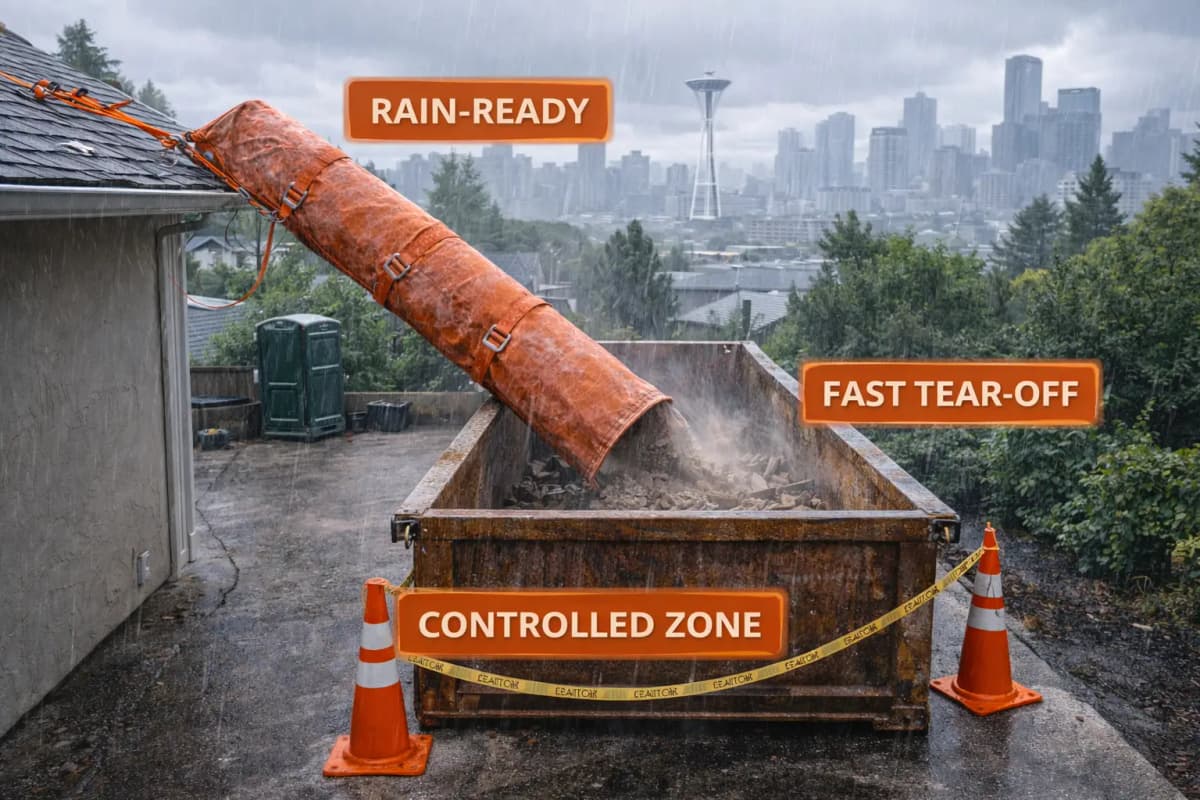
Installing a modular debris chute—anchored to the home’s exterior and discharging directly into a ground-level dumpster—keeps the work zone contained, reduces on-site clutter, minimizes dust and debris spread into living areas, and accelerates cleanup cycles. For families living in the home during renovation, this containment is non-negotiable for livability and safety.
Understanding Military Family Renovation Constraints
Military families renovating their homes operate under a distinct set of pressures:
- Fixed PCS departure dates: A reassignment order creates an immovable deadline. Delays ripple across logistics and family planning.
- In-home family presence: Spouses and children often remain during renovation work. The project must maintain habitability in non-work zones and minimize disruption to daily routines.
- Structural and compliance variety: Base housing, historic military-era homes, and varies regional building codes mean setup assumptions may differ site to site.
- Contractor coordination challenges: Military families may hire multiple trades (electrical, plumbing, HVAC) on overlapping schedules. A central debris management system keeps all crews synchronized.
- Security and access concerns: Some properties have restricted visitor access or require advance notification. Early planning ensures contractors can access the chute safely and continuously.
A debris chute system directly addresses these constraints by removing daily debris-hauling friction, reducing the number of truck trips to job sites, and keeping the renovation footprint compact and controlled.
Pre-Project Site Assessment and Planning
Before ordering and installing a debris chute, spend time on-site to understand the home’s geometry, the placement of temporary power and water, and the safest discharge point. This assessment step prevents costly repositioning mid-project.
Measuring Exterior Mounting Surfaces
Walk the home’s perimeter and identify the exterior wall or corner closest to the work zone and dumpster location. Measure the available vertical run from the highest work point (often a roof line or second-story window) to ground level. Most residential renovations benefit from 20–40 ft of chute length, depending on building height and debris volume. Document any obstructions: downspouts, electrical conduits, siding seams, or HVAC units that may require rerouting.
Ground-Level Dumpster Positioning
Coordinate with the debris disposal provider to position the dumpster directly below the chute discharge point. Ideally, the dumpster sits flush against the building line, minimizing the horizontal offset and ensuring efficient gravity-fed debris flow. Check for underground utilities (gas, water, electric) before finalizing dumpster placement. Many sites require a utility locate (call 811 or your local One-Call service before digging or anchoring equipment).
Access Routes for Multi-Crew Coordination
Map out how roofing contractors, electricians, plumbers, and other trades will move materials and personnel on-site. Ensure the debris chute doesn’t block emergency egress or create tripping hazards. If children will be on-site during renovation, verify that the chute and its immediate area are inaccessible to unsupervised play.
Safety Protocols When Family Members Are Home
Military families often remain in the home during renovation—particularly the non-work zones. This in-home presence creates a duty of care for contractors to minimize noise, dust, and safety hazards to the family.
A comprehensive safety protocol when children are on site includes physical barriers (safety netting, caution tape, hard-hat-only zones) and clear signage. A debris chute itself is safer than manual hauling: it contains dust, reduces foot traffic in occupied spaces, and eliminates the noise of hand-truck traffic on stairs and hallways.
Dust and Debris Containment
Install plastic sheeting or temporary walls to isolate the renovation zone from living areas. A chute discharges debris into a sealed dumpster, preventing debris scatter and airborne dust that would otherwise settle on furniture, bedding, and air-handling systems.
Noise and Vibration Management
Establish work-hour agreements with the family. Many military families request morning or afternoon work windows only, allowing evening and weekend quiet time. A chute system reduces the frequency and duration of debris-hauling noise (truck engine starts, dumpster lifts) because debris moves continuously into the bin rather than requiring repeated manual removal trips.
Hazard Communication and Signage
Post clear signage at the chute entrance, discharge point, and any access routes. Use bilingual materials if needed. Establish a hand-signal system if the chute extends multiple stories and workers cannot see the discharge zone directly. Never allow family members (especially children) near the chute discharge area during operation.
Installation Essentials for Residential Setups
Debris chute installation fundamentals begin with a clear understanding of modular section assembly, anchoring hardware, and fall-protection requirements for workers at height.
Modular Section Assembly and Coupling
Most chutes ship as individual 5–10 ft sections that stack and couple together. Each section features a reinforced collar and locking mechanism. During assembly:
- Lay out all sections on a clean, flat surface and inspect for shipping damage.
- Apply any lubrication specified by the manufacturer (typically a silicone-based spray) to coupling surfaces to ensure smooth assembly and ease of future disassembly.
- Connect sections in order from bottom to top, securing each with the specified lock pins or bolts. Verify each coupling is fully seated before moving to the next section.
- For residential work, a single worker can manage 5–10 ft sections by hand; sections longer than 15 ft may require a second person or a mechanical assist.
Anchoring to the Building
Residential homes require secure wall anchoring every 8–10 ft of vertical chute length. Use through-bolts, lag bolts, or metal brackets rated for the chute’s loaded weight (typically 50–200 lbs per section depending on material and diameter). For wood-frame homes, anchor into rim board, header beams, or framing studs. For masonry or concrete, use expansion anchors or adhesive anchors rated for your substrate.
Fall Protection for Installation Crew
Install workers must comply with OSHA construction safety standards. Use a ladder, scaffold, or safety harness rated for work at height. Ensure a second person is present as a spotter. A chute system itself does not eliminate fall hazards during setup—plan for worker protection first.
Debris Flow and Capacity Sizing for Whole-Home Work
Residential renovations—especially kitchen and bathroom remodels—generate a surprising volume of debris in a short window. Overestimating debris output leads to dumpster overflow; underestimating causes project delays as crews wait for disposal slots.
Use the debris flow and capacity sizing guidance to select the right dumpster and chute diameter for your project scope. A typical kitchen remodel generates 1–3 cubic yards of debris per day during the demolition phase (days 1–5). A second-story bathroom addition may add another 0.5–1 cubic yard.
Sizing the Chute Diameter
Residential chutes typically come in 15″, 18″, or 24″ diameters. Smaller diameters (15″) work for light-duty projects (trim, flooring, non-structural removal). Larger diameters (24″) accelerate flow for heavy debris (drywall, roofing, structural lumber). For a whole-home kitchen + 1.5-bath renovation, a 18″–24″ chute balances flow speed and installation footprint.
Dumpster Coordination
Order a dumpster size (10, 15, or 20 cubic yards) that matches your expected debris volume. Most military family renovation scopes fit within a 15-yard dumpster if crews use the chute consistently. Establish a schedule with the disposal provider for pickup/replacement mid-project if needed, especially for demolition-heavy phases.
Daily Operational Workflow and Team Coordination
A successful military family renovation relies on clear daily workflows and communication between the family and all trade contractors.
Pre-Work Briefing
Each morning, assign one crew lead to brief all teams on the day’s debris management plan. Identify which work zones are active, which trades are on-site, and the expected debris types and volumes. Assign chute-loading responsibility to a specific crew member or rotation among trades.
Debris Loading Best Practices
Load the chute steadily rather than in bulk dumps. Large pieces (drywall sheets, lumber) should be broken down to fit comfortably through the chute diameter without jamming. Avoid mixing incompatible materials (wet debris, metals, liquids) that may clog the chute or create safety hazards. Clear the chute discharge point of blockages daily.
Communication with the Family
Establish a single point of contact on the contractor side. Brief the family daily on work scope, noise expectations, dust-control measures, and any schedule changes. For military families juggling move logistics, clarity and reliability in the renovation process reduce stress and build trust.
Managing PCS Timelines and Project Acceleration
PCS moves often arrive with 30–90 days’ notice. A renovation that would normally span 6–8 weeks must compress into 4–6 weeks or happen in parallel with move-out planning. A debris chute is a force-multiplier: it cuts debris-removal downtime from hours per day to minutes.
Compressed Scheduling for Whole-Home Scopes
Run demolition and framing phases in parallel where possible. Use the chute to keep demolition debris moving continuously, preventing on-site clutter that would slow frame crews. Coordinate material deliveries to avoid overwhelming the dumpster capacity mid-demolition.
Overlap Multiple Trades
Layer electrical, plumbing, and HVAC rough-ins during framing. A chute system allows each trade to manage its own debris without stepping over other crews’ piles. Mechanical systems that would normally require separate staging areas can be coordinated more tightly.
Finish Phase Acceleration
Once framing is complete, debris volume drops sharply. Use the chute for drywall scrap, trim waste, and packaging material during finish phases. A clean job site accelerates final inspections and punch-list work.
Insurance, Liability, and Compliance Checklist
Military family renovations may occur on base housing (under military building codes) or in private homes (subject to local municipal codes). Verify compliance requirements early.
Verify Insurance and Coverage
Confirm that your insurance and liability coverage includes debris chute installation and operation. Many general liability policies cover chute rental; some exclude installation work at height. If you own the chute, ensure it is insured as equipment. Request certificates of insurance from all sub-contractors before they begin work on-site.
Permitting and Inspection
Contact the local building department or, if applicable, the military base engineering office to determine whether the debris chute requires a permit. In many jurisdictions, temporary debris chutes are exempt from permitting; some require a notification or a one-page installation checklist. Installing without required permits can result in stop-work orders and liability exposure.
Safety and Environmental Compliance
Ensure the dumpster is rated for construction debris and that the disposal contractor complies with EPA construction and demolition debris guidelines. Some materials (asbestos, lead paint, hazardous waste) require special handling and disposal. If the home was built before 1980, budget for professional testing and removal of these materials separately from the main debris stream.
Cost Management and Budget Planning
Military families operating on a fixed budget need transparency on debris chute costs upfront. Use cost estimation and budgeting guidance to build an accurate scope and quote.
Chute Rental vs. Purchase Trade-Off
For a single renovation lasting 4–8 weeks, chute rental is typically more economical than purchase. Rental includes delivery, setup assistance, and pickup. Purchase makes sense if you run frequent jobs (3+ per year) or plan to retain the equipment for emergency response or future projects. Calculate your annual chute utilization to decide.
Hidden Costs to Budget
- Dumpster fees and hauls: Beyond the dumpster rental base, expect per-haul charges if the bin fills faster than expected.
- Installation labor: Factor in 4–8 hours of skilled labor to assemble and anchor the chute safely.
- Bracing and fall protection: Temporary scaffolding or safety equipment to support installation work.
- Protective sheeting and barriers: Plastic barriers, dust containment, and signage to meet safety and in-home family protection requirements.
Return on Investment
A debris chute reduces manual debris-hauling time by an estimated 20–30% compared to traditional dumpster-only approaches. For a team of 4–6 workers, this translates to 40–90 labor hours saved over the project—a significant productivity gain. Additionally, accident risk and worker fatigue decline, further boosting ROI.
Common Mistakes and How to Avoid Them
Learning from common debris chute mistakes will accelerate your team’s proficiency and prevent costly rework.
Mistake #1: Underestimating Debris Volume
Problem: A family orders a 10-yard dumpster thinking demolition will be light. By day 3, the bin is full and work pauses while a new dumpster arrives.
Solution: Conduct a walkthrough with an experienced estimator and multiply your initial estimate by 1.25–1.5 for contingency. For whole-home renovation scopes, start with a 15-yard dumpster and plan a mid-project replacement if needed.
Mistake #2: Chute Installation Without Proper Anchoring
Problem: A crew quickly bolts a chute to exterior siding or weak rim board without verifying structural capacity. Under load, bolts pull through or the entire system sways dangerously.
Solution: Always anchor into structural framing (rim board, header beams, studs) or masonry. Use a structural engineer’s guidance if you are uncertain about load paths. Verify each anchor point independently before loading.
Mistake #3: Neglecting Family Safety Communication
Problem: A crew sets up a chute without briefing the family on no-access zones. A child approaches the discharge point during debris flow and narrowly escapes injury.
Solution: Conduct a detailed safety briefing with the family on day one. Post clear warning signs and caution tape at both the chute entrance and discharge point. Establish a work-hour agreement and stick to it.
Mistake #4: Mixing Incompatible Debris Types
Problem: Wet drywall dust, metal scraps, and liquid waste clog the chute. Cleanup requires partial disassembly and hours of downtime.
Solution: Brief crews on acceptable debris types. Require liquids and hazardous materials to be disposed of separately. Use a second bin for metals and recyclables if the project scope includes salvage or scrap metal sales.
Frequently Asked Questions
Can a debris chute be installed on a military-base-owned home, or does it require special approval?
Many military bases allow temporary debris chutes on family housing, but approval processes vary by installation. Contact your base civil engineering or facilities office before ordering a chute. Some bases require a temporary structure permit or engineering review. Starting the approval process early prevents delays. If you plan to install the chute yourself, confirm whether your homeowner’s insurance or military housing agreement imposes restrictions.
How do I protect family members during operation, and are there age restrictions on who can be on-site?
Establish clear no-access zones around the chute entrance and discharge point. Install warning signage and caution tape. Ideally, arrange for the family to be off-site during heavy demolition phases, or isolate non-work zones with plastic sheeting and hard doors. Some contractors require families with young children (under 10) to leave during high-risk demolition phases. Check your insurance policy and state regulations for any mandated age restrictions.
What happens if the chute jams, and how long does clearing take?
Jams typically occur when large pieces of drywall or lumber become wedged. Clear most jams by removing the blockage from above (using a rod or pole to dislodge material) or, in stubborn cases, by disassembling one or two chute sections and removing debris by hand. Clearing a jam usually takes 15–45 minutes. To prevent jams, enforce a rule: break drywall into 2–3 ft pieces and cut lumber to 4–6 ft lengths before loading.
Can I use a single debris chute for multiple floors of work, and how do I manage flow to the discharge point?
Yes. A single chute can serve multiple floors. Gravity naturally accelerates debris downward. Ensure the discharge point (dumpster) has a metal shield or funnel to guide debris into the bin and minimize scatter. For particularly long chutes (40+ ft), position the dumpster directly below the exit to avoid horizontal spray.
What is the typical rental cost for a residential debris chute, and are there seasonal price fluctuations?
Residential chute rentals typically range from $400–$1,200 per month depending on diameter, region, and delivery distance. Summer and spring (peak renovation season) may see 10–20% premium pricing. For a 4–6 week renovation, expect $200–$600 all-in for chute rental plus dumpster costs. Compare quoted pricing with your project timeline and debris volume to confirm ROI against manual hauling labor.
How do I coordinate debris chute use when multiple contractors (electrician, plumber, roofer) are on-site simultaneously?
Assign one crew lead or project manager to oversee chute loading. Establish a loading schedule or rotation among trades (e.g., demo crew loads mornings, electricians load afternoons). Use a checklist to track debris types and volumes daily. Weekly coordination meetings align all trades on schedule, load capacities, and dumpster pickup timing.
Is a debris chute more cost-effective than hiring a junk-removal service or using hand-truck hauls to a street-level dumpster?
In most cases, yes. A chute system eliminates repeated labor-intensive trips and acceleration of site work (because crews are not waiting for debris to be manually removed) usually recovers its rental cost within the first two weeks. Junk-removal services charge $100–$300 per load and may require 4–8 hauls per week during demolition. A chute rental typically costs less and completes work faster.
Ready to Get Started?
Debris chutes are engineered to accelerate military family renovations, reduce on-site safety risks, and keep your PCS timeline on track. The setup is straightforward—from site assessment and installation through daily operational workflows—but requires upfront planning and clear communication with the family and all trade partners.
If you’re managing a military family renovation, contact EasyChute today for a free site assessment and rental quote. We serve military families and civilian contractors across the Northeast and growing regions. Our team will help you right-size the chute diameter, dumpster capacity, and rental timeline to match your project scope and budget.
Call EasyChute at (855) 902-4883 to discuss your military family renovation project—or visit our website to explore debris chute options and local availability.