
Aging-in-place renovations are booming across Pennsylvania. From the rowhouse corridors of South Philadelphia to the hilltop ranches of the Pittsburgh suburbs, contractors are gutting bathrooms, widening doorways, reconfiguring kitchens and adding first-floor master suites at a pace that wasn't seen even a couple of years ago. The demographic math is simple: Pennsylvania is one of the oldest states in the country by median age, and homeowners who want to stay in their homes as they get older are investing serious money in making those homes work for them.
What's not so simple is the debris. Aging-in-place work is surgical by nature — you're tearing out old tile, pulling plywood subfloor, removing load-bearing walls, demo-ing plaster lath — all in occupied or semi-occupied homes where someone's grandmother still sleeps 15 feet from the job. Moving that debris safely and efficiently, especially on multi-story homes, is one of the most underestimated logistics challenges in this niche.
That's where a proper debris chute pays for itself a dozen times over. This guide covers everything Pennsylvania contractors need to know: why aging-in-place jobs are uniquely challenging for debris removal, how to set up a lightweight fabric chute fast, and how to protect both your crew and your client's household during the process.
Why Aging-in-Place Renovations Create Unique Debris Challenges
Most contractors are used to debris removal on empty houses — a gut-and-rebuild where the homeowner is staying with family. Aging-in-place renovations are different. The home is occupied, often by someone who can't simply move out for three weeks. That changes everything about how you work and how you move material.
Occupied Homes Mean Zero Tolerance for Mess
When you're carrying bags of old tile or armloads of plaster lath down through an occupied home, every trip is a risk. Dust migrates. Debris falls. Flooring gets scratched. For a client who is elderly, possibly immunocompromised, or uses mobility aids, that mess isn't just an inconvenience — it's a safety hazard. A debris chute that routes material directly from the work area to the dumpster outside eliminates the occupied-floor transit problem entirely.
Pennsylvania Housing Stock Is Older and Denser
Much of Pennsylvania's residential housing was built between 1890 and 1960. Philadelphia's rowhouses, Allentown's twin homes, Scranton's triple-deckers — these are narrow, stair-heavy buildings with no service elevator and no convenient side access. Getting debris out of a second- or third-floor bathroom renovation means navigating tight stairwells with heavy loads, which creates ergonomic risks OSHA specifically flags in construction environments. A chute solves the stairwell problem in one setup.
Aging-in-Place Tearout Is Material-Dense
Grab bars and walk-in showers sound minor, but installing them often means removing full bathroom tile systems, concrete backer board, old cast-iron tubs, plywood subfloors and plaster walls — all of which is heavy and bulky. A single aging-in-place bathroom gut in a 1940s Harrisburg rancher can produce 1,500 to 2,500 pounds of debris. Bag-carrying that down a flight of stairs is a crew fatigue and injury problem. Chuting it is fast, controlled and safe.
What Type of Debris Chute Works Best for These Jobs
There are two broad categories of construction chutes: rigid plastic sectional chutes (the kind you see on large commercial demolition projects) and lightweight fabric chutes. For aging-in-place residential work in Pennsylvania, fabric chutes win on every practical dimension.
Rigid vs. Fabric: The Quick Comparison
- Rigid plastic chutes are heavy, expensive, often require a rental agreement, need specialized brackets and scaffolding, and don't make economic sense for a two-day bathroom demo.
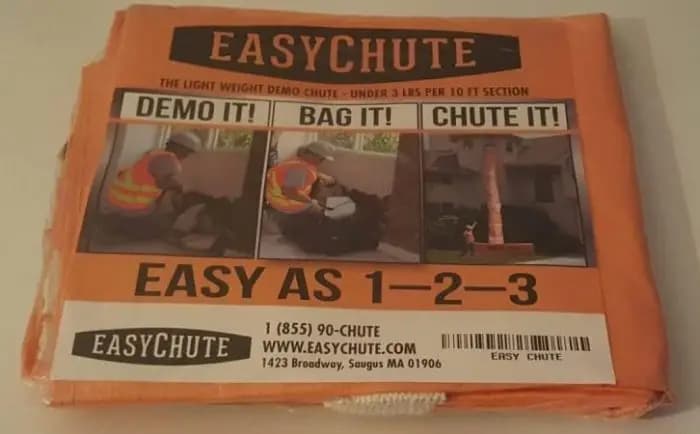
- Fabric chutes like EasyChute sections weigh under 3 lbs per 10 ft section, fold into a box that fits in the back of a pickup, hang from four woven loops with ordinary carabiners, and cost a fraction of rental over the life of the tool.
For the typical Pennsylvania aging-in-place contractor running three to six residential jobs simultaneously, a reusable fabric trash chute is the practical choice. You own it, you reuse it job after job, and you're not paying weekly rental fees that eat into already thin residential margins.
Matching Chute Length to Your Job Height
EasyChute sections connect with a 1.5 ft overlap, so you can build exactly the drop you need:
- One-story addition or first-floor window: a single 10 ft section is usually sufficient.
- Second-floor bathroom or bedroom: two 10 ft sections (connected) or one 25 ft section covers most standard Pennsylvania two-story homes.
- Third-floor or roofline work: a 25 ft plus a 10 ft section, or a single 50 ft section, depending on the building height.
- Roofing combined with interior demo: check out the full roofing trash chute guide for how to handle combined tearout scenarios.
How to Plan the Chute Setup Before You Arrive on Site
The best chute setups start with five minutes of planning before you ever unbox the chute. Walk the site the day before or early on Day 1 and answer these questions.
Identify Your Drop Point
You need a window, door opening, or roof edge that is directly above or close to where your dumpster will sit. In Pennsylvania rowhouses, this is often a rear window that faces an alley — ideal. In suburban ranch conversions, a garage-facing side window works well. The cleaner the vertical line from drop point to dumpster, the better your chute will flow.
Confirm Dumpster Placement
Most Pennsylvania municipalities require a dumpster permit if the container sits in a public right-of-way. Philadelphia, Pittsburgh, Allentown and Bethlehem all have permit processes for street placement. Plan your chute angle to drop directly into the dumpster opening — you don't want debris landing on the sidewalk or property adjacent to the bin. Position the dumpster before you hang the chute, not after.
Check for Obstructions Along the Drop Path
Mature trees, utility lines, awnings and exterior HVAC equipment are common obstacles on older Pennsylvania homes. Walk the exterior and visually trace your chute's path from the attachment point down to the dumpster. If there's an obstacle, pick an alternate window or adjust dumpster placement so the path is clean.
Assess Attachment Points Inside the Opening
EasyChute hangs from four woven loops — two near the top of the section. Inside the window or door opening, you can attach to:
- Existing window frame or trim (if sturdy)
- A piece of 2x4 lumber laid across the opening
- A scaffold crossbar or ledger
- Eye bolts or hooks set into the framing
Ordinary carabiners or quick-connect hooks work. No specialized hardware required. See the full EasyChute installation guide for step-by-step attachment instructions.
Step-by-Step Debris Chute Setup for a Typical Pennsylvania Aging-in-Place Job
Here's the practical SOP for a second-floor bathroom gut in a 1950s Cape Cod or rowhouse — the most common aging-in-place scenario in Pennsylvania.
- Place and permit your dumpster. Confirm placement is legal and directly below or close to your planned drop point.
- Select and prepare your drop window. Remove the sash if needed. If the window opens inward, prop or remove it. Lay a 2x4 or metal bar across the opening to serve as your anchor point.
- Unfold the chute section(s). A 10 ft section folds out in seconds. Connect additional sections with the 1.5 ft overlap — the coated poly material snugs together and gravity keeps it aligned.
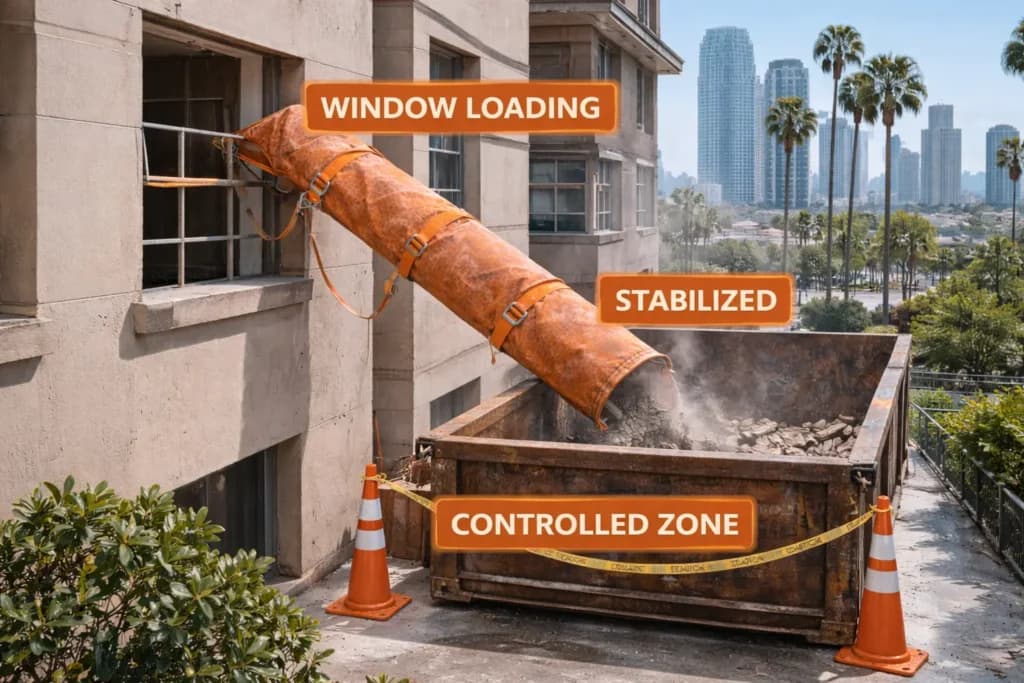
- Attach the top loops. Clip the two top woven loops to your anchor bar with carabiners. The chute should hang plumb from the window opening. If you need to angle it slightly toward the dumpster, a simple guide rope at the base works.
- Test with a small load. Toss a half-full bag down before committing to full production. Watch where material lands in the dumpster and adjust the base angle if needed.
- Establish a loading protocol with your crew. One person feeds the chute, one person monitors the dumpster level. Never overfill the dumpster to the point where debris can bounce back.
- At end of day, fold and store. The chute folds back into its box. Store it in your truck or van overnight rather than leaving it hanging — Pennsylvania weather, especially in fall and spring, can be rough on anything left exterior overnight.
Safety Protocols for Occupied-Home Debris Removal
Aging-in-place renovations put you in a unique ethical and legal position: your client is likely living in the home, possibly with limited mobility or medical needs. Your debris removal protocol has to account for their safety, not just your crew's.
Protect the Resident's Path of Travel
Before work begins each day, confirm with the homeowner which parts of the home are off-limits to your crew and which routes you'll be using. Post a simple sign at the work area entry. If debris must cross a path the homeowner uses, schedule that movement during a window when they're out or in another part of the home.
Dust Containment During Tearout
Aging-in-place clients are often sensitive to dust — respiratory conditions are more common in elderly populations. Use plastic sheeting to seal the work area from the rest of the home before beginning any tearout. The chute helps here: by routing debris directly out of the building rather than down interior hallways, you're dramatically reducing the dust spread through the home's main living areas.
OSHA Load and Lifting Guidelines
Even with a chute in place, your crew is still lifting and loading debris into the chute opening. OSHA's construction industry safety standards set clear expectations on manual material handling. Keep individual bag weights under 50 lbs. Rotate crew members on loading duty. Use knee pads when picking up material at floor level.
Never Chute Hazardous Material
Aging-in-place renovations in pre-1980 Pennsylvania homes often uncover asbestos floor tile, lead paint, and older insulation materials. None of this goes in the chute. Hazardous material requires separate handling, containment and disposal under Pennsylvania DEP regulations. Reserve the chute for standard construction debris: tile, drywall, wood, concrete, roofing material.
Pennsylvania-Specific Considerations for Aging-in-Place Contractors
Pennsylvania has its own regulatory and logistical nuances that affect how you plan debris removal on residential renovation jobs.
Philadelphia Permit Requirements
Philadelphia L&I (Licenses and Inspections) requires a street obstruction permit for dumpsters in the right-of-way, as well as specific requirements for scaffolding and exterior chutes on certain building types. If you're working on a historic property in Rittenhouse, Society Hill, or Germantown, check with the Philadelphia Historical Commission before hanging any exterior equipment.
Pittsburgh and Allegheny County Jobs
Pittsburgh's hilly topography creates interesting chute geometry. Many Pittsburgh homes are set into hillsides, which means the rear of the house may already be at grade level or below while the front is two or three stories up. This can actually simplify chute setup on some jobs — the effective drop height from a rear window may be less than expected. Always measure actual vertical distance, not just floor count.
Allentown, Reading and Lehigh Valley Rowhouses
Much of the aging-in-place renovation work in the Lehigh Valley is happening in densely packed rowhouse neighborhoods where rear-alley access is standard. This is a natural chute scenario: hang from the rear window, drop into an alley-placed dumpster, keep the front sidewalk and street completely clear. Local contractors in this region should get comfortable with the alley-access setup as a default configuration.
Rural Central PA: Long Driveways, Wide Setbacks
In rural Pennsylvania — think Lancaster County farmhouses or Centre County ranches — the challenge is different. Homes are often set well back from the road, and dumpsters may be placed far from the work area. Plan your chute setup relative to the nearest exterior wall to the demo area, and use a dumpster positioned as close to the building as the driveway or lawn allows. A 25 ft or 50 ft section gives you flexibility when the vertical and horizontal distances are both significant.
How a Debris Chute Protects Your Aging-in-Place Business
Beyond the practical logistics, using a debris chute on aging-in-place jobs is a business positioning decision. Here's why it matters for your reputation and bottom line in Pennsylvania's competitive remodeling market.
Faster Tearout Means Shorter Project Duration
A crew that can clear a bathroom gut in four hours instead of seven — because they're chuting debris directly instead of carrying bags down two flights of stairs — compresses your project timeline. Shorter timelines mean less disruption for your client, better crew utilization, and more jobs per month. Aging-in-place clients in particular value speed because every day of construction disruption is a day their home is less safe and accessible for them.
Lower Injury Risk, Lower Insurance Exposure
Stair-carrying heavy debris bags is one of the leading causes of construction crew injuries on residential jobs. Workers' comp claims and lost-time injuries are expensive and disruptive. A chute eliminates most of the carrying-on-stairs exposure. That's not just good safety practice — it's good risk management for your business.
Professional Appearance That Earns Referrals
Aging-in-place clients talk to other homeowners. They're often part of active communities — church groups, neighborhood associations, senior centers — where word of mouth travels fast. Showing up with a systematic, professional debris removal setup (versus wheelbarrow runs through the client's living room) is the kind of detail that earns referrals. It signals that you've thought through every aspect of working in someone's home, not just the construction itself.
Reusability and Cost Over a Full Season
One of the most common questions Pennsylvania contractors ask is whether a fabric chute is worth the upfront cost compared to just renting when needed. Let's work through the math.
- A typical debris chute rental in Pennsylvania runs $150 to $400 per week depending on the region and chute type.
- An EasyChute 25 ft section is a one-time purchase with free shipping — no weekly fees, no return deadlines, no logistics hassle.
- A contractor running six aging-in-place jobs per year, each with a two-week tearout window, could easily pay $1,800 to $4,800 in annual chute rental fees.
- An owned fabric chute that lasts multiple seasons costs a fraction of that — and is available immediately when you need it, without calling a rental company.
The reusability case is especially strong for construction chute applications in residential remodeling, where jobs are frequent but individually shorter than large commercial projects. You're not renting a crane — you're managing a simple material-handling tool that should live in your truck year-round.
What to Do with Construction Debris Once It's in the Dumpster
Getting debris into the dumpster efficiently is only half the equation. What happens to that material after it leaves your job site matters — both for environmental responsibility and, increasingly, for client optics.
Pennsylvania C&D Waste and Recycling Requirements
Pennsylvania follows federal EPA guidelines on construction and demolition debris, which the EPA estimates at over 600 million tons generated nationally per year. Pennsylvania DEP requires that C&D waste haulers be licensed and that certain materials — particularly concrete, drywall and clean wood — be diverted from landfill where practicable. Talk to your dumpster hauler about whether they offer a sort-and-recycle option.
Separating Recyclable Materials at the Source
The most efficient way to handle mixed renovation debris is to do a rough sort at the chute exit — not a detailed sort, but enough to keep clean concrete and brick separate from drywall and wood. Some Pennsylvania haulers offer lower tipping fees for sorted loads. Even if the economics are marginal, being able to tell an aging-in-place client that you recycled the concrete from their bathroom demo is a talking point worth having. The EPA's recycling resources include guidance on C&D diversion programs by region.
Common Mistakes Pennsylvania Contractors Make with Debris Chute Setup
Even experienced crews make avoidable errors when they're new to using a chute on residential aging-in-place work. Here are the most common ones and how to avoid them.
- Hanging the chute too far from the dumpster opening. If the chute exit is 4 feet to the side of the dumpster, debris lands on the ground. Measure and position before hanging. Adjust dumpster placement, not the chute, if there's a mismatch.
- Using too short a section and creating a steeper-than-needed angle. A chute that's too short for the drop height will have an extreme angle at the base and debris will bounce out. Match section length to actual vertical distance.
- Overfilling the dumpster. A full dumpster with a heaping pile is a safety problem — material can bounce back or the pile can shift and block the chute exit. Call for a swap before the dumpster is at capacity.
- Not communicating with the homeowner about the setup. Aging-in-place clients are home. Tell them when you're hanging the chute, where the dumpster will be, and what windows you're using. Surprises breed complaints.
- Skipping the test load. Always run a small test before full production. Five minutes of testing prevents an afternoon of cleaning up debris that missed the dumpster.
- Leaving the chute hung overnight in bad weather. Pennsylvania's weather is variable — spring thunderstorms, fall wind events, early winter ice. A lightweight fabric chute is designed to be installed and struck quickly. Take it down at the end of the day.
Integrating Chute Use Into Your Standard Operating Procedures
The contractors who get the most value from a debris chute are the ones who make it part of their standard job setup — not an afterthought they reach for when things get difficult.
Add Chute Setup to Your Pre-Job Checklist
Your pre-job checklist should include: confirm dumpster placement and permit, identify chute drop window, verify attachment point hardware, load chute sections in truck. This takes less than a minute to review and prevents the "oh, we forgot the carabiners" problem on Day 1.
Train Every Crew Member on Basic Setup
One of the advantages of a lightweight fabric chute is that any crew member can set it up — you don't need a designated specialist. Walk every person on your crew through the setup once. After that, it's a two-person, ten-minute job on any aging-in-place site. Watch the EasyChute setup videos for a visual walkthrough your crew can reference.
Track Time Savings Per Job
Start logging actual tearout hours before and after you introduce chute use. Most contractors see 25 to 40 percent reduction in debris-removal time on multi-story residential jobs. That data gives you a concrete ROI story to justify the equipment cost — and it helps you bid future jobs more accurately.
Frequently Asked Questions
Do I need a permit to hang a debris chute from a window in Pennsylvania?
Requirements vary by municipality. In Philadelphia, any exterior construction equipment may require an L&I permit depending on the building type and scope of work. Pittsburgh, Allentown and most other Pennsylvania cities follow similar local ordinances. As a general rule, check with your local building or licensing department before hanging any chute from a street-facing facade, especially on historic properties. Rear-window and alley setups in private property are typically not regulated the same way as street-facing installations.
What size chute sections do I need for a typical two-story Pennsylvania home?
Most two-story Pennsylvania homes — rowhouses, Cape Cods, colonial-style builds — have a floor-to-dumpster distance of 18 to 28 feet when measured from a second-floor window. Two connected 10 ft EasyChute sections (totaling about 18.5 ft with overlap) cover many of these situations. A single 25 ft section gives you comfortable coverage on taller or hillside homes where the effective drop is greater. When in doubt, go longer — excess chute simply pools at the base, while a chute that's too short won't reach the dumpster cleanly.
Can I use a fabric debris chute on a bathroom gut with heavy tile and concrete backer board?
Yes. EasyChute's heavy-duty 10 ft sections are made from woven, coated poly fabric specifically designed for dense construction debris. Ceramic tile, concrete backer board, and broken drywall all move through the chute without issue. The key is to load material in manageable quantities — don't try to slide a full sheet of backer board through at once. Break it up, load steadily, and the chute handles it without damage.
How do I keep debris dust from spreading into the occupied part of the home during tearout?
Seal the work area with plastic sheeting before beginning any demolition. Tape sheeting across doorways and any HVAC vents in the work zone to prevent cross-contamination. Use the chute to route demolished material directly out of the building rather than carrying it through occupied rooms. A negative-pressure air scrubber in the work area further reduces dust migration. This combination — sealed area, chute for material removal, air scrubber for particulates — is the gold standard for occupied-home renovation dust control.
Is a fabric trash chute reusable across multiple jobs, and how long does it last?
Yes — reusability is a core feature of EasyChute's design. The woven, coated poly fabric is built to withstand repeated use across many jobs. How long a chute lasts depends on the abuse it sees — heavy concrete-laden projects will wear it faster than lighter drywall work — but contractors commonly get multiple seasons of regular use from a single set of sections. Storing the chute properly (folded, dry, away from UV exposure when not in use) extends its service life significantly.
Can one person set up an EasyChute, or do I need two crew members?
One person can set up a single 10 ft section solo in most configurations. For longer setups — 25 ft or multiple connected sections — two people make the job faster and safer, particularly when threading sections out of a window and aligning them with the dumpster below. The chute weighs under 3 lbs per 10 ft section, so the weight is never the issue; it's the coordination of hanging and aligning that benefits from a second set of hands.
What should I do with aging-in-place demolition debris that might contain hazardous materials?
Pennsylvania homes built before 1980 may contain asbestos (floor tile, pipe insulation, roofing felt) and lead paint. These materials cannot go into a standard debris chute or dumpster. Before beginning any tearout in a pre-1980 home, conduct a hazardous material survey — either through a licensed inspector or by using an EPA-approved test kit for lead paint. Asbestos-containing material must be handled by a Pennsylvania DEP-licensed abatement contractor. Only after hazardous material is remediated and cleared should standard demolition and chute-based debris removal proceed.
Get Your Debris Chute Ready for Pennsylvania Aging-in-Place Work
Aging-in-place renovations are one of the fastest-growing segments of Pennsylvania's residential construction market, and the contractors who win in this space are the ones who've figured out how to work efficiently and professionally in occupied homes. A proper debris chute setup is one of the highest-leverage tools in that playbook — it cuts tearout time, keeps dust and mess out of your client's living space, reduces your crew's injury exposure, and signals to every homeowner (and their friends) that you run a professional operation.
EasyChute sections ship free to job sites across Pennsylvania. Whether you're working a Philly rowhouse bathroom or a Lancaster County farmhouse addition, you can have the right length section delivered directly to your site, set up in minutes, and reused job after job. Visit the fabric trash chute guide to review section options, or head to the installation guide to see the full setup process before your next job. If you have specific questions about your project, the EasyChute FAQ covers the most common contractor questions in detail, or you can reach the team directly through the contact page.
Demo it. Bag it. Chute it.