
Finding a practical trash chute in Manhattan means working around some of the most demanding job-site conditions in the country — narrow sidewalks, tight interior stairwells, co-op board rules, and buildings that range from century-old walk-up tenements to glass-curtain-wall towers pushing sixty stories. EasyChute ships a lightweight, woven coated-poly fabric debris chute directly to your Manhattan job site, free of charge, so you can move demolition waste from upper floors to a dumpster at street level without renting staging equipment or hiring a separate crew.
Whether you are gutting a pre-war Upper West Side apartment, re-roofing a Hell's Kitchen rowhouse, or stripping drywall on a Chelsea gut renovation, the right trash chute keeps your site cleaner, your workers safer, and your project moving. Read on to find the right section length for your building, learn how to hang it safely, and place your order online at a fixed price with free shipping anywhere in the United States.
Trash chutes shipped free to Manhattan
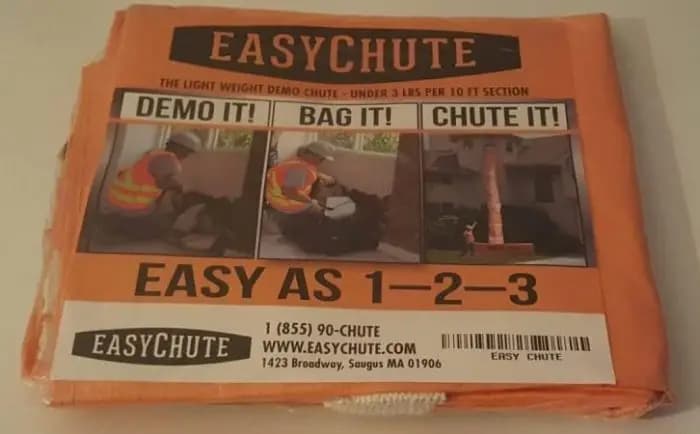
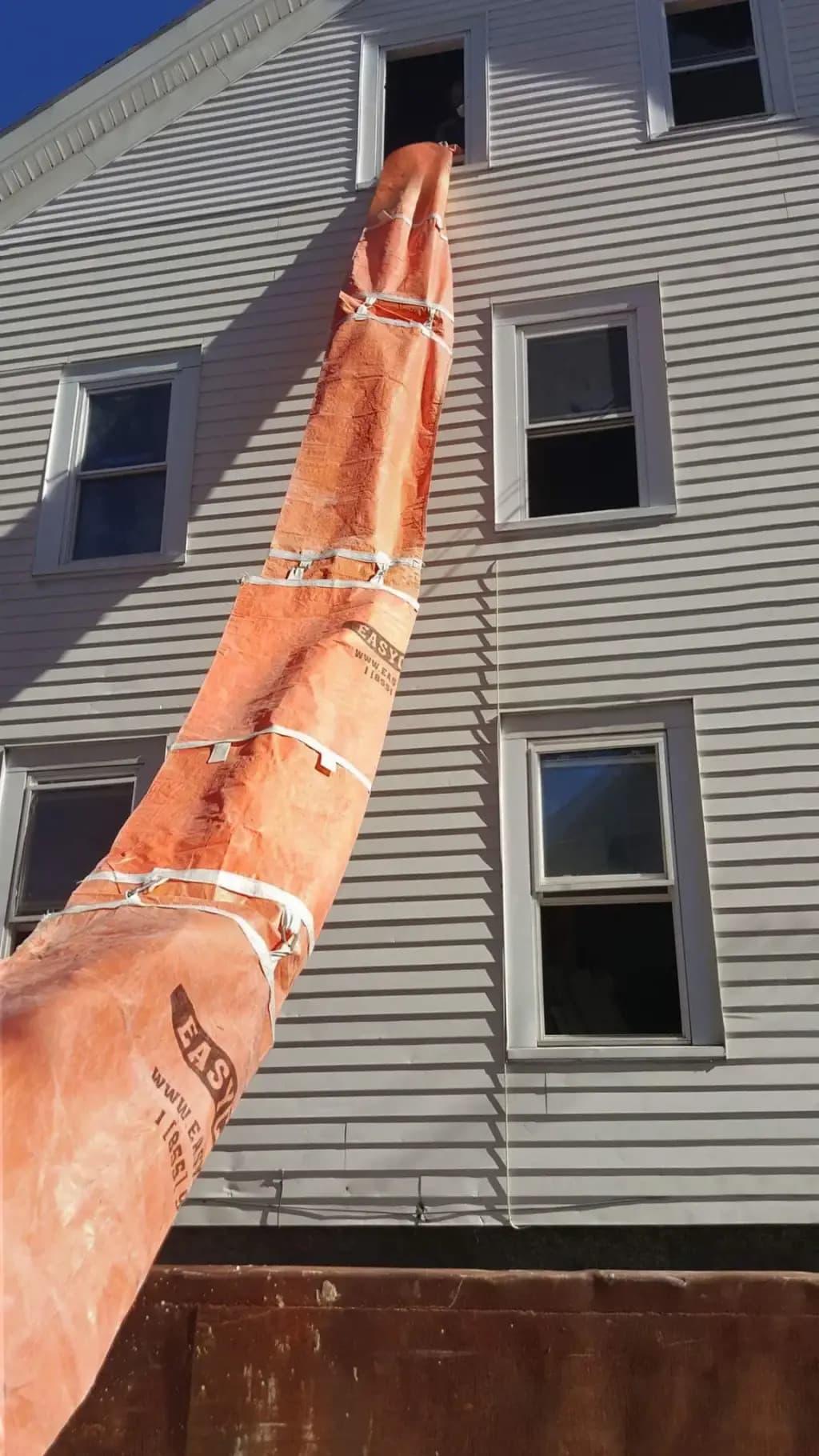
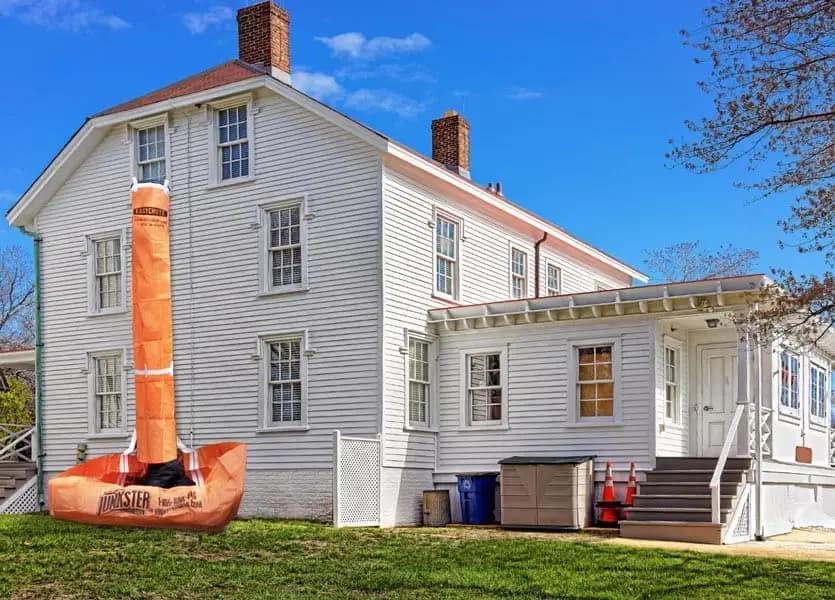
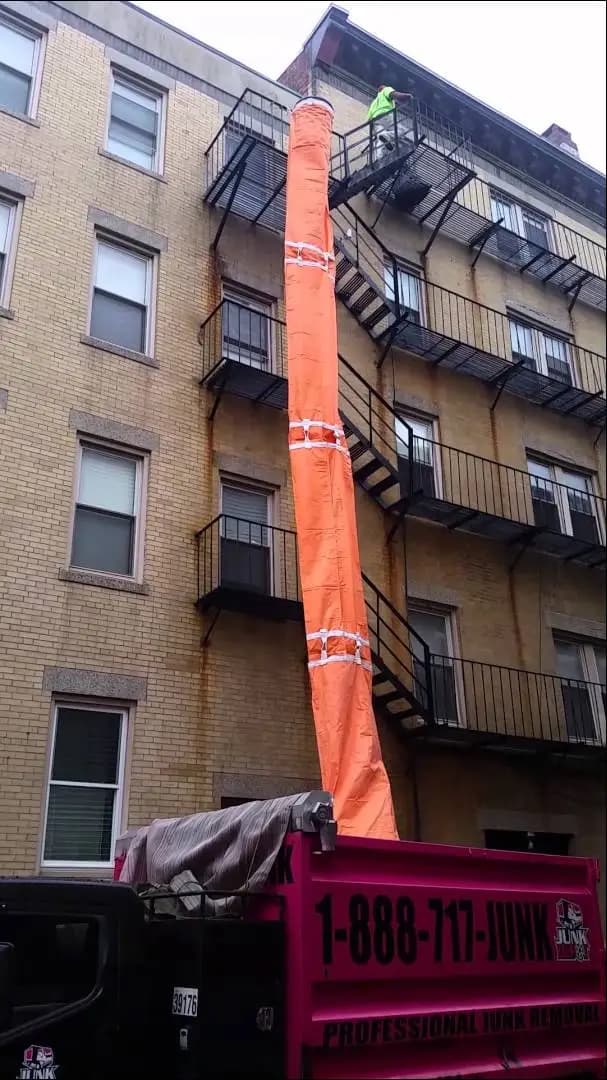
Free shipping on every order. See the full shop.
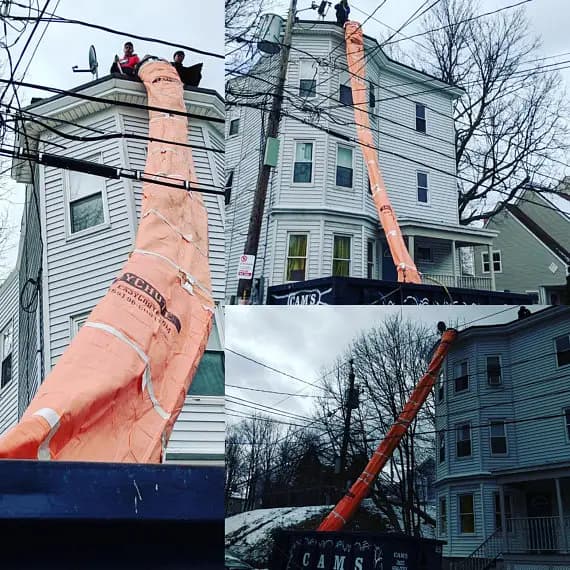
Why Manhattan Job Sites Need a Purpose-Built Trash Chute
Manhattan's built environment creates a specific set of logistical challenges that contractors elsewhere rarely face all at once. Street-level space is at a premium — a double-parked dumpster may be all the staging area you get. Elevator access in occupied residential buildings is often restricted to off-peak hours. Manually carrying debris bags down five, eight, or twelve flights of stairs is slow, physically punishing, and increases the risk of worker injury on narrow stairwells.
A fabric debris chute solves all three problems. You hang it from a window, a roof edge, or a scaffold pipe, feed demolition material in at the top, and it travels down inside the enclosed tube directly into a roll-off container or a standard 32-gallon commercial trash can (with the bottom removed) acting as a hopper. No elevator needed. No repeated trips down the stairs. And because EasyChute's fabric sections fold down to the size of a small duffel bag, getting the chute into a Manhattan apartment building is as simple as bringing it up in an elevator once and carrying it back down empty when the job is done.
OSHA regulation 29 CFR 1926.252(a) requires an enclosed chute when material is dropped more than 20 feet to any point outside the exterior walls of a building. In a borough where the average residential building is six or more stories, that threshold is crossed on nearly every exterior drop. EasyChute meets or exceeds applicable OSHA regulations, so you stay compliant without adding a separate rental line item to your budget.
Manhattan's Building Stock: Matching Your Chute Section to the Job
Manhattan contains an unusually wide range of building heights within just a few square miles. Choosing the right section length before you order saves time and avoids having too little — or too much — chute on site.
Two- to Five-Story Walk-Ups and Rowhouses
Older residential neighborhoods throughout Manhattan — think the tenement blocks of the Lower East Side, the narrow rowhouses of the West Village, or the brownstone-style buildings on the Upper East Side — typically run three to five stories. A single 25 ft section ($277) covers roughly two and a half stories and is often enough for a third- or fourth-floor window drop. For a full five-story reach, two 10 ft heavy-duty sections ($149 each) connected to a 25 ft section will get you there, or go straight to the 50 ft section ($596) if you anticipate longer runs on future jobs.
Six- to Ten-Story Pre-War Apartment Buildings
The classic pre-war elevator building — six to twelve stories of brick and terra cotta — is one of Manhattan's most common renovation contexts. Gut renovations of these apartments often involve removing plaster and lath, original hardwood subfloors, and decades of layered finishes. A 50 ft section handles drops from roughly the fifth floor, and two 50 ft sections connected together cover a ten-story reach. Because sections link loop-to-loop with carabiners or quick-connects and every joint overlaps 1.5 feet to contain dust and debris, extending the system to match your floor is straightforward on site.
Midtown and High-Rise Construction
For taller commercial or mixed-use projects in Midtown or the Financial District, multiple 50 ft sections can be chained to reach significant heights. Each 50 ft section weighs under 15 lbs, so even on a job with restricted freight elevator access you can bring all the sections up by hand if necessary. Check out our dedicated pages for Midtown Manhattan and Lower Manhattan for more detail on those specific project types.
Neighborhood-by-Neighborhood: What Manhattan Contractors Are Demolishing
Manhattan is not a monolith. The demo debris coming out of a Tribeca loft conversion looks different from what comes out of a Chinatown commercial gut or a Greenwich Village townhouse kitchen remodel. EasyChute is built for the most common construction materials found in these older buildings:
- Plaster and lath — the dominant wall system in pre-1950s Manhattan apartments, heavy and dusty
- Drywall — standard in post-war and more recently renovated units
- Roofing shingles — on low-slope rooftops and rowhouse roofs throughout Harlem and Washington Heights
- Wood scraps and structural lumber — from framing demo and subfloor tearouts
- Insulation — blown-in or batt, common in attic conversions and exterior wall work
For neighborhood-specific guidance, see our pages for Tribeca, Chinatown, Greenwich Village, Chelsea, and Upper Manhattan.
How to Set Up a Trash Chute on a Manhattan Job Site
EasyChute hangs from a window opening, a roof parapet, or a scaffold pipe — no outriggers, no rental hoisting frame, no separate setup crew required. Here is a typical window-hung setup in a Manhattan apartment building:
- Choose your drop point. A window or a roof hatch opening directly above the dumpster or trash can at the curb is ideal. Confirm with the building super or property manager where the street-level container is permitted to sit.
- Set up a hopper. A standard 32-gallon commercial trash can with the bottom cut out fits the 22-inch diameter opening and gives workers a visible, stable target to aim debris into at the upper floor.
- Attach the top section. Use the four woven connection loops at the top of the first section to tie or clip the chute to a sturdy anchor — a scaffold tube, a window frame reinforced with blocking, or a roof edge anchor point. Make sure the anchor can support the dynamic load of debris moving through the chute.
- Add sections as needed. Connect additional sections loop-to-loop with carabiners or quick-connects. The 1.5-foot overlap at every joint keeps dust and debris contained inside — important on Manhattan sidewalks where pedestrians and parked vehicles may be directly below.
- Use the middle shortening straps to fine-tune the chute length so the bottom outlet sits just above the open top of your dumpster or container, minimizing dust at street level.
- Feed debris slowly and steadily. Overloading the chute causes blockages. Brief pauses between loads let material clear before the next batch goes in.
Always check with the building department and your site's safety officer about any local requirements for chute signage, sidewalk protection, or pedestrian barriers. Requirements vary by building type and block, and your building department is the authoritative source.
Ordering a Trash Chute for Your Manhattan Job Site
EasyChute sells at fixed prices with no negotiation and no hidden fees. Every order ships free to any address in the United States — including job sites in Manhattan, whether that is a Hell's Kitchen brownstone, a Financial District office tower, or a Harlem multi-family building. You can order online any time, or call 855-902-4883 (Mon–Fri, 8 AM–10 PM Eastern) if you want to talk through which section configuration fits your project.
Not sure whether the lite-duty or heavy-duty 10 ft section is right for your work? The Lite-Duty 10 ft section ($99) handles lighter residential demo loads, while the Heavy-Duty 10 ft section ($149) is built for heavier, more abrasive materials like plaster and roofing shingles. Both connect seamlessly to the 25 ft and 50 ft sections if you need a longer run. Visit the full shop to see all options and build the configuration your Manhattan project needs.
For a broader look at how EasyChute serves job sites across the five boroughs, visit our New York City trash chute page, or explore tips on reusing your chute across multiple projects at cost-effective reusable trash chutes for NYC renovations.
Frequently asked questions
Does EasyChute ship to Manhattan addresses?
Yes. EasyChute ships free to job sites anywhere in the United States, including every neighborhood in Manhattan. You can order online at any time and have the chute delivered directly to your site address. For questions about your order, call 855-902-4883 or email orders@easychute.com.
What section length do I need for a typical Manhattan apartment building?
A 10 ft section covers roughly one story, so a 25 ft section reaches about two and a half stories and a 50 ft section reaches about five stories. For pre-war buildings in the six-to-twelve-story range, two or more 50 ft sections connected together will cover the drop. Sections link with carabiners or quick-connects, so you can build any length you need on site.
Is a trash chute required by OSHA for Manhattan high-rise work?
OSHA regulation 29 CFR 1926.252(a) requires an enclosed chute when material is dropped more than 20 feet to any point outside the exterior walls of a building. Many Manhattan buildings exceed that height starting from the third or fourth floor, so an enclosed chute is typically required for exterior drops on those sites. EasyChute meets or exceeds applicable OSHA regulations.
Can I use EasyChute on a Manhattan job site where elevator access is limited?
Absolutely. Each section is very lightweight — the 50 ft section weighs under 15 lbs — and folds down small enough to carry up a stairwell or bring in a service elevator without special equipment. Once the job is done, the chute folds back down and stores in a small bag for transport to the next project.
Do I need any special permits or building-department approvals to hang a debris chute in Manhattan?
Permit and approval requirements vary by building type, block, and project scope. EasyChute can tell you how the product works, but for any permit or regulatory questions specific to your Manhattan address, you should check directly with the New York City Department of Buildings or your site's safety officer. When in doubt, confirm before you hang the chute.
Neighborhoods in Manhattan
- New York City
- Chelsea
- Chinatown
- Greenwich Village
- Lower Manhattan
- Midtown Manhattan
- Tribeca
- Upper Manhattan
Related guides
- Brownstone Window Debris Chute Brooklyn: Setup, Permits & Safety Guide for 2026
- Cost-Effective Reusable Trash Chute for NYC Renovation Projects (Contractors)
- Long Island Contractor Guide to Debris Chutes for Split-Level Homes
- Queens Multi-Unit Renovation Debris Control Plan (Window Loading + Zone Control)