
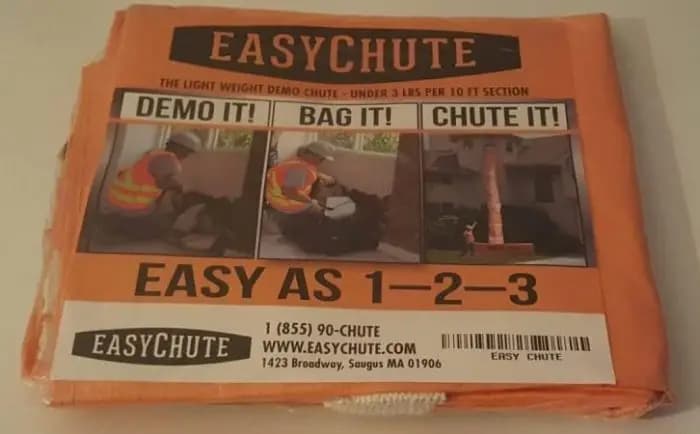
When a renovation project lands in Greenwich Village, debris removal becomes one of the first real logistical puzzles you face. Narrow cobblestone streets, Federal-era and early-twentieth-century rowhouses, four- and five-story walk-ups, and tight rear yards leave very little room for a traditional debris drop. A trash chute for Greenwich Village work sites solves that puzzle cleanly: hang it from a window or a roof edge, run debris straight into a dumpster below, and keep the sidewalk — and your neighbors — clear. EasyChute ships these lightweight, woven coated-poly fabric chutes free to any Manhattan address so your crew can get moving without a trip to a rental house.
This page covers everything a contractor, roofer, or property manager working in the Village needs to know: which section length fits your building, how the chute hooks up in tight spaces, and what OSHA says about dropping debris more than 20 feet. If you just want to see the options, head straight to the EasyChute shop.
Trash chutes shipped free to Greenwich Village
Free shipping on every order. See the full shop.
Why Greenwich Village Buildings Make Debris Removal Tricky
Greenwich Village is one of the most architecturally intact neighborhoods in New York City. Rows of Federal and Greek Revival townhouses, converted carriage houses, and pre-war apartment buildings line streets that were laid out before the Manhattan grid existed. That history is a big part of the neighborhood's appeal — and a persistent headache for anyone pulling out old plaster, ripping up floors, or stripping a roof.
A few realities every contractor in the Village runs into quickly:
- Narrow lots and party walls. Many Village townhouses sit on 20-foot-wide lots with shared walls on both sides. There is rarely a generous side yard to stage equipment.
- Rear yards, not alleyways. Unlike some neighborhoods, the Village often has a rear courtyard or garden shared by multiple buildings — not a service alley wide enough for a boom truck.
- Walk-up floors with tight stairwells. Hauling debris bags down a steep, winding staircase in a 19th-century walk-up is slow, hard on workers, and hard on the staircase itself.
- Landmark and historic-district considerations. Much of Greenwich Village falls within the Greenwich Village Historic District. Always check with the NYC Department of Buildings and the Landmarks Preservation Commission before attaching anything to a façade — an EasyChute hangs from a window opening or roof parapet and does not require drilling into the exterior, which keeps the installation low-impact.
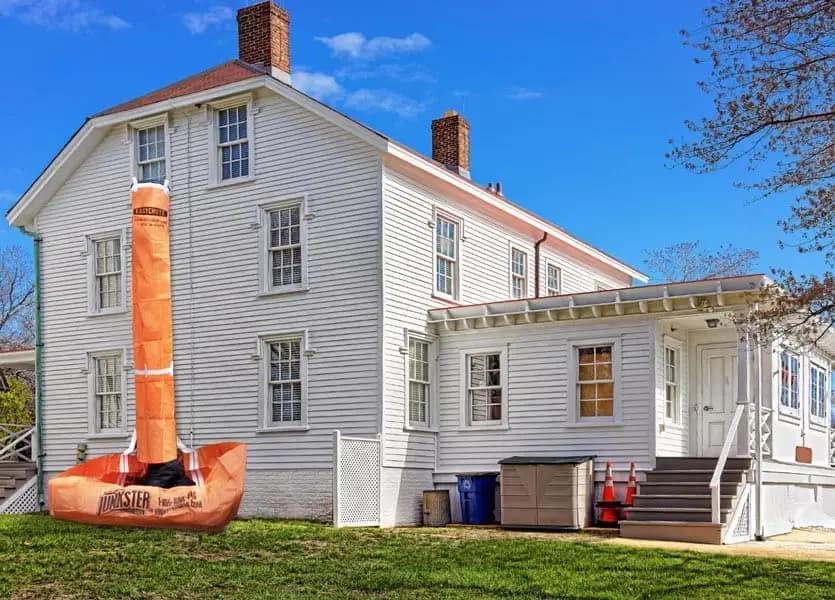
A fabric debris chute threads through all of these constraints. It is light enough to carry up any staircase, fits through any standard window opening, and hangs without scaffolding, outriggers, or a rental crew.
Choosing the Right Trash Chute Section for Your Village Project
EasyChute sections are sized to match story heights, which makes it straightforward to match a section to a Greenwich Village building:
- 10 ft section ≈ one story. Perfect for a single-floor gut or a roofing job on a two-story carriage house where the drop is short. The Lite-Duty 10 ft section ($99) handles lighter renovation debris; the Heavy-Duty 10 ft section ($149) is built for roofing shingles, plaster and lath, and heavier loads.
- 25 ft section ≈ two and a half stories. The 25 ft section ($277) suits a three-story Village rowhouse where you are working from the top floor or the roof and dropping into a dumpster on the street or in the rear yard.
- 50 ft section ≈ five stories. The 50 ft section ($596) is the right call for a five- or six-story pre-war apartment building — common on Sixth Avenue, Bleecker Street, and the blocks around Sheridan Square.
Sections connect loop-to-loop using carabiners or quick-connects, with a 1.5-foot overlap at every joint so dust and debris stay inside the chute rather than raining down on the sidewalk or rear garden below. Need a custom drop length? Middle shortening straps let you dial in the exact height without buying a new section.
The 22-inch diameter moves drywall chunks, broken plaster, roofing shingles, insulation batts, and wood scraps with ease — the debris types you encounter in most Village gut-renovations and exterior restorations.
Setting Up a Debris Chute on a Greenwich Village Walk-Up
Setup is deliberately simple because the chute was designed by a remodeling contractor who understood tight urban job sites. Here is how a typical installation looks on a Village walk-up:
- Position your dumpster. Park it on the street (with a DOT permit if required — check with the city) or in the rear yard directly below the window or roof edge you plan to use.
- Make the hopper. Remove the bottom from a standard 32-gallon commercial trash can and set it in the window opening. This gives your crew a stable, open throat to toss debris into and keeps dust from blowing back into the apartment.
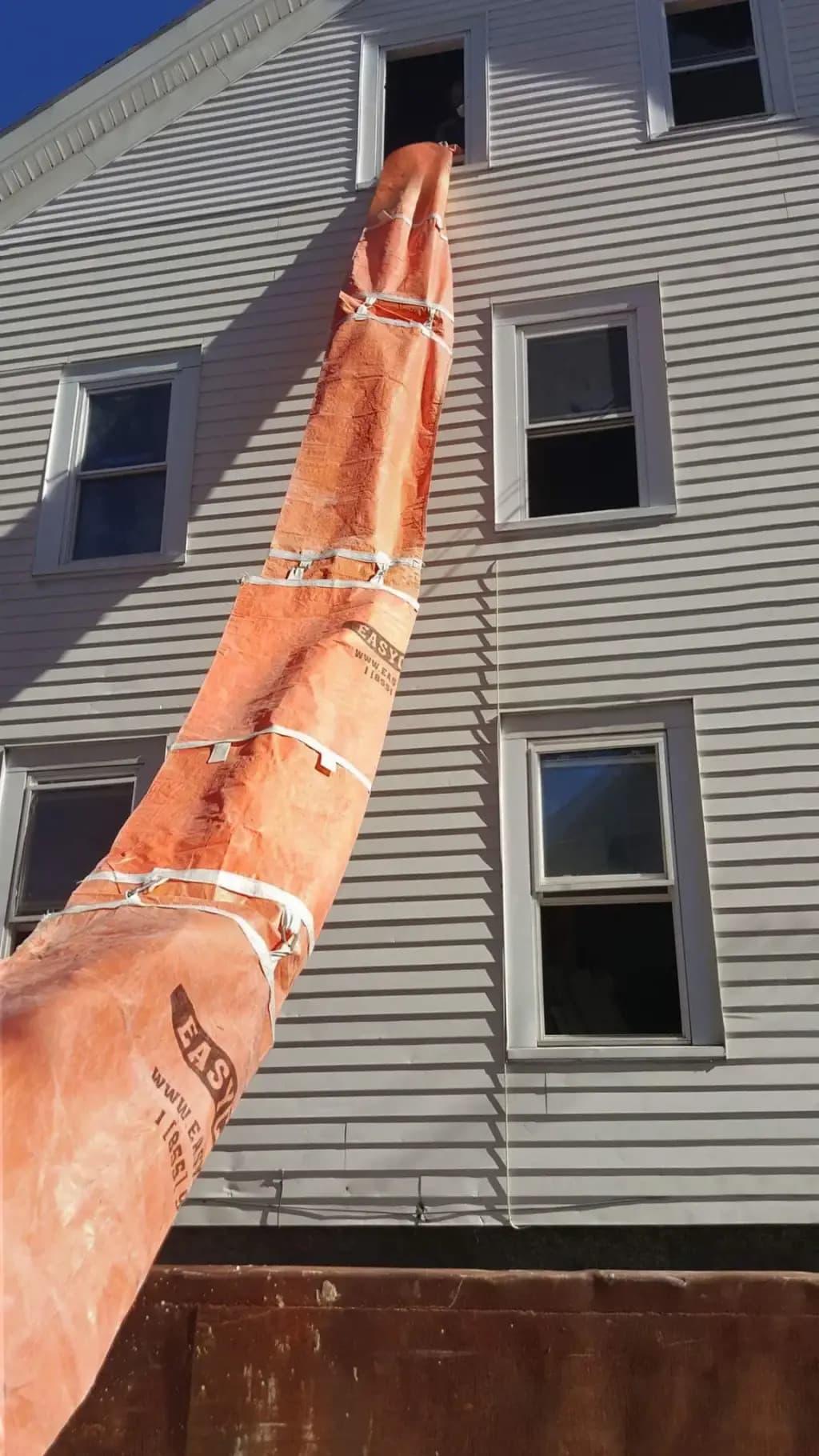
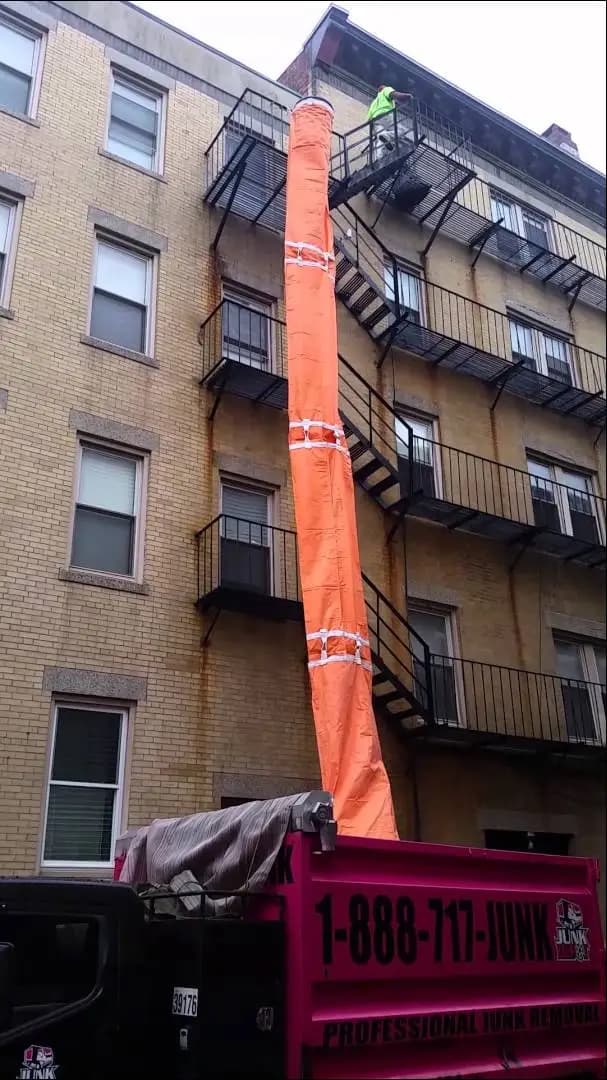
- Hang the chute. The four woven connection loops at the top of the chute attach to the window frame, a parapet, scaffold, or fire escape. No outriggers, no frames, no hoists.
- Start moving debris. Drop material into the hopper and let gravity do the rest. The enclosed design keeps the drop contained — important in a dense neighborhood where a neighboring building or a sidewalk café may be just a few feet away.
When the job is done, the chute folds down small — a 10 ft section fits in a drawer or small box and weighs under 3 lbs. Pack it with your other tools and bring it to the next project. These chutes are reusable job after job.
OSHA Compliance for Debris Drops in Manhattan
OSHA 29 CFR 1926.252(a) is clear: when material is dropped more than 20 feet to any point outside the exterior walls of a building, an enclosed chute must be used. Most Village rowhouses are three to five stories — well over 20 feet to street level. Using an EasyChute keeps you on the right side of that regulation and protects pedestrians, neighbors, and your crew from falling debris.
EasyChute meets or exceeds applicable OSHA regulations. For specific permit and safety requirements on your project, always consult the NYC Department of Buildings and your site safety plan.
Free Shipping to Greenwich Village Job Sites
Every EasyChute order ships free anywhere in the United States — including job sites on Bleecker Street, West 4th, Christopher Street, or anywhere else in the Village. Order online at any hour; the shop is always open. If you have questions before ordering, call 855-902-4883 (Monday–Friday, 8 AM–10 PM Eastern) or email orders@easychute.com.
Working on other parts of Manhattan? See our pages for Manhattan debris chutes, Chelsea, Midtown, and Lower Manhattan. You may also find our guide on reusable trash chutes for NYC renovations useful before you buy.
Ready to order? Shop all EasyChute sections and get free shipping straight to your Greenwich Village job site.
Frequently asked questions
Can I hang an EasyChute from a fire escape in Greenwich Village?
Yes — the four woven loops at the top of every EasyChute section are designed to attach to a fire escape, window frame, roof parapet, or scaffold using carabiners or quick-connects. Make sure the attachment point can safely support the load, and check any local fire-escape use rules with the NYC Department of Buildings before you hang the chute.
Which section length works for a four-story Greenwich Village rowhouse?
A 25 ft section covers roughly two and a half stories, so for a four-story rowhouse you would typically pair a 25 ft section with a 10 ft section — or order the 50 ft section and use the middle shortening straps to match your exact drop height. The 50 ft section weighs under 15 lbs and folds compactly, so carrying it up a walk-up staircase is straightforward.
Does using an EasyChute satisfy OSHA's enclosed-chute requirement?
EasyChute meets or exceeds applicable OSHA regulations, including 29 CFR 1926.252(a), which requires an enclosed chute when debris is dropped more than 20 feet outside the exterior walls of a building. The 1.5-foot overlapping joints between sections keep the drop fully enclosed. Always review your site-specific safety plan and consult your site safety manager for full compliance.
How does EasyChute ship to a Greenwich Village address, and how much does it cost?
Shipping is free on every EasyChute order to any address in the United States, including Manhattan job sites. You order online at a fixed price — there are no quotes or negotiation — and the chute ships directly to the address you provide at checkout, whether that is a building super's address, a staging location, or the site itself.
Can one person set up the chute on a Village walk-up renovation?
Yes. EasyChute sections are very lightweight — the 10 ft section is under 3 lbs, the 25 ft under 8 lbs, and the 50 ft under 15 lbs — so a single worker can carry sections up a narrow staircase and hang them from a window or roof edge without help. No outriggers, frames, or rental equipment are needed.
Nearby
Related guides
- Brownstone Window Debris Chute Brooklyn: Setup, Permits & Safety Guide for 2026
- Cost-Effective Reusable Trash Chute for NYC Renovation Projects (Contractors)
- Long Island Contractor Guide to Debris Chutes for Split-Level Homes
- Queens Multi-Unit Renovation Debris Control Plan (Window Loading + Zone Control)