
Long Island City is one of the most intensely renovated neighborhoods in all of New York City. From converted warehouse lofts and mid-rise co-ops along the waterfront to older walk-up apartment buildings on the residential blocks east of Queens Plaza, contractors and property managers here face a constant challenge: how do you move demolition debris out of upper floors quickly, safely, and without blocking a narrow street or courtyard? A trash chute in Long Island City is the practical answer — and EasyChute ships one directly to your job site, free of charge, anywhere in the United States.
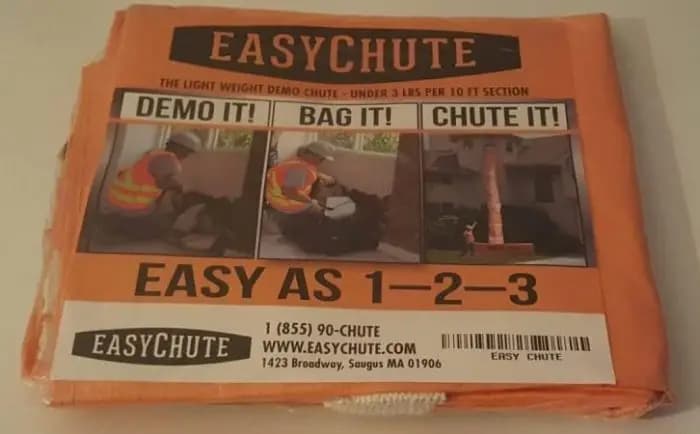
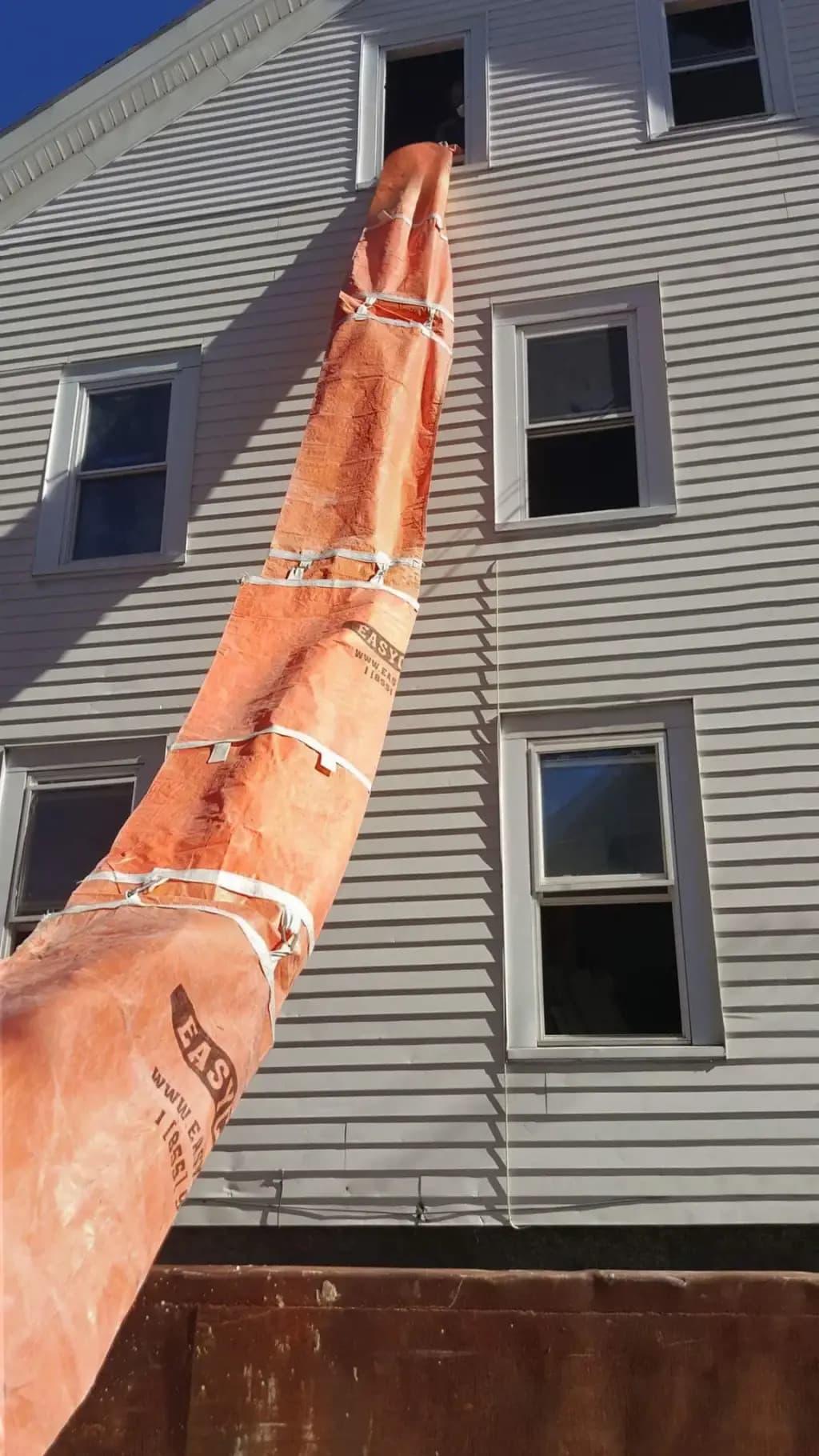
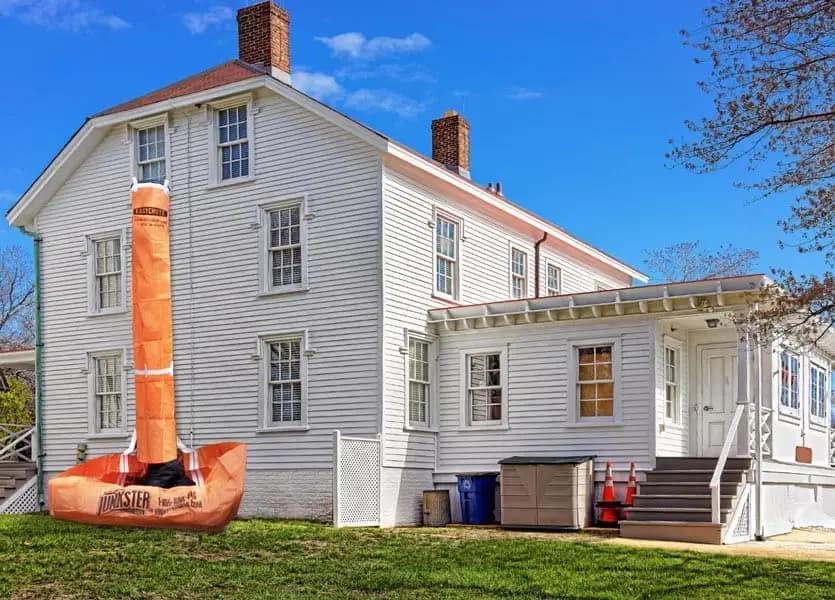
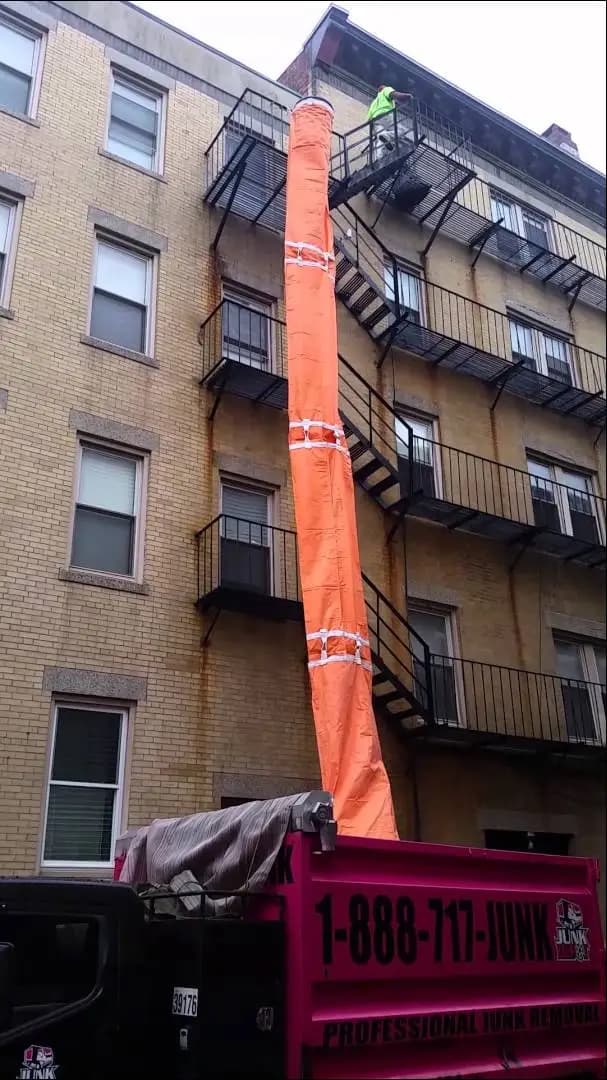
EasyChute's debris chutes are made from woven, coated poly fabric, weigh just a few pounds per section, and fold down small enough to carry up a stairwell in a bag. There are no frames to rent, no outriggers to bolt on, and no crew required to set one up. You hang it from a window, a roof edge, a scaffold, or a fire escape — and debris flows straight down into a dumpster or trash can below. For LIC's mix of tight lots, rear yards, and multi-story buildings, that kind of simplicity matters.
Trash chutes shipped free to Long Island City
Free shipping on every order. See the full shop.
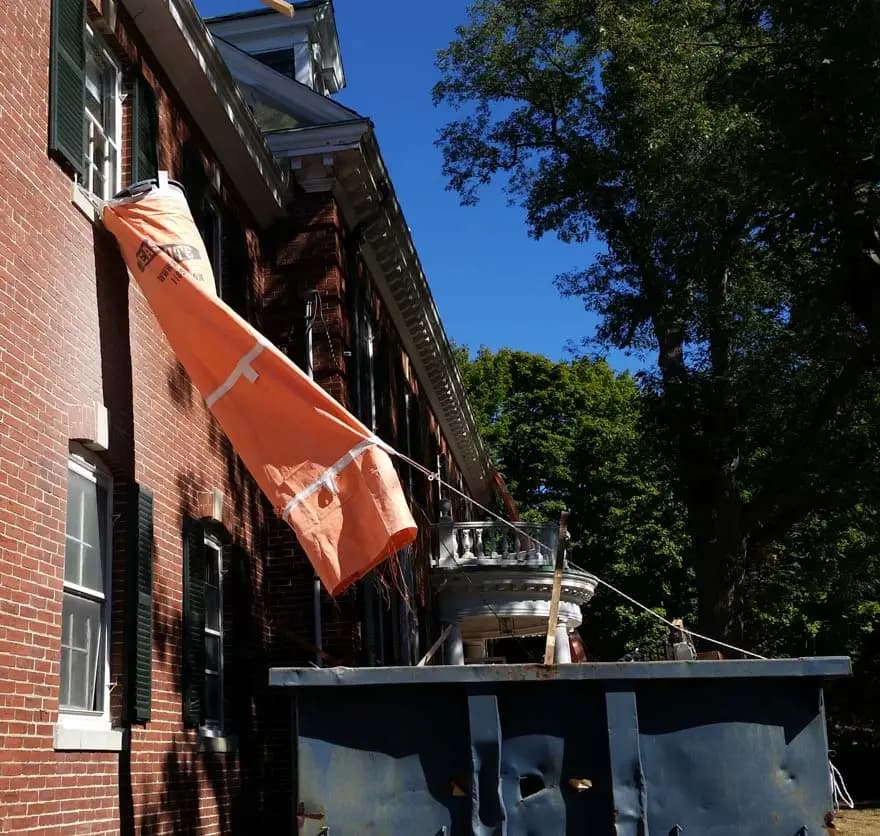
Why Long Island City Renovations Need a Proper Debris Chute
LIC's building stock is unlike anywhere else in Queens. On one block you might be gutting a century-old four-story walk-up; on the next, stripping out a former industrial building that's been converted to luxury condos. Both situations share the same core problem: debris has to travel down multiple floors through buildings where elevators are either absent, unavailable during construction, or simply too small to handle demo loads efficiently.
Carrying bags of drywall, plaster, and roofing shingles down narrow staircases is slow, physically grueling, and a safety hazard for workers. It also tears up stairwell walls and banisters — damage the owner will eventually charge back against your contract. Running a debris chute out of a window or off a roof edge eliminates the stair carry entirely. Material drops straight from the floor where it's generated into the bin below.
LIC's tight lot lines and active sidewalks add another layer of complexity. OSHA 29 CFR 1926.252(a) requires an enclosed chute whenever material is dropped more than 20 feet to any point outside the exterior walls of a building. EasyChute meets or exceeds that standard. Each section overlaps the next by 1.5 feet at every connection point, keeping dust and debris contained inside the chute rather than scattering onto the sidewalk or neighboring properties.
Choosing the Right EasyChute Section for Your LIC Building
Sizing your chute correctly means knowing roughly how many stories of drop you need to cover. EasyChute offers four section lengths designed to handle everything from a two-story walk-up to a ten-story mid-rise.
- 10-foot section (≈ one story): Use a single section for a low first-floor drop, or stack multiple sections for taller buildings. Available in Lite-Duty ($99) and Heavy-Duty ($149) versions. Under 3 lbs each. Stacks connect loop-to-loop with carabiners — no tools needed.
- 25-foot section (≈ two and a half stories, $277): A smart single-piece solution for a typical three-story walk-up in LIC's residential blocks. Order the 25 ft section. Weighs under 8 lbs.
- 50-foot section (≈ five stories, $596): Built for the taller converted industrial buildings and mid-rise co-ops that define the LIC waterfront. Order the 50 ft section. Weighs under 15 lbs.
Sections connect with four woven loops at the top and four at the bottom (two front, two back), joined loop-to-loop with carabiners or quick-connects. Middle shortening straps let you fine-tune the length when your drop doesn't divide evenly into sections. Need to span six stories? Run the 50-foot section and add a 10-foot section below — they link together in minutes.
Setting Up a Trash Chute in a Long Island City Walk-Up or Loft Building
Setup in LIC typically looks like one of three configurations, depending on your building type.
Window Hang
For a walk-up apartment building, anchor the top of the chute to a sturdy window frame on the highest floor where demo is happening. The four top loops give you multiple anchor points. A standard 32-gallon commercial trash can with the bottom cut out makes an effective hopper — it catches material thrown from a few feet away and funnels it into the chute.
Roof Edge
For roofing work or top-floor demo on a flat-roof building — common in LIC's older residential stock — attach the chute at the roof parapet or edge. The lightweight fabric makes it easy for one worker to carry the folded chute up a roof hatch and hang it without assistance.
Fire Escape
On older walk-ups where a window anchor isn't practical, a fire escape provides a solid attachment point. Loop the top connections around a railing or stringer, confirm the anchor is secure, and you're ready to run debris.
In all three cases, position your dumpster or bin directly below the chute's exit before you start. In LIC's tight rear yards, a 22-inch-diameter chute exit fits easily into a standard roll-off or large trash can.
Reusable and Lightweight — Ready for the Next LIC Job
One of the biggest practical advantages of EasyChute for contractors working across Queens is reusability. The woven, coated poly fabric and tear-resistant construction mean the chute holds up through multiple projects. After the job, fold it down — a 10-foot section fits in a drawer or small box — and store it in your van or warehouse until the next renovation. For contractors running back-to-back jobs in LIC, Astoria, Flushing, or anywhere else in the borough, that saves real money over renting equipment or buying single-use solutions.
If you manage multiple units or run regular renovation cycles, see our guide on debris chutes for multi-unit buildings in Queens and our broader Queens trash chute resource page. For nearby neighborhoods, we also cover Astoria and Flushing.
Free Shipping to Long Island City Job Sites
Every EasyChute order ships free to any address in the United States — including job sites and staging addresses in Long Island City and across Queens. There are no minimums, no freight surcharges, and no hidden fees. Order at fixed prices directly from our online shop, and the chute ships to wherever you need it.
Questions before you order? Call us at 855-902-4883 (Monday–Friday, 8 AM–10 PM Eastern), email orders@easychute.com, or visit our FAQ page for answers on sizing, setup, and connecting sections. We're based in Massachusetts and built this product in the field — we understand exactly what a New York renovation site demands.
Ready to stop hauling debris down the stairs? Shop EasyChute debris chutes and get free shipping straight to your Long Island City job site.
Frequently asked questions
Can I use an EasyChute debris chute on a Long Island City fire escape?
Yes. EasyChute's top connection loops are designed to anchor to railings, window frames, scaffold rails, or fire escape stringers. Use the four top loops to secure the chute firmly before running debris. Always confirm your anchor point is structurally sound before loading.
What size section do I need for a four-story walk-up in LIC?
A 25-foot section covers roughly two and a half stories, so for four stories you'd typically use the 50-foot section ($596) or combine a 25-foot ($277) and a 10-foot section. The overlap connection at each joint is 1.5 feet, so account for that when estimating your total drop.
Does EasyChute ship free to job sites in Long Island City and Queens?
Yes — free shipping is included on every order, to any address in the United States. There are no freight surcharges or minimums. Just order online at the listed price and we ship directly to your job site or staging location.
Does an enclosed chute like EasyChute satisfy OSHA requirements for debris drops in New York City?
EasyChute meets or exceeds OSHA 29 CFR 1926.252(a), which requires an enclosed chute when material is dropped more than 20 feet to any point outside the exterior walls of a building. Each joint overlaps 1.5 feet and the 22-inch-diameter tube keeps debris contained. For city-specific permit or inspection requirements, always check with the NYC Department of Buildings or your local building department.
How many workers does it take to set up an EasyChute in a Long Island City building?
One person can typically hang and set up a chute. The heaviest section — the 50-foot — weighs under 15 pounds and folds compactly, so carrying it up stairs or through a hatch is straightforward. Anchor the top loops, position your dumpster below, and you're ready to run debris.
Nearby
Related guides
- Brownstone Window Debris Chute Brooklyn: Setup, Permits & Safety Guide for 2026
- Cost-Effective Reusable Trash Chute for NYC Renovation Projects (Contractors)
- Long Island Contractor Guide to Debris Chutes for Split-Level Homes
- Queens Multi-Unit Renovation Debris Control Plan (Window Loading + Zone Control)