
When you're tearing out roofing, drywall, or old plaster on a Staten Island job site, getting debris safely to the ground is the first problem to solve. A trash chute for Staten Island keeps shingles, plaster chunks, and wood scraps moving straight into a dumpster instead of raining down on passersby, driveways, or parked cars — and it keeps your crew off the ladder carrying heavy loads. EasyChute ships its lightweight, woven coated-poly debris chutes free to job sites anywhere on the Island, so you can order today and get to work.
Staten Island's mix of single-family colonials, two-story cape cods, mid-rise co-ops, and older attached rowhouses means the right chute setup looks a little different from project to project. This page walks through which EasyChute sections fit the borough's most common building heights, how to hang the chute safely from a roofline or window, and what OSHA requires when you're dropping debris more than 20 feet outside a building's exterior walls.
Trash chutes shipped free to Staten Island
Free shipping on every order. See the full shop.
Staten Island's Building Stock and Why It Calls for a Debris Chute
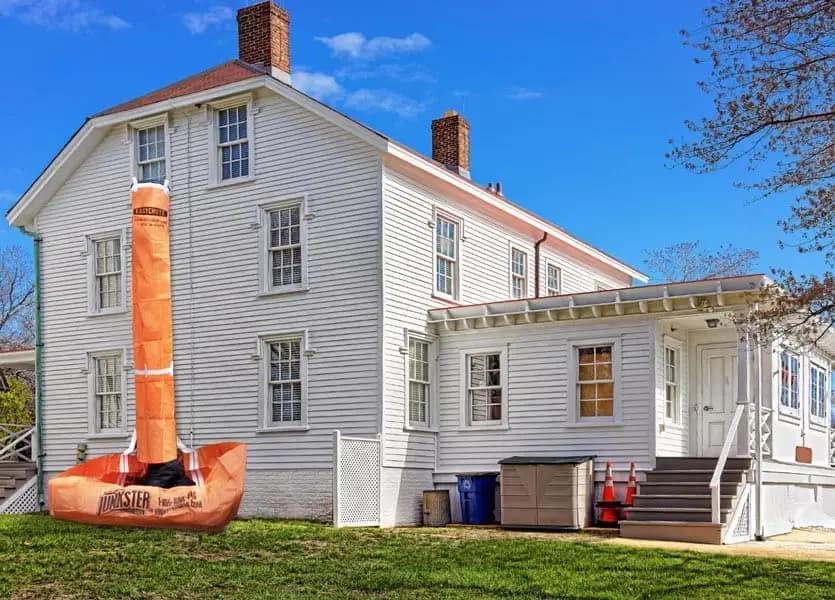
Unlike Manhattan's towers or Brooklyn's dense brownstone blocks, Staten Island is the most suburban of New York City's five boroughs. The dominant building type is the detached or semi-detached single-family home — one and two stories, often with an attic or a finished basement, set back from the street with a driveway and a modest yard. You'll also find ranches, split-levels, and cape cods throughout neighborhoods like Tottenville, Westerleigh, and New Springville, along with clusters of two- and three-story attached rowhouses closer to the North Shore ferry corridor.
That suburban character shapes how debris removal works. Narrow side yards, finished driveways, and neighboring homes in close proximity make tossing material off a roof or out a window a genuine liability. A contained debris chute channels waste in a controlled line from the work area straight into a dumpster or trailer below, protecting the property and anyone nearby. It's the professional approach — and on Staten Island's tighter residential lots, it's often the only practical one.
Older homes across the Island frequently contain plaster-and-lath walls, original roofing layers, and aging insulation — exactly the kind of chunky, dusty debris that benefits most from a chute. Renovation activity on the North Shore in particular has been steady, with contractors gutting and updating older housing stock. Whether you're on a full gut renovation or just replacing a roof, a chute pays for itself in time saved and cleanup avoided.
Choosing the Right EasyChute Section for Staten Island Building Heights
EasyChute sections come in three lengths, and matching the section to your building height is straightforward.
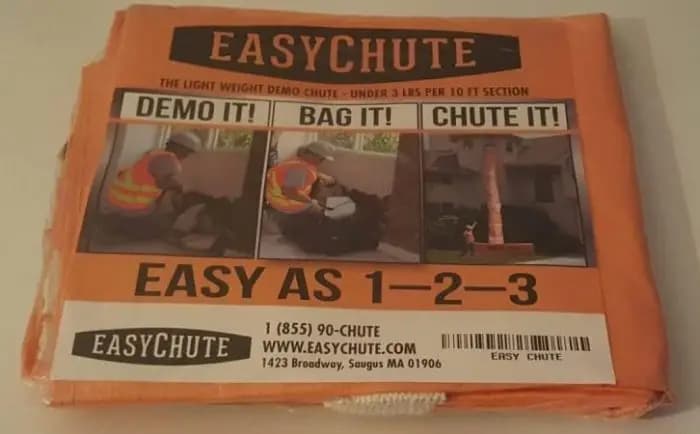
- 10 ft section (≈ one story): A single Lite-Duty 10 ft section ($99) or Heavy-Duty 10 ft section ($149) handles a one-story drop from a first-floor window or a low eave. Light enough to carry in one hand — under 3 lbs — it folds down to fit in a tool bag or a drawer on the work truck.
- 25 ft section (≈ two and a half stories): The 25 ft section ($277) covers the most common Staten Island renovation scenario: a two-story colonial or cape cod where debris exits from the second-floor or attic level. Under 8 lbs and compact when folded, it's easy for one person to carry up a ladder and hang.
- 50 ft section (≈ five stories): Staten Island has mid-rise apartment buildings and co-op complexes, particularly along the North Shore and in areas like St. George. For those jobs, the 50 ft section ($596) — under 15 lbs — reaches from rooftop to dumpster in a single run. Sections also connect to each other with carabiners and quick-connects, so you can pair a 25 ft and a 10 ft section for an in-between height without buying a longer chute than you need.
Every joint between sections overlaps by 1.5 feet, so dust and debris stay inside the chute rather than escaping through the connection. Middle shortening straps let you fine-tune the length once it's hanging, which is useful when you're positioning the outlet directly over a dumpster opening.
How to Hang a Debris Chute on a Staten Island Job Site
EasyChute is designed to hang without frames, outriggers, or a rental crew. Here's the basic setup process for a typical Staten Island single-family home:
- Position your dumpster or trailer as close to the building as possible, directly below the window or roof edge where the chute will exit.
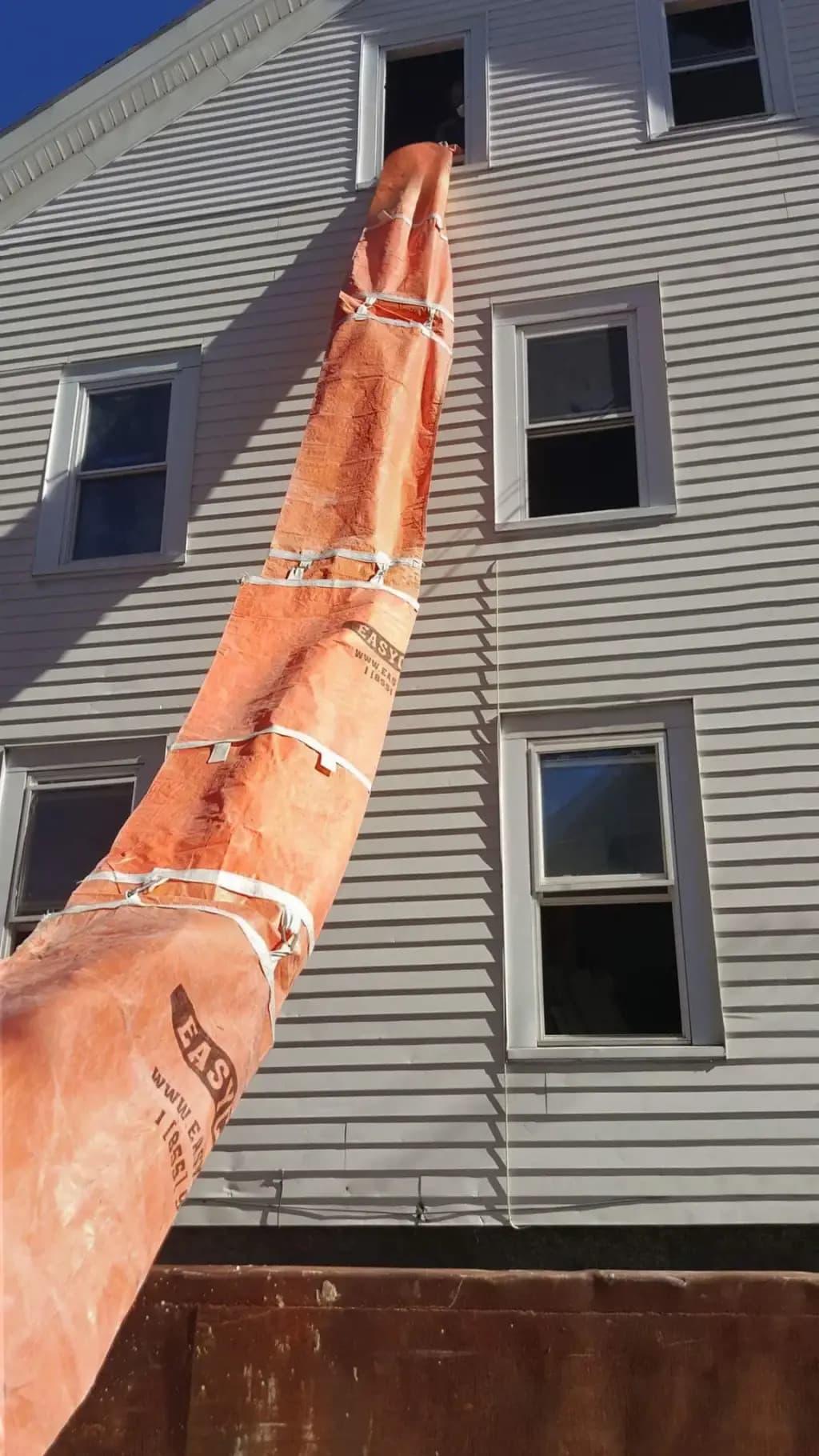
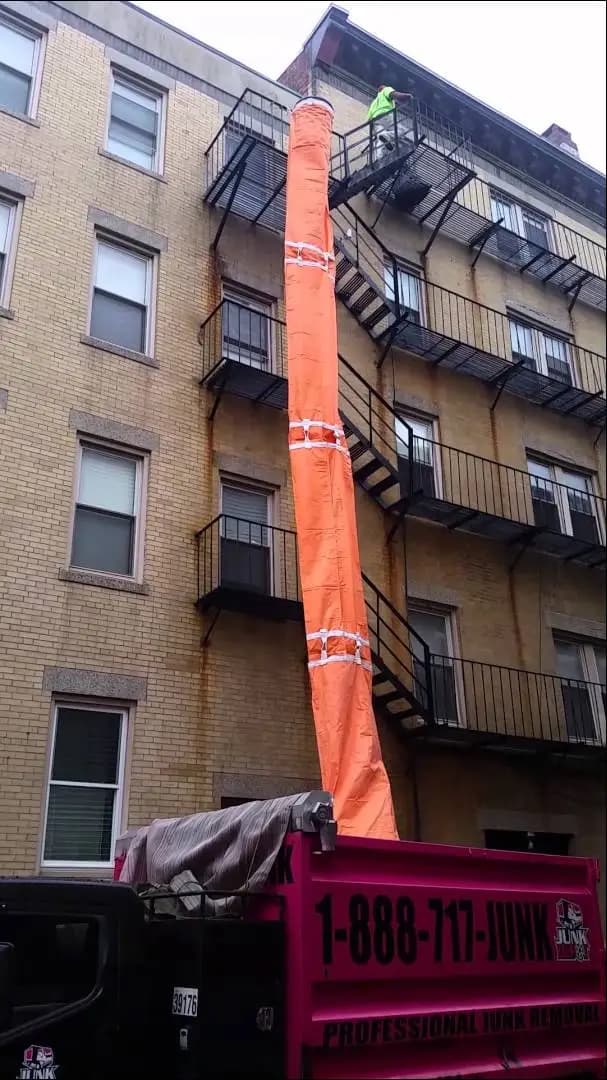
- Attach the top section using the four woven connection loops. The chute hangs from a window frame, roof edge, scaffold rail, or fire escape — whatever is solid and accessible at the work level. Use rope, straps, or carabiners through the loops to secure it.
- Drop a standard 32-gallon commercial trash can with the bottom removed over the top of the chute inlet to create a hopper. This funnel catches debris thrown from the work area and directs it into the chute, reducing dust and spillage.
- Let the chute hang freely to the dumpster below. Adjust the middle shortening straps so the outlet end sits just above the dumpster rim — close enough to contain debris but not so tight that it restricts flow.
- Connect additional sections loop-to-loop with carabiners if your drop is longer than one section covers.
That's the whole setup — typically achievable by one or two workers in under 15 minutes, with no tools beyond a ladder and whatever fasteners you already have on site.
OSHA Compliance for Staten Island Debris Chutes
OSHA 29 CFR 1926.252(a) requires that when material is dropped more than 20 feet to any point outside the exterior walls of a building, an enclosed chute must be used. On a standard two-story Staten Island colonial, the eave can easily be 20 feet or more above grade — which means a debris chute isn't just a convenience, it's a regulatory requirement.
EasyChute meets or exceeds applicable OSHA regulations. The chute's enclosed design and overlapping section joints keep debris contained from inlet to dumpster. If you have questions about specific permit or safety requirements on your Staten Island job, check with the New York City Department of Buildings or your local building department — rules for scaffolding, sidewalk sheds, and debris containment can vary by project scope and location.
For more on debris chute setup and OSHA compliance in the New York metro area, see our New York City trash chute guide and our guide to reusable debris chutes for NYC renovations.
Free Shipping to Every Staten Island Zip Code
EasyChute ships every order free to job sites anywhere in the United States — Staten Island included. Whether your site is in Tottenville at the southern tip or St. George near the ferry, you pay the listed price and nothing more. There are no fuel surcharges, borough fees, or shipping minimums. Order from the EasyChute shop online at any time, or call us Monday through Friday, 8 AM to 10 PM Eastern at 855-902-4883 if you'd like to talk through which section fits your project.
The chute is reusable job after job. Fold it up at the end of the project, toss it in the van, and it's ready for the next site. Compared to renting a chute system or paying for repeated manual hauls down a ladder, a single EasyChute section covers its cost quickly — and then keeps working for you across every future job.
Related Resources for New York Contractors
- Debris chute setup for Brooklyn brownstones
- Multi-unit debris chute setup in Queens
- Debris chute setup for Long Island split-levels
- EasyChute FAQ
- Contact EasyChute
Frequently asked questions
Does EasyChute ship free to Staten Island job sites?
Yes. Every EasyChute order ships free to job sites anywhere in the United States, including all Staten Island zip codes. You pay the listed product price and nothing else — no borough surcharges or shipping fees.
Which chute section is right for a two-story Staten Island home?
The 25 ft section is sized for roughly two and a half stories and handles the most common Staten Island renovation scenario — debris exiting from a second-floor window or attic level. If your drop is shorter, a 10 ft section covers one story. Sections can also be connected together with carabiners if you need a custom length.
Do I need an enclosed chute by law on a Staten Island job site?
OSHA 29 CFR 1926.252(a) requires an enclosed debris chute whenever material is dropped more than 20 feet outside the exterior walls of a building. Many two-story homes on Staten Island meet or exceed that threshold. For specific permit or local code requirements, check with the NYC Department of Buildings or your local building department.
How do I attach an EasyChute to a window or roof edge on a house?
The top of each chute section has four woven connection loops. You secure those loops to a window frame, roof edge, scaffold rail, or fire escape using rope, straps, or carabiners — no frames, outriggers, or rental equipment needed. A standard 32-gallon commercial trash can with the bottom removed fits over the inlet to act as a hopper and funnel debris into the chute.
Can I reuse an EasyChute on multiple Staten Island jobs?
Absolutely. EasyChute is built to be reused job after job. When you're done, fold it up — a 10 ft section fits in a drawer or small box — and store it in your van or truck until the next project. The tear-resistant woven coated-poly fabric holds up to repeated use with common construction debris like shingles, drywall, and plaster.
Neighborhoods in Staten Island
Related guides
- Brownstone Window Debris Chute Brooklyn: Setup, Permits & Safety Guide for 2026
- Cost-Effective Reusable Trash Chute for NYC Renovation Projects (Contractors)
- Long Island Contractor Guide to Debris Chutes for Split-Level Homes
- Queens Multi-Unit Renovation Debris Control Plan (Window Loading + Zone Control)